
 A SCHOLARLY BOOK REPOSITORY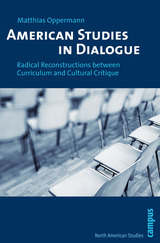
American studies has changed drastically over the past few decades, as a new wave of scholars—armed with groundbreaking ideas and more extensive methods of research—flocked to the relatively young field. This focus on scholarship, though necessary to the advancement of the discipline, has left pedagogy largely ignored. In American Studies in Dialogue, Matthias Oppermann consciously resists the traditional academic split between scholarship and classroom practice. His study calls for a radical reconstruction of American studies grounded in an understanding of cultural analysis and critique as genuinely dialogic processes of research and pedagogy. Drawing on case studies ranging from courses in early American civilization to recent multimedia projects, American Studies in Dialogue will be required reading for American studies scholars and teachers.
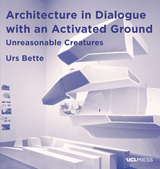
Using case study projects, architect Urs Bette gives an insight into the epistemological processes of his creative practice and unveils the strategies he deploys in order to facilitate the poetic aspects of architecture within a discourse whose evaluation parameters predominantly involve reason. Themes discussed include the emergence of space from the staged opposition between the architectural object and the site, and the relationship between emotive cognition and analytic synthesis in the design act. In both cases, there is a necessary engagement with forms of ‘unreasonable’ thought, action or behaviors.
By arguing for the usefulness and validity of the unreasonable in architecture, and by investigating the performative relationship between object and ground, Bette contributes to the discourse on extensions, growth and urban densification that tap into local histories and voices, including those of the seemingly inanimate – the architecture itself and the ground it sits upon – to inform the site-related production of architectural character and space. In doing so, he raises debates about the values pursued in design approval processes and the ways in which site-relatedness is both produced and judged.
Classical phenomenology has suffered from an individualist bias and a neglect of the communicative structure of experience, especially the phenomenological importance of the addressee, the inseparability of I and You, and the nature of the alternation between them. Beata Stawarska remedies this neglect by bringing relevant contributions from cognate empirical disciplines—such as sociolinguistics and developmental psychology, as well as the dialogic tradition in philosophy—to bear on phenomenological inquiry. Taken together, these contributions substantiate an alternative view of primary I-You connectedness and help foreground the dialogic dimension of both prediscursive and discursive experience. Between You and I suggests that phenomenology is best practiced in a dialogical engagement with other disciplines.
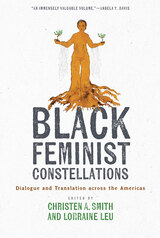
A collection of essays, interviews, and conversations by and between scholars, activists, and artists from Latin America and the Caribbean that paints a portrait of Black women's experiences across the region.
Black women in Latin America and the Caribbean suffer a triple erasure: as Black people, as women, and as non-English speakers in a global environment dominated by the Anglophone North. Black Feminist Constellations is a passionate and necessary corrective. Focused on and written by Black women of the southern Americas, the original works composing this volume make legible the epistemologies that sustain radical scholarship, art, and political organizing by Black women everywhere.
In essays, poems, and dialogues, the writers in Black Feminist Constellations reimagine liberation from the perspectives of radical South American and Caribbean Black women thinkers. The volume’s methodologically innovative approach reflects how Black women come together to theorize the world and challenges the notion that the university is the only site where knowledge can emerge. A major work of intellectual history, Black Feminist Constellations amplifies rarely heard voices, centers the uncanonized, and celebrates the overlooked work of Black women.

A Black-Jewish dialogue lifts a veil on these groups’ unspoken history, shedding light on the challenges and promises facing American democracy from its inception to the present
In this uniquely structured conversational work, two scholars—one of African American politics and religion, and one of contemporary American Jewish culture—explore a mystery: Why aren't Blacks and Jews presently united in their efforts to combat white supremacy? As alt-right rhetoric becomes increasingly normalized in public life, the time seems right for these one-time allies to rekindle the fires of the civil rights movement.
Blacks and Jews in America investigates why these two groups do not presently see each other as sharing a common enemy, let alone a political alliance. Authors Terrence L. Johnson and Jacques Berlinerblau consider a number of angles, including the disintegration of the “Grand Alliance” between Blacks and Jews during the civil rights era, the perspective of Black and Jewish millennials, the debate over Louis Farrakhan and the Nation of Islam, and the Israel-Palestine conflict.
Ultimately, this book shows how the deep roots of the Black-Jewish relationship began long before the mid-twentieth century, changing a narrative dominated by the Grand Alliance and its subsequent fracturing. By engaging this history from our country’s origins to its present moment, this dialogue models the honest and searching conversation needed for Blacks and Jews to forge a new understanding.
The Roman Catholic Church's first significant legislative enactment on the nature and role of the Catholic university, the apostolic constitution Ex corde Ecclesiae (1990) grew out of thirty years of dialogue between ecclesiastical authorities and academic representatives. The final document affirms the explicit Catholic identity of Catholic educational institutions and outlines provisions for maintaining that identity; the questions of how to implement its provisions have in turn created the need for more dialogue and examination. In this volume, distinguished scholars and legal experts define the key questions and explore the future implications of Ex corde for American Catholic colleges and universities.
The assertion of the Catholic identity of Catholic institutions of higher education prompts the contributors to examine the definition of Catholic education as a special synthesis of the religious and the academic, of faith and reason; and to discuss corollary issues such as secularization; the counter-cultural features of Catholic education; and the great diversity of such schools in the United States and of their sponsoring religious orders. The contributors probe the schools' relationships with the Church hierarchy, exploring in particular the role of the bishops, the degree of autonomy from ecclesiastical control, and questions of academic freedom. They also consider specific legal issues that American Catholic colleges must face, including recognition of student groups, tenure and promotion decisions, governance, student and faculty conduct, and the relationship between canon and civil law, including compliance with national and local civil rights provisions. This volume also includes the complete text in English of Ex corde Ecclesiae and the preliminary draft of ordinances from the Ex corde Ecclesiae Implementation Committee of the National Conference of Catholic Bishops.
Appearing at a time when universities must face major issues of their own identity and governance, this volume will be of interest to all faculty and administrators, diocesan authorities and legal counsel, and everyone concerned with the future of Catholic higher education.
In The Chekhovian Intertext Lyudmila Parts explores contemporary Russian writers’ intertextual engagement with Chekhov and his myth. She offers a new interpretative framework to explain the role Chekhov and other classics play in constructing and maintaining Russian national identity and the reasons for the surge in the number of intertextual engagements with the classical authors during the cultural crisis in post-perestroika Russia.
The book highlights the intersection of three distinct concepts: cultural memory, cultural myth, and intertextuality. It is precisely their interrelation that explains how intertextuality came to function as a defense mechanism of culture, a reaction of cultural memory to the threat of its disintegration.
In addition to offering close readings of some of the most significant short stories by contemporary Russian authors and by Chekhov, as a theoretical case study the book sheds light on important processes in contemporary literature: it explores the function of intertextuality in the development of Russian literature, especially post-Soviet literature; it singles out the main themes in contemporary literature, and explains their ties to national cultural myths and to cultural memory. The Chekhovian Intertext may serve as a theoretical model and impetus for examinations of other national literatures from the point of view of the relationship between intertextuality and cultural memory.
Evangelium Vitae, or "The Gospel of Life," Pope John Paul II's 1995 encyclical, addresses practical moral questions that touch on the sacredness of human life: abortion, euthanasia and assisted suicide, and capital punishment. Tackling major moral and cultural ideas, the Pope urged "all men and women of good will" to embrace a "culture of life" instead of the prevailing "culture of death." In this book, scholars from a wide range of disciplines—law, medicine, philosophy, and theology—and various religious perspectives discuss and interpret the Pope's teachings on these complex moral issues.
The opening essays establish a context for the encyclical in the moral thought of John Paul II and examine issues of methodology and ecclesiology. A second group considers the themes of law and technology, which are crucial to the way the encyclical views the specific matters of life and death. The final section turns to the specific topics of abortion, euthanasia, assisted suicide, medical experimentation, and capital punishment.
Seeking to promote discussion between the ideas of the encyclical and other points of view, this volume does not attempt to endorse Evangelium Vitae but rather to illustrate its relevance to both private choice and public policy. It will serve as a foundation for further dialogue and allow others to approach the pontiff's thought with new awareness and insight.

Novelists have individually distinctive ideas of dialogue, Aaron Fogel argues. In this analysis of Conrad's narrative craft he explores--with broad implications--the theory and uses of dialogue.
Conrad's was a distinctive reading of the English language conditioned by his particular idea of forced speech and forced writing. Fogel shows how Conrad shaped ideas and events and interpreted character and institutions by means of dialogues representing not free exchange but various forms of forcing another to respond. He applied this format not only to the obvious political contexts, such as inquisition or spying, but also to seemingly more private relations, such as marriage, commerce, and storytelling. His idea of dialogue shaded the meanings he gave to words even to characters' names. Conrad is particularly interested in scenes in which a speech-forcer is surprised, repudiated, or punished. Fogel concludes that Conrad increasingly saw the punishment of the speech-forcer as classically related to Oedipus inquiries, in which the provoked answers rebound upon and destroy the forcer. This punishment is--as Shakespeare, Scott, and Wordsworth also dramatically intuited--the classical Oedipal dialogue scene.
Fogel's analysis ranges widely over Conrad's fiction but focuses especially on Nostromo, The Secret Agent, and Under Western Eyes. His readings offer a balanced critique of Mikhail Bakhtin's theories about dialogic. Conrad's novels have many of the features Bakhtin identified as dialogical; but he was preoccupied with coercion in dialogue form. Fogel proposes that to understand this form is to begin to reconsider our political and aesthetic assumptions about what dialogue is or ought to be.
This volume presents English translations of all of Nogarola's extant works and highlights just how daring and original her convictions were. In her letters and orations, Nogarola elegantly synthesized Greco-Roman thought with biblical teachings. And striding across the stage in public, she lectured the Veronese citizenry on everything from history and religion to politics and morality. But the most influential of Nogarola's works was a performance piece, Dialogue on Adam and Eve, in which she discussed the relative sinfulness of Adam and Eve—thereby opening up a centuries-long debate in Europe on gender and the nature of woman and establishing herself as an important figure in Western intellectual history. This book will be a must read for teachers and students of Women's Studies as well as of Renaissance literature and history.
The participle in its title—Constructing—acknowledges that any articulation of nineteenth-century religion is never just a work of the past: scholars also actively construct religion as their disciplinary assumptions (and indeed personal and lived investments) shape their research and findings. Constructing NineteenthCentury Religion newly analyzes the diverse ways in which religion was debated and deployed in a wide range of nineteenthcentury texts and contexts. While focusing primarily on nineteenthcentury Britain, the collection also contributes to the increasingly transnational and transcultural outlook of postsecular studies, drawing connections between Britain and the United States, continental Europe, and colonial India.
Carrere elucidates the paradoxical spiritual truth that salvation lies not in an escape from humanity, but in embracing it. An interdisciplinary tour de force, this book will appeal to anyone interested in philosophy, psychology, religion, or cultural anthropology.
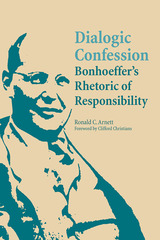
In this landmark volume of contemporary communication theory, Ronald C. Arnett applies the metaphor of dialogic confession—which enables historical moments to be addressed from a confessed standpoint and through a communicative lens—to the works of German theologian Dietrich Bonhoeffer, who pointed to an era of postmodern difference with his notion of "a world come of age." Arnett’s interpretations of Bonhoeffer’s life and scholarship in contention with Nazi dominance offer implications for a dialogic confession that engages the complexity of postmodern narrative contention.
Rooted in classical theory, the field of communication ethics is abstract and arguably outmoded. In Dialogic Confession: Bonhoeffer’s Rhetoric of Responsibility, Arnett locates cross-cultural and comparative anchors that not only bring legitimacy and relevance to the field but also develop a conceptual framework that will advance and inspire future scholarship.

Morace analyzes the novels of Malcolm Bradbury and David Lodge together because they provide a dialogue of conflicting views, styles, and forms of the contemporary novel. This dialogue parallels the views of these two British novelists as critics.
Beginning as realists, as novelists of manners, as writers of campus novels, Bradbury and Lodge explore the possibilities and the limitations of realistic writing. Bradbury and Lodge, however, are not only heirs of English literary tradition. Both are also literary critics with a keen interest in recent critical theories. Morace shows us how the debate between Bradbury and Lodge over the nature and purpose of fiction and criticism has found its way into their novels. The realistic conflicts between civilian and military, English and American, pre- and post-Vatican II values gradually give way to an exploration of the semiotics behind such conflicts.
Morace finds Bradbury’s and Lodge’s works far more open-ended than the "doggedly indeterminate fictions" of many contemporary writers. Using Mikhail Bakhtin’s theory of dialogism, he identifies the ways in which language and values simultaneously compete with and support one another in their novels.
This first book-length study of Bradbury or Lodge deals with all of their novels, including Changing Places, How Far Can You Go?, and Small World by Lodge, as well as Bradbury’s The History of Man and Rates of Exchange.
This book articulates an ethics for reading that places primary responsibility for the social influences of a text on the response of its readers.
We write and read as participants in a process through which we negotiate with others whom we must live or work with and with whom we share values, beliefs, and actions. Clark draws on current literary theory, rhetoric, philosophy, communication theory, and composition studies as he builds on this argument.
Because reading and writing are public actions that address and direct matters of shared belief, values, and action, reading and writing should be taught as public discourse. We should teach not writing or reading so much as the larger practice of public discourse—a discourse that sustains the many important communities of which students are and will be active members.

A Dialogue of Voices was first published in 1994. Minnesota Archive Editions uses digital technology to make long-unavailable books once again accessible, and are published unaltered from the original University of Minnesota Press editions.
The work of the Russian theorist Mikhail Bakhtin, particularly his notions of dialogics and genre, has had a substantial impact on contemporary critical practices. Until now, however, little attention has been paid to the possibilities and challenges Bakhtin presents to feminist theory, the task taken up in A Dialogue of Voices. The original essays in this book combine feminism and Bakhtin in unique ways and, by interpreting texts through these two lenses, arrive at new theoretical approaches. Together, these essays point to a new direction for feminist theory that originates in Bakhtin-one that would lead to a feminine être rather than a feminine écriture.
Focusing on feminist theorists such as Hélène Cixous, Teresa de Lauretis, Julia Kristeva, and Monique Wittig in conjunction with Bakhtin's concepts of dialogism, heteroglossia, and chronotope, the authors offer close readings of texts from a wide range of multicultural genres, including nature writing, sermon composition, nineteenth-century British women's fiction, the contemporary romance novel, Irish and French lyric poetry, and Latin American film. The result is a unique dialogue in which authors of both sexes, from several countries and different eras, speak against, for, and with one another in ways that reveal their works anew as well as the critical matrices surrounding them.Karen Hohne is an independent scholar and artist living in Moorhead, Minnesota. Helen Wussow is an assistant professor of English at Memphis State University.
Sexually liberated and financially independent, Tullia d'Aragona dared to argue that the only moral form of love between woman and man is one that recognizes both the sensual and the spiritual needs of humankind. Declaring sexual drives to be fundamentally irrepressible and blameless, she challenged the Platonic and religious orthodoxy of her time, which condemned all forms of sensual experience, denied the rationality of women, and relegated femininity to the realm of physicality and sin. Human beings, she argued, consist of body and soul, sense and intellect, and honorable love must be based on this real nature.
By exposing the intrinsic misogyny of prevailing theories of love, Aragona vindicates all women, proposing a morality of love that restores them to intellectual and sexual parity with men. Through Aragona's sharp reasoning, her sense of irony and humor, and her renowned linguistic skill, a rare picture unfolds of an intelligent and thoughtful woman fighting sixteenth-century stereotypes of women and sexuality.

Hosted by the Penny W. Stamps School of Art & Design at the
University of Michigan, Decipher:
- Connected emerging and experienced design researchers in academia and beyond
- Gathered and shared best practices, resources, tools, and exemplary research matter
- Helped participants hone research plans and writing skills
- Created opportunities for dialogues to foster mentorship and collaborative connections
Hosted by the Penny W. Stamps School of Art & Design at the University of Michigan, Decipher:
- Connected emerging and experienced design researchers in academia and beyond
- Gathered and shared best practices, resources, tools, and exemplary research matter
- Helped participants hone research plans and writing skills
- Created opportunities for dialogues to foster mentorship and collaborative connections
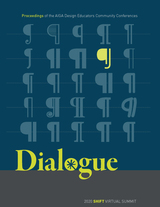
Dialogue is the ongoing series of fully open access proceedings of the conferences and national symposia of the AIGA Design Educators Committee.
Although each conference varies in theme, issues of Dialogue contain papers from DEC conferences which focus on topics that affect design education, research, and professional practice.
Michigan Publishing, the hub of scholarly publishing at the University of Michigan, publishes Dialogue on behalf of the AIGA DEC.

Although each conference varies in theme, issues of Dialogue contain papers from DEC conferences which focus on topics that affect design education, research, and professional practice. Michigan Publishing, the hub of scholarly publishing at the University of Michigan, publishes Dialogue on behalf of the AIGA DEC.
In 1937 during the Spanish Civil War, Arthur Koestler, a German exile writing for a British newspaper, was arrested by Nationalist forces in Málaga. He was then sentenced to execution and spent every day awaiting death—only to be released three months later under pressure from the British government. Out of this experience, Koestler wrote Darkness at Noon, his most acclaimed work in the United States, about a man arrested and executed in a Communist prison.
Dialogue with Death is Koestler’s riveting account of the fall of Málaga to rebel forces, his surreal arrest, and his three months facing death from a prison cell. Despite the harrowing circumstances, Koestler manages to convey the stress of uncertainty, fear, and deprivation of human contact with the keen eye of a reporter.
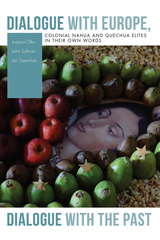
In each chapter a particular document is transcribed exactly as it appears in the original manuscript or colonial printed document, with the editor placing it in historical context and considering the degree of European influence. These texts show the nobility through documents they themselves produced or caused to be produced—such as wills, land deeds, and petitions—and prioritize indigenous ways of expression, perspectives, and concepts. Together, the chapters demonstrate that native elites were independent actors as well as agents of social change and indigenous sustainability in colonial society. Additionally, the volume diversifies the commonly homogenous term “cacique” and recognizes the differences in elites throughout Mesoamerica and the Andes.
Showcasing important and varied colonial genres of indigenous writing, Dialogue with Europe, Dialogue with the Past reveals some of the realities, needs, strategies, behaviors, and attitudes associated with the lives of the elites. Each document and its accompanying commentary provide additional insight into how the nobility negotiated everyday life. The book will be of great interest to students and researchers of Mesoamerican and Andean history, as well as those interested in indigenous colonial societies in the Spanish Empire.
Contributors: Agnieszka Brylak, Maria Castañeda de la Paz, Katarzyna Granicka, Gregory Haimovich, Anastasia Kalyuta, Julia Madajczak, Patrycja Prządka-Giersz
In three chapters, French takes up in turn the narrator and narrative points of view, the author’s use of inserted narratives, and three modes of interaction French calls Monologue, Dialogue, and Dialogical Living.
“It’s a pleasure to read an introduction to science and Christian belief that is both erudite and accessible. McGrath’s new book is rich with personal examples, biographies of famous scientists and theologians, and effective refutations of their detractors. This invitation to move forward from a bifurcated to an expansive view of reality is recommended for all who seek an ‘integrated understanding’ of science and Christian faith.” —Philip Clayton, editor of The Oxford Handbook of Religion and Science
In this exceptional volume, leading theologian Alister McGrath writes for scientists with an interest in theology, and Christians and theologians who are aware of the importance of the natural sciences. A scene-setting chapter explores the importance of the human quest for intelligibility. The focus then moves to three leading figures who have stimulated discussion about the relationship between science and theology in recent years: Charles Coulson, an Oxford professor of theoretical chemistry who was also a prominent Methodist lay preacher; Thomas F. Torrance, perhaps the finest British theologian of the twentieth-century; and John Polkinghorne, a theoretical physicist and theologian.
The final section of the book features six “parallel conversations” between science and theology, which lay the groundwork for the kind of enriched vision of reality the author hopes to encourage. Here, we are inspired to enjoy individual aspects of nature while seeking to interpret them in the light of deeper revelations about our gloriously strange universe.
Framed Narratives was first published in 1985. Minnesota Archive Editions uses digital technology to make long-unavailable books once again accessible, and are published unaltered from the original University of Minnesota Press editions.
The work of French philosophe Denis Diderot (1713-1784) has inspired conflicting reactions in those who encounter him. Diderot has been admired and despised; he has moved his readers and irritated them - often at the same time. His work continually shifts between mutually exclusive positions - neither of which provides an entirely satisfactory answer to the question at hand, yet neither of which can be disregarded. The nature of these paradoxes has been the fundamental problem in Diderot, a problem that his interpreters have approached by imagining synthetic perspectives or frames within which the paradoxes could be resolved.
In Framed Narratives, Jay Caplan focuses on the problem of framing in and of Diderot. He proposes an interpretive model that draws upon the notion of dialogue developed by Mikhail Bakhtin. For Bakhtin, no utterance can be reduced to a univocal meaning; one's discourse is always marked by other voices. In Diderot, Caplan shows, the narrative device of the tableau engages the reader (or beholder) in a dialogic relationship with the author and the characters. Diderot defines the players of those roles as members of a family, one of whom is always missing, and that sacrificial relationship becomes an integral part of the text. Caplan then uses the concept of the tableau to interpret the rhetoric of gender, genre, and pathos in Diderot's works for and about the theater, his novel The Nun, the philosophical dialogue D'Alembert's Dream,and his correspondence.
What emerges from these readings is not only an interpretation of certain texts, but a description of Diderot's—and, by implication, early bourgeois—poetics. Framed Narratives is, in addition, one of the first attempts to rely upon Bakhtin's concepts in the interpretation of specific texts, in this case the work of an essentially dialogic writer. A socio-historical supplement to Framed Narratives is provided in Jochen Schulte-Sasse's afterword.
Explores the conflicts and challenges facing older and younger feminist scholars.
In universities and colleges across the country, feminists are debating their histories and future legacies, often expressing these controversies in generational terms. Some older, second wave feminists accuse younger ones of being careerist, overly theoretical, insufficiently political, and not grateful enough to previous generations. Some third wave feminists consider their foremothers naive, universalizing, or elitist, resentful of deviations from their established plans and improperly wielding their power. Generations addresses these divisions and impasses through sophisticated analyses of the challenges of “passing the torch.”
Generations is composed of essays from academic women at various professional stages-from established scholars to junior professors to graduate students. Some are concerned with telling intergenerational feminist histories based on both research and experience. Others describe difficulties faced by feminists of all ages in the academy today. A final cluster considers issues in the highly charged convergence of feminist theory and postmodernism. The promise of feminisms yet to come can be found in these pages, alongside some of the most resonant and important feminist voices of the last two decades. Generations both complicates and enlivens the transmission and rebirth of feminist knowledges from one generation to another. Contributors: Diane Elam, U of Wales; Elizabeth Francis, Brown U; Linda Frost, U of Alabama; Jane Gallop, U of Wisconsin; Dana Heller, Old Dominion U; Jane Kalbfleisch; Jeanne Marecek, Swarthmore College; Nancy K. Miller, CUNY; Mona Narain, Otterbein College; Angela M. S. Nelson, Bowling Green State U; Judith Newton, U of California, Davis; Rebecca Dakin Quinn; Gita Rajan, Fairfield U; Judith Roof, Indiana U; Theresa Ann Sears, U of Missouri at St. Louis; Ruthe Thompson; Michele Wallace, CUNY; Barbara A. White, U of New Hampshire; Lynda Zwinger, U of Arizona.
Through a stimulating dialogue, two old friends trace the history of the idea of India through digressions, anecdotes, and observations. Historian Romila Thapar and theorist Gayatri Chakravorty Spivak reflect on the challenges posed by essentialism and exclusion whenever cultures attempt to define and assert themselves. They also emphasize the role of education in fostering a more inclusive and accurate understanding of the nation’s complex history. Their conversation revolves around the narratives that have shaped Indian identity—from Vedic times to the present—and those whose voices and visions for this land remain unheard and unseen.
Ranging from nationalism to religion and beyond, TheIdea of India discusses an urgent question: What does it mean to be an Indian in contemporary society?
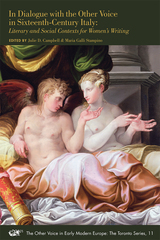
—Elissa Weaver
Professor of Italian, Emerita, University of Chicago
“A civil but honest dialogue…As illuminating as it is fascinating.”
—Ayaan Hirsi Ali
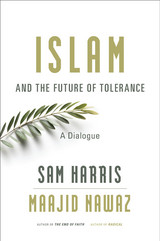
Is Islam a religion of peace or war? Is it amenable to reform? Why do so many Muslims seem to be drawn to extremism? And what do words like jihadism and fundamentalism really mean? In a world riven by misunderstanding and violence, Sam Harris—a famous atheist—and Maajid Nawaz—a former radical—demonstrate how two people with very different religious views can find common ground and invite you to join in an urgently needed conversation.
“How refreshing to read an honest yet affectionate exchange between the Islamist-turned-liberal-Muslim Maajid Nawaz and the neuroscientist who advocates mindful atheism, Sam Harris…Their back-and-forth clarifies multiple confusions that plague the public conversation about Islam.”
—Irshad Manji, New York Times Book Review
“It is sadly uncommon, in any era, to find dialogue based on facts and reason—but even more rarely are Muslim and non-Muslim intellectuals able to maintain critical distance on broad questions about Islam. Which makes Islam and the Future of Tolerance something of a unicorn…Most conversations about religion are marked by the inability of either side to listen, but here, at last, is a proper debate.”
—New Statesman
Israeli Palestinians make up about 20 percent of Israeli citizens and, for the most part, live separate lives from their Jewish neighbors—lives fraught with political, social, and economic divisions. Attempts to initiate interactions between Palestinians and Jews outside official frameworks have often dissolved under political and economic pressures.
One lasting effort began when the School for Peace was established in 1976 in Neve Shalom/Wahat al-Salam, a joint model village set up in 1972 by a group of Jewish and Palestinian Israelis. Since its inception, the School for Peace has conducted hundreds of encounter activities to help create a more authentic and egalitarian dialogue between the Palestinian minority and Jewish majority.
This volume is the product of the insight and experiences of both Arabs and Jews at the School for Peace over the last two decades. Essays address topics such as strategies for working with young people, development of effective learning environments for conflict resolution, and language as a bridge and as an obstacle. It is the first book to provide a model for dialogue between Palestinians and Jews that has been used successfully in other ethnic and national conflicts, and should be required reading for everyone interested in Jewish-Palestinian relations.
Avoiding the male-authored model of competing orations, French and Italian women of the Renaissance framed their dialogues as informal conversations, as letters with friends that in turn became epistles to a wider audience, and even sometimes as dramas. No other study to date has provided thorough, comparative view of these works across French, Italian, and Latin. Smarr's comprehensive treatment relates these writings to classical, medieval, and Renaissance forms of dialogue, and to other genres including drama, lyric exchange, and humanist invective -- as well as to the real conversations in women's lives -- in order to show how women adapted existing models to their own needs and purposes.
Janet Levarie Smarr is Professor of Theatre and Italian Studies at the University of California, San Diego.
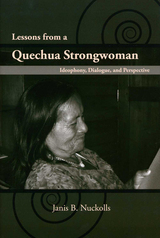
This book is a fascinating look at ideophones—words that communicate succinctly through imitative sound qualities. They are at the core of Quechua speakers’ discourse—both linguistic and cultural—because they allow agency and reaction to substances and entities as well as beings. Nuckolls shows that Luisa Cadena’s utterances give every individual, major or minor, a voice in her narrative. Sometimes as subtle as a barely felt movement or unintelligible sound, the language supports an amazingly wide variety of voices.
Cadena’s narratives and commentaries on everyday events reveal that sound imitation through ideophones, representations of dialogues between humans and nonhumans, and grammatical distinctions between a speaking self and an other are all part of a language system that allows for the possibility of shared affects, intentions, moral values, and meaningful, communicative interactions between humans and nonhumans.
The essays gathered here each examine vital aspects of Plato’s many methods, considering his dialogues in relation to Thucydides and Homer, narrative strategies and medical practice, images and metaphors. They offer surprising new research into such much-studied works as The Republic as well as revealing views of lesser-known dialogues like the Cratylus and Philebus. With reference to thinkers such as Heidegger, Gadamer, and Sartre, the authors place the Platonic dialogues in an illuminating historical context. Together, their essays should reinvigorate the scholarly examination of the way Plato’s dialogues “work”—and should prompt a reconsideration of how the form of Plato’s philosophical writing bears on the Platonic conception of philosophy.
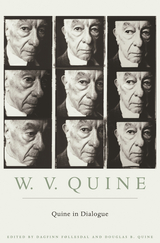
Over the course of his life, W. V. Quine, one of the twentieth century’s great philosophers, engaged and inspired, interviewed and critiqued countless scholars, critics, and students. The qualities that distinguished him in any discussion are on clear display in this volume, which features him in dialogue with his predecessors and peers, his critics and students.
The volume begins with a number of interviews Quine gave about his perspectives on twentieth-century logic, science and philosophy, the ideas of others, and philosophy generally. Also included are his most important articles, reviews, and comments on other philosophers, from Rudolf Carnap to P. F. Strawson. The book, which contains many previously unpublished manuscripts, concludes with a selection of small pieces, written for a broader public, that give a glimpse of the philosopher’s wide interests, his sense of humor, and his warm relations to friends. The result is a wide-ranging, in-depth, and finely nuanced portrait of the humanity underlying this great twentieth-century thinker’s philosophy.

Chester Pierce was born in 1927; by 1952 he was a graduate of the Harvard Medical School. He went on to become president of the American Board of Psychiatry and Neurology and president of the American Orthopsychiatric Association. He was elected to the Institute of Medicine at the National Academy of Sciences and had an annual research seminar named after him by the National Medical Association.
Founding chair of the Black Psychiatrists of America, Pierce has profoundly affected American psychiatry and the thinking of African American psychiatrists during the last two decades. While recognized for his substantive scholarship on coping with extreme environments such as the South Pole, he is probably best known for his theories regarding how blacks cope with racism in the United States.
In Race and Excellence, Ezra Griffith, also an African American professor of psychiatry, engages Pierce in a dialogue with the goal of clarifying the inter-connection between the personal and the professional in the lives of both black scholars. The text melds the story of Pierce's life and his achievements, with particular attention to his theories about the predictable nature of racist behavior and the responses of oppressed groups. Having earned his doctorate a generation after Pierce, Griffith approaches his conversation with Pierce as a face-to-face meeting between mentor and student. Retelling Pierce's life story ultimately becomes for Griffith an exercise in conceptualizing his own experience. As he writes, “I never just wanted to tell Chet's story; I wanted to work his story out, to measure it, to try it on, to figure out which parts are good for me and other blacks so earnestly seeking heroes.”
Considered the most important work of Walter Ong's career, Ramus, Method, and the Decay of Dialogue is an elegant review of the history of Ramist scholarship and Ramus's quarrels with Aristotle. A key influence on Marshall McLuhan, with whom Ong enjoys the status of honorary guru among technophiles, this challenging study remains the most detailed account of Ramus's method ever published. Out of print for more than a decade, this book—with a new foreword by Adrian Johns—is a canonical text for enthusiasts of media, Renaissance literature, and intellectual history.
Aaron T. Wolf has spent his career mediating such conflicts, both in the U.S. and around the world. He quickly learned that in negotiations, people are not automatons, programed to defend their positions, but are driven by a complicated set of dynamics—from how comfortable (or uncomfortable) the meeting room is to their deepest senses of self. What approach or system of understanding could possibly untangle all these complexities? Wolf’s answer may be surprising to Westerners who are accustomed to separating religion from science, rationality from spirituality.
Wolf draws lessons from a diversity of faith traditions to transform conflict. True listening, as practiced by Buddhist monks, as opposed to the “active listening” advocated by many mediators, can be the key to calming a colleague’s anger. Alignment with an energy beyond oneself, what Christians would call grace, can change self-righteousness into community concern. Shifting the discussion from one about interests to one about common values—both farmers and environmentalists share the value of love of place—can be the starting point for real dialogue.
As a scientist, Wolf engages religion not for the purpose of dogma but for the practical process of transformation. Whether atheist or fundamentalist, Muslim or Jewish, Quaker or Hindu, any reader involved in difficult dialogue will find concrete steps towards a meeting of souls.
The Strange Music of Social Life presents a dialogue on dialogic sociology, explored through the medium of music. Sociologist and composer Michael Mayerfeld Bell presents an argument that both sociology and classical music remain largely in the grip of a nineteenth-century totalizing ambition of prediction and control. He provides the refreshing approach of "strangency" to explain a sociology that tries to understand not only the regularities of social life but also the social conditions in which people do what we do not expect.
Nine important sociologists and musicians respond-often vigorously-to the conversation Bell initiates by raising pivotal questions. The Strange Music of Social Life concludes with Bell's reply to those responses and offers new insight into sociology and music sociology.

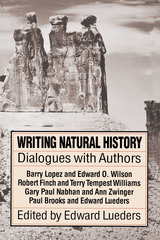
Writing Natural History is the edited record of four public dialogues held at the University of Utah in 1988 between eminent writers in the fields of natural history. In these interchanges the writers discussed their traditions, perspectives, values, purposes, techniques, and personal insights. Their conversations, like their work, link the sciences with the humanities in surprising ways, enhancing our understanding and appreciation of both. This volume maintains the vitality of the spoken dialogues and conveys a lively sense of each speaker’s concern with the processes of the natural world and our human position in it.
Half of the authors began as professionals in the natural sciences before becoming recognized for their literary skills; the other half are established writers whose works reflect their vital human affinity with and respect for nature. Writing Natural History will appeal to all readers involved in conservation, nature study, creative writing, environmental issues, the natural sciences, the outdoors, and the ecological politics of Earth.
Authors dialogues feature Barry Lopez and Edward O. Wilson, Robert Finch and Terry Tempest Williams, Gary Paul Nabhan and Ann Zwinger, Paul Brooks and Edward Lueders.
READERS
Browse our collection.
PUBLISHERS
See BiblioVault's publisher services.
STUDENT SERVICES
Files for college accessibility offices.
RECENTLY PUBLISHED


UChicago Accessibility Resources
home | accessibility | search | about | contact us
BiblioVault ® 2001 - 2024
The University of Chicago Press