
 A SCHOLARLY BOOK REPOSITORY
7 start with C start with C

The book is the first comprehensive study of the American copper industry to include labor markets, unionism, and labor relations as an integral part of its focus. It also undertakes a careful examination of the influences exerted by geography and geology in the shaping of the industry.
The study begins with the formation, development, and later histories of all the principal copper producers, their major business and labor policies, technical innovations, attempts at diversification, and foreign ventures. On the labor side, the book examines the beginnings of unionism in the 1880s; the emergence of the Western Federation of Miners in 1893; the later appearance of the International Union of Mine, Mill and Smelter Workers in 1916. The eventual takeover of the Mine Mill by the Steel workers in 1967 and the reasons for the eventual collapse of the pattern system in 1983 are also carefully considered.
The study emphasizes the role of strategic innovations in shaping American copper history, most prominently in the successive development of underground block-caving and open-pit mining; concentration and flotation; and solvent extraction and electrowinning. The study concludes with an evaluation of the lessons supplied by the past and the prospects for the future of the industry.
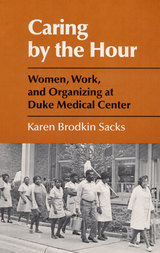
In addition to an analysis of the dynamics of women's activism, Caring by the Hour provides a comparative study of Duke Medical Center's treatment of both black and white female workers. Sacks links patterns of racial segregation in clerical jobs to the relationship between race, working conditions, and unequal opportunities for black and white women, and to their differing work cultures and patterns of public militance. She also discusses recent changes in service, clerical, and professional work and their effects on white and black women, placing them in the context of national changes in health funding and policies.

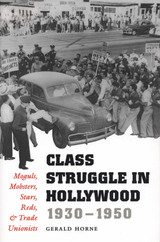
As World War II wound down in 1945 and the cold war heated up, the skilled trades that made up the Conference of Studio Unions (CSU) began a tumultuous strike at the major Hollywood studios. This turmoil escalated further when the studios retaliated by locking out CSU in 1946. This labor unrest unleashed a fury of Red-baiting that allowed studio moguls to crush the union and seize control of the production process, with far-reaching consequences.
This engrossing book probes the motives and actions of all the players to reveal the full story of the CSU strike and the resulting lockout of 1946. Gerald Horne draws extensively on primary materials and oral histories to document how limited a "threat" the Communist party actually posed in Hollywood, even as studio moguls successfully used the Red scare to undermine union clout, prevent film stars from supporting labor, and prove the moguls' own patriotism.
Horne also discloses that, unnoticed amid the turmoil, organized crime entrenched itself in management and labor, gaining considerable control over both the "product" and the profits of Hollywood. This research demonstrates that the CSU strike and lockout were a pivotal moment in Hollywood history, with consequences for everything from production values, to the kinds of stories told in films, to permanent shifts in the centers of power.
By focusing on the daily challenges and experiences of the Chinese workers at the corporation, Ma examines how life was actually lived by people navigating between practical and ideological concerns. She illustrates how the inhabitants of Manchukuo navigated social opportunities, economic depression, educational reforms, fascist rule, commercial interests, practical daily needs, and more—and reveals ways in which these conflicting preoccupations sometimes manifested as tension and ambiguity on screen. In the battle between repression and expression, these Chinese actors, directors, writers, and technicians adopted defensive and opportunistic tactics. They did so in colonial spaces, often rejecting modernist representations of Manchukuo in favor of venerating traditional Chinese culture and values. The expertise, skills, and professional networks they developed extended well beyond the occupation into the postwar period, and may individuals reestablished themselves as cinema professionals in the socialist era.
At the birth of the Internet Age, computer technologists in small, aggressive software development companies became part of a unique networked occupational community. They were creative, team-oriented, and enthusiastic workers who built "boundaryless careers," hopping from one employer to another.
In his absorbing ethnography The Company We Keep, sociologist Daniel Marschall immerses himself in IntenSivity, one such technological workplace. Chronicling the employees' experiences, Marschall examines how these workers characterize their occupational culture, share values and work practices, and help one another within their community. He sheds light on the nature of this industry marked by highly skilled jobs and rapid technological change.
The experiences at IntenSivity are now mirrored by employees at Facebook and thousands of other cutting-edge, high-tech start-up firms. The Company We Keep helps us understand the emergence of virtual work communities and the character of the contemporary labor market at the level of a small enterprise.
READERS
Browse our collection.
PUBLISHERS
See BiblioVault's publisher services.
STUDENT SERVICES
Files for college accessibility offices.
RECENTLY PUBLISHED







UChicago Accessibility Resources
home | accessibility | search | about | contact us
BiblioVault ® 2001 - 2024
The University of Chicago Press