
 A SCHOLARLY BOOK REPOSITORY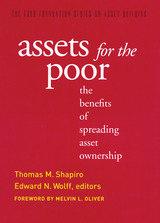
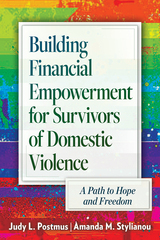
Curiously, little of the research on domestic violence has sought to either fully understand the impact of financial abuse or to determine which intervention strategies are most effective for the financial empowerment of survivors. Building Financial Empowerment for Survivors of Domestic Violence aims to address this critical knowledge gap by providing those who work with survivors of domestic violence with practical knowledge on how to empower the financial well-being and stability of survivors. Specifically, every practitioner, human service provider, criminal justice practitioner, financial manager, and corporate supervisor should be screening the women they encounter for economic abuse, and when such abuse is found, they should work with the women toward developing financial safety plans and refer survivors to financial empowerment programs to assist survivors to become free from abuse.

Nichols uses money in myriad forms—a grandfather‘s silver dollar, stocks and bonds, salaries, pallets of coins at the U.S. Mint, on-the-job dealings with coin collectors—as touchstones for reflections on relationships, motives, and a career "like one of those moving walkways in airports." His father's health is measured, tested, and evaluated in part by the health of his finances; at the same time, the turmoil and mystery surrounding both money and relationships are reflected in this memorable story.
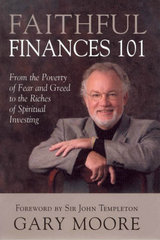
Faithful Finances 101 is a first-person narrative by an outspoken advocate of faith-based investing. A senior vice president of investments at Paine Webber before founding his own investment firm as "counsel to ethical and spiritual investors," Gary Moore warns that much of the economic advice emanating from some popular and influential evangelical authors and speakers is based on scare tactics and distortions of what the Bible has to say about finances. He draws on fifty years of studying the Bible, politics, and economics and presents insights for those who want to be faithful in their finances—to use 100 percent of the time, talent, and treasure with which they have been entrusted for the glory of God as well as for the benefit of others and themselves, and not just give 10 percent of their incomes to the church.
***Winner of an English PEN Award 2021***
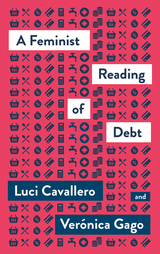
In this sharp intervention, authors Lucí Cavallero and Verónica Gago defiantly develop a feminist understanding of debt, showing its impact on women and members of the LGBTQ+ community and examining the relationship between debt and social reproduction.
Exploring the link between financial activity and the rise of conservative forces in Latin America, the book demonstrates that debt is intimately linked to gendered violence and patriarchal notions of the family. Yet, rather than seeing these forces as insurmountable, the authors also show ways in which debt can be resisted, drawing on concrete experiences and practices from Latin America and around the world.
Featuring interviews with women in Argentina and Brazil, the book reveals the real-life impact of debt and how it falls mainly on the shoulders of women, from the household to the wider effects of national debt and austerity. However, through discussions around experiences of work, prisons, domestic labour, agriculture, family, abortion and housing, a narrative of resistance emerges.
Translated by Liz Mason-Deese.

This 2nd edition updates changes in online banking, smartphone apps, credit cards, and student loans but retains basic financial information that ensures students won’t learn about money the hard way. A chapter for parents has been added so they can help their students become financially knowledgeable, and it includes advice for parents about making decisions related to college costs. In addition, a chapter for grandparents contains suggestions on how to help college-bound grandchildren—financially and in other ways—without endangering their own financial security. A basic investments chapter is included for first-time investors.
The intent of Financial Basics is to enhance student readers’ financial knowledge and provide money-management options for finding their own best way to become masters of their money.
In “Hatching Ruin,” Charles H. Gold provides a complete description of Samuel L. Clemens’s business relationships with Charles L. Webster and James W. Paige during the 1880s. Gold analyzes how these relationships affected Clemens as a person and an artist, most notably in A Connecticut Yankee in King Arthur’s Court.
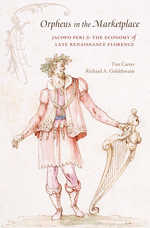
The Florentine musician Jacopo Peri (1561-1633) is known as the composer of the first operas--they include the earliest to survive complete, Euridice (1600), in which Peri sang the role of Orpheus. A large collection of recently discovered account books belonging to him and his family allows for a greater exploration of Peri's professional and personal life. Richard Goldthwaite, an economic historian, and Tim Carter, a musicologist, have done much more, however, than write a biography: their investigation exposes the remarkable value of such financial documents as a primary source for an entire period.
This record of Peri's wide-ranging investments and activities in the marketplace enables the first detailed account of the Florentine economy in the late sixteenth and early seventeenth centuries, and also opens a completely new perspective on one of Europe's principal centers of capitalism. His economic circumstances reflect continuities and transformations in Florentine society, and the strategies for negotiating them, under the Medici grand dukes. At the same time they allow a reevaluation of Peri the singer and composer that elucidates the cultural life of a major artistic center even in changing times, providing a quite different view of what it meant to be a musician in late Renaissance Italy.
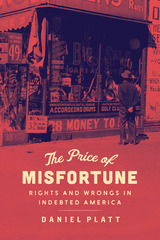
What can be taken from someone who has borrowed money and cannot repay? What do the victims of misfortune owe to their lenders, and what can they keep for themselves? The answers to those questions, immensely important for debtors, creditors, and society at large, have changed over time. The Price of Misfortune examines the cause of debtors’ rights in the modern United States and the struggles of reformers who fought to establish financial freedoms in law.
Daniel Platt shows how, in the wake of the Civil War, a range of advocates drew potent analogies between slavery, imprisonment for debt, and the experiences of wage garnishment and property foreclosure. He traces the ways those analogies were used to campaign for bold new protections for debtors, keeping them secure in their labor, property, and personhood. Yet, as Platt demonstrates, those reforms tended to assume as their ideal borrower someone who was white, propertied, and male. In subsequent decades, the emancipatory promise of debtors’ rights would be tested as women, wage earners, and African Americans seized on their language to challenge other structural inequalities: the dependency of marriage, the exploitation of industrial capitalism, and the oppression of Jim Crow. By reconstructing these forgotten developments—and recovering the experiences of indebted farmwives, sharecroppers, and wage workers—The Price of Misfortune narrates a new history of inequality, coercion, and law amid the early financialization of American capitalism.

Samir Jeraj and Rosie Walker offer the first in-depth case study of the private rental sector in the United Kingdom, exploring the rent-trap injustices in a first-world economy and exposing the powers that conspire to oppose regulation. A quarter of British MPs are landlords; rent strike is almost impossible; and sudden evictions are growing. Nevertheless, drawing on inspiration from movements in the United Kingdom, continental Europe, and elsewhere, The Rent Trap shows how people are starting to fight back against the financial burdens, health risks, and vicious behavior of landlords, working to create a world of fairer, safer housing for all—lessons that extend well beyond the borders of the UK.
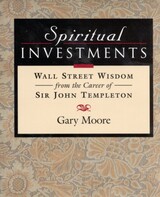
Gathered here are seventeen sound investment principles that will help people make sensible choices for financial security. What is surprising, however, is how applicable these principles are to life.
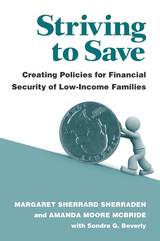
---Tom Shapiro, Brandeis University
book provides an essential corrective to the unidimensional view of poor households as unable and unwilling to save."
---Michael Barr, University of Michigan
READERS
Browse our collection.
PUBLISHERS
See BiblioVault's publisher services.
STUDENT SERVICES
Files for college accessibility offices.
RECENTLY PUBLISHED





UChicago Accessibility Resources
home | accessibility | search | about | contact us
BiblioVault ® 2001 - 2024
The University of Chicago Press