
 A SCHOLARLY BOOK REPOSITORY
51 start with A start with A
The guide includes 65 common academic literacy terms and explores how they relate to genres, writing conventions, and language use. Each entry briefly defines the term, identifies variations and tensions about its use across disciplines, provides examples, and includes reflection questions. An appendix lists further readings for each entry.
Unique to this volume are comments featuring the experiences of the graduate students who wrote the entries, comments that bring each entry to life and build a bridge to graduate student readers.
William Clark argues that the research university—which originated in German Protestant lands and spread globally in the nineteenth and twentieth centuries—developed in response to market forces and bureaucracy, producing a new kind of academic whose goal was to establish originality and achieve fame through publication. With an astonishing wealth of research, Academic Charisma and the Origins of the Research University investigates the origins and evolving fixtures of academic life: the lecture catalogue, the library catalog, the grading system, the conduct of oral and written exams, the roles of conversation and the writing of research papers in seminars, the writing and oral defense of the doctoral dissertation, the ethos of "lecturing with applause" and "publish or perish," and the role of reviews and rumor. This is a grand, ambitious book that should be required reading for every academic.
In this passionately argued overview, a longtime activist-scholar takes readers through the changing landscape of academic freedom. From the aftermath of September 11th to the new frontier of blogging, Robert O'Neil examines the tension between institutional and individual interests. Many cases boil down to a hotly contested question: who has the right to decide what is taught in the classroom?
O'Neil shows how courts increasingly restrict professorial judgment, and how the feeble protection of what is posted on the Internet and written in email makes academics more vulnerable than ever. Even more provocatively, O'Neil argues, the newest threats to academic freedom come not from government, but from the private sector. Corporations increasingly sponsor and control university-based research, while self-appointed watchdogs systematically harass individual teachers on websites and blogs. Most troubling, these threats to academic freedom are nearly immune from legal recourse.
Insisting that new concepts of academic freedom, and new strategies for maintaining it are needed, O'Neil urges academics to work together--and across rigid and simplistic divisions between "left" and "right."
This version of the book matches 9780472033324 except it is not packaged with a DVD. All references to the DVD in the text have been replaced with "videos." Video access sold separately on Vitalsource, here: https://www.vitalsource.com/products/videos-to-accompany-academic-interactions-christine-b-feak-susan-m-v9780472003631?term=9780472003631.
The ability to understand and be understood when communicating with professors and with native speakers is crucial to academic success. Academic Interactions focuses on actual academic speaking events, particularly classroom interactions and office hours, and gives students practice improving the ways that they communicate in a college/university setting.
Academic Interactions addresses skills like using names and names of locations correctly on campus, giving directions, understanding instructors and their expectations, interacting during office hours, participating in class and in seminars, and delivering formal and informal presentations. In addition, advice is provided for communicating via email with professors and working in groups with native speakers (including negotiating tasks in groups).
The text uses transcripts from MICASE (the Michigan Corpus of Academic Spoken English) to ensure that students learn the vocabulary and communication strategies that will be most effective in their academic pursuits. Units also feature language use issues like ellipsis, hedging, and apologies.
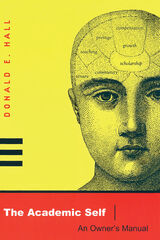
Donald E. Hall offers a self-help book designed for academics, from graduate students to tenured faculty. He helps readers engage in an active process of career management, goal setting, prioritization, and reflection on the norms that constitute what he calls “academic selfhood.” Drawing broadly on the insights of Anthony Giddens’ notions of reflexivity and self-identity, Hall encourages new and seasoned scholars to “own up to” the behaviors, attitudes, and complicities that compromise their professional identities. This book couples all its exhortations with clear, concrete, and practical strategies for responding productively to the many uncertainties of academic life.
Separate chapters of the book examine the textuality of the academic self, profession, academic processes and collegiality. Among the topics candidly discussed are careerism, burnout, procrastination, and insecurity. Throughout the book readers will find anecdotes, real-life examples, and concrete tips for constructing and maintaining a successful career defined on their own terms.
The Academic Self: An Owner’s Manual opens up a new and frank discussion on academic life and academics’ basic responsibility for their own actions and attitudes.

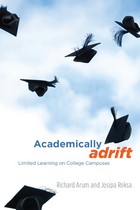
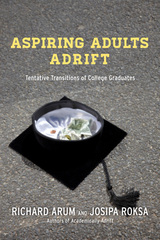
In spite of soaring tuition costs, more and more students go to college every year. A bachelor’s degree is now required for entry into a growing number of professions. And some parents begin planning for the expense of sending their kids to college when they’re born. Almost everyone strives to go, but almost no one asks the fundamental question posed by Academically Adrift: are undergraduates really learning anything once they get there?
For a large proportion of students, Richard Arum and Josipa Roksa’s answer to that question is a definitive no. Their extensive research draws on survey responses, transcript data, and, for the first time, the state-of-the-art Collegiate Learning Assessment, a standardized test administered to students in their first semester and then again at the end of their second year. According to their analysis of more than 2,300 undergraduates at twenty-four institutions, 45 percent of these students demonstrate no significant improvement in a range of skills—including critical thinking, complex reasoning, and writing—during their first two years of college. As troubling as their findings are, Arum and Roksa argue that for many faculty and administrators they will come as no surprise—instead, they are the expected result of a student body distracted by socializing or working and an institutional culture that puts undergraduate learning close to the bottom of the priority list.
Academically Adrift holds sobering lessons for students, faculty, administrators, policy makers, and parents—all of whom are implicated in promoting or at least ignoring contemporary campus culture. Higher education faces crises on a number of fronts, but Arum and Roksa’s report that colleges are failing at their most basic mission will demand the attention of us all.
Faculty members, administrators, and professionals with experience at all levels of higher education offer candid, practical advice to help beginning academics understand matters including:
— The different kinds of institutions of higher learning and expectations of faculty at each.
— The advantages and disadvantages of teaching at four-year colleges instead of research universities.
— The ins and outs of the job market.
— Alternatives to tenure-track, research-oriented positions.
— Salary and benefits.
— The tenure system.
— Pedagogy in both large lecture courses and small, discussion-based seminars.
— The difficulties facing women and minorities within academia.
— Corporations, foundations, and the federal government as potential sources of research funds.
— The challenges of faculty mentoring.
— The impact of technology on contemporary teaching and learning.
— Different types of publishers and the publishing process at university presses.
— The modern research library.
— The structure of university governance.
— The role of departments within the university.
With the inclusion of eight new chapters, this edition of The Academic’s Handbook is designed to ease the transition from graduate school to a well-rounded and rewarding career.
Contributors. Judith K. Argon, Louis J. Budd, Ronald R. Butters, Norman L. Christensen, Joel Colton, Paul L. Conway, John G. Cross, Fred E. Crossland, Cathy N. Davidson, A. Leigh DeNeef, Beth A. Eastlick, Matthew W. Finkin, Jerry G. Gaff, Edie N. Goldenberg, Craufurd D. Goodwin, Stanley M. Hauerwas, Deborah L. Jakubs, L. Gregory Jones, Nellie Y. McKay, Patrick M. Murphy, Elizabeth Studley Nathans, A. Kenneth Pye, Zachary B. Robbins, Anne Firor Scott, Sudhir Shetty, Samuel Schuman, Philip Stewart, Boyd R. Strain, Emily Toth, P. Aarne Vesilind, Judith S. White, Henry M. Wilbur, Ken Wissoker
Contributors. Luis Alvarez, Steven Alvarez, Eladio Bobadilla, Genevieve Carpio, Marcia Chatelain, Ernesto Chávez, Miroslava Chávez-García, Nathan D. B. Connolly, Jeremy V. Cruz, Cathy N. Davidson, Sarah Deutsch, Brenda Elsey, Sylvanna M. Falcón, Michelle Falkoff, Kelly Fayard, Matthew W. Finkin, Lori A. Flores, Kathryn J. Fox, Frederico Freitas, Neil Garg, Nanibaa’ A. Garrison, Joy Gaston Gayles, Tiffany Jasmin González, Cynthia R. Greenlee, Romeo Guzmán, Lauren Hall-Lew, David Hansen, Heidi Harley, Laura M. Harrison, Sonia Hernández, Sharon P. Holland, Elizabeth Q. Hutchison, Deborah Jakubs, Bridget Turner Kelly, Karen Kelsky, Stephen Kuusisto, Magdalena Maczynska, Sheila McManus, Cary Nelson, Jocelyn H. Olcott, Rosanna Olsen, Natalia Mehlman Petrzela, Charles Piot, Bryan Pitts, Sarah Portnoy, Laura Portwood-Stacer, Yuridia Ramirez, Meghan K. Roberts, John Elder Robison, David Schultz, Lynn Stephen, James E. Sutton, Antar A. Tichavakunda, Keri Watson, Ken Wissoker, Karin Wulf
This collection of essays, written by University of Nevada, Reno (UNR) faculty and students, is an examination of the programs and strategies created to support first-generation and other underrepresented student populations. In addition, it serves as a dedication to the families and students whose hopes and dreams include the attainment of a college degree. Readers will gain insight into the framework needed to provide accessible programs and services to a large and diverse student population before, during, and after college graduation as well as first-hand success stories from the students themselves.
Each generation hopes for a better life for their children. Higher education, in particular, has been a dream for many in this country that has been made possible through public and private financial support. Every new generation of college-bound students faces new and evolving challenges, but the fierce dedication and commitment demonstrated in these pages define the key to developing a thriving and diverse institution that helps all students succeed.
The story of American higher education, written with insight and humor, by an acclaimed educator.
“There’s no more important story to be told at this moment in America then why higher education matters. And there’s no more adept and engaging storyteller than Sol Gittleman.” —Larry Tye, New York Times bestselling author of Satchel and Demagogue
“Hardly a day passes without reference to some scandal, fraud, intellectual or moral failure, or other ill associated with American academic institutions,” writes Sol Gittleman in his bracing new book, An Accidental Triumph. “If American higher education is such a failure, why are students and scholars from all over the world still so eager to secure a place in one of these institutions? Is American higher education a disaster or the envy of the world?”
Gittleman confronts this contradiction in this dynamic mix of history, analysis, and personal reflection. An Accidental Triumph tells the engaging story of how American higher education evolved from a patchwork of seminaries in the early nineteenth century into the world’s leader in research by the middle of the twentieth. Gittleman links this fascinating story to his own fifty-year academic career, which coincided with an explosive rise in enrollment, spurred by the GI Bill, and an unparalleled postwar boom in faculty hiring, prompted by massive new federal support for academic research from organizations such as the National Science Foundation.
Writing with authority, frankness, and unfailing wry good humor, Gittleman surveys the triumphs, tragedies, and tensions of the history of American higher education. Despite the relentless criticism, Gittleman finds good reason to remain optimistic about the future of teaching and research at the college and university level in the United States.
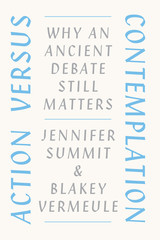
It is truly an ancient debate: Is it better to be active or contemplative? To do or to think? To make an impact, or to understand the world more deeply? Aristotle argued for contemplation as the highest state of human flourishing. But it was through action that his student Alexander the Great conquered the known world. Which should we aim at? Centuries later, this argument underlies a surprising number of the questions we face in contemporary life. Should students study the humanities, or train for a job? Should adults work for money or for meaning? And in tumultuous times, should any of us sit on the sidelines, pondering great books, or throw ourselves into protests and petition drives?
With Action versus Contemplation, Jennifer Summit and Blakey Vermeule address the question in a refreshingly unexpected way: by refusing to take sides. Rather, they argue for a rethinking of the very opposition. The active and the contemplative can—and should—be vibrantly alive in each of us, fused rather than sundered. Writing in a personable, accessible style, Summit and Vermeule guide readers through the long history of this debate from Plato to Pixar, drawing compelling connections to the questions and problems of today. Rather than playing one against the other, they argue, we can discover how the two can nourish, invigorate, and give meaning to each other, as they have for the many writers, artists, and thinkers, past and present, whose examples give the book its rich, lively texture of interplay and reference.
This is not a self-help book. It won’t give you instructions on how to live your life. Instead, it will do something better: it will remind you of the richness of a life that embraces action and contemplation, company and solitude, living in the moment and planning for the future. Which is better? Readers of this book will discover the answer: both.
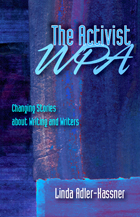
Drawing on recent developments in framing theory and the resurgent traditions of progressive organizers, Linda Adler-Kassner calls upon composition teachers and administrators to develop strategic programs of collective action that do justice to composition’s best principles. Adler-Kassner argues that the “story” of college composition can be changed only when writing scholars bring the wonders down, to articulate a theory framework that is pragmatic and intelligible to those outside the field--and then create messages that reference that framework. In The Activist WPA, she makes a case for developing a more integrated vision of outreach, English education, and writing program administration.
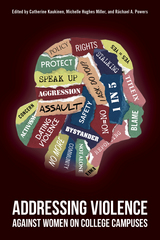
Violence against women on college campuses has remained underreported and often under addressed by both campus security and local law enforcement, as well as campus administrators. The researchers, practitioners, and activists who contribute to this pertinent volume Addressing Violence Against Women on College Campuses examine the extent, nature, dynamic and contexts of violence against women at institutions of higher education.
This book is designed to facilitate an ongoing discussion and provide direction on how best to prevent and investigate violence against women, and intervene to assist victims while reducing the impact of these crimes. Chapters detail the necessary changes and implications that are part of Title IX and other federal legislation and initiatives as well as the effect these changes have had for higher education actors, including campus administrators, victim advocates, and student activists. The contributors also explore the importance of campus efforts to estimate the extent of violence against women; educating young men and women on the nature of sexual and dating violence; and shifting efforts to both make offenders accountable for their crimes and prompt all bystanders to act.
Addressing Violence Against Women on College Campuses urgently argues to make violence prevention is not separate from but rather an integral part of the student experience.
Contributors include: Antonia Abbey, Joanne Belknap, Ava Blustein, Stephanie Bonnes, Alesha Cameron, Sarah L. Cook, Walter S. DeKeseredy. Helen Eigenberg, Kate Fox, Christopher P. Krebs, Jennifer Leili, Christine Lindquist, Sarah McMahon, Caitlyn Meade, Christine Mouton, Matt R. Nobles, Callie Marie Rennison, Meredith M. Smith, Carmen Suarez, and the editors.
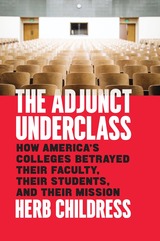
Welcome to the life of the mind in the gig economy. Over the past few decades, the job of college professor has been utterly transformed—for the worse. America’s colleges and universities were designed to serve students and create knowledge through the teaching, research, and stability that come with the longevity of tenured faculty, but higher education today is dominated by adjuncts. In 1975, only thirty percent of faculty held temporary or part-time positions. By 2011, as universities faced both a decrease in public support and ballooning administrative costs, that number topped fifty percent. Now, some surveys suggest that as many as seventy percent of American professors are working course-to-course, with few benefits, little to no security, and extremely low pay.
In The Adjunct Underclass, Herb Childress draws on his own firsthand experience and that of other adjuncts to tell the story of how higher education reached this sorry state. Pinpointing numerous forces within and beyond higher ed that have driven this shift, he shows us the damage wrought by contingency, not only on the adjunct faculty themselves, but also on students, the permanent faculty and administration, and the nation. How can we say that we value higher education when we treat educators like desperate day laborers?
Measured but passionate, rooted in facts but sure to shock, The Adjunct Underclass reveals the conflicting values, strangled resources, and competing goals that have fundamentally changed our idea of what college should be. This book is a call to arms for anyone who believes that strong colleges are vital to society.

There have been institutions of higher learning for centuries in Africa, but the phenomenal growth has taken place in the last fifty years, first in the later days of colonialism and then in the heady days of independence and commodity boom. Without them, there would have been no development.
The three highly distinguished authors have written the first comprehensive assessment of universities and higher education in Africa south of the Sahara. As can be seen from their biographies, they draw on experience from both francophone and anglophone Africa and from teaching in both the sciences and the arts.
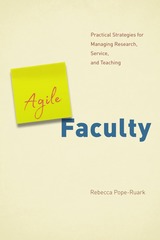
Agile work strategies are a staple of the software development world, developed out of the need to be flexible and responsive to fast-paced change at times when “business as usual” could not work. These techniques call for breaking projects into phases and short-term goals, managing assignments collectively, and tracking progress openly.
Agile Faculty is a comprehensive roadmap for scholars who want to incorporate Agile practices into all aspects of their academic careers, be it research, service, or teaching. Rebecca Pope-Ruark covers the basic principles of Scrum, one of the most widely used models, and then through individual chapters shows how to apply that framework to everything from individual research to running faculty committees to overseeing student class work. Practical and forward-thinking, Agile Faculty will help readers not only manage their time and projects but also foster productivity, balance, and personal and professional growth.
The contributors tackle the biggest questions in higher education: What are the proper aims of the university? What role do the liberal arts play in fulfilling those aims? What is the justification for the humanities? How should we conceive of critical reflection, and how should we teach it to our students? How should professors approach their intellectual relationship with students, both in social interaction and through curriculum? What obligations do elite institutions have to correct for their historical role in racial and social inequality? And, perhaps most important of all: How can the university serve as a model of justice? The result is a refreshingly thoughtful approach to higher education and what it can, and should, be doing.
From the author of Stylish Academic Writing comes an essential new guide for writers aspiring to become more productive and take greater pleasure in their craft. Helen Sword interviewed one hundred academics worldwide about their writing background and practices. Relatively few were trained as writers, she found, and yet all have developed strategies to thrive in their publish-or-perish environment.
So how do these successful academics write, and where do they find the “air and light and time and space,” in the words of poet Charles Bukowski, to get their writing done? What are their formative experiences, their daily routines, their habits of mind? How do they summon up the courage to take intellectual risks and the resilience to deal with rejection?
Sword identifies four cornerstones that anchor any successful writing practice: Behavioral habits of discipline and persistence; Artisanal habits of craftsmanship and care; Social habits of collegiality and collaboration; and Emotional habits of positivity and pleasure. Building on this “BASE,” she illuminates the emotional complexity of the writing process and exposes the lack of writing support typically available to early-career academics. She also lays to rest the myth that academics must produce safe, conventional prose or risk professional failure. The successful writers profiled here tell stories of intellectual passions indulged, disciplinary conventions subverted, and risk-taking rewarded. Grounded in empirical research and focused on sustainable change, Air & Light & Time & Space offers a customizable blueprint for refreshing personal habits and creating a collegial environment where all writers can flourish.
This collection of essays helps advisors by providing information about major changes in the fellowship and scholarship landscape. Included is guidance on the new Schwarzman scholarship for study in China, the recently added video interview for the Mitchell scholarship, and the new rules for the Rhodes personal statement (an advisor’s take). Additionally, seasoned advisors share practical advice, ranging from workshops that engage students and faculty to helpful technological tools to personal statements and office assessments. Keeping the focus on the scholar in the scholarship process is a central theme. All before Them is an important addition to any faculty mentor’s or scholarship advisor’s toolkit.
How colleges and universities can respond to legal pressures while remaining true to their educational missions.
Not so long ago, colleges and universities had little interaction with the law. In the 1970s, only a few well-heeled universities even employed in-house legal counsel. But now we live in the age of tenure-denial lawsuits, free speech battles, and campus sexual assault investigations. Even athletics rules violations have become a serious legal matter. The pressures of regulation, litigation, and legislation, Louis Guard and Joyce Jacobsen write, have fostered a new era in higher education, and institutions must know how to respond.
For many higher education observers and participants, including most administrators and faculty, the maze of legal mandates and potential risks can seem bewildering. Guard, a general counsel with years of higher education law experience, and Jacobsen, a former college president, map this unfamiliar terrain. All the Campus Lawyers provides a vital, up-to-date assessment of the impact of legal concerns on higher education and helps readers make sense of the most pressing trends and issues, including civil rights; free speech and expression; student life and wellness; admissions, advancement, and community relations; governance and oversight; the higher education business model; and on-campus crises, from cyberattacks to pandemics.
As well as informing about the latest legal and regulatory developments affecting higher education, Guard and Jacobsen offer practical guidance to those in positions of campus authority. There has never been a more crucial time for college and university boards, presidents, inside and outside counsel, and other higher education leaders to know the law and prepare for legal challenges.
"O'Brien's historical overview of the transition from 19th-century denominational colleges to 20th-century research-driven and largely secular ones is provocative. Cleverly written and well-focused, the book addresses the financial pressures facing higher education and asks vital questions about cutbacks and curricula."—Publishers Weekly
"Lively, engaging, and richly suggestive." —Francis Oakley, Commonweal
"O'Brien employs calm, powerful reason, without sensationalism. His perspective is illuminating. . . . All the Essential Half-Truths About Higher Education is one of the wisest and most useful treatments of American higher education." —John Attarian, Detroit News
During the nineteenth century, nearly ten thousand Americans traveled to Germany to study in universities renowned for their research and teaching. By the mid-twentieth century, American institutions led the world. How did America become the center of excellence in higher education? And what does that story reveal about who will lead in the twenty-first century?
Allies and Rivals is the first history of the ascent of American higher education seen through the lens of German-American exchange. In a series of compelling portraits of such leaders as Wilhelm von Humboldt, Martha Carey Thomas, and W. E. B. Du Bois, Emily J. Levine shows how academic innovators on both sides of the Atlantic competed and collaborated to shape the research university. Even as nations sought world dominance through scholarship, universities retained values apart from politics and economics. Open borders enabled Americans to unite the English college and German PhD to create the modern research university, a hybrid now replicated the world over.
In a captivating narrative spanning one hundred years, Levine upends notions of the university as a timeless ideal, restoring the contemporary university to its rightful place in history. In so doing she reveals that innovation in the twentieth century was rooted in international cooperation—a crucial lesson that bears remembering today.
In the United States, the entanglement of sports and education has persisted for over a century. Multimillion-dollar high school football stadiums, college coaches whose salaries are many times those of their institutions’ presidents, psychological and educational tolls on student-athletes, and high-profile academic scandals are just symptoms of a system that has come under increasing fire. Institutions large and small face persistent quandaries: which do they value more, academic integrity or athletic success? Which takes precedence: prioritizing elite teams and athletes, or making it possible for all students to participate in sports? How do we create opportunities for academic—not just athletic—development for players?
In Alternative Models of Sports Development in America, B. David Ridpath—a leading sports development researcher who has studied both the US system and the European club model—offers clear steps toward creating a new status quo. He lays out four possible alternative models that draw various elements from academic, athletic, and European approaches. His proposals will help increase access of all young people to the benefits of sports and exercise, allow athletes to also thrive as students, and improve competitiveness. The result is a book that will resonate with sports development professionals, academic administrators, and parents.
So begins Lawrence Lessig's sweeping indictment of contemporary American institutions and the corruption that besets them. We can all see it—from the selling of Congress to special interests to the corporate capture of the academy. Something is wrong. It’s getting worse.
And it’s our fault. What Lessig shows, brilliantly and persuasively, is that we can’t blame the problems of contemporary American life on bad people, as our discourse all too often tends to do. Rather, he explains, “We have allowed core institutions of America’s economic, social, and political life to become corrupted. Not by evil souls, but by good souls. Not through crime, but through compromise.” Every one of us, every day, making the modest compromises that seem necessary to keep moving along, is contributing to the rot at the core of American civic life. Through case studies of Congress, finance, the academy, the media, and the law, Lessig shows how institutions are drawn away from higher purposes and toward money, power, quick rewards—the first steps to corruption.
Lessig knows that a charge so broad should not be levied lightly, and that our instinct will be to resist it. So he brings copious, damning detail gleaned from years of research, building a case that is all but incontrovertible: America is on the wrong path. If we don’t acknowledge our own part in that, and act now to change it, we will hand our children a less perfect union than we were given. It will be a long struggle. This book represents the first steps.
Mattingly sketches out seven broad generational cultures: evangelical, Jeffersonian, republican/nondenominational, industrially driven, progressively pragmatic, internationally minded, and the current corporate model. What we see through his close analysis of each of these cultures in their historical moments is that the politics of higher education, both inside and outside institutions, are ultimately driven by the dominant culture of the time. By looking at the history of higher education in this new way, Mattingly opens our eyes to our own moment, and the part its culture plays in generating its politics and promise.
A trenchant critique of failure and opportunism across the political spectrum, American Idyll argues that social mobility, once a revered hallmark of American society, has ebbed, as higher education has become a mechanistic process for efficient sorting that has more to do with class formation than anything else. Academic freedom and aesthetic education are reserved for high-scoring, privileged students and vocational education is the only option for economically marginal ones.
Throughout most of American history, antielitist sentiment was reserved for attacks against an entrenched aristocracy or rapacious plutocracy, but it has now become a revolt against meritocracy itself, directed against what insurgents see as a ruling class of credentialed elites with degrees from exclusive academic institutions. Catherine Liu reveals that, within the academy and stemming from the relatively new discipline of cultural studies, animosity against expertise has animated much of the Left’s cultural criticism.
By unpacking the disciplinary formation and academic ambitions of American cultural studies, Liu uncovers the genealogy of the current antielitism, placing the populism that dominates headlines within a broad historical context. In the process, she emphasizes the relevance of the historical origins of populist revolt against finance capital and its political influence. American Idyll reveals the unlikely alliance between American pragmatism and proponents of the Frankfurt School and argues for the importance of broad frames of historical thinking in encouraging robust academic debate within democratic institutions. In a bold thought experiment that revives and defends Richard Hofstadter’s theories of anti-intellectualism in American life, Liu asks, What if cultural populism had been the consensus politics of the past three decades?
American Idyll shows that recent antielitism does nothing to redress the source of its discontent—namely, growing economic inequality and diminishing social mobility. Instead, pseudopopulist rage, in conservative and countercultural forms alike, has been transformed into resentment, content merely to take down allegedly elitist cultural forms without questioning the real political and economic consolidation of powers that has taken place in America during the past thirty years.
In American Indian Studies, Native PhD graduates share their personal stories about their educational experiences and how doctoral education has shaped their identities, lives, relationships, and careers.
This collection of personal narratives from Native graduates of the University of Arizona’s American Indian Studies (AIS) doctoral program, the first such program of its kind, gifts stories of endurance and resiliency, hardship and struggle, and accomplishment and success. It provides insight into the diverse and dynamic experiences of Native graduate students. The narratives address family and kinship, mentorship, and service and giving back. Essayists share the benefits of having an AIS program at a mainstream academic institution—not just for the students enrolled but also for their communities.
This book offers Native students aspiring to a PhD a realistic picture of what it takes. While each student has their own path to walk, these stories provide the gift of encouragement and serve to empower Native students to reach their educational goals, whether it be in an AIS program or other fields of study.
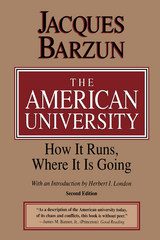
"American higher education is fortunate to have had a scholar and intellectual of Jacques Barzun's stature give so many years of service to the daily bread-and-butter details of running a great university and then share his reflections with us in a literate, humane, and engaging book."—Charles Donovan, America
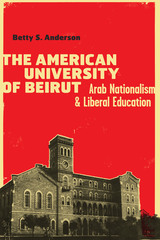
Since the American University of Beirut opened its doors in 1866, the campus has stood at the intersection of a rapidly changing American educational project for the Middle East and an ongoing student quest for Arab national identity and empowerment. Betty S. Anderson provides a unique and comprehensive analysis of how the school shifted from a missionary institution providing a curriculum in Arabic to one offering an English-language American liberal education extolling freedom of speech and analytical discovery.
Anderson discusses how generations of students demanded that they be considered legitimate voices of authority over their own education; increasingly, these students sought to introduce into their classrooms the real-life political issues raging in the Arab world. The Darwin Affair of 1882, the introduction of coeducation in the 1920s, the Arab nationalist protests of the late 1940s and early 1950s, and the even larger protests of the 1970s all challenged the Americans and Arabs to fashion an educational program relevant to a student body constantly bombarded with political and social change. Anderson reveals that the two groups chose to develop a program that combined American goals for liberal education with an Arab student demand that the educational experience remain relevant to their lives outside the school's walls. As a result, in eras of both cooperation and conflict, the American leaders and the students at the school have made this American institution of the Arab world and of Beirut.

Contributions by Martha Saxton, Gary J. Kornblith, David W. Wills, Frederick E. Hoxie, Trent Maxey, Nicholas L. Syrett, Wendy H. Bergoffen, Rick López, Matthew Alexander Randolph, Daniel Levinson Wilk, K. Ian Shin, David S. Reynolds, Jane F. Thrailkill, Julie Dobrow, Richard F. Teichgraeber III, Debby Applegate, Michael E. Jirik, Bruce Laurie, Molly Michelmore, and Christian G. Appy.
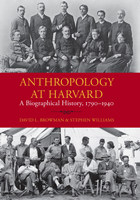
Anthropology at Harvard recounts the rich and complex history of anthropology at America’s oldest university, beginning with the earliest precursors of the discipline within the study of natural history. The story unfolds through fascinating vignettes about the many individuals—famous and obscure alike—who helped shape the discipline at Harvard College and the Peabody Museum. Lively anecdotes provide in-depth portraits of dozens of key individuals, including Louis and Alexander Agassiz, Frederic Ward Putnam, Mary Hemenway, Alice Cunningham Fletcher, Sylvanus Morley, A. V. Kidder, and Antonio Apache. The text also throws new light on longstanding puzzles and debates, such as Franz Boas’s censure by the American Anthropological Association and the involvement of Harvard archaeologists in espionage work for the U.S. government during World War I.
The authors take a “cohort” perspective, looking beyond the big names to the larger network of colleagues that formed the dynamic backdrop to the development of ideas. The significant contributions of amateurs and private funders to the early growth of the field are highlighted, as is the active participation of women and of students and scholars of diverse ethnic backgrounds. A monumental achievement, Anthropology at Harvard makes an important contribution to the history of Americanist anthropology.
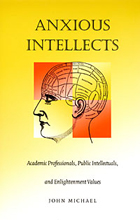
As part of his investigation of intellectuals’ self-conceptions and their roles in society, Michael concentrates on several well-known contemporary African American intellectuals, including Henry Louis Gates Jr. and Cornel West. To illuminate public debates over pedagogy and the role of university, he turns to the work of Todd Gitlin, Michael Bérubé, and Allan Bloom. Stanley Fish’s pragmatic tome, Doing What Comes Naturally, along with a juxtaposition of Fredric Jameson and Samuel Huntington’s work, proves fertile ground for Michael’s argument that democratic politics without intellectuals is not possible. In the second half of Anxious Intellects, Michael relies on three popular conceptions of the intellectual—as critic, scientist, and professional—to discuss the work of scholars Constance Penley, Henry Jenkins, the celebrated physicist Stephen Hawking, and others, insisting that ambivalence, anxiety, projection, identification, hybridity, and various forms of psychosocial complexity constitute the real meaning of Enlightenment intellectuality. As a new and refreshing contribution to the recently emergent culture and science wars, Michael’s take on contemporary intellectuals and their place in society will enliven and redirect these ongoing debates.
Rated Outstanding by the American Association of School Libraries
This is the first book to be written by autistic college students about the challenges they face. Aquamarine Blue 5 details the struggle of these highly sensitive students and shows that there are gifts specific to autistic students that enrich the university system, scholarship, and the world as a whole.
Dawn Prince-Hughes presents an array of writings by students who have been diagnosed with Asperger’s Syndrome or High-Functioning Autism, showing their unique ways of looking at and solving problems. In their own words, they portray how their divergent thinking skills could be put to great use if they were given an opportunity. Many such students never get the chance because the same sensitivity that gives them these insights makes the flicker of fluorescent lights and the sound of chalk on the board unbearable For simple—and easily remedied—reasons, we lose these students, who are as gifted as they are challenged.
Aquamarine Blue 5 is a showcase of the strength and resilient character of individuals with Asperger’s Syndrome. It will be an invaluable resource for those touched by this syndrome, their friends and families, and school administrators.
Cope and Feinberg draw on conversations, narratives, and archival research that reveal how different generations explored their role in defining and carrying out the College’s multifaceted mission. Their account raises critical questions about the character of learning, the aims of teaching, and the nature of teaching as a profession. At the same time, the authors address issues that range from the role of schools in fostering individual and collective identity to the introduction of computer-mediated and online learning. Cope and Feinberg examine changes in self-understanding about fundamental ideas and chart how the College evolved from its original narrow mission of training children’s schoolteachers to embracing global perspectives.
A wide-ranging portrait of an institution, Arguments for Learning uses the School of Education to tell the stories of thinkers dedicated to the idea that education can change the world for the better.
The Art, Science, and Magic of the Data Curation Network: A Retrospective on Cross Institutional Collaboration captures the results of a project retrospective meeting and describes the necessary components of the DCN’s sustained collaboration in the hopes that the insights will be of use to other collaborative efforts. In particular, the authors describe the successes of the community and challenges of launching a cross-institutional network. Additionally, this publication details the administrative, tool-based, and trust-based structures necessary for establishing this community, the “radical collaboration” that is the cornerstone of the DCN, and potential future collaborations to address shared challenges in libraries and research data management. This in-depth case study provides an overview of the critical work of launching a collaborative network and transitioning to sustainability. This publication will be of special interest to research librarians, data curators, and anyone interested in academic community building.


This arresting graphic provides a visual overview of the impacts of arts integration and interdisciplinarity in the university. It can be a tool for case-making, communication, and further inquiry.

This arresting graphic provides a visual overview of the impacts of arts integration and interdisciplinarity in the university. It can be a tool for case-making, communication, and further inquiry.
This listing is for a pack of 12 maps.

This arresting graphic provides a visual overview of the impacts of arts integration and interdisciplinarity in the university. It can be a tool for case-making, communication, and further inquiry.
This listing is for a pack of 5 maps.
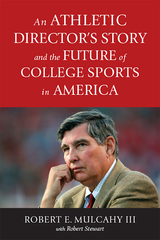
His words and actions were prominent during a nationally-reported incident involving student athletes. When the Rutgers Women’s Basketball team players were slandered by racist remarks from a popular radio talk show host, Mulcahy met it head on. With the coach and players, he set an inspiring example for defending character and values.
Though Mr. Mulcahy left Rutgers in 2009, his memoir reflects continued devotion to intercollegiate athletics and student athletes. His insights for addressing several leading issues confronting Division I sports today offer guidelines for present and future athletic directors to follow.
READERS
Browse our collection.
PUBLISHERS
See BiblioVault's publisher services.
STUDENT SERVICES
Files for college accessibility offices.
RECENTLY PUBLISHED



UChicago Accessibility Resources
home | accessibility | search | about | contact us
BiblioVault ® 2001 - 2024
The University of Chicago Press