
 A SCHOLARLY BOOK REPOSITORY
53 start with A start with A
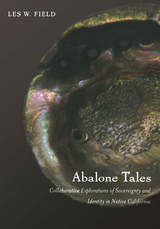
Tales about abalone and their historical and contemporary meanings are related by Field and his coauthors, who include the chair and other members of the Muwekma Ohlone Tribe; a Point Arena Pomo elder; the chair of the Wiyot tribe and her sister; several Hupa Indians; and a Karuk scholar, artist, and performer. Reflecting the divergent perspectives of various Native groups and people, the stories and analyses belie any presumption of a single, unified indigenous understanding of abalone. At the same time, they shed light on abalone’s role in cultural revitalization, struggles over territory, tribal appeals for federal recognition, and connections among California’s Native groups. While California’s abalone are in danger of extinction, their symbolic power appears to surpass even the environmental crises affecting the state’s vulnerable coastline.

NAGPRA requires museums and federal agencies to return requested Native American cultural items to lineal descendants, culturally affiliated Indian tribes, and Native Hawai’ian organizations. Since the 1990 passage of the act, museums and federal agencies have made more than one million cultural items—and the remains of nearly forty thousand Native Americans—available for repatriation.
Drawing on case studies, personal reflections, historical documents, and statistics, the volume examines NAGPRA and its grassroots, practical application throughout the United States.? Accomplishing NAGPRA will appeal to professionals and academics with an interest in cultural resource management, Indian and human rights law, Indigenous studies, social justice movements, and public policy.
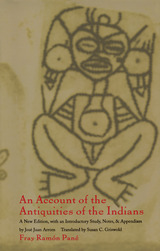
Edited by the noted Hispanist José Juan Arrom, Pané’s report is the only surviving direct source of information about the myths, ceremonies, and lives of the New World inhabitants whom Columbus first encountered. The friar’s text contains many linguistic and cultural observations, including descriptions of the Taíno people’s healing rituals and their beliefs about their souls after death. Pané provides the first known description of the use of the hallucinogen cohoba, and he recounts the use of idols in ritual ceremonies. The names, functions, and attributes of native gods; the mythological origin of the aboriginal people’s attitudes toward sex and gender; and their rich stories of creation are described as well.
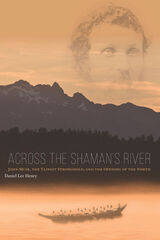
Tucked in the corner of Southeast Alaska, the Tlingits had successfully warded off the Anglo influences that had swept into other corners of the territory. This tribe was viewed by European and American outsiders as the last wild tribe and a frustrating impediment to access. Missionaries and prospectors alike had widely failed to bring the Tlingit into their power. Yet, when John Muir arrived in 1879, accompanied by a fiery preacher, it only took a speech about “brotherhood”—and some encouragement from the revered local shaman Skandoo’o—to finally transform these “hostile heathens.”
Using Muir’s original journal entries, as well as historic writings of explorers juxtaposed with insights from contemporary tribal descendants, Across the Shaman’s River reveals how Muir’s famous canoe journey changed the course of history and had profound consequences on the region’s Native Americans.
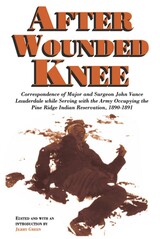
The Wounded Knee Massacre of December 29, 1890, known to U.S. military historians as the last battle in "the Indian Wars," was in reality another tragic event in a larger pattern of conquest, destruction, killing, and broken promises that continue to this day.
On a cold winter's morning more than a century ago, the U.S. Seventh Cavalry attacked and killed more than 260 Lakota men, women, and children at Wounded Knee Creek in South Dakota. In the aftermath, the broken, twisted bodies of the Lakota people were soon covered by a blanket of snow, as a blizzard swept through the countryside. A few days later, veteran army surgeon John Vance Lauderdale arrived for duty at the nearby Pine Ridge Indian Reservation. Shocked by what he encountered, he wrote numerous letters to his closest family members detailing the events, aftermath, and daily life on the Reservation under military occupation. He also treated the wounded, both Cavalry soldiers and Lakota civilians. What distinguishes After Wounded Knee from the large body of literature already available on the massacre is Lauderdale's frank appraisals of military life and a personal observation of the tragedy, untainted by self-serving reminiscence or embellished newspaper and political reports. His sense of frustration and outrage toward the military command, especially concerning the tactics used against the Lakota, is vividly apparent in this intimate view of Lauderdale's life. His correspondence provides new insight into a familiar subject and was written at the height of the cultural struggle between the U.S. and Lakota people. Jerry Green's careful editing of this substantial collection, part of the John Vance Lauderdale Papers in the Western Americana Collection in Yale University's Beinecke Library, clarifies Lauderdale's experiences at the Pine Ridge Indian Reservation.

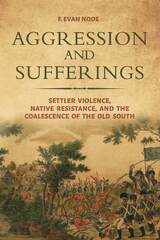
In 1823, Tennessee historian John Haywood encapsulated a foundational sentiment among the white citizenry of Tennessee when he wrote of a “long continued course of aggression and sufferings” between whites and Native Americans. According to F. Evan Nooe, “aggression” and “sufferings” are broad categories that can be used to represent the framework of factors contributing to the coalescence of the white South.
Traditionally, the concept of coalescence is an anthropological model used to examine the transformation of Indigenous communities in the Eastern Woodlands from chieftaincies to Native tribes, confederacies, and nations in response to colonialism. Applying this concept to white southerners, Nooe argues that through the experiences and selective memory of settlers in the antebellum South, white southerners incorporated their aggression against and suffering at the hands of the Indigenous peoples of the Southeast in the coalescence of a regional identity built upon the violent dispossession of the Native South. This, in turn, formed a precursor to Confederate identity and its later iterations in the long nineteenth century.
Geographically, Aggression and Sufferings prioritizes events in South Carolina, Florida, Tennessee, Georgia, and Alabama. Nooe considers how divergent systems of violence and justice between Native Americans and white settlers (such as blood revenge and concepts of honor) functioned in the region and examines the involved societies’ conflicting standards on how to equitably resolve interpersonal violence. Finally, Nooe explores how white southerners constructed, propagated, and perpetuated harrowing tales of colonizers as both victims and heroes in the violent expulsion of the region’s Native peoples from their homelands. This constructed sense of regional history and identity continued to flower into the antebellum period, during western expansion, and well through the twentieth century.
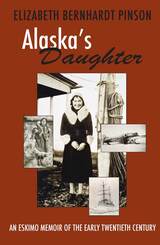
Elizabeth B. Pinson shares with us her memories of Alaska's emergence into a new and modern era, bearing witness to history in the early twentieth century as she recalls it. She draws us into her world as a young girl of mixed ethnicity, with a mother whose Eskimo family had resided on the Seward Peninsula for generations and a father of German heritage. Growing up in and near the tiny village of Teller on the Bering Strait, Elizabeth at the age of six, despite a harrowing, long midwinter sled ride to rescue her, lost both her legs to frostbite when her grandparents, with whom she was spending the winter in their traditional Eskimo home, died in the 1918 influenza epidemic.
Fitted with artificial legs financed by an eastern benefactor, Elizabeth kept journals of her struggles, triumphs, and adventures, recording her impressions of the changing world around her and experiences with the motley characters she met. These included Roald Amundsen, whose dirigible landed in Teller after crossing the Arctic Circle; the ill-fated 1921 British colonists of Wrangel Island in the Arctic; trading ship captains and crews; prospectors; doomed aviators; and native reindeer herders. Elizabeth moved on to boarding school, marriage, and the state of Washington, where she compiled her records into this memoir and where she lived until her death in 2006.
Still fragile, a bereft Annie returns to the ranch, where she is befriended by Leona, a Umatilla-Cayuse neighbor. Leona, as it turns out, has a long connection to the family that even Jack never knew about. At the time of his disappearance, Jack had been grappling with his family’s legacy—with the conflicts and consequences of white settlement of native ground. Three generations before he was born, the family ranch was taken from the Umatilla reservation through the Allotment Act. Jack’s mother died when he was six, but his father’s stern presence still cast a shadow on the land.
“Survival is hard sometimes,” Leona says, but with her help, Annie is able to bring Riley home from rehab and begin the work of healing their small family, learning, season by season, how to go on living without Jack. Leona, Riley’s friends Alex and Mattie, and old neighbors Gus and Audrey become a larger family for Annie as they share the stories that connect them—long-silenced stories from both cultures that could solve the mystery of Jack’s disappearance.
In prose that is lyrical and clear-eyed, All Coyote’s Children weaves an unforgettable tale of cultures and families caught in the inescapable web of who they are and what they have inherited.
Several sacred artifacts have gone missing from the Minnesota Red Earth Reservation and the suspect list is continuously growing. While it could be the racists from the bordering town, or a young man struggling with problems at home, or the county coroner and his cronies, the need for answers and apprehending the culprit is amplified when Jed Morriseau, the Tribal Chairman, is murdered. Investigating these mysterious occurrences because of tribal traditions and the honor of her family, Renee LaRoche works to track down the people responsible. But can she maintain her intense investigation as well as her new relationship with Samantha Salisbury, the visiting women’s studies professor at the white college nearby? Renee is caught between the traditions of her tribe and efforts to help her chimook lover accept their cultural differences.
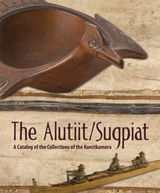
This beautifully photographed book catalogs the collection of nearly five hundred Alutiiq cultural items held by the Peter the Great Museum of Anthropology and Ethnography, or the Kunstkamera, in St. Petersburg, Russia. Gathered between 1780 and 1867, many of the artifacts are composed of fur, feathers, gut, hair, and other delicate materials, which prevent their transport for display or study.
When Sadie Walela decides to pursue her childhood dream of owning a restaurant, she has no idea that murder will be on the menu.
In this second book in the Sadie Walela series, set in the heart of the Cherokee Nation, Sadie discovers life as an entrepreneur is not as easy as she anticipated. On her first day, she is threatened by the town’s resident "crazy" woman and the former owner of the American Café turns up dead, engulfing the café—and Sadie herself—in a cloud of suspicion and unanswered questions.
Drawing on the intuition and perseverance of her Cherokee ancestry, Sadie is determined to get some answers when an old friend unexpectedly turns up to lend a hand. A diverse cast of characters—including a mysterious Creek Indian, a corrupt police chief, an angry Marine home from Iraq, and the victim’s grieving sister and alcoholic niece—all come together to create a multilayered story of denial and deceit.
While striving to untangle relationships and old family secrets, Sadie ends up unraveling far more than a murder.
Culture-to-culture encounters between "natives" and "aliens" have gone on for centuries in the American Southwest—among American Indian tribes, between American Indians and Euro-Americans, and even, according to some, between humans and extraterrestrials at Roswell, New Mexico. Drawing on a wide range of cultural productions including novels, films, paintings, comic strips, and historical studies, this groundbreaking book explores the Southwest as both a real and a culturally constructed site of migration and encounter, in which the very identities of "alien" and "native" shift with each act of travel.
Eric Anderson pursues his inquiry through an unprecedented range of cultural texts. These include the Roswell spacecraft myths, Leslie Marmon Silko's Almanac of the Dead, Wendy Rose's poetry, the outlaw narratives of Billy the Kid, Apache autobiographies by Geronimo and Jason Betzinez, paintings by Georgia O'Keeffe, New West history by Patricia Nelson Limerick, Frank Norris' McTeague, Mary Austin's The Land of Little Rain, Sarah Winnemucca's Life Among the Piutes, Willa Cather's The Professor's House, George Herriman's modernist comic strip Krazy Kat, and A. A. Carr's Navajo-vampire novel Eye Killers.
This powerful book is one of the first to examine the intersections between literature and the environment from the perspective of the oppressions of race, class, gender, and nature, and the first to review American Indian literature from the standpoint of environmental justice and ecocriticism. By examining such texts as Sherman Alexie's short stories and Leslie Marmon Silko's novel Almanac of the Dead, Adamson contends that these works, in addition to being literary, are examples of ecological criticism that expand Euro-American concepts of nature and place.
Adamson shows that when we begin exploring the differences that shape diverse cultural and literary representations of nature, we discover the challenge they present to mainstream American culture, environmentalism, and literature. By comparing the work of Native authors such as Simon Ortiz with that of environmental writers such as Edward Abbey, she reveals opportunities for more multicultural conceptions of nature and the environment.
More than a work of literary criticism, this is a book about the search to find ways to understand our cultural and historical differences and similarities in order to arrive at a better agreement of what the human role in nature is and should be. It exposes the blind spots in early ecocriticism and shows the possibilities for building common ground— a middle place— where writers, scholars, teachers, and environmentalists might come together to work for social and environmental change.
This groundbreaking collection provides fascinating stories of wisdom, spiritual power, and forces within tribal communities that have influenced the past and may influence the future. Through discussions of omens, prophecies, war, peace, ceremony, ritual, and cultural items such as masks, prayer sticks, sweat lodges, and peyote, this volume offers examples of the ways in which Native American beliefs in spirits have been and remain a fundamental aspect of history and culture. Drawing from written and oral sources, the book offers readers a greater understanding of creation narratives, oral histories, and songs that speak of healers, spirits, and power from tribes across the North American continent.
American Indian medicine ways and spiritual power remain vital today. With the help of spirits, people can heal the sick, protect communities from natural disasters, and mediate power of many kinds between the spiritual and corporeal worlds. As the contributors to this volume illustrate, healers are the connective cloth between the ancient past and the present, and their influence is significant for future generations.
CONTRIBUTORS
R. David Edmunds
Joseph B. Herring
Benjamin Jenkins
Troy R. Johnson
Michelle Lorimer
L. G. Moses
Richard D. Scheuerman
Al Logan Slagle
Clifford E. Trafzer
American Indian Rhetorics of Survivance presents an original critical and theoretical analysis of American Indian rhetorical practices in both canonical and previously overlooked texts: autobiographies, memoirs, prophecies, and oral storytelling traditions. Ernest Stromberg assembles essays from a range of academic disciplines that investigate the rhetorical strategies of Native American orators, writers, activists, leaders, and intellectuals.
The contributors consider rhetoric in broad terms, ranging from Aristotle's definition of rhetoric as “the faculty . . . of discovering in the particular case what are the available means of persuasion,” to the ways in which Native Americans assimilated and revised Western rhetorical concepts and language to form their own discourse with European and American colonists. They relate the power and use of rhetoric in treaty negotiations, written accounts of historic conflicts and events, and ongoing relations between American Indian governments and the United States.
This is a groundbreaking collection for readers interested in Native American issues and the study of language. In presenting an examination of past and present Native American rhetoric, it emphasizes the need for an improved understanding of multicultural perspectives.

"The author has reduced the long story—often as tangled as a five-year-old's fishing line—into a brief, clear, and highly interesting book. . . . A remarkable achievement."—San Francisco Chronicle
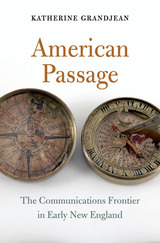
New England was built on letters. Its colonists left behind thousands of them, brittle and browning and crammed with curls of purplish script. How they were delivered, though, remains mysterious. We know surprisingly little about the way news and people traveled in early America. No postal service or newspapers existed—not until 1704 would readers be able to glean news from a “public print.” But there was, in early New England, an unseen world of travelers, rumors, movement, and letters. Unearthing that early American communications frontier, American Passage retells the story of English colonization as less orderly and more precarious than the quiet villages of popular imagination.
The English quest to control the northeast entailed a great struggle to control the flow of information. Even when it was meant solely for English eyes, news did not pass solely through English hands. Algonquian messengers carried letters along footpaths, and Dutch ships took them across waterways. Who could travel where, who controlled the routes winding through the woods, who dictated what news might be sent—in Katherine Grandjean’s hands, these questions reveal a new dimension of contest and conquest in the northeast. Gaining control of New England was not solely a matter of consuming territory, of transforming woods into farms. It also meant mastering the lines of communication.

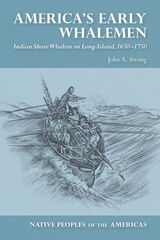
America’s Early Whalemen examines this early chapter of an iconic American historical experience. John A. Strong’s research draws on exhaustive sources, domestic and international, including little-known documents such as the whaling contracts of 340 Native American whalers, personal accounting books of whaling company owners, London customs records, estate inventories, and court records. Strong addresses labor relations, the role of alcohol and debt, the patterns of cultural accommodations by Native Americans, and the emergence of corporate capitalism in colonial America.
When Strong began teaching at Long Island University in 1964, he found little mention of the local Indigenous people in history books. The Shinnecocks and the neighboring tribes of Unkechaugs and Montauketts were treated as background figures for the celebratory narrative of the “heroic” English settlers. America’s Early Whalemen highlights the important contributions of Native peoples to colonial America.
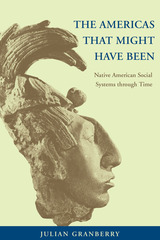
This work answers the hypothetical question: What would the Americas be like today—politically, economically, culturally—if Columbus and the Europeans had never found them, and how would American peoples interact with the world’s other societies? It assumes that Columbus did not embark from Spain in 1492 and that no Europeans found or settled the New World afterward, leaving the peoples of the two American continents free to follow the natural course of their Native lives.
The Americas That Might Have Been is a professional but layman-accessible, fact-based, nonfiction account of the major Native American political states that were thriving in the New World in 1492. Granberry considers a contemporary New World in which the glories of Aztec Mexico, Maya Middle America, and Inca Peru survived intact. He imagines the roles that the Iroquois Confederacy of the American Northeast, the powerful city-states along the Mississippi River in the Midwest and Southeast, the Navajo Nation and the Pueblo culture of the Southwest, the Eskimo Nation in the Far North, and the Taino/Arawak chiefdoms of the Caribbean would play in American and world politics in the 21st Century.
Following a critical examination of the data using empirical archaeology, linguistics, and ethnohistory, Granberry presents a reasoned and compelling discussion of native cultures and the paths they would have logically taken over the past five centuries. He reveals the spectacular futures these brilliant pre-Columbian societies might have had, if not for one epochal meeting that set off a chain of events so overwhelming to them that the course of human history was forever changed.
J.D. and Hoolie find their simple missing person case hides a web of murder, graft, and injustice tied to a network of bootleggers with links to the Ku Klux Klan. Set in the aftermath of the violent Tulsa race riot of 1921, Anadarko reveals a deadly and corrupt town filled with a toxic cocktail of booze, greed, and bigotry.
Tackling racial prejudice head-on, author Tom Holm expertly weaves a vivid and suspenseful tale set in Prohibition-era Indian Country. This gritty whodunit shows nothing is ever simple in the fight between good and evil.
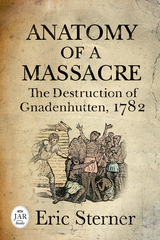
On March 8, 1782, a group of western settlers killed nearly one hundred unarmed and peaceful Indians who had converted to Christianity under the tutelage of missionaries from the Church of the United Brethren. The murders were cold-blooded and heartless; roughly two-thirds of those executed were women and children. Its brutality stunned Benjamin Franklin in far-away France. He wrote: “the abominable Murders committed by some of the frontier People on the poor Moravian Indians, has given me infinite Pain and Vexation. The Dispensations of Providence in this World puzzle my weak Reason. I cannot comprehend why cruel Men should have been permitted thus to destroy their Fellow Creatures.” Since that maelstrom of violence struck the small Indian village of Gnadenhutten, history has treated the episode as a simple morality tale. While there were ample incidents of good and evil on March 8, that summation does not explain what brought murderers and victims together on the banks of the Muskingum River in today’s Ohio. It was actually the culmination of a series of events among different Indian tribes, the British, Congressional authorities at Pittsburgh, the Pennsylvania militia, and key individuals, all of which are lost in contemporary explanations of the massacre.
Anatomy of a Massacre: The Destruction of Gnadenhutten, 1782 fills that void by examining the political maneuvering among white settlers, Continental officials, British officers, western Indian tribes, missionaries, and the Indians practicing Christianity that culminated in the massacre. Uniquely, it follows the developing story from each perspective, using first-person accounts from each group to understand how they saw and experienced the changes on the American frontier. Along the way it profiles some of the key individuals responsible for the way the war unfolded. It is a fresh look at an often mentioned, but seldom understood, episode in the American Revolution.

Addressing Native American studies past, present, and future, the essays in New Indians, Old Wars tackle the discipline head-on, presenting a radical revision of the popular view of the American West in the process. Instead of luxuriating in the West's past glories or accepting the widespread historians' view of it as a shared place, Elizabeth Cook-Lynn argues that the American West should be fundamentally understood as stolen.
Cook-Lynn says that the Indian Wars of Resistance to the nineteenth- and twentieth-century colonial effort to seize native lands and resources must be given standing in the face of the ever-growing imperial narrative of America--because the terror the world is now witnessing may be the direct consequence of events which began in America's earliest dealings with the natives of this continent. Cook-Lynn's story examines the ongoing and perennial relationship of conflict between colonizers and indigenous people, and it is a story that every American must read.
Cook-Lynn understands that the story of the American West teaches the political language of land theft and tyranny. She argues that to remedy this situation, Native American studies must be considered and pursued as its own discipline, rather than as a subset of history or anthropology. She makes an impassioned claim that such a shift, not merely an institutional or theoretical change, could allow Native American studies to play an important role in defending the sovereignty of indigenous nations today.
"Indian reservations" were the United States' ultimate solution to the "problem" of what to do with native peoples who already occupied the western lands that Anglo settlers wanted. In this broadly inclusive study, Richard J. Perry considers the historical development of the reservation system and its contemporary relationship to the American state, with comparisons to similar phenomena in Canada, Australia, and South Africa.
The San Carlos Apache Reservation of Arizona provides the lens through which Perry views reservation issues. One of the oldest and largest reservations, its location in a minerals- and metals-rich area has often brought it into conflict with powerful private and governmental interests. Indeed, Perry argues that the reservation system is best understood in terms of competition for resources among interest groups through time within the hegemony of the state. He asserts that full control over their resources—and hence, over their lives—would address many of the Apache's contemporary economic problems.
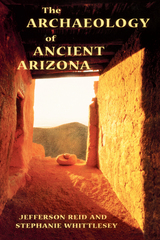
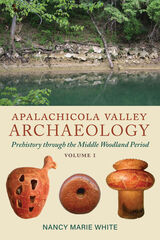
This book invites us to step into a Hohokam village with its sounds of barking dogs, children's laughter, and the ever-present grinding of mano on metate to produce the daily bread. Here, too, readers will marvel at the skills of Clovis elephant hunters and touch the lives of other ancestral people known as Mogollon, Anasazi, Sinagua, and Salado. Descriptions of long-ago people are balanced with tales about the archaeologists who have devoted their lives to learning more about "those who came before." Trekking through the desert with the famed Emil Haury, readers will stumble upon Ventana Cave, his "answer to a prayer." With amateur archaeologist Richard Wetherill, they will sense the peril of crossing the flooded San Juan River on the way to Chaco Canyon. Others profiled in the book are A. V. Kidder, Andrew Ellicott Douglass, Julian Hayden, Harold S. Gladwin, and many more names synonymous with the continuing saga of southwestern archaeology.
This book is an open invitation to general readers to join in solving the great archaeological puzzles of this part of the world. Moreover, it is the only up-to-date summary of a field advancing so rapidly that much of the material is new even to professional archaeologists. Lively and fast paced, the book will appeal to anyone who finds magic in a broken bowl or pueblo wall touched by human hands hundreds of years ago. For all readers, these pages offer a sense of adventure, that "you are there" stir of excitement that comes only with making new discoveries about the distant past.
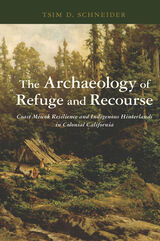
Applying theories of place and landscape, social memory, and mobility to the analysis of six archaeological sites, Tsim D. Schneider argues for a new direction in the archaeology of colonialism. This book offers insight about the critical and ongoing relationships Indigenous people maintained to their homelands despite colonization and systematic destruction of their cultural sites.
Schneider is a citizen of the Federated Indians of Graton Rancheria, the sovereign and federally recognized tribe of Coast Miwok and Southern Pomo people whose ancestral homelands and homewaters are the central focus of The Archaeology of Refuge and Recourse. Viewing this colonial narrative from an Indigenous perspective, Schneider focuses on the nearly one quarter of Coast Miwok people who survived the missions and created outlets within and beyond colonial settlements to resist and endure colonialism.
Fleeing these colonial missions and other establishments and taking refuge around the San Francisco Bay Area, Coast Miwok people sought to protect their identities by remaining connected to culturally and historically significant places. Mobility and a sense of place further enabled Coast Miwok people to find recourse and make decisions about their future through selective participation in colonial projects. In this book, Tsim D. Schneider argues that these distancing and familiarizing efforts contribute to the resilience of Coast Miwok communities and a sense of relevance and belonging to stolen lands and waters. Facing death, violence, and the pervading uncertainty of change, Indigenous people of the Marin Peninsula balanced the pull and persistence of place against the unknown possibilities of a dynamic colonial landscape and the forward-thinking required to survive. History, change, and the future can be read in the story of Coast Miwok people.

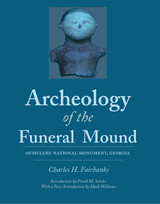
The largest prehistoric mound site in Georgia is located in modern-day Macon and is known as Ocmulgee. It was first recorded in August 1739 by General James Oglethorpe’s rangers during an expedition to the territory of the Lower Creeks. The botanist William Bartram wrote extensively of the ecology of the area during his visit in 1773, but the 1873 volume by Charles C. Jones, Antiquities of the Southern Indians, Particularly of the Georgia Tribes, was the first to treat the archaeological significance of the site.
Professional excavations began at Ocmulgee in 1933 under the auspices of the Smithsonian Institution, using Civil Works Administration labor. Investigations continued under a variety of sponsorships until December 1936, when the locality was formally named a national monument. Excavation of the mounds, village sites, earth lodge, and funeral mound revealed an occupation of the Macon Plateau spanning more than 7,000 years. The funeral mound was found to contain log tombs, bundles of disarticulated bones, flexed burials, and cremations. Grave goods included uniquely patterned copper sun disks that were found at only one other site in the Southeast—the Bessemer site in Alabama—so the two ceremonial centers were established as contemporaries.
In this classic work of archaeological research and analysis, Charles Fairbanks has not only offered a full treatment of the cultural development and lifeways of the builders of Ocmulgee but has also related them effectively to other known cultures of the prehistoric Southeast.
Often thought of as a primitive backwoods peopled by rough hunters and unsavory characters, early Arkansas was actually productive and dynamic in the same manner as other American territories and states. In this, the second volume in the Histories of Arkansas, S. Charles Bolton describes the emigration, mostly from other southern states, that carried Americans into Arkansas; the growth of an agricultural economy based on cotton, corn, and pork; the dominance of evangelical religion; and the way in which women coped with the frontier and made their own contributions toward its improvement. He closely compares the actual lifestyles of the settlers with the popularly held, uncomplimentary image.
Separate chapters deal with slavery and the lives of the slaves and with Indian affairs, particularly the dispossession of the native Quapaws and the later-arriving Cherokees. Political chapters explore opportunism in Arkansas Territory, the rise of the Democratic Party under the control of the Sevier-Johnson group known as the Dynasty, and the forces that led Arkansas to secede from the Union. In addition, Arkansas’s role in the Mexican War and the California gold rush is treated in detail.
In truth, geographic isolation and a rugged terrain did keep Arkansas underpopulated, and political violence and a disastrous experience in state banking tarnished its reputation, but the state still developed rapidly and successfully in this period, playing an important role on the southwestern frontier.
Winner of the 1999 Booker Worthen Literary Prize
This fully illustrated volume includes essays by art historians and historians and reflections by the artists included in the collection. Also included are key contemporary writings—from the 1950s onward—by artists, scholars, and critics, investigating the themes of transculturalism and pan-Indian identity, traditional practices conducted in radically new ways, displacement, forced migration, shadow histories, the role of personal mythologies as a means to reimagine the future, and much more.
As both a survey of the development of Indigenous art from the 1950s to the present and a consideration of Native artists within contemporary art more broadly, Art for a New Understanding expands the definition of American art and sets the tone for future considerations of the subject. It is an essential publication for any institution or individual with an interest in contemporary Native American art, and an invaluable resource in ongoing scholarly considerations of the American contemporary art landscape at large.
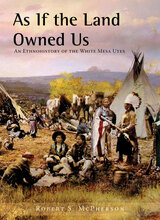
The Ute people of White Mesa have a long, colorful, but neglected history in the Four Corners region. Although they ranged into the Great Basin, Southwest, and parts of the Rocky Mountains as hunters, gatherers, and warriors, southeastern Utah was home. There they adapted culturally and physically to the austere environment while participating in many of the well-known events of their times.
In As If the Land Owned Us, Robert McPherson has gathered the wisdom of White Mesa elders as they imparted knowledge about their land—place names, uses, teachings, and historic events tied to specific sites—providing a fresh insight into the lives of these little-known people. While there have been few published studies about the Southern Utes, this ethnohistory is the first to mix cultural and historic events. The book illustrates the life and times of the White Mesa Utes as they faced multiple changes to their lifeways. It is time for their history to be told in their terms.
Beginning in the 1880s, the US government implemented programs to eliminate “vice” among the Tohono O’odham and to encourage the morals of the majority culture as the basis of a process of “Americanization.” During the next fifty years, tribal norms interacted with—sometimes conflicting with and sometimes reinforcing—those of the larger society in ways that significantly shaped both government policy and tribal experience. This book examines the mediation between cultures, the officials who sometimes developed policies based on personal beliefs and gender biases, and the native people whose lives were impacted as a result. These issues are brought into useful relief by comparing the experiences of the Tohono O’odham on two sides of a border that was, from a native perspective, totally arbitrary.
One of those survivors, Nick Golodoff, became a prisoner of war at just six years old. He was among the dozens of Unangan Attu residents swept away to Hokkaido, and one of only twenty-five to survive. Attu Boy tells Golodoff’s story of these harrowing years as he found both friendship and cruelty at the hands of the Japanese. It offers a rare look at the lives of civilian prisoners and their captors in WWII-era Japan. It also tells of Golodoff’s bittersweet return to a homeland torn apart by occupation and forced internments. Interwoven with other voices from Attu, this richly illustrated memoir is a testament to the struggles, triumphs, and heartbreak of lives disrupted by war.
Drawing on research in newspapers, magazines, agency and missionary records, memoirs, and diaries, Raibmon combines cultural and labor history. She looks at three historical episodes: the participation of a group of Kwakwaka’wakw from Vancouver in the 1893 World’s Columbian Exposition in Chicago; the work of migrant Aboriginal laborers in the hop fields of Puget Sound; and the legal efforts of Tlingit artist Rudolph Walton to have his mixed-race step-children admitted to the white public school in Sitka, Alaska. Together these episodes reveal the consequences of outsiders’ attempts to define authentic Aboriginal culture. Raibmon argues that Aboriginal culture is much more than the reproduction of rituals; it also lies in the means by which Aboriginal people generate new and meaningful ways of identifying their place in a changing modern environment.

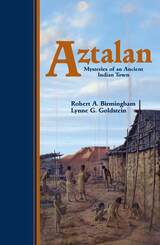
Birmingham and Goldstein attempt to unlock some of the mysteries, providing insights and information about the group of people who first settled here in 1100 AD. Filled with maps, drawings, and photographs of artifacts, this small volume examines a time before modern Native American people settled in this area.
READERS
Browse our collection.
PUBLISHERS
See BiblioVault's publisher services.
STUDENT SERVICES
Files for college accessibility offices.
RECENTLY PUBLISHED




UChicago Accessibility Resources
home | accessibility | search | about | contact us
BiblioVault ® 2001 - 2024
The University of Chicago Press