
 A SCHOLARLY BOOK REPOSITORY
15 start with P start with P

Offering a concise and compelling explanation of the causes of this resurgence, David W. Rohde argues that a realignment of electoral forces led to a reduction of sectional divisions within the parties—particularly between the northern and southern Democrats—and to increased divergence between the parties on many important issues. He challenges previous findings by asserting that congressional reform contributed to, rather than restrained, the increase of partisanship. Among the Democrats, reforms siphoned power away from conservative and autocratic committee chairs and put control of those committees in the hands of Democratic committee caucuses, strengthening party leaders and making both party and committee leaders responsible to rank-and-file Democrats. Electoral changes increased the homogeneity of House Democrats while institutional reforms reduced the influence of dissident members on a consensus in the majority party. Rohde's accessible analysis provides a detailed discussion of the goals of the congressional reformers, the increased consensus among Democrats and its reinforcement by their caucus, the Democratic leadership's use of expanded powers to shape the legislative agenda, and the responses of House Republicans. He also addresses the changes in the relationship between the House majority and the president during the Carter and Reagan administrations and analyzes the legislative consequences of the partisan resurgence.
A readable, systematic synthesis of the many complex factors that fueled the recent resurgence of partisanship, Parties and Leaders in the Postreform House is ideal for course use.
Public-service executives, both elected and appointed within the public and nonprofit sectors, are retiring at record levels, and the number of Americans reaching age sixty-five annually will continue to rise over the next decade and is expected to surpass four million in 2020. Finding qualified, motivated leaders to fill vital public-service positions will challenge the public and nonprofit sectors.
Unfortunately, recent studies show that few proactive steps are being taken by public-service organizations to plan for the next generation. Passing the Torch: Planning for the Next Generation of Public-Service Leaders provides an outline for those who will be facing and managing these looming changes.
In this valuable guide, the factors that influence selection of a career in public service are explored through the authors’ years of experience as leaders in public-service organizations and through interviews with other public-service professionals. Passing the Torch will be essential for leaders of nonprofit organizations, university faculty, researchers in the field of nonprofit management, and students in nonprofit management courses.
How do international leaders emerge and why are they successful in bringing followers to converge on their positions? The Passion of International Leadership draws on recent advances in political psychology and state-of-the-art research in International Relations to go beyond current knowledge and simplistic accounts of international leadership. It tells surprising and intense stories of policymakers at the head of great powers attempting to cooperate during crisis moments, and uses these stories to challenge commonly held beliefs and intuitions about international leadership.
Beauregard explores international leadership in four cases of transatlantic cooperation when Western policymakers were confronted with foreign conflicts, like civil or secessionist wars. He provides a fascinating study of the recognition of Slovenia, Croatia, and Bosnia during the wars in Yugoslavia; the peace mediation during the Russia-Georgia war in 2008; the adoption of economic sanctions against Russia over the conflict in Ukraine; and finally, cooperation on striking against the Islamic State in Iraq and Syria. The book argues that leaders are driven by their convictions, and that they must strike a balance between the intense emotions associated with their beliefs and their need to represent a broader community. At the same time as they seek to bring followers on board by persuading them, they need to pay attention to emotionally contagious and resonant events that can alter the course of international cooperation.
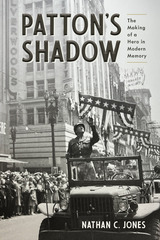
General George S. Patton’s legendary image was carefully crafted during World War II and continues to shape our understanding of American history and culture today. Historian Nathan C. Jones explores the creation of the Patton legend and its enduring legacy in Patton’s Shadow.


With Political Standards, Karthik Ramanna develops the notion of “thin political markets” to describe a key problem facing technical rule-making in corporate accounting and beyond. When standard-setting boards attempt to regulate the accounting practices of corporations, they must draw on a small pool of qualified experts—but those experts almost always have strong commercial interests in the outcome. Meanwhile, standard setting rarely enjoys much attention from the general public. This absence of accountability, Ramanna argues, allows corporate managers to game the system. In the profit-maximization framework of modern capitalism, the only practicable solution is to reframe managerial norms when participating in thin political markets. Political Standards will be an essential resource for understanding how the rules of the game are set, whom they inevitably favor, and how the process can be changed for a better capitalism.
Robert C. Tucker begins this invaluable book with an analytical look at politics, leadership, and the effect each has on the other. Aligning himself with Plato's view of politics as leadership, Tucker argues that politics is more usefully defined from this perspective than from the more familiar stance of the exercise of power. He maintains leaders must define collective problems, prescribe actions or policies, and finally seek support for their diagnoses and policy prescriptions.
Tucker contends that political science must take account not only of leadership by those in state authority, but also of sociopolitical movements for change as vehicles of attempted leadership of political communities. Dividing such movements into those for reform and those for revolution, he illustrates this distinction with examples, including Martin Luther King Jr. as a reform leader and Lenin as a revolutionary one.
Finally, Tucker raises a central question of his study: how can leadership save humankind from itself in the troubled world of today? In an insightful and moving discussion of what he calls the "crisis syndrome," Tucker analyzes problems such as population growth, resource depletion, and environmental degradation with respect to leadership. He argues that the current political process has focused on the immediate present while ignoring crises with far-reaching implications that require tough solutions.
In the epilogue to this revised edition, Tucker draws on his expertise as a Russian specialist, extending the book's discussion of leadership by viewing Mikhail Gorbachev as a reform leader in Soviet Russia and Boris Yeltsin as a post-Soviet Russian leader. Tucker also readdresses the "crisis syndrome" by examining leaders' responses in the 1980s and early 1990s.
Tucker's incisive reasoning, original insights, and commentary on the theory and practice of politics should make this revised edition of Politics as Leadership equally valuable and fascinating for experts in the field of political science and for concerned citizens.
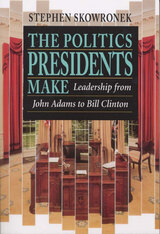

THIS EDITION HAS BEEN REPLACED BY A NEWER EDITION.
Stephen Skowronek's wholly innovative study demonstrates that presidents are persistent agents of change, continually disrupting and transforming the political landscape. In an afterword to this new edition, the author examines "third way" leadership as it has been practiced by Bill Clinton and others. These leaders are neither great repudiators nor orthodox innovators. They challenge received political categories, mix seemingly antithetical doctrines, and often take their opponents' issues as their own. As the 1996 election confirmed, third way leadership has great electoral appeal. The question is whether Clinton in his second term will escape the convulsive end so often associated with the type.

In January 1995, fighting broke out between Ecuadorian and Peruvian military forces in a remote section of the Amazon. It took more than three years and the interplay of multiple actors and factors to achieve a definitive peace agreement, thus ending what had been the region's oldest unresolved border dispute. This conflict and its resolution provide insights about other unresolved and/or disputed land and sea boundaries which involve almost every country in the Western Hemisphere.
Drawing on extensive field research at the time of the dispute and during its aftermath, including interviews with high-ranking diplomats and military officials, Power, Institutions, and Leadership in War and Peace is the first book-length study to relate this complex border dispute and its resolution to broader theories of conflict. The findings emphasize an emerging leadership approach in which individuals are not mere captives of power and institutions. In addition, the authors illuminate an overlap in national and international arenas in shaping effective articulation, perception, and selection of policy.
In the “new” democratic Latin America that emerged in the late 1970s through the early 1990s, historical memory remains influential in shaping the context of disputes, in spite of presumed U.S. post–Cold War influence. This study offers important, broader perspectives on a hemisphere still rife with boundary disputes as a rising number of people and products (including arms) pass through these borderlands.

This book presents three of the works of Abduʾl-Bahā, son of the founder of the Bahāʾi Faith, which deal with social and political issues.
In The Secret of Divine Civilization (1875) Abduʾl-Bahā supports the administrative and broader social reforms of Mirzā Hosayn Khān, but looks mainly for organic reform through the efforts of Iranian intellectuals to awaken and educate the masses. In this work, Abduʾl-Bahā gives virtuous and progressive Islamic clerics a leading role among these intellectuals—indeed most of his appeals are directed specifically to them. A Traveller’s Narrative (1889/90) is an authoritative statement of the overarching concepts of Bahā’i social and political thinking. The Art of Governance (1892/93) was written as Iran entered a prerevolutionary phase, and ideas that we recognize today as the precursors of political Islam were spreading. It sets out the principles underlying the ideal relationship between religion and politics and between the government and the people.
In addition to presenting the first parallel text translations of these works, the Persian texts incorporate notes on variants in the early published sources. An introduction outlines the intellectual and political landscape from which Abduʾl-Bahā wrote, and in which his readers lived.

J.B. Hunt’s triumphs and struggles provide a fascinating case study of how business theory, leadership, culture, and organizational best-practices have combined to create one of the most successful companies in American history. Kirk Thompson, with more than forty years of experience inside the company, gives a CEO’s account of the company’s evolution, while Matt Waller connects the leadership decisions to business theories that are transferrable to other leaders and industries.
Purple on the Inside is more than a corporate history or business management primer. It’s a practical case study that illustrates what Seth Godin described in Purple Cow, his best-selling book that considers what characteristics make for a remarkable business. It’s the story of leaders and team members who tap into their founder’s spirit for innovation while maintaining the focus and high level of performance needed to grow. It’s a story about developing partnerships, technologies, and expertise that others can’t easily duplicate. And it’s a story of overcoming disheartening setbacks and cultivating the purple cows that have allowed J.B. Hunt Transport to do what many experts said was impossible—stand out from its competition in an industry full of brown cows.
READERS
Browse our collection.
PUBLISHERS
See BiblioVault's publisher services.
STUDENT SERVICES
Files for college accessibility offices.
RECENTLY PUBLISHED






UChicago Accessibility Resources
home | accessibility | search | about | contact us
BiblioVault ® 2001 - 2024
The University of Chicago Press