
 A SCHOLARLY BOOK REPOSITORY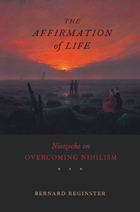
Among all the great thinkers of the past two hundred years, Nietzsche continues to occupy a special place--not only for a broad range of academics but also for members of a wider public, who find some of their most pressing existential concerns addressed in his works. Central among these concerns is the question of the meaning of a life characterized by inescapable suffering, at a time when the traditional responses inspired by Christianity are increasingly losing their credibility. While most recent studies of Nietzsche's works have lost sight of this fundamental issue, Bernard Reginster's book The Affirmation of Life brings it sharply into focus.
Reginster identifies overcoming nihilism as a central objective of Nietzsche's philosophical project, and shows how this concern systematically animates all of his main ideas. In particular, Reginster's work develops an original and elegant interpretation of the will to power, which convincingly explains how Nietzsche uses this doctrine to mount a critique of the dominant Christian values, to overcome the nihilistic despair they produce, and to determine the conditions of a new affirmation of life. Thus, Reginster attributes to Nietzsche a compelling substantive ethical outlook based on the notions of challenge and creativity--an outlook that involves a radical reevaluation of the role and significance of suffering in human existence.
Replete with deeply original insights on many familiar--and frequently misunderstood--Nietzschean concepts, Reginster's book will be essential to anyone approaching this towering figure of Western intellectual history.

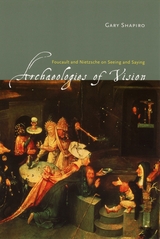
Shapiro explores the whole range of Foucault's writings on visual art, including the theory of visual resistance, the concept of the phantasm or simulacrum, and his interrogation of the relation of painting, language, and power in artists from Bosch to Warhol. Shapiro also shows through an excavation of little-known writings that the visual is a major theme in Nietzsche's thought. In addition to explaining the significance of Nietzsche's analysis of Raphael, Dürer, and Claude Lorrain, he examines the philosopher's understanding of the visual dimension of Greek theater and Wagnerian opera and offers a powerful new reading of Thus Spoke Zarathustra.
Archaeologies of Vision will be a landmark work for all scholars of visual culture as well as for those engaged with continental philosophy.
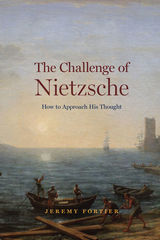
The Challenge of Nietzsche uses Nietzsche as a guide to Nietzsche, highlighting the fact that Nietzsche equipped his writings with retrospective self-commentaries and an autobiographical apparatus that clarify how he understood his development as an author, thinker, and human being. Fortier shows that Nietzsche used his writings to establish two major character types, the Free Spirit and Zarathustra, who represent two different approaches to the conduct and understanding of life: one that strives to be as independent and critical of the world as possible, and one that engages with, cares for, and aims to change the world. Nietzsche developed these characters at different moments of his life, in order to confront from contrasting perspectives such elemental experiences as the drive to independence, the feeling of love, and the assessment of one’s overall health or well-being. Understanding the tension between the Free Spirit and Zarathustra takes readers to the heart of what Nietzsche identified as the tensions central to his life, and to all human life.
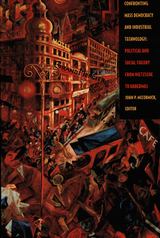
Scholars representing the fields of political science, philosophy, history, law, literature, and cultural studies devote essays to the work of Nietzsche, Weber, Heidegger, Lukács, Schmitt, Marcuse, Adorno, and Habermas. They also discuss the writings of such figures as Brecht and Freud, who are not primarily thought of as political theorists, and explore the thought of Helmut Plessner and reformist theorists from East Germany who have been little studied in the English language. In the process of debating the nature and responsibilities of the modern state in an era of mass politics, unparalleled military technology, capacity for surveillance, and global media presence, the contributors question whether technology is best understood as an instrument of human design and collective control or as an autonomous entity that not only has a will and life of its own but one that forms the very fabric of modern humanity.
Contributors. Seyla Benhabib, Richard J. Bernstein, Peter C. Caldwell, Richard Dienst, David Dyzenhaus, Andrew Feenberg, Nancy S. Love, John P. McCormick, Jan-Werner Müller, Gia Pascarelli, William E. Scheuerman, Steven B. Smith, Tracy B. Strong, Richard Wolin
The Birth of Tragedy is a rethinking of art at the
limit of metaphysics. His close reading focuses on the
complexity of the Apollinian/Dionysian dyad and on the
crossing of these basic art impulses in tragedy.
"Sallis effectively calls into question some commonly
accepted and simplistic ideas about Nietzsche's early
thinking and its debt to Schopenhauer, and proposes
alternatives that are worth considering."—Richard
Schacht, Times Literary Supplement
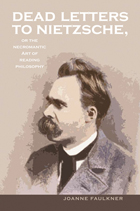
Dead Letters to Nietzsche examines how writing shapes subjectivity through the example of Nietzsche’s reception by his readers, including Stanley Rosen, David Farrell Krell, Georges Bataille, Laurence Lampert, Pierre Klossowski, and Sarah Kofman. More precisely, Joanne Faulkner finds that the personal identification that these readers form with Nietzsche’s texts is an enactment of the kind of identity-formation described in Lacanian and Kleinian psychoanalysis. This investment of their subjectivity guides their understanding of Nietzsche’s project, the revaluation of values.
Not only does this work make a provocative contribution to Nietzsche scholarship, but it also opens in an original way broader philosophical questions about how readers come to be invested in a philosophical project and how such investment alters their subjectivity.

In the essays brought together in this volume Shestov presents a profound and original analysis of the thought of three of the most brilliant literary figures of nineteenth-century Europe—Dostoevsky, Tolstoy, and Nietzsche—all of whom had a decisive influence on the development of his own philosophy.
According to Shestov, the greatness of these writers consists in their deep probing into the question of the meaning of life and the problems of human suffering, evil, and death. That all three of them at times abandoned their probing and lapsed into the banality of preaching does not diminish their stature but shows only that there are limits to man’s capacity for looking unflichingly at reality.
Dostoevsky, Tolstoy, and Nietzsche are united, in Shestov’s view, by their common insight into the essential tragedy of human life—a tragedy which no increase in scientific knowledge and no degree of political and social reform can significantly mitigate but which can ultimately be redeemed only by faith in the omnipotent God proclaimed by the Bible.
In all three of his subjects Shestov sees a rebellion against the tyranny of idealist systems of philosophy, as well as a recognition that the supposedly universal and necessary laws discovered by science and the moral principles for which autonomous ethics claims eternal validity do not liberate man but rather crush and destroy him. This rebellion and this recognition are often suppressed by Dostoevsky, Tolstoy, and Nietzsche, byt they break forth again and again with overwhelming power.
In this provocative discussion of the novels and stories of the two celebrated Russian writers and of the essays and aphorisms of the solitary German philosopher whose genius was finally extinguished by insanity, Shestov finds ideas and insights that other critics have overlooked or the important of which they have not adequately understood. The value of his achievement has been widely recognized. Prince Mirsky, for example, does not hesitate to say in his authorative history of Russian literature that, as far as Dostoevsky is concerned, Shestov is undoubtedly his greatest commentator.
The reader will find in these remarkable studies of the men who exercised the strongest intellectual influence on the young Shestov the beginnings of the Russian philosopher’s own lifelong polemic against idealism, scientism, and conventional morality, as well as the first gropings of the quest for faith in the Biblical God that was to become the leitmotif of all his thinking and writing in the last decades of his life.
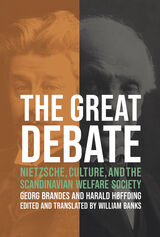
Marking the moment at which the uniquely Nordic concept of social democratic welfare was first contested in the public sphere, this debate provides insights into not only Nietzschean philosophy and its immediate reception but also the foundational concept of modern Scandinavian social, cultural, and political organization. This volume presents, for the first time in any language other than Danish, the debate in its entirety: three essays by Brandes and three by Høffding. A critical introduction by editor and translator William Banks explores the exchange in its context and convincingly argues that the principles contested by the two Danish luminaries still very much resonate in Western society today.
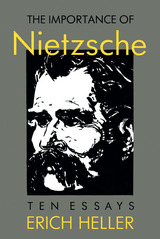
Nietzsche prided himself on having broken with all traditional ways of thinking and feeling, and once even claimed that he would someday be recognized for having ushered in a new millennium. While acknowledging Nietzsche's radicalism, Heller also insists on the continuity of the story in which he does indeed occupy a central place. By considering Nietzsche in relation to Goethe, Rilke, Wittgenstein, Yeats, and others, Heller shows the philosopher's ambivalence toward the tradition he inherited as well as his profound effect on the thought and sensibility of those who followed him. It is hardly an exaggeration to say, as Heller does in his first essay, that Nietzsche is to many modern writers and thinkers—including Mann, Musil, Kafka, Freud, Heidegger, Jaspers, Gide, and Sartre—what St. Thomas Aquinas was to Dante: the categorical interpreter of a world, which they contemplate imaginatively and theoretically without ever much upsetting its Nietzschean structure.
Thus it is Nietzsche's thought, so pervasively present in the themes of modernity, that gives coherence and unity to Heller's essays. What emerges from them is that, despite his iconoclastic declarations and unorthodox philosophical practices, Nietzsche deals with the human spirit's persistent concerns. His questions remain urgent, and even the answers, in all their contradictoriness, possess the commanding force of his inquiry. An example is the incompatibility of the famous extremes, the teaching of the Übermensch and the Eternal Recurrence of All Things. These cancel each other out and yet grow from the same intellectual and spiritual roots, as is shown lucidly and cogently by one of Heller's most forceful essays, "Nietzsche's Terrors: Time and the Inarticulate." In fathoming the depth of this contradiction, Heller at the same time reveals the importance of Nietzsche for those who seek to understand the wellsprings of the epoch's disquiet, turmoil, and creativity.
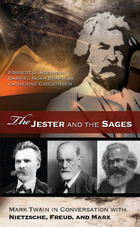
During their lifetimes, Twain, Nietzsche, Freud, and Marx witnessed massive upheavals in Western constructions of religion, morality, history, political economy, and human nature. The foundations of reality had been shaken, and one did not need to be a philosopher—nor did one even need to read philosophy—to weigh in on what this all might mean. Drawing on a wide range of primary and secondary materials, the authors show that Twain was well attuned to debates of the time. Unlike his Continental contemporaries, however, he was not as systematic in developing his views.
Brahm and Robinson’s chapter on Nietzsche and Twain reveals their subjects’ common defiance of the moral and religious truisms of their time. Both desired freedom, resented the constraints of Christian civilization, and saw punishing guilt as the disease of modern man. Pervasive moral evasion and bland conformity were the principal end result, they believed.
In addition to a continuing focus on guilt, Robinson discovers in his chapter on Freud and Twain that the two men shared a lifelong fascination with the mysteries of the human mind. From the formative influence of childhood and repression, to dreams and the unconscious, the mind could free people or keep them in perpetual chains. The realm of the unconscious was of special interest to both men as it pertained to the creation of art.
In the final chapter, Carlstroem and Robinson explain that, despite significant differences in their views of human nature, history, and progress, Twain and Marx were both profoundly disturbed by economic and social injustice in the world. Of particular concern was the gulf that industrial capitalism opened between the privileged elite property owners and the vast class of property-less workers. Moralists impatient with conventional morality, Twain and Marx wanted to free ordinary people from the illusions that enslaved them.
Twain did not know the work's of Nietzsche, Freud, and Marx well, yet many of his thoughts cross those of his philosophical contemporaries. By focusing on the deeper aspects of Twain’s intellectual makeup, Robinson, Brahm, and Carlstroem supplement the traditional appreciation of the forces that drove Twain’s creativity and the dynamics of his humor.
In Leo Strauss and Nietzsche, the eminent Nietzsche scholar Laurence Lampert offers a controversial new assessment of the Strauss-Nietzsche connection. Lampert undertakes a searching examination of the key Straussian essay, "Note on the Plan of Nietzsche's Beyond Good and Evil." He shows that this essay, written toward the end of Strauss's life and placed at the center of his final work, reveals an affinity for and debt to Nietzsche greater than Strauss's followers allow. Lampert argues that the essay comprises the most important interpretation of Nietzsche ever published, one that clarifies Nietzsche's conception of nature and of human spiritual history and demonstrates the logical relationship between the essential themes in Nietzsche's thought—the will to power and the eternal return.
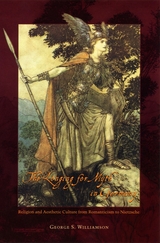
Through readings of key intellectuals ranging from Herder and Schelling to Wagner and Nietzsche, Williamson highlights three crucial factors in the emergence of the German engagement with myth: the tradition of Philhellenist neohumanism, a critique of contemporary aesthetic and public life as dominated by private interests, and a rejection of the Bible by many Protestant scholars as the product of a foreign, "Oriental" culture. According to Williamson, the discourse on myth in Germany remained bound up with problems of Protestant theology and confessional conflict through the nineteenth century and beyond.
A compelling adventure in intellectual history, this study uncovers the foundations of Germany's fascination with myth and its enduring cultural legacy.

Published in 1894 as its subject languished in madness, Salomé's book rode the crest of a surge of interest in Nietzsche's iconoclastic philosophy. She discusses his writings and such biographical events as his break with Wagner, attempting to ferret out the man in the midst of his works.
Salomé's provocative conclusion -- that Nietzsche's madness was the inevitable result of his philosophical views -- generated considerable controversy. Nietzsche's sister, Elisabeth Förster-Nietzsche, dismissed the book as a work of fantasy. Yet the philosopher's longtime acquaintance Erwin Rohde wrote, "Nothing better or more deeply experienced or perceived has ever been written about Nietzsche."
Siegfried Mandel's extensive introduction examines the circumstances that brought Lou Salomé and Nietzsche together and the ideological conflicts that drove them apart.
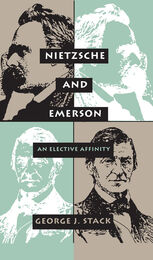
George J. Stack traces the sources of ideas and theories that have long been considered the exclusive province of Friedrich Nietzsche to the surprisingly radical writings of the American essayist and poet, Ralph Waldo Emerson.
Nietzsche and Emerson makes us see Emerson’s writings in a new, more intensified light and presents a new perspective on Nietzsche’s philosophy. Stack traces how the rich theoretical ideas and literary images of Emerson entered directly into the existential dimension of Nietzsche’s thought and hence into the stream of what has been considered a distinctively European intellectual movement.

The contributors are Roger T. Ames, Johann Figl, Chen Guying, Michel Hulin, Arifuku Kogaku, David A. Kelly, Glen T. Martin, Sonoda Muneto, Graham Parkes, okochi Ryogi, Eberhard Scheiffele, Mervyn Sprung, and Joan Stambaugh.
"Exemplary. Its comparative approach is incisive yet accessible. I consider it a 'must read'"—Kathleen Marie Higgins, Philosophy East and West
"An excellent introduction to the broad ranging reception of Nietzsche among Asian thinkers."—James R. Watson, Canadian Philosophical Review
"The essays in this welcome collection are invariably thought-provoking and genuinely cross-disciplinary."—Kenneth Surin, Religious Studies Review
"A worthy and undogmatic introduction to several fascinating questions concerning the relations between Nietzschean thought and certain traditions of thought in India, China, and Japan."—Don Miller, Asian Studies Review
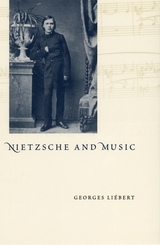
In his youth, Friedrich Nietzsche yearned to become a great composer and wrote many pieces of music. He later claimed to be "the most musical of all philosophers." Yet most books on Nietzsche fail to explore the importance of music for his thought.
Nietzsche and Music provides the first in-depth examination of the fundamental significance of music for Nietzsche's life and work. Nietzsche's views on music are essential for understanding his philosophy as a whole. Part biography and part critical examination, Georges Liébert brilliantly demonstrates that despite failed attempts at a professional career as composer, Nietzsche never fully removed himself from the world of music, but instead, became a composer of philosophy, utilizing the musical form as a template for his own writings and creative thought. Liébert's study surveys Nietzsche's opinions about particular composers and compositions, as well as his more theoretical writings on music and its relation to the other arts. He also explores Nietzsche's listening habits, his playing and style of composition, and his many contacts in the musical world, including his controversial and contentious relationship with Richard Wagner. For Nietzsche, music gave access to a realm of wisdom that transcended thought. Music was Nietzsche's great solace; in his last years, it was his refuge from madness.
A virtuoso exploration of this little-known but crucial aspect of Nietzsche's life and work, this volume will be of enormous value to scholars of philosophy, music, aesthetics, and literature.
The caricature of Friedrich Nietzsche as a proto-Nazi is still with us, having originated with his own Nazi sister, Elisabeth Förster, who curated Nietzsche’s disparate texts to suit her own purposes. In Nietzsche and Race, Marc de Launay deftly counters this persistent narrative in a series of concise and highly accessible reflections on the concept of race in Nietzsche’s publications, notebooks, and correspondence. Through a fresh reading of Nietzsche’s core philosophical project, de Launay articulates a new understanding of race in Nietzsche’s body of work free from the misunderstanding of his detractors.
nature of the individual. Richard White shows how Nietzsche was inspired
and guided by the question of personal "sovereignty" and how
through his writings he sought to provoke the very sovereignty he described.
White argues that Nietzsche is a philosopher our contemporary age must
therefore come to understand if we are ever to secure a genuinely meaningful
direction for the future. Profoundly relevant to our era, Nietzsche's
philosophy addresses a version of individuality that allows us to move
beyond the self-dispossession of mass society and the alternative of selfish
individualism--to fully understand how one becomes what one is.
A volume in the International Nietzsche Studies series, edited by
Richard Schacht
Bergo and Farah’s clear translation introduces this work to an English-speaking audience for the first time.
In recent years, both analytic thinkers and postmodern theorists have looked at Friedrich Nietzsche's epistemology from the perspectives of their philosophical traditions. Michael Steven Green's penetrating study tries instead to do justice to Nietzsche's views on truth and knowledge by looking at them from the perspective of his contemporaries, particularly the Neo-Kantian philosopher Afrikan Spir, whose ideas exerted a tremendous influence on Nietzsche's thought.
Despite his generally naturalist outlook, Nietzsche was committed to an antinaturalist theory of cognition inherited from Kant and Spir. Green shows how this fundamental tension in Nietzsche's thought led him to present not only the antirealism that has commonly been attributed to him in the past, but two other epistemological positions. These are a denial of the possibility of human thought entirely, and an error theory–-the argument that all of our judgments are false–-that has strong parallels in Spir's thought and Kant's antinomies.
Viewing Nietzsche's error theory in light of Kantian transcendental idealism, Green makes sense of arguments that have previously confounded Nietzsche interpreters. Green also provides the first English translations of many passages from Spir's writings and Nietzsche's notebooks.
In examining Nietzsche's thought through the lens of the philosophical influences upon him–-the philosophers that Nietzsche himself read–-Green establishes a significant new foundation from which to assess Nietzsche's place in modern philosophy and culture.
Nietzsche's ideas did not stem from personal pathology, according to Klossowski. Rather, he made a pathological use of his best ideas, anchoring them in his own fluctuating bodily and mental conditions. Thus Nietzsche's belief that questions of truth and morality are at base questions of power and fitness resonates dynamically and intellectually with his alternating lucidity and delirium.
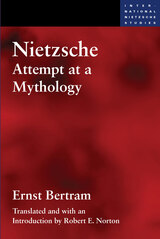
The only English translation of a crucial interpretation of Nietzsche
First published in 1918, Ernst Bertram's Nietzsche: Attempt at a Mythology substantially shaped the image of Nietzsche for the generation between the wars. It won the Nietzsche Society's first prize and was admired by luminous contemporaries including André Gide, Hermann Hesse, Gottfried Benn, and Thomas Mann. Although translated into French in 1932, the book was never translated into English following the decline of Nietzsche's and Bertram's reputations after 1945. Now, with Nietzsche's importance for twentieth-century thought undisputed, the work by one of his most influential interpreters can at last be read in English.Employing a perspectival technique inspired by Nietzsche himself, Bertram constructs a densely layered portrait of the thinker that shows him riven by deep and ultimately irresolvable cultural, historical, and psychological conflicts. At once lyrical and intensely probing, richly complex yet thematically coherent, Bertram's book is a masterpiece in a forgotten tradition of intellectual biography.
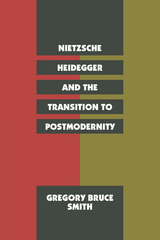
Smith argues that, while much of postmodern thought is rooted in Nietzsche and Heidegger, it has ironically attempted, whether unwittingly or by design, to deflect their philosophy back onto a modern path. Other alternative paths emanating from both Nietzschean and Heideggerian thought that might more powerfully speak to postmodern culture have been ignored. Nietzsche and Heidegger, Smith suggests, have made possible a far more revolutionary critique of modernity then even their most ardent postmodern admirers have realized.
Smith contends that the influences on the postmodern in the thought of Nietzsche and Heidegger are founded in a new vision of praxis liberated from theory. Ultimately, these philosophers do transcend the nihilism often found in the guise of postmodernism. Their thought is, moreover, consistent with the possibility of limited constitutional government and the rule of law. Smith's book takes the first step toward recovering these possibilities and posing the fundamental questions of politics and ethics in ways that have heretofore been closed off by late-modern thought.
Müller-Lauter has remained at the forefront of German Nietzsche studies throughout the quarter century since this book first appeared. This long-awaited translation, containing two substantial subsequent essays, is a major addition to the English-language Nietzsche literature
More than eighty years after his death, Nietzsche’s writings and his career remain disquieting, disturbing, obscure. His most famous views—the will to power, the eternal recurrence, the Übermensch, the master morality—often seem incomprehensible or, worse, repugnant. Yet he remains a thinker of singular importance, a great opponent of Hegel and Kant, and the source of much that is powerful in figures as diverse as Wittgenstein, Derrida, Heidegger, and many recent American philosophers.
Alexander Nehamas provides the best possible guide for the perplexed. He reveals the single thread running through Nietzsche’s views: his thinking of the world on the model of a literary text, of people as if they were literary characters, and of knowledge and science as if they were literary interpretation. Beyond this, he advances the clarity of the concept of textuality, making explicit some of the forces that hold texts together and so hold us together. Nehamas finally allows us to see that Nietzsche is creating a literary character out of himself, that he is, in effect, playing the role of Plato to his own Socrates.
Nehamas discusses a number of opposing views, both American and European, of Nietzsche’s texts and general project, and reaches a climactic solving of the main problems of Nietzsche interpretation in a step-by-step argument. In the process he takes up a set of very interesting questions in contemporary philosophy, such as moral relativism and scientific realism. This is a book of considerable breadth and elegance that will appeal to all curious readers of philosophy and literature.
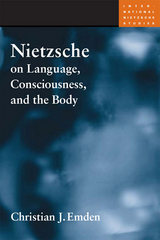
Emden situates Nietzsche’s writings on language and rhetoric within their wider historical context. He demonstrates that Nietzsche is not as radical in his thinking as has been often supposed, and that a number of problems with Nietzsche disappear when Nietzsche’s works are compared to works on the same subjects by writers of the 18th and 19th centuries. Further, the relevance of rhetoric and the history of rhetoric to philosophy and the history of philosophy is reasserted, in consonance with Nietzsche’s own statements and practices. Important in this regard are the role of fictions, descriptions, and metaphor.
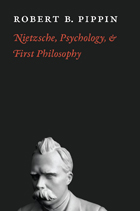
Friedrich Nietzsche is one of the most elusive thinkers in the philosophical tradition. His highly unusual style and insistence on what remains hidden or unsaid in his writing make pinning him to a particular position tricky. Nonetheless, certain readings of his work have become standard and influential. In this major new interpretation of Nietzsche’s work, Robert B. Pippin challenges various traditional views of Nietzsche, taking him at his word when he says that his writing can best be understood as a kind of psychology.
Pippin traces this idea of Nietzsche as a psychologist to his admiration for the French moralists: La Rochefoucauld, Pascal, Stendhal, and especially Montaigne. In distinction from philosophers, Pippin shows, these writers avoided grand metaphysical theories in favor of reflections on life as lived and experienced. Aligning himself with this project, Nietzsche sought to make psychology “the queen of the sciences” and the “path to the fundamental problems.” Pippin contends that Nietzsche’s singular prose was an essential part of this goal, and so he organizes the book around four of Nietzsche’s most important images and metaphors: that truth could be a woman, that a science could be gay, that God could have died, and that an agent is as much one with his act as lightning is with its flash.
Expanded from a series of lectures Pippin delivered at the Collège de France, Nietzsche, Psychology, and First Philosophy offers a brilliant, novel, and accessible reading of this seminal thinker.
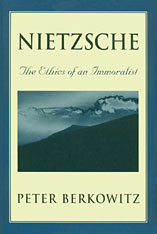
Once regarded as a conservative critic of culture, then enlisted by the court theoreticians of Nazism, Nietzsche has come to be revered by postmodern thinkers as one of their founding fathers, a prophet of human liberation who revealed the perspectival character of all knowledge and broke radically with traditional forms of morality and philosophy.
In Nietzsche: The Ethics of an Immoralist, Peter Berkowitz challenges this new orthodoxy, asserting that it produces a one-dimensional picture of Nietzsche's philosophical explorations and passes by much of what is provocative and problematic in his thought. Berkowitz argues that Nietzsche's thought is rooted in extreme and conflicting opinions about metaphysics and human nature. Discovering a deep unity in Nietzsche's work by exploring the structure and argumentative movement of a wide range of his books, Berkowitz shows that Nietzsche is a moral and political philosopher in the Socratic sense whose governing question is, "What is the best life?"
Nietzsche, Berkowitz argues, puts forward a severe and aristocratic ethics, an ethics of creativity, that demands that the few human beings who are capable acquire a fundamental understanding of and attain total mastery over the world. Following the path of Nietzsche's thought, Berkowitz shows that this mastery, which represents a suprapolitical form of rule and entails a radical denigration of political life, is, from Nietzsche's own perspective, neither desirable nor attainable.
Out of the colorful and richly textured fabric of Nietzsche's books, Peter Berkowitz weaves an interpretation of Nietzsche's achievement that is at once respectful and skeptical, an interpretation that brings out the love of truth, the courage, and the yearning for the good that mark Nietzsche's magisterial effort to live an examined life by giving an account of the best life.
This volume of Reiner Schürmann’s lectures unpacks Nietzsche’s ambivalence towards Kant, in particular positioning Nietzsche’s claim to have brought an end to German idealism against the backdrop of the Kantian transcendental-critical tradition. Rather than simply compare the two philosophers, Schürmann’s lectures help us to understand the consequences Nietzsche derived from Kantian concepts, as well as the wider horizon within which Nietzsche’s ideas arose and can best be shown to apply. According to Schürmann’s trenchant reading: if Nietzsche was indeed “fatal” to Western philosophy, as he claimed, he was so in large part because of the Kantian transcendental thinking from which he inherited the very elements and tools of his criticism.
The great American thinker Ralph Waldo Emerson and the influential German philosopher Friedrich Nietzsche, though writing in different eras and ultimately developing significantly different philosophies, both praised the individual’s wish to be transformed, to be fully created for the first time. Emerson and Nietzsche challenge us to undertake the task of identity on our own, in order to see (in Nietzsche’s phrase) “how one becomes what one is.”
David Mikics’s The Romance of Individualism in Emerson and Nietzsche examines the argument, as well as the affinity, between these two philosophers. Nietzsche was an enthusiastic reader of Emerson and inherited from him an interest in provocation as a means of instruction, an understanding of the permanent importance of moods and transitory moments in our lives, and a sense of the revolutionary character of impulse. Both were deliberately outrageous thinkers, striving to shake us out of our complacency.
Rather than choosing between Emerson and Nietzsche, Professor Mikics attends to Nietzsche’s struggle with Emerson’s example and influence. Elegant in its delivery, The Romance of Individualism in Emerson and Nietzsche offers a significant commentary on the visions of several contemporary theorists whose interests intersect with those of Emerson and Nietzsche, especially Stanley Cavell, Jacques Lacan, Slavoj Zizek, and Harold Bloom.
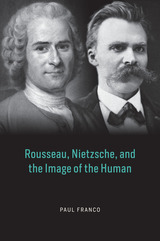
In Rousseau, Nietzsche, and the Image of the Human, Paul Franco examines the relationship between Jean-Jacques Rousseau and Friedrich Nietzsche, arguably the two most influential shapers and explorers of the moral and cultural imagination of late modernity. Both thinkers leveled radical critiques of modern life, but those critiques differed in important respects. Whereas Rousseau focused on the growing inequality of modern society and the hypocrisy, self-division, and loss of civic virtue it spawned, Nietzsche decried the democratic equality he identified with Rousseau and the loss of individual and cultural greatness it entailed. Franco argues, however, that Rousseau and Nietzsche are more than mere critics; they both put forward powerful alternative visions of how we ought to live. Franco focuses specifically on their views of the self and its realization, their understandings of women and the relation between the sexes, and their speculative conceptions of politics. While there are many similarities in their positive visions, Franco argues that it is the differences between them from which we have most to learn.
Georg Simmel pits the two German masters of philosophy of life against
each other in a play of opposition and supplementation. This first English
translation of Simmel's work includes an extensive introduction, providing
the reader with ready access to the text by mapping its discursive strategies.
READERS
Browse our collection.
PUBLISHERS
See BiblioVault's publisher services.
STUDENT SERVICES
Files for college accessibility offices.
RECENTLY PUBLISHED





UChicago Accessibility Resources
home | accessibility | search | about | contact us
BiblioVault ® 2001 - 2024
The University of Chicago Press