
 A SCHOLARLY BOOK REPOSITORY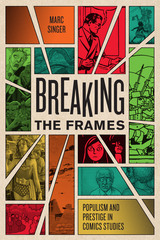
A CHOICE Outstanding Academic Title, 2019
Comics studies has reached a crossroads. Graphic novels have never received more attention and legitimation from scholars, but new canons and new critical discourses have created tensions within a field built on the populist rhetoric of cultural studies. As a result, comics studies has begun to cleave into distinct camps—based primarily in cultural or literary studies—that attempt to dictate the boundaries of the discipline or else resist disciplinarity itself. The consequence is a growing disconnect in the ways that comics scholars talk to each other—or, more frequently, do not talk to each other or even acknowledge each other’s work.
Breaking the Frames: Populism and Prestige in Comics Studies surveys the current state of comics scholarship, interrogating its dominant schools, questioning their mutual estrangement, and challenging their propensity to champion the comics they study. Marc Singer advocates for greater disciplinary diversity and methodological rigor in comics studies, making the case for a field that can embrace more critical and oppositional perspectives. Working through extended readings of some of the most acclaimed comics creators—including Marjane Satrapi, Alan Moore, Kyle Baker, and Chris Ware—Singer demonstrates how comics studies can break out of the celebratory frameworks and restrictive canons that currently define the field to produce new scholarship that expands our understanding of comics and their critics.
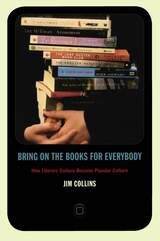
Collins explores how digital technologies and the convergence of literary, visual, and consumer cultures have changed what counts as a “literary experience” in phenomena ranging from lush film adaptations such as The English Patient and Shakespeare in Love to the customer communities at Amazon. Central to Collins’s analysis and, he argues, to contemporary literary culture, is the notion that refined taste is now easily acquired; it is just a matter of knowing where to access it and whose advice to trust. Using recent novels, he shows that the redefined literary landscape has affected not just how books are being read, but also what sort of novels are being written for these passionate readers. Collins connects literary bestsellers from The Jane Austen Book Club and Literacy and Longing in L.A. to Saturday and The Line of Beauty, highlighting their depictions of fictional worlds filled with avid readers and their equations of reading with cultivated consumer taste.
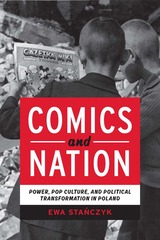

The book first establishes the concept of the “Detroit genre” that emerged in late 1960s and traces the tropes of this white-centric narrative genre in popular culture, touching on key texts including Blue Collar, Robocop, The Crow, It Follows, and Barbarian. The second part shows how Black writers, including Alice Randall, adrienne maree brown, Stephen Mack Jones, and Angela Flournoy, reclaimed and revised the Detroit genre by un-fixing Detroit narratives of dispossession, criminality, and industrial and social failure through formal experimentations on genre itself.
Where Detroit has typically been painted in the news as one of three things—the center of the automotive industry; crime-ridden and in ruins; or as a “blank canvas” with limitless potential of entrepreneurship—Vincent Haddad shows that the Detroit genre in literature and film can be far more powerful than news media in narrating Black dispossession as a pragmatic, even liberal consensus. The texts studied here condition forgetfulness about Detroit’s history or expose it to a full reckoning, direct attention toward or away from the city’s agents of injustice, fetishize resilience or model resistance, and foreclose or imagine a future of Black liberation. Appealing to scholars of popular literature, media, race, and American studies, The Detroit Genre is an accessible and engaging study of the city’s influence on a wide array of genres in pop culture.
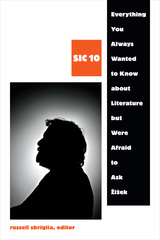
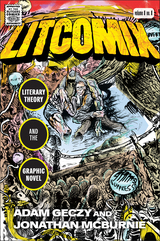
Using the methodology of Georg Lukács and his detailed defense of literary realism as a socially embedded practice, Litcomix tackles difficult questions about reading graphic novels as literature. What critical standards should we use to measure the quality of a graphic novel? How does the genre contribute to our understanding of ourselves and the world? What qualities distinguish it from other forms of literature?
LitComix hones its theoretical approach through case studies taken from across the diverse world of comics, from Yoshihiro Tatsumi’s groundbreaking manga to the Hernandez Brothers’ influential alt-comix. Whether looking at graphic novel adaptations of Proust or considering how Jack Kirby’s use of intertextuality makes him the Balzac of comics, this study offers fresh perspectives on how we might appreciate graphic novels as literature.
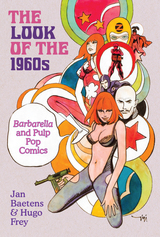
How the classic aesthetic of 1960s pulp comics influenced art, culture, and politics.
As a form of visual art, comic books rely on a distinct and eye-catching aesthetic. This is especially true of the iconic comics, graphic novels, and illustrations of the 1960s and 1970s. The Look of the 1960s explores the sources of inspiration that influenced the world of comics, beginning with the well-known French comics series Barbarella.
Noted comics scholars Jan Baetens and Hugo Frey analyze the impacts of the often-provocative images featured in the comics of the 1960s, which pushed back against French censorship in a politically tense time, and detail how women resisted their objectification in the comic book industry. Barbarella left its mark on the world and gained international attention, inspiring a movie adaptation and changing the look and content of other popular comics. The “Pulp Pop” movement remains relevant today, continuing to influence the art and political world. With new information about artists and an astute analysis of sociopolitical influence, The Look of the 1960s offers deep insights, making it a must read for comics fans all over the world.
READERS
Browse our collection.
PUBLISHERS
See BiblioVault's publisher services.
STUDENT SERVICES
Files for college accessibility offices.
RECENTLY PUBLISHED






UChicago Accessibility Resources
home | accessibility | search | about | contact us
BiblioVault ® 2001 - 2025
The University of Chicago Press