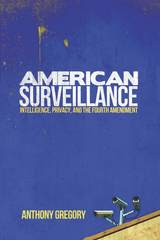
front cover of American Surveillance
American Surveillance
Intelligence, Privacy, and the Fourth Amendment
Anthony Gregory
University of Wisconsin Press, 2016
To defend its citizens from harm, must the government have unfettered access to all information? Or, must personal privacy be defended at all costs from the encroachment of a surveillance state? And, doesn’t the Constitution already protect us from such intrusions? When the topic of discussion is intelligence-gathering, privacy, or Fourth Amendment protections against unreasonable search and seizure, the result is usually more heat than light.
            Anthony Gregory challenges such simplifications, offering a nuanced history and analysis of these difficult issues. He highlights the complexity of the relationship between the gathering of intelligence for national security and countervailing efforts to safeguard individual privacy. The Fourth Amendment prohibiting unreasonable searches and seizures offers no panacea, he finds, in combating assaults on privacy—whether by the NSA, the FBI, local police, or more mundane administrative agencies. Given the growth of technology, together with the ambiguities and practical problems of enforcing the Fourth Amendment, advocates for privacy protections need to work on multiple policy fronts.

“This fascinating review of the shifts and accretions of American law and culture is filled with historical surprises and twenty-first-century shocks, so beneficial in an era of gross American ahistoricality and cultural acquiescence to the technological state. Every flag-waving patriot, every dissenter, every judge and police officer, every small-town mayor and every president should read America Surveillance. We have work to do!”—Lt. Col. Karen U. Kwiatkowski, (Ret.), former Senior Operations Staff Officer, Office of the Director, National Security Agency
[more]

front cover of Automating Governance in China?
Automating Governance in China?
Data-Driven Systems in the Scoring Society
Haiqing Yu
Leiden University Press, 2025
This book considers the interplay between the affordances of technologies, the experiences and processes of technological systems, and the process of learning and adaptation by state actors as part of governance reform in China. It offers detailed studies of specific projects and applications that are automated or quasi-automated in organising and governing social, economic, and cultural lives in the world’s largest techno-authoritarian regime. Written by scholars from six countries across four continents, case studies illustrate new modes of digital governance employed by the Chinese government, as it interacts and collaborates with technology companies, ordinary citizens, and other key stakeholders. They offer new insights on the deployment of automated decision-making in authoritarian governance, and on its application and implementation in real-life scenarios. In a broader sense, the book contributes to global debates about the integration of decision-making technologies in governmental practices.
[more]

logo for Leiden University Press
Automating Governance in China?
Data-Driven Systems in the Scoring Society
Haiqing Yu
Leiden University Press, 2025
This book considers the interplay between the affordances of technologies, the experiences and processes of technological systems, and the process of learning and adaptation by state actors as part of governance reform in China. It offers detailed studies of specific projects and applications that are automated or quasi-automated in organising and governing social, economic, and cultural lives in the world’s largest techno-authoritarian regime. Written by scholars from six countries across four continents, case studies illustrate new modes of digital governance employed by the Chinese government, as it interacts and collaborates with technology companies, ordinary citizens, and other key stakeholders. They offer new insights on the deployment of automated decision-making in authoritarian governance, and on its application and implementation in real-life scenarios. In a broader sense, the book contributes to global debates about the integration of decision-making technologies in governmental practices.
[more]


front cover of Breaking the World
Breaking the World
Black Insecurity and the Horizons of Speculative Fiction
Justin L. Mann
Duke University Press, 2026
In Breaking the World, Justin L. Mann argues that Black speculative fictions are an essential but overlooked archive for understanding the modern security ambitions of the United States. Foregrounding how the contemporary security state renders Black life insecure, Mann theorizes worldbreaking: speculative narrative, aesthetic, and ethical strategies that Black writers, musicians, and artists employ to unmake the processes by which state and parastate agents augment and build up the tools, techniques, and infrastructures intended to make people safer. He shows how the techniques of worldbreaking in the works of Octavia E. Butler, Colson Whitehead, N.K. Jemisin, Janelle Monáe, and the Marvel and DC Cinematic Universes chart the distinction between securitization and Black insecurity. These works illuminate the difference between the antiblackness of state security and the power of Black collectivity. Contending that speculative worldbreaking is a vital part of the Black radical imagination, Mann shows that its destructive strategies can help transform worlds of securitization to worlds of liberation.
[more]

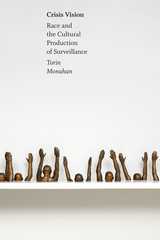
front cover of Crisis Vision
Crisis Vision
Race and the Cultural Production of Surveillance
Tom Monahan
Duke University Press, 2022
In Crisis Vision, Torin Monahan explores how artists confront the racializing dimensions of contemporary surveillance. He focuses on artists ranging from Kai Wiedenhöfer, Paolo Cirio, and Hank Willis Thomas to Claudia Rankine and Dread Scott, who engage with what he calls crisis vision—the regimes of racializing surveillance that position black and brown bodies as targets for police and state violence. Many artists, Monahan contends, remain invested in frameworks that privilege transparency, universality, and individual responsibility in ways that often occlude racial difference. Other artists, however, disrupt crisis vision by confronting white supremacy and destabilizing hierarchies through the performance of opacity. Whether fostering a recognition of a shared responsibility and complicity for the violence of crisis vision or critiquing how vulnerable groups are constructed and treated globally, these artists emphasize ethical relations between strangers and ask viewers to question their own place within unjust social orders.
[more]

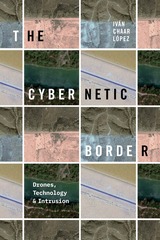
front cover of The Cybernetic Border
The Cybernetic Border
Drones, Technology, and Intrusion
Iván Chaar López
Duke University Press, 2024
In The Cybernetic Border, Iván Chaar López argues that the settler US nation requires the production and targeting of a racialized enemy that threatens the empire. The cybernetic border is organized through practices of data capture, storage, processing, circulation, and communication that police bodies and constitute the nation as a bounded, territorial space. Chaar López historicizes the US government’s use of border enforcement technologies on Mexicans, Arabs, and Muslims from the mid-twentieth century to the present, showing how data systems are presented as solutions to unauthorized border crossing. Contrary to enduring fantasies of the purported neutrality of drones, smart walls, artificial intelligence, and biometric technologies, the cybernetic border represents the consolidation of calculation and automation in the exercise of racialized violence. Chaar López draws on corporate, military, and government records, promotional documents and films, technical reports, news reporting, surveillance footage, and activist and artist practices. These materials reveal how logics of enmity are embedded into information infrastructures that shape border control and modern sovereignty.
[more]

front cover of Digital Rights at the Periphery
Digital Rights at the Periphery
Making Brazil's Marco Civil
Guy T. Hoskins
University of Illinois Press, 2025

Signed into law in 2014, the Marco Civil da Internet (Brazilian Civil Rights Framework for the Internet) appeared to offer pioneering legislation for a digital bill of rights that addressed issues like network neutrality and privacy. Guy T. Hoskins chronicles the Marco Civil’s development and its failure to confront the greatest concentration of power in the digital age: informational capitalism. Combining interviews with discourse and political-economic analysis, Hoskins reveals why the legislation fell short while examining the implications of its emergence in Brazil, which remains on the margins of the global system of informational capitalism. Hoskins places collectivist and public service principles at the core of any framework’s effectiveness. He also shows why we must create systems sensitive to the sociocultural and political-economic contexts that will shape digital rights and their usefulness.

Compelling and contrarian, Digital Rights at the Periphery looks at communications policy and internet governance in the Global South and the lessons they provide for the rest of the world.

[more]

front cover of Disobedient Aesthetics
Disobedient Aesthetics
Surveillance, Bodies, Control
Anthony Stagliano
University of Alabama Press, 2024

A compelling inquiry into the rhetorical and aesthetic techniques that subvert contemporary regimes of digital surveillance, embodiment, and control.

The contemporary world bristles with tools of observation and manipulation. Security cameras, social media, data mining, biometric scans, and other instruments ensnare the individual in a web of surveillance. In Disobedient Aesthetics, Anthony Stagliano exposes the use of human lives as sites of data exploitation and outlines paths of resistance. From the thermal-vision systems used on military drones, which use human body heat itself as a media object, to facial recognition platforms that use human faces as data mines, and from law enforcement tools of DNA analysis to data-driven urban governance, the realm of algorithmic surveillance and control is wide and subtle.

Disobedient Aesthetics outlines interventions into the technical systems subtending data-driven surveillance and control. Stagliano maps not only the surveillant regimes afforded by recent networked technologies, but also the inventive, artistic research into ways of undermining, upending, or redirecting such technologies. The concluding chapter examines creative, critical, and collective efforts to democratize access to the technology that undergirds such scrutiny and enables ways to detect and contest its power.

In a fascinating epilogue, Stagliano revisits current theories of control and offers an alternative reading of Gilles Deleuze’s oft-cited thesis on control societies: namely that it is not a matter of “finding new weapons” to undermine control but developing new techniques, new designs, new prototypes, and new modes of creative escape.
 

[more]

front cover of Exposed
Exposed
Desire and Disobedience in the Digital Age
Bernard E. Harcourt
Harvard University Press, 2015

Social media compile data on users, retailers mine information on consumers, Internet giants create dossiers of who we know and what we do, and intelligence agencies collect all this plus billions of communications daily. Exploiting our boundless desire to access everything all the time, digital technology is breaking down whatever boundaries still exist between the state, the market, and the private realm. Exposed offers a powerful critique of our new virtual transparence, revealing just how unfree we are becoming and how little we seem to care.

Bernard Harcourt guides us through our new digital landscape, one that makes it so easy for others to monitor, profile, and shape our every desire. We are building what he calls the expository society—a platform for unprecedented levels of exhibition, watching, and influence that is reconfiguring our political relations and reshaping our notions of what it means to be an individual.

We are not scandalized by this. To the contrary: we crave exposure and knowingly surrender our privacy and anonymity in order to tap into social networks and consumer convenience—or we give in ambivalently, despite our reservations. But we have arrived at a moment of reckoning. If we do not wish to be trapped in a steel mesh of wireless digits, we have a responsibility to do whatever we can to resist. Disobedience to a regime that relies on massive data mining can take many forms, from aggressively encrypting personal information to leaking government secrets, but all will require conviction and courage.


[more]

front cover of Forever Suspect
Forever Suspect
Racialized Surveillance of Muslim Americans in the War on Terror
Selod, Saher
Rutgers University Press, 2018
The declaration of a “War on Terror” in the aftermath of the September 11, 2001 terrorist attacks brought sweeping changes to the American criminal justice and national security systems, as well as a massive shift in the American public opinion of both individual Muslims and the Islamic religion generally. Since that time, sociologist Saher Selod argues, Muslim Americans have experienced higher levels of racism in their everyday lives. In Forever Suspect, Selod shows how a specific American religious identity has acquired racial meanings, resulting in the hyper surveillance of Muslim citizens. Drawing on forty-eight in-depth interviews with South Asian and Arab Muslim Americans, she investigates how Muslim Americans are subjected to racialized surveillance in both an institutional context by the state and a social context by their neighbors and co-workers. Forever Suspect underscores how this newly racialized religious identity changes the social location of Arabs and South Asians on the racial hierarchy further away from whiteness and compromises their status as American citizens.
[more]

front cover of The General Data Protection Regulation in Plain Language
The General Data Protection Regulation in Plain Language
Bart van der Sloot
Amsterdam University Press, 2020
The General Data Protection Regulation in Plain Language is a guide for anyone interested in the much-discussed rules of the GDPR. In this legislation, which came into force in 2018, the European Union meticulously describes what you can and cannot do with data about other people. Violating these rules can lead to a fine of up to 20 million euros.

This book sets out the most important obligations of individuals and organisations that process data about others. These include taking technical security measures, carrying out an impact assessment and registering all data-processing procedures within an organisation. It also discusses the rights of citizens whose data are processed, such as the right to be forgotten, the right to information and the right to data portability.

[more]

front cover of The General Data Protection Regulation in Plain Language
The General Data Protection Regulation in Plain Language
Bart van der Sloot
Amsterdam University Press, 2020
The General Data Protection Regulation in Plain Language is a guide for anyone interested in the much-discussed rules of the GDPR. In this legislation, which came into force in 2018, the European Union meticulously describes what you can and cannot do with data about other people. Violating these rules can lead to a fine of up to 20 million euros.

This book sets out the most important obligations of individuals and organisations that process data about others. These include taking technical security measures, carrying out an impact assessment and registering all data-processing procedures within an organisation. It also discusses the rights of citizens whose data are processed, such as the right to be forgotten, the right to information and the right to data portability.
[more]

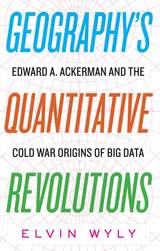
front cover of Geography's Quantitative Revolutions
Geography's Quantitative Revolutions
Edward A. Ackerman and the Cold War Origins of Big Data
Elvin Wyly
West Virginia University Press, 2019

Do you have a smartphone? Billions of people on the planet now navigate their daily lives with the kind of advanced Global Positioning System capabilities once reserved for the most secretive elements of America’s military-industrial complex. But when so many people have access to the most powerful technologies humanity has ever devised for the precise determination of geographical coordinates, do we still need a specialized field of knowledge called geography?

Just as big data and artificial intelligence promise to automate occupations ranging from customer service and truck driving to stock trading and financial analysis, our age of algorithmic efficiency seems to eliminate the need for humans who call themselves geographers—at the precise moment when engaging with information about the peoples, places, and environments of a diverse world is more popular than ever before. How did we get here? This book traces the recent history of geography, information, and technology through the biography of Edward A. Ackerman, an important but forgotten figure in geography’s “quantitative revolution.” It argues that Ackerman’s work helped encode the hidden logics of a distorted philosophical heritage—a dangerous, cybernetic form of thought known as militant neo-Kantianism—into the network architectures of today’s pervasive worlds of surveillance capitalism.
[more]

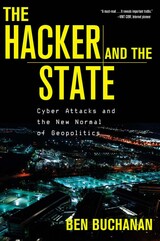
front cover of The Hacker and the State
The Hacker and the State
Cyber Attacks and the New Normal of Geopolitics
Ben Buchanan
Harvard University Press, 2020

“A must-read…It reveals important truths.”
—Vint Cerf, Internet pioneer

“One of the finest books on information security published so far in this century—easily accessible, tightly argued, superbly well-sourced, intimidatingly perceptive.”
—Thomas Rid, author of Active Measures

Cyber attacks are less destructive than we thought they would be—but they are more pervasive, and much harder to prevent. With little fanfare and only occasional scrutiny, they target our banks, our tech and health systems, our democracy, and impact every aspect of our lives. Packed with insider information based on interviews with key players in defense and cyber security, declassified files, and forensic analysis of company reports, The Hacker and the State explores the real geopolitical competition of the digital age and reveals little-known details of how China, Russia, North Korea, Britain, and the United States hack one another in a relentless struggle for dominance. It moves deftly from underseas cable taps to underground nuclear sabotage, from blackouts and data breaches to election interference and billion-dollar heists.

Ben Buchanan brings to life this continuous cycle of espionage and deception, attack and counterattack, destabilization and retaliation. Quietly, insidiously, cyber attacks have reshaped our national-security priorities and transformed spycraft and statecraft. The United States and its allies can no longer dominate the way they once did. From now on, the nation that hacks best will triumph.

“A helpful reminder…of the sheer diligence and seriousness of purpose exhibited by the Russians in their mission.”
—Jonathan Freedland, New York Review of Books

“The best examination I have read of how increasingly dramatic developments in cyberspace are defining the ‘new normal’ of geopolitics in the digital age.”
—General David Petraeus, former Director of the CIA

“Fundamentally changes the way we think about cyber operations from ‘war’ to something of significant import that is not war—what Buchanan refers to as ‘real geopolitical competition.’”
—Richard Harknett, former Scholar-in-Residence at United States Cyber Command


[more]

front cover of The Known Citizen
The Known Citizen
A History of Privacy in Modern America
Sarah E. Igo
Harvard University Press, 2020

A Washington Post Book of the Year
Winner of the Merle Curti Award
Winner of the Jacques Barzun Prize
Winner of the Ralph Waldo Emerson Award


“A masterful study of privacy.”
—Sue Halpern, New York Review of Books

“Masterful (and timely)…[A] marathon trek from Victorian propriety to social media exhibitionism…Utterly original.”
Washington Post

Every day, we make decisions about what to share and when, how much to expose and to whom. Securing the boundary between one’s private affairs and public identity has become an urgent task of modern life. How did privacy come to loom so large in public consciousness? Sarah Igo tracks the quest for privacy from the invention of the telegraph onward, revealing enduring debates over how Americans would—and should—be known. The Known Citizen is a penetrating historical investigation with powerful lessons for our own times, when corporations, government agencies, and data miners are tracking our every move.

“A mighty effort to tell the story of modern America as a story of anxieties about privacy…Shows us that although we may feel that the threat to privacy today is unprecedented, every generation has felt that way since the introduction of the postcard.”
—Louis Menand, New Yorker

“Engaging and wide-ranging…Igo’s analysis of state surveillance from the New Deal through Watergate is remarkably thorough and insightful.”
The Nation

[more]

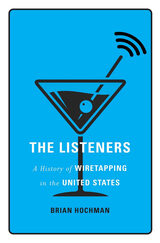
front cover of The Listeners
The Listeners
A History of Wiretapping in the United States
Brian Hochman
Harvard University Press, 2022

They’ve been listening for longer than you think. A new history reveals how—and why.

Wiretapping is nearly as old as electronic communications. Telegraph operators intercepted enemy messages during the Civil War. Law enforcement agencies were listening to private telephone calls as early as 1895. Communications firms have assisted government eavesdropping programs since the early twentieth century—and they have spied on their own customers too. Such breaches of privacy once provoked outrage, but today most Americans have resigned themselves to constant electronic monitoring. How did we get from there to here?

In The Listeners, Brian Hochman shows how the wiretap evolved from a specialized intelligence-gathering tool to a mundane fact of life. He explores the origins of wiretapping in military campaigns and criminal confidence games and tracks the use of telephone taps in the US government’s wars on alcohol, communism, terrorism, and crime. While high-profile eavesdropping scandals fueled public debates about national security, crime control, and the rights and liberties of individuals, wiretapping became a routine surveillance tactic for private businesses and police agencies alike.

From wayward lovers to foreign spies, from private detectives to public officials, and from the silver screen to the Supreme Court, The Listeners traces the long and surprising history of wiretapping and electronic eavesdropping in the United States. Along the way, Brian Hochman considers how earlier generations of Americans confronted threats to privacy that now seem more urgent than ever.


[more]

front cover of Nonhuman Witnessing
Nonhuman Witnessing
War, Data, and Ecology after the End of the World
Michael Richardson
Duke University Press, 2024
In Nonhuman Witnessing Michael Richardson argues that a radical rethinking of what counts as witnessing is central to building frameworks for justice in an era of endless war, ecological catastrophe, and technological capture. Dismantling the primacy and notion of traditional human-based forms of witnessing, Richardson shows how ecological, machinic, and algorithmic forms of witnessing can help us better understand contemporary crises. He examines the media-specificity of nonhuman witnessing across an array of sites, from nuclear testing on First Nations land and autonomous drone warfare to deepfakes, artificial intelligence, and algorithmic investigative tools. Throughout, he illuminates the ethical and political implications of witnessing in an age of profound instability. By challenging readers to rethink their understanding of witnessing, testimony, and trauma in the context of interconnected crises, Richardson reveals the complex entanglements between witnessing and violence and the human and the nonhuman.
[more]

front cover of Paradoxes of Digital Disengagement
Paradoxes of Digital Disengagement
In Search of the Opt-Out Button
Adi Kuntsman and Esperanza Miyake
University of Westminster Press, 2022

Listen to authors Adi Kuntsman and Esperanza Miyake discuss collective data justice, the rights, refusals and ethics of digital (dis)engagement in this latest podcast from Lateral, the Journal of the Cultural Studies Association.

https://csalateral.org/podcasts/positions/for-the-moment-i-am-not-scrolling-culp-skinner-kuntsman-miyake-karppi/

“The digital now thoroughly saturates our everyday lives to the point where it seems we are drowning. But is it possible to swim on our terms? This book thoughtfully examines this question, critically teasing apart the structures of power that permeate digital relations and charting pathways to a more just digital world. Essential reading for those who want to move beyond personal digital detoxes to challenge and transform our digital society and economy.” - Professor Rob Kitchin, author of The Data Revolution and Data Lives

“The seductions of tech have ushered in the encroachment of technological solutions into policing, law enforcement and ever-widening systems of social regulation across the UK and Europe. This book marks a critical intervention – by conceptualising our understanding of the ways in which data and digital harms are systemically expended against the powerless. It is a must read for those of us who are concerned to resist the (digital) exclusion of the marginalised, and the (digital) banishment of the vulnerable.” - Dr Patrick Williams, author of Data-Driven Policing: The Hardwiring of Discriminatory Policing Practices Across Europe

“While imaginaries of techno futures constructed by the Digital Lords of contemporary societies become self-fulfilling prophecies, we struggle to imagine a present and future free from digital coercion and exclusion. In their powerful interdisciplinary analysis, Adi Kuntsman and Esperanza Miyake delve into the personal, social, political and environmental costs of compulsory digitality. Rejecting a self-defeating naturalisation of digitality and digital inevitability Paradoxes of Digital Disengagement compellingly shows how collective digital justice is imperative in this future/present where the machine rules and people can become marginalized and excluded. A much-needed scholarly intervention that can inspire our collective thinking, research and praxis.” - Dr Benedetta Brevini, author of Is AI Good for the Planet?

“Kuntsman and Miyake have written an engaging book. It offers a readable critique of enforced digitality and broadens the scope of disconnection studies. The detailed analyses of complicated documents are elegantly structured and thought-provoking.” - https://blogs.lse.ac.uk/lsereviewofbooks/2022/11/16/book-review-paradoxes-of-digital-disengagement-in-search-of-the-opt-out-button-by-adi-kuntsman-and-esperanza-miyake/

Life is increasingly governed and mediated through digital and smart technologies, platforms, big data and algorithms. However, the reasons, practices and impact of how the digital is used by different institutions are often deeply linked to social oppression and injustice. Similarly, the ability to resist these digital impositions is based on inequality and privilege. Challenging the ways in which we are increasingly dependent on the digital, this book raises a set of provocative and urgent questions: in a world of compulsory digitality is there an opt out button? Where, when, how, why and to whom is it available? Answering these questions has become even more relevant since the COVID-19 pandemic. In response, the book puts forward the concept of ‘digital disengagement’ which is explored across six key areas of digitisation: health; citizenship; education; consumer culture; labour; and the environment.

Part I examines the difficulty of opting out of compulsory digitality in a world where most things are digital by default. From health apps, algorithmic decision-making to learning analytics, opting out comes with a set of troubling consequences. Part II turns to several examples of disconnection and disengagement. The chapters reveal how phenomena like digital detoxes, time-management apps and online ‘green’ spaces are co-opted by the very digital systems one is trying to resist.

The book critiques issues relating to digital surveillance, algorithmic discrimination and biased tech, corporatisation and monetisation of data, exploitative digital labour, digitalised self-discipline and destruction of the environment. As an interdisciplinary piece of work, the book will be useful to any scholar and activist in Digital, Internet and Social Media Studies; Digital Sociology and Social Policy; Digital Health; Media, Popular and Communication Studies; Consumer culture; and Environment Studies.

[more]

front cover of Predator Empire
Predator Empire
Drone Warfare and Full Spectrum Dominance
Ian G. R. Shaw
University of Minnesota Press, 2016

What does it mean for human beings to exist in an era of dronified state violence? How can we understand the rise of robotic systems of power and domination? Focusing on U.S. drone warfare and its broader implications as no other book has to date, Predator Empire argues that we are witnessing a transition from a labor-intensive “American empire” to a machine-intensive “Predator Empire.” 

Moving from the Vietnam War to the War on Terror and beyond, Ian G. R. Shaw reveals how changes in military strategy, domestic policing, and state surveillance have come together to enclose our planet in a robotic system of control. The rise of drones presents a series of “existential crises,” he suggests, that are reengineering not only spaces of violence but also the character of the modern state. Positioning drone warfare as part of a much longer project to watch and enclose the human species, he shows that for decades—centuries even—human existence has slowly but surely been brought within the artificial worlds of “technological civilization.” Instead of incarcerating us in prisons or colonizing territory directly, the Predator Empire locks us inside a worldwide system of electromagnetic enclosure—in which democratic ideals give way to a system of totalitarian control, a machinic “rule by Nobody.” 

As accessibly written as it is theoretically ambitious, Predator Empire provides up-to-date information about U.S. drone warfare, as well as an in-depth history of the rise of drones.

[more]

logo for Georgetown University Press
Principled Spying
The Ethics of Secret Intelligence
David Omand and Mark Phythian
Georgetown University Press, 2018

Intelligence agencies provide critical information to national security and foreign policy decision makers, but spying also poses inherent dilemmas for liberty, privacy, human rights, and diplomacy. Principled Spying explores how to strike a balance between necessary intelligence activities and protecting democratic values by developing a new framework of ethics.

David Omand and Mark Phythian structure this book as an engaging debate between a former national security practitioner and an intelligence scholar. Rather than simply presenting their positions, throughout the book they pose key questions to each other and to the reader and offer contrasting perspectives to stimulate further discussion. They demonstrate the value for both practitioners and the public of weighing the dilemmas of secret intelligence through ethics. The chapters in the book cover key areas including human intelligence, surveillance, acting on intelligence, and oversight and accountability. The authors disagree on some key questions, but in the course of their debate they demonstrate that it is possible to find a balance between liberty and security. This book is accessible reading for concerned citizens, but it also delivers the sophisticated insights of a high-ranking former practitioner and a distinguished scholar.

[more]

front cover of Privacy and the Past
Privacy and the Past
Research, Law, Archives, Ethics
Lawrence, Susan C
Rutgers University Press, 2016
When the new HIPAA privacy rules regarding the release of health information took effect, medical historians suddenly faced a raft of new ethical and legal challenges—even in cases where their subjects had died years, or even a century, earlier. In Privacy and the Past, medical historian Susan C. Lawrence explores the impact of these new privacy rules, offering insight into what historians should do when they research, write about, and name real people in their work.
 
Lawrence offers a wide-ranging and informative discussion of the many issues involved. She highlights the key points in research ethics that can affect historians, including their ethical obligations to their research subjects, both living and dead, and she reviews the range of federal laws that protect various kinds of information. The book discusses how the courts have dealt with privacy in contexts relevant to historians, including a case in which a historian was actually sued for a privacy violation. Lawrence also questions who gets to decide what is revealed and what is kept hidden in decades-old records, and she examines the privacy issues that archivists consider when acquiring records and allowing researchers to use them. She looks at how demands to maintain individual privacy both protect and erase the identities of people whose stories make up the historical record, discussing decisions that historians have made to conceal identities that they believed needed to be protected. Finally, she encourages historians to vigorously resist any expansion of regulatory language that extends privacy protections to the dead.
 
Engagingly written and powerfully argued, Privacy and the Past is an important first step in preventing privacy regulations from affecting the historical record and the ways that historians write history.
 
[more]

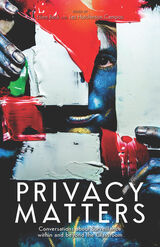
front cover of Privacy Matters
Privacy Matters
Conversations about Surveillance within and beyond the Classroom
Estee Beck
Utah State University Press, 2020
Privacy Matters examines how communications and writing educators, administrators, technological resource coordinators, and scholars can address the ways surveillance and privacy affect student and faculty composing, configure identity formation, and subvert the surveillance state.
 
This collection offers practical analyses of surveillance and privacy as they occur within classrooms and communities. Organized by themes—surveillance and classrooms, surveillance and bodies, surveillance and culture—Privacy Matters provides writing, rhetoric, and communication scholars and teachers with specific approaches, methods, inquiries, and examinations into the impact tracking and monitoring has upon people’s habits, bodies, and lived experiences.
 
While each chapter contributes a new perspective in the discipline and beyond, Privacy Matters affirms that these analyses remain inconclusive. This collection is a call for scholars, researchers, activists, and educators within rhetoric and composition to continue the scholarly conversation because privacy matters to all of us.
 
Contributors: Christina Cedillo, Jenae Cohn, Dànielle Nicole DeVoss, Dustin Edwards, Norah Fahim, Ann Hill Duin, Gavin P. Johnson, John Peterson, Santos Ramos, Colleen A. Reilly, Jennifer Roth Miller, Jason Tham, Stephanie Vie
 
[more]

logo for Pluto Press
The Privatisation of Israeli Security
Shir Hever
Pluto Press, 2017
From 1994-2014, Israel’s security service transformed and became one of the most extreme examples of privatized security in the world. The Privatisation of Israeli Security provides a comprehensive overview of this period and the socioeconomic conditions that enabled it. Shir Hever considers the impact of the ongoing crisis of Palestinian resistance to Israeli occupation, the influence of US military aid, and the effect of neoliberalism on state apparatus in order to make sense of this dramatic change in security policy. Through his revealing study, Hever shows how the structural violence of the neoliberal economy is self-perpetuating, providing a fresh perspective on the Israeli occupation for students, activists, and journalists alike. 
 
[more]

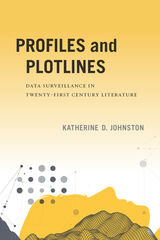
front cover of Profiles and Plotlines
Profiles and Plotlines
Data Surveillance in Twenty-first Century Literature
Katherine D. Johnston
University of Iowa Press, 2023
Algorithmic data profiling is not merely an important topic in contemporary fiction, it is an increasingly dominant form of storytelling and characterization in our society. These stories are being told inside boardrooms, banks, presidential briefings, police stations, advertising agencies, and technology companies. And so, to the extent that data has taken up storytelling, literature must take up data. After all, profiling coincides with character development; surveillance reflects point of view; and data points track as plot points in tales of the political economy.

In Profiles and Plotlines, Katherine Johnston engages this energetic reformation of contemporary literature to account for a society and economy of frenetic counting. Fiction and poetry are capable of addressing precisely that for which algorithms cannot or do not account: the effects of profile culture; the ideologies and supposed truth-power of data; the gendered and racialized dynamics of watching and being watched; and the politics of who counts and what gets counted. Johnston analyzes prescient work by contemporary authors such as Jennifer Egan, Claudia Rankine, Mohsin Hamid, and William Gibson to probe how the claims of data surveillance serve to make lives seem legible, intelligible, and sometimes even expendable.

 
[more]

front cover of The Right to Oblivion
The Right to Oblivion
Privacy and the Good Life
Lowry Pressly
Harvard University Press, 2024

A New Yorker Best Book of the Year

"A radiantly original contribution to a conversation gravely in need of new thinking."
–Ben Tarnoff, New Yorker


A visionary reexamination of the value of privacy in today’s hypermediated world—not just as a political right but as the key to a life worth living.

The parts of our lives that are not being surveilled and turned into data diminish each day. We are able to configure privacy settings on our devices and social media platforms, but we know our efforts pale in comparison to the scale of surveillance capitalism and algorithmic manipulation. In our hyperconnected era, many have begun to wonder whether it is still possible to live a private life, or whether it is no longer worth fighting for.

The Right to Oblivion argues incisively and persuasively that we still can and should strive for privacy, though for different reasons than we might think. Recent years have seen heated debate in the realm of law and technology about why privacy matters, often focusing on how personal data breaches amount to violations of individual freedom. Yet as Lowry Pressly shows, the very terms of this debate have undermined our understanding of privacy’s real value. In a novel philosophical account, Pressly insists that privacy isn’t simply a right to be protected but a tool for making life meaningful.

Privacy deepens our relationships with others as well as ourselves, reinforcing our capacities for agency, trust, play, self-discovery, and growth. Without privacy, the world would grow shallow, lonely, and inhospitable. Drawing inspiration from the likes of Hannah Arendt, Jorge Luis Borges, and a range of contemporary artists, Pressly shows why we all need a refuge from the world: not a place to hide, but a psychic space beyond the confines of a digital world in which the individual is treated as mere data.

[more]

logo for Harvard University Press
The Right to Oblivion
Privacy and the Good Life
Lowry Pressly
Harvard University Press

“A probing critique of a modern public sphere that overwhelms the private realm . . . Pressly offers a unique vision of what can be gained by stepping back from the outside world, and the screens that try to possess us.” —John Kaag, The Atlantic

A visionary reexamination of the value of privacy in today’s hypermediated world—not just as a political right but as the key to a life worth living.

Today, almost nothing in our digital lives escapes surveillance. We are able to configure privacy settings on our devices and social media platforms, but we know our efforts pale in comparison to the scale of surveillance capitalism and algorithmic manipulation. Many now wonder whether it is still possible to live a private life, or whether privacy is even worth fighting for.

The Right to Oblivion argues incisively and persuasively that we still can and should strive for privacy, though for different reasons than we might think. Debates about privacy often equate personal data breaches with violations of individual freedom. Yet, as Lowry Pressly argues, privacy isn’t simply a right to be protected, but a tool for making life meaningful.

Privacy deepens our relationships with others as well as ourselves, reinforcing our capacities for agency, trust, play, self-discovery, and growth. Without privacy, the world would be shallow, lonely, and inhospitable. Drawing inspiration from the likes of Hannah Arendt, Jorge Luis Borges, and a range of contemporary artists, Pressly shows why we all need a refuge from the world: not a place to hide, but a psychic space beyond the confines of a digital world where the individual is treated as mere data.

[more]

front cover of Sex Offenders, Stigma, and Social Control
Sex Offenders, Stigma, and Social Control
Rickard, Diana
Rutgers University Press, 2016
The 1990s witnessed a flurry of legislative initiatives—most notably, “Megan’s Law”—designed to control a population of sex offenders (child abusers) widely reviled as sick, evil, and incurable. In Sex Offenders, Stigma, and Social Control, Diana Rickard provides the reader with an in-depth view of six such men, exploring how they manage to cope with their highly stigmatized role as social outcasts. 
 
The six men discussed in the book are typical convicted sex offenders—neither serial pedophiles nor individuals convicted of the type of brutal act that looms large in public perceptions about sex crimes. Sex Offenders, Stigma, and Social Control explores how these individuals, who have been cast as social pariahs, construct their sense of self. How does being labeled in this way and controlled by measures such as Megan’s Law affect one’s identity and sense of social being?  Unlike traditional criminological and psychological studies of this population, this book frames their experiences in concepts of both deviance and identity, asking how men so highly stigmatized cope with the most extreme form of social marginality. Placing their stories within the context of the current culture of mass incarceration and zero-tolerance, Rickard provides a deeper understanding of the complex relationship between public policy and lived experience, as well as an understanding of the social challenges faced by this population, whose re-integration into society is far from simple or assured.  
 
Sex Offenders, Stigma, and Social Control makes a significant contribution to our understanding of sex offenders, offering a unique window into how individuals make meaning out of their experiences and present a viable—not monstrous—social self to themselves and others. 
 
[more]

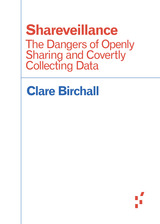
front cover of Shareveillance
Shareveillance
The Dangers of Openly Sharing and Covertly Collecting Data
Clare Birchall
University of Minnesota Press, 2017

Cracking open the politics of transparency and secrecy

In an era of open data and ubiquitous dataveillance, what does it mean to “share”? This book argues that we are all “shareveillant” subjects, called upon to be transparent and render data open at the same time as the security state invests in practices to keep data closed. Drawing on Jacques Rancière’s “distribution of the sensible,” Clare Birchall reimagines sharing in terms of a collective political relationality beyond the veillant expectations of the state.

[more]

front cover of Shock and Yawn
Shock and Yawn
Resisting Banal Terror Through Queer Storytelling
Megan Sibbett
The Ohio State University Press, 2026
In Shock and Yawn, Megan Sibbett confronts state-sanctioned, mundane violence committed in the name of protection and argues that queer storytelling is an ideal avenue for recognizing, theorizing, and subverting it: Through queer stories, we have a direct window into the real-world ramifications of violence that purports to be for the public good. This violence, reinforced and normalized through surveillance campaigns, failure-to-protect laws, border policies, and government messaging, is obscured by both its banality and its benevolent veneer, in which children, or imagined children, are central to its logic of protection.

Building on queer theorists’ critiques of intimate and administrative violence, especially Gloria Anzaldúa’s “intimate terrorism,” Sibbett develops methodologies for conceptualizing and subverting violence aimed at queer, racialized, and gendered bodies in this era of surveillance and increasing authoritarianism. Sibbett addresses book bans, anti-trans legislation, idealized histories of westward expansion, and more, examining materials that include public service announcements, advertising, social media, news reports, poems, interviews, and novels. In so doing, she demonstrates the crucial role queer testimonies—and queer histories and queer futures—play in revealing systemic violence and illuminating the transformative potential of everyday resistance.
[more]

front cover of Sovereign, Settler, Leaker, Lie
Sovereign, Settler, Leaker, Lie
Forms of the Secret in US Political Rhetoric
Atilla Hallsby
The Ohio State University Press, 2026

In Sovereign, Settler, Leaker, Lie, Atilla Hallsby argues that secrets play a pivotal role in organizing political discourse in the United States. Hallsby takes up contemporary case studies—ranging from the Valerie Plame scandal during the George W. Bush presidency, to the use of Saul Alinsky’s name as a partisan codeword for politicizing Obama’s Blackness, to Chelsea Manning’s public naming and outing—to show how dramatic revelations increasingly fail to produce meaningful change and instead reproduce entrenched racial, gendered, and colonial hierarchies.

The core feature of these interlinked moments of crisis is the secret: a rhetorical patterning of political life organized by specific forms, each one lending a familiar shape to the shadows of American empire. These forms, theorized here as tropes, connect decades of secrets, linking the George W. Bush administration’s War on Terror to the Trump-era reemergence of “deep state” conspiracy theories. As an extension of secrecy and surveillance studies, and with the aim of attaining a more accountable and just form of US governmentality, Sovereign, Settler, Leaker, Lie explains how still-unfolding political realities in the United States emerged, transformed, and regenerate.

[more]

front cover of Spying with Maps
Spying with Maps
Surveillance Technologies and the Future of Privacy
Mark Monmonier
University of Chicago Press, 2002
Maps, as we know, help us find our way around. But they're also powerful tools for someone hoping to find you. Widely available in electronic and paper formats, maps offer revealing insights into our movements and activities, even our likes and dislikes. In Spying with Maps, the "mapmatician" Mark Monmonier looks at the increased use of geographic data, satellite imagery, and location tracking across a wide range of fields such as military intelligence, law enforcement, market research, and traffic engineering. Could these diverse forms of geographic monitoring, he asks, lead to grave consequences for society? To assess this very real threat, he explains how geospatial technology works, what it can reveal, who uses it, and to what effect.

Despite our apprehension about surveillance technology, Spying with Maps is not a jeremiad, crammed with dire warnings about eyes in the sky and invasive tracking. Monmonier's approach encompasses both skepticism and the acknowledgment that geospatial technology brings with it unprecedented benefits to governments, institutions, and individuals, especially in an era of asymmetric warfare and bioterrorism. Monmonier frames his explanations of what this new technology is and how it works with the question of whether locational privacy is a fundamental right. Does the right to be left alone include not letting Big Brother (or a legion of Little Brothers) know where we are or where we've been? What sacrifices must we make for homeland security and open government?

With his usual wit and clarity, Monmonier offers readers an engaging, even-handed introduction to the dark side of the new technology that surrounds us—from traffic cameras and weather satellites to personal GPS devices and wireless communications.

[more]

front cover of State of Fear
State of Fear
Policing a Postcolonial City
Joshua Barker
Duke University Press, 2024
In State of Fear, Joshua Barker reckons with how fear and violence are produced and reproduced through everyday practices of rule and control. Examining the ethnographic and historical genealogies of Indonesian policing, Barker focuses on the city of Bandung, which is permeated by anxieties about security, in spite of the fact that it’s a relatively safe city according to the data. Drawing from his fieldwork there during the latter years of the authoritarian New Order regime, Barker traces the complex relationship between the state and vigilante groups like neighborhood watch patrols and street gangs. Through interviews with police officers, vigilantes, and street-level toughs, he uncovers a struggle between two visions of social control that continues to animate policing in Indonesia: the modern, bureaucratic approach favored by the state, and a territorial approach that divides the city into fiefdoms overseen by charismatic individuals of authority. Synthesizing insights from in-depth ethnographic, historical, and theoretical work, Barker reveals how authoritarianism can take root not just from the top down but also from the bottom up.
[more]

front cover of Technocreep and the Politics of Things Not Seen
Technocreep and the Politics of Things Not Seen
Neda Atanasoski and Nassim Parvin, editors
Duke University Press, 2025
New and emerging technologies, especially ones that infiltrate intimate spaces, relations, homes, and bodies, are often referred to as creepy in media and political discourses. In Technocreep and the Politics of Things Not Seen, Neda Atanasoski and Nassim Parvin introduce a feminist theory of creep that they substantiate through critical engagement with smart homes, smart dust, smart desires, and smart forests toward dreams of feminist futures. Contributing authors further illuminate what is otherwise obscured, assumed, or dismissed in characterizations of technology as creepy or creeping. Considering diverse technologies such as border surveillance and China’s credit system to sexcams and home assistants, the volume’s essays and artworks demonstrate that the potentials and pitfalls of artificial intelligence and digital and robotic technologies cannot be assessed through binaries of seeing/being seen, privacy/surveillance, or harmful/useful. Together, their multifaceted and multimodal approach transcends such binaries, accounting for technological relations that exceed sight to include touch, presence, trust, and diverse modes of collectivity. As such, this volume develops creep as a feminist analytic and creative mode on par with technology’s complex entanglement with intimate, local, and global politics.

Contributors. Neda Atanasoski, Katherine Bennett, Iván Chaar López, Sushmita Chatterjee, Hayri Dortdivanlioglu, Sanaz Haghani, Jacob Hagelberg, Jennifer Hamilton, Antonia Hernández, Marjan Khatibi, Tamara Kneese, Erin McElroy, Vernelle A. A. Noel, Jessica Olivares, Nassim Parvin, Beth Semel, Renee Shelby, Tanja Wiehn
[more]

front cover of Terror Capitalism
Terror Capitalism
Uyghur Dispossession and Masculinity in a Chinese City
Darren Byler
Duke University Press, 2021
In Terror Capitalism anthropologist Darren Byler theorizes the contemporary Chinese colonization of the Uyghur Muslim minority group in the northwest autonomous region of Xinjiang. He shows that the mass detention of over one million Uyghurs in “reeducation camps” is part of processes of resource extraction in Uyghur lands that have led to what he calls terror capitalism—a configuration of ethnoracialization, surveillance, and mass detention that in this case promotes settler colonialism. Drawing on ethnographic fieldwork in the regional capital Ürümchi, Byler shows how media infrastructures, the state’s enforcement of “Chinese” cultural values, and the influx of Han Chinese settlers contribute to Uyghur dispossession and their expulsion from the city. He particularly attends to the experiences of young Uyghur men—who are the primary target of state violence—and how they develop masculinities and homosocial friendships to protect themselves against gendered, ethnoracial, and economic violence. By tracing the political and economic stakes of Uyghur colonization, Byler demonstrates that state-directed capitalist dispossession is coconstructed with a colonial relation of domination.
[more]

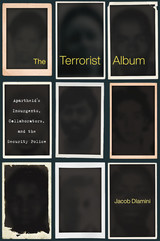
front cover of The Terrorist Album
The Terrorist Album
Apartheid’s Insurgents, Collaborators, and the Security Police
Jacob Dlamini
Harvard University Press, 2020

An award-winning historian and journalist tells the very human story of apartheid’s afterlife, tracing the fates of South African insurgents, collaborators, and the security police through the tale of the clandestine photo album used to target apartheid’s enemies.

From the 1960s until the early 1990s, the South African security police and counterinsurgency units collected over 7,000 photographs of apartheid’s enemies. The political rogue’s gallery was known as the “terrorist album,” copies of which were distributed covertly to police stations throughout the country. Many who appeared in the album were targeted for surveillance. Sometimes the security police tried to turn them; sometimes the goal was elimination.

All of the albums were ordered destroyed when apartheid’s violent collapse began. But three copies survived the memory purge. With full access to one of these surviving albums, award-winning South African historian and journalist Jacob Dlamini investigates the story behind these images: their origins, how they were used, and the lives they changed. Extensive interviews with former targets and their family members testify to the brutal and often careless work of the police. Although the police certainly hunted down resisters, the terrorist album also contains mug shots of bystanders and even regime supporters. Their inclusion is a stark reminder that apartheid’s guardians were not the efficient, if morally compromised, law enforcers of legend but rather blundering agents of racial panic.

With particular attentiveness to the afterlife of apartheid, Dlamini uncovers the stories of former insurgents disenchanted with today’s South Africa, former collaborators seeking forgiveness, and former security police reinventing themselves as South Africa’s newest export: “security consultants” serving as mercenaries for Western nations and multinational corporations. The Terrorist Album is a brilliant evocation of apartheid’s tragic caprice, ultimate failure, and grim legacy.

[more]

front cover of A Thousand Paper Cuts
A Thousand Paper Cuts
US Empire and the Bureaucratic Life of War
Anjali Nath
Duke University Press, 2025
In A Thousand Paper Cuts, Anjali Nath considers the paper worlds made and destroyed by US imperialism. From the slogans of anti-Communist Cold Warriors against a spectral “Paper Curtain” to the scuttled efforts of activists who sought to document America’s surveillance regime amidst the US war on Vietnam, Nath offers a pre-history of the redacted visions of the Homeland Security age. Nath shows how declassified documents tell the story of American counterinsurgency at home and abroad, revealing the imperial grammar beneath the abundant redactions of contemporary visual culture. Tracing the liberal political rhetoric that inspired the Freedom of Information Act in the 1960s, through to the Bush-era’s exuberant secrecy to the contemporary artists who subversively repurpose redacted documents in collage and critique, Nath maps the formation of the security state, its bureaucratic regimes of surveillance, and the racial logic of transparency.
[more]

front cover of Threshold
Threshold
How Smart Homes Change Us Inside and Out
Heather Suzanne Woods
University of Alabama Press, 2024
An urgent and cautionary examination of the totalizing effect of smart home technology on the lives of those who live in them—and those who don’t

Smart homes are here—domestic spaces bristling with networked technologies that appear to enhance work, entertainment, logistics, health, and security. But these technologies may also extract a cost in attention, money, and privacy. In Threshold, communication and technology expert Heather Suzanne Woods applies rhetorical theory to answer the urgent question of how swiftly proliferating smart homes alter those who inhabit them.

Building on extensive research into smart homes in the United States, Woods recounts how smart homes arose and predicts the trajectory of their future form. She pulls back the curtain on the technology, probes who is in control, and questions whether a home can be too smart. She reveals how smart homes incentivize ubiquitous computing as a daily practice, priming smart home occupants for permanent transactional existence largely controlled by corporate interests.

Woods suggests a dynamic cultural framework for understanding smart homes that takes into account sociotechnical variables such as gender, class, income, race, criminal justice, and more through which smart homes shape human life. Woods’s framework reveals how smart homes both reflect social norms about technology as well as whet consumer appetites for an ever more totalizing relationship with technology. She argues that this progression leads to “living in digitality,” a cultural state of constant use and reliance on technology.

Written for homeowners, policymakers, technology enthusiasts, and scholars, Threshold interweaves meticulously researched critical analysis with matter-of-fact graphics that map relationships between digital tools and social life. Readers will appreciate this bracing assessment of smart technologies that empowers smart home users to make informed decisions about their dwellings.
 
[more]

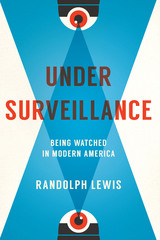
front cover of Under Surveillance
Under Surveillance
Being Watched in Modern America
By Randolph Lewis
University of Texas Press, 2017

Never before has so much been known about so many. CCTV cameras, TSA scanners, NSA databases, big data marketers, predator drones, “stop and frisk” tactics, Facebook algorithms, hidden spyware, and even old-fashioned nosy neighbors—surveillance has become so ubiquitous that we take its presence for granted. While many types of surveillance are pitched as ways to make us safer, almost no one has examined the unintended consequences of living under constant scrutiny and how it changes the way we think and feel about the world. In Under Surveillance, Randolph Lewis offers a highly original look at the emotional, ethical, and aesthetic challenges of living with surveillance in America since 9/11.

Taking a broad and humanistic approach, Lewis explores the growth of surveillance in surprising places, such as childhood and nature. He traces the rise of businesses designed to provide surveillance and security, including those that cater to the Bible Belt’s houses of worship. And he peers into the dark side of playful surveillance, such as eBay’s online guide to “Fun with Surveillance Gadgets.” A worried but ultimately genial guide to this landscape, Lewis helps us see the hidden costs of living in a “control society” in which surveillance is deemed essential to governance and business alike. Written accessibly for a general audience, Under Surveillance prompts us to think deeply about what Lewis calls “the soft tissue damage” inflicted by the culture of surveillance.


[more]

front cover of The Vital Realities for 2020 and Beyond
The Vital Realities for 2020 and Beyond
Writings on Water Wars, Nuclear Devastation, Endless War, Economic Revolution, and Surveillance Versus Freedom
Roger Armbrust
Parkhurst Brothers, Inc., 2019
This collection of writings by journalist Roger Armbrust focuses on national and international public policy concerns. Armbrust is particularly concerned with water resource policy, both nationally and internationally, the increasing likelihood of nuclear war, given the proliferation of nuclear powers and the destruction of nuclear treaties. Armbrust is concerned that the USA seems to be at war somewhere nearly always, a condition that enhances the power of the military-industrial complex in this country and abroad. Economic instability exacerbated by mounting public and private debt is another of his recurring themes. The continuum of government-and corporate efforts to stifle sustainable economic progress of poorer peoples leads to social instability worldwide.
 
[more]

front cover of When Riot Cops Are Not Enough
When Riot Cops Are Not Enough
The Policing and Repression of Occupy Oakland
King, Mike
Rutgers University Press, 2017
In When Riot Cops Are Not Enough, sociologist and activist Mike King examines the policing, and broader political repression, of the Occupy Oakland movement during the fall of 2011 through the spring of 2012. King’s active and daily participation in that movement, from its inception through its demise, provides a unique insider perspective to illustrate how the Oakland police and city administrators lost the ability to effectively control the movement.
 
Drawn from King’s intensive field work, the book focuses on the physical, legal, political, and ideological dimensions of repression—in the streets, in courtrooms, in the media, in city hall, and within the movement itself—When Riot Cops Are Not Enough highlights the central role of political legitimacy, both for mass movements seeking to create social change, as well as for governmental forces seeking to control such movements. Although Occupy Oakland was different from other Occupy sites in many respects, King shows how the contradictions it illuminated within both social movement and police strategies provide deep insights into the nature of protest policing generally, and a clear map to understanding the full range of social control techniques used in North America in the twenty-first century.
 
[more]


Send via email Share on Facebook Share on Twitter