
 A SCHOLARLY BOOK REPOSITORY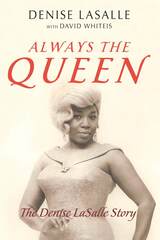
As honest and no-nonsense as the artist herself, Always the Queen is LaSalle's in-her-own-words story of a lifetime in music. Moving to Chicago as a teen, LaSalle launched a career in gospel and blues that eventually led to the chart-topping 1971 smash ”Trapped by a Thing Called Love” and a string of R&B hits. She reinvented herself as a soul-blues artist as tastes changed and became a headliner on the revitalized southern soul circuit and at festivals nationwide and overseas. Revered for a tireless dedication to her music and fans, LaSalle continued to tour and record until shortly before her death.
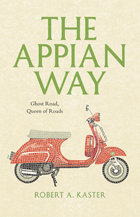
The Roman poet Statius called the via Appia “the Queen of Roads,” and for nearly a thousand years that description held true, as countless travelers trod its path from the center of Rome to the heel of Italy. Today, the road is all but gone, destroyed by time, neglect, and the incursions of modernity; to travel the Appian Way today is to be a seeker, and to walk in the footsteps of ghosts.
Our guide to those ghosts—and the layers of history they represent—is Robert A. Kaster. In The Appian Way, he brings a lifetime of studying Roman literature and history to his adventures along the ancient highway. A footsore Roman soldier pushing the imperial power south; craftsmen and farmers bringing their goods to the towns that lined the road; pious pilgrims headed to Jerusalem, using stage-by-stage directions we can still follow—all come to life once more as Kaster walks (and drives—and suffers car trouble) on what’s left of the Appian Way. Other voices help him tell the story: Cicero, Goethe, Hawthorne, Dickens, James, and even Monty Python offer commentary, insight, and curmudgeonly grumbles, their voices blending like the ages of the road to create a telescopic, perhaps kaleidoscopic, view of present and past.
To stand on the remnants of the Via Appia today is to stand in the pathway of history. With The Appian Way, Kaster invites us to close our eyes and walk with him back in time, to the campaigns of Garibaldi, the revolt of Spartacus, and the glory days of Imperial Rome. No traveler will want to miss this fascinating journey.

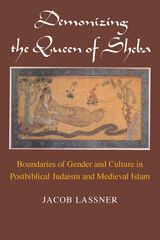
The Bible presents the Queen of Sheba's encounter with King Solomon as a diplomatic mission: the queen comes "to test him with hard questions," all of which he answers to her satisfaction; she then praises him and, after an exchange of gifts, returns to her own land. By the Middle Ages, Lassner demonstrates, the focus of the queen's visit had shifted from international to sexual politics. The queen was now portrayed as acting in open defiance of nature's equilibrium and God's design. In these retellings, the authors humbled the queen and thereby restored the world to its proper condition.
Lassner also examines the Islamization of Jewish themes, using the dramatic accounts of Solomon and his female antagonist as a test case of how Jewish lore penetrated the literary imagination of Muslims. Demonizing the Queen of Sheba thus addresses not only specialists in Jewish and Islamic studies, but also those concerned with issues of cultural transmission and the role of gender in history.
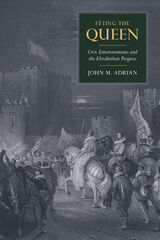
While previous scholars have studied Elizabeth I and her visits to the homes of influential courtiers, Fêting the Queen places a new emphasis on the civic communities that hosted the monarch and their efforts to secure much needed support. Case studies of the cities of Oxford, Canterbury, Sandwich, Bristol, Worcester, and Norwich focus on the concepts of hospitality and space—including the intimate details of the built environment.
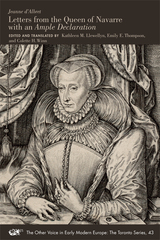
This edition presents in English, for the first time, Jeanne d’Albret’s Letters to the king, his mother, his brother, her own brother-in-law, and the queen of England, together with her Ample Declaration (1568) defending her decampment to the Protestant stronghold of La Rochelle. A historical-biographical introduction situates these writings in the larger context of Reformation politics and examines in detail the specific literary characteristics of her memoir. In her works, Jeanne d’Albret asserts her own position as legal sovereign of Béarn and Navarre and situates herself at the nexus of overlapping political, religious, and familial tensions.

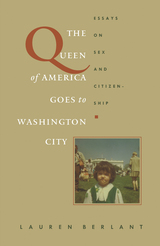
As Berlant traces the guiding images of U.S. citizenship through the process of privatization, she discusses the ideas of intimacy that have come to define national culture. From the fantasy of the American dream to the lessons of Forrest Gump, Lisa Simpson to Queer Nation, the reactionary culture of imperilled privilege to the testimony of Anita Hill, Berlant charts the landscape of American politics and culture. She examines the consequences of a shrinking and privatized concept of citizenship on increasing class, racial, sexual, and gender animosity and explores the contradictions of a conservative politics that maintains the sacredness of privacy, the virtue of the free market, and the immorality of state overregulation—except when it comes to issues of intimacy.
Drawing on literature, the law, and popular media, The Queen of America Goes to Washington City is a stunning and major statement about the nation and its citizens in an age of mass mediation. As it opens a critical space for new theory of agency, its narratives and gallery of images will challenge readers to rethink what it means to be American and to seek salvation in its promise.

This is the first biography in a hundred years of Jeanne d'Albret, a femme politique worthy of comparison with Elizabeth of England (her ally) and Catherine de Medici (her opponent) in a period when all the political and ideological currents of Reformation Europe converged in France. Her career as a feudal ruler in southwest France illustrates the changing relations between the high nobility and the crown, while her role as co-leader, with Coligny, of the Calvinist party at its height contributes to an understanding of the failure of the French Reformation. As the mother of Henry IV, she was responsible for the political education of France's most popular king, some of whose problems were inherited from her along with the models for some solutions.
The daughter of Marguerite de Navarre, Jeanne d'Albret experienced a dramatic series of crises which her uncompromising Calvinism and iron will enabled her to survive. In addition to the many unpublished letters included here, the author's insights into the character and motives of this unusual woman constitute one of the most enlightening aspects of her biography. Nancy Lyman Roelker's vivid style breathes life into a host of fascinating figures in an era in France richly colored by intrigue, war, and turbulent religious conflict.

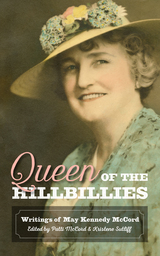
May Kennedy McCord, lovingly nicknamed “First Lady of the Ozarks” and “Queen of the Hillbillies,” spent half a century sharing the history, songs, and stories of her native Ozarks through newspaper columns, radio programs, and music festivals. Though her work made her one of the twentieth century’s preeminent folklorists, McCord was first and foremost an entertainer—at one time nearly as renowned as the hills she loved.
Despite the encouragement of her contemporaries, McCord never published a collection of her work. In 1956, Vance Randolph wrote to her, “If you didn’t have such a mental block against writing books, I could show you how to make a book out of extracts from your columns. It would be very little work, and sell like hotcakes. . . . I could write a solemn little introduction, telling the citizens what a fine gal you are! The hell of it is, most of the readers know all about you.” In Queen of the Hillbillies, editors Patti McCord and Kristene Sutliff at last bring together the best of McCord’s published and previously unpublished writings to share her knowledge, humor, and inimitable spirit with a new generation of readers.

READERS
Browse our collection.
PUBLISHERS
See BiblioVault's publisher services.
STUDENT SERVICES
Files for college accessibility offices.
RECENTLY PUBLISHED





UChicago Accessibility Resources
home | accessibility | search | about | contact us
BiblioVault ® 2001 - 2024
The University of Chicago Press