
 A SCHOLARLY BOOK REPOSITORY
19 start with O start with O
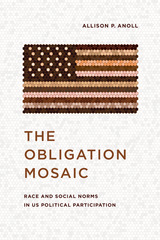
In The Obligation Mosaic, Allison P. Anoll shows that the obligations that bring people into the political world—or encourage them to stay away—vary systematically by race in the United States, with broad consequences for representation. Drawing on a rich mix of interviews, surveys, and experiments with Asian, Black, Latino, and White Americans, the book uncovers two common norms that centrally define concepts of obligation: honoring ancestors and helping those in need. Whether these norms lead different groups to politics depends on distinct racial histories and continued patterns of segregation.
Anoll’s findings not only help to explain patterns of participation but also provide a window into opportunities for change, suggesting how activists and parties might better mobilize marginalized citizens.
Anger is an emotion that affects everyone regardless of culture, class, race, or gender—but at the same time, being angry always results from the circumstances in which people find themselves. In On Anger, Sue J. Kim opens a stimulating dialogue between cognitive studies and cultural studies to argue that anger is always socially and historically constructed and complexly ideological, and that the predominant individualistic conceptions of anger are insufficient to explain its collective, structural, and historical nature.
On Anger examines the dynamics of racial anger in global late capitalism, bringing into conversation work on political anger in ethnic, postcolonial, and cultural studies with recent studies on emotion in cognitive studies. Kim uses a variety of literary and media texts to show how narratives serve as a means of reflecting on experiences of anger and also how we think about anger—its triggers, its deeper causes, its wrongness or rightness. The narratives she studies include the film Crash, Maxine Hong Kingston’s The Woman Warrior, Tsitsi Dangarembga’s Nervous Conditions and The Book of Not, Ngugi wa Thiong’o’s Devil on the Cross and Wizard of the Crow, and the HBO series The Wire. Kim concludes by distinguishing frustration and outrage from anger through a consideration of Stéphane Hessel’s call to arms, Indignez-vous! One of the few works that focuses on both anger and race, On Anger demonstrates that race—including whiteness—is central to our conceptions and experiences of anger.
In this boldly interpretive narrative, William McKee Evans tells the story of America's paradox of democracy entangled with a centuries-old system of racial oppression. This racial system of interacting practices and ideas first justified black slavery, then, after the Civil War, other forms of coerced black labor and, today, black poverty and unemployment.
At three historical moments, a crisis in the larger society opened political space for idealists to challenge the racial system: during the American Revolution, then during the "irrepressible conflict" ending in the Civil War, and, finally, during the Cold War and the colonial liberation movements. Each challenge resulted in an historic advance. But none swept clean. Many African Americans remain segregated in jobless ghettoes with dilapidated schools and dismal prospects in an increasingly polarized class society.
Evans sees a new crisis looming in a convergence of environmental disaster, endless wars, and economic collapse, which may again open space for a challenge to the racial system. African Americans, with their memory of their centuries-old struggle against oppressors, appear uniquely placed to play a central role.

In Opportunity Lost, Marcus D. Pohlmann examines the troubling issue of why Memphis city school students are underperforming at alarming rates. His provocative interdisciplinary analysis, combining both history and social science, examines the events before and after desegregation, compares a city school to an affluent suburban school to pinpoint imbalances, and offers critical assessments of various educational reforms.
In addition to his analysis of the problems, Pohlmann lays out educational reforms that run the gamut from early intervention and parental involvement to increasing teacher compensation, improving time utilization, and more. Pohlmann’s illuminating and original study has wide application for a problem that bedevils inner-city children everywhere and prevents the promise of equality from reaching all of our nation’s citizens.
In Opportunity Lost, Marcus D. Pohlmann examines the troubling issue of why Memphis city school students are underperforming at alarming rates. His provocative interdisciplinary analysis, combining both history and social science, examines the events before and after desegregation, compares a city school to an affluent suburban school to pinpoint imbalances, and offers critical assessments of various educational reforms.
Employing a rich trove of data to demonstrate the realities of racial and economic inequality, Pohlmann underscores the difficulties that plague the urban schools and their students-problems that persist despite the fact that the city schools often have more resource advantages than the county schools: better student-to-teacher ratios, more teachers with advanced degrees, and even greater spending on each student. Pohlmann demonstrates that post-industrial economic shifts and continuing racial exclusion have resulted in a predominance of low-income students at these schools. This economic disadvantage has had a lasting impact on performance among students at all grade levels and has not been reversed simply by increasing resources.
In addition to his analysis of the problems, Pohlmann lays out educational reforms that run the gamut from early intervention and parental involvement to increasing class size and teacher compensation, improving time utilization, and more. Pohlmann's illuminating and original study has wide application for a problem that bedevils inner-city children everywhere and prevents the promise of equality from reaching all of our nation's citizens.
Marcus D. Pohlmann is professor of political science at Rhodes College. He is the author of Governing the Postindustrial City; coauthor, with Michael P. Kirby, of Racial Politics at the Crossroads: Memphis Elects W. W. Herenton; and editor of the six-volume African American Political Thought.
By organizing workers into neighborhood locals, which connected workplace struggles to ethnic and religious identities, the CFL facilitated a surge in the organization’s membership, particularly among African American workers, and afforded the federation the opportunity to aggressively confront employers. The CFL’s innovative structure, however, was ultimately its demise. Linking union locals to neighborhoods proved to be a form of de facto segregation. Over time union structures, rank-and-file conflicts, and employer resistance combined to turn the union’s hopeful calls for solidarity into animosity and estrangement. Tensions were exacerbated by violent shop floor confrontations and exploded in the bloody 1919 Chicago Race Riot. By the early 1920s, the CFL had collapsed.
The Ordeal of the Jungle explores the choices of a variety of people while showing a complex, overarching interplay of black and white workers and their employers. In addition to analyzing union structures and on-the-ground relations between workers, Bates synthesizes and challenges previous scholarship on interracial organizing to explain the failure of progressive unionism in Chicago.

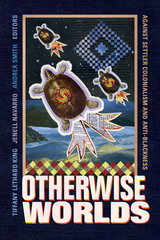
Contributors
Maile Arvin, Marcus Briggs-Cloud, J. Kameron Carter, Ashon Crawley, Denise Ferreira da Silva, Chris Finley, Hotvlkuce Harjo, Sandra Harvey, Chad B. Infante, Tiffany Lethabo King, Jenell Navarro, Lindsay Nixon, Kimberly Robertson, Jared Sexton, Andrea Smith, Cedric Sunray, Se’mana Thompson, Frank B. Wilderson
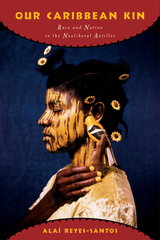
Our Caribbean Kin considers three key moments in the region’s history: the nineteenth century, when the antillanismo movement sought to throw off the yoke of colonial occupation; the 1930s, at the height of the region’s struggles with US imperialism; and the past thirty years, as neoliberal economic and social policies have encroached upon the islands. At each moment, the book demonstrates, specific tropes of brotherhood, marriage, and lineage have been mobilized to construct political kinship among Antilleans, while racist and xenophobic discourses have made it difficult for them to imagine themselves as part of one big family.
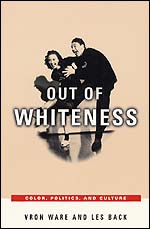
Vron Ware and Les Back look at key points in recent American and British culture where the "color line" has been blurred. Through probing accounts of racial masquerades in popular literature, the growth of the white power music scene on the Internet, the meteoric rise of big band jazz during the Second World War, and the pivotal role of white session players in crafting rhythm and blues classics by black artists, Ware and Back upset the idea of race as a symbol of inherent human attributes. Their book gives us a timely reckoning of the forces that continue to make people "white," and reveals to us the polyglot potential of identities and cultures.
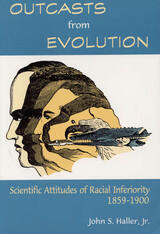
In the only book to date to explore the period between the 1859 publication of Darwin’s Origin of Species and the discovery in 1900 of Gregor Mendel’s experiments in genetics, John S. Haller, Jr., shows the relationship between scientific "conviction" and public policy. He focuses on the numerous liberally educated American scientists who were caught up in the triumph of evolutionary ideas and who sought to apply those ideas to comparative morality, health, and the physiognomy of nonwhite races.
During this period, the natural and social scientists of the day not only accepted without question the genetic and cultural superiority of the Caucasian; they also asserted that the Caucasian race held a monopoly on evolutionary progress, arguing that "inferior races" were no more than evolutionary survivors doomed by their genetic legacy to remain outcasts from evolution.
Hereditarians and evolutionists believed that "less fit" human races were perishing from the rigors of civilization’s struggle and competition. Indeed, racial inferiority lay at the very foundation of the evolutionary framework and, remaining there, rose to the pinnacle of "truth" with the myth of scientific certainty.
READERS
Browse our collection.
PUBLISHERS
See BiblioVault's publisher services.
STUDENT SERVICES
Files for college accessibility offices.
RECENTLY PUBLISHED



UChicago Accessibility Resources
home | accessibility | search | about | contact us
BiblioVault ® 2001 - 2024
The University of Chicago Press