
 A SCHOLARLY BOOK REPOSITORY
America’s national parks are facing unprecedented challenges. With visitation pressures mounting and the National Park Service struggling to keep up, author and former park ranger Steve Kemp looks toward one exceptionally effective historical example of conservation philanthropy and park building—the collaboration between John D. Rockefeller Jr. and NPS legends Stephen Mather, Horace Albright, and Arno Cammerer.
An Exaltation of Parks reveals the inspiring story of this collaboration, showing how the partnership transformed some of America's most cherished national parks, including Acadia, Grand Teton, Great Smoky Mountains, Yellowstone, and Yosemite. It recounts Rockefeller’s lifelong dedication to conservation, digging into his own pockets and toiling as a volunteer to achieve his goals for converting private land into public use. Bringing to life the history and significance of America’s most magnificent landscapes, this volume is both a tribute to past conservation victories and a call to action for the future, emphasizing the need for continued vigilance to preserve these national treasures for generations to come.
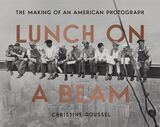
Lunch on a Beam, also known as Lunch Atop a Skyscraper, shows ironworkers eating lunch on a steel beam during the construction of Rockefeller Center’s RCA Building in 1932. It’s a photo so famous you can likely picture it in your mind: seated in a row, eleven men chat and break bread 850 feet above the ground, the dense cityscape behind them. While the scene may look spontaneous, the photo was taken during a publicity shoot to promote Rockefeller Center’s new skyscraper. And despite the image’s renown, for years, little information was available about its subjects or its photographer.
In Lunch on a Beam, Rockefeller Center archivist Christine Roussel interweaves the art, architectural, and social history behind the photograph with her personal experience as a confidante to the financiers who developed Rockefeller Center. She tells the stories of the fearless photographers, brazen publicity men, the ironworkers, and their immigrant and Indigenous communities. This portrait of eleven construction workers, she points out, is also a celebration of the nation’s richest man. She examines how, in the depths of the Great Depression, John D. Rockefeller, Jr., took it upon himself to build a monument to American industry and sell it to the public.
Featuring striking images from the Rockefeller Center Archives, Lunch on a Beam calls attention to the fascinating paradoxes contained in a single photo and celebrates the men who built an architectural marvel at great personal risk. This is a story of art and commerce, and the role of a photograph in the mythmaking of New York City.
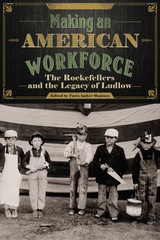
Focusing on the workers themselves—men, women, and children representative of a variety of immigrant and ethnic groups—contributors trace the emergence of the Employee Representation Plan, the work of the company's Sociology Department, and CF&I's interactions with the YMCA in the early twentieth century. They examine CF&I's early commitment to Americanize its immigrant employees and shape worker behavior, the development of policies that constructed the workforce it envisioned while simultaneously laying the groundwork for the strike that eventually led to the Ludlow Massacre, and the impact of the massacre on the employees, the company, and beyond.
Making an American Workforce provides greater insight into the repercussions of the Industrial Representation Plan and the Ludlow Massacre, revealing the long-term consequences of Colorado Fuel and Iron Company policies on the American worker, the state of Colorado, and the creation of corporate culture. Making an American Workforce will be of interest to Western, labor, and business historians.
READERS
Browse our collection.
PUBLISHERS
See BiblioVault's publisher services.
STUDENT SERVICES
Files for college accessibility offices.
RECENTLY PUBLISHED





UChicago Accessibility Resources
home | accessibility | search | about | contact us
BiblioVault ® 2001 - 2026
The University of Chicago Press