
 A SCHOLARLY BOOK REPOSITORY
27 start with A start with A
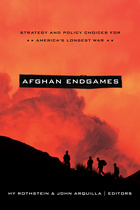
A balanced, comprehensive, and clear-eyed survey of the alternative strategies that can be pursued with the hope of restoring peace and stability to Afghanistan.
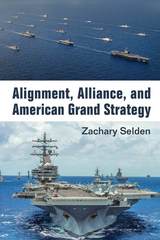
Amid calls for retrenchment or restraint, Selden makes the case that a policy focused on maintaining American military preeminence and the demonstrated willingness to use force may be what sustains the cooperation of second-tier states, which in turn help to maintain US hegemony at a manageable cost.

What qualities make an ally useful in coalition warfare, and when is an ally more trouble than it’s worth? Allies That Count analyzes the utility of junior partners in coalition warfare and reaches surprising conclusions.
In this volume, Olivier Schmitt presents detailed case-study analysis of several US allies in the Gulf War, the Kosovo campaign, the Iraq War, and the war in Afghanistan. He also includes a broader comparative analysis of 204 junior partners in various interventions since the end of the Cold War. This analysis bridges a gap in previous studies about coalition warfare, while also contributing to policy debates about a recurring defense dilemma. Previous works about coalition warfare have focused on explaining how coalitions are formed, but little attention has been given to the issue of their effectiveness. Simultaneously, policy debates, have framed the issue of junior partners in multinational military operations in terms of a trade-off between the legitimacy that is allegedly gained from a large number of coalition states vs. the decrease in military effectiveness associated with the inherent difficulties of coalition warfare. Schmitt determines which political and military variables are more likely to create utility, and he challenges the conventional wisdom about the supposed benefit of having as many states as possible in a coalition. Allies That Count will be of interest to students and scholars of security studies and international relations as well as military practitioners and policymakers.

The classic road toward nuclear disarmament appears to be closed for the foreseeable future, but there may be another route. In the last fifty years, well-conceived regional treaties have been developed in Latin America, the South Pacific, Africa, Southeast Asia, and Central Asia. These arrangements have developed for many and varied political and security reasons, but now virtually all of the Southern Hemisphere and important parts of the Northern Hemisphere are legally nuclear-weapon-free. These regional nuclear weapon disarmament treaties are formally respected by the five states recognized under the Non-Proliferation Treaty (NPT) as nuclear weapon states: the United States, the United Kingdom, Russia, France, and China—often referred to collectively as the P-5 states.
Variations of these regional treaties might eventually be negotiated in the Middle East, Northeast Asia, and South Asia, setting aside the P-5 states until the very end of the process. With regional agreements in place around the globe, negotiation among the P-5 states would be all that stands between the world community and the banishment of nuclear weapons, verifiably and effectively worldwide. By the time this point is reached, Russia and the United States might be able to cooperate.
Essential reading for policy advisors, foreign service professionals, and scholars in political science, The Alternate Route examines the possibilities of nuclear-weapon-free zones as a pathway to worldwide nuclear disarmament.
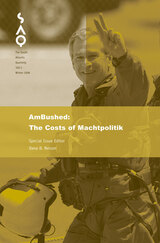
One essay argues that the Left has ceded its political vision—forgoing active political organization in favor of simply voicing political criticism of the president—allowing its activist sensibilities and abilities to atrophy. Others explore the Bush administration, its masterful machtpolitik (power politics), its strategic feminization of its opposition, its aggressive expansion of executive-branch powers, and its flirtation with what some have labeled American fascism or totalitarianism; still others reflect on how the Left has insulated itself from both reality and politics. A contributor from South Africa draws parallels between apartheid proponents and their tactics and President Bush. Others analyze “Bush II” as the leader of the Christian Right, as a skillful exploiter and manipulator of the mainstream media, as the chief spokesman for “evangelical capitalism,” and as the world’s most powerful lobbyist for corporate interests.
Contributors. Wendell Berry, Michael Bérubé, Timothy Brennan, Sharad Chari, Matthew A. Crenson, Ariel Dorfman, Thomas L. Dumm, Keya Ganguly, Benjamin Ginsberg, Pierre Guerlain, Stephen Hartnett, Dana D. Nelson, Chris Newfield, Melissa A. Orlie, Stanley G. M. Ridge, Larry Schehr, Nikhil Singh, Neil Smith, Laura Ann Stengrim
U.S. arms sales to Third World countries rapidly escalated from $250 million per year in the 1950s and 1960s to $10 billion and above in the 1970s and 1980s. But were these military sales, so critical in their impact on Third World nations and on America’s perception of its global role, achieving the ends and benefits attributed to them by U.S. policymakers? In American Arms Supermarket, Michael T. Klare responds to this troubling, still-timely question with a resounding no, showing how a steady growth in arms sales places global security and stability in jeopardy.
Tracing U.S. policies, practices, and experiences in military sales to the Third World from the 1950s to the 1980s, Klare explains how the formation of U.S. foreign policy did not keep pace with its escalating arms sales—how, instead, U.S. arms exports proved to be an unreliable instrument of policy, often producing results that diminished rather than enhanced fundamental American interests. Klare carefully considers the whole spectrum of contemporary American arms policy, focusing on the political economy of military sales, the evolution of U.S. arms export policy from John F. Kennedy to Ronald Reagan, and the institutional framework for arms export decision making. Actual case studies of U.S. arms sales to Latin America, Iran, and the Middle East provide useful data in assessing the effectiveness of arms transfer programs in meeting U.S. foreign policy objectives.
The author also rigorously examines trouble spots in arms policy: the transfer of arms-making technology to Third World arms producers, the relationship between arms transfers and human rights, and the enforcement of arms embargoes on South Africa, Chile, and other “pariah” regimes. Klare also compares the U.S. record on arms transfers to the experiences of other major arms suppliers: the Soviet Union and the “big four” European nations—France, Britain, the former West Germany, and Italy. Concluding with a reasoned, carefully drawn proposal for an alternative arms export policy, Klare vividly demonstrates the need for cautious, restrained, and sensitive policy.
A roadmap for US military innovation based on the Navy’s history of success through civilian-military collaborations
The US military must continually adapt to evolving technologies, shifting adversaries, and a changing social environment for its personnel. In American Defense Reform, Dave Oliver and Anand Toprani use US naval history as a guide for leading successful change in the Pentagon.
American Defense Reform provides a historical analysis of the Navy during four key periods of disruptive transformation: the 1940s Revolt of the Admirals, the McNamara Revolution in systems analysis, the fallout from the Vietnam War, and the end of the Cold War. The authors draw insights from historical documents, previously unpublished interviews from four-star admirals, and Oliver’s own experiences as a senior naval officer and defense industry executive. They show that Congress alone cannot effectively create change and reveal barriers to applying the experience of the private sector to the public sector
Ultimately, Oliver and Toprani show that change can only come from a collaborative effort between civilians, the military, and industry, each making vital contributions. American Defense Reform provides insights and practical recommendations essential to reforming national defense to meet future demands.
In a challenging, provocative book, Andrew Bacevich reconsiders the assumptions and purposes governing the exercise of American global power. Examining the presidencies of George H. W. Bush and Bill Clinton--as well as George W. Bush's first year in office--he demolishes the view that the United States has failed to devise a replacement for containment as a basis for foreign policy. He finds instead that successive post-Cold War administrations have adhered to a well-defined "strategy of openness." Motivated by the imperative of economic expansionism, that strategy aims to foster an open and integrated international order, thereby perpetuating the undisputed primacy of the world's sole remaining superpower. Moreover, openness is not a new strategy, but has been an abiding preoccupation of policymakers as far back as Woodrow Wilson.
Although based on expectations that eliminating barriers to the movement of trade, capital, and ideas nurtures not only affluence but also democracy, the aggressive pursuit of openness has met considerable resistance. To overcome that resistance, U.S. policymakers have with increasing frequency resorted to force, and military power has emerged as never before as the preferred instrument of American statecraft, resulting in the progressive militarization of U.S. foreign policy.
Neither indictment nor celebration, American Empire sees the drive for openness for what it is--a breathtakingly ambitious project aimed at erecting a global imperium. Large questions remain about that project's feasibility and about the human, financial, and moral costs that it will entail. By penetrating the illusions obscuring the reality of U.S. policy, this book marks an essential first step toward finding the answers.
Paul D. Miller offers a tough minded critique of recent trends in American grand strategy. He rejects retrenchment but also the excesses of liberal internationalism. He prescribes a conservative internationalist grand strategy to preserve the American security and leadership in the world while avoiding overstretch.
Originally written before the 2016 US presidential election, this first paperback edition contains a new preface that repositions the book’s argument for the Trump era. Miller explains why President Trump’s nationalist vision for American grand strategy damages US interests and world order. Miller blends academic rigor with his experiences as former member of the National Security Council and intelligence community to offer prescriptions for US grand strategy. He advocates for narrowing regional priorities and focusing on five strategic objectives: balancing against the nuclear autocracies, championing liberalism to maintain a favorable balance of power, thwarting the transnational jihadist movement, investing in governance in weak and failed states, and strengthening homeland security.
This book is a must read for scholars and students of international affairs and for anyone who is concerned about America’s role in the world.
A history of Americans who spied against their country and what their stories reveal about national security
What's your secret?
American Spies presents the stunning histories of more than forty Americans who spied against their country during the past six decades. Michael Sulick, former head of the CIA's clandestine service, illustrates through these stories—some familiar, others much less well known—the common threads in the spy cases and the evolution of American attitudes toward espionage since the onset of the Cold War. After highlighting the accounts of many who have spied for traditional adversaries such as Russian and Chinese intelligence services, Sulick shows how spy hunters today confront a far broader spectrum of threats not only from hostile states but also substate groups, including those conducting cyberespionage.
Sulick reveals six fundamental elements of espionage in these stories: the motivations that drove them to spy; their access and the secrets they betrayed; their tradecraft, or the techniques of concealing their espionage; their exposure; their punishment; and, finally, the damage they inflicted on America's national security.
The book is the sequel to Sulick's popular Spying in America: Espionage from the Revolutionary War to the Dawn of the Cold War. Together they serve as a basic introduction to understanding America's vulnerability to espionage, which has oscillated between peacetime complacency and wartime vigilance, and continues to be shaped by the inherent conflict between our nation's security needs and our commitment to the preservation of civil liberties. Now available in paperback, with a new preface that brings the conversation up to the present, American Spies is as insightful and relevant as ever.
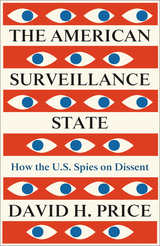
New evidence has come to light proving how far the FBI monitored its citizens throughout the Cold War and beyond
When the possibility of wiretapping first became known to Americans they were outraged. Now, in our post-9/11 world, it’s accepted that corporations are vested with human rights, and government agencies and corporations use computers to monitor our private lives. David H. Price pulls back the curtain to reveal how the FBI and other government agencies have always functioned as the secret police of American capitalism up to today, where they luxuriate in a near-limitless NSA surveillance of all.
Price looks through a roster of campaigns by law enforcement, intelligence agencies, and corporations to understand how we got here. Starting with J. Edgar Hoover and the early FBI’s alignment with business, his access to 15,000 pages of never-before-seen FBI files shines a light on the surveillance of Edward Said, Andre Gunder Frank and Alexander Cockburn, Native American communists, and progressive factory owners.
Price uncovers patterns of FBI monitoring and harassing of activists and public figures, providing the vital means for us to understand how these new frightening surveillance operations are weaponized by powerful governmental agencies that remain largely shrouded in secrecy.
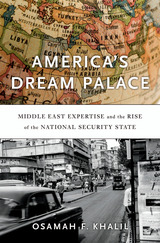
In T. E. Lawrence’s classic memoir Seven Pillars of Wisdom, Lawrence of Arabia claimed that he inspired a “dream palace” of Arab nationalism. What he really inspired, however, was an American idea of the area now called the Middle East that has shaped U.S. interventions over the course of a century, with sometimes tragic consequences. America’s Dream Palace brings into sharp focus the ways U.S. foreign policy has shaped the emergence of expertise concerning this crucial, often turbulent, and misunderstood part of the world.
America’s growing stature as a global power created a need for expert knowledge about different regions. When it came to the Middle East, the U.S. government was initially content to rely on Christian missionaries and Orientalist scholars. After World War II, however, as Washington’s national security establishment required professional expertise in Middle Eastern affairs, it began to cultivate a mutually beneficial relationship with academic institutions. Newly created programs at Harvard, Princeton, and other universities became integral to Washington’s policymaking in the region. The National Defense Education Act of 1958, which aligned America’s educational goals with Cold War security concerns, proved a boon for Middle Eastern studies.
But charges of anti-Americanism within the academy soon strained this cozy relationship. Federal funding for area studies declined, while independent think tanks with ties to the government flourished. By the time the Bush administration declared its Global War on Terror, Osamah Khalil writes, think tanks that actively pursued agendas aligned with neoconservative goals were the drivers of America’s foreign policy.
A challenge to long-held assumptions about the costs and benefits of America’s allies.
Since the Revolutionary War, the United States has entered into dozens of alliances with international powers to protect its assets and advance its security interests. America’s Entangling Alliances offers a corrective to long-held assumptions about US foreign policy and is relevant to current public and academic debates about the costs and benefits of America’s allies.
Author Jason W. Davidson examines these alliances to shed light on their nature and what they reveal about the evolution of American power. He challenges the belief that the nation resists international alliances, showing that this has been true in practice only when using a narrow definition of alliance. While there have been more alliances since World War II than before it, US presidents and Congress have viewed it in the country’s best interest to enter into a variety of security arrangements over virtually the entire course of the country’s history. By documenting thirty-four alliances—categorized as defense pacts, military coalitions, or security partnerships—Davidson finds that the US demand for allies is best explained by looking at variance in its relative power and the threats it has faced.
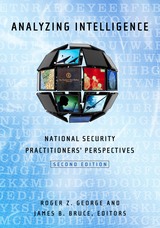
Analyzing Intelligence, now in a revised and extensively updated second edition, assesses the state of the profession of intelligence analysis from the practitioner's point of view. The contributors—most of whom have held senior positions in the US intelligence community—review the evolution of the field, the rise of new challenges, pitfalls in analysis, and the lessons from new training and techniques designed to deal with 21st century national security problems. This second edition updates this indispensable book with new chapters that highlight advances in applying more analytic rigor to analysis, along with expertise-building, training, and professional development. New chapters by practitioners broaden the original volume’s discussion of the analyst-policymaker relationship by addressing analytic support to the military customer as well as by demonstrating how structured analysis can benefit military commanders on the battlefield.
Analyzing Intelligence is written for national security practitioners such as producers and users of intelligence, as well as for scholars and students seeking to understand the nature and role of intelligence analysis, its strengths and weaknesses, and steps that can improve it and lead it to a more recognizable profession.
The most comprehensive and up-to-date volume on professional intelligence analysis as practiced in the US Government, Analyzing Intelligence is essential reading for practitioners and users of intelligence analysis, as well as for students and scholars in security studies and related fields.
Drawing on the individual and collective experience of recognized intelligence experts and scholars in the field, Analyzing Intelligence provides the first comprehensive assessment of the state of intelligence analysis since 9/11. Its in-depth and balanced evaluation of more than fifty years of U.S. analysis includes a critique of why it has under-performed at times. It provides insights regarding the enduring obstacles as well as new challenges of analysis in the post-9/11 world, and suggests innovative ideas for improved analytical methods, training, and structured approaches.
The book's six sections present a coherent plan for improving analysis. Early chapters examine how intelligence analysis has evolved since its origins in the mid-20th century, focusing on traditions, culture, successes, and failures. The middle sections examine how analysis supports the most senior national security and military policymakers and strategists, and how analysts must deal with the perennial challenges of collection, politicization, analytical bias, knowledge building and denial and deception. The final sections of the book propose new ways to address enduring issues in warning analysis, methodology (or "analytical tradecraft") and emerging analytic issues like homeland defense. The book suggests new forms of analytic collaboration in a global intelligence environment, and imperatives for the development of a new profession of intelligence analysis.
Analyzing Intelligence is written for the national security expert who needs to understand the role of intelligence and its strengths and weaknesses. Practicing and future analysts will also find that its attention to the enduring challenges provides useful lessons-learned to guide their own efforts. The innovations section will provoke senior intelligence managers to consider major changes in the way analysis is currently organized and conducted, and the way that analysts are trained and perform.
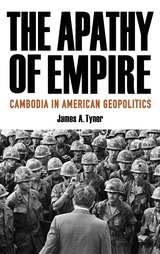
What America’s intervention in Cambodia during the Vietnam War reveals about Cold War–era U.S. national security strategy
The Apathy of Empire reveals just how significant Cambodia was to U.S. policy in Indochina during the Vietnam War, broadening the lens to include more than the often-cited incursion in 1970 or the illegal bombing after the Paris Peace Accords in 1973. This theoretically informed and thoroughly documented case study argues that U.S. military intervention in Cambodia revealed America’s efforts to construct a hegemonic spatial world order.
James Tyner documents the shift of America’s post-1945 focus from national defense to national security. He demonstrates that America’s expansionist policies abroad, often bolstered by military power, were not so much about occupying territory but instead constituted the construction of a new normal for the exercise of state power. During the Cold War, Vietnam became the geopolitical lodestar of this unfolding spatial order. And yet America’s grand strategy was one of contradiction: to build a sovereign state (South Vietnam) based on democratic liberalism, it was necessary to protect its boundaries—in effect, to isolate it—through both covert and overt operations in violation of Cambodia’s sovereignty. The latter was deemed necessary for the former.
Questioning reductionist geopolitical understandings of states as central or peripheral, Tyner explores this paradox to rethink the formulation of the Cambodian war as sideshow, revealing it instead as a crucial site for the formation of this new normal.
Retail e-book files for this title are screen-reader friendly.

Excavating a scenography of trials—formal or covert, orchestrated or improvised, criminalizing or criminal—Feldman shows how the will to truth disappears into the very violence it interrogates. He maps the sensory inscriptions and erasures of war, highlighting war as a media that severs factuality from actuality to render violence just. He proposes that war promotes an anesthesiology that interdicts the witness of a sensory and affective commons that has the capacity to speak truth to war. Feldman uses layered deconstructive description to decelerate the ballistical tempo of war to salvage the embodied actualities and material histories that war reduces to the ashes of collateral damage, the automatism of drones, and the opacities of black sites. The result is a penetrating work that marries critical visual theory, political philosophy, anthropology, and media archeology into a trenchant dissection of emerging forms of sovereignty and state power that war now makes possible.
A reappraisal of classic arms control theory that advocates for reprioritizing deterrence over disarmament in a new era of nuclear multipolarity
The United States faces a new era of nuclear arms racing for which it is conceptually unprepared. Great power nuclear competition is seemingly returning with a vengeance as the post–Cold War international order morphs into something more uncertain, complicated, and dangerous. In this unstable third nuclear age, legacy nonproliferation and disarmament instruments designed for outmoded conditions are ill-equipped to tame the complex dynamics of a multipolar nuclear arms race centered on China, Russia, and the United States.
International relations scholar David A. Cooper proposes relearning, reviving, and adapting classic arms control theory and negotiating practices to steer the world away from threatening and destabilizing nuclear arms races. He surveys the history of nuclear arms control efforts, revisits strategic theory’s view of nuclear competition dynamics, and interviews US nuclear policy practitioners about both the past and the emerging era. To prepare for this third nuclear age, Cooper recommends adapting the Cold War’s classical paradigm of adversarial arms control for the contemporary landscape. Rather than prioritizing disarmament to eliminate nuclear weapons, this neoclassical approach would pursue pragmatic agreements to stabilize deterrence relationships among today’s nuclear rivals. Drawing on an extensive theoretical and practical study of the Cold War and its aftermath, Cooper distills relevant lessons that could inform the United States’ long-term efforts to navigate the unprecedented dangers of nuclear multipolarity.
Diverging from other recent books on the topic, Arms Control for the Third Nuclear Age provides analysts with a more hard-nosed strategic approach. In this very different era of great power rivalry, this book will be a must-read for scholars, students, and practitioners of nuclear arms control.
A world-leading military strategist and an IDF insider explain the improbable success of the Israeli armed forces.
When the Israel Defense Forces was established in May 1948, it was small, poorly equipped, and already at war. Lacking sufficient weaponry or the domestic industrial base to produce it, the newborn military was forced to make do with whatever it could get its hands on. That spirit of improvisation carried the IDF to a decisive victory in the First Arab-Israeli War.
Today the same spirit has made the IDF the most powerful military in the Middle East and among the most capable in the world. In The Art of Military Innovation, Edward N. Luttwak and Eitan Shamir trace the roots of this astounding success. What sets the IDF apart, they argue, is its singular organizational structure. From its inception, it has been the world’s only one-service military, encompassing air, naval, and land forces in a single institutional body. This unique structure, coupled with a young officer corps, allows for initiative from below. The result is a nimble organization inclined toward change rather than beholden to tradition.
The IDF has fostered some of the most significant advances in military technology of the past seventy years, from the first wartime use of drones to the famed Iron Dome missile defense system, and now the first laser weapon, Iron Beam. Less-heralded innovations in training, logistics, and human resources have been equally important. Sharing rich insights and compelling stories, Luttwak and Shamir reveal just what makes the IDF so agile and effective.

This new textbook gathers an international roster of top security studies scholars to provide an overview of Asia-Pacific’s international relations and pressing contemporary security issues. It is a suitable introduction for undergraduate and masters students' use in international relations and security studies courses. Merging a strong theoretical component with rich contemporary and historical empirical examples, Asia-Pacific Security examines the region's key players and challenges as well as a spectrum of proposed solutions for improving regional stability. Major topics include in-depth looks at the United States' relationship with China; Security concerns presented by small and microstates, the region's largest group of nations; threats posed by terrorism and insurgency; the region's accelerating arms race and the potential for an Asian war; the possible roles of multilateralism, security communities, and human security as part of solutions to regional problems.
Today's protracted asymmetrical conflicts confuse efforts to measure progress, often inviting politics and wishful thinking to replace objective evaluation.
In Assessing War, military historians, social scientists, and military officers explore how observers have analyzed the trajectory of war in American conflicts from the Seven Years’ War through the war in Afghanistan. Drawing on decades of acquired expertise, the contributors examine wartime assessment in both theory and practice and, through alternative dimensions of assessment such as justice and proportionality, the war of ideas and economics. This group of distinguished authors grapples with both conventional and irregular wars and emerging aspects of conflict—such as cyberwar and nation building—that add to the complexities of the modern threat environment. The volume ends with recommendations for practitioners on best approaches while offering sobering conclusions about the challenges of assessing war without politicization or self-delusion.
Covering conflicts from the eighteenth century to today, Assessing War blends focused advice and a uniquely broad set of case studies to ponder vital questions about warfare's past—and its future. The book includes a foreword by Gen. George W. Casey Jr. (USA, Ret.), former chief of staff of the US Army and former commander, Multi-National Force–Iraq.
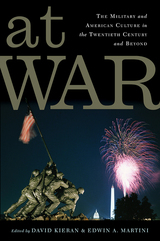
At War offers short, accessible essays addressing the central issues in the new military history—ranging from diplomacy and the history of imperialism to the environmental issues that war raises and the ways that war shapes and is shaped by discourses of identity, to questions of who serves in the U.S. military and why and how U.S. wars have been represented in the media and in popular culture.
READERS
Browse our collection.
PUBLISHERS
See BiblioVault's publisher services.
STUDENT SERVICES
Files for college accessibility offices.
RECENTLY PUBLISHED






UChicago Accessibility Resources
home | accessibility | search | about | contact us
BiblioVault ® 2001 - 2024
The University of Chicago Press