
 A SCHOLARLY BOOK REPOSITORY
How aesthetic religious experiences can create solidarity in marginalized communities
Latine Catholics have used Our Lady of Guadalupe as a symbol in democratic campaigns ranging from the Chicano movement and United Farm Workers’ movements to contemporary calls for just immigration reform. In diverse ways, these groups have used Guadalupe’s symbol and narrative to critique society’s basic structures—including law, policy, and institutions—while seeking to inspire broader participation and representation among marginalized peoples in US democracy.
Yet, from the outside, Guadalupe’s symbol is illegible within a liberal political framework that seeks to protect society’s basic structures from religious encroachment by relegating religious speech, practices, and symbols to the background.
The Aesthetics of Solidarity argues for the capacity of Our Lady of Guadalupe—and similar religious symbols—to make democratic claims. Author Nichole M. Flores exposes the limitations of political liberalism’s aesthetic responses to religious difference, turning instead to Latine theological aesthetics and Catholic social thought to build a framework for interpreting religious symbols in our contemporary pluralistic and participatory democratic life. By offering a lived theology of Chicanx Catholics in Denver, Colorado, and their use of Guadalupe in the pursuit of justice in response to their neighborhood’s gentrification, this book provides an important framework for a community of interpretation where members stand in solidarity to respond to justice claims made from diverse religious and cultural communities.

The Spanish Civil War created a conflict for Americans who preferred that the United States remain uninvolved in foreign affairs. Despite the country's isolationist tendencies, opposition to the rise of fascism across Europe convinced many Americans that they had to act in support of the Spanish Republic. While much has been written about the war itself and its international volunteers, little attention has been paid to those who coordinated these relief efforts at home.
American Relief Aid and the Spanish Civil War tells the story of the political campaigns to raise aid for the Spanish Republic as activists pushed the limits of isolationist thinking. Those concerned with Spain’s fate held a range of political convictions (including anarchists, socialists, liberals, and communists) with very different understandings of what fascism was. Yet they all agreed that fascism’s advance must be halted. With labor strikes, fund-raising parties, and ambulance tours, defenders of Spain in the United States sought to shift the political discussion away from isolation of Spain’s elected government and toward active assistance for the faltering Republic.
Examining the American political organizations affiliated with this relief effort and the political repression that resulted as many of Spain’s supporters faced the early incarnations of McCarthyism’s trials, Smith provides new understanding of American politics during the crucial years leading up to World War II. By also focusing on the impact the Spanish Civil War had on those of Spanish ethnicity in the United States, Smith shows how close to home the seemingly distant war really hit.
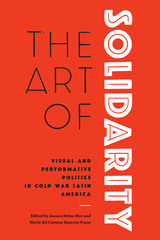
The Cold War claimed many lives and inflicted tremendous psychological pain throughout the Americas. The extreme polarization that resulted from pitting capitalism against communism held most of the creative and productive energy of the twentieth century captive. Many artists responded to Cold War struggles by engaging in activist art practice, using creative expression to mobilize social change. The Art of Solidarity examines how these creative practices in the arts and culture contributed to transnational solidarity campaigns that connected people across the Americas from the early twentieth century through the Cold War and its immediate aftermath.
This collection of original essays is divided into four chronological sections: cultural and artistic production in the pre–Cold War era that set the stage for transnational solidarity organizing; early artistic responses to the rise of Cold War polarization and state repression; the centrality of cultural and artistic production in social movements of solidarity; and solidarity activism beyond movements. Essay topics range widely across regions and social groups, from the work of lesbian activists in Mexico City in the late 1970s and 1980s, to the exchanges and transmissions of folk-music practices from Cuba to the United States, to the uses of Chilean arpilleras to oppose and protest the military dictatorship. While previous studies have focused on politically engaged artists or examined how artist communities have created solidarity movements, this book is one of the first to merge both perspectives.
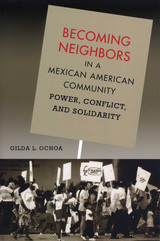
On the surface, Mexican Americans and Mexican immigrants to the United States seem to share a common cultural identity but often make uneasy neighbors. Discrimination and assimilationist policies have influenced generations of Mexican Americans so that some now fear that the status they have gained by assimilating into American society will be jeopardized by Spanish-speaking newcomers. Other Mexican Americans, however, adopt a position of group solidarity and work to better the social conditions and educational opportunities of Mexican immigrants.
Focusing on the Mexican-origin, working-class city of La Puente in Los Angeles County, California, this book examines Mexican Americans' everyday attitudes toward and interactions with Mexican immigrants—a topic that has so far received little serious study. Using in-depth interviews, participant observations, school board meeting minutes, and other historical documents, Gilda Ochoa investigates how Mexican Americans are negotiating their relationships with immigrants at an interpersonal level in the places where they shop, worship, learn, and raise their families. This research into daily lives highlights the centrality of women in the process of negotiating and building communities and sheds new light on identity formation and group mobilization in the U.S. and on educational issues, especially bilingual education. It also complements previous studies on the impact of immigration on the wages and employment opportunities of Mexican Americans.
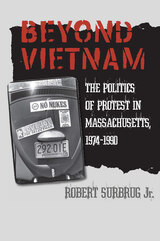
In Beyond Vietnam: The Politics of Protest in Massachusetts, 1974–1990, Robert Surbrug challenges this prevailing paradigm by examining three protest movements that were direct descendants of Vietnam-era activism: the movement against nuclear energy; the nuclear weapons freeze movement; and the Central American solidarity movement. Drawing lessons from the successes and failures of the preceding era, these movements had a significant impact on the liberal wing of the Democratic Party, which itself had been undergoing major transformations in the wake of the 1960s.
By focusing on one state—Massachusetts—Surbrug is able to illuminate the interaction between the activist left and mainstream liberalism, showing how each influenced the other and how together they helped shape the politics of the 1970s and 1980s. During these years, Massachusetts emerged as a center of opposition to nuclear power, the continuing Cold War arms race, and Ronald Reagan's interventionist policies in Central America. The state's role in national policy was greatly enhanced by prominent political figures such as Senator Edward Kennedy, Speaker of the House Thomas "Tip" O'Neill, presidential candidate Governor Michael Dukakis, Vietnam veteran Senator John Kerry, and moderate Republican Silvio Conte.
What Beyond Vietnam shows is that the rise of the right in the aftermath of the 1960s was by no means a unilateral ascendancy. Instead it involved a bifurcation of American politics in which an increasingly strong conservative movement was vigorously contested by an activist left and a reinvigorated mainstream liberalism.
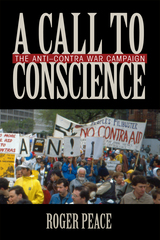
A Call to Conscience offers the first comprehensive history of the anti–Contra War campaign and its Nicaragua connections. Roger Peace places this eight-year campaign in the context of previous American interventions in Latin America, the Cold War, and other grassroots oppositional movements. Based on interviews with American and Nicaraguan citizens and leaders, archival records of activist organizations, and official government documents, this book reveals activist motivations, analyzes the organizational dynamics of the anti–Contra War campaign, and contrasts perceptions of the campaign in Managua and Washington.
Peace shows how a variety of civic groups and networks—religious, leftist, peace, veteran, labor, women's rights—worked together in a decentralized campaign that involved extensive transnational cooperation.
Composition has been a microcosm of the corporatization of higher education for thirty years, with adjuncts often handling the hard work of writing instruction. We've learned enough to know that change is needed. Influenced by the efforts of organizations such as New Faculty Majority, Faculty Forward, PrecariCorps, and national faculty unions, this collection highlights action, describing efforts that have improved adjunct working conditions in English departments. The editors categorize these efforts into five threads: strategies for self-advocacy; organizing within and across ranks; professionalizing in complex contexts; working for local changes to workload, pay, and material conditions; and protecting gains.
Contributors to this collection include contingent and tenure-line faculty from private, public, and community colleges, as well as writing program administrators and writing center faculty. Their voices address contingency, exploitation, and solidarity in activist terms deriving from institutional realities and cases. Collectively, they offer creative and constructive responses that can enact labor justice and champion the disciplinary energies of all members of our collegial community.
Contributors: Janelle Adsit, Jacob Babb, Chris Blankenship, Rebekah Shultz Colby, Richard Colby, Anicca Cox, Sue Doe, Tracy Donhardt, Dawn Fels, Barbara Heifferon, Desirée M. Holter, Justin Jory, Jeffrey Klausman, Michelle LaFrance, Sarah Layden, Carol Lind, Maria Maisto, Amanda Martin, Mark McBeth, Tim McCormack, Joan Mullin, Dani Nier-Weber, Glenn Moomau, Michael Murphy, Anna K. Nardo, Rolf Norgaard, Courtney Adams Wooten, Lacey Wootton, Allison Laubach Wright

Building on many of the topics in his highly acclaimed earlier work, these essays treat a number of contentious issues, many of them deeply embedded in America's past and present political polarization. Essays include "Amalgamation and Hypodescent," "Enough Already: Universities Do Not Need More Christianity," "Cultural Relativism," "Why Are Jews Preeminent in Science and Scholarship: The Veblen Thesis Reconsidered," and "The One Drop Rule and the One Hate Rule." Hollinger is at his best in his judicious approach to America's controversial history of race, ethnicity, and religion, and he offers his own thoughtful prescriptions as Americans and others throughout the world struggle with the pressing questions of identity and solidarity.
In Days of Awe, Atalia Omer examines this shift through interviews with a new generation of Jewish activists, rigorous data analysis, and fieldwork within a progressive synagogue community. She highlights people politically inspired by social justice campaigns including the Black Lives Matter movement and protests against anti-immigration policies. These activists, she shows, discover that their ethical outrage at US policies extends to Israel’s treatment of Palestinians. For these American Jews, the Jewish history of dispossession and diaspora compels a search for solidarity with liberation movements. This shift produces innovations within Jewish tradition, including multi-racial and intersectional conceptions of Jewishness and movements to reclaim prophetic Judaism. Charting the rise of such religious innovation, Omer points toward the possible futures of post-Zionist Judaism.
Three leading thinkers analyze the erosion of democracy’s social foundations and call for a movement to reduce inequality, strengthen inclusive solidarity, empower citizens, and reclaim pursuit of the public good.
Democracy is in trouble. Populism is a common scapegoat but not the root cause. More basic are social and economic transformations eroding the foundations of democracy, ruling elites trying to lock in their own privilege, and cultural perversions like making individualistic freedom the enemy of democracy’s other crucial ideals of equality and solidarity. In Degenerations of Democracy three of our most prominent intellectuals investigate democracy gone awry, locate our points of fracture, and suggest paths to democratic renewal.
In Charles Taylor’s phrase, democracy is a process, not an end state. Taylor documents creeping disempowerment of citizens, failures of inclusion, and widespread efforts to suppress democratic participation, and he calls for renewing community. Craig Calhoun explores the impact of disruption, inequality, and transformation in democracy’s social foundations. He reminds us that democracies depend on republican constitutions as well as popular will, and that solidarity and voice must be achieved at large scales as well as locally.
Taylor and Calhoun together examine how ideals like meritocracy and authenticity have become problems for equality and solidarity, the need for stronger articulation of the idea of public good, and the challenges of thinking big without always thinking centralization.
Dilip Parameshwar Gaonkar points out that even well-designed institutions will not integrate everyone, and inequality and precarity make matters worse. He calls for democracies to be prepared for violence and disorder at their margins—and to treat them with justice, not oppression.
The authors call for bold action building on projects like Black Lives Matter and the Green New Deal. Policy is not enough to save democracy; it will take movements.
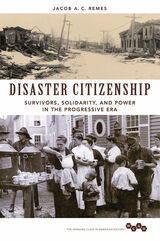
In Disaster Citizenship, Jacob A. C. Remes draws on histories of the Salem and Halifax events to explore the institutions--both formal and informal--that ordinary people relied upon in times of crisis. He explores patterns and traditions of self-help, informal order, and solidarity and details how people adapted these traditions when necessary. Yet, as he shows, these methods--though often quick and effective--remained illegible to reformers. Indeed, soldiers, social workers, and reformers wielding extraordinary emergency powers challenged these grassroots practices to impose progressive "solutions" on what they wrongly imagined to be a fractured social landscape.


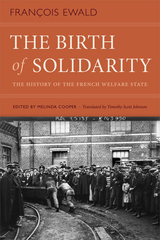
The rich and complex texture of working-class neighborhoods in eighteenth-century Paris comes vibrantly alive in this collage of the experiences of ordinary people—men and women, rich and poor, masters and servants, neighbors and colleagues. Exploring three arenas of conflict and solidarity—the home, the workplace, and the street—Arlette Farge offers the reader an intimate social history, bringing long-dead citizens and vanished social groups back to life with sensitivity and perception.
Fragile Lives reconstructs the rhythms of this population's daily existence, the way they met, formed relationships and broke them off, conducted their affairs in the community, and raised their young. Farge follows them into the factory and describes the ways they organized to improve their working conditions, and how they were controlled by the authorities. She shows how these Parisians behaved in the context of collective events, from festive street spectacles to repressive displays of power by the police. As the author examines interwoven lives as revealed in judicial records, we come to know and understand the criminals and the underworld of the time; the situation of women as lovers, wives, or prostitutes; anxieties about food and drink, and the rules of conduct in a “fragile” society. Elegantly written and skillfully translated, Fragile Lives is a book for the curious general reader and for those interested in social and cultural history.
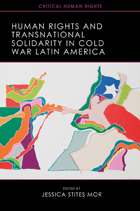
Edited by Jessica Stites Mor, this book offers fine-grained case studies that show how Latin America’s re-emerging Left transformed the struggles against dictatorship and repression of the Cold War into the language of anti-colonialism, socioeconomic rights, and identity.
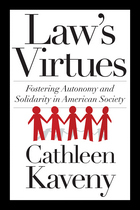
Can the law promote moral values even in pluralistic societies such as the United States? Drawing upon important federal legislation such as the Americans with Disabilities Act, legal scholar and moral theologian Cathleen Kaveny argues that it can. In conversation with thinkers as diverse as Thomas Aquinas, Pope John Paul II, and Joseph Raz, she argues that the law rightly promotes the values of autonomy and solidarity. At the same time, she cautions that wise lawmakers will not enact mandates that are too far out of step with the lived moral values of the actual community.
According to Kaveny, the law is best understood as a moral teacher encouraging people to act virtuously, rather than a police officer requiring them to do so. In Law’s Virtues Kaveny expertly applies this theoretical framework to the controversial moral-legal issues of abortion, genetics, and euthanasia. In addition, she proposes a moral analysis of the act of voting, in dialogue with the election guides issued by the US bishops. Moving beyond the culture wars, this bold and provocative volume proposes a vision of the relationship of law and morality that is realistic without being relativistic and optimistic without being utopian.
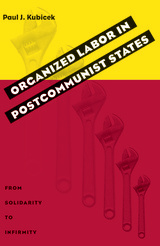
While some of labor's problems can be traced to legacies of the communist period, Kubicek draws upon the experience of unions in the West to argue that privatization and nascent globalization are creating new economic structures and a political playing field hostile to organized labor. He concludes that labor is likely to remain a marginalized economic and political force for the foreseeable.
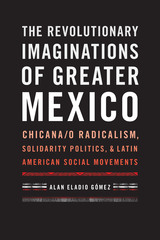
Bringing to life the stories of political teatristas, feminists, gunrunners, labor organizers, poets, journalists, ex-prisoners, and other revolutionaries, The Revolutionary Imaginations of Greater Mexico examines the inspiration Chicanas/os found in social movements in Mexico and Latin America from 1971 to 1979. Drawing on fifteen years of interviews and archival research, including examinations of declassified government documents from Mexico, this study uncovers encounters between activists and artists across borders while sharing a socialist-oriented, anticapitalist vision. In discussions ranging from the Nuevo Teatro Popular movement across Latin America to the Revolutionary Proletariat Party of America in Mexico and the Peronista Youth organizers in Argentina, Alan Eladio Gómez brings to light the transnational nature of leftist organizing by people of Mexican descent in the United States, tracing an array of festivals, assemblies, labor strikes, clandestine organizations, and public protests linked to an international movement of solidarity against imperialism.
Taking its title from the “greater Mexico” designation used by Américo Paredes to describe the present and historical movement of Mexicans, Mexican Americans, and Chicanas/os back and forth across the US-Mexico border, this book analyzes the radical creativity and global justice that animated “Greater Mexico” leftists during a pivotal decade. While not all the participants were of one mind politically or personally, they nonetheless shared an international solidarity that was enacted in local arenas, giving voice to a political and cultural imaginary that circulated throughout a broad geographic terrain while forging multifaceted identities. The epilogue considers the politics of going beyond solidarity.
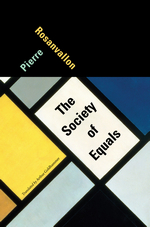
Since the 1980s, society’s wealthiest members have claimed an ever-expanding share of income and property. It has been a true counterrevolution, says Pierre Rosanvallon—the end of the age of growing equality launched by the American and French revolutions. And just as significant as the social and economic factors driving this contemporary inequality has been a loss of faith in the ideal of equality itself. An ambitious transatlantic history of the struggles that, for two centuries, put political and economic equality at their heart, The Society of Equals calls for a new philosophy of social relations to reenergize egalitarian politics.
For eighteenth-century revolutionaries, equality meant understanding human beings as fundamentally alike and then creating universal political and economic rights. Rosanvallon sees the roots of today’s crisis in the period 1830–1900, when industrialized capitalism threatened to quash these aspirations. By the early twentieth century, progressive forces had begun to rectify some imbalances of the Gilded Age, and the modern welfare state gradually emerged from Depression-era reforms. But new economic shocks in the 1970s began a slide toward inequality that has only gained momentum in the decades since.
There is no returning to the days of the redistributive welfare state, Rosanvallon says. Rather than resort to outdated notions of social solidarity, we must instead revitalize the idea of equality according to principles of singularity, reciprocity, and communality that more accurately reflect today’s realities.
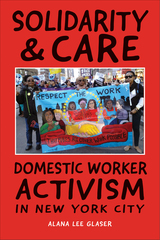
Solidarity & Care examines the political mobilization of diverse care workers who joined together and supported one another through education, protests, lobbying, and storytelling. Domestic work activists used narrative and emotional appeals to build a coalition of religious communities, employers of domestic workers, labor union members, and politicians to first pass and then to enforce the new law.
Through oral history interviews, as well as ethnographic observation during DWU meetings and protest actions, Glaser chronicles how these women fought (and continue to fight) to improve working conditions. She also illustrates how they endure racism, punitive immigration laws, on-the-job indignities, and unemployment that can result in eviction and food insecurity.
The lessons from Solidarity & Care along with the DWU’s precedent-setting legislative success have applications to workers across industries.
All royalties will go directly to the Domestic Workers United
Offers an innovative model for understanding how social movements occur in repressive societies
After a series of failed attempts at mobilizing society, Poland’s opposition sprang to surprising—and newly effective—life with the formation of the Solidarity trade union in 1980. If not for those past failures, this book suggests, Solidarity might never have succeeded. Solidarity and Contention deftly reconstructs the networks of protest in Communist Poland to show how waves of dissent during the 1950s, 1960s, and 1970s left an organizational residue that both instructed and enabled Solidarity and, ultimately, the Polish revolution.
Using newly available documentary sources, Maryjane Osa establishes links between activists during three waves of protest: 1954 to 1959, 1966 to 1970, and 1976 to 1980. She shows how political challengers, applying lessons drawn from past failures, developed an ideological formula to de-emphasize divisive issues and promote symbolic concerns, thus facilitating coalition building. Solidarity was therefore able to take advantage of a large opposition network already well in place before the founding of the union. An important case study in itself, the book also answers one of the most intriguing questions in social movement research: how can movements emerge in authoritarian states—where media are state controlled, the rights of assembly and speech are restricted, and the risks of collective action are high?
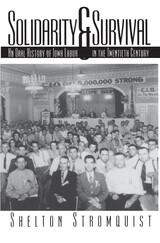
In Solidarity and Survival, three generations of Iowa workers tell of their unrelenting efforts to create a labor movement in the coal mines and on the rails, in packinghouses and farm equipment plants, on construction sites and in hospital wards. Drawing on nearly one thousand interviews collected over more than a decade by oral historians working for the Iowa Federation of Labor, AFL-CIO, Shelton Stromquist presents the resonant voices of the men and women who defined a new, prominent place for themselves in the lives of their communities and in the politics of their state.

Popular conceptions hold that capitalism is driven almost entirely by the pursuit of profit and self-interest. Challenging that assumption, this major new study of American business associations shows how market and non-market relations are actually profoundly entwined at the heart of capitalism.
In Solidarity in Strategy, Lyn Spillman draws on rich documentary archives and a comprehensive data set of more than four thousand trade associations from diverse and obscure corners of commercial life to reveal a busy and often surprising arena of American economic activity. From the Intelligent Transportation Society to the American Gem Trade Association, Spillman explains how business associations are more collegial than cutthroat, and how they make capitalist action meaningful not only by developing shared ideas about collective interests but also by articulating a disinterested solidarity that transcends those interests.
Deeply grounded in both economic and cultural sociology, Solidarity in Strategy provides rich, lively, and often surprising insights into the world of business, and leads us to question some of our most fundamental assumptions about economic life and how cultural context influences economic.
In Solidarity, Steve Striffler addresses these key questions, offering the first history of US-Latin American solidarity from the Haitian Revolution to the present day. Striffler traces the history of internationalism through the Cold War, exploring the rise of human rights as the dominant current of international solidarity. He also considers the limitations of a solidarity movement today that inherited its organisational infrastructure from the human rights movements.
Moving beyond conventionally ahistorical analyses of solidarity, here Striffler provides a distinctive intervention in the history of progressive politics in both the US and Latin America, the past and present of US imperialism and anti-imperialism, and the history of human rights and labour internationalism.

Grounded in ecofeminist theory, this literary analysis examines Walker’s evolving views on animals in relation to her discussions of other oppressed groups. Pamela B. June argues that Walker’s fiction can help readers understand and perhaps challenge American culture’s mistreatment of nonhuman animals. Walker has withstood criticism for her decision to abandon vegetarianism, and this book also problematizes the slippery territory of viewing writers as moral guides. Solidarity with the Other Beings on the Planet will appeal to readers in literary studies, ecofeminist studies, African American studies, and critical animal studies.
A pioneering exploration of the unexamined roots and effect of racial sympathy within American politics.
There is racial inequality in America, and some people are distressed over it while others are not. This is a book about white people who feel that distress. For decades, political scientists have studied the effects of white racial prejudice, but Jennifer Chudy shows that white racial sympathy for Black Americans’ suffering is also a potent force in modern American politics. Grounded in the history of Black-white relations in America, racial sympathy is unique. It is not equivalent to a low level of racial prejudice or sympathy for other marginalized groups. Some White Folks reveals how racial sympathy shapes a significant number of white Americans’ opinions on policy areas ranging from the social welfare state to the criminal justice system. Under certain circumstances, it can also spur action—although effects on political behavior are weaker and less consistent, for reasons Chudy examines.
Drawing on diverse quantitative and qualitative evidence and integrating insights from multiple disciplines, Chudy explores the origins, importance, and complexity of racial sympathy, as well as the practical implications for political and movement leaders. A companion to the rich literature on prejudice, Some White Folks demonstrates the multifaceted role of race in American politics and public opinion.
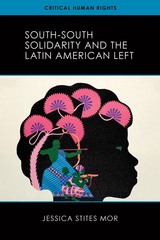
Jessica Stites Mor looks at four in-depth case studies: the use of legal reform to accomplish the goals of solidarity embedded in Mexico's revolutionary constitution, visual and print media circulated by Cuba and its influence on the agenda of the Afro-Asian block at the United Nations, organizing on behalf of Palestinian nationalism in reshaping Argentina's socialist left, and the role of Latin American Catholic activists in challenging the South African apartheid state. These examples serve as a much-needed road map to navigate our current political climate and show us how solidarity movements might approach future struggles.
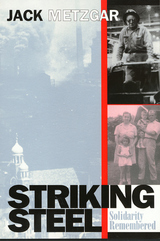
Combining personal memoir and historical narrative, Striking Steel argues for reassessment of unionism in American life during the second half of the twentieth century and a recasting of "official memory." As he traces the history of union steelworkers after World War II, Metzgar draws on his father's powerful stories about the publishing work in the mills, stories in which time is divided between "before the union" and since. His father, Johnny Metzgar, fought ardently for workplace rules as a means of giving "the men" some control over their working conditions and protection from venal foremen. He pursued grievances until he eroded management's authority, and he badgered foremen until he established shop-floor practices that would become part of the next negotiated contract. As a passionate advocate of solidarity, he urged coworkers to stick together so that the rules were upheld and everyone could earn a decent wage.
Striking Steel's pivotal event is the four-month nationwide steel strike of 1959, a landmark union victory that has been all but erased from public memory. With remarkable tenacity, union members held out for the shop-floor rules that gave them dignity in the workplace and raised their standard of living. Their victory underscored the value of sticking together and reinforced their sense that they were contributing to a general improvement in American working and living conditions.
The Metzgar family's story vividly illustrates the larger narrative of how unionism lifted the fortunes and prospects of working-class families. It also offers an account of how the broad social changes of the period helped to shift the balance of power in a conflict-ridden, patriarchal household. Even if the optimism of his generation faded in the upheavals of the 1960s, Johnny Metzgar's commitment to his union and the strike itself stands as an honorable example of what a collective action can and did achieve. Jack Metzgar's Striking Steel is a stirring call to remember and renew the struggle.


Ergun’s comparative framework reveals translation’s potential to facilitate cross-border flows of feminist theories, empower feminist interventions, connect feminist activists across differences and divides, and forge transnational feminist solidarities. As she considers hopeful and woeful pictures of border crossings, Ergun invites readers to revise their views of translation’s role in transnational feminism and examine their own potential as ethically and politically responsible agents willing to search for new meanings.
Sophisticated and compelling, Virgin Crossing Borders reveals translation’s vital role in exchanges of feminist theories, stories, and knowledge.
READERS
Browse our collection.
PUBLISHERS
See BiblioVault's publisher services.
STUDENT SERVICES
Files for college accessibility offices.
RECENTLY PUBLISHED



UChicago Accessibility Resources
home | accessibility | search | about | contact us
BiblioVault ® 2001 - 2024
The University of Chicago Press