
 A SCHOLARLY BOOK REPOSITORY
Longlisted for the 2022 Kraszna-Krausz Book Award, Moving Image Category
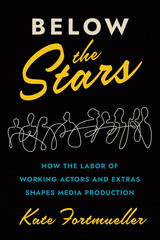
Despite their considerable presence in Hollywood, extras and working actors have received scant attention within film and media studies as significant contributors to the history of the industry. Looking not to the stars but to these supporting players in film, television, and, recently, streaming programming, Below the Stars highlights such actors as precarious laborers whose work as freelancers has critically shaped the entertainment industry throughout the twentieth and twenty-first centuries. By addressing ordinary actors as a labor force, Kate Fortmueller proposes a media industry history that positions underrepresented and quotidian experiences as the structural elements of the culture and business of Hollywood.
Resisting a top-down assessment, Fortmueller explores the wrangling of labor unions and guilds that advocated for collective action for everyday actors and helped shape professional norms. She pulls from archival research, in-person interviews, and firsthand observation to examine a history that cuts across industry boundaries and situates actors as a labor group at the center of industrial and technological upheavals, with lasting implications for race, gender, and labor relations in Hollywood.

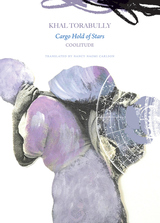
With Cargo Hold of Stars, Torabully introduces the concept of ‘Coolitude’ in a way that echoes Aimé Césaire’s term ‘Negritude,’ imbuing the term with dignity and pride, as well as a strong and resilient cultural identity and language. Stating that ordinary language was not equipped to bring to life the diverse voices of indenture, Torabully has developed a ‘poetics of Coolitude’: a new French, peppered with Mauritian Creole, wordplay, and neologisms—and always musical. The humor in these linguistic acrobatics serves to underscore the violence in which his poems are steeped.
Deftly translated from the French by Nancy Naomi Carlson, Cargo Hold of Stars is the song of an uprooting, of the destruction and the reconstruction of the indentured laborer’s identity. But it also celebrates setting down roots, as it conjures an ideal homeland of fraternity and reconciliation in which bodies, memories, stories, and languages mingle—a compelling odyssey that ultimately defines the essence of humankind.
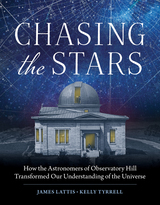
Explore the remarkable story of Wisconsin astronomers whose curiosity, persistence, and innovation helped us better understand our universe.
Chasing the Stars traces the history of the University of Wisconsin’s Washburn Observatory, where some of the world’s most cutting-edge astronomical inventions were born. Learn about the earliest Indigenous stargazers, the women who worked as the first human computers, the astronomers who sold time by the stars, the scientists who shrank the Milky Way, and the crucial role Wisconsin astronomers played in the development of modern astrophysics and space astronomy.
This extraordinary book features more than 100 modern and historic photographs that illustrate the people and science behind Wisconsin’s astronomical innovations. Designed for lay readers and astronomers alike, Chasing the Stars inspires all of us to look up at the sky in wonder.

In Children of the Stars, Galindo relates his experience with this first team and with successive student teams, who continued to participate in NASA programs over the course of a decade. He discusses the challenges of teaching American Indian students, from the practical limits of a rural reservation school to the importance of respecting and incorporating Indigenous knowledge systems. In describing how he had to earn the trust of his students to truly be successful as their teacher, Galindo also touches on the complexities of community belonging and understanding; although Indigenous himself, Galindo is not a member of the Shoshone-Bannock tribes and was still an outsider who had as much to learn as the students.
Children of the Stars is the story of students and a teacher, courage and hope. Written in a conversational style, it’s an accessible story about students who were supported and educated in culturally relevant ways and so overcame the limitations of an underfunded reservation school to reach great heights.
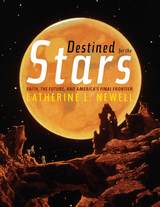
Where did humanity get the idea that outer space is a frontier waiting to be explored? Destined for the Stars unravels the popularization of the science of space exploration in America between 1944 and 1955, arguing that the success of the US space program was due not to technological or economic superiority, but was sustained by a culture that had long believed it was called by God to settle new frontiers and prepare for the inevitable end of time and God’s final judgment. Religious forces, Newell finds, were in no small way responsible for the crescendo of support for and interest in space exploration in the early 1950s, well before Project Mercury—the United States’ first human spaceflight program—began in 1959.
In this remarkable history, Newell explores the connection between the art of Chesley Bonestell—the father of modern space art whose paintings drew inspiration from depictions of the American West—and the popularity of that art in Cold War America; Bonestell’s working partnership with science writer and rocket expert Willy Ley; and Ley and Bonestell’s relationship with Wernher von Braun, father of both the V-2 missile and the Saturn V rocket, whose millennial conviction that God wanted humankind to leave Earth and explore other planets animated his life’s work. Together, they inspired a technological and scientific faith that awoke a deep-seated belief in a sense of divine destiny to reach the heavens. The origins of their quest, Newell concludes, had less to do with the Cold War strife commonly associated with the space race and everything to do with the religious culture that contributed to the invention of space as the final frontier.
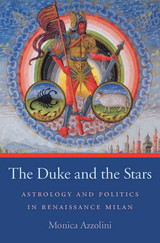
This study is the first to examine the important political role played by astrology in Italian court culture. Reconstructing the powerful dynamics existing between astrologers and their prospective or existing patrons, The Duke and the Stars illustrates how the “predictive art” of astrology was a critical source of information for Italian Renaissance rulers, particularly in times of crisis. Astrological “intelligence” was often treated as sensitive, and astrologers and astrologer-physicians were often trusted with intimate secrets and delicate tasks that required profound knowledge not only of astrology but also of the political and personal situation of their clients. Two types of astrological predictions, medical and political, were taken into the most serious consideration. Focusing on Milan, Monica Azzolini describes the various ways in which the Sforza dukes (and Italian rulers more broadly) used astrology as a political and dynastic tool, guiding them as they contracted alliances, made political decisions, waged war, planned weddings, and navigated health crises.
The Duke and the Stars explores science and medicine as studied and practiced in fifteenth-century Italy, including how astrology was taught in relation to astronomy.
"Those who share Kohák's concern to understand nature as other than a mere resource or matter in motion will find his temporally oriented interpretation of nature instructive. It is here in particular that Kohák turns moments of experience to account philosophically, turning what we habitually overlook or avoid into an opportunity and basis for self-knowledge. This is an impassioned attempt to see the vital order of nature and the moral order of our humanity as one."—Ethics
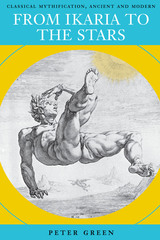
"I hadn't, till I really started digging, gauged the fierce intensity of the need for myth in the human psyche, of any age, or sensed the variety of motives dictating that need," writes Peter Green in the introduction to this wide-ranging collection of essays on classical mythology and the mythic experience. Using the need for myth as the starting point for exploring a number of topics in Greek mythology and history, Green advances new ideas about why the human urge to make myths persists across the millennia and why the borderland between mythology and history can sometimes be hard to map.
Green looks at both specific problems in classical mythology and larger theoretical issues. His explorations underscore how mythic expression opens a door into non-rational and quasi-rational modes of thought in which it becomes possible to rewrite painful truths and unacceptable history—which is, Green argues, a dangerous enterprise. His study of the intersections between classical mythology and Greek history ultimately drives home a larger point, "the degree of mythification and deception (of oneself no less than of others) of which the human mind is capable."
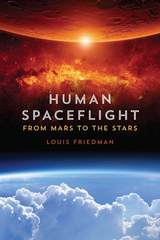
Far from diminishing our future in space, Human Spaceflight lays out a provocative future for human space travel. The noted aerospace engineer and scientist says that human space exploration will continue well into the future, but space travel by humans will stop at Mars. Instead, nanotechnology, space sails, robotics, biomolecular engineering, and artificial intelligence will provide the vehicles of the future for an exciting evolution not just of space travel but of humankind.
Friedman has worked with agencies around the globe on space exploration projects to extend human presence beyond Mars and beyond the solar system. He writes that once we accept Mars as the only viable destination for humans, our space program on planet Earth can become more exciting and more relevant. Mars, he writes, will take hundreds, even thousands, of years to settle. During that time, humans and all our supporting technologies will evolve, allowing our minds to be present throughout the universe while our bodies stay home on Earth and Mars.

Willard’s love of music combines with his love and respect for the natural world. Often rooted in, or coming out of, domestic encounters, the poems of this collection rise up (much like the clouds over his oft-traversed Rockies), as the speaker throws his attention to earth and sky, better to understand his own dynamic and shifting inner weather.

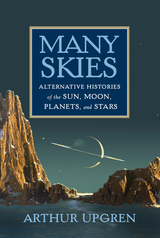
These and other imaginative scenarios are the subject of Arthur Upgren's inventive book Many Skies: Alternative Histories of the Sun, Moon, Planets, and Stars. Although the night sky as we know it seems eternal and inevitable, Upgren reminds us that, just as easily, it could have been very different.
Had the solar sytem happened to be in the midst of a star cluster, we might have many more bright stars in the sky. Yet had it been located beyond the edge of the Milky Way galaxy, we might have no stars at all. If Venus or Mars had a moon as large as ours, we would be able to view it easily with the unaided eye. Given these or other alternative skies, what might Ptolemy or Copernicus have concluded about the center of the solar sytem and the Sun?
This book not only examines the changes in science that these alternative solar, stellar, and galactic arrangements would have brought, it also explores the different theologies, astrologies, and methods of tracking time that would have developed to reflect them. Our perception of our surroundings, the number of gods we worship, the symbols we use in art and literature, even the way we form nations and empires are all closely tied to our particular (and accidental) placement in the universe.
Many Skies, however, is not merely a fanciful play on what might have been. Upgren also explores the actual ways that human interferences such as light pollution are changing the night sky. Our atmosphere, he warns, will appear very different if we have belt of debris circling the globe and blotting out the stars, as will happen if advertisers one day pollute space with brilliant satellites displaying their products.
From fanciful to foreboding, the scenarios in Many Skies will both delight and inspire reflection, reminding us that ours is but one of many worldviews based on our experience of a universe that is as much a product of accident as it is of intention.
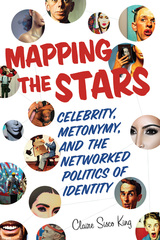
King considers three stars with popular and controversial personas: Norman Rockwell, Will Smith, and Kim Kardashian. Working in very different contexts and with very different public images, these figures nonetheless share a consistent, if not conspicuous, interest in celebrity as a construct. Offering intertextual readings of their public images across such sites as movie posters, magazines, cinema, and social media—and deploying rhetorical theories of metonymy (a linguistic device linking signifiers by shared associations)—King argues that these stars’ self-reflexive attention to the processes by which celebrity is created and constrained creates opportunities for reframing public discourse about what it means to be famous and what it means to be a person.

William Bradford Huie’s first novel, Mud on the Stars, is largely autobiographical and is set in the years 1929-1942. As in many of his later books, the theme here is of the education of the inexperienced youth, which is, after all, the quintessential American story. Drawing on his own boyhood, Huie gives the reader a detailed account of rural life and race relations in the Tennessee Valley in the early years of this century, including a vivid picture of college life at The University of Alabama during the Great Depression. Through a careful weaving of characters and events, fact and fiction, Huie’s novel captures the tumultuous times before World War II in the urban South, times of social unrest and testing of new political ideologies. The book’s publication in 1942 was a huge financial success, by the economic standards of the day, and not only brought Huie the acclaim his talent warranted but also focused an approving national spotlight on this prolific Alabama writer.
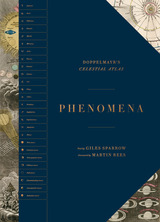
The expansive and intricate Atlas Coelestis, created by Johann Doppelmayr in 1742, set out to record everything known about astronomy at the time, covering constellations, planets, moons, comets, and more, all rendered in exquisite detail. Through stunning illustrations, historical notes, and scientific explanations, Phenomena contextualizes Doppelmayr’s atlas and creates a spectacular handbook to the heavens.
Phenomena begins by introducing Doppelmayr’s life and work, placing his extraordinary cosmic atlas in the context of discoveries made in the Renaissance and Enlightenment and highlighting the significance of its publication. This oversized book presents thirty beautifully illustrated and richly annotated plates, covering all the fundamentals of astronomy—from the dimensions of the solar system to the phases of the moon and the courses of comets. Each plate is accompanied by expert analysis from astronomer Giles Sparrow, who deftly presents Doppelmayr’s references and cosmological work to a modern audience. Each plate is carefully deconstructed, isolating key stars, planets, orbits, and moons for in-depth exploration. A conclusion reflects on the development of astronomy since the publication of the Atlas and traces the course of the science up to the present day. Following the conclusion is a timeline of key discoveries from ancient times onward along with short biographies of the key players in this history.
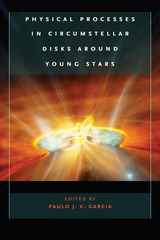
Circumstellar disks are vast expanses of dust that form around new stars in the earliest stages of their birth. Predicted by astronomers as early as the eighteenth century, they weren’t observed until the late twentieth century, when interstellar imaging technology enabled us to see nascent stars hundreds of light years away. Since then, circumstellar disks have become an area of intense study among astrophysicists, largely because they are thought to be the forerunners of planetary systems like our own—the possible birthplaces of planets.
This volume brings together a team of leading experts to distill the most up-to-date knowledge of circumstellar disks into a clear introductory volume. Understanding circumstellar disks requires a broad range of scientific knowledge, including chemical processes, the properties of dust and gases, hydrodynamics and magnetohydrodynamics, radiation transfer, and stellar evolution—all of which are covered in this comprehensive work, which will be indispensable for graduate students, seasoned researchers, or even advanced undergrads setting out on the study of planetary evolution.
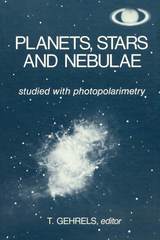
“The high quality of this book is clearly due to strict editorial attention to each paper and the discussions. Gehrels’s book will surely stand for many years as the fundamental reference source for polarization studies in astronomy as well as in atmospheric physics.”—Journal of the Association of Lunar and Planetary Observers
Protostars and Planets III reflects the enormous progress made in understanding star and planet formation as a result of new observational capabilities and cooperative research among scientists from diverse fields.
Protostars and Planets IV is also the first book to include chapters describing the discoveries of extrasolar planets, brown dwarfs, and Edgeworth-Kuiper Belt objects, and the first to include high-resolution optical and near-infrared images of protoplanetary disks. Protostars and Planets IV is an unsurpassed reference not only for established researchers but also for younger scientists whose imagination and work will lead to tomorrow's discoveries.
question: How do planets and their host stars form and evolve? Protostars and Planets VI brings together more than 250 contributing authors at the forefront of their field, conveying the latest results in this research area and establishing a new foundation for advancing our understanding of stellar and planetary formation.
Continuing the tradition of the Protostars and Planets series, this latest volume uniquely integrates the cross-disciplinary aspects of this broad field. Covering an extremely wide range of scales, from the formation of large clouds in our Milky Way galaxy down to small chondrules in our solar system, Protostars and Planets VI takes an encompassing view with the goal of not only highlighting what we know but, most importantly, emphasizing the frontiers of what we do not know.
As a vehicle for propelling forward new discoveries on stars, planets, and their origins, this latest volume in the Space Science Series is an indispensable resource for both current scientists and new students in astronomy, astrophysics, planetary science, and the study of meteorites.

Chandrasekhar has selected papers that trace the development of his ideas and that present aspects of his work not fully covered in the books he has periodically published to summarize his research in each area.
Volume 1, Stellar Structure and Stellar Atmospheres, covers primarily the period 1930-40 and includes early papers on the theory of white dwarfs. In the Preface, Chandrasekhar explains the criteria for selection and provides historical background. Each subsequent volume will include a foreword by an authority on the topics covered.
Chandrasekhar has selected papers that trace the development of his ideas and that present aspects of his work not fully covered in the books he has periodically published to summarize his research in each area.
Volume 2 covers primarily the period 1940-50 and includes papers on the theory of radiative transfer and on the physics and astrophysics of the negative ion of hydrogen. Of particular note are Chandrasekhar's Gibbs Lecture to the American Mathematical Society in 1946 and his "Personal Account" presented at a conference at Erevan in the U.S.S.R. in 1981. A foreword by T. W. Mullikin, a distinguished scholar in the area of radiative transfer, and an author's note provide a historical context for the papers.
world through the eyes of one of the twentieth century's most brilliant
and sensitive scientists. Conceived by Chandrasekhar as a supplement to
his Selected Papers, this volume begins with eight papers he
wrote with Valeria Ferrari on the non-radial oscillations of stars. It
then explores some of the themes addressed in Truth and Beauty,
with meditations on the aesthetics of science and the world it examines.
Highlights include: "The Series Paintings of Claude Monet and the
Landscape of General Relativity," "The Perception of Beauty and the
Pursuit of Science," "On Reading Newton's Principia at Age Past
Eighty," and personal recollections of Indira Gandhi, Jawaharlal Nehru,
and others.
Selected Papers, Volume 7 paints a picture of Chandra's universe,
filled with stars and galaxies, but with space for poetics, paintings,
and politics.
The late S. Chandrasekhar was best known for his discovery of the upper
limit to the mass of a white dwarf star, for which he received the Nobel
Prize in Physics in 1983. He was the author of many books, including
The Mathematical Theory of Black Holes and, most recently,
Newton's Principia for the Common Reader.
Geographer Laura Harjo demonstrates that Mvskoke communities have what they need to dream, imagine, speculate, and activate the wishes of ancestors, contemporary kin, and future relatives—all in a present temporality—which is Indigenous futurity.
Organized around four methodologies—radical sovereignty, community knowledge, collective power, and emergence geographies—Spiral to the Stars provides a path that departs from traditional community-making strategies, which are often extensions of the settler state. Readers are provided a set of methodologies to build genuine community relationships, knowledge, power, and spaces for themselves. Communities don’t have to wait on experts because this book helps them activate their own possibilities and expertise. A detailed final chapter provides participatory tools that can be used in workshop settings or one on one.
This book offers a critical and concrete map for community making that leverages Indigenous way-finding tools. Mvskoke narratives thread throughout the text, vividly demonstrating that theories come from lived and felt experiences. This is a must-have book for community organizers, radical pedagogists, and anyone wishing to empower and advocate for their community.


Raffelt presents the many uses of stellar astrophysics for research in basic particle physics. He focuses primarily on the properties and nongravitational interactions of elementary particles. Numerous graphs and figures complement the text.
Stars as Laboratories for Fundamental Physics is a valuable reference for cosmologists, astrophysicists, and particle physicists.

Stars in My Eyes is a revealing and entertaining collection of celebrity portraits, rendered both in acute drawings and in finely observed prose. In the 1970s and 1980s, internationally known artist Don Bachardy made portraits from life, depicting the actors, writers, artists, composers, directors, and Hollywood elite that he and his partner Christopher Isherwood knew. He then made detailed notes about these portrait sittings in the journal he has kept for more than forty years. The result is a unique document: we enter the mind of the artist as he records the images and behavior of his celebrity subjects—from Ruby Keeler and Barbara Stanwyck to Jack Nicholson and Linda Ronstadt—during their often intense collaboration with him.
Finalist, Lambda Literary Foundation Book Award

The Stars, the Earth, the River contains an excellent introduction by the translators, grounding the stories in Le Minh Khue's personal history. You simultaneously feel the rage of the author and the narrator when Khue disparagingly notes that the conversations around her center on luxuries, motor scooters, and business deals. Of what use, these stories ask, is such suffering? How can a culture honor the losses of war?
"The book as a whole should be a gift from every research supervisor to every new graduate student in theoretical astronomy."—D. W. Sciama, Science

This edition is updated with a new introduction by Balio that places in relief UA’s operations for those readers who may be unfamiliar with film industry practices and adds new perspective to the company’s place within Hollywood.
Women and land form the core themes of the book, which brings tribal and settler colonial narratives into comparative analysis. Divided into two parts, the first section of the work explores how settler colonizers used the printing press and boarding schools to displace Oceti Sakowin women as traditional culture keepers and culture bearers with the goal of internally and externally colonizing the Dakota, Nakota, and Lakota nations. The second section focuses on decolonization and explores how contemporary Oceti Sakowin writers and scholars have started to reclaim Dakota, Nakota, and Lakota literatures to decolonize and heal their families, communities, and nations.
READERS
Browse our collection.
PUBLISHERS
See BiblioVault's publisher services.
STUDENT SERVICES
Files for college accessibility offices.
RECENTLY PUBLISHED






UChicago Accessibility Resources
home | accessibility | search | about | contact us
BiblioVault ® 2001 - 2024
The University of Chicago Press