
 A SCHOLARLY BOOK REPOSITORY
Since the first edition's publication, author Jamison Green's writings and advocacy among business and governmental organizations around the world have led to major changes in the fields of law, medicine, and social policy, and his (mostly invisible) work has had significant effects on trans people globally. This new edition captures the changes of the last two decades, while also imparting a message of self-acceptance and health.
With profoundly personal and eminently practical threads, Green clarifies transgender experience for transgender people and their families, friends, and coworkers. Medical and mental health care providers, educators, business leaders, and advocates seeking information about transgender concerns can all gain from Green's integrative approach to the topic. This book candidly addresses emotional relationships that are affected by a transition, and brings refined integrity to the struggle to self-define, whether one undergoes a transition or chooses not to.
Emphasizing the lives of transgender men—who are often overlooked—he elucidates the experience of masculinity in a way that is self-assured and inclusive of feminist values. Green's inspirational wisdom has informed and empowered thousands of readers. There is still no other book like Becoming a Visible Man in the transgender canon.

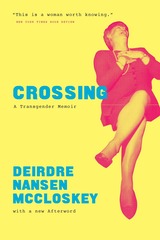
“I visited womanhood and stayed. It was not for the pleasures, though I discovered many I had not imagined, and many pains too. But calculating pleasures and pains was not the point. The point was who I am.”
Once a golden boy of conservative economics and a child of 1950s privilege, Deirdre McCloskey (formerly Donald) had wanted to change genders from the age of eleven. But it was a different time, one hostile to any sort of straying from the path—against gays, socialists, women with professions, men without hats, and so on—and certainly against gender transition. Finally, in 1995, at the age of fifty-three, it was time for McCloskey to cross the gender line.
Crossing is the story of McCloskey’s dramatic and poignant transformation from Donald to Dee to Deirdre. She chronicles the physical procedures and emotional evolution required and the legal and cultural roadblocks she faced in her journey to womanhood. By turns searing and humorous, this is the unflinching, unforgettable story of her transformation—what she lost, what she gained, and the women who lifted her up along the way.

Laurie Lee Hall’s growing-up years were defined by the conflict between her physical condition as a boy and her inherent identity as a girl. Unable to explain or resolve her gender dysphoria, she committed to living her adult life as a male. She joined the Church of Jesus Christ of Latter-day Saints, eventually becoming chief architect of its temples and an ecclesiastical leader. In her church and community, rigid adherence to gender roles is not only the norm, but the defining issue of a faith that doctrinally declares one’s gender as an “eternal identity.” Against this traditional backdrop, Hall finally received spiritual confirmation and personally accepted that she was transgender and always had been. In this remarkable memoir, Laurie Lee details how she risked everything to live true to her long-suppressed gender identity.
Through the power of lived experience, Laurie Lee’s story affirms the reality of gender identity and the strength and joy of self-acceptance.
Invisible Lives is the first scholarly study of transgendered people—cross-dressers, drag queens and transsexuals—and their everyday lives.
Through combined theoretical and empirical study, Viviane K. Namaste argues that transgendered people are not so much produced by medicine or psychiatry as they are erased, or made invisible, in a variety of institutional and cultural settings. Namaste begins her work by analyzing two theoretical perspectives on transgendered people—queer theory and the social sciences—displaying how neither of these has adequately addressed the issues most relevant to sex change: everything from employment to health care to identity papers. Namaste then examines some of the rhetorical and semiotic inscriptions of transgendered figures in culture, including studies of early punk and glam rock subcultures, to illustrate how the effacement of transgendered people is organized in different cultural sites. Invisible Lives concludes with new research on some of the day-to-day concerns of transgendered people, offering case studies in violence, health care, gender identity clinics, and the law.
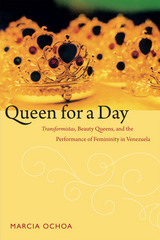
Beauty pageants play an outsized role in Venezuela. The country has won more international beauty contests than any other. The femininity performed by Venezuelan women in high-profile, widely viewed pageants defines a kind of national femininity. Ochoa argues that as transformistas and misses work to achieve the bodies, clothing and makeup styles, and postures and gestures of this national femininity, they come to embody Venezuelan modernity.

By empowering clients to be well-informed medical consumers and by delivering care providers from the straitjacket of inadequate diagnostic standards and stereotypes, this book sets out to transform the nature of transgender care.
In an accessible style, the authors discuss the key mental health issues, with much attention to the vexed relationship between professionals and clients. They propose a new professional role; that of "Gender Specialist."
Chapters 3, 4, and 5 provide definitive information (in the context of consulting health professionals) on hormone administration, aesthetic surgery, and genital reassignment surgery. Chapter 6 takes up the little-examined issue of HIV and AIDS among transgender people. There is also a chapter devoted to issues of transgender people of color, as well as a chapter on transgender adolescents.
The book contains a wealth of practical information and accounts of people's experiences about coming out to one's employer or to one's friends or spouse. Several essays spell out the legal rights of transgender people with regard to insurance, work, marriage, and the use of rest rooms.
The second part of the book consists of thirteen essays on a range of controversial topics. They include three personal stories of transgender life, one essay on the new academic field of Transgender Studies, two essays on legal rights, three essays on medical issues, and two essays on the origins and possible resolution of the conflicts between therapist and client. The authors have also provided useful listings of organizations, centers, and Web sites.
The book has been reviewed by a national committee of professionals and consumers, some of whose members have contributed the essays in the second part of the book.

In clarifying how transmen and FTMs define and validate their lives, as opposed to how society attempts to pigeonhole and belittle them, Cromwell shows how female-to-male transpeople have been made virtually invisible by male-dominated discourses. He considers cross-cultural data on female gender diversity, historical evidence of female-bodied people who have lived as men, and contemporary transmen and FTMs. He also addresses how FTMs and transmen are working to challenge the mental illness model of transness as well as other misconceptions.
Transmen and FTMs seeks to reframe the dialogue about gender identity and move away from regarding fixed gender categories as normative. By redefining gender diversity from a manifestation of pathology to a human condition Transmen and FTMs promotes a fuller understanding of these individuals as persons in their own right.
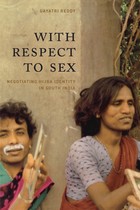
Hijras are men who sacrifice their genitalia to a goddess in return for the power to confer fertility on newlyweds and newborn children, a ritual role they are respected for, at the same time as they are stigmatized for their ambiguous sexuality. By focusing on the hijra community, Gayatri Reddy sheds new light on Indian society and the intricate negotiations of identity across various domains of everyday life. Further, by reframing hijra identity through the local economy of respect, this ethnography highlights the complex relationships among local and global, sexual and moral, economies.
This book will be regarded as the definitive work on hijras, one that will be of enormous interest to anthropologists, students of South Asian culture, and specialists in the study of gender and sexuality.
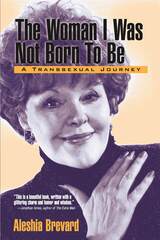
Under the stage name Lee Shaw, Brevard worked as a drag queen at Finocchio's, a San Francisco club, doing Marilyn Monroe impersonations. (Like Marilyn, she sought romance all the time and had a string of entanglements with men.) Later, she worked as a stripper in Reno and as a Playboy Bunny at the Sunset Strip hutch.
After playing opposite Don Knotts in the movie The Love God, Brevard appeared in other films and broke into TV as a regular on the Red Skelton Show. She created the role of Tex on the daytime soap opera One Life To Live. As a woman, Brevard returned to teach theater at East Tennessee State, the same university she had attended as a boy.
This memoir is a rare pre-Women's Movement account of coming to terms with gender identity. Brevard writes frankly about the degree to which she organized her life around pleasing men, and how absurd it all seems to her now.
READERS
Browse our collection.
PUBLISHERS
See BiblioVault's publisher services.
STUDENT SERVICES
Files for college accessibility offices.
RECENTLY PUBLISHED






UChicago Accessibility Resources
home | accessibility | search | about | contact us
BiblioVault ® 2001 - 2025
The University of Chicago Press