Results by title
1563 books match the query 'African American & Black Studies' and 135 start with a
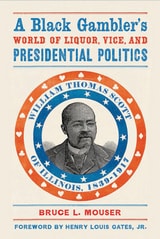
A Black Gambler’s World of Liquor, Vice, and Presidential Politics
William Thomas Scott of Illinois, 1839–1917Bruce L. Mouser
University of Wisconsin Press, 2014
Scott helped build the National Negro Liberty Party to forward economic, political, and legal rights for his race. But the hustling that had brought him business success proved his undoing as a national political figure. He was the NNLP's initial presidential nominee, only to be replaced by a better-educated and more socially acceptable candidate, George Edwin Taylor.
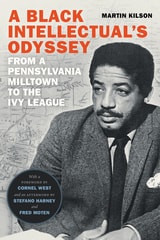
A Black Intellectual's Odyssey
From a Pennsylvania Milltown to the Ivy LeagueMartin Kilson
Duke University Press, 2021
He gives a sweeping sociological tour of Ambler as a multiethnic, working-class company town while sketching the social, economic, and racial elements that marked everyday life. From narrating the area's history of persistent racism and the racial politics in the integrated schools to describing the Black church's role in buttressing the town's small Black community, Kilson vividly renders his experience of northern small-town life during the 1930s and 1940s.
At Lincoln University, Kilson's liberal political views coalesced as he became active in the local NAACP chapter. While at Lincoln and during his graduate work at Harvard, Kilson observed how class, political, and racial dynamics influenced his peers' political engagement, diverse career paths, and relationships with white people. As a young professor, Kilson made a point of assisting Harvard's African American students in adapting to life at a white institution.
Throughout his career, Kilson engaged in pioneering scholarship while mentoring countless students. A Black Intellectual's Odyssey features contributions from three of his students: a foreword by Cornel West and an afterword by Stefano Harney and Fred Moten.
A Change Is Gonna Come
Music, Race & the Soul of AmericaCraig Werner
University of Michigan Press, 2006
—Notes
"No one has written this way about music in a long, long time. Lucid, insightful, with real spiritual, political, intellectual, and emotional grasp of the whole picture. A book about why music matters, and how, and to whom."
—Dave Marsh, author of Louie, Louie and Born to Run: The Bruce Springsteen Story
"This book is urgently needed: a comprehensive look at the various forms of black popular music, both as music and as seen in a larger social context. No one can do this better than Craig Werner."
—Henry Louis Gates, Jr., W.E.B. Du Bois Professor of the Humanities, Harvard University
"[Werner has] mastered the extremely difficult art of writing about music as both an aesthetic and social force that conveys, implies, symbolizes, and represents ideas as well as emotion, but without reducing its complexities and ambiguities to merely didactic categories."
—African American Review
A Change Is Gonna Come is the story of more than four decades of enormously influential black music, from the hopeful, angry refrains of the Freedom movement, to the slick pop of Motown; from the disco inferno to the Million Man March; from Woodstock's "Summer of Love" to the war in Vietnam and the race riots that inspired Marvin Gaye to write "What's Going On."
Originally published in 1998, A Change Is Gonna Come drew the attention of scholars and general readers alike. This new edition, featuring four new and updated chapters, will reintroduce Werner's seminal study of black music to a new generation of readers.
Craig Werner is Professor of Afro-American Studies at the University of Wisconsin, and author of many books, including Playing the Changes: From Afro-Modernism to the Jazz Impulse and Up Around the Bend: An Oral History of Creedence Clearwater Revival. His most recent book is Higher Ground: Stevie Wonder, Aretha Franklin, Curtis Mayfield, and the Rise and Fall of American Soul.
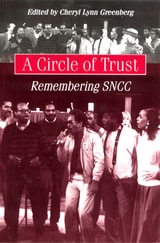
A Circle of Trust
Remembering SNCCGreenberg, Cheryl L
Rutgers University Press, 1998
"The reminiscences and reflections voiced at the SNCC reunion remind us of the remarkable vision and courageous dedication of the civil rights movement of the 1960s. Framed by Cheryl Greenberg's eloquent and probing introduction, the SNCC veterans' comments about the triumphs and limitations of their movement represent a major contribution to the historical literature on race and power in modern America." --Raymond Arsenault, University of South Florida
On the occasion of the SNCC's 25th anniversary, more than 500 people gathered at Trinity College in Connecticut to both celebrate and critique its accomplishments. More than 40 SNCC members tell their stories and reflect on the contributions, limits and legacies of the movement in A Circle of Trust. Engaging in spirited debate with each other, with historians of the movement, and with contemporary political culture more broadly, these former and perpetual activists speak of their vision of a just society and what still remains to be done. With increasing racial tension and the continued debate over integration and separatism in America in the 1990s, the content of this conference is more relevant than ever.
Cheryl Lynn Greenberg begins with an overview of SNCC and introduces each of the chapters of oral history. Participants explore the origins of SNCC, its early adoption of nonviolent protest, its ultimate renunciation of liberal integration and embrace of militant black radicalism, its refusal to repudiate far-left organizations, and controversies over the roles of women in SNCC and society at large. The result is a thoughtful, moving, sometimes acrimonious, sometimes celebratory account of one of the most significant civil rights organizations and its successes and failures.
A City Divided
The Racial Landscape of Kansas City, 1900-1960Sherry Lamb Schirmer
University of Missouri Press, 2002
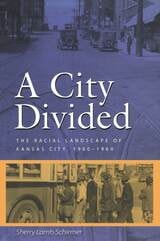
As the African American population grew in size and assertiveness, whites increasingly identified blacks with those factors that most deprived a given space of its middle-class character. Consequently, African Americans came to represent the antithesis of middle-class values, and the white middle class established its identity by excluding blacks from the urban spaces it occupied.
By 1930, racial discrimination rested firmly on gender and family values as well as class. Inequitable law enforcement in the ghetto increased criminal activity, both real and perceived, within the African American community. White Kansas Citians maintained this system of racial exclusion and denigration in part by “misdirection,” either by denying that exclusion existed or by claiming that segregation was necessary to prevent racial violence. Consequently, African American organizations sought to counter misdirection tactics. The most effective of these efforts followed World War II, when local black activists devised demonstration strategies that targeted misdirection specifically.
At the same time, a new perception emerged among white liberals about the role of race in shaping society. Whites in the local civil rights movement acted upon the belief that integration would produce a better society by transforming human character. Successful in laying the foundation for desegregating public accommodations in Kansas City, black and white activists nonetheless failed to dismantle the systems of spatial exclusion and inequitable law enforcement or to eradicate the racial ideologies that underlay those systems.
These racial perceptions continue to shape race relations in Kansas City and elsewhere. This study demystifies these perceptions by exploring their historical context. While there have been many studies of the emergence of ghettos in northern and border cities, and others of race, gender, segregation, and the origins of white ideologies, A City Divided is the first to address these topics in the context of a dynamic, urban society in the Midwest.
A City within a City
The Black Freedom Struggle in Grand Rapids, MichiganTodd E Robinson
Temple University Press, 2012
A City within a City cogently argues that the post-war political reform championed by local Republicans transformed the city's racial geography, creating a racialized "city within a city," featuring a system of "managerial racism" designed to keep blacks in declining inner-city areas. As Robinson indicates, this bold, provocative framework for understanding race relations in Grand Rapids has broader implications for illuminating the twentieth-century African American urban experience in secondary cities.
A Colored Man Round the World
David F. Dorr
University of Michigan Press, 1999
Malini Johar Schueller has edited and annotated the 1858 text and added a critical introduction that provides a useful context for understanding and appreciating this important but heretofore neglected document. Her edition of A Colored Man Round the World provides a fascinating account of Dorr's negotiation of the conflicting roles of slave versus man, taking into account all of the racial complexities that existed at the time. As a traveler abroad, Dorr claimed an American selfhood that allowed him mobility in Europe, and he benefited from the privileges accorded American "Orientalists" venturing in the near East. However, any empowerment that Dorr experienced while a tourist vanished upon his return to America.
The book will be welcomed for the rare perspective it provides of the mid-nineteenth century, through the eyes of an African-American slave and for the light it casts on world and U.S. history as well as on questions of racial and national identity.
Malini Johar Schueller is Professor of English, University of Florida.
A Conditional Embrace
Black Queer Feminism in PerformanceKristyl D. Tift
The Ohio State University Press, 2026
In A Conditional Embrace, Kristyl D. Tift seeks to understand how Black queer women theater and film artists depict their own survival in heterosexist temporalities and spaces. Using the framework of lovin’ on—a theory inspired by Black feminist thought, performance theory, and queer theory—Tift closely reads the works of a selection of artists to investigate the “conditional embrace” of Black queer art in society. Her intersectional and intertextual methodology considers the text and body as part and parcel of performance work, allowing her to examine the multiple and complex intersections of identity at play in works meant to be read and performed. Tift puts the work of more visible artists such as Dee Rees, Sharon Bridgforth, and Staceyann Chin in direct conversation with lesser-known contributors to Black queer feminist performance such as Shirlene Holmes and Donnetta Lavinia Grays, analyzing not only their plays, installations, and poetry but also interviews, personal essays, performances, and more. Centering the works of artists situated, by birth or migration, in the Southern US and the Caribbean, A Conditional Embrace explores how artists at the margins of art and society represent Black queer women’s survival through processes of self-making, community-building, and homemaking.
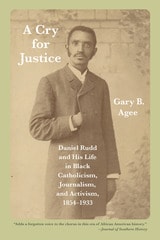
A Cry for Justice
Daniel Rudd and His Life in Black Catholicism, Journalism, and Activism, 1854-1933Gary B. Agee
University of Arkansas Press, 2017
A Fatherless Child
Autobiographical Perspectives of African American MenTara T. Green
University of Missouri Press, 2009
Through her analysis, Green emphasizes the role of community as a father-substitute in producing successful black men, the impact of fatherlessness on self-perceptions and relationships with women, and black men’s engagement with healing the pain of abandonment. She also looks at why these four men visited Africa to reclaim a cultural history and identity, showing how each developed a clearer understanding of himself as an American man of African descent.
A Ghetto Takes Shape
Black Cleveland, 1870-1930Kenneth L. Kusmer
University of Illinois Press, 1976
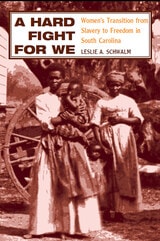
A Hard Fight for We
Women's Transition from Slavery to Freedom in South CarolinaLeslie A. Schwalm
University of Illinois Press, 1997
African-American women fought for their freedom with courage and vigor during and after the Civil War. Leslie Schwalm explores the vital roles of enslaved and formerly enslaved women on the rice plantations of lowcountry South Carolina, both in antebellum plantation life and in the wartime collapse of slavery. From there, she chronicles their efforts as freedwomen to recover from the impact of the war while redefining their lives and labor.
Freedwomen asserted their own ideas of what freedom meant and insisted on important changes in the work they performed both for white employers and in their own homes. As Schwalm shows, these women rejected the most unpleasant or demeaning tasks, guarded the prerogatives they gained under the South's slave economy, and defended their hard-won freedoms against unwanted intervention by Northern whites and the efforts of former owners to restore slavery's social and economic relations during Reconstruction. A bold challenge to entrenched notions, A Hard Fight for We places African American women at the center of the South's transition from a slave society.
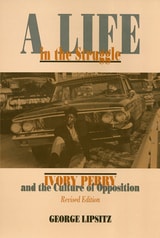
A Life In The Struggle
Ivory Perry and the Culture of OppositionGeorge Lipsitz
Temple University Press, 1995
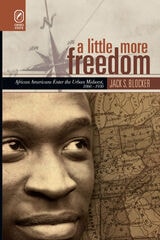
A Little More Freedom
African Americans Enter the Urban Midwest, 1860–1930Jack S. Blocker
The Ohio State University Press, 2008
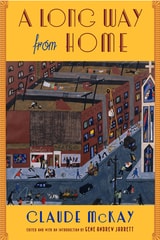
A Long Way From Home
Jarrett, Gene A
Rutgers University Press, 2007
Claude McKay (1889–1948) was one of the most prolific and sophisticated African American writers of the early twentieth century. A Jamaican-born author of poetry, short stories, novels, and nonfiction, McKay has often been associated with the “New Negro” or Harlem Renaissance, a movement of African American art, culture, and intellectualism between World War I and the Great Depression. But his relationship to the movement was complex. Literally absent from Harlem during that period, he devoted most of his time to traveling through Europe, Russia, and Africa during the 1920s and 1930s. His active participation in Communist groups and the radical Left also encouraged certain opinions on race and class that strained his relationship to the Harlem Renaissance and its black intelligentsia. In his 1937 autobiography, A Long Way from Home, McKay explains what it means to be a black “rebel sojourner” and presents one of the first unflattering, yet informative, exposés of the Harlem Renaissance. Reprinted here with a critical introduction by Gene Andrew Jarrett, this book will challenge readers to rethink McKay’s articulation of identity, art, race, and politics and situate these topics in terms of his oeuvre and his literary contemporaries between the world wars.
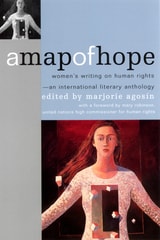
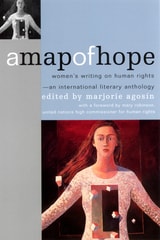
A Map of Hope
Women's Writing on Human Rights—An International Literary AnthologyAgosín, Marjorie
Rutgers University Press, 1999
The first international anthology to explore women’s human rights from a literary perspective.
More than half a century after the United Nations Declaration of Human Rights, women throughout the world still struggle for social and political justice. Many fight back with the only tools of resistance they possess—words. A Map of Hope presents a collection of 77 extraordinary literary works documenting the ways women writers have spoken out about human rights issues.
Writers young and old, known and unknown, explore the dimensions of terror, the unspeakable atrocities of war, and the possibilities of resistance and refusal against all odds. Their poems, essays, memoirs, and brief histories examine issues that affect the condition of women in war, prison camps, exile, and as victims of domestic and political violence.
A Map of Hope presents diverse women writers who have created a literature of global consciousness and justice. Their works give a face, an image, and a human dimension to the dehumanization of human rights violations. The collection allows readers to hear voices that have decided to make a difference. It goes beyond geography and ethnic groups; writers from around the globe are united by the universal dimensions of horror and deprivation, as well as the unique common struggle for justice and solidarity.
A Map of Hope
Women's Writing on Human Rights—An International Literary AnthologyAgosín, Marjorie
Rutgers University Press, 1999
The first international anthology to explore women’s human rights from a literary perspective.
More than half a century after the United Nations Declaration of Human Rights, women throughout the world still struggle for social and political justice. Many fight back with the only tools of resistance they possess—words. A Map of Hope presents a collection of 77 extraordinary literary works documenting the ways women writers have spoken out about human rights issues.
Writers young and old, known and unknown, explore the dimensions of terror, the unspeakable atrocities of war, and the possibilities of resistance and refusal against all odds. Their poems, essays, memoirs, and brief histories examine issues that affect the condition of women in war, prison camps, exile, and as victims of domestic and political violence.
A Map of Hope presents diverse women writers who have created a literature of global consciousness and justice. Their works give a face, an image, and a human dimension to the dehumanization of human rights violations. The collection allows readers to hear voices that have decided to make a difference. It goes beyond geography and ethnic groups; writers from around the globe are united by the universal dimensions of horror and deprivation, as well as the unique common struggle for justice and solidarity.
A Mouth Sweeter Than Salt
An African MemoirToyin Falola
University of Michigan Press, 2005
-Ama Ata Aidoo
"A splendid coming-of-age story so full of vivid color and emotion, the words seem to dance off the page. But this is not only Falola's memoir; it is an account of a new nation coming into being and the tensions and negotiations that invariably occur between city and country, tradition and modernity, men and women, rich and poor. A truly beautiful book."
-Robin D. G. Kelley
"More than a personal memoir, this book is a rich minihistory of contemporary Nigeria recorded in delicious detail by a perceptive eyewitness who grew up at the crossroads of many cultures."
-Bernth Lindfors
"The reader is irresistibly drawn into Falola's world. The prose is lucid. There is humor. This work is sweet. Period."
-Ngugi wa Thiongo'o
A Mouth Sweeter Than Salt gathers the stories and reflections of the early years of Toyin Falola, the grand historian of Africa and one of the greatest sons of Ibadan, the notable Yoruba city-state in Nigeria.
Redefining the autobiographical genre altogether, Falola miraculously weaves together personal, historical, and communal stories, along with political and cultural developments in the period immediately preceding and following Nigeria's independence, to give us a unique and enduring picture of the Yoruba in the mid-twentieth century. This is truly a literary memoir, told in language rich with proverbs, poetry, song, and humor.
Falola's memoir is far more than the story of one man's childhood experiences; rather, he presents us with the riches of an entire culture and community-its history, traditions, pleasures, mysteries, household arrangements, forms of power, struggles, and transformations.
A Muslim American Slave
The Life of Omar Ibn SaidOmar Ibn Said; translated from the Arabic, edited, and with an introduction by Ala Alryyes
University of Wisconsin Press, 2011
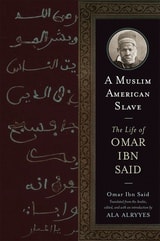
Born to a wealthy family in West Africa around 1770, Omar Ibn Said was abducted and sold into slavery in the United States, where he came to the attention of a prominent North Carolina family after filling “the walls of his room with piteous petitions to be released, all written in the Arabic language,” as one local newspaper reported. Ibn Said soon became a local celebrity, and in 1831 he was asked to write his life story, producing the only known surviving American slave narrative written in Arabic.
In A Muslim American Slave, scholar and translator Ala Alryyes offers both a definitive translation and an authoritative edition of this singularly important work, lending new insights into the early history of Islam in America and exploring the multiple, shifting interpretations of Ibn Said’s narrative by the nineteenth-century missionaries, ethnographers, and intellectuals who championed it.
This edition presents the English translation on pages facing facsimile pages of Ibn Said’s Arabic narrative, augmented by Alryyes’s comprehensive introduction, contextual essays and historical commentary by leading literary critics and scholars of Islam and the African diaspora, photographs, maps, and other writings by Omar Ibn Said. The result is an invaluable addition to our understanding of writings by enslaved Americans and a timely reminder that “Islam” and “America” are not mutually exclusive terms.
This edition presents the English translation on pages facing facsimile pages of Ibn Said’s Arabic narrative, augmented by Alryyes’s comprehensive introduction and by photographs, maps, and other writings by Omar Ibn Said. The volume also includes contextual essays and historical commentary by literary critics and scholars of Islam and the African diaspora: Michael A. Gomez, Allan D. Austin, Robert J. Allison, Sylviane A. Diouf, Ghada Osman, and Camille F. Forbes. The result is an invaluable addition to our understanding of writings by enslaved Americans and a timely reminder that “Islam” and “America” are not mutually exclusive terms.
Best Books for General Audiences, selected by the American Association of School Librarians
A Mysterious Life and Calling
From Slavery to Ministry in South CarolinaReverend Mrs. Charlotte S. Riley, Edited with an introduction by Crystal J. Lucky, Foreword by Joycelyn K. Moody
University of Wisconsin Press, 2016
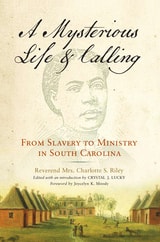
Born in 1839 in Charleston, South Carolina, Riley was taught to read, write, and sew despite laws forbidding black literacy. Raised a Presbyterian, she writes of her conversion at age fourteen to the African Methodist Episcopal (AME) church, embracing its ecstatic worship and led by her own spiritual visions. Her memoir is revelatory on many counts, including life in urban Charleston before and after emancipation, her work as a preacher at multiracial revivals, the rise of African American civil servants in the Reconstruction era, and her education and development as a licensed female minister in a patriarchal church.
Crystal J. Lucky, who discovered Riley’s forgotten book in the library archives at Wilberforce University in Ohio, provides an introduction and notes on events, society, and religious practice in the antebellum era and during the Civil War and Reconstruction, and places A Mysterious Life and Calling in the context of other spiritual autobiographies and slave narratives.
A New Day in the Delta
Inventing School Desegregation As You GoDavid W. Beckwith
University of Alabama Press, 2009
Explores Mississippi’s school desegregation from the viewpoint of a white teacher
A New Day in the Delta is a fresh and appealing memoir of the experience of a young white college graduate in need of a job as the Vietnam War reached its zenith. David Beckwith applied and was accepted for a teaching position in the Mississippi Delta in the summer of 1969. Although it seemed to him a bit strange that he was accepted so quickly for this job while his other applications went nowhere, he was grateful for the opportunity. Beckwith reported for work to learn that he was to be assigned to an all-black school as the first step in Mississippi’s long-deferred school desegregation.
The nation and Mississippi alike were being transformed by war and evolving racial relations, and Beckwith found himself on the cutting edge of the transformation of American education and society in one of the most resistant (and poor) corners of the country. Beckwith’s revealing and often amusing story of the year of mutual incomprehension between an inexperienced white teacher and a classroom full of black children who had had minimal contact with any whites. This is history as it was experienced by those who were thrust into another sort of “front line.”
A New Deal for All?
Race and Class Struggles in Depression-Era BaltimoreAndor Skotnes
Duke University Press, 2012
A New Deal for Bronzeville
Housing, Employment, and Civil Rights in Black Chicago, 1935-1955Lionel Kimble Jr.
Southern Illinois University Press, 2015
During the Great Migration of the 1920s and 1930s, southern African Americans flocked to the South Side Chicago community of Bronzeville, the cultural, political, social, and economic hub of African American life in the city, if not the Midwest. The area soon became the epicenter of community activism as working-class African Americans struggled for equality in housing and employment. In this study, Lionel Kimble Jr. demonstrates how these struggles led to much of the civil rights activism that occurred from 1935 to 1955 in Chicago and shows how this working-class activism and culture helped to ground the early civil rights movement. Despite the obstacles posed by the Depression, blue-collar African Americans worked with leftist organizations to counter job discrimination and made strong appeals to New Deal allies for access to public housing. Kimble details how growing federal intervention in local issues during World War II helped African Americans make significant inroads into Chicago’s war economy and how returning African American World War II veterans helped to continue the fight against discrimination in housing and employment after the war. The activism that appeared in Bronzeville was not simply motivated by the “class consciousness” rhetoric of the organized labor movement but instead grew out of everyday struggles for racial justice, citizenship rights, and improved economic and material conditions. With its focus on the role of working-class African Americans—as opposed to the middle-class leaders who have received the most attention from civil rights historians in the past—A New Deal for Bronzeville makes a significant contribution to the study of civil rights work in the Windy City and enriches our understanding of African American life in mid-twentieth-century Chicago.
This publication is partially funded by a grant from Furthermore: a program of the J.M. Kaplan fund.

A New History of Black Pittsburgh
Advancing the Case for Reparatory JusticeJoe William Trotter, Jr., Esther Bush, Laurence Glasco, Benjamin Houston, Patricia Pugh Mitchell, Tony Norman, Rob Ruck, and Carla Young
University of Michigan Press, 2027
A rising chorus of voices have called for redress and compensation to level the playing field for African Americans across all walks of life. A New History of Black Pittsburgh brings together humanities scholars, social service and social justice activists, and community residents to document multigenerational patterns of class and racial inequality and forge a comprehensive case for reparatory justice.
Focusing on industry’s “first city,” the authors draw on oral histories, archival research, and scholarship to examine more than two centuries of Pittsburgh’s history. By featuring a city home to professional Negro League baseball teams, jazz artists, the Pittsburgh Courier, and acclaimed writers and playwrights, the authors show that recognizing ongoing creativity and community-building activities is just as vital for the case for reparations as documenting persistent forms of inequality. A New History of Black Pittsburgh offers insights and policy recommendations to inspire activists, educators, historians, and policymakers working to repair the damage of racial inequality around the globe.

A Nimble Arc
James Van Der Zee and PhotographyEmilie Boone
Duke University Press, 2023
A Noble Fight
African American Freemasonry and the Struggle for Democracy in AmericaCorey D. B. Walker
University of Illinois Press, 2008
With great care and detail, Walker argues that African American freemasonry provides a critical theoretical lens for understanding the distinctive ways African Americans have constructed a radically democratic political imaginary through racial solidarity and political nationalism, forcing us to reconsider much more circumspectly the complex relationship between voluntary associations and democratic politics.
Mapping the discursive logics of the language of freemasonry as a metaphoric rendering of American democracy, this study interrogates the concrete forms of an associational culture, revealing how paradoxical aspects of freemasonry such as secrecy and public association inform the production of particular ideas and expressions of democracy in America.
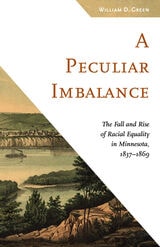
A Peculiar Imbalance
The Fall and Rise of Racial Equality in Minnesota, 1837–1869William D. Green
University of Minnesota Press, 2015
A Peculiar Imbalance is the little-known history of the black experience in Minnesota in the mid-1800s, a time of dramatic change in the region. William D. Green explains how, as white progressive politicians pushed for statehood, black men who had been integrated members of the community, owning businesses and maintaining good relationships with their neighbors, found themselves denied the right to vote or to run for office in those same communities.
As Minnesota was transformed from a wilderness territory to a state, the concepts of race and ethnicity and the distinctions among them made by Anglo-Americans grew more rigid and arbitrary. A black man might enjoy economic success and a middle-class lifestyle but was not considered a citizen under the law. In contrast, an Irish Catholic man was able to vote—as could a mixed-blood Indian—but might find himself struggling to build a business because of the ethnic and religious prejudices of the Anglo-American community. A Peculiar Imbalance examines these disparities, reflecting on the political, social, and legal experiences of black men from 1837 to 1869, the year of black suffrage.
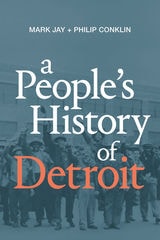
A People's History of Detroit
Mark Jay and Philip Conklin
Duke University Press, 2020
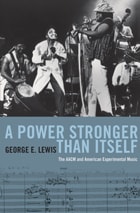
A Power Stronger Than Itself
The AACM and American Experimental MusicGeorge E. Lewis
University of Chicago Press, 2008
Founded in 1965 and still active today, the Association for the Advancement of Creative Musicians (AACM) is an American institution with an international reputation. George E. Lewis, who joined the collective as a teenager in 1971, establishes the full importance and vitality of the AACM with this communal history, written with a symphonic sweep that draws on a cross-generational chorus of voices and a rich collection of rare images.
Moving from Chicago to New York to Paris, and from founding member Steve McCall’s kitchen table to Carnegie Hall, A Power Stronger Than Itself uncovers a vibrant, multicultural universe and brings to light a major piece of the history of avant-garde music and art.
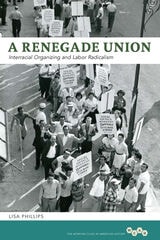
A Renegade Union
Interracial Organizing and Labor RadicalismLisa Phillips
University of Illinois Press, 2013
A Rift in the Clouds
Race and the Southern Federal Judiciary, 1900-1910Brent J. Aucoin
University of Arkansas Press, 2007

A Rumor of Revolt
The "Great Negro Plot" in Colonial New YorkT. J. Davis
University of Massachusetts Press, 1990
This groundbreaking historical examination analyzes the 1741 New York Conspiracy trials: a pivotal moment in colonial American history when the city's legal system prosecuted an alleged slave conspiracy with severe and controversial consequences. Thomas J. Davis meticulously reconstructs the trials and executions that resulted from this supposed uprising, providing crucial insights into the intersection of race, ethnicity, legal practice, and social control in colonial New York.
During the spring and summer of 1741, New York authorities conducted dramatic trials in response to fears of a coordinated slave rebellion. Between May 11 and August 29, 1741, the city executed 35 individuals: thirteen Black men were burned at the stake, seventeen Black men were hanged, and two white men and two white women were also executed. These brutal punishments reflected the city's intense fear and the racialized nature of colonial justice.
Davis's analysis examines the primary source material to investigate what this historical episode reveals about colonial New York's racial hierarchies, ethnic tensions, and legal systems. The work scrutinizes the trials themselves, asking critical questions: Was there truly a conspiracy, or was the event primarily a product of hysteria and rumor? How did racial prejudices, economic anxieties, and the structure of colonial authority shape legal proceedings?
Beyond the courtroom drama, Davis explores the broader implications of these trials for understanding slavery in northern colonies, where enslaved people were not as visible but equally integral to colonial society. The book demonstrates how fear, whether grounded in reality or stoked by rumor, could mobilize entire communities and transform legal systems into instruments of racialized control. This work has become essential reading for understanding how colonial societies constructed narratives of racial threat and employed legal mechanisms to enforce racial subordination.
A Secret Society History of the Civil War
Mark A. Lause
University of Illinois Press, 2014
Antebellum secret societies ranged politically from those with progressive or even revolutionary agendas to those that pursued conservative or oppressive goals. This book shows how, in the years leading up to the Civil War, these clandestine organizations exacerbated existing sectional tensions in the United States. Lause's research indicates that the pervasive influence of secret societies may have played a part in key events such as the Freesoil movement, the beginning of the Republican party, John Brown's raid on Harpers Ferry, Lincoln's election, and the Southern secession process of 1860-1861.
This exceptional study encompasses both white and African American secret society involvement, revealing the black fraternal experience in antebellum America as well as the clandestine operations that provided assistance to escaped slaves via the Underground Railroad. Unraveling these pervasive and extensive networks of power and influence, A Secret Society History of the Civil War demonstrates that antebellum secret societies played a greater role in affecting Civil War-era politics than has been previously acknowledged.
A Sense of Arrival
Kevin Adonis Browne
Duke University Press, 2024
A Shared Future
Faith-Based Organizing for Racial Equity and Ethical DemocracyRichard L. Wood and Brad R. Fulton
University of Chicago Press, 2015
In A Shared Future, Richard L. Wood and Brad R. Fulton draw on a new national study of community organizing coalitions and in-depth interviews of key leaders in this field to show how faith-based organizing is creatively navigating the competing aspirations of America’s universalist and multiculturalist democratic ideals, even as it confronts three demons bedeviling American politics: economic inequality, federal policy paralysis, and racial inequity. With a broad view of the entire field and a distinct empirical focus on the PICO National Network, Wood and Fulton’s analysis illuminates the tensions, struggles, and deep rewards that come with pursuing racial equity within a social change organization and in society. Ultimately, A Shared Future offers a vision for how we might build a future that embodies the ethical democracy of the best American dreams.
An interview of the authors on the subject of faith leaders organizing for justice (Peace Talks Radio, copyright Good Radio Shows, Inc.) can be heard at this link: https://beta.prx.org/stories/190030
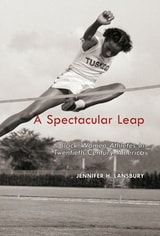
A Spectacular Leap
Black Women Athletes in Twentieth-Century AmericaJennifer H. Lansbury
University of Arkansas Press, 2014
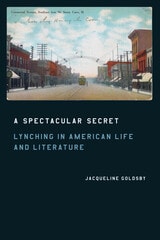
A Spectacular Secret
Lynching in American Life and LiteratureJacqueline Goldsby
University of Chicago Press, 2006
To pursue this argument, Goldsby traces lynching's history by taking up select mob murders and studying them together with key literary works. She focuses on three prominent authors—Ida B. Wells-Barnett, Stephen Crane, and James Weldon Johnson—and shows how their own encounters with lynching influenced their analyses of it. She also examines a recently assembled archive of evidence—lynching photographs—to show how photography structured the nation's perception of lynching violence before World War I. Finally, Goldsby considers the way lynching persisted into the twentieth century, discussing the lynching of Emmett Till in 1955 and the ballad-elegies of Gwendolyn Brooks to which his murder gave rise.
An empathic and perceptive work, A Spectacular Secret will make an important contribution to the study of American history and literature.
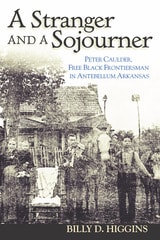
A Stranger and a Sojourner
Peter Caulder, Free Black Frontiersman in Antebellum ArkansasBilly D. Higgins
University of Arkansas Press, 2004
A Taste for Brown Sugar
Black Women in PornographyMireille Miller-Young
Duke University Press, 2014
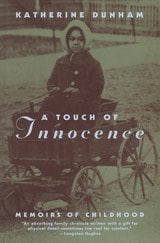
A Touch of Innocence
A Memoir of ChildhoodKatherine Dunham
University of Chicago Press, 1994
In stark prose, she tells of growing up in both black and white households and of the divisions of race and class in Chicago that become the harsh realities of her young life. A riveting narrative of one girl's struggle to transcend the painful confusions of a family and culture in turmoil, Dunham's story is full of the clarity, candor, and intelligence that lifted her above her troubled beginnings.
"A Touch of Innocence is an absorbing family chronicle written with a gift for physical detail sometimes too real for comfort. In quietly graphic prose the growing girl, the slightly older brother, the ambitious father and the kind stepmother are pictured in such human terms that when their lives get tied into harder and harder knots beyond their undoing, one can only continue to read helplessly as doom closes in upon the household."—Langston Hughes, New York Herald Tribune
"A Touch of Innocence is one of the most extraordinary life stories I have ever read . . . . The content of this book is so heartbreaking that only the strongest artistic skills can keep it from leaking out into sobbing self-pity, but Katherine Dunham's art contains it, understands it and refuses to be overwhelmed by its terrors."—Elizabeth Janeway, New York Times
"The first eighteen years of the famous dancer and choreographer's life are brought vividly to the reader in this first volume of her autobiography. She writes of what it is like to be a special, gifted young woman growing up in a racially mixed family in the American Middle West. A beautiful, touching and sometimes discomforting book."—Publishers Weekly
"As writing it is honest, searing, graphic and touching, giving us a rather heartbreaking early view of the young American Negro who was later to make a name for herself as a dancer and choreographer."—Arthur Todd, Saturday Review

A Voice of Thunder
A BLACK SOLDIER'S CIVIL WAREdited by Donald Yacovone
University of Illinois Press, 1997
important African-American war correspondent of his era, served in the
famed black Fifty-fourth Massachusetts Regiment, subject of the film Glory.
His letters from the front, published in the New York Weekly Anglo-African,
brilliantly detail two wars: one against the Confederacy and one against
the brutal, debilitating racism within his own Union Army. Together with
Donald Yacovone's biographical introduction detailing Stephens's life
and times, they provide a singular perspective on the greatest crisis
in the history of the United States.
Stephens chronicled the African-American
quest for freedom in reports from southern Maryland and eastern Virginia
in 1861 and 1862 that detailed, among other issues of the day, the Army
of the Potomac's initial encounter with slavery, the heroism of fugitive
slaves, and the brutality both Southerners and Union troops inflicted
on them.
From the inception of the
Fifty-fourth early in 1863 Stephens was the unit's voice, telling of its
struggle against slavery and its quest to win the pay it had been promised.
His description of the July 18, 1863, assault on Battery Wagner near Charleston,
South Carolina, and his writings on the unit's eighteen-month campaign
to be paid as much as white troops are gripping accounts of continued
heroism in the face of persistent insult.
The Weekly Anglo-African
was the preeminent African-American newspaper of its time. Stephens's
correspondence, intimate and authoritative, takes in an expansive array
of issues and anticipates nearly all modern assessments of the black role
in the Civil War. His commentary on the Lincoln administration's wartime
policy and his conviction that the issues of race and slavery were central
to nineteenth-century American life mark him as a major American social
critic.

A White Side of Black Britain
Interracial Intimacy and Racial LiteracyFrance Winddance Twine
Duke University Press, 2010
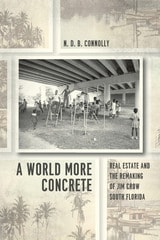
A World More Concrete
Real Estate and the Remaking of Jim Crow South FloridaN. D. B. Connolly
University of Chicago Press, 2014
A World More Concrete argues that black and white landlords, entrepreneurs, and even liberal community leaders used tenements and repeated land dispossession to take advantage of the poor and generate remarkable wealth. Through a political culture built on real estate, South Florida’s landlords and homeowners advanced property rights and white property rights, especially, at the expense of more inclusive visions of equality. For black people and many of their white allies, uses of eminent domain helped to harden class and color lines. Yet, for many reformers, confiscating certain kinds of real estate through eminent domain also promised to help improve housing conditions, to undermine the neighborhood influence of powerful slumlords, and to open new opportunities for suburban life for black Floridians.
Concerned more with winners and losers than with heroes and villains, A World More Concrete offers a sober assessment of money and power in Jim Crow America. It shows how negotiations between powerful real estate interests on both sides of the color line gave racial segregation a remarkable capacity to evolve, revealing property owners’ power to reshape American cities in ways that can still be seen and felt today.

A-Train
Memoirs of a Tuskegee AirmanCharles W. Dryden
University of Alabama Press, 1997
A moving personal account of a man’s flight for freedom—above the clouds and beyond prejudice—by one of the first Tuskegee airmen.
A-Train is the story of one of the black Americans who, during World War II, graduated from Tuskegee (AL) Flying School and served as a pilot in the Army Air Corps’ 99th Pursuit Squadron. Charles W. Dryden presents a fast-paced, balanced, and personal account of what it was like to prepare for a career traditionally closed to African Americans, how he coped with the frustrations and dangers of combat, and how he, along with many fellow black pilots, navigators, bombardiers, and crewmen, emerged with a magnificent war record.
Under the command of Colonel Benjamin O. Davis Jr., the Tuskegee airmen fought over North Africa, Sicily, and Europe, escorting American bomber crews who respected their "no-losses" record. Some were shot down, many of them were killed or captured by the enemy, and several won medals of valor and honor. But the airmen still faced great barriers of racial prejudice in the armed forces and at home. As a member of that elite group of young pilots who fought for their country overseas while being denied civil liberties at home, Dryden presents an eloquent story that will touch every reader.
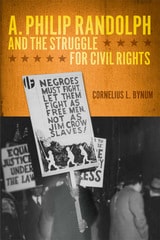
A. Philip Randolph and the Struggle for Civil Rights
Cornelius L. Bynum
University of Illinois Press, 2010
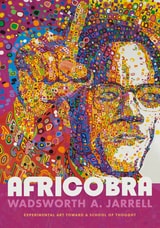
AFRICOBRA
Experimental Art toward a School of ThoughtWadsworth A. Jarrell
Duke University Press, 2020
Aaron Henry of Mississippi
Inside AgitatorMinion K. C. Morrison
University of Arkansas Press, 2015
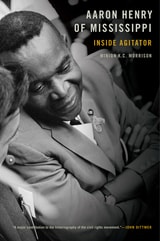
When Aaron Henry returned home to Mississippi from World War II service in 1946, he was part of wave of black servicemen who challenged the racial status quo. He became a pharmacist through the GI Bill, and as a prominent citizen, he organized a hometown chapter of the NAACP and relatively quickly became leader of the state chapter.
From that launching pad he joined and helped lead an ensemble of activists who fundamentally challenged the system of segregation and the almost total exclusion of African Americans from the political structure. These efforts were most clearly evident in his leadership of the integrated Mississippi Freedom Democratic Party delegation, which, after an unsuccessful effort to unseat the lily-white Democratic delegation at the Democratic National Convention in 1964, won recognition from the national party in 1968.
The man who the New York Times described as being “at the forefront of every significant boycott, sit-in, protest march, rally, voter registration drive and court case” eventually became a rare example of a social-movement leader who successfully moved into political office. Aaron Henry of Mississippi covers the life of this remarkable leader, from his humble beginnings in a sharecropping family to his election to the Mississippi house of representatives in 1979, all the while maintaining the social-change ideology that prompted him to improve his native state, and thereby the nation.
Abandoning the Black Hero
Sympathy and Privacy in the Postwar African American White-Life NovelCharles, John C
Rutgers University Press, 2012
Abandoning the Black Hero is the first book to examine the postwar African American white-life novel—novels with white protagonists written by African Americans. These fascinating works have been understudied despite having been written by such defining figures in the tradition as Richard Wright, Zora Neale Hurston, James Baldwin, Ann Petry, and Chester Himes, as well as lesser known but formerly best-selling authors Willard Motley and Frank Yerby.
John C. Charles argues that these fictions have been overlooked because they deviate from two critical suppositions: that black literature is always about black life and that when it represents whiteness, it must attack white supremacy. The authors are, however, quite sympathetic in the treatment of their white protagonists, which Charles contends should be read not as a failure of racial pride but instead as a strategy for claiming creative freedom, expansive moral authority, and critical agency.
In an era when “Negro writers” were expected to protest, their sympathetic treatment of white suffering grants these authors a degree of racial privacy previously unavailable to them. White writers, after all, have the privilege of racial privacy because they are never pressured to write only about white life. Charles reveals that the freedom to abandon the “Negro problem” encouraged these authors to explore a range of new genres and themes, generating a strikingly diverse body of novels that significantly revise our understanding of mid-twentieth-century black writing.
Abolition Time
Grammars of Law, Poetics of JusticeJess A. Goldberg
University of Minnesota Press, 2024
How Black Atlantic literature can challenge conventions and redefine literary scholarship
Abolition Time is an invitation to reenvision abolitionist justice through literary studies. Placing critical race theory, queer theory, critical prison studies, and antiprison activism in conversation with an archive of Black Atlantic literatures of slavery, Jess A. Goldberg reveals how literary studies can help undo carceral epistemologies embedded in language and poetics.
Goldberg examines poetry, drama, and novels from the nineteenth century through the twenty-first—such as William Wells Brown’s The Escape, Angelina Weld Grimké’s Rachel, Toni Morrison’s A Mercy, and Claudia Rankine’s Citizen—to consider literature and literary scholarship’s roles in shaping societal paradigms. Focusing on how Black Atlantic literature disrupts the grammar of law and order, they show how these texts propose nonlinear theories of time that imagine a queer relationality characterized by care rather than inheritance, property, or biology.
Abolition Time offers a framework for thinking critically about what is meant by the term justice in the broadest and deepest sense, using close reading to inform the question of abolishing prisons or the police and to think seriously about the most fundamental questions at the heart of the abolitionist movement.
Across the Color Line
Reporting 25 Years in Black CincinnatiMark Curnutte
Ohio University Press, 2019
Published by the University of Cincinnati Press
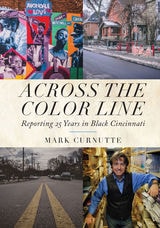
Across the Color Line: Reporting 25 Years in Black Cincinnati presents newspaper reporter Mark Curnutte’s stories published in The Cincinnati Enquirer over a twenty-five-year period beginning in 1993. With hard-won insights gained from years of community reporting, Curnutte describes experiences of African-Americans living in Cincinnati through individual and neighborhood profiles, explorations of community institutions, historical perspectives, and issue stories. The anthology tells a sweeping narrative of a city suffering and maturing through turn-of-the-century racial growing pains and increased racial sophistication and diversity. These stories are complimented by excerpts from Curnutte’s personal journal, providing his reflection on his role as a white man and reporter making the intentional decision to work and live across the color line.