Results by title
277 books match the query 'Biology' and 24 start with a
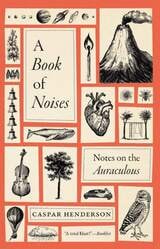
A Book of Noises
Notes on the AuraculousCaspar Henderson
University of Chicago Press, 2023
The crackling of a campfire. The scratch, hiss, and pop of a vinyl record. The first glug of wine as it is poured from a bottle. These are just a few of writer Caspar Henderson’s favorite sounds. In A Book of Noises, Henderson invites readers to use their ears a little better—to tune in to the world in all its surprising noisiness.
Describing sounds from around the natural and human world, the forty-eight essays that make up A Book of Noises are a celebration of all things “auraculous.” Henderson calls on his characteristic curiosity to explore sounds related to humans (anthropophony), other life (biophony), the planet (geophony), and space (cosmophony). Henderson finds the beauty in everyday sounds, like the ringing of a bell, the buzz of a bee, or the “earworm” songs that get stuck in our heads. A Book of Noises also explores the marvelous, miraculous sounds we may never get the chance to hear, like the deep boom of a volcano or the quiet, rustling sound of the Northern Lights.
A Book of Noises will teach readers to really listen to the sounds of the world around them, to broaden and deepen their appreciation of the humans, animals, rocks, and trees simultaneously broadcasting across the whole spectrum of sentience.
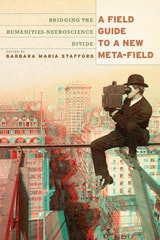
A Field Guide to a New Meta-field
Bridging the Humanities-Neurosciences DivideEdited by Barbara Maria Stafford
University of Chicago Press, 2011
Barbara Stafford is a pioneering art historian whose research has long helped to bridge the divide between the humanities and cognitive sciences. In A Field Guide to a New Meta-Field, she marshals a distinguished group of thinkers to forge a ground-breaking dialogue between the emerging brain sciences, the liberal arts, and social sciences.
Stafford’s book examines meaning and mental function from this dual experimental perspective. The wide-ranging essays included here—from Frank Echenhofer’s foray into shamanist hallucinogenic visions to David Bashwiner’s analysis of emotion and danceability—develop a common language for implementing programmatic and institutional change. Demonstrating how formerly divided fields are converging around shared issues, A Field Guide to a New Meta-Field maps a high-level, crossdisciplinary adventure from one of our leading figures in visual studies.
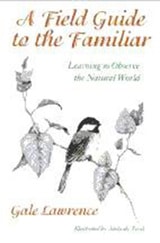
A Field Guide to the Familiar
Learning to Observe the Natural WorldGale Lawrence
Brandeis University Press, 1998
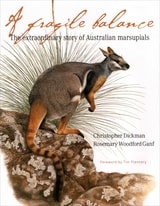
A Fragile Balance
The Extraordinary Story of Australian MarsupialsChristopher Dickman
University of Chicago Press, 2007
Marsupials are nearly synonymous with Australia. Although one of these enigmatic pouched mammals—the opossum—inhabits the United States and another 80 or so thrive in South America, some 220 species are confined to the Australasian region. In Australia, marsupials are the most diverse and dominant indigenous species, from the wallaby and the wombat to the kangaroo and koala.
The extraordinary story of these fascinating animals, A Fragile Balance provides the most up-to-date information on marsupials without losing sight of the unique set of circumstances that led them to prevalence Down Under. Covering all marsupial species in Australia, the book uses an evolutionary framework to interpret the marsupial’s biological traits. Each species account includes a basic biological description, a range map, and a measure of conservation status. The accounts are bounded by general chapters on biology, natural history, cultural history, and conservation. A Fragile Balance is the first book to emphasize interactions between and among marsupials, as well as between humans and marsupials.
Combining the expertise of renowned biologist Christopher Dickman with the artistic talents of illustrator Rosemary Woodford Ganf, A Fragile Balance will be a much celebrated reference for mammalogists worldwide, as well as for readers interested in Australian natural and cultural history.
A Handbook of Biological Illustration
Frances W. Zweifel
University of Chicago Press, 1988
This book is designed to help biologists who must create their own illustrations and artists who are confronted with unfamiliar biological subjects. The author, an experienced biological illustrator, gives practical instructions and advice on the consideration of size and of printing processes, choice of materials, methods for saving time and labor, drawing techniques, lettering methods, and mounting and packing the finished illustrations. She explains how to produce clear and attractive charts, graphs, and maps, so essential to science publications. Though this primer does not cover photographic techniques, it does include advice on retouching, cropping, and mounting photographs and on using photographs of biological subjects as aids in drawing. This second edition is updated to reflect the many technological changes in art materials and printing processes that have occurred since the book's first publication, and it includes an entirely new chapter on planning, designing, and mounting the poster presentations that have become an essential part of conferences held by scientific societies. Also included are the requirements and conventions peculiar to biological illustration and a bibliography of useful reference works.
A Little Queer Natural History
Josh L. Davis
University of Chicago Press, 2024
From a pair of male swans raising young to splitgill mushrooms with over 23,000 mating types, sex in the natural world is wonderfully diverse. Josh L. Davis considers how, for many different organisms—animals, plants, and fungi included—sexual reproduction and sex determination rely on a surprisingly complex interaction among genes, hormones, environment, and chance. As Davis introduces us to fascinating biological concepts like parthenogenesis (virgin birth), monoecious plants (individuals with separate male and female flowers), and sex-reversed genitals, we see turtle hatchlings whose sex is determined by egg temperature; butterflies that embody male and female biological tissue in the same organism; and a tomato that can reproduce three different ways at the same time. Davis also reveals animal and plant behaviors in nature that researchers have historically covered up or explained away, like queer sex among Adélie penguins or bottlenose dolphins, and presents animal behaviors that challenge us to rethink our assumptions and prejudices. Featuring fabulous sex-fluid fishes and ant, wasp, and bee queens who can choose both how they want to have sex and the sex of their offspring, A Little Queer Natural History offers a larger lesson: that the diversity we see in our own species needs no justification and represents just a fraction of what exists in the natural world.
A Manual of Aquatic Plants
Norman C. Fassett; Revised Appendix by Eugene C. Ogden
University of Wisconsin Press, 2006
A Manual of Aquatic Plants can be said to be a classic; it made the identification of aquatic plants in sterile as well as in flowering or fruiting condition as simple as possible, and covers a region from Minnesota to Missouri and eastward to the Gulf of St. Lawrence and Virgina.

A Martian Stranded on Earth
Alexander Bogdanov, Blood Transfusions, and Proletarian ScienceNikolai Krementsov
University of Chicago Press, 2011
Much like Vladimir Lenin, his onetime rival for the leadership of the Bolshevik party during its formative years, Alexander Bogdanov (1873–1928) was a visionary. In two science fiction novels set on Mars, Bogdanov imagined a future in which the workers of the world, liberated from capitalist exploitation, create a “physiological collective” that rejuvenates and unites its members through regular blood exchanges. But Bogdanov was not merely a dreamer. He worked tirelessly to popularize and realize his vision, founding the first research institute devoted to the science of blood transfusion.
In A Martian Stranded on Earth, the first broad-based book on Bogdanov in English, Nikolai Krementsov examines Bogdanov’s roles as revolutionary, novelist, and scientist, presenting his protagonist as a coherent thinker who pursued his ideas in a wide range of venues. Through the lens of Bogdanov’s involvement with blood studies on one hand, and of his fictional and philosophical writings on the other, Krementsov offers a nuanced analysis of the interactions between scientific ideas and societal values.
A Natural History of Time
Pascal Richet
University of Chicago Press, 2007
The quest to pinpoint the age of the Earth is nearly as old as humanity itself. For most of history, people trusted mythology or religion to provide the answer, even though nature abounds with clues to the past of the Earth and the stars. In A Natural History of Time, geophysicist Pascal Richet tells the fascinating story of how scientists and philosophers examined those clues and from them built a chronological scale that has made it possible to reconstruct the history of nature itself.
Richet begins his story with mythological traditions, which were heavily influenced by the seasons and almost uniformly viewed time cyclically. The linear history promulgated by Judaism, with its story of creation, was an exception, and it was that tradition that drove early Christian attempts to date the Earth. For instance, in 169 CE, the bishop of Antioch, for instance declared that the world had been in existence for “5,698 years and the odd months and days.”
Until the mid-eighteenth century, such natural timescales derived from biblical chronologies prevailed, but, Richet demonstrates, with the Scientific Revolution geological and astronomical evidence for much longer timescales began to accumulate. Fossils and the developing science of geology provided compelling evidence for periods of millions and millions of years—a scale that even scientists had difficulty grasping. By the end of the twentieth century, new tools such as radiometric dating had demonstrated that the solar system is four and a half billion years old, and the universe itself about twice that, though controversial questions remain.
The quest for time is a story of ingenuity and determination, and like a geologist, Pascal Richet carefully peels back the strata of that history, giving us a chance to marvel at each layer and truly appreciate how far our knowledge—and our planet—have come.
A Practical Guide to the Marine Animals of Northeastern North America
Leland W Pollock
Rutgers University Press, 1998
A Year of Wild Sex
Twelve Months of Animal MatingJulie Feinstein
University of Chicago Press, 2026
An eye-opening, unexpected year of animals' most intimate encounters.
It was a chance meeting with mating silverfish behind her bathroom cabinet that made biologist Julie Feinstein more curious about, well, the birds and the bees. How do other animals have sex? How do turtles do it? Or starfish without obvious sex organs? What about dangerous animals, like alligators? Or those historically associated with sex, like an oyster or a stork? What if all the animals that we see in zoos, TV ads, and children’s books, she wondered, had sex lives as seemingly strange as those of silverfish?
Feinstein’s humorous, accessible, and deeply researched text answers these and other questions on nature’s most surprising sexual behaviors, including firefly suitors bearing nutritious “nuptial gifts” and post-copulatory slug penis amputations. She raises an eyebrow at all the mammals—from goats to giraffes—that incorporate urine into courtship. She explains the complex interactions of amorous cockroaches and their equally complex genitalia. She laments that dyeing poison dart frog tadpoles sometimes commit cannibalism for a better shot at growing up and then, eventually, coupling up. In this little black book of animal sex, Feinstein guides readers through the year, drawing connections that illuminate the associations between animals’ mating behaviors and our monthly calendars. She details some animals’ peak bursts of activity, such as Atlantic white shrimp spawning in July, porcupines breeding in October, and bald eagles, decorators extraordinaires, working on their nests in December. Scorpions enter whimsically under the astrological sign of Scorpio in November, and when a holiday nears, she explains the mating nitty-gritty of species with deep cultural connections to a specific day, like New Year storks, Thanksgiving turkeys, or Christmas reindeer. Presenting a pair of animals for each month, Feinstein offers an entertaining and illuminating Noah’s ark and a year of wacky, unbelievable, truly wild sex.
Acoustic Communication in Insects and Anurans
Common Problems and Diverse SolutionsH. Carl Gerhardt and Franz Huber
University of Chicago Press, 2002
H. Carl Gerhardt and Franz Huber address these questions among many others, drawing on research from bioacoustics, behavior, neurobiology, and evolutionary biology to present the first integrated approach to the study of acoustic communication in insects and anurans. They highlight both the common solutions that these very different groups have evolved to shared challenges, such as small size, ectothermy (cold-bloodedness), and noisy environments, as well as the divergences that reflect the many differences in evolutionary history between the groups. Throughout the book Gerhardt and Huber also provide helpful suggestions for future research.
Activist Biology
The National Museum, Politics, and Nation Building in BrazilRegina Horta Duarte
University of Arizona Press, 2016
For the first time in English, Brazil’s leading environmental historian, Regina Horta Duarte, brings us a nuanced analysis of the National Museum of Brazil’s contribution to that country’s formation and history. In Activist Biology, Duarte explores the careers of three of these scientists as they leveraged biology as a strategy for change. Devoted to educational initiatives, they organized exhibits, promoted educational film and radio, wrote books, published science communication magazines, fostered school museums, and authored textbooks for young people. Their approach was transdisciplinary, and their reliance on multimedia formats was pioneering.
Capturing a crucial period in Brazil’s history, this portrait of science as a creative and potentially transformative pathway will intrigue anyone fascinated by environmental history, museums, and the history of science. Duarte skillfully shows how Brazilian science furthered global scientific knowledge in ways that are relevant now more than ever.
Adventures in the Wild
Tales from Biologists of the Natural StateJoy Trauth
University of Arkansas Press, 2008
Alaska Halibut History
The Story of Alaska's Commercial Halibut FisheryJames Mackovjak
University of Alaska Press, 2027
Alaska Halibut History—the latest installment in James Mackovjak’s Alaska fisheries series—chronicles one of the grandest and most storied fisheries in the region. Author of Alaska Codfish Chronicle and Alaska Herring History, Mackovjak tells the story of the flatfish that has long been a favorite among chefs globally. A staple in the diet of many Native populations, the halibut has also played a key role in Indigenous mythology across the northern Pacific region. Tracing the evolution of Alaska’s halibut fishery over time, Mackovjak reveals the cultural, economic, and environmental impact of halibut fishing in Alaska and the fish’s vital role in commercial, sport, and subsistence fishing within the state.
Mackovjak considers the organization and chronology of halibut fishery as well as the various factors that have affected fishery management over the years, such as bycatch (the portion of commercial fishing catch that includes animals other than the target species), guided sportfishing, fishermen’s unionization, technological and environmental changes, and major world events. Through detailed analysis and exploration of government reports and fisheries publications, Alaska Halibut History offers a glimpse into the development of the modern-day halibut fishery and the nuances of and challenges behind providing the fish so often seen on a menu. It is an indispensable work for anyone interested in the halibut and fishing in the northern Pacific region.
Alaska Herring History
The Story of Alaska’s Herring Fisheries and Industryby James Mackovjak
University of Alaska Press, 2022
The book is divided into three parts based on the purposes for which herring have been harvested. Part I is a history of the reduction (fertilizer/fish meal/fish oil) and cured (salted) herring industries and the
bait-herring fisheries; part II is a history of the roe-herring fisheries in Southeast Alaska, Prince William Sound, Kodiak Island, lower Cook Inlet, Togiak, and Norton Sound; and part III is a history of the herring spawn-on-kelp industry. Historical and contemporary photos and illustrations—as well as graphs and charts that help summarize the development and, in some cases, the demise of the fisheries—augment this detailed look at the evolution of Alaska's herring fisheries.
Balancing scientific details, historical facts, and personal anecdotes from experts in the field, Alaska Herring History will be of interest to historians, social scientists, biologists, and fishery managers and makes an important contribution to Alaska fisheries literature.
Albertus Magnus On Animals V1 2
A Medieval Summa Zoologica Revised EditionKenneth F. Kitchell Jr.and Irven Michael Resnick
The Ohio State University Press, 2018
In his work De animalibus, Albert integrated the vast amount of information on nature that had come down to him in previous centuries: the exposition of Michael Scotus’s translation from the Arabic of Aristotle’s books on the natural world (Books 1–19), Albert’s own revisions to Aristotle’s teachings (Books 20–21), and a “dictionary” of animals appropriated largely from the De natura rerum of Thomas of Cantimpré (Books 22–26). Albert’s comprehensive treatise on living things was acknowledged as the reputable authority in biology for almost five hundred years.
In this translated and annotated edition, Kenneth F. Kitchell Jr. and Irven Michael Resnick illuminate the importance of this work, allowing Albert’s magnum opus to be better understood and more widely appreciated than ever before. Broken into two volumes (Books 1–10 and 11–26),Albertus Magnus On Animals is a veritable medieval scientific encyclopedia, ranging in topics from medicine, embryology, and comparative anatomy to women, hunting and everyday life, commerce, and much more—an essential work for historians, medievalists, scientists, and philosophers alike.
Albertus Magnus On Animals V1
A Medieval Summa Zoologica Revised EditionAlbertus Magnus, Edited by Kenneth F. Kitchell Jr.and Irven Michael Resnick
The Ohio State University Press, 2018
In his work De animalibus, Albert integrated the vast amount of information on nature that had come down to him in previous centuries: the exposition of Michael Scotus’s translation from the Arabic of Aristotle’s books on the natural world (Books 1–19), Albert’s own revisions to Aristotle’s teachings (Books 20–21), and a “dictionary” of animals appropriated largely from the De natura rerum of Thomas of Cantimpré (Books 22–26). Albert’s comprehensive treatise on living things was acknowledged as the reputable authority in biology for almost five hundred years.
In this translated and annotated edition, Kenneth F. Kitchell Jr. and Irven Michael Resnick illuminate the importance of this work, allowing Albert’s magnum opus to be better understood and more widely appreciated than ever before. Broken into two volumes (Books 1–10 and 11–26),Albertus Magnus On Animals is a veritable medieval scientific encyclopedia, ranging in topics from medicine, embryology, and comparative anatomy to women, hunting and everyday life, commerce, and much more—an essential work for historians, medievalists, scientists, and philosophers alike.
Albertus Magnus On Animals V2
A Medieval Summa Zoologica Revised EditionAlbertus Magnus, Edited by Kenneth F. Kitchell Jr.and Irven Michael Resnick
The Ohio State University Press, 2019
In his work De animalibus, Albert integrated the vast amount of information on nature that had come down to him in previous centuries: the exposition of Michael Scotus’s translation from the Arabic of Aristotle’s books on the natural world (Books 1–19), Albert’s own revisions to Aristotle’s teachings (Books 20–21), and a “dictionary” of animals appropriated largely from the De natura rerum of Thomas of Cantimpré (Books 22–26). Albert’s comprehensive treatise on living things was acknowledged as the reputable authority in biology for almost five hundred years.
In this translated and annotated edition, Kenneth F. Kitchell Jr. and Irven Michael Resnick illuminate the importance of this work, allowing Albert’s magnum opus to be better understood and more widely appreciated than ever before. Broken into two volumes (Books 1–10 and 11–26),Albertus Magnus On Animals is a veritable medieval scientific encyclopedia, ranging in topics from medicine, embryology, and comparative anatomy to women, hunting and everyday life, commerce, and much more—an essential work for historians, medievalists, scientists, and philosophers alike.
Amniote Paleobiology
Perspectives on the Evolution of Mammals, Birds, and ReptilesEdited by Matthew T. Carrano, Timothy J. Gaudin, Richard W. Blob, and John R. Wi
University of Chicago Press, 2006
A collaborative effort of twenty-four researchers, Amniote Paleobiology presents thirteen new and important scientific perspectives on the evolution and biology of this familiar group. It includes new discoveries of dinosaurs and primitive relatives of mammals; studies of mammalian chewing and locomotion; and examinations of the evolutionary process in plesiosaurs, mammals, and dinosaurs. Emphasizing the rich variety of analytical techniques available to vertebrate paleontologists—from traditional description to multivariate morphometrics and complex three-dimensional kinematics—Amniote Paleobiology seeks to understand how species are related to each other and what these relationships reveal about changes in anatomy and function over time. A timely synthesis of modern contributions to the field of evolutionary studies, Amniote Paleobiology furthers our understanding of this diverse group.
An Epistemology of the Concrete
Twentieth-Century Histories of LifeHans-Jörg Rheinberger
Duke University Press, 2010
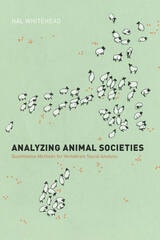
Analyzing Animal Societies
Quantitative Methods for Vertebrate Social AnalysisHal Whitehead
University of Chicago Press, 2008
Analyzing AnimalSocieties presents a conceptual framework for analyzing social behavior and demonstrates how to put this framework into practice by collecting suitable data on the interactions and associations of individuals so that relationships can be described, and, from these, models can be derived. In addition to presenting the tools, Hal Whitehead illustrates their applicability using a wide range of real data on a variety of animal species—from bats and chimps to dolphins and birds. The techniques that Whitehead describes will be profitably adopted by scientists working with primates, cetaceans, birds, and ungulates, but the tools can be used to study societies of invertebrates, amphibians, and even humans. Analyzing AnimalSocieties will become a standard reference for those studying vertebrate social behavior and will give to these studies the kind of quality standard already in use in other areas of the life sciences.
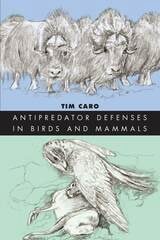
Antipredator Defenses in Birds and Mammals
Tim Caro
University of Chicago Press, 2005
In Antipredator Defenses in Birds and Mammals, Tim Caro ambitiously synthesizes predator defenses in birds and mammals and integrates all functional and evolutionary perspectives on antipredator defenses that have developed over the last century. Structured chronologically along a hypothetical sequence of predation—Caro evokes a gazelle fawn desperate to survive a cheetah attack to illustrate the continuum of the evolution of antipredator defenses—Antipredator Defenses in Birds and Mammals considers the defenses that prey use to avoid detection by predators; the benefits of living in groups; morphological and behavioral defenses in individuals and groups; and, finally, flight and adaptations of last resort.
Antipredator Defenses in Birds and Mammals will be of interest to both specialists and general readers interested in ecological issues.
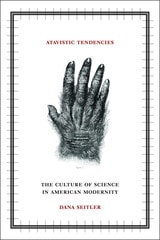
Atavistic Tendencies
The Culture of Science in American ModernityDana Seitler
University of Minnesota Press, 2008
A provocative exploration of the impact of the human sciences on literature, politics, and culture
The post-Darwinian theory of atavism forecasted obstacles to human progress in the reappearance of throwback physical or cultural traits after several generations of absence. In this original and stimulating work, Dana Seitler explores the ways in which modernity itself is an atavism, shaping a historical and theoretical account of its dramatic rise and impact on Western culture and imagination.
Examining late nineteenth- and early twentieth-century science, fiction, and photography, Seitler discovers how modern thought oriented itself around this paradigm of obsolescence and return—one that served to sustain ideologies of gender, sexuality, and race. She argues that atavism was not only a discourse of violence—mapping racial and sexual divisions onto the boundary between human and animal—but was also an illustration of how modern science understood human being as a temporal category. On one hand, atavism positioned some humans as more advanced than others on an evolutionary scale. On the other, it undermined such progressivism by suggesting that because all humans had evolved from animals they were therefore not purely human. Atavism thus reveals how scientific theories of a recurrent past were a significant feature of modernity.At the beginning of the twentieth century, atavistic theory had widespread social and economic effects on the taxonomies of medicine, the logic of the welfare state, conceptions of the modern family, and images of the abnormal. Investigating the cultural logic of science in conjunction with naturalist, feminist, and popular narratives, Seitler exposes the influence of atavism: a fundamental shift in ways of knowing—and telling stories about—the modern human.