Results by title
527 books match the query 'Translations into English' and 34 start with a
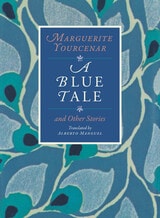
A Blue Tale and Other Stories
Marguerite Yourcenar
University of Chicago Press, 1995
Published to great acclaim in France in 1993, this collection is not only a delight for Marguerite Yourcenar fans but a welcome port of entry for any reader not yet familiar with the author's lengthier, more demanding works. This collection includes three stories written between 1927 and 1930 when the author was in her mid-twenties. These stories cover a range of themes, from an allegory on greed and a scene from the war of the sexes to a witch hunt that obsessively creates its own quarry.
For the devoted readers of Yourcenar, this collection allows a rare glimpse at the beginnings of a writer's craft. In these accomplished but forgotten pieces, edited and introduced by her biographer, Josyane Savigneau, readers will find the blend of fable and fairy tale of Oriental Tales, the psychological chronicle of Dear Departed, and the ironic realism of A Coin in Nine Hands. Read as an introduction to Yourcenar's work, the stories take us into the writer's workshop, as it were, to the early days of creation. A Blue Tale and Other Stories carries the unmistakable voice of a formidable and vastly talented writer.
Marguerite Yourcenar (her pseudonym was an anagram of her family name, Crayencour) was born in Brussels in 1903 and died in Maine in 1987. One of the most respected writers in the French language, she is best known as the author of the acclaimed Memoirs of Hadrian and The Abyss. She was awarded many literary honors, most notably election to the Académie Française in 1980, the first woman so honored.
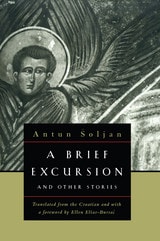
A Brief Excursion and Other Stories
Antun Soljan
Northwestern University Press, 2000
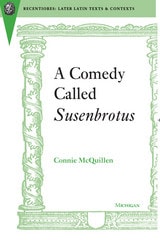
A Comedy Called Susenbrotus
Connie McQuillen
University of Michigan Press, 1998
Susenbrotus is in many ways representative of later university comedy. It is a rowdy, bawdy farce with roots in the Roman comedies of Plautus and Terence. The wit and much of the humor in these plays is in the reworking of traditional themes with characters and situations adapted to contemporary types and topical satire. Almost every playwright for the professional stage (with the notable exception of Shakespeare) either wrote or acted in university plays. Moreover, they were popular forms of entertainment and were attended not only by members of the academic community but also by visiting dignitaries, courtiers, foreign ambassadors, and on occasion, the English monarchs.
Susenbrotus is special among later university plays because it was specifically written for King James I. It was meant to flatter the king, who prided himself on his humanist education, with a display of wit and erudition. It was also meant to entertain: the play itself is quite funny. It involves the antics of several contemporary types (the pedant, a poet, a Spanish dandy, and a braggart soldier) vying for the affection of a cross-dressed boy. Much of the wit in Susenbrotus is verbal: scholarly puns, sexual metaphors, classical allusions, and quotations that are explained in annotations. The sustained transvestitism of the character Fortunia distinguishes it from its classical sources as well as from other plays of its type. Unlike Latin texts that were submitted to publishing houses and therefore corrected or stylized by printers, Susenbrotus is an example of Latin as it was written in the seventeenth century.
Connie McQuillen is Associate Professor of Humanities, Southwest State University, Minnesota.
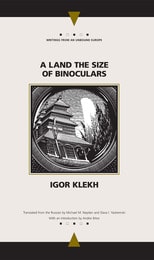
A Land the Size of Binoculars
Igor Klekh
Northwestern University Press, 2004
Throughout, Klekh studies landscapes as intimate as the terrain between fathers and sons and as broad as the wild, mysterious Carpathian Mountains. His work has been compared to that of Borges, Eco, and the magical realists, and celebrated for its synthesis of numerous literary traditions, its use of esoteric knowledge, and its breathtaking prose.
A Map of Signs and Scents
New and Selected Poems, 1979–2014Amjad Nasser / Translated from the Arabic by Fady Joudah and Khaled Mattawa
Northwestern University Press, 2016
Featuring poems from earlier collections of Amjad Nasser’s work and many newer uncollected poems never made available in English, A Map of Signs and Scents introduces the work of an important Arabic poet to a broader contemporary Anglophone readership. This special annotation edition helps readers view the multifaceted contexts within which Nasser has created his award-winning poems.
A New Divan
A Lyrical Dialogue between East and WestEdited by Barbara Schwepcke and Bill Swainson
Gingko, 2019
Reaching through time, language, and poetic history, A New Divan offers a lyrical conversation and opens paths of connection across cultures.
A Pan-American Life
Selected Poetry and Prose of Muna LeeMuna Lee; Edited and with biography by Jonathan M. Cohen
University of Wisconsin Press, 2004
A Sanskrit Treasury
A Compendium of Literature from the Clay Sanskrit LibraryCamillo A. Formigatti
Bodleian Library Publishing, 2020
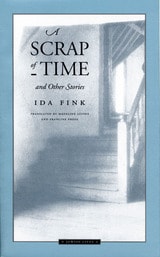
A Scrap of Time and Other Stories
Ida Fink
Northwestern University Press, 1995
Winner of the PEN/Book-of-the-Month Club Translation Prize
Winner of the Anne Frank Prize
These shattering stories describe the lives of ordinary people as they are compelled to do the unimaginable: a couple who must decide what to do with their five-year-old daughter as the Gestapo come to march them out of town; a wife whose safety depends on her acquiescence in her husband's love affair; a girl who must pay a grim price for an Aryan identity card.
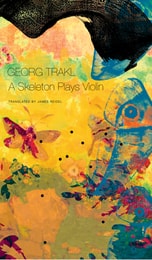
A Skeleton Plays Violin
Book Three of Our TraklGeorg Trakl
Seagull Books, 2017
A Skeleton Plays Violin comprises the final volume in a trilogy of works by Trakl published by Seagull Books. This selection gathers Trakl’s early, middle, and late work, none of it published in book form during his lifetime. The work here ranges widely, from his haunting prose pieces to his darkly beautiful poems documenting the first bloody weeks of World War I on the Eastern Front.
Book Three of Our Trakl—the series that began with Trakl’s first book Poems and his posthumously published Sebastian Dreaming—also includes translations of unpublished poems and significant variants. Interpolated throughout this comprehensive and chronological selection is a biographical essay that provides more information about Trakl’s gifted and troubled life, especially as it relates to his poetry, as well as the necessary context of his relationship with his favorite sibling, his sister Grete, whose role as a muse to her brother is still highly controversial. Trakl’s life was mysterious and fascinating, a fact reflected in his work. A Skeleton Plays Violin should not be missed.
A Voice
Selected PoemsAnzhelina Polonskaya
Northwestern University Press, 2004
Drawn from her most recent Russian collections, A Voice: Selected Poems explores the poet's ongoing fascinations—desolate places, long journeys, a synesthesia of sensory stimulation, and the presence of death. Also on display is her Chekhovian gift for unexpected closure. This is a promising English-language debut from a poet already gaining international attention.
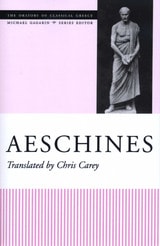
Aeschines
Translated by Chris Carey
University of Texas Press, 2000
This is the third volume in the Oratory of Classical Greece series. Published over several years, the series presents all of the surviving speeches from the late fifth and fourth centuries B.C. in new translations prepared by classical scholars who are at the forefront of the discipline. These translations are especially designed for the needs and interests of today's undergraduates, Greekless scholars in other disciplines, and the general public.
Classical oratory is an invaluable resource for the study of ancient Greek life and culture. The speeches offer evidence on Greek moral views, social and economic conditions, political and social ideology, and other aspects of Athenian culture that have been largely ignored: women and family life, slavery, and religion, to name just a few.
This volume contains the three surviving speeches of Aeschines (390-? B.C.). His speeches all revolve around political developments in Athens during the second half of the fourth century B.C. and reflect the internal political rivalries in an Athens overshadowed by the growing power of Macedonia in the north. The first speech was delivered when Aeschines successfully prosecuted Timarchus, a political opponent, for having allegedly prostituted himself as a young man. The other two speeches were delivered in the context of Aeschines' long-running political feud with Demosthenes. As a group, the speeches provide important information on Athenian law and politics, Demosthenes and his career, sexuality and social history, and the historical rivalry between Athens and Macedonia.
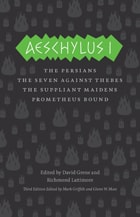
Aeschylus I
The Persians, The Seven Against Thebes, The Suppliant Maidens, Prometheus BoundEdited and Translated by David Grene, Richmond Lattimore, Mark Griffith, and Glenn W. Most
University of Chicago Press, 2013
The most engaging and authoritative translation of some of the foundational works of Western culture
This volume collects careful, readable translations of some of the key works of Aeschylus by experts in the language and culture of the ancient Greek world in which he lived and wrote. Aeschylus I contains “The Persians,” translated by Seth Benardete; “The Seven Against Thebes,” translated by David Grene; “The Suppliant Maidens,” translated by Seth Benardete; and “Prometheus Bound,” translated by David Grene.
For this edition, series editors Mark Griffith and Glenn W. Most have carefully updated the translations to bring them even closer to the ancient Greek while retaining the vibrancy for which our English versions are famous.New introductions for each play offer essential information about its first production, plot, and reception in antiquity and beyond. In addition, each volume includes an introduction to the life and work of its tragedian, as well as notes addressing textual uncertainties and a glossary of names and places mentioned in the plays.
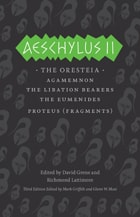
Aeschylus II
The OresteiaEdited and Translated by David Grene, Richmond Lattimore, Mark Griffith, and Glenn W. Most
University of Chicago Press, 2013
Aeschylus II contains “The Oresteia,” translated by Richmond Lattimore, and fragments of “Proteus,” translated by Mark Griffith.
Many years ago, the University of Chicago Press undertook a momentous project: a new translation of the Greek tragedies that would be the ultimate resource for teachers, students, and readers. They succeeded. Under the expert management of eminent classicists David Grene and Richmond Lattimore, those translations combined accuracy, poetic immediacy, and clarity of presentation to render the surviving masterpieces of Aeschylus, Sophocles, and Euripides in an English so lively and compelling that they remain the standard translations. The updated third editions of these classic works were designed to ensure that our Greek tragedies remain the leading English-language versions throughout the twenty-first century.
In this highly anticipated third edition, Mark Griffith and Glenn W. Most have carefully updated the translations to bring them even closer to the ancient Greek while retaining the vibrancy for which our English versions are famous. This edition also includes brand-new translations of Euripides’ Medea, The Children of Heracles, Andromache, and Iphigenia among the Taurians, fragments of lost plays by Aeschylus, and the surviving portion of Sophocles’s satyr-drama The Trackers. New introductions for each play offer essential information about its first production, plot, and reception in antiquity and beyond. In addition, each volume includes an introduction to the life and work of its tragedian, as well as notes addressing textual uncertainties and a glossary of names and places mentioned in the plays.
In addition to the new content, the volumes have been reorganized both within and between volumes to reflect the most up-to-date scholarship on the order in which the plays were originally written. The result is a set of handsome paperbacks destined to introduce new generations of readers to these foundational works of Western drama, art, and life.
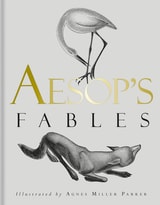
Aesop's Fables
Illustrated by Agnes Miller Parker
Bodleian Library Publishing, 2020
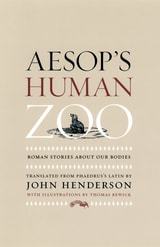
Aesop's Human Zoo
Roman Stories about Our BodiesPhaedrus
University of Chicago Press, 2004
Providing unusual insights into the heart of Roman culture, these clever poems open up odd avenues of ancient lore and life as they explore social types and physical aspects of the body, regularly mocking the limitations of human nature and offering vulgar or promiscuous interpretations of the stuff of social life.
Featuring folksy proverbs and satirical anecdotes, filled with saucy naughtiness and awful puns, Aesop's Human Zoo will amuse you with its eccentricities and hit home with its shrewdly candid and red raw messages. The entertainment offered in this volume of impeccably accurate translations is truly a novelty—a good-hearted and knowing laugh courtesy of classical poetry. Beginning to advanced classicists and Latin scholars will appreciate the original Latin text provided in this bilingual edition. The splash of classic Thomas Bewick wood engravings to accompany the fables renders the collection complete.
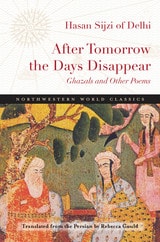
After Tomorrow the Days Disappear
Ghazals and Other PoemsHasan Sijzi of Delhi, Translated from the Persian by Rebecca Gould
Northwestern University Press, 2016
Hasan Sijzi, also known as Amir Hasan Sijzi Dehlavi, is considered the originator of the Indo-Persian ghazal, a poetic form that endures to this day—from the legacy of Hasan’s poetic descendent, Hafez, to contemporary Anglophone poets such as John Hollander, Maxine Kumin, Agha Shahid Ali, and W. S. Merwin.
As with other Persian poets, Hasan worked within a highly regulated set of poetic conventions that brought into relief the interpenetration of apparent opposites—metaphysical and material, mysterious and quotidian, death and desire, sacred and profane, fleeting time and eternity. Within these strictures, he crafted a poetics that blended Sufi Islam with non-Muslim Indic traditions. Of the Persian poets practiced the ghazal, Hafez and Rumi are best known to Western readers, but their verse represents only a small fraction of a rich tradition. This collection reveals the geographical range of the literature while introducing an Indian voice that will find a place on reader’s bookshelves alongside better known Iranian names.
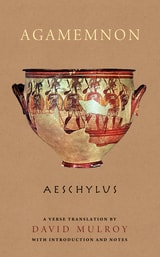
Agamemnon
Aeschylus, A verse translation by David Mulroy, with introduction and notes
University of Wisconsin Press, 2015
Aeschylus (525/4–456/5 B.C.E.) was the first of the three great tragic dramatists of ancient Greece, a forerunner of Sophocles and Euripides. His early tragedies were largely choral pageants with minimal plots. In Agamemnon, choral songs still predominate, but Aeschylus infuses them with such dramatic feeling that the spectator or reader is constantly spellbound.
Translator David Mulroy brings this ancient tragedy to life for modern readers and audiences. Using end rhyme and strict metrics, he combines the buoyant lyricism of the Greek text with a faithful rendering of its meaning in lucid English.
Amigas
Letters of Friendship and ExileBy Marjorie Agosín and Emma Sepúlveda
University of Texas Press, 2001
This collection of letters chronicles a remarkable, long-term friendship between two women who, despite differences of religion and ethnicity, have followed remarkably parallel paths from their first adolescent meeting in their native Chile to their current lives in exile as writers, academics, and political activists in the United States. Spanning more than thirty years (1966-2000), Agosín's and Sepúlveda's letters speak eloquently on themes that are at once personal and political—family life and patriarchy, women's roles, the loneliness of being a religious or cultural outsider, political turmoil in Chile, and the experience of exile.
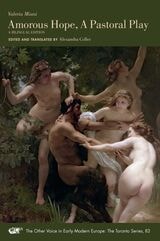
Amorous Hope, A Pastoral Play
A Bilingual EditionValeria Miani
Iter Press, 2020
Valeria Miani’s Amorous Hope is a play of remarkable richness, subtlety, and verve. It presents a scathing exposure of society’s double-standards and it champions women’s dramatic agency by centering on the bleak reality they often faced, a reality that attempted to harm and silence its victims. The play’s salient episodes reflect realities modern women still face today.
Miani’s literary achievements attest to her emergence as a cultural protagonist alongside Europe’s most talented women writers, such as Isabella Andreini, and she challenged the premodern notion that a woman’s eloquence is an indication of her sexual promiscuity.

An Anthology of Contemporary Russian Women Poets
Valentina Polukhina
University of Iowa Press, 2005
Focusing on the middle generation, with major figures such as Olga Sedakova, Svetlana Kekova, Vera Pavlova, and Tatyana Shcherbina, the collection also includes work by the youngest generation—born after 1970 and not yet known outside of Russia—as well as senior poets such as Bella Akhmadulina and Natalya Gorbanevskaya. Translators include such poets as Elaine Feinstein, Ruth Fainlight, Carol Rumens, and Daniel Weissbort as well as Russianists and scholars Peter France, Catriona Kelly, Robert Reid, and Stephanie Sandler.
A significant and extensive bibliography lists the major works of prominent Russian women poets. A preface by Stephanie Sandler, a concluding note by Dmitry Kuzmin on the online Vavilon project, a postface by Elena Fanailova, and biographical notes on the poets and translators complete the anthology, which is sure to be of great interest to students and scholars of Russian literature.
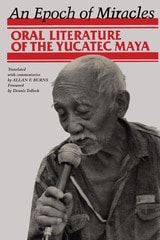
An Epoch of Miracles
Oral Literature of the Yucatec MayaTranslated with Commentaries by Allan F. Burns
University of Texas Press, 1983
“Mr. Allan Burns, I am here to tell you an example, the example of the Hunchbacks.” So said Paulino Yamá, traditionalist and storyteller, to Allan Burns, anthropologist and linguist, as he began one story that found its way into this book.
Paulino Yamá was just one of several master storytellers from the Yucatán Peninsula of Mexico from whom Burns learned not only the Mayan language but also the style and performance of myths, stories, riddles, prayers, and other forms of speech of their people. The result is An Epoch of Miracles, a wonderfully readable yet thoroughly scholarly set of translations from the oral literature of the Yucatec Maya, an important New World tradition never before systematically described.
An Epoch of Miracles brings us over thirty-five long narratives of things large, small, strange, and “regular” and as many delightful short pieces, such as bird lore, riddles, and definitions of anteaters, rainbows, and other commonplaces of the Mayan world. Here are profound narratives of the Feathered Serpent, the mighty Rain God Chac and his helpers, and the mysterious cult of the Speaking Cross. But because these are modern, “Petroleum Age” Maya, here too are a discussion with Cuba’s Fidel Castro and a greeting to former president Richard Nixon.
All pieces are translated ethnopoetically; examples of several genres are presented bilingually. An especially valuable feature is the indication of performance style, such as pauses and voice quality, given with each piece.
Ancient Egyptian Literature
An AnthologyTranslated by John L. Foster
University of Texas Press, 2001
Poetry, stories, hymns, prayers, and wisdom texts found exquisite written expression in ancient Egypt while their literary counterparts were still being recited around hearth fires in ancient Greece and Israel. Yet, because of its very antiquity and the centuries during which the language was forgotten, ancient Egyptian literature is a newly discovered country for modern readers.
This anthology offers an extensive sampling of all the major genres of ancient Egyptian literature. It includes all the texts from John Foster's previous book Echoes of Egyptian Voices, along with selections from his Love Songs of the New Kingdom and Hymns, Prayers, and Songs: An Anthology of Ancient Egyptian Lyric Poetry, as well as previously unpublished translations of four longer and two short poems. Foster's translations capture the poetical beauty of the Egyptian language and the spirit that impelled each piece's composition, making these ancient masterworks sing for modern readers. An introduction to ancient Egyptian literature and its translation, as well as brief information about the authorship and date of each selection, completes the volume.

András Visky's Barrack Dramaturgy
Memories of the BodyEdited by Jozefina Komporaly
Intellect Books, 2017
The book includes the first English-language anthology of Visky’s best known plays—Juliet, I Killed My Mother, and Porn—as well as critical analysis and an exploration of Visky’s “Barrack Dramaturgy,” a dramaturgical theory in which he considers the theater as a space for exploring feelings of cultural and personal captivity. Inspired by personal experience of the oppressive communist regime in Romania, Visky’s work explores the themes of gender, justice, and trauma, encouraging shared moments of remembrance and collective memory. This collection makes use of scripts and director’s notes, as well as interviews with creative teams behind the productions, to reveal a holistic, insider’s view of Visky’s artistic vision. Scholars and practitioners alike will benefit from this rare, English-language collection of Visky’s work and dramaturgy.
Anglicanus ortus
A Verse Herbal of the Twelfth CenturyHenry of Huntingdon
Bodleian Library Publishing, 2012
Angry Voices
An Anthology of the Off-Beat New Egyptian PoetsMohamed Enani
University of Arkansas Press, 2003
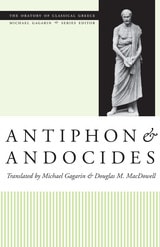
Antiphon and Andocides
Translated by Michael Gagarin and Douglas M. MacDowell
University of Texas Press, 1998
Classical oratory is an invaluable resource for the study of ancient Greek life and culture. The speeches offer evidence on Greek moral views, social and economic conditions, political and social ideology, and other aspects of Athenian culture that have been largely ignored: women and family life, slavery, and religion, to name just a few.
This volume contains the works of the two earliest surviving orators, Antiphon and Andocides. Antiphon (ca. 480-411) was a leading Athenian intellectual and creator of the profession of logography ("speech writing"), whose special interest was law and justice. His six surviving works all concern homicide cases. Andocides (ca. 440-390) was involved in two religious scandals—the mutilation of the Herms (busts of Hermes) and the revelation of the Eleusinian Mysteries—on the eve of the fateful Athenian expedition to Sicily in 415. His speeches are a defense against charges relating to those events.
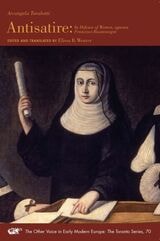
Antisatire
In Defense of Women, against Francesco BuoninsegniArcangela Tarabotti
Iter Press, 2020
The Other Voice in Early Modern Women: The Toronto Series volume 70
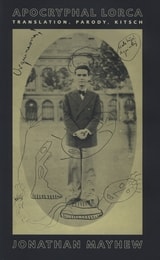
Apocryphal Lorca
Translation, Parody, KitschJonathan Mayhew
University of Chicago Press, 2009
Federico García Lorca (1898–1936) had enormous impact on the generation of American poets who came of age during the cold war, from Robert Duncan and Allen Ginsberg to Robert Creeley and Jerome Rothenberg. In large numbers, these poets have not only translated his works, but written imitations, parodies, and pastiches—along with essays and critical reviews. Jonathan Mayhew’s Apocryphal Lorca is an exploration of the afterlife of this legendary Spanish writer in the poetic culture of the United States.
The book examines how Lorca in English translation has become a specifically American poet, adapted to American cultural and ideological desiderata—one that bears little resemblance to the original corpus, or even to Lorca’s Spanish legacy. As Mayhew assesses Lorca’s considerable influence on the American literary scene of the latter half of the twentieth century, he uncovers fundamental truths about contemporary poetry, the uses and abuses of translation, and Lorca himself.
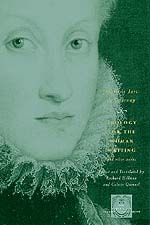
Apology for the Woman Writing and Other Works
Marie le Jars de Gournay
University of Chicago Press, 2002
This volume presents translations of four of Gournay's works that address feminist issues. Two of these appear here in English for the first time—The Promenade of Monsieur de Montaigne and The Apology for the Woman Writing. One of the first modern psychological novels, the best-selling Promenade was also the first to explore female sexual feeling. With the autobiographical Apology, Gournay defended every aspect of her life, from her moral conduct to her household management. The book also includes Gournay's last revisions (1641) of her two best-known feminist treatises, The Equality of Men and Women and The Ladies' Complaint. The editors provide a general overview of Gournay's career, as well as individual introductions and extensive annotations for each work.
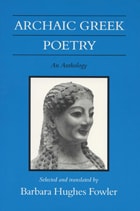
Archaic Greek Poetry
An AnthologySelected and translated by Barbara Hughes Fowler
University of Wisconsin Press, 1992
In addition to its breadth, Archaic Greek Poetry stands alone as the only volume of its kind translated by a contemporary published poet. Perhaps the most elegant translator of ancient Greek poetry into modern English, Barbara Hughes Fowler offers translations true to the original Greek while providing modern readers with superb examples of the beauty of lyric poetry. Students and scholars of classical and comparative literature, ancient history, and art history, as well as lovers of lyric poetry, will enthusiastically welcome this volume.
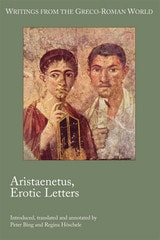
Aristaenetus, Erotic Letters
Peter Bing
SBL Press, 2014
The first complete English translation of Aristaenetus in nearly three centuries
Through allusion and adaption of earlier authors, Aristaenetus recounts tales that are the stuff of comedy, erotic poetry, and ancient novel. Here we read of lovers who use every trope of erotic literature to praise their beloveds in over-the-top speeches. Aristaenetus amazes us with tales of paramours hatching complicated schemes to achieve their desires, while wily go-betweens help smooth their way. He presents us with accounts of unfaithful spouses who barely avoid capture in the midst of hair-raising and amusing infidelities. This sixth century collection is perfect for anyone interested in classical and postclassical literature.
Features:
- English translation and Greek text on facing pages
- Introduction with history of the text
- Discussion of intertextual connections with Greco-Roman authors
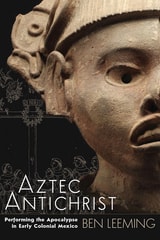
Aztec Antichrist
Performing the Apocalypse in Early Colonial MexicoBen Leeming
University Press of Colorado, 2022
Discovered in the archives of the Hispanic Society of America in New York inside a notebook of miscellaneous Nahuatl-Christian texts written almost entirely by an Indigenous writer named Fabían de Aquino, the plays are filled with references to human sacrifice, bloodletting, ritual divination, and other religious practices declared “idolatrous” at a time when ecclesiastical authorities actively sought to suppress writing about Indigenous religion. These are Indigenous plays for an Indigenous audience that reveal how Nahuas made sense of Christianity and helped form its colonial image—the title figure is a powerful Indigenous being, an “Aztec Antichrist,” who violently opposes the evangelizing efforts of the church and seeks to draw converted Nahuas back to the religious practices of their ancestors. These practices include devotion to Nahua deities such as Tlaloc, Quetzalcoatl, and Tezcatlipoca who, in one of the most striking moves made by Aquino, are cast as characters in the plays.
Along with the translations, Leeming provides context and analysis highlighting these rare and fascinating examples of early Indigenous American literature that offer a window into the complexity of Nahua interactions with Christianity in the early colonial period. The work is extremely valuable to all students and scholars of Latin American religion, colonialism, Indigenous history, and early modern history and theater.
and when the light comes it will be so fantastic
poemsKristin Berget and Kathleen Maris Paltrineri
Northwestern University Press, 2025
Norwegian poet Kristin Berget’s 2017 Brage Prize–nominated poetry collection and when the light comes it will be so fantastic weaves together themes of ecological and linguistic loss, memory and deep time, and motherhood and grief. Berget’s poetics point to landscapes used as sites of extraction, where exhausted phosphorus, starving clay layers, and forest machines are encountered. The poems in this collection traverse forests, deserts, and seas—their poetic matter separated by fields of caesuras, visual absences suggestive of Earth’s ongoing extinctions. As jurors of the Brage Prize commented, within these pages is a universe where humans can seldom be separated from one another or from the nature they live in and among. Berget’s first book translated into English is an innovative exploration of the climate crises we are living with today and the complex emotions that ebb and flow along with it.