Results by title
18284 books match the query 'United States' and 1653 start with a
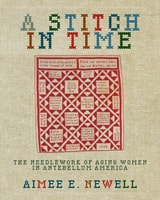
A Stitch in Time
The Needlework of Aging Women in Antebellum AmericaAimee E. Newell
Ohio University Press, 2014
Drawing from 167 examples of decorative needlework—primarily samplers and quilts from 114 collections across the United States—made by individual women aged forty years and over between 1820 and 1860, this exquisitely illustrated book explores how women experienced social and cultural change in antebellum America.
The book is filled with individual examples, stories, and over eighty fine color photographs that illuminate the role that samplers and needlework played in the culture of the time. For example, in October 1852, Amy Fiske (1785–1859) of Sturbridge, Massachusetts, stitched a sampler. But she was not a schoolgirl making a sampler to learn her letters. Instead, as she explained, “The above is what I have taken from my sampler that I wrought when I was nine years old. It was w[rough]t on fine cloth [and] it tattered to pieces. My age at this time is 66 years.”
Situated at the intersection of women’s history, material culture study, and the history of aging, this book brings together objects, diaries, letters, portraits, and prescriptive literature to consider how middle-class American women experienced the aging process. Chapters explore the physical and mental effects of “old age” on antebellum women and their needlework, technological developments related to needlework during the antebellum period and the tensions that arose from the increased mechanization of textile production, and how gift needlework functioned among friends and family members. Far from being solely decorative ornaments or functional household textiles, these samplers and quilts served their own ends. They offered aging women a means of coping, of sharing and of expressing themselves. These “threads of time” provide a valuable and revealing source for the lives of mature antebellum women.
Publication of this book was made possible in part through generous funding from the Coby Foundation, Ltd and from the Quilters Guild of Dallas, Helena Hibbs Endowment Fund.
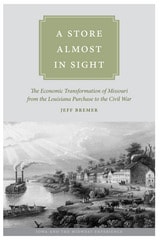
A Store Almost in Sight
The Economic Transformation of Missouri from the Lousiana Purchase to the Civil WarJeff Bremer
University of Iowa Press, 2014
Most Missourians welcomed the opportunity to take part in commercial markets. Farmwomen sold eggs or butter to peddlers and in nearby towns, while men took surplus corn or pork to stores for credit. Immigrants searched for the most fertile land closest to waterways, to ensure they would have large harvests and an easy way to ship them to market. Families floated farm goods downriver until steamboats transformed rural life by drastically reducing the cost of transportation and boosting farm production and consumption. Traders also trekked west across the plains to trade at the inland entrepôt of Santa Fe. The waves of migrants headed for Oregon and California in the 1840s and 1850s further encouraged commercial development. However, most white settlers lacked the necessary financial means to be capitalists in a technical sense, seeking instead a “competency,” or comfortable independence.
This fresh reinterpretation of the American frontier will interest anyone who wants to understand the economic and social significance of westward migration in U.S. history. It gives the reader a gritty, grassroots sense of how ordinary people made their livings and built communities in the lands newly opened to American settlement.
A Strike Like No Other Strike
Law and Resistance During the Pittston Coal Strike of 1989-1990Richard A. Brisbin, Jr.
West Virginia University Press, 2010
The miners' strike against Pittston Coal in 1989–1990, which spread throughout southwestern Virginia, southern West Virginia, and eastern Kentucky, was one of the most important strikes in the history of American labor, and, as Richard Brisbin observes, "one of the longest and largest incidents of civil disorder and civil disobedience in the United States in the second half of the twentieth century." The company aggressively sought to break the strike, and workers and their families used a variety of tactics—lawful and unlawful—to resist Pittston's efforts as the situation quickly turned ugly.
In A Strike like No Other Strike: Law and Resistance during the Pittston Coal Strike of 1989–1990, Richard Brisbin offers a compelling study of the exercise of political power. In considering the legal significance of the strike, Brisbin asks the larger question of whether even extreme transgression or resistance can fracture the "imagined coherence of the law." He shows how each party in the strike invoked the law to justify its actions while attacking those of the other side as unlawful. In the end, both sides lost; although the U.S. Supreme Court ultimately ruled in favor of the union, most of the strikers faced elimination of their jobs and an ongoing struggle for pensions and health benefits.
A Strong and Steady Pulse
Stories from a CardiologistGregory D. Chapman, MD
University of Alabama Press, 2021
A seasoned cardiologist shares his experiences, opinions, and recommendations about heart disease and other cardiac problems.
A Strong and Steady Pulse: Stories from a Cardiologist provides an insider’s perspective on the field of cardiovascular medicine told through vignettes and insights drawn from Gregory D. Chapman’s three decades as a cardiologist and professor of medicine. In twenty-six bite-sized chapters based on real-life patients and experiences, Chapman provides an overview of contemporary cardiovascular diseases and treatments, illuminating the art and science of medical practice for lay audiences and professionals alike.
With A Strong and Steady Pulse, Chapman provides medical students and general readers with a better understanding of cardiac disease and its contributing factors in modern life, and he also provides insights on the diagnostic process, medical decision making, and patient care. Each chapter presents a patient and their initial appearance, described in clear detail as Chapman gently walks us through his evaluation and the steps he and his associates take to determine the underlying problem. Chapman’s stories are about real people dealing with life and death situations—including the physicians, nurses, medical students, and other team members who try to save lives in emergent, confusing conditions.
The sometimes hard-won solutions to these medical challenges combine new technology and cutting-edge research together with insights drawn from Chapman’s past experiences as an intern and resident in Manhattan during the AIDS epidemic, as a postdoctoral fellow at Duke University in the 1990s, and in practice in Nashville, Tennessee, and Birmingham, Alabama. Conditions addressed include the recognition and management of heart attack, heart failure, arrhythmia, valvular heart disease, cardiac transplantation, broken heart syndrome, hypertension, and the depression some people experience after a heart attack, as well as related topics like statin drugs, the Apple Watch ECG feature, and oral anticoagulants. Finally, the emergence of the COVID-19 virus and its disruption of normal hospital routines as the pandemic unfolded is addressed in an epilogue.
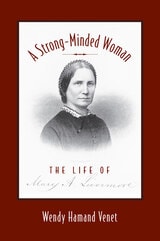
A Strong-Minded Woman
The Life of Mary LivermoreWendy Hamand Venet
University of Massachusetts Press, 2005
When Mary Livermore died in 1905 at age 84, a Boston newspaper praised her as “America's foremost woman.” A leading figure in the struggle for woman's rights as well as in the temperance movement, she was as widely recognized during her lifetime as Susan B. Anthony, and for a time the most popular and highly paid female orator in the country. Yet aside from Civil War historians familiar with her service as a wartime nurse, few today remember even her name.
In this book, Wendy Hamand Venet reconstructs Mary Livermore's remarkable story and explores how and why she became so renowned in her day. Born and raised in Boston, Livermore left home at age eighteen to become the private schoolteacher to a wealthy tobacco planter's children in Virginia, an experience that afforded her an intimate look at slave-based society in the 1840s. Returning to New England, she married and lived a conventional life as the wife of a minister and mother of three daughters. With the coming of the Civil War, however, Livermore's life changed dramatically when she became active with the United States Sanitary Commission, an organization that would propel her into the public limelight and cause her to challenge society's traditional view of the role of women.
After the war Livermore became deeply involved in the woman's rights movement, serving as editor of the newspaper Woman's Journal and later as president of three major suffrage organizations—the American, New England, and Massachusetts Woman Suffrage Associations. She was also founder and president of the Massachusetts Women's Christian Temperance Union, and became active in the Society of Christian Socialists in Boston. Her frequent speaking appearances on behalf of these causes eventually earned her the nickname “Queen of the Platform.” Although she may not have been as radical as some other early feminists, Livermore's ideas resonated with thousands of middle-class women whose experiences paralleled her own. For that reason alone, Venet shows, her life and legacy are worthy of our attention.

A Student's Guide to Law School
What Counts, What Helps, and What MattersAndrew B. Ayers
University of Chicago Press, 2013
As a recent graduate and an appellate lawyer, Andrew Ayers knows how high the stakes are—he’s been there, and not only did he survive the experience, he graduated first in his class. In A Student’s Guide to Law School he shares invaluable insight on what it takes to make a successful law school journey. Originating in notes Ayers jotted down while commuting to his first clerkship with then-Judge Sonia Sotomayor, and refined throughout his first years as a lawyer, A Student’s Guide to Law School offers a unique balance of insider’s knowledge and professional advice.
Organized in four parts, the first part looks at tests and grades, explaining what’s expected and exploring the seven choices students must make on exam day. The second part discusses the skills needed to be a successful law student, giving the reader easy-to-use tools to analyze legal materials and construct clear arguments.
The third part contains advice on how to use studying, class work, and note-taking to find your best path. Finally, Ayers closes with a look beyond the classroom, showing students how the choices they make in law school will affect their career—and even determine the kind of lawyer they become.
The first law school guide written by a recent top-ranked graduate, A Student’s Guide to Law School is relentlessly practical and thoroughly relevant to the law school experience of today’s students. With the tools and advice Ayers shares here, students can make the most of their investment in law school, and turn their valuable learning experiences into a meaningful career.
A Study of Some Michigan Indians
Frances Densmore
University of Michigan Press, 1949
A Study of the Glacial Kame Culture in Michigan, Ohio, and Indiana
Wilbur M. Cunningham
University of Michigan Press, 1948
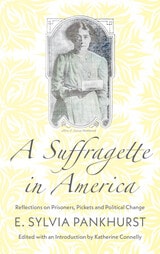
A Suffragette in America
Reflections on Prisoners, Pickets and Political ChangeSylvia Pankhurst
Pluto Press, 2019
This book gathers Pankhurst’s writings from the year-long visit, in which she reveals her shock at the darkness hidden in American life, and draws parallels to her experiences of imprisonment and misogyny in her own country. Never before published, these writings mark an important stage in the development of the suffragette's thought, which she brought back to Britain to inform the burgeoning suffrage campaign there.
A Summer Up North
Henry Aaron and the Legend of Eau Claire BaseballJerry Poling
University of Wisconsin Press, 2002
June 12, 1952—only a local sportswriter showed up at the Eau Claire airport to greet a newly signed eighteen-year-old shortstop from Alabama toting a cardboard suitcase. "I was scared as hell," said Henry Aaron, recalling his arrival as the new recruit on the city’s Class C minor league baseball team.
Forty-two years later, as Aaron approached the stadium where the Eau Claire Bears once played, an estimated five thousand people surrounded a newly raised bronze statue of a young "Hank" Aaron at bat. "I had goosebumps," he said later. "A lot of things happened to me in my twenty-three years as a ballplayer, but nothing touched me more than that day in Eau Claire." For the people of Eau Claire, Aaron’s summer two years before his Major League debut with the Milwaukee Braves symbolizes a magical time, when baseball fans in a small city in northern Wisconsin could live a part of the dream.
A Supreme Court Unlike Any Other
The Deepening Divide Between the Justices and the PeopleKevin J. McMahon
University of Chicago Press, 2024
A data-rich examination of the US Supreme Court's unprecedented detachment from the democratic processes that buttress its legitimacy.
Today’s Supreme Court is unlike any other in American history. This is not just because of its jurisprudence but also because the current Court has a tenuous relationship with the democratic processes that help establish its authority. Historically, this “democracy gap” was not nearly as severe as it is today. Simply put, past Supreme Courts were constructed in a fashion far more in line with the promise of democracy—that the people decide and the majority rules.
Drawing on historical and contemporary data alongside a deep knowledge of court battles during presidencies ranging from FDR to Donald Trump, Kevin J. McMahon charts the developments that brought us here. McMahon offers insight into the altered politics of nominating and confirming justices, the shifting pool of Supreme Court hopefuls, and the increased salience of the Court in elections. A Supreme Court Unlike Any Other is an eye-opening account of today’s Court within the context of US history and the broader structure of contemporary politics.
A Tale of Two Bridges
The San Francisco–Oakland Bay Bridges of 1936 and 2013Stephen Mikesell
University of Nevada Press, 2017
A Tale of Two Bridges is a history of two versions of the San Francisco—Oakland Bay Bridge: the original bridge built in 1936 and a replacement for the eastern half of the bridge finished in 2013. The 1936 bridge revolutionized transportation in the Bay Area and profoundly influenced settlement patterns in the region. It was also a remarkable feat of engineering. In the 1950s the American Society of Civil Engineers adopted a list of the “Seven Engineering Wonders” of the United States. The 1936 structure was the only bridge on the list, besting even the more famous Golden Gate Bridge. One of its greatest achievements was that it was built on time (in less than three years) and came in under budget. Mikesell explores in fascinating detail how the bridge was designed by a collection of the best-known engineers in the country as well as the heroic story of its construction by largely unskilled laborers from California, joined by highly skilled steel workers.
By contrast, the East Span replacement, which was planned between 1989 and 1998, and built between 1998 and 2013, fell victim to cost overruns in the billions of dollars, was a decade behind schedule, and suffered from structural problems that has made it a perpetual maintenance nightmare.
This is narrative history in its purest form. Mikesell excels at explaining highly technical engineering issues in language that can be understood and appreciated by general readers. Here is the story of two very important bridges, which provides a fair but uncompromising analysis of why one bridge succeeded and the other did not.

A Tale of Two Colonies
What Really Happened in Virginia and Bermuda?Virginia Bernhard
University of Missouri Press, 2011
A Taste for Brown Sugar
Black Women in PornographyMireille Miller-Young
Duke University Press, 2014
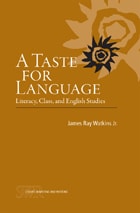
A Taste for Language
Literacy, Class, and English StudiesJames Ray Watkins Jr.
Southern Illinois University Press, 2009
“This is a book about the American Dream as it has become embodied in the university in general and in the English department in particular,” writes James Ray Watkins at the start of A Taste for Language: Literacy, Class, and English Studies. In it, Watkins argues that contemporary economic and political challenges require a clear understanding of the identity of English studies, making elementary questions about literacy, language, literature, education, and class once again imperative.
A personal history of university-level English studies in the twentieth century, A Taste for Language combines biography, autobiography, and critical analysis to explore the central role of freshman English and literary studies in the creation and maintenance of the middle class. It tells a multi-generational story of the author and his father, intertwined with close reading of texts and historical analysis. The story moves from depression-era Mississippi, where the author's father was born, to a contemporary English department, where the author now teaches.
Watkins looks at not only textbooks, scholars, and the academy but also at families and other social institutions. A rich combination of biography, autobiography, and critical analysis, A Taste for Language questions what purpose an education in English language and literature serves in the lives of the educated in a class-based society and whether English studies has become wholly irrelevant in the twenty-first century.
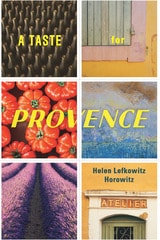
A Taste for Provence
Helen Lefkowitz Horowitz
University of Chicago Press, 2016
In A Taste for Provence, historian Helen Lefkowitz Horowitz digs into this question and spins a wonderfully appealing tale of how Provence became Provence. The region had previously been regarded as a backwater and known only for its Roman ruins, but in the postwar era authors, chefs, food writers, visual artists, purveyors of goods, and travel magazines crafted a new, alluring image for Provence. Soon, the travel industry learned that there were many ways to roam—and some even involved sitting still. The promise of longer stays where one cooked fresh food from storied outdoor markets became desirable as American travelers sought new tastes and unadulterated ingredients.
Even as she revels in its atmospheric, cultural, and culinary attractions, Horowitz demystifies Provence and the perpetuation of its image today. Guiding readers through books, magazines, and cookbooks, she takes us on a tour of Provence pitched as a new Eden, and she dives into the records of a wide range of visual media—paintings, photographs, television, and film—demonstrating what fueled American enthusiasm for the region. Beginning in the 1970s, Provence—for a summer, a month, or even just a week or two—became a dream for many Americans. Even today as a road well traveled, Provence continues to enchant travelers, armchair and actual alike.

A Taste of the Hocking Hills
Matt Rapposelli
Ohio University Press, 2018
When chef Matt Rapposelli left the National Park Service to attend culinary school in New England, he was moving from one passion to another. What later brought those passions together was a job in the Hocking Hills, southeast Ohio’s stunning, wild landscape, where the restaurants he helmed—at Hocking Hills Lodge and Lake Hope Lodge—gained a resounding reputation for classic dishes that, driven by the regional vernacular and the natural seasonal abundance of Appalachia, were impeccably fresh and flavorful.
A Taste of the Hocking Hills intermingles delicious recipes with striking photographs of a region to which thousands trek each year. Rapposelli presents dishes by the season, noting the specialties that appear on his menus in a given time of year. Whether enjoying a winter evening or a summer morning, cooks will be able to bring a bit of the Hocking Hills home.
A Tawdry Place of Salvation
The Art of Jane BowlesEdited by Jennie Skerl
Southern Illinois University Press, 1997
Through these essays—which deal with Bowles’s published as well as her unpublished work—Skerl seeks to generate serious critical attention for an important but neglected female experimental writer of the mid-twentieth century and to celebrate her originality, power, and craft.
Based in disciplines and theoretical approaches that range from feminist criticism to Middle Eastern studies, from postmodernism to queer theory, and from Victorianism to the Beat Generation, the essayists naturally approach Bowles’s fiction and drama from a wide variety of critical perspectives. All of these essays are unpublished and written for this volume.
A Telescope on Society
Survey Research and Social Science at the University of Michigan and BeyondJames S. House, F. Thomas Juster, Robert L. Kahn, Howard Schuman, and Eleanor Singer, Editors
University of Michigan Press, 2004
The chapters of this volume illustrate the impact that developments in survey research have had and continue to have on a broad range of social science disciplines and interdisciplinary areas ranging from political behavior and electoral systems to macroeconomics and individual income dynamics, mental and physical health, human development and aging, and racial/ethnic diversity and relationships.
The volume will speak to a wide audience of social science and survey research professionals and students interested in learning more about the broad history of survey-based social science and its contributions to understanding ourselves as social beings. It also seeks to convey how crucial institutional and public support are to the development of social science and survey research, as they have been to development in the natural, biomedical, and life sciences.
The five editors of this book are longtime research professors and colleagues in the Survey Research Center of the Institute for Social Research at the University of Michigan. James S. House is also Professor in the Department of Sociology; F. Thomas Juster is Professor Emeritus in the Department of Economics; Robert L. Kahn is Professor Emeritus in the Department of Psychology and Department of Health Management and Policy; and Howard Schuman is Professor Emeritus in the Department of Sociology; Eleanor Singer is Research Professor in the Survey Research Center, all at the University of Michigan. Professors House (1991-2001), Kahn (1970-76), and Schuman (1982-90) have each served as Director of the Survey Research Center; Professor Juster served (1976-86) as Director of the Institute for Social Research; and Professor Singer served (1999-2002) as Associate Director of the Survey Research Center.
A Theater of Our Own
A History and a Memoir of 1,001 Nights in ChicagoRichard Christiansen, with a foreword by Brian Dennehy
Northwestern University Press, 2004
A Theater of Our Own is a fascinating, fast-paced, and fact-filled chronicle of Chicago's legendary theater scene by the long-time chief critic for the Chicago Tribune. Who produced the first stage adaptation of "The Wizard of Oz" in 1902-nearly forty years before the movie classic? What entertainment juggernaut began in a converted Chinese laundry on Wells Street in 1959? Where did Louis (Studs) Terkel make his stage debut? When did the original production of "Grease" open at Kingston Mines Theater? Richard Christiansen, former chief critic for the Chicago Tribune, answers these and many more questions about the rich role of the theater in Chicago, from its earliest days in 1837 to its present state as a diverse community of artists with international stature.
In A Theater of Our Own, he draws upon his exclusive interviews, insights, and memories gathered over a period of more than forty years of reviewing the arts. This history and memoir traces the evolution of the Chicago theater scene from small theaters to major institutions such as the Steppenwolf Theatre Company, the Goodman Theater, and The Second City. Along the way, Richard Christiansen relates his behind-the-scenes conversations with some of Chicago's most acclaimed writers, directors, and actors--David Mamet, Frank Galati, Mary Zimmerman, John Malkovich, Laurie Metcalf, Harold Ramis, Gary Sinise, and Joe Mantegna--all a part of Chicago's theater renaissance from the 1970s onward. To this day, Chicago remains a city known for its imaginative, innovative, and influential theaters and artists. A Theater of Our Own, a valuable contribution to the history of theater, is a book written for anyone who enjoys the theater and its people as well as the story of Chicago.
A Thirsty Land
The Fight for Water in TexasBy Seamus McGraw
University of Texas Press, 2018
As a changing climate threatens the whole country with deeper droughts and more furious floods that put ever more people and property at risk, Texas has become a bellwether state for water debates. Will there be enough water for everyone? Is there the will to take the steps necessary to defend ourselves against the sea? Is it in the nature of Americans to adapt to nature in flux?
The most comprehensive—and comprehensible—book on contemporary water issues, A Thirsty Land delves deep into the challenges faced not just by Texas but by the nation as a whole, as we struggle to find a way to balance the changing forces of nature with our own ever-expanding needs. Part history, part science, part adventure story, and part travelogue, this book puts a human face on the struggle to master that most precious and capricious of resources, water. Seamus McGraw goes to the taproots, talking to farmers, ranchers, businesspeople, and citizen activists, as well as to politicians and government employees. Their stories provide chilling evidence that Texas—and indeed the nation—is not ready for the next devastating drought, the next catastrophic flood. Ultimately, however, A Thirsty Land delivers hope. This deep dive into one of the most vexing challenges facing Texas and the nation offers glimpses of the way forward in the untapped opportunities that water also presents.

A Thousand Deer
Four Generations of Hunting and the Hill CountryBy Rick Bass
University of Texas Press, 2012
In November, countless families across Texas head out for the annual deer hunt, a ritual that spans generations, ethnicities, socioeconomics, and gender as perhaps no other cultural experience in the state. Rick Bass’s family has returned to the same hardscrabble piece of land in the Hill Country—“the Deer Pasture”—for more than seventy-five years. In A Thousand Deer, Bass walks the Deer Pasture again in memory and stories, tallying up what hunting there has taught him about our need for wildness and wilderness, about cycles in nature and in the life of a family, and particularly about how important it is for children to live in the natural world.
The arc of A Thousand Deer spans from Bass’s boyhood in the suburbs of Houston, where he searched for anything rank or fecund in the little oxbow swamps and pockets of woods along Buffalo Bayou, to his commitment to providing his children in Montana the same opportunity—a life afield—that his parents gave him in Texas. Inevitably this brings him back to the Deer Pasture and the passing of seasons and generations he has experienced there. Bass lyrically describes his own passage from young manhood, when the urge to hunt was something primal, to mature adulthood and the waning of the urge to take an animal, his commitment to the hunt evolving into a commitment to family and to the last wild places.
A Thousand Paper Cuts
US Empire and the Bureaucratic Life of WarAnjali Nath
Duke University Press, 2025

A Thousand Pieces of Paradise
Landscape and Property in the Kickapoo ValleyLynne Heasley
University of Wisconsin Press, 2012
A Thousand Pieces of Paradise is an ecological history of property and a cultural history of rural ecosystems set in one of the Midwest’s most historically significant regions, the Kickapoo River Valley. Whether examining the national war on soil erosion, Amish migration, a Corps of Engineers dam project, or Native American land claims, Lynne Heasley traces the history of modern American property debates. Her book holds powerful lessons for rural communities seeking to reconcile competing values about land and their place in it.
A Thrilling Narrative
The Memoir of a Southern UnionistDennis E. Haynes
University of Arkansas Press, 2006
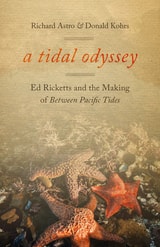
A Tidal Odyssey
Ed Ricketts and the Making of Between Pacific TidesRichard Astro
Oregon State University Press, 2021
In A Tidal Odyssey, literary scholar Richard Astro and archivist Donald Kohrs explore how Between Pacific Tides came to be, covering both the writing process and the long journey to publication. They tell three interwoven stories: the development of ecology as a valuable new approach to the study of marine life in the intertidal zone; a case study of how new and dynamic science is published and reaches a larger audience; and the intellectual development of Ed Ricketts.
Not only a scientist but also an expert in music, philosophy, history, and literature, Ricketts and his work impacted a broad range of writers and scholars. A number of these intellectual figures appear in A Tidal Odyssey, including Ricketts’s co-author, Jack Calvin, and illustrator, Ritch Lovejoy; mythologist Joseph Campbell; novelist Henry Miller; composer John Cage; and of course John Steinbeck. The authors have drawn extensively from Ricketts’s archive, including previously unpublished letters, memoranda, notebooks, and photographs.
A Tidal Odyssey is for anyone interested in the world of Ed Ricketts as well as marine biology, intertidal ecology, and how ecological studies underpin our understanding of the impact of environmental change on the well-being of our planet.
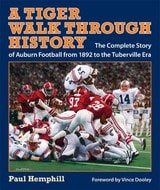
A Tiger Walk through History
The Complete Story of Auburn Football from 1892 to the Tuberville EraPaul Hemphill
University of Alabama Press, 2008
In this lively and fascinating book, noted writer and Auburn alum Paul Hemphill tells the story of the progress of Auburn from that first game coached by Auburn legend George Petrie through the team’s growth and development into the national force it is today. Hemphill records the many highs and occasional lows, and the heartbreak and jubilation each caused, noting the standouts great and small on the way.
A Tiger Walk through History contains 172 photographs, many of them rare and surprising. The text and photos capture the many great players and coaches in the Auburn football experience: Auburn’s first bowl appearance in 1936; coaching eras of innovative football genius John Heisman, after whom the Heisman trophy is named; “Iron Mike” Donahue; Ralph “Shug” Jordan, who brought Auburn its first national championship in 1957; Pat Dye, Terry Bowden, and present coach Tommy Tuberville; Auburn’s two Heisman trophy winners Pat Sullivan and Bo Jackson; and victories over rivals Alabama and Georgia. The 2007-2008 season is highlighted, including the sixth straight win over Alabama and a bowl victory over Clemson. As the game has grown, Auburn and its team have grown with it, and Auburn now ranks as a perennial power both in its conference and in the nation.
Vince Dooley states in his foreword that “beyond the famous coaches and players and their heroics on behalf of the Orange and Blue, A Tiger Walk through History is also about time-honored traditions—rallying cries like ‘Sullivan-to-Beasley’ and ‘Punt Bama Punt’ and ‘Rolling Toomer’s Corner’—that echo in resounding fashion from the pages of Paul Hemphill’s remarkable book.”
No fan, whether casual or devoted, can afford to miss this riveting account of the Plainsmen’s journey from the very beginning to today, which is the record of a great university as well as the story of the development of a great football team.

A Time of Youth
San Francisco, 1966–1967William Gedney
Duke University Press, 2021

A Tolerance for Inequality
American Public Opinion and Economic PolicyAndrew J. Taylor
University of Chicago Press, 2025
A nuanced reassessment of US democratic responsiveness and public opinion on economic policy that explores the real reasons government does not do more to mitigate inequality.
Many believe that the United States’ growing economic inequality is the result of a political system that has been captured by wealthy elites. But is economic capture actually the problem? In A Tolerance for Inequality, Andrew J. Taylor examines this question from multiple angles, drawing on public opinion data and analyses of representation in Congress. Taylor finds that economic policy outcomes are more reflective of public opinion than the common wisdom suggests.
Broadly, less-affluent Americans’ policy preferences are not meaningfully different from the preferences of other Americans, and Washington is responsive to these preferences. Although politicians are more affluent, on average, than most Americans, this does not prevent them from representing the economic views of their poorer constituents. Today’s Democratic Party is more interested in regulation and supplying public goods than redistributing wealth downwards, and political reforms designed to provide more equal outcomes are largely misguided. In short, Americans get the kind of economy they at least say they want.
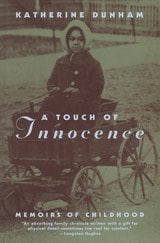
A Touch of Innocence
A Memoir of ChildhoodKatherine Dunham
University of Chicago Press, 1994
In stark prose, she tells of growing up in both black and white households and of the divisions of race and class in Chicago that become the harsh realities of her young life. A riveting narrative of one girl's struggle to transcend the painful confusions of a family and culture in turmoil, Dunham's story is full of the clarity, candor, and intelligence that lifted her above her troubled beginnings.
"A Touch of Innocence is an absorbing family chronicle written with a gift for physical detail sometimes too real for comfort. In quietly graphic prose the growing girl, the slightly older brother, the ambitious father and the kind stepmother are pictured in such human terms that when their lives get tied into harder and harder knots beyond their undoing, one can only continue to read helplessly as doom closes in upon the household."—Langston Hughes, New York Herald Tribune
"A Touch of Innocence is one of the most extraordinary life stories I have ever read . . . . The content of this book is so heartbreaking that only the strongest artistic skills can keep it from leaking out into sobbing self-pity, but Katherine Dunham's art contains it, understands it and refuses to be overwhelmed by its terrors."—Elizabeth Janeway, New York Times
"The first eighteen years of the famous dancer and choreographer's life are brought vividly to the reader in this first volume of her autobiography. She writes of what it is like to be a special, gifted young woman growing up in a racially mixed family in the American Middle West. A beautiful, touching and sometimes discomforting book."—Publishers Weekly
"As writing it is honest, searing, graphic and touching, giving us a rather heartbreaking early view of the young American Negro who was later to make a name for herself as a dancer and choreographer."—Arthur Todd, Saturday Review
A Tough Little Patch of History
Gone with the Wind and the Politics of MemoryJennifer W. Dickey
University of Arkansas Press, 2014
More than seventy-five years after its publication, Gone with the Wind remains thoroughly embedded in American culture. Margaret Mitchell’s novel and the film produced by David O. Selznick have melded with the broader forces of southern history, southern mythology, and marketing to become, and remain, a cultural phenomenon.
A Tough Little Patch of History (the phrase was coined by a journalist in 1996 to describe the Margaret Mitchell home after it was spared from destruction by fire) explores how Gone with the Wind has remained an important component of public memory in Atlanta through an analysis of museums and historic sites that focus on this famous work of fiction. Jennifer W. Dickey explores how the book and film threw a spotlight on Atlanta, which found itself simultaneously presented as an emblem of both the Old South and the New South. Exhibitions produced by the Atlanta History Center related to Gone with the Wind are explored, along with nearby Clayton County’s claim to fame as “the Home of Gone with the Wind,” a moniker bestowed on the county by Margaret Mitchell’s estate in 1969. There’s a recounting of the saga of “the Dump,” the tiny apartment in midtown Atlanta where Margaret Mitchell wrote the book, and how this place became a symbol for all that was right and all that was wrong with Mitchell’s writing.

A Transforming Faith
Explorations of Twentieth-Century American EvangelicalismDavid Harrington Watt
Rutgers University Press, 1991
Over the course of the twentieth century, evangelicals have in a variety of ways adjusted their world view to accommodate the changes in modern life. At the same time, there are important continuities between the ideas and attitudes of evangelicals in the 1920s and those of the late 1970s. Little attention has actually been paid to changes in this important social and political group since the Scopes trial and the election of 1976, when evangelical concerns played a major role in national politics. David Watt, in this readable and persuasive book, examines what happened in that fifty-year period. This book is an intellectual history of the evangelical movement in the period of its rise to prominence and power.
What Watt finds is that changes were more striking than continuities. Many of these changes manifested themselves in shifts of focus--from an emphasis on the second coming of Christ to the family, from privatization to politicization of religious concerns, from an antipathy to therapeutic practices to an acceptance of many of the assumptions of modern psychology. Watt believes that evangelicalism, as every other "ism," is subject to the influence of conflicting ideologies.
The book explores ideas and attitudes, not practice. It is based on the popular literature produced by evangelicals. In many ways it does not develop and prove a thesis; rather, it puts what we think we know about the experience of evangelicalism in this country into the context of the lives of evangelicals themselves.
A Trauma Artist
Tim O'Brien and the Fiction of VietnamMark A. Heberle
University of Iowa Press, 2001
A Trauma Artist examines how O'Brien's works variously rewrite his own traumatization during the war in Vietnam as a never-ending fiction that paradoxically "recovers" personal experience by both recapturing and (re)disguising it. Mark Heberle considers O'Brien's career as a writer through the prisms of post-traumatic stress disorder, postmodernist metafiction, and post-World War II American political uncertainties and public violence.
Based on recent conversations with O'Brien, previously published interviews, and new readings of all his works through 1999, this book is the first study to concentrate on the role and representation of trauma as the central focus of all O'Brien's works, whether situated in Vietnam, in post-Vietnam America, or in the imagination of protagonists suspended between the two. By doing so, Heberle redefines O'Brien as a major U.S. writer of the late twentieth century whose representations of self-damaging experiences and narratives of recovery characterize not only the war in Vietnam but also relationships between fathers and sons and men and women in the post-traumatic culture of the contemporary United States.

A Trauma-Informed Approach to Library Services
Rebecca Tolley
American Library Association, 2014
We are only now coming to terms with how common trauma really is; a landmark Kaiser study that surveyed patients receiving physicals found that almost two-thirds had experienced at least one form of abuse, neglect, or other trauma as a child. Though originating in the fields of health and social services, trauma-informed care is a framework that holds great promise for application to library work. Empathetic service, positive patron encounters, and a more trusting workplace are only a few of the benefits that this approach offers. In this important book Tolley, experienced in both academic and public libraries, brings these ideas into the library context. Library administrators, directors, and reference and user services staff will all benefit from learning
- the six key principles of trauma-informed care;
- characteristics of a trusting and transparent library organization, plus discussion questions to promote a sense of psychological safety among library workers;
- how certain language and labels can undermine mutuality, with suggested phrases that will help library staff demonstrate neutrality to patron ideas and views during information requests;
- delivery models that empower patrons;
- advice on balancing free speech on campus with students’ need for safety;
- how appropriate furniture arrangement can help people suffering from PTSD feel safe;
- guidance on creating safe zones for LGBTQIA+ children, teens, and adults; and
- self-assessment tools to support change toward trauma-responsive library services.
A Trauma-Informed Framework for Supporting Patrons
The PLA Workbook of Best PracticesThe Public Library Association Social Worker Task Force
American Library Association, 2022
- delve into what trauma is and how it impacts library work;
- be introduced to a framework for utilizing a trauma-informed lens in your interactions;
- practice exercises to spur personal reflection on common concerns bound up with library work and the policies relating to these issues; and
- gain hand-on tools and techniques, including strategies for de-escalation and guidance on the impacts of involving law-enforcement and banning patrons.
You will also explore various scenarios which provide the opportunity to integrate what you’ve learned and practice responding through a trauma-informed lens, including
- Mental Health Challenges
- Sleeping at the Library
- Strong Personal Odor
- Personal Belongings
- Suspected Intoxication/Under the Influence
- Substance Use
- Threatening Verbal and Nonverbal Behavior
- Unsheltered Teens
- Adult Self-Neglect
- Child Abuse or Assault
- Solicitation or Panhandling
- Stealing
- Child Unattended After Closing
A Travel Guide To Basque America
Families, Feasts, and Festivals, 2nd EditionNancy Zubiri
University of Nevada Press, 2006
A Travel Guide to Basque America—the first-ever guide to America’s Basque-American communities, their history, culture, and festivals—has been a best-seller since it first appeared in 1998. This new edition lists dozens of new restaurants, Basque cultural clubs and cultural events, and hundreds of Basque-related Internet sites that have appeared since 1998. It also includes new information about recent events in the Basque Country, their impact on Basque-Americans, and new cultural and community efforts to preserve Basque culture in America. This is the essential guide for Basque-Americans seeking links to their ancient culture and its homeland and their counterparts in the U.S., as well as for any traveler interested in exploring one of this country’s most vibrant and fascinating ethnic minorities.
A Troubled Birth
The 1930s and American Public OpinionSusan Herbst
University of Chicago Press, 2021
Herbst contends that the idea that there was a public—whose opinions mattered—emerged during the Great Depression, with the diffusion of radio, the devastating impact of the economic collapse on so many people, the appearance of professional pollsters, and Franklin Roosevelt’s powerful rhetoric. She argues that public opinion about issues can only be seen as a messy mixture of culture, politics, and economics—in short, all the things that influence how people live. Herbst deftly pins down contours of public opinion in new ways and explores what endures and what doesn’t in the extraordinarily troubled, polarized, and hyper-mediated present. Before we can ask the most important questions about public opinion in American democracy today, we must reckon yet again with the politics and culture of the 1930s.
A Troubled Dream
The Promise and Failure of School Desegregation in LouisianaCarl L. Bankston
Vanderbilt University Press, 2002
Winner, Louisiana Literary Award 2003
Fifty years after Brown v. Board of Education, the United States still has a long way to go to attain true integration of our educational system.
Using extensive interviews and a wealth of statistical information, Bankston and Caldas examine the failed desegregation efforts in Louisiana as a case study to show how desegregation has followed the same unsuccessful pattern across the United States. Strong supporters of the dream of integration, Bankston and Caldas show that the practical difficulty with desegregation is that academic environments are created by all the students in a school from the backgrounds that all the students bring with them. Unfortunately, the disadvantages that minority children have to overcome affect schools more than schools can help remedy these disadvantages.
A Union Like Ours
The Love Story of F. O. Matthiessen and Russell CheneyScott Bane
University of Massachusetts Press, 2022
After a chance meeting aboard the ocean liner Paris in 1924, Harvard University scholar and activist F. O. Matthiessen and artist Russell Cheney fell in love and remained inseparable until Cheney’s death in 1945. During the intervening years, the men traveled throughout Europe and the United States, achieving great professional success while contending with serious personal challenges, including addiction, chronic disease, and severe depression.
During a hospital stay, years into their relationship, Matthiessen confessed to Cheney that “never once has the freshness of your life lost any trace of its magic for me. Every day is a new discovery of your wealth.” Situating the couple’s private correspondence alongside other sources, Scott Bane tells the remarkable story of their relationship in the context of shifting social dynamics in the United States. From the vantage point of the present day, with marriage equality enacted into law, Bane provides a window into the realities faced by same-sex couples in the early twentieth century, as they maintained relationships in the face of overt discrimination and the absence of legal protections.
A Union for Appalachian Healthcare Workers
The Radical Roots and Hard Fights of Local 1199John Hennen
West Virginia University Press, 2021
The union of hospital workers usually referred to as the 1199 sits at the intersection of three of the most important topics in US history: organized labor, health care, and civil rights. John Hennen’s book explores the union’s history in Appalachia, a region that is generally associated with extractive industries but has seen health care grow as a share of the overall economy.
With a multiracial, largely female, and notably militant membership, 1199 was at labor’s vanguard in the 1970s, and Hennen traces its efforts in hospitals, nursing homes, and healthcare centers in West Virginia, eastern Kentucky, and Appalachian Ohio. He places these stories of mainly low-wage women workers within the framework of shake-ups in the late industrial and early postindustrial United States, relying in part on the words of Local 1199 workers and organizers themselves. Both a sophisticated account of an overlooked aspect of Appalachia’s labor history and a key piece of context for Americans’ current concern with the status of “essential workers,” Hennen’s book is a timely contribution to the fields of history and Appalachian studies and to the study of social movements.
A University Turns to the World
Ralph H. Smuckler
Michigan State University Press, 2003
A University Turns to the World examines the growth of Michigan State University’s pacesetting International program beginning in 1956, when President John Hannah named the nation’s first international dean, Glen Taggart, to head a university-wide effort. In the years that followed, MSU’s technical assistance projects in Asia, Africa, and Latin America were an important contribution to economic growth and development, and they were integral to broad efforts to strengthen the international dimension at home. The faculty members who went to Okinawa, Colombia, Brazil, South Vietnam, and Pakistan in the early years defined important goals and they learned much. As the years passed, their experiences led to increased sensitivity to the complexities of development activity and the need for patience.
Smuckler’s leadership of the international program and intimate involvement in MSU’s work at home and abroad enable him to recapture the dreams and disappointments of the development promise. Ultimately, Smuckler demonstrates that the development programs of the mid-twentieth century paved the way for valuable new research activities and long-term mutually beneficial ties between MSU faculty and institutions and colleagues overseas.
A Very Dangerous Woman
Martha Wright and Women's RightsSharon H. Penney
University of Massachusetts Press, 2004
In telling Wright's story, the authors make good use of her lively letters to her family, friends, and colleagues, including Susan B. Anthony and Elizabeth Cady Stanton. These letters reveal Wright's engaging wit and offer an insider's view of nineteenth-century reform and family life. Her correspondence with slaveholding relatives in the South grew increasingly contentious with the approach of the Civil War. One nephew became a hero of the Confederacy with his exploits at the Battle of Fredericksburg, and her son in the Union artillery was seriously wounded at Gettysburg while repelling Pickett's Charge.
Wright's life never lacked for drama. She survived a shipwreck, spent time at a frontier fort, experienced the trauma of the deaths of a fiancé, her first husband, and three of her seven children, and navigated intense conflicts within the women's rights and abolition movements. Throughout her tumultuous career, she drew on a reservoir of humor to promote her ideas and overcome the many challenges she faced. This accessible biography, written with the general reader in mind, does justice to her remarkable life.
A Very Private Public Citizen
The Life of Grenville ClarkNancy Peterson Hill
University of Missouri Press, 2016

A Very Serious Thing
Women’s Humor and American CultureNancy A. Walker
University of Minnesota Press, 1988
A Very Serious Thing was first published in 1988. Minnesota Archive Editions uses digital technology to make long-unavailable books once again accessible, and are published unaltered from the original University of Minnesota Press editions.
"It is a very serious thing to be a funny woman." –Frances Miriam Berry Whitcher
A Very Serious Thing is the first book-length study of a part of American literature that has been consistently neglected by scholars and underrepresented in anthologies—American women's humorous writing. Nancy Walker proposes that the American humorous tradition to be redefined to include women's humor as well as men's, because, contrary to popular opinion, women do have a sense of humor.
Her book draws on history, sociology, anthropology, literature, and psychology to posit that the reasons for neglect of women's humorous expression are rooted in a male-dominated culture that has officially denied women the freedom and self-confidence essential to the humorist. Rather than a study of individual writers, the book is an exploration of relationships between cultural realities—including expectations of "true womanhood"—and women's humorous response to those realities.
Humorous expression, Walker maintains, is at odds with the culturally sanctioned ideal of the "lady," and much of women's humor seems to accept, while actually denying, this ideal. In fact, most of American women's humorous writing has been a feminist critique of American culture and its attitudes toward women, according to the author.
A View from the Bottom
Asian American Masculinity and Sexual RepresentationNguyen Tan Hoang
Duke University Press, 2014

A Visitable Past
Views of Venice by American Artists, 1860-1915Margaretta M. Lovell
University of Chicago Press, 1988
A Vital Force
Women in American HomeopathyKirschmann, Anne Taylor
Rutgers University Press, 2003
Homeopathy, as a medical system, presented a significant institutional and economic challenge to conventional medicine in the nineteenth century. Although contemporary critics portrayed homeopathic physicians as part of a sect whose treatment of disease was beyond the pale of acceptable medical practice, homeopathy was in many ways similar to established medicine. Anne Taylor Kirschmann explores the strategic choices and consequences for women practitioners. Not only were female homeopaths respected within their communities, they also enjoyed considerable professional advantages not available to women within regular medicine.
A Vital Force: Women in American Homeopathy offers a new interpretation of women’s roles in modern medicine. Kirschmann strengthens and clarifies the history of homeopathic women physicians and creates a framework of comparison to “regular,” or orthodox, physicians. Women medical practitioners chose homeopathy in dramatic numbers from the mid-nineteenth through the early twentieth centuries, although the reasons for this preference varied over time. Linked to social reform movements in the nineteenth century, anti-modernism in the late nineteenth and early twentieth, and countercultural ideals of the 1960s and 1970s, women's advocacy of homeopathy has been intertwined with broad social and cultural issues in American society.
A Vocabulary of Thinking
Gertrude Stein and Contemporary North American Women's Innnovative WritingDeborah M. Mix
University of Iowa Press, 2007
Arguing that these authors have received relatively little attention because of the difficulty in categorizing them, Mix brings the writing of women of color, lesbians, and collaborative writers into the discussion of experimental writing. Thus, rather than exploring conventional lines of influence, she departs from earlier scholarship by using Stein and her work as a lens through which to read the ways these authors have renegotiated tradition, authority, and innovation.
Building on the tradition of experimental or avant-garde writing in the United States, Mix questions the politics of the canon and literary influence, offers close readings of previously neglected contemporary writers whose work doesn't fit within conventional categories, and by linking genres not typically associated with experimentalism-lyric, epic, and autobiography-challenges ongoing reevaluations of innovative writing.
A Voice Of Their Own
The Woman Suffrage Press, 1840-1910Martha Solomon
University of Alabama Press, 1991
A Voice for Justice
Writings of David SchumanSharon Schuman
Oregon State University Press, 2021
His friends and associates knew that Oregon Supreme Court Justice Hans Linde convinced Schuman to turn to the Oregon Constitution rather than the federal one to protect individual rights. But even some of Schuman’s closest friends were unaware of his fiction, which provides a window into his deep capacity for empathy and casts new light on his ability to write elegant, sometimes funny, judicial opinions. His legal thinking also had deep roots in literature and political theory.
Schuman’s 672 judicial opinions are not just brilliant, but written so that anyone can understand them. Like Ruth Bader Ginsburg, he knew there was nothing to gain by communicating only to specialists. He wanted citizens to be able to make up their own minds about important issues.
A Voice for Justice brings together for the first time writings that span over fifty years. Lawyers and laypeople alike will appreciate Schuman’s lucid, engaging observations, which are highly relevant to our current anxieties about institutional racism and democracy under stress. The short stories, speeches, op-eds, articles, legal opinions, and dissents selected for this volume constitute a call to action for everyone to become voices for justice.