Results by title
22279 books match the query 'Social Science' and 1819 start with a
Acts of Authority/Acts of Resistance
Theater and Politics in Colonial and Postcolonial IndiaNandi Bhatia
University of Michigan Press, 2004
Nandi Bhatia argues that Indian theater was a significant force in the struggle against oppressive colonial and postcolonial structures, as it sought to undo various schemes of political and cultural power through its engagement with subjects derived from mythology, history, and available colonial models such as Shakespeare. Bhatia's attention to local histories within a postcolonial framework places performance in a global and transcultural context. Drawing connections between art and politics, between performance and everyday experience, Bhatia shows how performance often intervened in political debates and even changed the course of politics.
One of the first Western studies of Indian theater to link the aesthetics and the politics of that theater, Acts of Authority/Acts of Resistance combines in-depth archival research with close readings of dramatic texts performed at critical moments in history. Each chapter amplifies its themes against the backdrop of specific social conditions as it examines particular dramatic productions, from The Indigo Mirror to adaptations of Shakespeare plays by Indian theater companies, illustrating the role of theater in bringing nationalist, anticolonial, and gendered struggles into the public sphere.
Nandi Bhatia is Associate Professor of English at the University of Western Ontario.
Acts of Conspicuous Compassion
Performance Culture and American Charity PracticesSheila C. Moeschen
University of Michigan Press, 2016
Sheila C. Moeschen sheds new light on the legacy and involvement of disabled people within charity—specifically, the articulation of performance culture as a vital theoretical framework for discussing issues of embodiment and identity, a framework that dislodges previously held notions of the disabled existing as passive “objects” of pity. This work gives rise to a more complicated and nuanced discussion of the participation of the disabled community in the charity industry, of the opportunities afforded by performance culture for disabled people to act as critical agents of charity, and of the new ethical and political issues that arise from employing performance methodology in a culture with increased appetites for voyeurism, display, and complex spectacle.
Acts of Gaiety
LGBT Performance and the Politics of PleasureSara Warner
University of Michigan Press, 2013
Acts of Gaiety explores the mirthful modes of political performance by LGBT artists, activists, and collectives that have inspired and sustained deadly serious struggles for revolutionary change. The book explores antics such as camp, kitsch, drag, guerrilla theater, zap actions, rallies, manifestos, pageants, and parades alongside more familiar forms of "legitimate theater." Against queer theory's long-suffering romance with mourning and melancholia and a national agenda that urges homosexuals to renounce pleasure if they want to be taken seriously by mainstream society, Acts of Gaiety seeks to reanimate notions of "gaiety" as a political value for LGBT activism.
The book mines the archives of lesbian-feminist activism of the 1960s-70s, highlighting the outrageous gaiety that lay at the center of the social and theatrical performances of the era and uncovering original documents long thought to be lost. Juxtaposing historical figures such as Valerie Solanas and Jill Johnston with more recent performers and activists (including Hothead Paisan, Bitch & Animal, and the Five Lesbian Brothers), Warner shows how reclaiming this largely discarded and disavowed past elucidates possibilities for being and belonging. Acts of Gaiety explores the mutually informing histories of gayness as politics and as joie de vivre, along with the centrality of liveliness to queer performance and protest.
Acts of Hope
Creating Authority in Literature, Law, and PoliticsJames Boyd White
University of Chicago Press, 1994
In this book, James Boyd White shows how texts by some of our most important thinkers and writers—including Plato, Shakespeare, Dickinson, Mandela, and Lincoln—answer these questions, not in the abstract, but in the way they wrestle with the claims of the world and self in particular historical and cultural contexts. As they define afresh the institutions or practices for which they claim (or resist) authority, they create authorities of their own, in the very modes of thought and expression they employ. They imagine their world anew and transform the languages that give it meaning.
In so doing, White maintains, these works teach us about how to read and judge claims of authority made by others upon us; how to decide to which institutions and practices we should grant authority; and how to create authorities of our own through our thoughts and arguments. Elegant and accessible, this book will appeal to anyone wanting to better understand one of the primary processes of our social and political lives.

Acts of Possession
Collecting in AmericaDilworth, Leah
Rutgers University Press, 2003
Drawing upon the body of theoretical work on collecting and focusing on individual as opposed to museum collections, the contributors investigate how, what, and why Americans have collected and explore the inherent meanings behind systems of organization and display. Essays consider the meanings of Thomas Jefferson's Indian Hall at Monticello; the pedagogical theories behind nineteenth-century children's curiosity cabinets; collections of Native American artifacts; and the ability of the owners of doll houses to construct meaning within the context of traditional ideals of domesticity.
The authors also consider some darker aspects of collecting-hoarding, fetishism, and compulsive behavior-scrutinizing collections of racist memorabilia and fascist propaganda. The final essay posits the serial killer as a collector, an investigation into the dangerous objectification of humans themselves.
By bringing fresh, interdisciplinary critical perspectives to bear on these questions, Dilworth and her coauthors weave a fascinating cultural history of collecting in America.

Acts of Repair
Justice, Truth, and the Politics of Memory in ArgentinaNatasha Zaretsky
Rutgers University Press, 2021

Acts of Resistance
Antibiotic Use and Prescribing Culture in the United StatesKatharina Rynkiewich
Vanderbilt University Press, 2026
In Acts of Resistance, Katharina Rynkiewich explores the fight to save the utility of antibiotic medicines amid global antimicrobial resistance. This engaging ethnography follows bacteria, patients, and practitioners as they weave in and out of North American medical institutions. Through an examination of the social dynamics and ethical challenges of everyday antibiotic use, the author expands on the limitations of good intentions in current antibiotic stewardship policy. Her ethnographic account shows the lived experience of multiple central figures as she shifts setting and tone, ultimately deepening our understanding of the global antimicrobial resistance crisis as emergency.
Due to the global scale of impact related to antimicrobial resistance, holding industries and institutions accountable is difficult but essential. With new and reemerging multidrug-resistant organisms making their homes within institutions and in the community, tracing the origins of an infection can be an insurmountable challenge. Rynkiewich demonstrates how “microbial highways” coexist along human highways, providing an apt example of how multidrug-resistant organisms spread across hospitals, communities, and entire regions.

Adam's Gift
A Memoir of a Pastor's Calling to Defy the Church's Persecution of Lesbians and GaysJimmy Creech
Duke University Press, 2011
Adam’s visit prompted Creech to re-evaluate his belief that homosexuality was a sin, and to research the scriptural basis for the church’s position. He determined that the church was mistaken, that scriptural translations and interpretations had been botched and dangerously distorted. As a Christian, Creech came to believe that discriminating against lesbian, gay, bisexual, and transgender people was morally wrong. This understanding compelled him to perform same-gender commitment ceremonies, which conflicted with church directives. Creech was tried twice by The United Methodist Church, and, after the second trial, his ordination credentials were revoked. Adam’s Gift is a moving story and an important chapter in the unfinished struggle for lesbian, gay, bisexual, and transgender civil and human rights.

Adapting to the Land
A History of Agriculture in ColoradoJohn F. Freeman
University Press of Colorado, 2021
Ancestral Puebloans farmed and grazed within the limits of nature. Early settlers adjusted their cultivation methods through trial and error, while later agriculturists relied on research and technical advice from the Colorado Agricultural College. As part of wartime mobilization, the federal government prompted farmers to efficiently increase yields. To meet the demand for food and fiber scientific and technical innovations led to the development of new plant cultivars and livestock breeds, advances in mechanization, and widespread use of synthetic amendments. Increasing concern over soil fertility and the loss of irrigation water to urbanization contributed to more changes. Despite, or perhaps because of, what we see today along the Front Range, Colorado may still have a chance to slow or even reverse its seemingly unrestrained growth, creating a more vibrant, earth-friendly society in which agriculture plays an increasingly significant part. Scientific discoveries and innovations in regenerative cultivation are clearing the path to a more sustainable future.
Adapting to the Land adds an ecological and horticultural perspective to historical interpretations of recurring agricultural issues in the state and tracks the concept of stewardship, suggesting that spiritual beliefs continue to contribute to debates over acceptable agricultural practices and the effects of urbanization upon the land. This book will be a key resource for students, scholars, and general readers interested in agricultural and Colorado history, sustainability, and rural sociology.
Addicted to Rehab
Race, Gender, and Drugs in the Era of Mass IncarcerationMcKim, Allison
Rutgers University Press, 2017
Winner of the 2018 Book of the Year Award from the American Society of Criminology's Division on Women and Crime
After decades of the American “war on drugs” and relentless prison expansion, political officials are finally challenging mass incarceration. Many point to an apparently promising solution to reduce the prison population: addiction treatment.
In Addicted to Rehab, Bard College sociologist Allison McKim gives an in-depth and innovative ethnographic account of two such rehab programs for women, one located in the criminal justice system and one located in the private healthcare system—two very different ways of defining and treating addiction. McKim’s book shows how addiction rehab reflects the race, class, and gender politics of the punitive turn. As a result, addiction has become a racialized category that has reorganized the link between punishment and welfare provision. While reformers hope that treatment will offer an alternative to punishment and help women, McKim argues that the framework of addiction further stigmatizes criminalized women and undermines our capacity to challenge gendered subordination. Her study ultimately reveals a two-tiered system, bifurcated by race and class.
Addiction Becomes Normal
On the Late-Modern American SubjectJaeyoon Park
University of Chicago Press, 2024
Over the last forty years, a variety of developments in American science, politics, and culture have reimagined addiction in their own ways, but they share an important understanding: increasingly, addiction is described as normal, the natural result of a body that has been exposed to potent stimuli. This shift in thinking suggests that addiction is a condition latent in all of us, a common response to a society rich in thrills.
In Addiction Becomes Normal, Jaeyoon Park provides a history and critical analysis of the normalization of addiction in late-modern American society. By exploring addiction science, diagnostic manuals, judicial reform, and public health policy, he shows how seeing addiction as normal has flourished in recent decades and is supported throughout cultural life in the United States by the language of wellness, psychotherapy, and more. Building on Michel Foucault’s depiction of the human figure, Park argues that this shift reflects the emergence of a new American subject, one formed by the accretion of experiences. This view of the human subject challenges the idea that our compulsions reflect our characters, wills, or spirits. For if addiction is an extreme but ordinary attachment, and if compulsive consumption resembles healthy behavior, then desire is no longer an expression of the soul so much as the pursuit of a past reward. A perceptive work of recent history and political theory, Addiction Becomes Normal raises new questions about what it means to be human in America today.
Addiction Becomes Normal
On the Late-Modern American SubjectJaeyoon Park
University of Chicago Press, 2024
Addiction is now seen as an ordinary feature of human nature, an idea that introduces new doubts about the meaning of our desires.
Over the last forty years, a variety of developments in American science, politics, and culture have reimagined addiction in their own ways, but they share an important understanding: increasingly, addiction is described as normal, the natural result of a body that has been exposed to potent stimuli. This shift in thinking suggests that addiction is a condition latent in all of us, a common response to a society rich in thrills.
In Addiction Becomes Normal, Jaeyoon Park provides a history and critical analysis of the normalization of addiction in late-modern American society. By exploring addiction science, diagnostic manuals, judicial reform, and public health policy, he shows how seeing addiction as normal has flourished in recent decades and is supported throughout cultural life in the United States by the language of wellness, psychotherapy, and more. Building on Michel Foucault’s depiction of the human figure, Park argues that this shift reflects the emergence of a new American subject, one formed by the accretion of experiences. This view of the human subject challenges the idea that our compulsions reflect our characters, wills, or spirits. For if addiction is an extreme but ordinary attachment, and if compulsive consumption resembles healthy behavior, then desire is no longer an expression of the soul so much as the pursuit of a past reward. A perceptive work of recent history and political theory, Addiction Becomes Normal raises new questions about what it means to be human in America today.
Addiction Trajectories
Eugene Raikhel and William Garriott, eds.
Duke University Press, 2013
Contributors. Nancy D. Campbell, E. Summerson Carr, Angela Garcia, William Garriott, Helena Hansen, Anne M. Lovell, Emily Martin, Todd Meyers, Eugene Raikhel, A. Jamie Saris, Natasha Dow Schüll
Addiction
Entries and ExitsJon Elster
Russell Sage Foundation, 1999
Additive Schooling in Subtractive Times
Bilingual Education and Dominican Immigrant Youth in the HeightsLesley Bartlett
Vanderbilt University Press, 2011
After offering a history of the school's formation, the authors detail the ways in which federal No Child Left Behind policies, New York State accountability measures, and New York City's educational reforms under Mayor Michael Bloomberg complicated the school's efforts. The book then describes the dynamic bilingual pedagogical approach adopted within the school to help students develop academic Spanish and English. Focusing on the lives of twenty immigrant youth, Bartlett and Garcia also show that, although the school achieves high completion rates, the graduating students nevertheless face difficult postsecondary educational and work environments that too often consign them to the ranks of the working poor.
Addressing Violence Against Women on College Campuses
Catherine Kaukinen
Temple University Press, 2017
Violence against women on college campuses has remained underreported and often under addressed by both campus security and local law enforcement, as well as campus administrators. The researchers, practitioners, and activists who contribute to this pertinent volume Addressing Violence Against Women on College Campuses examine the extent, nature, dynamic and contexts of violence against women at institutions of higher education.
This book is designed to facilitate an ongoing discussion and provide direction on how best to prevent and investigate violence against women, and intervene to assist victims while reducing the impact of these crimes. Chapters detail the necessary changes and implications that are part of Title IX and other federal legislation and initiatives as well as the effect these changes have had for higher education actors, including campus administrators, victim advocates, and student activists. The contributors also explore the importance of campus efforts to estimate the extent of violence against women; educating young men and women on the nature of sexual and dating violence; and shifting efforts to both make offenders accountable for their crimes and prompt all bystanders to act.
Addressing Violence Against Women on College Campuses urgently argues to make violence prevention is not separate from but rather an integral part of the student experience.
Contributors include: Antonia Abbey, Joanne Belknap, Ava Blustein, Stephanie Bonnes, Alesha Cameron, Sarah L. Cook, Walter S. DeKeseredy. Helen Eigenberg, Kate Fox, Christopher P. Krebs, Jennifer Leili, Christine Lindquist, Sarah McMahon, Caitlyn Meade, Christine Mouton, Matt R. Nobles, Callie Marie Rennison, Meredith M. Smith, Carmen Suarez, and the editors.
Adiós Muchachos
A Memoir of the Sandinista RevolutionSergio Ramírez
Duke University Press, 2012

Adiós Niño
The Gangs of Guatemala City and the Politics of DeathDeborah T. Levenson
Duke University Press, 2013

Administrative Burden
Policymaking by Other MeansPamela Herd
Russell Sage Foundation, 2018
Winner of the 2020 Outstanding Book Award Presented by the Public and Nonprofit Section of the National Academy of Management
Winner of the 2019 Louis Brownlow Book Award from the National Academy of Public Administration
Through in-depth case studies of federal programs and controversial legislation, the authors show that administrative burdens are the nuts-and-bolts of policy design. Regarding controversial issues such as voter enfranchisement or abortion rights, lawmakers often use administrative burdens to limit access to rights or services they oppose. For instance, legislators have implemented administrative burdens such as complicated registration requirements and strict voter-identification laws to suppress turnout of African American voters. Similarly, the right to an abortion is legally protected, but many states require women seeking abortions to comply with burdens such as mandatory waiting periods, ultrasounds, and scripted counseling. As Herd and Moynihan demonstrate, administrative burdens often disproportionately affect the disadvantaged who lack the resources to deal with the financial and psychological costs of navigating these obstacles.
However, policymakers have sometimes reduced administrative burdens or shifted them away from citizens and onto the government. One example is Social Security, which early administrators of the program implemented in the 1930s with the goal of minimizing burdens for beneficiaries. As a result, the take-up rate is about 100 percent because the Social Security Administration keeps track of peoples’ earnings for them, automatically calculates benefits and eligibility, and simply requires an easy online enrollment or visiting one of 1,200 field offices. Making more programs and public services operate this efficiently, the authors argue, requires adoption of a nonpartisan, evidence-based metric for determining when and how to institute administrative burdens, with a bias toward reducing them. By ensuring that the public’s interaction with government is no more onerous than it need be, policymakers and administrators can reduce inequality, boost civic engagement, and build an efficient state that works for all citizens.

Administrative Justice
Advocacy and Change in a Government AgencyPhilippe Nonet
Russell Sage Foundation, 1969

Adolescence in a Moroccan Town
Davis, Susan S
Rutgers University Press, 1999
Rashid was eighteen in 1982, when he helped us understand the feelings and activities of young people in his neighborhood, no longer a boy but not quite a man. He liked to talk about how his feelings and his understanding had grown from the time described, when he was just a kid. He recalled his dreams and plans in one of the hundreds of conversations we had about adolescence in this Moroccan town. His generation of youth in "Zawiya," on the western edge of North Africa, are the subject of this book.

Adolf Hitler
A Psychological Interpretation of His Views on Architecture, Art, and MusicSherree Owens Zalampas
University of Wisconsin Press, 1990
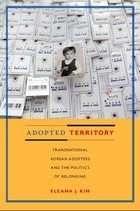
Adopted Territory
Transnational Korean Adoptees and the Politics of BelongingEleana J. Kim
Duke University Press, 2010
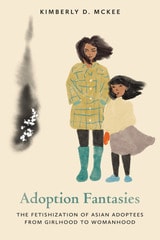
Adoption Fantasies
The Fetishization of Asian Adoptees from Girlhood to WomanhoodKimberly D. McKee
The Ohio State University Press, 2023
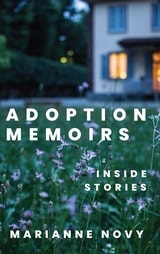
Adoption Memoirs
Inside StoriesMarianne Novy
Temple University Press, 2024
Novy considers 45 memoirs, mostly from the twenty-first century, by birthmothers, adoptees, and adoptive parents, about same-race and transracial adoption. These adoptees, she recounts, wanted to learn about their ancestry and appreciated adoptive parents who helped. Birthmother Amy Seek shows why open adoption is not simple, and many other memoirs tell stories that continue past reunion.
Adoption Memoirs will enlighten readers who lack experience with adoption and help those looking for a shared experience to also understand adoption from a different standpoint.
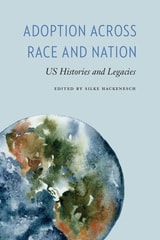
Adoption across Race and Nation
US Histories and LegaciesEdited by Silke Hackenesch
The Ohio State University Press, 2022

Adoption in America
Historical PerspectivesE. Wayne Carp, Editor
University of Michigan Press, 2004
---Choice
"Sheds new light on the roots of this complex and fascinating institution."
---Library Journal
"Well-written and accessible . . . showcases the wide-ranging scholarship underway on the history of adoption."
---Adoptive Families
"[T]his volume is a significant contribution to the literature and can serve as a catalyst for further research."
---Social Service Review
Adoption affects an estimated 60 percent of Americans, but despite its pervasiveness, this social institution has been little examined and poorly understood. Adoption in America gathers essays on the history of adoptions and orphanages in the United States. Offering provocative interpretations of a variety of issues, including antebellum adoption and orphanages; changing conceptions of adoption in late-nineteenth-century novels; Progressive Era reform and adoptive mothers; the politics of "matching" adoptive parents with children; the radical effect of World War II on adoption practices; religion and the reform of adoption; and the construction of birth mother and adoptee identities, the essays in Adoption in America will be debated for many years to come.
Adoptive Families in a Diverse Society
Wegar, Katarina
Rutgers University Press, 2006
In recent years, different family types have begun demanding recognition to an unprecedented extent. Despite notable changes to our cultural and academic landscapes, however, adoptive families remain overlooked. According to census data, about two and a half percent of children in the United States are adopted. But mere numbers do not begin to indicate the profound impact that these families have on cultural definitions of kinship.
Adoptive Families in a Diverse Society brings together twenty-one prominent scholars to explore the experience, practice, and policy of adoption in North America. While much existing literature tends to stress the potential problems inherent in non-biological kinship, the essays in this volume consider adoptive family life in a broad and balanced context.
Essays explore our current fascination with genetics, showing how our intense belief that we are produced, shaped, and controlled by our genes has affected the authenticity and value that we credit to adoptive parent/child relations. Other essays look at identity development, community attitudes toward adoption, gay adoptive fathers’ experiences, the ways in which single mother adoptive families create kinship, and the ways in which cultural assumptions about race and class operate in the system.
Bringing new perspectives to the topics of kinship, identity, and belonging, this path-breaking book expands more than our understandings of adoptive family life; it urges us to rethink the limits and possibilities of diversity and assimilation in American society.
Adoptive Migration
Raising Latinos in SpainJessaca B. Leinaweaver
Duke University Press, 2013
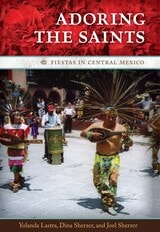
Adoring the Saints
Fiestas in Central MexicoBy Yolanda Lastra, Dina Sherzer, and Joel Sherzer
University of Texas Press, 2009
Mexico is famous for spectacular fiestas that embody its heart and soul. An expression of the cult of the saint, patron saint fiestas are the centerpiece of Mexican popular religion and of great importance to the lives and cultures of people and communities. These fiestas have their own language, objects, belief systems, and practices. They link Mexico's past and present, its indigenous and European populations, and its local and global relations.
This work provides a comprehensive study of two intimately linked patron saint fiestas in the state of Guanajuato, near San Miguel de Allende—the fiesta of the village of Cruz del Palmar and that of the town of San Luis de la Paz. These two fiestas are related to one another in very special ways involving both religious practices and their respective pre-Hispanic origins.
A mixture of secular and sacred, patron saint fiestas are multi-day affairs that include many events, ritual specialists, and performers, with the participation of the entire community. Fiestas take place in order to honor the saints, and they are the occasion for religious ceremonies, processions, musical performances, dances, and dance dramas. They feature spectacular costumes, enormous puppets, masked and cross-dressed individuals, dazzling fireworks, rodeos, food stands, competitions, and public dances. By encompassing all of these events and performances, this work displays the essence of Mexico, a lens through which this country's complex history, religion, ethnic mix, traditions, and magic can be viewed.
Adorned in Dreams
Fashion and ModernityElizabeth Wilson
Rutgers University Press, 2003
Adrian Piper
Race, Gender, and EmbodimentJohn P. Bowles
Duke University Press, 2011
Over the course of a decade, John P. Bowles and Piper conversed about her art and its meaning, reception, and relation to her scholarship on Kant’s philosophy. Drawing on those conversations, Bowles locates Piper’s work at the nexus of Conceptual and feminist art of the late 1960s and 1970s. Piper was the only African American woman associated with the Conceptual artists of the 1960s and one of only a few African Americans to participate in exhibitions of the nascent feminist art movement in the early 1970s. Bowles contends that Piper’s work is ultimately about our responsibility for the world in which we live.
Adult Supervision Required
Private Freedom and Public Constraints for Parents and ChildrenRutherford, Markella B
Rutgers University Press, 2011
Adult Supervision Required considers the contradictory ways in which contemporary American culture has imagined individual autonomy for parents and children. In many ways, today’s parents and children have more freedom than ever before. There is widespread respect for children’s autonomy as distinct individuals, and a broad range of parenting styles are flourishing. Yet it may also be fair to say that there is an unprecedented fear of children’s and parents’ freedom. Dread about Amber Alerts and “stranger danger” have put an end to the unsupervised outdoor play enjoyed by earlier generations of suburban kids. Similarly, fear of bad parenting has not only given rise to a cottage industry of advice books for anxious parents, but has also granted state agencies greater power to police the family.
Using popular parenting advice literature as a springboard for a broader sociological analysis of the American family, Markella B. Rutherford explores how our increasingly psychological conception of the family might be jeopardizing our appreciation for parents’ and children’s public lives and civil liberties.

Adulthood in Britain and the United States from 1350 to Generation Z
Edited by Maria Cannon and Laura Tisdall
University of London Press, 2024
Who gets to be an adult—and who decides? This book argues that consideration of age is a crucial element in scholarship that addresses power and inequality. Exploring how concepts of adulthood have changed over time in Britain and the United States from 1350 to the present day, the essays collected here engage with the intersectional identities of gender, race, class, sexuality, and disability, and ask how these affect understandings of adulthood.
Advances in Behavioral Finance
Richard H. Thaler
Russell Sage Foundation, 1993
Advances in Titicaca Basin Archaeology–III
Edited by Alexei Vranich, Elizabeth A. Klarich and Charles Stanish
University of Michigan Press, 2012
Advances in the Economics of Aging
Edited by David A. Wise
University of Chicago Press, 1996
Specific topics include the effect of labor market rigidities on the employment of older workers; the effect on retirement of the availability of continuation coverage benefits; and the influence of the prospective payment system (PPS) on rising Medicare costs. Also considered are the effects of health and wealth on living arrangement decisions; the incentive effects of employer-provided pension plans; the degree of substitution between 401(k) plans and other employer-provided retirement saving arrangements; and the extent to which housing wealth determines how much the elderly save and consume.
Two final studies use simulations that describe the implications of stylized economic models of behavior among the elderly. This timely volume will be of interest to anyone concerned with the economics of aging.
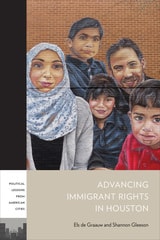
Advancing Immigrant Rights in Houston
Els de Graauw and Shannon Gleeson
Temple University Press, 2024
In Advancing Immigrant Rights in Houston, Els de Graauw and Shannon Gleeson recount how local and multi-level contexts shape the creation, contestation, and implementation of immigrant rights policies and practices in the city. They examine the development of a city immigrant affairs office, interactions between local law enforcement and federal immigration enforcement officials, local public-private partnerships around federal immigration benefits, and collaborations between labor, immigrant rights, faith, and business leaders to combat wage theft.
The case study of Houston provides a bellwether for how other U.S. cities will deal with their growing immigrant populations and underscores the importance of public-private collaborations to advance immigrant rights.

Adventures in Africa
Gianni Celati
University of Chicago Press, 2000
In 1997 the celebrated Italian novelist and essayist Gianni Celati accompanied his friend, filmmaker Jean Talon, on a journey to West Africa which took them from Mali to Senegal and Mauritania. The two had been hoping to research a documentary about Dogon priests, but frustrated by red tape, their voyage became instead a touristic adventure. The vulnerable, prickly, insightful Celati kept notebooks of the journey, now translated by Adria Bernardi as Adventures in Africa. Celati is the privileged traveler, overwhelmed by customs he doesn't understand, always at the mercy of others who are trying to sell him something he doesn't want to buy, and aware of himself as the Tourist who is always a little disoriented and at the center of the continual misadventures that are at the heart of travel.
Celati's book is both a travelogue in the European tradition and a trenchant meditation on what it means to be a tourist. Celati learns to surrender to the chaos of West Africa and in the process produces a work of touching and comic descriptions, in the lucid and ironic prose that is his hallmark. Hailed as one of the best travelogues on Africa ever written and awarded the first Zerilli-Marimó prize, Adventures in Africa is a modest yet profound account of the utter discombobulation of travel.
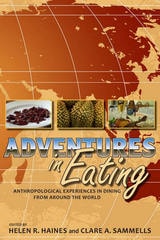
Adventures in Eating
Anthropological Experiences in Dining from Around the WorldHelen R. Haines
University Press of Colorado, 2010
Whether sago grubs, jungle rats, termites, or the pungent durian fruit are on the table, participating in the act of sharing food can establish relationships vital to anthropologists' research practices and knowledge of their host cultures. Using their own experiences with unfamiliar-and sometimes unappealing-food practices and customs, the contributors explore such eating moments and how these moments can produce new understandings of culture and the meaning of food beyond the immediate experience of eating it. They also address how personal eating experiences and culinary dilemmas can shape the data and methodologies of the discipline.
The main readership of Adventures in Eating will be students in anthropology and other scholars, but the explosion of food media gives the book additional appeal for fans of No Reservations and Bizarre Foods on the Travel Channel.
Adventures in Shondaland
Identity Politics and the Power of RepresentationGriffin, Rachel Alicia
Rutgers University Press, 2018
Shonda Rhimes is one of the most powerful players in contemporary American network television. Beginning with her break-out hit series Grey’s Anatomy, she has successfully debuted Private Practice, Scandal, How to Get Away with Murder, The Catch, For The People, and Station 19. Rhimes’s work is attentive to identity politics, “post-” identity politics, power, and representation, addressing innumerable societal issues. Rhimes intentionally addresses these issues with diverse characters and story lines that center, for example, on interracial friendships and relationships, LGBTIQ relationships and parenting, the impact of disability on familial and work dynamics, and complex representations of womanhood. This volume serves as a means to theorize Rhimes’s contributions and influence by inspiring provocative conversations about television as a deeply politicized institution and exploring how Rhimes fits into the implications of twenty-first century television.
Adventures in the Archaic
Primitivism, Degrowth, and the French Social Sciences, 1945–1975Ryan L. Allen
University of Chicago Press, 2026
We tend to associate primitivism with the nostalgic idealization of origins, often aimed at parts of the world that are viewed as closer to that idealized past than modern post-industrial society. Primitivist impulses still exist in popular culture, whether in paleo diets or returns to foraging, and they can also be seen in intellectual and political circles in debates around the possibility of degrowth. In this book, historian Ryan L. Allen examines primitivism anew through four fascinating figures: Georges Bataille, Henri Lefebvre, Georges Devereux, and Mircea Eliade.
In the postwar period, Allen shows, the French social sciences reappraised the primitive and archaic from anthropological, sociological, psychiatric, and religious angles. These four thinkers sought past alternatives to midcentury hypermodernization and capitalist excess. They put forth trenchant critiques of contemporary society and sought in the archaic past a way to imagine a more sustainable future. Adventures in the Archaic rehabilitates these thinkers, showing how their critique of growth and consumerism was nourished by an engagement with primitive cultures as potential sources of cultural and ecological wisdom. As we confront planetary crisis, Allen suggests, there is still much we can learn from these iconoclastic approaches.
Adventures in the Play-Ritual Continuum
Audun Kjus
Utah State University Press, 2025
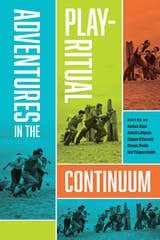
Adventures in the Play-Ritual Continuum explores the connectivity between the playful and the ritualized through a fresh theoretical perspective, highlighting the creative messiness and the cultural paradoxes such intersections allow. The chapters span topics such as hen parties, marriage proposals, ash scatterings, extreme sports races, football fans, computer game festivals, celebrations of fandom, migration heritages, and antiracist protests. While the case studies are selected to show a range of diversity with various mergings of play, game, ritual, ceremony, rite, and ritualizing, the introductory and concluding discussions offer sharpened perspectives on common aspects.
Following these excursions through the play-ritual continuum will be enjoyable for readers interested in how people make sense of their own existence and profitable for scholars in folklore, anthropology, religion, pedagogy, cultural studies, and social sciences and humanities more generally.
Adventures in the Stone Age
A New Guinea DiaryLeopold Pospíšil
Karolinum Press, 2021
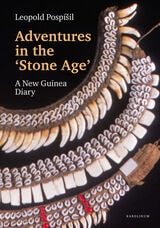
When Leopold Pospíšil first arrived in New Guinea in 1954 to investigate the legal systems of the local tribes, he was warned about the Kapauku, who reputedly had no laws. Skeptical of the idea that any society could exist without laws, Pospíšil immediately decided to live among and study the Kapauku. Learning the language and living as a participant-observer among them, Pospíšil discovered that the supposedly primitive society possessed laws, rules, and social structures that were as sophisticated as they were logical. Drawing on his research and experiences among the Kapauku—he would stay with them five times between 1954 and 1979—Pospíšil broke new ground in the field of legal anthropology, holding a professorship at Yale, serving as the anthropology curator of the Peabody Museum of Natural History, and publishing three books of scholarship on Kapauku law.
This memoir of Pospíšil’s experience is filled with charming anecdotes and thrilling stories of trials, travels, and war told with humor and humility and accompanied by a wealth of the author’s personal photos from the time.
Adventures of a Deaf-Mute and Other Short Pieces
William B. Swett
Gallaudet University Press, 2017
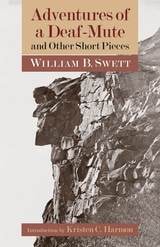
Confident in his identity as a Deaf “mute,” he notes with wry humor the varied perceptions of deafness that he encounters. As a signing Deaf person from a prominent multigenerational Deaf family, he counters negative stereotypes with generosity and a smart wit. He takes pride in his physical abilities, which he showcases through various stunts and arduous treks in the wilderness. However, Swett’s writing also reveals a deep awareness of the fragility and precariousness of life. This is a portrait of a man testing his physical and emotional limits, written from the vantage point of someone who is no longer a young man but is still very much in the prime of his life.
This collection also includes “Mr. Swett and His Diorama,” an article from 1859 in which Swett describes his miniature recreation of the Battle of Lexington, as well as Manual Alphabets, a pamphlet published in 1875 on the history of manual alphabets that includes short biographies of Thomas Hopkins Gallaudet and Laurent Clerc, two pioneers of Deaf education in the United States. The work is accompanied by a new introduction that offers a reflection on Swett’s life and the time in which he lived.
Advertising Diversity
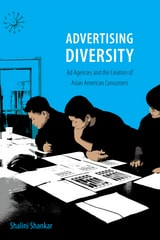
Ad Agencies and the Creation of Asian American ConsumersShalini Shankar
Duke University Press, 2015

Advertising and Identity in Europe
The I of the BeholderRobin Warner
Intellect Books, 2013
Advertising and Popular Culture
Studies in Variety and VersatilitySammy R. Danna
University of Wisconsin Press, 1992
Advertising as Culture
Edited by Chris Wharton
Intellect Books, 2013
Advice and Consent
The Development of the Policy SciencesPeter DeLeon
Russell Sage Foundation, 1988