Results by title
28164 books match the query 'History' and 2536 start with a
A&R Pioneers
Architects of American Roots Music on RecordBrian Ward
Vanderbilt University Press, 2018
A&R Pioneers offers the first comprehensive account of the diverse group of men and women who pioneered artists-and-repertoire (A&R) work in the early US recording industry. In the process, they helped create much of what we now think of as American roots music. Resourceful, innovative, and, at times, shockingly unscrupulous, they scouted and signed many of the singers and musicians who came to define American roots music between the two world wars. They also shaped the repertoires and musical styles of their discoveries, supervised recording sessions, and then devised marketing campaigns to sell the resulting records. By World War II, they had helped redefine the canons of American popular music and established the basic structure and practices of the modern recording industry. Moreover, though their musical interests, talents, and sensibilities varied enormously, these A&R pioneers created the template for the job that would subsequently become known as "record producer."
Without Ralph Peer, Art Satherley, Frank Walker, Polk C. Brockman, Eli Oberstein, Don Law, Lester Melrose, J. Mayo Williams, John Hammond, Helen Oakley Dance, and a whole army of lesser known but often hugely influential A&R representatives, the music of Bessie Smith and Bob Wills, of the Carter Family and Count Basie, of Robert Johnson and Jimmie Rodgers may never have found its way onto commercial records and into the heart of America's musical heritage. This is their story.

A-Train
Memoirs of a Tuskegee AirmanCharles W. Dryden
University of Alabama Press, 1997
A moving personal account of a man’s flight for freedom—above the clouds and beyond prejudice—by one of the first Tuskegee airmen.
A-Train is the story of one of the black Americans who, during World War II, graduated from Tuskegee (AL) Flying School and served as a pilot in the Army Air Corps’ 99th Pursuit Squadron. Charles W. Dryden presents a fast-paced, balanced, and personal account of what it was like to prepare for a career traditionally closed to African Americans, how he coped with the frustrations and dangers of combat, and how he, along with many fellow black pilots, navigators, bombardiers, and crewmen, emerged with a magnificent war record.
Under the command of Colonel Benjamin O. Davis Jr., the Tuskegee airmen fought over North Africa, Sicily, and Europe, escorting American bomber crews who respected their "no-losses" record. Some were shot down, many of them were killed or captured by the enemy, and several won medals of valor and honor. But the airmen still faced great barriers of racial prejudice in the armed forces and at home. As a member of that elite group of young pilots who fought for their country overseas while being denied civil liberties at home, Dryden presents an eloquent story that will touch every reader.
A. Philip Randolph and the Struggle for Civil Rights
Cornelius L. Bynum
University of Illinois Press, 2010
A/MORAL ECONOMICS
CLASSICAL POLITICAL ECONOMY AND CULTURAL AUTHORITY IN NINETEENTH-CENTURY ENGLANDClaudia C. Klaver
The Ohio State University Press, 2003
A/Moral Economics is an interdisciplinary historical study that examines the ways which social “science” of economics emerged through the discourse of the literary, namely the dominant moral and fictional narrative genres of early and mid-Victorian England. In particular, this book argues that the classical economic theory of early-nineteenth-century England gained its broad cultural authority not directly, through the well- known texts of such canonical economic theorists as David Ricardo, but indirectly through the narratives constructed by Ricardo’s popularizers John Ramsey McCulloch and Harriet Martineau.
By reexamining the rhetorical and institutional contexts of classical political economy in the nineteenth century, A/Moral Economics repositions the popular writings of both supporters and detractors of political economy as central to early political economists’ bids for a cultural voice. The now marginalized economic writings of McCulloch, Martineau, Henry Mayhew, and John Ruskin, as well as the texts of Charles Dickens and J. S. Mill, must be read as constituting in part the entities they have been read as merely criticizing. It is this repressed moral logic that resurfaces in a range of textual contradictions—not only in the writings of Ricardo’s supporters, but, ironically, in those of his critics as well.

ADVERSARIES OF DANCE
FROM THE PURITANS TO THE PRESENTAnn Wagner
University of Illinois Press, 1997
Whether in the private parlor, public hall, commercial "dance palace," or sleazy dive, dance has long been opposed by those who viewed it as immoral--more precisely as being a danger to the purity of those who practiced it, particularly women. In Adversaries of Dance, Ann Wagner presents a major study of opposition to dance over a period of four centuries in what is now the United States.
Wagner bases her work on the thesis that the tradition of opposition to dance "derived from white, male, Protestant clergy and evangelists who argued from a narrow and selective interpretation of biblical passages," and that the opposition thrived when denominational dogma held greater power over people's lives and when women's social roles were strictly limited.
Central to Wagner's work, which will be welcomed by scholars of both religion and dance, are issues of gender, race, and socioeconomic status.
AFRICOBRA
Experimental Art toward a School of ThoughtWadsworth A. Jarrell
Duke University Press, 2020
AFSCME's Philadelphia Story
Municipal Workers and Urban Power in the Twentieth CenturyFrancis Ryan
Temple University Press, 2011
AFSCME's Philadelphia Story provides the most comprehensive account of the early years of the American Federation of State, County and Municipal Employees, which is one of the nation’s largest and most politically powerful unions in the AFL-CIO. Author Francis Ryan details the emergence of the Quaker City's interracial union, charting its beginnings in the political patronage system of one of the nation's most notorious political machines to the first decade of the twenty-first century. Ryan provides new insight into the working class origins of African American political power in the late twentieth century as well as a thorough overview of the role the municipal state played in the urban economy of one of the nation's largest cities.
Ryan describes the work processes and how they changed, and uses workers' testimonies to ground the detailed accounts of issues and negotiations. Beginning in the 1920s and ending in the 2000s, Ryan's study offers a long-term analysis of the growth of a single union in a major American city.

AIA Guide to Chicago
American Institute of Architects Chicago; Edited by Alice Sinkevitch and Laurie McGovern Petersen; Preface by Geoffrey Baer; Introduction by Perry Duis
University of Illinois Press, 2014
Four hundred photos and thirty-four specially commissioned maps make it easy to find each of the one thousand-plus featured buildings, while a comprehensive index organizes buildings by name and architect. This edition also features an introduction providing an indispensable overview of Chicago's architectural history.

AIDS Doesn't Show Its Face
Inequality, Morality, and Social Change in NigeriaDaniel Jordan Smith
University of Chicago Press, 2014
Drawing on twenty years of fieldwork in Nigeria, Smith tells a story of dramatic social changes, ones implicated in the same inequalities that also factor into local perceptions about AIDS—inequalities of gender, generation, and social class. Nigerians, he shows, view both social inequality and the presence of AIDS in moral terms, as kinds of ethical failure. Mixing ethnographies that describe everyday life with pointed analyses of public health interventions, he demonstrates just how powerful these paired anxieties—medical and social—are, and how the world might better alleviate them through a more sensitive understanding of their relationship.
AMERICAN BRIDGE PATENTS
"THE FIRST CENTURY, 1790-1890"EMORY L. KEMP
West Virginia University Press, 2005
American Bridge Patents: The First Century (1790-1890), thoroughly illustrated with dozens of photographs and reproductions, presents the findings of a two-decade long study of several thousand pages of patent documents collected from the U.S. Patent Office. The essays in this volume offer readers tremendous insight into the creativity that characterized the evolution of bridge patents during this important and formative period of American engineering history. Of particular interest to the authors is the great variety of innovative and unusual designs that were accommodated by the then ambiguous patent law. Alongside these case studies, authors also address the Patent Office itself, whose processes regarding permissions were reformed in 1836, linking the evolution of patent law to the technology it managed.

AMERICAN PUBLIC FINANCE 1700 1815
EDWIN PERKINS
The Ohio State University Press, 1997
AND SIN NO MORE
SOCIAL POLICY AND UNWED MOTHERS IN CLEVEMARIAN J. MORTON
The Ohio State University Press, 1993
ANNE OF AUSTRIA
QUEEN OF FRANCERuth Kleinman
The Ohio State University Press, 1987
ANY FRIEND OF THE MOVEMENT
NETWORKING FOR BIRTH CONTROL 1920-1940JIMMY ELAINE WILKINS MEYER
The Ohio State University Press, 2004

ASML and Dutch Physics
A History of the Advanced Research Center for Nanolithography (ARCNL), 2014-2024Hein Brookhuis
Amsterdam University Press, 2025
ASML and Dutch Physics draws on archival research and interviews to offer insight into how science and industry interact, the motivations that drive such partnerships, and how scientific and technological perspectives are balanced. It reveals how the political and societal context of the twenty-first century imposes new demands on contemporary scientists.
Aaron Copland in Latin America
Music and Cultural PoliticsCarol A. Hess
University of Illinois Press, 2023
Aaron Henry of Mississippi
Inside AgitatorMinion K. C. Morrison
University of Arkansas Press, 2015
When Aaron Henry returned home to Mississippi from World War II service in 1946, he was part of wave of black servicemen who challenged the racial status quo. He became a pharmacist through the GI Bill, and as a prominent citizen, he organized a hometown chapter of the NAACP and relatively quickly became leader of the state chapter.
From that launching pad he joined and helped lead an ensemble of activists who fundamentally challenged the system of segregation and the almost total exclusion of African Americans from the political structure. These efforts were most clearly evident in his leadership of the integrated Mississippi Freedom Democratic Party delegation, which, after an unsuccessful effort to unseat the lily-white Democratic delegation at the Democratic National Convention in 1964, won recognition from the national party in 1968.
The man who the New York Times described as being “at the forefront of every significant boycott, sit-in, protest march, rally, voter registration drive and court case” eventually became a rare example of a social-movement leader who successfully moved into political office. Aaron Henry of Mississippi covers the life of this remarkable leader, from his humble beginnings in a sharecropping family to his election to the Mississippi house of representatives in 1979, all the while maintaining the social-change ideology that prompted him to improve his native state, and thereby the nation.
Abalone Tales
Collaborative Explorations of Sovereignty and Identity in Native CaliforniaLes W. Field
Duke University Press, 2008
Tales about abalone and their historical and contemporary meanings are related by Field and his coauthors, who include the chair and other members of the Muwekma Ohlone Tribe; a Point Arena Pomo elder; the chair of the Wiyot tribe and her sister; several Hupa Indians; and a Karuk scholar, artist, and performer. Reflecting the divergent perspectives of various Native groups and people, the stories and analyses belie any presumption of a single, unified indigenous understanding of abalone. At the same time, they shed light on abalone’s role in cultural revitalization, struggles over territory, tribal appeals for federal recognition, and connections among California’s Native groups. While California’s abalone are in danger of extinction, their symbolic power appears to surpass even the environmental crises affecting the state’s vulnerable coastline.
Abalone
The Remarkable History and Uncertain Future of California's Iconic ShellfishAnn Vileisis
Oregon State University Press, 2020
From rocky coves at Mendocino and Monterey to San Diego’s reefs, abalone have held a cherished place in California culture for millennia. Prized for iridescent shells and delectable meat, these unique shellfish inspired indigenous artisans, bohemian writers, California cuisine, and the popular sport of skin diving, but also became a highly coveted commercial commodity. Mistakenly regarded as an inexhaustible seafood, abalone ultimately became vulnerable to overfishing and early impacts of climate change.
As the first and only comprehensive history of these once abundant but now tragically imperiled shellfish, Abalone guides the reader through eras of discovery, exploitation, scientific inquiry, fierce disputes between sport and commercial divers, near-extinction, and determined recovery efforts. Combining rich cultural and culinary history with hard-minded marine science, grassroots activism, and gritty politics, Ann Vileisis chronicles the plight of California’s abalone species and the growing biological awareness that has become crucial to conserve these rare animals into the future.
Abalone reveals the challenges of reckoning with past misunderstandings, emerging science, and political intransigence, while underscoring the vulnerability of wild animals to human appetites and environmental change. An important contribution to the emerging field of marine environmental history, this is a must-read for scientists, conservationists, environmental historians, and all who remember abalone fondly.

Abandoned Women
Rewriting the Classics in Dante, Boccaccio, and ChaucerSuzanne Hagedorn
University of Michigan Press, 2003
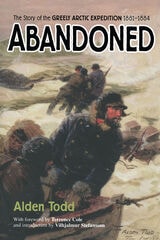
Abandoned
The Story of the Greely Arctic Expedition 1881-1884Alden Todd
University of Alaska Press, 2001
Abandoned is the gripping account of men battling for survival as they are pitted against the elements and each other. It is also the most complete and authentic account of the controversial Greely Expedition ever published, an exemplar of the best in chronicles of polar exploration.
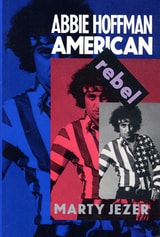
Abbie Hoffman
American RebelJezer, Marty
Rutgers University Press, 1993
"... Abbie, more than any other radical, showed potheads how to demonstrate and radicals how to dance." -- Chicago Tribune
"... deeply sympathetic and scrupulously detached-a triumph of judicious empathy." -- MARTIN DUBERMAN, Distinguished Professor of History, Lehman/The Graduate School, C.U.N.Y.
"... details Hoffman's humor, manic energy, depressive spells, political skills, and above all, his Incurable and still contagious optimism." -- Entertainment Weekly
"Here's the Abbie I knew and loved! Marty Jezer has captured him in all his complexity, dedication, humor, and heart." -- ANITA HOFFMAN

Abduction
Anouar Benmalek
Haus Publishing, 2011
Aberrations In Black
Toward a Queer of Color CritiqueRoderick A. Ferguson
University of Minnesota Press, 2003
A hard-hitting look at the regulation of sexual difference and its role in circumscribing African American culture
The sociology of race relations in America typically describes an intersection of poverty, race, and economic discrimination. But what is missing from the picture—sexual difference—can be as instructive as what is present. In this ambitious work, Roderick A. Ferguson reveals how the discourses of sexuality are used to articulate theories of racial difference in the field of sociology. He shows how canonical sociology—Gunnar Myrdal, Ernest Burgess, Robert Park, Daniel Patrick Moynihan, and William Julius Wilson—has measured African Americans’s unsuitability for a liberal capitalist order in terms of their adherence to the norms of a heterosexual and patriarchal nuclear family model. In short, to the extent that African Americans’s culture and behavior deviated from those norms, they would not achieve economic and racial equality.
Aberrations in Black tells the story of canonical sociology’s regulation of sexual difference as part of its general regulation of African American culture. Ferguson places this story within other stories—the narrative of capital’s emergence and development, the histories of Marxism and revolutionary nationalism, and the novels that depict the gendered and sexual idiosyncrasies of African American culture—works by Richard Wright, Ralph Ellison, James Baldwin, Audre Lorde, and Toni Morrison. In turn, this book tries to present another story—one in which people who presumably manifest the dysfunctions of capitalism are reconsidered as indictments of the norms of state, capital, and social science. Ferguson includes the first-ever discussion of a new archival discovery—a never-published chapter of Invisible Man that deals with a gay character in a way that complicates and illuminates Ellison’s project.
Unique in the way it situates critiques of race, gender, and sexuality within analyses of cultural, economic, and epistemological formations, Ferguson’s work introduces a new mode of discourse—which Ferguson calls queer of color analysis—that helps to lay bare the mutual distortions of racial, economic, and sexual portrayals within sociology.
Abiding by Sri Lanka
On Peace, Place, and PostcolonialityQadri Ismail
University of Minnesota Press, 2005
Abiding by Sri Lanka examines how the disciplines of anthropology, history, and literature treat the Sri Lankan ethnic conflict. Anthropology, Ismail contends, approaches Sri Lanka as an object from an “outside” and western point of view. History, addressing the conflict from the “inside,” abides by the place and so promotes change that is nationalist and exclusive. Neither of these fields imagines an inclusive community. Literature, Ismail argues, can.
With close readings of texts that “abide” by Sri Lanka, texts that have a commitment to it, Ismail demonstrates that the problems in Sri Lanka raise fundamental concerns for us all regarding the relationship between democracies and minorities. Recognizing the structural as well as political tendencies of representative democracies to suppress minorities, Ismail rethinks democracy by redefining the concept of the minority perspective, not as a subject-position of numerical insignificance, but as a conceptual space that opens up the possibility for distinction without domination and, ultimately, peace.
Qadri Ismail is associate professor of English at the University of Minnesota. He has also been a journalist in Sri Lanka.
Abigail Field Mott's The Life and Adventures of Olaudah Equiano
A Scholarly EditionEric D. Lamore
West Virginia University Press, 2023
An adaptation of Olaudah Equiano’s Interesting Narrative published for Black children in 1829, now given new life in a major scholarly edition.
In 1829, Samuel Wood and Sons, a New York publisher of children’s literature, printed and sold the Quaker Abigail Field Mott’s Life and Adventures of Olaudah Equiano. Mott adapted Olaudah Equiano’s Interesting Narrative, a bestselling autobiography first published in London in 1789, for Black children studying at New York African Free Schools, one of the first educational systems to teach individuals of African descent in the United States.
By reissuing Mott’s neglected adaptation with contextualizing scholarly apparatus, Eric D. Lamore disrupts the editorial tradition of selecting a London edition of Equiano’s Interesting Narrative, and positions Equiano in the United States instead of Great Britain. Lamore’s volume contains Mott’s children’s book, which includes a series of illustrations, in a facsimile edition; instructive notes on Life and Adventures; a provocative essay on the adaptation; and selections from relevant texts on the New York African Free Schools and other related topics. With its focus on the intersections of early Black Atlantic and American studies, children’s literature, history of education, life writing, and book history, this edition offers a fresh take on Equiano and his autobiography for a variety of twenty-first-century audiences.
Abigail Field Mott’s The Life and Adventures of Olaudah Equiano
A Scholarly EditionEric D. Lamore
University of Delaware Press, 0
By reissuing Mott’s neglected adaptation with contextualizing scholarly apparatus, Eric D. Lamore disrupts the editorial tradition of selecting a London edition of Equiano’s Interesting Narrative, and positions Equiano in the United States instead of Great Britain. Lamore’s volume contains Mott’s children’s book, which includes a series of illustrations, in a facsimile edition; instructive notes on Life and Adventures; a provocative essay on the adaptation; and selections from relevant texts on the New York African Free Schools and other related topics. With its focus on the intersections of early Black Atlantic and American studies, children’s literature, history of education, life writing, and book history, this edition offers a fresh take on Equiano and his autobiography for a variety of twenty-first-century audiences.
Abigail and John Adams
The Americanization of SensibilityG. J. Barker-Benfield
University of Chicago Press, 2010
During the many years that they were separated by the perils of the American Revolution, John and Abigail Adams exchanged hundreds of letters. Writing to each other of public events and private feelings, loyalty and love, revolution and parenting, they wove a tapestry of correspondence that has become a cherished part of American history and literature.
With Abigail and John Adams, historian G. J. Barker-Benfield mines those familiar letters to a new purpose: teasing out the ways in which they reflected—and helped transform—a language of sensibility, inherited from Britain but, amid the revolutionary fervor, becoming Americanized. Sensibility—a heightened moral consciousness of feeling, rooted in the theories of such thinkers as Descartes, Locke, and Adam Smith and including a “moral sense” akin to the physical senses—threads throughout these letters. As Barker-Benfield makes clear, sensibility was the fertile, humanizing ground on which the Adamses not only founded their marriage, but also the “abhorrence of injustice and inhumanity” they and their contemporaries hoped to plant at the heart of the new nation. Bringing together their correspondence with a wealth of fascinating detail about life and thought, courtship and sex, gender and parenting, and class and politics in the revolutionary generation and beyond, Abigail and John Adams draws a lively, convincing portrait of a marriage endangered by separation, yet surviving by the same ideas and idealism that drove the revolution itself.
A feast of ideas that never neglects the real lives of the man and woman at its center, Abigail and John Adams takes readers into the heart of an unforgettable union in order to illuminate the first days of our nation—and explore our earliest understandings of what it might mean to be an American.
Abolition and the Press
The Moral Struggle Against SlaveryFord Risley
Northwestern University Press, 2008
This examination of nineteenth-century journalism explores the specific actions and practices of the publications that provided a true picture of slavery to the general public. From Boston's strident <i>Liberator</i> to Frederick Douglass' <i>North Star</i>, the decades before the Civil War saw more than forty newspapers founded with the specific aim of promoting emancipation. Not only did these sheets provide a platform for discourse, but they also gave slavery a face for a wider audience. The reach of the abolitionist press only grew as the fiery publications became objects of controversy and targets of violence in both South and North. These works kept the issue of slavery in the public eye even as mainstream publications took up the call for emancipation, as the nation went to war, up to the end of slavery. Their legacy has endured, as dedicated reform writers and editors continue to view the press as a vital tool in the fight for equality.
Abolitionism and Imperialism in Britain, Africa, and the Atlantic
Derek R. Peterson
Ohio University Press, 2010
The abolition of the slave trade is normally understood to be the singular achievement of eighteenth-century British liberalism. Abolitionism and Imperialism in Britain, Africa, and the Atlantic expands both the temporal and the geographic framework in which the history of abolitionism is conceived. Abolitionism was a theater in which a variety of actors—slaves, African rulers, Caribbean planters, working-class radicals, British evangelicals, African political entrepreneurs—played a part. The Atlantic was an echo chamber, in which abolitionist symbols, ideas, and evidence were generated from a variety of vantage points. These essays highlight the range of political and moral projects in which the advocates of abolitionism were engaged, and in so doing it joins together geographies that are normally studied in isolation.
Where empires are often understood to involve the government of one people over another, Abolitionism and Imperialism shows that British values were formed, debated, and remade in the space of empire. Africans were not simply objects of British liberals’ benevolence. They played an active role in shaping, and extending, the values that Britain now regards as part of its national character. This book is therefore a contribution to the larger scholarship about the nature of modern empires.
Contributors: Christopher Leslie Brown, Seymour Drescher, Jonathon Glassman, Boyd Hilton, Robin Law, Phillip D. Morgan, Derek R. Peterson, John K. Thornton
Abolitionist Intimacies
Queer and Trans Migrants against the Deportation StateEithne Luibheid
Duke University Press, 2025
Abolitionist Politics and the Coming of the Civil War
James Brewer Stewart
University of Massachusetts Press, 2008
Before the Civil War, slaveholders made themselves into the most powerful, most deeply rooted, and best organized private interest group within the United States. Not only did slavery represent the national economy's second largest capital investment, exceeded only by investment in real estate, but guarantees of its perpetuation were studded throughout the U.S. Constitution. The vast majority of white Americans, in North and South, accepted the institution, and pro-slavery presidents and congressmen consistently promoted its interests.
In Abolitionist Politics and the Coming of the Civil War, James Brewer Stewart explains how a small group of radical activists, the abolitionist movement, played a pivotal role in turning American politics against this formidable system. He examines what influence the movement had in creating the political crises that led to civil war and evaluates the extent to which a small number of zealous reformers made a truly significant political difference when demanding that their nation face up to its most excruciating moral problem. In making these assessments, Stewart addresses a series of more specific questions: What were the abolitionists actually up against when seeking the overthrow of slavery and white supremacy? What motivated and sustained them during their long and difficult struggles? What larger historical contexts (religious, social, economic, cultural, and political) influenced their choices and determined their behavior? What roles did extraordinary leaders play in shaping the movement, and what were the contributions of abolitionism's unheralded “foot soldiers”? What factors ultimately determined, for better or worse, the abolitionists' impact on American politics and the realization of their equalitarian goals?
Abolitions as a Global Experience
Edited by Hideaki Suzuki
National University of Singapore Press, 2015
This book complicates the conventional story that global abilition was essentially a British moralizing effort, “among the three or four perfectly virtuous pages comprised in the history of nations”. Using comparison and connection, this book tells a story of dynamic encounters between local and global contexts, of which the local efforts of British abolition campaigns were a part.
Looking at abolitions as a globally shared experience provides an important perspective, not only to the field of slavery and abolition studies, but also the field of global or world history.

Abolition’s Public Sphere
Robert Fanuzzi
University of Minnesota Press, 2003
An innovative analysis of the Enlightenment’s effects on the anti-slavery movement
Echoes of Thomas Paine and Enlightenment thought resonate throughout the abolitionist movement and in the efforts of its leaders to create an antislavery reading public. In Abolition’s Public Sphere Robert Fanuzzi critically examines the writings of William Lloyd Garrison, Frederick Douglass, Henry David Thoreau, and Sarah and Angelina Grimke, and their massive abolition publicity campaign—pamphlets, newspapers, petitions, and public gatherings—geared to an audience of white male citizens, free black noncitizens, women, and the enslaved. Including provocative readings of Thoreau’s Walden and of the symbolic space of Boston’s Faneuil Hall, Abolition’s Public Sphere demonstrates how abolitionist public discourse sought to reenact eighteenth-century scenarios of revolution and democracy in the antebellum era.
Fanuzzi illustrates how the dissemination of abolitionist tracts served to create an “imaginary public” that promoted and provoked the discussion of slavery. However, by embracing Enlightenment abstractions of liberty, reason, and progress, Fanuzzi argues, abolitionist strategy introduced aesthetic concerns that challenged political institutions of the public sphere and prevailing notions of citizenship. Insightful and thought-provoking, Abolition’s Public Sphere questions standard versions of abolitionist history and, in the process, our understanding of democracy itself.
Aboriginal Relationships between Culture and Plant Life in the Upper Great Lakes Region
Richard Asa Yarnell
University of Michigan Press, 1964

Aboriginal Resource Use in Canada
Historical and Legal AspectsKerry Abel
University of Manitoba Press, 1991
Abortion Care as Moral Work
Ethical Considerations of Maternal and Fetal BodiesJohanna Schoen
Rutgers University Press, 2022

Abortion Pills
US History and PoliticsCarrie Baker
Amherst College Press, 2024
This is the first book to offer a comprehensive history of abortion pills in the United States. Public intellectual and lawyer Carrie N. Baker shows how courageous activists waged a decades-long campaign to establish, expand, and maintain access to abortion pills. Weaving their voices throughout her book, Baker recounts both dramatic and everyday acts of their resistance. These activists battled anti-abortion forces, overly cautious policymakers, medical gatekeepers, and fearful allies in their four-decade-long fight to free abortion pills. In post-Roe America, abortion pills are currently playing a critically important role in providing safe abortion access to tens of thousands of people living in states that now ban and restrict abortion. Understanding this struggle will help to ensure continued access into the future.

Abortion at Work
Ideology and Practice in a Feminist ClinicSimonds, Wendy
Rutgers University Press, 1996
These are the questions that drive Wendy Simonds' Abortion at Work. Simonds documents the ways in which workers at a feminist clinic construct compelling feminist visions, and also watch their ideals fall short in practice. Simonds interprets these women's narratives to get at how abortion works on feminism, and to show what feminism can gain by rethinking abortion utilizing these activists' terms. In thoroughly engaging prose, Simonds frames her analysis with a moving account of her own personal understanding of the issues.
About Antiquities
Politics of Archaeology in the Ottoman EmpireBy Zeynep Çelik
University of Texas Press, 2016
Antiquities have been pawns in empire-building and global rivalries; power struggles; assertions of national and cultural identities; and cross-cultural exchanges, cooperation, abuses, and misunderstandings—all with the underlying element of financial gain. Indeed, “who owns antiquity?” is a contentious question in many of today’s international conflicts.
About Antiquities offers an interdisciplinary study of the relationship between archaeology and empire-building around the turn of the twentieth century. Starting at Istanbul and focusing on antiquities from the Ottoman territories, Zeynep Çelik examines the popular discourse surrounding claims to the past in London, Paris, Berlin, and New York. She compares and contrasts the experiences of two museums—Istanbul’s Imperial Museum and the Metropolitan Museum of Art—that aspired to emulate European collections and gain the prestige and power of owning the material fragments of ancient history. Going beyond institutions, Çelik also unravels the complicated interactions among individuals—Westerners, Ottoman decision makers and officials, and local laborers—and their competing stakes in antiquities from such legendary sites as Ephesus, Pergamon, and Babylon.
Recovering perspectives that have been lost in histories of archaeology, particularly those of the excavation laborers whose voices have never been heard, About Antiquities provides important historical context for current controversies surrounding nation-building and the ownership of the past.
About Method
Experimenters, Snake Venom, and the History of Writing ScientificallyJutta Schickore
University of Chicago Press, 2017
About Method shows that methodological advancement throughout history has not been simply a steady progression toward better, more sophisticated and improved methodologies of experimentation. Rather, it was a progression in awareness of the obstacles and limitations that scientists face in developing strategies to probe the myriad unknown complexities of nature. The first long-term history of this development and of snake venom research, About Method offers a major contribution to integrated history and philosophy of science.
Above All, We Are Jews
A Biography of Rabbi Alexander SchindlerMichael A. Meyer
Central Conference of American Rabbis, 2025
Above the American Renaissance
David S. Reynolds and the Spiritual Imagination in American Literary StudiesHarold K. Bush
University of Massachusetts Press, 2018
In addition to the editors and David S. Reynolds, contributors include Jeffrey Bilbro, Dawn Coleman, Jonathan A. Cook, Tracy Fessenden, Zachary Hutchins, Richard Kopley, Mason I. Lowance Jr., John Matteson, Christopher N. Phillips, Vivian Pollak, Michael Robertson, Gail K. Smith, Claudia Stokes, and Timothy Sweet.
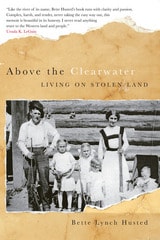
Above the Clearwater
Living on Stolen LandBette Lynch Husted
Oregon State University Press, 2004
Like her father before her, Bette Husted grew up on stolen land. The bench land above the Clearwater River in north-central Idaho had been a home for the Nez Perce Indians until the Dawes Act opened their reservation to settlement in 1895. As a child on the family homestead, Husted felt the presence of the Nez Perce: "But they were always just out of sight, like a smoky shadow behind me that I couldn't quite turn around quickly enough to catch."
Above the Clearwater chronicles her family's history on the land, revealing their joys and sorrows, their triumphs and tragedies. In a series of graceful and moving essays, Husted traces this intimate history, from her Cold War childhood to her struggles as a parent and finally to her life as a woman and teacher in the rural West. Her family's stories echo those of countless other families in the American West: the conflicts with guns, the struggles over land ownership and water rights, the isolation of women, the separations by race and class, the family secrets of mental illness and suicide.
With a powerful, poetic voice, Husted illuminates the tangled relationship between the history of a particular place and the history of the families who inhabit that place over time. As Above the Clearwater explores one family's search for a home on land taken from its original inhabitants, it quietly asks all readers to examine their own homes in the same light.
Above the Fray
The Red Cross and the Making of the Humanitarian NGO SectorShai M. Dromi
University of Chicago Press, 2020
Drawing on archival research, Dromi traces the genesis of the Red Cross to a Calvinist movement working in mid-nineteenth-century Geneva. He shows how global humanitarian policies emerged from the Red Cross founding members’ faith that an international volunteer program not beholden to the state was the only ethical way to provide relief to victims of armed conflict. By illustrating how Calvinism shaped the humanitarian field, Dromi argues for the key role belief systems play in establishing social fields and institutions. Ultimately, Dromi shows the immeasurable social good that NGOs have achieved, but also points to their limitations and suggests that alternative models of humanitarian relief need to be considered.
Above the Oxbow
Stories Entangled with a MountainDanielle R. Raad
West Virginia University Press, 2026
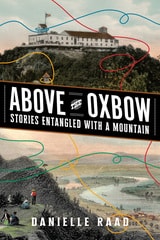
Above the Oxbow is a journey through the tangle of rich narratives surrounding Mount Holyoke, a locally cherished mountain in Western Massachusetts. It explores how visitors have forged connections with the mountain through various activities over the past two centuries. In an accessible blend of storytelling and scholarly analysis, Danielle Raad shows the significance of the landscape, historic sites, and material culture, revealing how cultural perspectives, community activism, collective memory, and personal experiences shape our understanding of a place. Situated at the intersection of public history and environmental history, this ethnography of place also discloses the curious stories of the Summit House, an erstwhile tramway, an airplane crash, and the local fight to conserve Mount Holyoke as a natural space and celebrates its myriad uses today.
Abraham Epstein
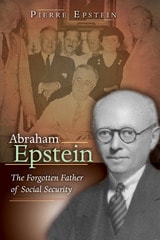
The Forgotten Father of Social SecurityPierre Epstein
University of Missouri Press, 2006

Abraham Geiger and the Jewish Jesus
Susannah Heschel
University of Chicago Press, 1998
Geiger, a pioneer of Reform Judaism and a founder of Jewish studies, developed a Jewish version of Christian origins. He contended that Jesus was a member of the Pharisees, a progressive and liberalizing group within first-century Judaism, and that he taught nothing new or original. This argument enraged German Protestant theologians, some of whom produced a tragic counterargument based on racial theory.
In this fascinating book, Susannah Heschel traces the genesis of Geiger's argument and examines the reaction to it within Christian theology. She concludes that Geiger initiated an intellectual revolt by the colonized against the colonizer, an attempt not to assimilate into Christianity by adopting Jesus as a Jew, but to overthrow Christian intellectual hegemony by claiming that Christianity—and all of Western civilization—was the product of Judaism.
Abraham Lincoln and Horace Greeley
Gregory A. Borchard
Southern Illinois University Press, 2011
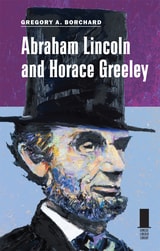
Borchard begins with an overview of the lives of both Lincoln and Greeley, delving particularly into their mutual belief in Henry Clay’s much-debated American System, and investigating the myriad similarities between the two political giants, including their comparable paths to power and their statuses as self-made men, their reputations as committed reformers, and their shared dedication to social order and developing a national infrastructure. Also detailed are Lincoln’s and Greeley’s personal quests to end slavery in the United States, as well as their staunch support of free-soil homesteads in the West.
Yet despite their ability to work together productively, both men periodically found themselves on opposite ends of the political spectrum. Their by turns harmonious and antagonistic relationship often played out on the front pages of Greeley’s influential newspaper, the New York Tribune. Drawing upon historical gems from the Tribune, as well as the personal papers of both Lincoln and Greeley, Borchard explores in depth the impact the two men had on their times and on each other, and how, as Lincoln’s and Greeley’s paths often crossed—and sometimes diverged—they personified the complexities, virtues, contradictions, and faults of their eras.
Abraham Lincoln and Horace Greeley goes beyond tracing each man’s personal and political evolution to offer a new perspective on the history-changing events of the times, including the decline of the Whig Party and the rise of the Republicans, the drive to extend American borders into the West; and the bloody years of the Civil War. Borchard finishes with reflections on the deaths of Lincoln and Greeley and how the two men have been remembered by subsequent generations.
Sure to become an essential volume in the annals of political history and journalism, Abraham Lincoln and Horace Greeley is a compelling testament to the indelible mark these men left on both their contemporaries and the face of America’s future.
Abraham Lincoln and Robert Burns
Connected Lives and LegendsFerenc Morton Szasz
Southern Illinois University Press, 2008
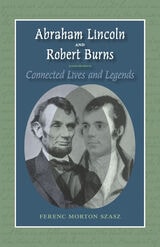
Today the images of Robert Burns and Abraham Lincoln are recognized worldwide, yet few are aware of the connection between the two. In Abraham Lincoln and Robert Burns: Connected Lives and Legends, author Ferenc Morton Szasz reveals how famed Scots poet Robert Burns—and Scotland in general—influenced the life and thought of one of the most beloved and important U.S. presidents and how the legends of the two men became intertwined after their deaths. This is the first extensive work to link the influence, philosophy, and artistry of these two larger-than-life figures.
Lacking a major national poet of their own in the early nineteenth century, Americans in the fledgling frontier country ardently adopted the poignant verses and songs of Scotland’s Robert Burns. Lincoln, too, was fascinated by Scotland’s favorite son and enthusiastically quoted the Scottish bard from his teenage years to the end of his life. Szasz explores the ways in which Burns’s portrayal of the foibles of human nature, his scorn for religious hypocrisy, his plea for nonjudgmental tolerance, and his commitment to social equality helped shape Lincoln’s own philosophy of life. The volume also traces how Burns’s lyrics helped Lincoln develop his own powerful sense of oratorical rhythm, from his casual anecdotal stories to his major state addresses.
Abraham Lincoln and Robert Burns connects the poor-farm-boy upbringings, the quasi-deistic religious views, the shared senses of destiny, the extraordinary gifts for words, and the quests for social equality of two respected and beloved world figures. This book is enhanced by twelve illustrations and two appendixes, which include Burns poems Lincoln particularly admired and Lincoln writings especially admired in Scotland.