Results by title
3071 books match the query 'Business & Economics' and 183 start with a

A Tough Little Patch of History
Gone with the Wind and the Politics of MemoryJennifer W. Dickey
University of Arkansas Press, 2014
More than seventy-five years after its publication, Gone with the Wind remains thoroughly embedded in American culture. Margaret Mitchell’s novel and the film produced by David O. Selznick have melded with the broader forces of southern history, southern mythology, and marketing to become, and remain, a cultural phenomenon.
A Tough Little Patch of History (the phrase was coined by a journalist in 1996 to describe the Margaret Mitchell home after it was spared from destruction by fire) explores how Gone with the Wind has remained an important component of public memory in Atlanta through an analysis of museums and historic sites that focus on this famous work of fiction. Jennifer W. Dickey explores how the book and film threw a spotlight on Atlanta, which found itself simultaneously presented as an emblem of both the Old South and the New South. Exhibitions produced by the Atlanta History Center related to Gone with the Wind are explored, along with nearby Clayton County’s claim to fame as “the Home of Gone with the Wind,” a moniker bestowed on the county by Margaret Mitchell’s estate in 1969. There’s a recounting of the saga of “the Dump,” the tiny apartment in midtown Atlanta where Margaret Mitchell wrote the book, and how this place became a symbol for all that was right and all that was wrong with Mitchell’s writing.
A Unified Theory of Collective Action and Social Change
Luis Fernando Medina
University of Michigan Press, 2007
The notion that groups form and act in ways that respond to objective, external costs and benefits has long been the key to accounting for social change processes driven by collective action. Yet this same notion seems to fall apart when we try to explain how collectivities emerge out of the choices of individuals. This book overcomes that dilemma by offering an analysis of collective action that, while rooted in individual decision making, also brings out the way in which objective costs and benefits can impede or foster social coordination. The resulting approach enables us to address the causes and consequences of collective action with the help of the tools of modern economic theory. To illustrate this, the book applies the tools it develops to the study of specific collective action problems such as clientelism, focusing on its connections with economic development and political redistribution; and wage bargaining, showing its economic determinants and its relevance for the political economy of the welfare state.
"Medina's study is a great step forward in the analytics of collective action. He shows the inadequacies of currently standard models and shows that straightforward revisions reconcile rational-choice and structural viewpoints. It will influence all future work."
—Kenneth Arrow, Stanford University
"Olson, Schelling, and now Medina. A Unified Theory deepens our understanding of collective action and contributes to the foundations of our field. A major work."
—Robert H. Bates, Harvard University
"Medina thinks that the main problem of social action is not whether or not to cooperate but how to do it. To this end he has produced an imaginative approach to analyzing strategic coordination problems that produces plausible predictions in a range of circumstances."
—John Ferejohn, Stanford University
Luis Fernando Medina is Associate Professor in the Department of Politics at the University of Virginia.
A Working Nation
Workers, Work, and Government in the New EconomyDavid T. Ellwood
Russell Sage Foundation, 2000

Accelerating Energy Innovation
Insights from Multiple SectorsEdited by Rebecca M. Henderson and Richard G. Newell
University of Chicago Press, 2011
Accelerating energy innovation could be an important part of an effective response to the threat of climate change. Written by a stellar group of experts in the field, this book complements existing research on the subject with an exploration of the role that public and private policy have played in enabling—and sustaining—swift innovation in a variety of industries, from agriculture and the life sciences to information technology. Chapters highlight the factors that have determined the impact of past policies, and suggest that effectively managed federal funding, strategies to increase customer demand, and the enabling of aggressive competition from new firms are important ingredients for policies that affect innovative activity.
Acceptable Risks
Politics, Policy, and Risky TechnologiesC. F. Larry Heimann
University of Michigan Press, 1998
Accounting for Capitalism
The World the Clerk MadeMichael Zakim
University of Chicago Press, 2018
The story of how everyday nineteenth-century clerks helped to articulate modern capitalism.
The clerk attended his desk and counter at the intersection of two great themes of modern historical experience: the development of a market economy and a society governed from below. Who better illustrates the daily practice and production of this modernity than someone of no particular account assigned with overseeing all the new buying and selling? In Accounting for Capitalism, Michael Zakim has written their story, a social history of capital that seeks to explain how the “bottom line” became a synonym for truth in an age shorn of absolutes, grafted onto our very sense of reason and trust.
This is a big story, told through an ostensibly marginal event: the birth of a class of “merchant clerks” in the United States in the middle of the nineteenth century. The personal trajectory of these young men from farm to metropolis, homestead to boarding house, and, most significantly, from growing things to selling them exemplified the enormous social effort required to domesticate the profit motive and turn it into the practical foundation of civic life. As Zakim reveals in his highly original study, there was nothing natural or preordained about the stunning ascendance of this capitalism and its radical transformation of the relationship between “Man and Mammon.”
Achieving Access to Justice in a Business and Human Rights Context
An Assessment of Litigation and Regulatory Responses in European Civil-Law CountriesVirginie Rouas
University of London Press, 2022
Multinational enterprises, or MNEs, can contribute to economic prosperity and social development in the countries where they operate. At the same time, their activities may directly or indirectly cause harm to humans and to the environment. Historically, MNEs have rarely been held accountable for their involvement in human rights abuses and environmental damage. In recent years, however, activists have sought to hold parent companies directly liable for the harm caused by their group’s activities. They have also strategically used litigation to trigger corporate accountability reforms at international, regional, and national levels.
Focusing on Europe, this book evaluates the extent to which litigation against MNEs has been effective in achieving access to justice and corporate accountability, particularly in civil-law countries. It also considers whether ongoing regulatory developments, such as the adoption of mandatory human rights due diligence norms and the negotiations for a business and human rights treaty, can contribute to the realization of access to justice and corporate accountability in the future.

Across the Waves
How the United States and France Shaped the International Age of RadioDerek Vaillant
University of Illinois Press, 2017
Drawing on a broad range of American and French archives, Derek Vaillant joins textual and aural materials with original data analytics and maps to illuminate U.S.-French broadcasting's political and cultural development. Vaillant focuses on the period from 1931 until France dismantled its state media system in 1974. His analysis examines mobile actors, circulating programs, and shifting institutions that shaped international radio's use in times of war and peace. He explores the extraordinary achievements, the miscommunications and failures, and the limits of cooperation between America and France as they shaped a new media environment. Throughout, Vaillant explains how radio's power as an instantaneous mass communications tool produced, legitimized, and circulated various notions of states, cultures, ideologies, and peoples as superior or inferior.
A first comparative history of its subject, Across the Waves provocatively examines how different strategic agendas, aesthetic aims and technical systems shaped U.S.-French broadcasting and the cultural politics linking the United States and France.
Actively Seeking Work?
The Politics of Unemployment and Welfare Policy in the United States and Great BritainDesmond King
University of Chicago Press, 1995
The goal of work-welfare policy in both countries has been to provide financial aid, training, and placement services for the unemployed. In order to muster support for these programs, however, work-welfare programs had to incorporate liberal requirements that they not interfere with private market forces, and that they prevent the "undeserving" from obtaining benefits. For King, the attempt to integrate these incompatible functions is the defining feature of British and American policies as well as the cause of their failure.
Administrative Aspects of Investment-Based Social Security Reform
Edited by John B. Shoven
University of Chicago Press, 2000
Advances in Behavioral Finance
Richard H. Thaler
Russell Sage Foundation, 1993
Advances in the Economics of Aging
Edited by David A. Wise
University of Chicago Press, 1996
Specific topics include the effect of labor market rigidities on the employment of older workers; the effect on retirement of the availability of continuation coverage benefits; and the influence of the prospective payment system (PPS) on rising Medicare costs. Also considered are the effects of health and wealth on living arrangement decisions; the incentive effects of employer-provided pension plans; the degree of substitution between 401(k) plans and other employer-provided retirement saving arrangements; and the extent to which housing wealth determines how much the elderly save and consume.
Two final studies use simulations that describe the implications of stylized economic models of behavior among the elderly. This timely volume will be of interest to anyone concerned with the economics of aging.
Advertising Diversity
Ad Agencies and the Creation of Asian American ConsumersShalini Shankar
Duke University Press, 2015
Advertising Revolutionary
The Life and Work of Tom BurrellJason P. Chambers
University of Illinois Press, 2024
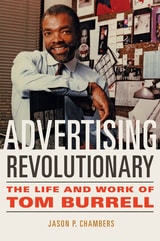
Over a forty-year career, Chicagoan Tom Burrell changed the face of advertising and revolutionized the industry’s approach to African Americans as human beings and consumers. Jason P. Chambers offers a biography of the groundbreaking creator and entrepreneur that explores Burrell’s role in building brands like McDonald’s and Coca-Cola within a deeply felt vision of folding positive images of Black people into mainstream American life. While detailing Burrell’s successes, Chambers tells a parallel story of what Burrell tried to do that sheds light on the motivations of advertising creators who viewed their work as being about more than just selling. Chambers also highlights how Burrell used his entrepreneurial gifts to build an agency that opened the door for Black artists, copywriters, directors, and other professionals to earn livings, build careers, and become leaders within the industry.
Compelling and multidimensional, Advertising Revolutionary combines archival research and interviews with Burrell and his colleagues to provide a long overdue portrait of an advertising industry legend and his times.
Advertising at War
Business, Consumers, and Government in the 1940sInger L. Stole
University of Illinois Press, 2012
Using archival sources, newspapers accounts, and trade publications, Stole demonstrates that the war elevated and magnified the seeming contradictions of advertising and allowed critics of these practices one final opportunity to corral and regulate the institution of advertising. Exploring how New Dealers and consumer advocates such as the Consumers Union battled the advertising industry, Advertising at War traces the debate over two basic policy questions: whether advertising should continue to be a tax-deductible business expense during the war, and whether the government should require effective standards and labeling for consumer products, which would render most advertising irrelevant. Ultimately the postwar climate of political intolerance and reverence for free enterprise quashed critical investigations into the advertising industry. While advertising could be criticized or lampooned, the institution itself became inviolable.

Advertising on Trial
Consumer Activism and Corporate Public Relations in the 1930sInger L. Stole
University of Illinois Press, 2006
Inger L. Stole examines how consumer activists sought to limit corporate influence by rallying popular support to moderate and change advertising. Stole weaves the story through the extensive use of primary sources, including archival research done with consumer and trade group records, as well as trade journals and engagement with the existing literature. Her account of the struggle also demonstrates how public relations developed in order to justify laissez-faire corporate advertising in light of a growing consumer rights movement, and how the failure to rein in advertising was significant not just for civic life in the 1930s but for our era as well.
Africa's Last Colonial Currency
The CFA Franc StoryFanny Pigeaud
Pluto Press, 2021

Africa's Last Colonial Currency
The CFA Franc StoryFanny Pigeaud
Pluto Press, 2021

African Entrepreneurship
Muslim Fula Merchants in Sierra LeoneAlusine Jalloh
Ohio University Press, 1999
Departing from the prevailing scholarship, Jalloh characterizes the Fula businesses as independent, rather than appendages of Western expatriate commerce. In addition to establishing successful businesses, Fula merchants established Islamic educational institutions for propogating the Muslim faith and promoting Islamic scholarship.
This study also examines the evolution of Fula chieftaincy from the colonial era to the postcolonial period and documents the importance of mercantile wealth and networks in the election of Fula chiefs in Freetown. African Entrepreneurship makes an important contribution to the understudied role of African business in Sierra Leone.

African Successes, Volume I
Government and InstitutionsEdited by Sebastian Edwards, Simon Johnson, and David N. Weil
University of Chicago Press, 2016
The first volume in the series, African Successes: Governments and Institutions considers the role governments and institutions have played in recent developments and identifies the factors that enable economists to predict the way institutions will function.
African Successes, Volume II
Human CapitalEdited by Sebastian Edwards, Simon Johnson, and David N. Weil
University of Chicago Press, 2016
The second volume in the series, African Successes: Human Capital turns the focus toward Africa’s human capital deficit, measured in terms of health and schooling. It offers a close look at the continent’s biggest challenges, including tropical disease and the spread of HIV.

African Successes, Volume III
Modernization and DevelopmentEdited by Sebastian Edwards, Simon Johnson, and David N. Weil
University of Chicago Press, 2016
The third volume in the series, African Successes: Modernization and Development looks at the rise in private production in spite of difficult institutional and physical environments. The volume emphasizes the ways that technologies, including mobile phones, have made growth in some areas especially dynamic.

African Successes, Volume IV
Sustainable GrowthEdited by Sebastian Edwards, Simon Johnson, and David N. Weil
University of Chicago Press, 2016
The fourth volume in the series, African Successes: Sustainable Growth combines informative case studies with careful empirical analysis to consider the prospects for future African growth.

After Admission
From College Access to College SuccessJames E. Rosenbaum
Russell Sage Foundation, 2006
After Capitalism
Horizons of Finance, Culture, and CitizenshipFerguson, Kennan
Rutgers University Press, 2016

After Neoliberalism
What Next for Latin America?Lance Taylor, Editor
University of Michigan Press, 1999
This book offers an intellectual and historical background for these policy choices, specifically in Argentina, Brazil, Chile, Colombia, Mexico, and Peru. The contributors detail the structural reform and economic policies in Latin America and discuss the various and often contradictory effects neoliberalism, such as fluctuating growth rates and saving-investment balances, worsened corruption, growth of exports, falling wages, and rising unemployment. In addition, each case study forecasts the effects of neoliberal policies on future growth and income distribution in the respective countries. Finally, it offers policy alternatives to neoliberalism.
The essays in this volume are: an introduction by Lance Taylor; "The Argentine Experience with Stabilization and Structural Reform," by José María Fanelli and Roberto Frenkel; "Opening, Stabilization, and Macroeconomic Sustainability in Brazil," by Edward Amadeo, "An Ongoing Structural Transformation: The Colombian Economy, 1986-96," by José Antonio Ocampo; "Economic Reforms, Stabilization Policies, and the 'Mexican Disease,'" by Nora Claudia Lustig and Jaime Ros; and "Structural Reforms and Macroeconomic Policy in Peru: 1990-96," by Oscar Dancourt.
Lance Taylor is the Arnhold Professor of International Cooperation and Development, New School for Social Research.
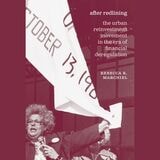
After Redlining
The Urban Reinvestment Movement in the Era of Financial DeregulationRebecca K. Marchiel
University of Chicago Press, 2020
American banks, to their eternal discredit, long played a key role in disenfranchising nonwhite urbanites and, through redlining, blighting the very city neighborhoods that needed the most investment. Banks long showed little compunction in aiding and abetting blockbusting, discrimination, and outright theft from nonwhites. They denied funds to entire neighborhoods or actively exploited them, to the benefit of suburban whites—an economic white flight to sharpen the pain caused by the demographic one.
And yet, the dynamic between banks and urban communities was not static, and positive urban development, supported by banks, became possible. In After Redlining, Rebecca K. Marchiel illuminates how, exactly, urban activists were able to change some banks’ behavior to support investment in communities that they had once abandoned. The leading activists arose in an area hit hard by banks’ discriminatory actions and politics: Chicago’s West Side. A multiracial coalition of low- and moderate-income city residents, this Saul Alinsky–inspired group championed urban reinvestment. And amazingly, it worked: their efforts inspired national action, culminating in the federal Home Mortgage Disclosure Act and the Community Reinvestment Act.
While the battle for urban equity goes on, After Redlining provides a blueprint of hope.
After Redlining
The Urban Reinvestment Movement in the Era of Financial DeregulationRebecca K. Marchiel
University of Chicago Press, 2020
Focusing on Chicago's West Side, After Redlining illuminates how urban activists were able to change banks’ behavior to support investment in communities that they had once abandoned.
American banks, to their eternal discredit, long played a key role in disenfranchising nonwhite urbanites and, through redlining, blighting the very city neighborhoods that needed the most investment. Banks long showed little compunction in aiding and abetting blockbusting, discrimination, and outright theft from nonwhites. They denied funds to entire neighborhoods or actively exploited them, to the benefit of suburban whites—an economic white flight to sharpen the pain caused by the demographic one.
And yet, the dynamic between banks and urban communities was not static, and positive urban development, supported by banks, became possible. In After Redlining, Rebecca K. Marchiel illuminates how, exactly, urban activists were able to change some banks’ behavior to support investment in communities that they had once abandoned. The leading activists arose in an area hit hard by banks’ discriminatory actions and politics: Chicago’s West Side. A multiracial coalition of low- and moderate-income city residents, this Saul Alinsky–inspired group championed urban reinvestment. And amazingly, it worked: their efforts inspired national action, culminating in the federal Home Mortgage Disclosure Act and the Community Reinvestment Act.
While the battle for urban equity goes on, After Redlining provides a blueprint of hope.

After a California Earthquake
Attitude and Behavior ChangeRisa Palm and Michael E. Hodgson
University of Chicago Press, 1992

After the Berlin Wall
A History of the EBRD, Volume 1Andrew Kilpatrick
Central European University Press, 2020
After the Berlin Wall tells the inside story of an international financial institution, the European Bank for Reconstruction and Development (EBRD), created in the aftermath of communism to help the countries of central and eastern Europe transition towards open market-oriented democratic economies.
The first volume of a history in two parts, After the Berlin Wall charts the EBRD’s life from a fledgling high-risk start-up investing in former socialist countries from 1991 to become an established member of the international financial community, which (as of April 2020) operates in almost 40 countries across three continents.
This volume describes the multilateral negotiations that created this cosmopolitan institution with a ‘European character’ and the emergence of the EBRD’s unique business model: a focus on the private sector and a mission to deliver development impact with sustainable financial returns. The author recounts the challenges that ‘transition’ countries faced in moving from a defunct to a functioning economic system and maps the EBRD’s response to critical events, from the dissolution of the Soviet Union, to the safe confinement of the Chernobyl disaster site, the debt default in Russia and the onset of the global financial crisis in 2008.

After the End of History
The Curious Fate of American MaterialismRobert E. Lane
University of Michigan Press, 2005
--David O. Sears, Professor of Psychology and Political Science, UCLA
"Lane's deep knowledge of the sources of human happiness enables him to develop a powerful critique of economic theory."
---Robert A. Dahl, Sterling Professor Emeritus of Political Science, Yale University
Robert E. Lane is the Eugene Meyer Professor Emeritus of Political Science at Yale University. His previous publications include The Loss of Happiness in Market Democracies (2000) and The Market Experience (1991).
After the Flood
How the Great Recession Changed Economic ThoughtEdited by Edward L. Glaeser, Tano Santos, and E. Glen Weyl
University of Chicago Press, 2017
A momentous collection of the best recent scholarship, After the Flood illustrates both the scope of the crises’ impact on our understanding of global financial markets and the innovative processes whereby scholars have adapted their research to gain a greater understanding of them. Among the contributors are José Scheinkman and Lars Peter Hansen, who bring up to date decades of collaborative research on the mechanisms that tie financial markets to the broader economy; Patrick Bolton, who argues that limiting bankers’ pay may be more effective than limiting the activities they can undertake; Edward Glaeser and Bruce Sacerdote, who study the social dynamics of markets; and E. Glen Weyl, who argues that economists are influenced by the incentives their consulting opportunities create.
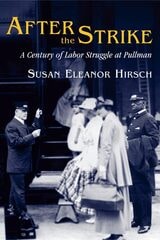
After the Strike
A Century of Labor Struggle at PullmanSusan Eleanor Hirsch
University of Illinois Press, 2003
The 1894 Pullman strike and the rise of the Brotherhood of Sleeping Car Porters played major roles in the century-long development of union organizing and labor-management relations in the Pullman Company. Susan Eleanor Hirsch connects the stories of Pullman car builders and porters to answer critical questions like: what created job segregation by race and gender? What role did such segregation play in shaping the labor movement?
Hirsch illuminates the relationship between labor organizing and the racial and sexual discrimination practiced by both employers and unions. Because the Pullman Company ran the sleeping-car service for American railroads and was a major manufacturer of railcars, its workers were involved in virtually every wave of union organizing from the 1890s to the 1940s.
In exploring the years of struggle by the men and women of the Pullman Company, After the Strike reveals the factors that determined the limited success and narrow vision of most American unions.
Against Austerity
How we Can Fix the Crisis they MadeRichard Seymour
Pluto Press, 2014
Five years into capitalism's deepest crisis, which has led to cuts and economic pain across the world, Against Austerity addresses a puzzling aspect of the current conjuncture: why are the rich still getting away with it? Why is protest so ephemeral? Why does the left appear to be marginal to political life?
In an analysis which challenges our understanding of capitalism, class and ideology, Richard Seymour shows how ‘austerity’ is just one part of a wider elite plan to radically re-engineer society and everyday life in the interests of profit, consumerism and speculative finance.
But Against Austerity is not a gospel of despair. Seymour argues that once we turn to face the headwinds of this new reality, dispensing with reassuring dogmas, we can forge new collective resistance and alternatives to the current system. Following Brecht, Against Austerity argues that the good old things are over, it's time to confront the bad new ones.
Against Labor
How U.S. Employers Organized to Defeat Union ActivismEdited by Rosemary Feurer and Chad Pearson
University of Illinois Press, 2017
Against Money
J. W. Mason and Arjun Jayadev
University of Chicago Press, 2026
A powerful deconstruction of humanity’s most influential invention, from the acclaimed economists J. W. Mason and Arjun Jayadev.
Money is everywhere in our daily lives. It lurks in the swipe of a card at the grocery store, in looming student-loan debts, in the prices of things we want, and in our subconscious navigation of the modern world. Money is an invisible convenience that saves us, as a society, the hassle of bartering for goods and services—a reflection, in our pockets and on our phones, of the hard facts of scarcity and desire. Or is it something more?
In this revelatory book, economists J. W. Mason and Arjun Jayadev explain how and why money is so deeply misunderstood by the world it dominates—as well as the dangerous social implications of this misunderstanding. Against Money tackles the most dearly held “truths” of economics, arguing that the world of money has never been an impartial representation of the world of things. Instead, its existence in different forms—debt, capital, liquidity, and interest—increasingly shapes events in the real world rather than just reflecting them. Sometimes money enables new forms of cooperation; more oftenit facilitates domination. Human existence is not just facilitated by money but also governed by it.
In the tradition of works by Thomas Piketty and David Graeber, Against Money is an erudite, disruptive exposé of the illusions and tyrannies of money. Mason and Jayadev present a radically different way of thinking about money—imagining a hopeful future in which it no longer dictates the possibilities of our collective existence.

Against Money
J. W. Mason and Arjun Jayadev
University of Chicago Press, 2026
A powerful deconstruction of humanity’s most influential invention, from the acclaimed economists J. W. Mason and Arjun Jayadev.
Money is everywhere in our daily lives. It lurks in the swipe of a card at the grocery store, in looming student-loan debts, in the prices of things we want, and in our subconscious navigation of the modern world. Money is an invisible convenience that saves us, as a society, the hassle of bartering for goods and services—a reflection, in our pockets and on our phones, of the hard facts of scarcity and desire. Or is it something more?
In this revelatory book, economists J. W. Mason and Arjun Jayadev explain how and why money is so deeply misunderstood by the world it dominates—as well as the dangerous social implications of this misunderstanding. Against Money tackles the most dearly held “truths” of economics, arguing that the world of money has never been an impartial representation of the world of things. Instead, its existence in different forms—debt, capital, liquidity, and interest—increasingly shapes events in the real world rather than just reflecting them. Sometimes money enables new forms of cooperation; more oftenit facilitates domination. Human existence is not just facilitated by money but also governed by it.
In the tradition of works by Thomas Piketty and David Graeber, Against Money is an erudite, disruptive exposé of the illusions and tyrannies of money. Mason and Jayadev present a radically different way of thinking about money—imagining a hopeful future in which it no longer dictates the possibilities of our collective existence.
Agglomeration Economics
Edited by Edward L. Glaeser
University of Chicago Press, 2010
Aggressive Unilateralism
America's 301 Trade Policy and the World Trading SystemJagdish Bhagwati and Hugh T. Patrick, Editors
University of Michigan Press, 1990
Aging Issues in the United States and Japan
Edited by Seiritsu Ogura, Toshiaki Tachibanaki, and David A. Wise
University of Chicago Press, 2001
Given the undeniable global importance of the Japanese and U.S. economies, these innovative essays shed welcome new light on the complex correlations between aging and economic behavior. This insightful work not only deepens our understanding of the Japanese and American economic landscapes but, through careful examination of the comparative social and economic data, clarifies the complex relation between aging societies, public policies, and economic outcomes.
Aging in the United States and Japan
Economic TrendsEdited by Yukio Noguchi and David A. Wise
University of Chicago Press, 1994
With essays on labor force participation and retirement, housing equity and the economic status of the elderly, budget implications of an aging population, and financing social security and health care in the 1990s, this volume covers a broad spectrum of issues related to the economics of aging. Among the book's findings are that workers are retiring at an increasingly earlier age in both countries and that, as the populations age, baby boomers in the United States will face diminishing financial resources as the ratio of retirees to workers sharply increases.
The result of a joint venture between the National Bureau of Economic Research and the Japan Center for Economic Research, this book complements Housing Markets in the United States and Japan (1994) by integrating research on housing markets with economic issues of the aged in the United States and Japan.

Agrarian Environments
Resources, Representations, and Rule in IndiaArun Agrawal, ed.
Duke University Press, 2000
Editors Arun Agrawal and K. Sivaramakrishnan claim that rural social change in India cannot be understood without exploring how environmental changes articulate major aspects of agrarian transformations—technological, cultural, and political—in the last two centuries. In order to examine these issues, they have reached beyond the confines of single disciplinary allegiances or methodological loyalties to bring together anthropologists, historians, political scientists, geographers, and environmental scientists who are significantly informed by interdisciplinary research. Drawing on extensive field and archival research, the contributors demonstrate the powerful political implications of blurring the boundaries between dichotomous cultural representations, combine conceptual analyses with specific case studies, and look at why competing powers chose to emphasize particular representations of land use or social relations. By providing a more textured analysis of how categories emerge and change, this work offers the possibility of creating crucial alliances across populations that have historically been assumed to lack mutual goals.
Agrarian Environments will be valuable to those in political science, Asian studies, and environmental studies.
Contributors. Arun Agrawal, Mark Baker, Molly Chattopadhyaya, Vinay Gidwani, Sumit Guha, Shubhra Gururani, Cecile Jackson, David Ludden, Haripriya Rangan, Paul Robbins, Vasant Saberwal, James C. Scott, K. Sivaramakrishnan, Ajay Skaria, Jennifer Springer, Darren Zook

Agricultural Productivity and Producer Behavior
Edited by Wolfram Schlenker
University of Chicago Press, 2019

Aid to Africa
So Much To Do, So Little DoneCarol Lancaster
University of Chicago Press, 1999
This balanced but tough-minded analysis does not reject the potential usefulness of foreign aid but does offer recommendations for fundamental changes in how governments and multilateral aid agencies can operate more effectively.
All Edge
Inside the New Workplace NetworksClay Spinuzzi
University of Chicago Press, 2015
Spinuzzi offers for the first time a comprehensive framework for understanding how these new groups function and thrive. His rigorous analysis tackles both the pros and cons of this evolving workflow and is based in case studies of real all-edge adhocracies at work. His provocative results will challenge our long-held assumptions about how we should be doing work.

All That Glitters
Class, Conflict, and Community in Cripple CreekElizabeth Jameson
University of Illinois Press, 1998
At the turn of the century, Colorado's Cripple Creek District captured the national imagination with the extraordinary wealth of its gold mines and the unquestionable strength of the militant Western Federation of Miners.
Elizabeth Jameson tells the entertaining story of Cripple Creek, the scene in 1894 of one of radical labor's most stunning victories and, in 1903 and 1904, of one of its most crushing defeats. Jameson draws on working-class oral histories, the Victor and Cripple Creek Daily Press published by 34 of the local labor unions, and the 1900 manuscript census. She connects unions with lodges and fraternal associations, ethnic identity, families, households, and partisan politics. Through these ties, she probes the differences in age, skill, gender, marital status, and ethnicity that strained working-class unity and contributed to the fall of labor in Cripple Creek.
Jameson's book will be required reading for western, ethnic, and working-class historians seeking an alternative interpretation of western mining struggles that emphasizes class, gender, and multiple sources of social identity.
All Work Is Cultural Work
Diasporic Haitian Women, Paid Labor, and Cultural CitizenshipNikita Carney
Rutgers University Press, 2026
What does it mean to belong in a nation? All Work Is Cultural Work examines how Haitian women living in diaspora find and create status through their work outside the home. Nikita Carney draws on ethnographic data gathered over several years in Boston, Montreal, and Paris with women who left Haiti in search of other things: safety, financial security, and opportunity. Ranging from administrative assistants to dancers to preschool teachers, the women in this study share their rich experiences, teaching us how they found a place in their new host nations through paid labor. Focusing on small, daily interactions in the workplace, these women’s narratives highlight the ways in which often invisible daily cultural practices build and re-build both the nation and the home. Taking into account the overlapping and interlocking systems of oppression her participants face both nationally and globally, Carney uses an intersectional analysis to illuminate how the workplace serves as a central site in which Haitian women become raced, gendered, and classed within the nation. Ultimately, the lives and experiences of these women point to one conclusion: culture is indivisible from labor and labor from culture, with paid labor providing a vital method for national culture to be created and recreated each and every day.

All about Flowers
James Vick's Nineteenth-Century Seed CompanyThomas J. Mickey
Ohio University Press, 2021
A nineteenth-century entrepreneur’s bold, innovative marketing helped transform flower gardens into one of America’s favorite hobbies.
“There is much that is hard and productive of sorrow in this sin-plagued world of ours; and, had we no flowers, I believe existence would be hard to be borne.” So states a customer’s 1881 letter—one of thousands James Vick regularly received. Vick’s business, selling flower seeds through the mail, wasn’t unique, but it was wildly successful because he understood better than his rivals how to engage customers’ emotions. He sold the love of flowers along with the flower seeds.
Vick was genuinely passionate about floriculture, but he also pioneered what we now describe as integrated marketing. He spent a mind-boggling $100,000 per year on advertising (mostly to women, his target demographic); he courted newspaper editors for free publicity; his educational guides presaged today’s content marketing; he recruited social influencers to popularize neighborhood gardening clubs; and he developed a visually rich communication and branding strategy to build customer loyalty and inflect their purchasing needs with purchasing desire.

All the Boats on the Ocean
How Government Subsidies Led to Global OverfishingCarmel Finley
University of Chicago Press, 2017
In this transnational, interdisciplinary history, Carmel Finley answers these questions and more as she explores how government subsidies propelled the expansion of fishing from a coastal, in-shore activity into a global industry. While nation states struggling for ocean supremacy have long used fishing as an imperial strategy, the Cold War brought a new emphasis: fishing became a means for nations to make distinct territorial claims. A network of trade policies and tariffs allowed cod from Iceland and tuna canned in Japan into the American market, destabilizing fisheries in New England and Southern California. With the subsequent establishment of tuna canneries in American Samoa and Puerto Rico, Japanese and American tuna boats moved from the Pacific into the Atlantic and Indian Oceans after bluefin. At the same time, government subsidies in nations such as Spain and the Soviet Union fueled fishery expansion on an industrial scale, with the Soviet fleet utterly depleting the stock of rosefish (or Pacific ocean perch) and other groundfish from British Columbia to California. This massive global explosion in fishing power led nations to expand their territorial limits in the 1970s, forever changing the seas.
Looking across politics, economics, and biology, All the Boats on the Ocean casts a wide net to reveal how the subsidy-driven expansion of fisheries in the Pacific during the Cold War led to the growth of fisheries science and the creation of international fisheries management. Nevertheless, the seas are far from calm: in a world where this technologically advanced industry has enabled nations to colonize the oceans, fish literally have no place left to hide, and the future of the seas and their fish stocks is uncertain.
Allocation of Income within the Household
Edward P. Lazear and Robert T. Michael
University of Chicago Press, 1988
Lazear and Michael also explore the implications their study may hold for the process of determining child support payments in households that dissolve. They argue that, unless the spending of every dollar can be monitored, alimony cannot be disentangled from child support. They also develop several criteria by which income might be distributed among family members, and, using one of those criteria, they present a series of tables that suggest the appropriate payment from one parent to another given family size, structure, and income level. Their model is particularly useful because it takes account of the ways other family members who were not part of the original household may contribute income to the new household. Other issues considered include the appropriate way to deal with children with special needs and the timing of transfer payments.