Results by title
944 books match the query 'Indians of North America' and 113 start with a
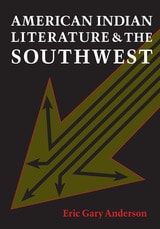
American Indian Literature and the Southwest
Contexts and DispositionsBy Eric Gary Anderson
University of Texas Press, 1999
Culture-to-culture encounters between "natives" and "aliens" have gone on for centuries in the American Southwest—among American Indian tribes, between American Indians and Euro-Americans, and even, according to some, between humans and extraterrestrials at Roswell, New Mexico. Drawing on a wide range of cultural productions including novels, films, paintings, comic strips, and historical studies, this groundbreaking book explores the Southwest as both a real and a culturally constructed site of migration and encounter, in which the very identities of "alien" and "native" shift with each act of travel.
Eric Anderson pursues his inquiry through an unprecedented range of cultural texts. These include the Roswell spacecraft myths, Leslie Marmon Silko's Almanac of the Dead, Wendy Rose's poetry, the outlaw narratives of Billy the Kid, Apache autobiographies by Geronimo and Jason Betzinez, paintings by Georgia O'Keeffe, New West history by Patricia Nelson Limerick, Frank Norris' McTeague, Mary Austin's The Land of Little Rain, Sarah Winnemucca's Life Among the Piutes, Willa Cather's The Professor's House, George Herriman's modernist comic strip Krazy Kat, and A. A. Carr's Navajo-vampire novel Eye Killers.
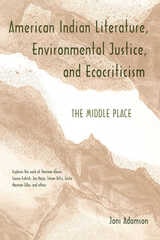
American Indian Literature, Environmental Justice, and Ecocriticism
The Middle PlaceJoni Adamson
University of Arizona Press, 2001
This powerful book is one of the first to examine the intersections between literature and the environment from the perspective of the oppressions of race, class, gender, and nature, and the first to review American Indian literature from the standpoint of environmental justice and ecocriticism. By examining such texts as Sherman Alexie's short stories and Leslie Marmon Silko's novel Almanac of the Dead, Adamson contends that these works, in addition to being literary, are examples of ecological criticism that expand Euro-American concepts of nature and place.
Adamson shows that when we begin exploring the differences that shape diverse cultural and literary representations of nature, we discover the challenge they present to mainstream American culture, environmentalism, and literature. By comparing the work of Native authors such as Simon Ortiz with that of environmental writers such as Edward Abbey, she reveals opportunities for more multicultural conceptions of nature and the environment.
More than a work of literary criticism, this is a book about the search to find ways to understand our cultural and historical differences and similarities in order to arrive at a better agreement of what the human role in nature is and should be. It exposes the blind spots in early ecocriticism and shows the possibilities for building common ground— a middle place— where writers, scholars, teachers, and environmentalists might come together to work for social and environmental change.
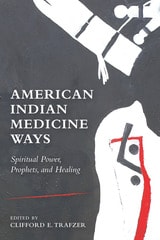
American Indian Medicine Ways
Spiritual Power, Prophets, and HealingEdited by Clifford E. Trafzer
University of Arizona Press, 2017
This groundbreaking collection provides fascinating stories of wisdom, spiritual power, and forces within tribal communities that have influenced the past and may influence the future. Through discussions of omens, prophecies, war, peace, ceremony, ritual, and cultural items such as masks, prayer sticks, sweat lodges, and peyote, this volume offers examples of the ways in which Native American beliefs in spirits have been and remain a fundamental aspect of history and culture. Drawing from written and oral sources, the book offers readers a greater understanding of creation narratives, oral histories, and songs that speak of healers, spirits, and power from tribes across the North American continent.
American Indian medicine ways and spiritual power remain vital today. With the help of spirits, people can heal the sick, protect communities from natural disasters, and mediate power of many kinds between the spiritual and corporeal worlds. As the contributors to this volume illustrate, healers are the connective cloth between the ancient past and the present, and their influence is significant for future generations.
CONTRIBUTORS
R. David Edmunds
Joseph B. Herring
Benjamin Jenkins
Troy R. Johnson
Michelle Lorimer
L. G. Moses
Richard D. Scheuerman
Al Logan Slagle
Clifford E. Trafzer
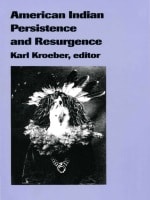
American Indian Persistence and Resurgence
Karl Kroeber
Duke University Press, 1994
Diverse commentators, including literary critics, anthropologists, ethnohistorians, poets and a novelist address persistent issues facing Native Americans and Native American studies today. The future of White-Indian relation, the viability of Pan-Indianism, tensions between Native Americans and North American anthropologists, and new devlopments in ethnohistory are among the topics discussed. The survival of Native Americans as recorded in this collection, an expanded edition of a special issue of boundary 2, brings into focus the dynamically adaptive values of Native American culture. Native Americans’ persistence in U.S. culture—not disappearing under the pressure to assimilate or through genocidal warfare—reminds us of the extent to which any living culture is defined by the process of transformation.
Contributors. Linda Ainsworth, Jonathan Boyarin, Raymomd J. DeMallie, Elaine Jahner, Karl Kroeber, William Overstreet, Douglas R. Parks, Katharine Pearce, Jarold Ramsey, Wendy Rose, Edward H. Spicer, Gerald Vizenor, Priscilla Wald

American Indian Sovereignty and the U.S. Supreme Court
The Masking of JusticeBy David E. Wilkins
University of Texas Press, 1997
"Like the miner's canary, the Indian marks the shift from fresh air to poison gas in our political atmosphere; and our treatment of Indians, even more than our treatment of other minorities, reflects the rise and fall in our democratic faith," wrote Felix S. Cohen, an early expert in Indian legal affairs.
In this book, David Wilkins charts the "fall in our democratic faith" through fifteen landmark cases in which the Supreme Court significantly curtailed Indian rights. He offers compelling evidence that Supreme Court justices selectively used precedents and facts, both historical and contemporary, to arrive at decisions that have undermined tribal sovereignty, legitimated massive tribal land losses, sanctioned the diminishment of Indian religious rights, and curtailed other rights as well.
These case studies—and their implications for all minority groups—make important and troubling reading at a time when the Supreme Court is at the vortex of political and moral developments that are redefining the nature of American government, transforming the relationship between the legal and political branches, and altering the very meaning of federalism.

American Indian Studies
Native PhD Graduates Gift Their StoriesEdited by Mark L. M. Blair, Mary Jo Tippeconnic Fox, and Kestrel A. Smith
University of Arizona Press, 2022
In American Indian Studies, Native PhD graduates share their personal stories about their educational experiences and how doctoral education has shaped their identities, lives, relationships, and careers.
This collection of personal narratives from Native graduates of the University of Arizona’s American Indian Studies (AIS) doctoral program, the first such program of its kind, gifts stories of endurance and resiliency, hardship and struggle, and accomplishment and success. It provides insight into the diverse and dynamic experiences of Native graduate students. The narratives address family and kinship, mentorship, and service and giving back. Essayists share the benefits of having an AIS program at a mainstream academic institution—not just for the students enrolled but also for their communities.
This book offers Native students aspiring to a PhD a realistic picture of what it takes. While each student has their own path to walk, these stories provide the gift of encouragement and serve to empower Native students to reach their educational goals, whether it be in an AIS program or other fields of study.
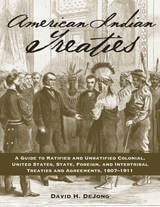
American Indian Treaties
A Guide to Ratified and Unratified Colonial, United States, State, Foreign, and Intertribal Treaties and Agreements, 1607-1911David DeJong
University of Utah Press, 2015
When it comes to American Indian treaties, the American polity too often forgets the realities of history. Prevailing perceptions are often not only inaccurate but also premised on outright falsehoods. Treaty-making was profoundly influenced by tribal conceptions of diplomacy. Colonial and early U.S. treaties especially were clothed in ritual, metaphor, and covenants that emphasized the sacred nature and purpose of diplomacy and represented a time when tribal nations were equal partners. To understand the nature and meaning of tribal treaties one needs to read them and recognize their sacred pledges and meaning, which are still relevant today.
This volume examines intertribal treaties and treaty-making and provides understanding of both the agreements and the diplomatic protocols in which they were enmeshed. It summarizes colonial Indian treaty discourse, intertribal treaties and diplomacy, the different eras of ratified and unratified U.S. treaties, foreign and state treaties with Indian nations, and the Indian agreements that followed the cessation of official treaty-making. It provides extensive lists of over 1,500 Indian treaties from all tribal diplomatic eras and includes dates, participants, purposes, and references.

American Indians
William T. Hagan
University of Chicago Press, 1993
"The author has reduced the long story—often as tangled as a five-year-old's fishing line—into a brief, clear, and highly interesting book. . . . A remarkable achievement."—San Francisco Chronicle
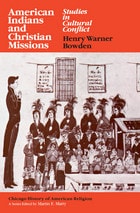
American Indians and Christian Missions
Studies in Cultural ConflictHenry Warner Bowden
University of Chicago Press, 1985
"Bowden makes a radical departure from the traditional approach. Drawing on the theories and findings of anthropologists, archaeologists, and historians, he presents Indian-missionary relations as a series of cultural encounters, the outcomes of which were determined by the content of native beliefs, the structure of native religious institutions, and external factors such as epidemic diseases and military conflicts, as well as by the missionaries' own resources and abilities. The result is a provocative, insightful historical essay that liberates a complex subject from the narrow perimeters of past discussions and accords it an appropriate richness and complexity. . . . For anyone with an interest in Indian-missionary relations, from the most casual to the most specialized, this book is the place to begin."—Neal Salisbury, Theology Today
"If one wishes to read a concise, thought-provoking ethnohistory of Indian missions, 1540-1980, this is it. Henry Warner Bowden's history, perhaps for the first time, places the sweep of Christian evangelism fully in the context of vigorous, believable, native religions."—Robert H. Keller, Jr., American Historical Review
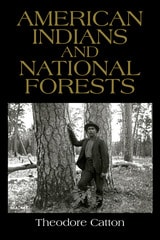
American Indians and National Forests
Theodore Catton
University of Arizona Press, 2016
Marginalized in American society and long denied a seat at the table of public land stewardship, American Indian tribes have at last taken their rightful place and are making themselves heard. Weighing indigenous perspectives on the environment is an emerging trend in public land management in the United States and around the world. The Forest Service has been a strong partner in that movement over the past quarter century.
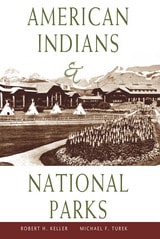
American Indians and National Parks
Robert H. Keller and Michael F. Turek
University of Arizona Press, 1998

American Indians and the American Dream
Policies, Place, and Property in MinnesotaKasey R. Keeler
University of Minnesota Press, 2023
Understanding the processes and policies of urbanization and suburbanization in American Indian communities
Nearly seven out of ten American Indians live in urban areas, yet studies of urban Indian experiences remain scant. Studies of suburban Natives are even more rare. Today’s suburban Natives, the fastest-growing American Indian demographic, highlight the tensions within federal policies working in tandem to move and house differing groups of people in very different residential locations. In American Indians and the American Dream, Kasey R. Keeler examines the long history of urbanization and suburbanization of Indian communities in Minnesota.
At the intersection of federal Indian policy and federal housing policy, American Indians and the American Dream analyzes the dispossession of Indian land, property rights, and patterns of home ownership through programs and policies that sought to move communities away from their traditional homelands to reservations and, later, to urban and suburban areas. Keeler begins this analysis with the Homestead Act of 1862, then shifts to the Indian Reorganization Act in the early twentieth century, the creation of Little Earth in Minneapolis, and Indian homeownership during the housing bubble of the early 2000s.
American Indians and the American Dream investigates the ways American Indians accessed homeownership, working with and against federal policy, underscoring American Indian peoples’ unequal and exclusionary access to the way of life known as the American dream.
Cover alt text: Vintage photo of Native person bathing smiling child in the sink of a midcentury kitchen. Title in yellow.

American Indians and the Market Economy, 1775-1850
Edited by Lance Greene and Mark R. Plane,with a foreword by Timothy K. Perttula
University of Alabama Press, 2011
The last quarter of the 18th century was a period of extensive political, economic, and social change in North America, as the continent-wide struggle between European superpowers waned. Native groups found themselves enmeshed in the market economy and new state forms of control, among other new threats to their cultural survival. Native populations throughout North America actively engaged the expanding marketplace in a variety of economic and social forms. These actions, often driven by and expressed through changes in material culture, were supported by a desire to maintain distinctive ethnic identities.
Illustrating the diversity of Native adaptations in an increasingly hostile and marginalized world, this volume is continental in scope—ranging from Connecticut to the Carolinas, and westward through Texas and Colorado. Calling on various theoretical perspectives, the authors provide nuanced perspectives on material culture use as a manipulation of the market economy. A thorough examination of artifacts used by Native Americans, whether of Euro-American or Native origin, this volume provides a clear view of the realities of the economic and social interactions between Native groups and the expanding Euro-American population and the engagement of these Native groups in determining their own fate.
American Indians, American Justice
By Vine Deloria, Jr., and Clifford M. Lytle
University of Texas Press, 1983
Baffled by the stereotypes presented by Hollywood and much historical fiction, many other Americans find the contemporary American Indian an enigma. Compounding their confusion is the highly publicized struggle of the contemporary Indian for self-determination, lost land, cultural preservation, and fundamental human rights—a struggle dramatized both by public acts of protest and by precedent-setting legal actions. More and more, the battles of American Indians are fought—and won—in the political arena and the courts.
American Indians, American Justice explores the complexities of the present Indian situation, particularly with regard to legal and political rights. It is the first book to present an overview of federal Indian law in language readably accessible to the layperson. Remarkably comprehensive, it is destined to become a standard sourcebook for all concerned with the plight of the contemporary Indian.
Beginning with an examination of the historical relationship of Indians and the courts, the authors describe how tribal courts developed and operate today, and how they relate to federal and state governments. They define such key legal concepts as tribal sovereignty and Indian Country. By comparing and contrasting the workings of Indian and non-Indian legal institutions, the authors illustrate how Indian tribes have adapted their customs, values, and institutions to the demands of the modern world. Describing the activities of attorneys and Indian advocates in asserting and defending Indian rights, they identify the difficulties typically faced by Indians in the criminal and civil legal arenas and explore the public policy and legal rights of Indians as regards citizenship, voting rights, religious freedom, and basic governmental services.
American Indians
Fourth EditionWilliam T. Hagan and Daniel M. Cobb
University of Chicago Press, 2012
American Indians
The First of This LandC. Matthew Snipp
Russell Sage Foundation, 1989

American Pentimento
The Invention of Indians and the Pursuit of RichesPatricia Seed
University of Minnesota Press, 2001

Amulets, Effigies, Fetishes, and Charms
Native American Artifacts and Spirit Stones from the NortheastEdward J. Lenik
University of Alabama Press, 2016
Interpreting Sacred Objects: Indigenous Material Culture and Spiritual Meaning in the Northeast.
Decorated stone artifacts are a significant part of archaeological studies of Native Americans in the Northeast. The artifacts illuminated in Amulets, Effigies, Fetishes, and Charms: Native American Artifacts and Spirit Stones from the Northeast include pecked, sculpted, or incised figures, images, or symbols. These are rendered on pebbles, plaques, pendants, axes, pestles, and atlatl weights, and are of varying sizes, shapes, and designs. Lenik draws from Indian myths and legends and incorporates data from ethnohistoric and archaeological sources together with local environmental settings in an attempt to interpret the iconography of these fascinating relics. For the Algonquian and Iroquois peoples, they reflect identity, status, and social relationships with other Indians as well as beings in the spirit world.
Lenik begins with background on the Indian cultures of the Northeast and includes a discussion of the dating system developed by anthropologists to describe prehistory. The heart of the content comprises more than eighty examples of portable rock art, grouped by recurring design motifs. This organization allows for in-depth analysis of each motif. The motifs examined range from people, animals, fish, and insects to geometric and abstract designs. Information for each object is presented in succinct prose, with a description, illustration, possible interpretation, the story of its discovery, and the location where it is now housed. Lenik also offers insight into the culture and lifestyle of the Native American groups represented. An appendix listing places to see and learn more about the artifacts and a glossary are included.
The material in this book, used in conjunction with Lenik’s previous research, offers a reference for virtually every known example of northeastern rock art. Archaeologists, students, and connoisseurs of Indian artistic expression will find this an invaluable work.

An Archaeology of the Soul
NORTH AMERICAN INDIAN BELIEF AND RITUALRobert L. Hall
University of Illinois Press, 1997
noted, but it has never been examined so thoroughly, nor with such an
eye for the amazing interconnectedness of Indian tribal ceremonies and
practices, as in An Archaeology of the Soul. In this monumental
work, destined to become a classic in its field, Robert Hall traces the
genetic and historical relationships of the tribes of the Midwest and
Plains--including roots that extend back as far as 3,000 years.
Looking beyond regional barriers, An Archaeology of the Soul offers new depths of insight into American Indian ethnography. Hall uncovers the lineage and kinship shared by Native North Americans through the perspectives of history, archaeology, archaeoastronomy, biological anthropology, linguistics, and mythology. The wholeness and panoramic complexity of American Indian belief has never been so fully explored--or more deeply understood.
An Early Woodland Community at the Schultz Site 20SA2 in the Saginaw Valley and the Nature of the Early Woodland Adaptation in the Great Lakes Region
Doreen Ozker
University of Michigan Press, 1982
Ancestral Hopi Migrations
Patrick D. Lyons
University of Arizona Press, 2003
Ancient Caves of the Great Salt Lake Region
Julian H Steward
University of Utah Press, 2009
First published in 1937 by the Bureau of American Ethnology, this edition of Ancient Caves of the Great Salt Lake Region features a new foreword by Joel Janetski.
Ancient Communities in the Mimbres Valley
Continuity and Change from AD 750 to 1350Roger Anyon and Steven A. LeBlanc
University of Arizona Press, 2024
Expanding beyond studies that focus on a single pueblo, this volume represents the final report on the excavations of the Mimbres Foundation. It brings together data from a range of pithouse and pueblo sites of different sizes and histories in diverse locations—to refine the current understandings of Mimbres region archaeology in the context of the Greater Southwest.
From the end of the Late Pithouse period through the Black Mountain phase, the book provides excellent documentation of the artifacts and data recovered from the sites, addresses models of Mimbres community, and tracks change and continuity in the valley over centuries. In addition, the authors consider the nature of the relationship between the Classic Mimbres period population of the valley and the people of the succeeding Black Mountain phase, as well as relationships among the Black Mountain phase people and those of neighboring parts of the region, including the Casas Grandes world and the Jornada Mogollon area.
In Ancient Communities in the Mimbres Valley two leading archaeologists bring together a trove of unpublished investigations, expanding understandings and setting a course for the future.
Ancient Complexities
New Perspectives in Pre-Columbian North AmericaSusan Alt
University of Utah Press, 2010
Edited by Susan M. Alt
Foundations of Archaeological Inquiry
Jim Skibo, Series Editor
Anthropology and Archaeology
Many archaeologists have long been frustrated with the traditional, reductionist representation of complexity. Yet, even after years of debate, there seem to be never ending disagreements over the complexity of places like Chaco Canyon, Cahokia, and Poverty Point. This matters, because there are political and scholarly implications to calling any place or people more or less complex. In North America especially, given historical biases and the mound-builder myth, archaeologists need to rethink complexity as they seek to explain the past.
Based on a Society of American Archaeology symposium, Ancient Complexities offers a current overview of what is meant by cultural complexity and how archaeologists study the development of complex societies in North America. Taking a critical look at how accepted definitions of complexity have bounded our thinking about ancient societies, this volume presents new theoretical perspectives and states a case for the need for different definitions in order to move this discussion ahead.
This collection by scholars of North American archaeology is a must read for anyone wishing to be abreast of the most current dialogue on complexity taking place in modern archaeology.
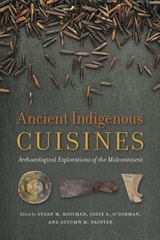
Ancient Indigenous Cuisines
Archaeological Explorations of the MidcontinentEdited by Susan M. Kooiman, Jodie A. O'Gorman, and Autumn M. Painter
University of Alabama Press, 2025
New essays from foodways archaeology related to cuisine in social, cultural, and environmental contexts.
This collection of original essays is the first to cover recent trends in foodways archaeology in the Midwest using the concept of cuisine: the selection of food ingredients and methods of food preparation, cooking, and serving/consumption in relation to their social, cultural, and environmental contexts. This work span the Early Archaic (9000 BC) to Late Precontact (up to around AD 1500) in ecological zones of present-day Michigan, Indiana, Illinois, Wisconsin, Minnesota, North Dakota, and Manitoba. Chapters trace development from hunter-gathering to horticultural practices to the more robust farming/fishing/hunting model centered on maize, squash, and other domesticates.
As Susan M. Kooiman, Jodie A. O’Gorman, and Autumn M. Painter note, identification of past cooking habits and evolving methods for foodstuffs identification can help archaeologists to reconstruct foodways and connect food behaviors with identity and associated fundamental societal beliefs. Contributors to this collection use cutting-edge methods and perspectives and consider a range of questions and outcomes that demonstrate the versatility and strength of culinary studies. To move the field forward, contributors also note areas for further analysis and improvement.
This volume targets archaeologists and students, archaeobotanists and zooarchaeologists, and those curious about Indigenous food culture. Engaging content includes chapters on the construction of earth ovens, the use-alteration of pottery and residue, a discussion of cuisine combining plant and animal data with ceramic trends, and the various contexts of plates to understand cooking methods and the social role of cuisine. Others examine faunal remains, the plant remains of feasting, the introduction of maize, the use of limestone nixtamalization, and archaeobotanical assemblages that reveal shifts in cuisine. A conclusion addresses the question, Why cuisine?
CONTRIBUTORS
Rebecca K. Albert / Alleen Betzenhauser / Jennifer R. Haas / Mary M. King / Susan M. Kooiman / Mary E. Malainey / Terrance J. Martin / Fernanda Neubauer / Kelsey Nordine / Jodie A. O’Gorman / Autumn M. Painter / Jeffrey M. Painter / Kimberly Schaefer / Mary Simon
Ancient Light
PoemsKimberly Blaeser
University of Arizona Press, 2024
With vision and resilience, Kimberly Blaeser’s poetry layers together past, present, and futures. Against a backdrop of pandemic loss and injustice, MMIW (Missing and Murdered Indigenous Women), hidden graves at Native American boarding schools, and destructive environmental practices, Blaeser’s innovative poems trace pathways of kinship, healing, and renewal. They celebrate the solace of natural spaces through sense-laden geo-poetry and picto-poems. With an Anishinaabe sensibility, her words and images invoke an ancient belonging and voice the deep relatedness she experiences in her familiar watery regions of Minnesota.
The collection invites readers to see with a new intimacy the worlds they inhabit. Blaeser brings readers to the brink, immerses them in the darkest regions of the Anthropocene, in the dangerous fallacies of capitalism, and then seeds hope. Ultimately, as the poems enact survivance, they reclaim Indigenous stories and lifeways.
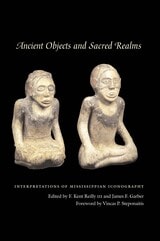
Ancient Objects and Sacred Realms
Interpretations of Mississippian IconographyEdited by F. Kent Reilly, III, and James F. Garber
University of Texas Press, 2006
Between AD 900-1600, the native peoples of the Mississippi River Valley and other areas of the Eastern Woodlands of the United States conceived and executed one of the greatest artistic traditions of the Precolumbian Americas. Created in the media of copper, shell, stone, clay, and wood, and incised or carved with a complex set of symbols and motifs, this seven-hundred-year-old artistic tradition functioned within a multiethnic landscape centered on communities dominated by earthen mounds and plazas. Previous researchers have referred to this material as the Southeastern Ceremonial Complex (SECC).
This groundbreaking volume brings together ten essays by leading anthropologists, archaeologists, and art historians, who analyze the iconography of Mississippian art in order to reconstruct the ritual activities, cosmological vision, and ideology of these ancient precursors to several groups of contemporary Native Americans. Significantly, the authors correlate archaeological, ethnographic, and art historical data that illustrate the stylistic differences within Mississippian art as well as the numerous changes that occur through time. The research also demonstrates the inadequacy of the SECC label, since Mississippian art is not limited to the Southeast and reflects stylistic changes over time among several linked but distinct religious traditions. The term Mississippian Iconographic Interaction Sphere (MIIS) more adequately describes the corpus of this Mississippian art. Most important, the authors illustrate the overarching nature of the ancient Native American religious system, as a creation unique to the native American cultures of the eastern United States.
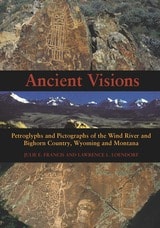
Ancient Visions
Petroglyphs and Pictographs of the Wind River and Bighorn Country, Wyoming and MontanaJulie Francis
University of Utah Press, 2004
The Bighorn and Wind River basins of north-central Wyoming and southern Montana have been home to Native American tribes for at least 11,000 years and contain some of the most diverse assemblages of hunter-gatherer rock art anywhere in the world. Most notable are the spectacular and surreal images of the Dinwoody tradition, but there is also a startling array of other forms from shield-bearing warriors to animals, plants, and abstract images. Ancient Visions presents a sampling of these wonderful rock art figures.
Julie Francis and Lawrence Loendorf contend that Native Americans, past and present, hold traditional knowledge that is central to an understanding of these images. By combining the ethnographic record with consultation of traditional leaders in modern Native communities, they offer compelling evidence that highly complex belief systems and religious experience form the context for the vast majority of petroglyphs and pictographs in the region.
The authors also show how this ancient imagery can be integrated with the archaeological record. Modern advances in rock-art dating techniques allow them to begin the process of incorporating image styles with archaeological chronologies. The result is a new approach that offers a much different archaeological picture of the ancient Bighorn and Wind River basins.
Anguish of Snails
Native American Folklore in the WestBarre Toelken
Utah State University Press, 2003
Winner of the 2004 Chicago Folklore Prize, The Anguish of Snails is an essential work for the collection of any serious reader in folklore or Native American studies.
Anthropologists and Indians in the New South
Edited by Rachel Bonney and J. Anthony Paredes; Foreword by Raymond D. Fogelson
University of Alabama Press, 2001
A clear assessment of the growing mutual respect and strengthening bond between modern Native Americans and the researchers who explore their past
Southern Indians have experienced much change in the last half of the 20th century. In rapid succession since World War II, they have passed through the testing field of land claims litigation begun in the 1950s, played upon or retreated from the civil rights movement of the 1960s, seen the proliferation of “wannabe” Indian groups in the 1970s, and created innovative tribal enterprises—such as high-stakes bingo and gambling casinos—in the 1980s. The Native American Graves Protection and Repatriation Act of 1990 stimulated a cultural renewal resulting in tribal museums and heritage programs and a rapprochement with their western kinsmen removed in “Old South” days.
Anthropology in the South has changed too, moving forward at the cutting edge of academic theory. This collection of essays reflects both that which has endured and that which has changed in the anthropological embrace of Indians from the New South. Beginning as an invited session at the 30th-anniversary meeting of the Southern Anthropological Society held in 1996, the collection includes papers by linguists, archaeologists, and physical anthropologists, as well as comments from Native Americans.
This broad scope of inquiry—ranging in subject from the Maya of Florida, presumed biology, and alcohol-related problems to pow-wow dancing, Mobilian linguistics, and the “lost Indian ancestor” myth—results in a volume valuable to students, professionals, and libraries. Anthropologists and Indians in the New South is a clear assessment of the growing mutual respect and strengthening bond between modern Native Americans and the researchers who explore their past.

Anti-Indianism in Modern America
A Voice from Tatekeya's EarthElizabeth Cook-Lynn
University of Illinois Press, 2000
Addressing Native American studies past, present, and future, the essays in New Indians, Old Wars tackle the discipline head-on, presenting a radical revision of the popular view of the American West in the process. Instead of luxuriating in the West's past glories or accepting the widespread historians' view of it as a shared place, Elizabeth Cook-Lynn argues that the American West should be fundamentally understood as stolen.
Cook-Lynn says that the Indian Wars of Resistance to the nineteenth- and twentieth-century colonial effort to seize native lands and resources must be given standing in the face of the ever-growing imperial narrative of America--because the terror the world is now witnessing may be the direct consequence of events which began in America's earliest dealings with the natives of this continent. Cook-Lynn's story examines the ongoing and perennial relationship of conflict between colonizers and indigenous people, and it is a story that every American must read.
Cook-Lynn understands that the story of the American West teaches the political language of land theft and tyranny. She argues that to remedy this situation, Native American studies must be considered and pursued as its own discipline, rather than as a subset of history or anthropology. She makes an impassioned claim that such a shift, not merely an institutional or theoretical change, could allow Native American studies to play an important role in defending the sovereignty of indigenous nations today.
Antiquities of the Southern Indians, Particularly of the Georgia Tribes
Charles C. Jones, Jr. edited and with an introduction by Frank T. Schnell, Jr.
University of Alabama Press, 1999
A Dan Josselyn Memorial Publication
This reissue of Charles Jones’s classic investigations of the Mound Builders will be an invaluable resource for archaeologists today
Long a classic of southeastern archaeology, Charles Jones’s Antiquities of the Southern Indians was a groundbreaking work that linked historic tribes with prehistoric “antiquities.” Published in 1873, it predated the work of Cyrus Thomas and Clarence Moore and remains a rich resource for modern scholars.
Jones was a pioneer of archaeology who not only excavated important sites but also related his findings to other sites, to contemporary Indians, and to artifacts from other areas. His work covers all of the southeastern states, from Virginia to Louisiana, and is noted for its insights into the De Soto expedition and the history of the Creek Indians.
Best known for refuting the popular myth of the Mound Builders, Jones proposed a connection between living Native Americans of the 1800s and the prehistoric peoples who had created the Southeast’s large earthen mounds. His early research and culture comparisons led to the eventual demise of the Mound Builder myth.
For this reissue of Jones’s book, a new introduction by Frank Schnell places Jones’s work in the context of his times and relates it to current research in the Southeast. An engagingly written work enhanced by numerous maps and engravings, Antiquities of the Southern Indians will serve today’s scholars and fascinate all readers interested in the region’s prehistory.
Apalachicola Valley Archaeology, Volume 1
Prehistory through the Middle Woodland PeriodNancy Marie White
University of Alabama Press, 2024
The definitive archaeological record and what is known or speculated about the ancient Apalachicola and lower Chattahoochee Valley region of northwest Florida, southeast Alabama, and southwest Georgia.
In this meticulously researched volume, Nancy Marie White provides a major holistic synthesis of the archaeological record and what is known or surmised about the peoples of the Apalachicola and lower Chattahoochee Valley region of northwest Florida, southeast Alabama, and southwest Georgia. White transforms a neglected research area into a lively saga that spans the time of the first human settlement, around 14,000 years ago, through the Middle Woodland period, ending about AD 700.
White reveals that Paleoindian habitation was more extensive than once surmised. Archaic sites were widespread, and those societies persisted when the Ice Age ended 10,000 years ago. Pottery appeared in the Late Archaic period (before 4000 BP), and Early Woodland–period burial mounds demonstrate a flowering of religious and ritual systems. Middle Woodland societies expanded this mortuary ceremony, and the complex pottery of the Swift Creek and the early Weeden Island ceramic series show an increased fascination with the ornate and unusual. Yet, basic Native American lifeways continued with gathering-fishing-hunting subsistence traditions similar to those of their ancestors.
This volume and its companion form the definitive work on the Apalachicola–lower Chattahoochee Valley region for both scholars and general readers interested in Native Americans of the Southeast.
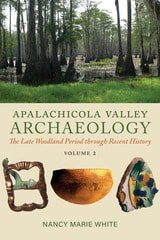
Apalachicola Valley Archaeology, Volume 2
The Late Woodland Period through Recent HistoryNancy Marie White
University of Alabama Press, 0
A comprehensive synthesis tracing 1,300 years of cultural transformation in the Apalachicola–lower Chattahoochee Valley, from Late Woodland societies to the modern era.
Apalachicola Valley Archaeology: The Late Woodland Period through Recent History, Volume 2, synthesizes the archaeology and history of the Native Americans, African Americans, and Euro-Americans of the Apalachicola–lower Chattahoochee Valley region of northwest Florida, southeast Alabama, and southwest Georgia from about 1300 years ago until the present. The region extends from Columbia, Alabama, to the Gulf of Mexico. It is culturally and environmentally distinct but little known archaeologically because it crosses historic political boundaries at the frontier.
Early chapters overview the environment and archaeology. Coverage then surveys time periods, from the Late Woodland to present. Topics include settlement, archaeological findings and material culture, subsistence and seasonality, history, sociopolitical systems, and peoples.
White’s prodigious work reveals that the prehistoric Late Woodland cultures who developed maize agriculture developed into Fort Walton chiefdoms. Post-invasion and Spanish and British colonization, these peoples were replaced by consolidated groups of Native American survivors and maroons moving around the region. These multiethnic societies with blended material cultures developed new identities, living at the edges of colonial territories. Creek societies, many becoming Seminoles, fought on all sides of European and American conflicts until most Indians were forcibly removed in the 1830s. Then the region became important for cotton, cattle, and timber, which were often produced by enslaved labor and transported by steamboat. Later expansion of agriculture and silviculture, as well as turpentine, tupelo honey, and other industries, left material evidence. The usefulness of the information to modern society is noted. Copious illustrations enhance the scientific analyses and the telling of the human stories.
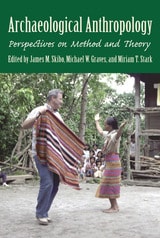
Archaeological Anthropology
Perspectives on Method and TheoryEdited by James M. Skibo, Michael W. Graves, and Miriam T. Stark
University of Arizona Press, 2014
In this collection of twelve new chapters, four generations of Longacre protégés show how they are building upon and developing but also modifying the theoretical paradigm that remains at the core of Americanist archaeology. The contributions focus on six themes prominent in Longacre’s career: the intellectual history of the field in the late twentieth century, archaeological methodology, analogical inference, ethnoarchaeology, cultural evolution, and reconstructing ancient society.
More than a comprehensive overview of the ideas developed by one of the most influential scholars in the field, however, Archaeological Anthropology makes stimulating contributions to contemporary research. The contributors do not unequivocally endorse Longacre’s ideas; they challenge them and expand beyond them, making this volume a fitting tribute to a man whose robust research and teaching career continues to resonate.
Archaeological Concepts for the Study of the Cultural Past
Alan P Sullivan III
University of Utah Press, 2008
By using the theoretical tension that has arisen between archaeology and cultural anthropology, the contributors illustrate the effectiveness of concepts and methods that have little, if any, overlap with those of the mother discipline.
Archaeological Concepts for the Study of the Cultural Past examines the degree to which the historically close relationship between archaeology and cultural anthropology may actually have inhibited archaeological investigations—particularly of those aspects of the cultural past that may be ethnographically undocumented or incompletely described.
Archaeological Explorations in Caves of the Point of Pines Region, Arizona
James C. Gifford
University of Arizona Press, 1980
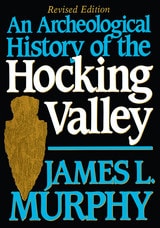
Archaeological History Hocking Valley
James L. Murphy
Ohio University Press, 1989
Never before available in paperback, this new edition also reveals Murphy’s original findings during 15 years of archeological surveys and excavations. This book includes detailed reports on the excavation of three Adena mounds, two Fort Ancient village sites, and several multi-component rock shelters.
A deliberate effort to present archeological finds of interest to both the professional archeologist and the layman in terms understandable to both has been coupled with an attempt to distinguish clearly between the presentation of facts and the presentation of opinion. The book is enhanced by illustrations of much of the artifact material analyzed in the text, site diagrams, and a map locating all major known archeological sites in the Hocking Valley, and an appendix locating and describing all sites discussed in the text.
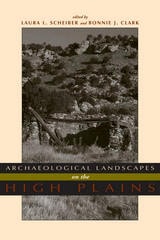
Archaeological Landscapes on the High Plains
Laura L. Scheiber
University Press of Colorado, 2008
Focusing on long-term change, this book considers ethnographic literature, archaeological evidence, and environmental data spanning thousands of years of human presence to understand human perception and construction of landscape. The contributors offer cohesive and synthetic studies emphasizing hunter-gatherers and subsistence farmers.
Using landscape as both reality and metaphor, Archaeological Landscapes on the High Plains explores the different and changing ways that people interacted with place in this transitional zone between the Rocky Mountains and the eastern prairies.
The contemporary archaeologists working in this small area have chosen diverse approaches to understand the past and its relationship to the present. Through these ten case studies, this variety is highlighted but leads to a common theme - that the High Plains contains important locales to which people, over generations or millennia, return. Providing both data and theory on a region that has not previously received much attention from archaeologists, especially compared with other regions in North America, this volume is a welcome addition to the literature. Contributors:
o Paul Burnett
o Oskar Burger
o Minette C. Church
o Philip Duke
o Kevin Gilmore
o Eileen Johnson
o Mark D. Mitchell
o Michael R. Peterson
o Lawrence Todd
Archaeological Narratives of the North American Great Plains
From Ancient Pasts to Historic ResettlementSarah J. Trabert
University Press of Colorado, 2021
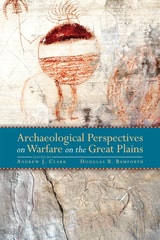
Archaeological Perspectives on Warfare on the Great Plains
Andrew Clark
University Press of Colorado, 2018
The Great Plains has been central to academic and popular visions of Native American warfare, largely because the region’s well-documented violence was so central to the expansion of Euroamerican settlement. However, social violence has deep roots on the Plains beyond this post-Contact perception, and these roots have not been systematically examined through archaeology before. War was part, and perhaps an important part, of the process of ethnogenesis that helped to define tribal societies in the region, and it affected many other aspects of human lives there. In Archaeological Perspectives on Warfare on the Great Plains, anthropologists who study sites across the Plains critically examine regional themes of warfare from pre-Contact and post-Contact periods and assess how war shaped human societies of the region.
Contributors to this volume offer a bird’s-eye view of warfare on the Great Plains, consider artistic evidence of the role of war in the lives of indigenous hunter-gatherers on the Plains prior to and during the period of Euroamerican expansion, provide archaeological discussions of fortification design and its implications, and offer archaeological and other information on the larger implications of war in human history. Bringing together research from across the region, this volume provides unprecedented evidence of the effects of war on tribal societies. Archaeological Perspectives on Warfare on the Great Plains is a valuable primer for regional warfare studies and the archaeology of the Great Plains as a whole.
Contributors: Peter Bleed, Richard R. Drass, David H. Dye, John Greer, Mavis Greer, Eric Hollinger, Ashley Kendell, James D. Keyser, Albert M. LeBeau III, Mark D. Mitchell, Stephen M. Perkins, Bryon Schroeder, Douglas Scott, Linea Sundstrom, Susan C. Vehik
Archaeological Remote Sensing in North America
Innovative Techniques for Anthropological ApplicationsEdited by Duncan P. McKinnon and Bryan S. Haley
University of Alabama Press, 2017
Updating the highly praised 2006 publication Remote Sensing in Archaeology, edited by Jay K. Johnson, Archaeological Remote Sensing in North America: Innovative Techniques for Anthropological Applications is a must-have volume for today’s archaeologist. Targeted to practitioners of archaeological remote sensing as well as students, this suite of current and exemplary applications adheres to high standards for methodology, processing, presentation, and interpretation.
The use of remote sensing technologies to address academic and applied archaeological and anthropological research problems is growing at a tremendous rate in North America. Fueling this growth are new research paradigms using innovative instrumentation technologies and broader-area data collection methods. Increasingly, investigators pursuing these new approaches are integrating remote sensing data collection with theory-based interpretations to address anthropological questions within larger research programs.
In this indispensable volume, case studies from around the country demonstrate the technically diverse and major remote sensing methods and their integration with relevant technologies, such as geographic information systems (GIS) and global positioning systems (GPS), and include various uses of the “big four”: magnetometry, resistivity, ground-penetrating radar (GPR), and electromagnetic induction.
The study explores four major anthropological themes: site structure and community organization; technological transformation and economic change; archaeological landscapes; and earthen mound construction and composition. Concluding commentary from renowned expert Kenneth L. Kvamme overviews the practices, advances, and trends of geophysics and remote sensing in the past decade.
Archaeological Salvage in the Walter F. George Basin of the Chattahoochee River in Alabama
David DeJarnette
University of Alabama Press, 2010
David L. DeJarnette, the founder of scientific archaeology in the state of Alabama, reports on archaeological surveys and excavations undertaken in the Chattahoochee River Valley between 1947 and 1962. The three contributors, Wesley R. Hurt, Edward B. Kurjack, and Fred Lamar Pearson Jr., each made signal contributions to the archaeology of the southeastern states. With their mentor, David L. DeJarnette, they worked out a viable cultural chronology of the region from the earliest Paleoindian and Archaic foragers to the period of early European-Indian contact. They excavated key sites, including the Woodland period Shorter Mound, the protohistoric Abercrombie village, and Spanish Fort Apalachicola, in addition to a number of important Creek Indian town sites of the eighteenth century. All are here, illustrated abundantly by site photographs, maps, and of course, the artifacts recovered from these remarkable investigations.
Copublication with the Historic Chattahoochee Commission
Archaeological Survey in the Lower Mississippi Alluvial Valley, 1940–1947
Philip Phillips, James A. Ford, and James B. Griffin; edited and with a new introduction by Stephen Williams
University of Alabama Press, 2003
A Dan Josselyn Memorial Publication
The Lower Mississippi Survey was initiated in 1939 as a joint undertaking of three institutions: the School of Geology at Louisiana State University, the Museum of Anthropology at the University of Michigan, and the Peabody Museum at Harvard. Fieldwork began in 1940 but was halted during the war years. When fieldwork resumed in 1946, James Ford had joined the American Museum of Natural History, which assumed co-sponsorship from LSU. The purpose of the Lower Mississippi Survey (LMS)—a term used to identify both the fieldwork and the resultant volume—was to investigate the northern two-thirds of the alluvial valley of the lower Mississippi River, roughly from the mouth of the Ohio River to Vicksburg. This area covers about 350 miles and had been long regarded as one of the principal hot spots in eastern North American archaeology.
Phillips, Ford, and Griffin surveyed over 12,000 square miles, identified 382 archaeological sites, and analyzed over 350,000 potsherds in order to define ceramic typologies and establish a number of cultural periods. The commitment of these scholars to developing a coherent understanding of the archaeology of the area, as well as their mutual respect for one another, enabled the publication of what is now commonly considered the bible of southeastern archaeology. Originally published in 1951 as volume 25 of the Papers of the Peabody Museum of American Archaeology and Ethnology, this work has been long out of print.
Because Stephen Williams served for 35 years as director of the LMS at Harvard, succeeding Phillips, and was closely associated with the authors during their lifetimes, his new introduction offers a broad overview of the work’s influence and value, placing it in a contemporary context.
Archaeology As Anthropology
A Case StudyWilliam A. Longacre
University of Arizona Press, 1970
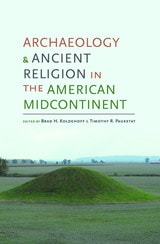
Archaeology and Ancient Religion in the American Midcontinent
Edited by Brad H. Koldehoff and Timothy R. Pauketat
University of Alabama Press, 2019
Across North America, huge data accumulations derived from decades of cultural resource management studies, combined with old museum collections, provide archaeologists with unparalleled opportunities to explore new questions about the lives of ancient native peoples. For many years the topics of technology, economy, and political organization have received the most research attention, while ritual, religion, and symbolic expression have largely been ignored. This was often the case because researchers considered such topics beyond reach of their methods and data.
In Archaeology and Ancient Religion in the American Midcontinent, editors Brad H. Koldehoff and Timothy R. Pauketat and their contributors demonstrate that this notion is outdated through their analyses of a series of large datasets from the midcontinent, ranging from tiny charred seeds to the cosmic alignments of mounds, they consider new questions about the religious practices and lives of native peoples. At the core of this volume are case studies that explore religious practices from the Cahokia area and surrounding Illinois uplands. Additional chapters explore these topics using data collected from sites and landscapes scattered along the Mississippi and Ohio River valleys.
This innovative work facilitates a greater appreciation for, and understanding of, ancient native religious practices, especially their seamless connections to everyday life and livelihood. The contributors do not advocate for a reduced emphasis on technology, economy, and political organization; rather, they recommend expanding the scope of such studies to include considerations of how religious practices shaped the locations of sites, the character of artifacts, and the content and arrangement of sites and features. They also highlight analytical approaches that are applicable to archaeological datasets from across the Americas and beyond.
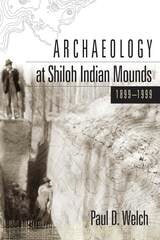
Archaeology at Shiloh Indian Mounds, 1899-1999
Paul D. Welch
University of Alabama Press, 2006
The Shiloh Indian Mounds archaeological site, a National Historic Landmark, is a late prehistoric community within the boundaries of the Shiloh National Military Park on the banks of the Tennessee River, where one of the bloodiest battles of the Civil War was fought in April 1862. Dating between AD 1000 and 1450, the archaeological site includes at least eight mounds and more than 100 houses. It is unique in that the land has never been plowed, so visitors can walk around the area and find the collapsed remains of 800-year-old houses and the 900-meter-long palisade with bastions that protected the village in prehistoric times. Although its location within a National Park boundary has protected the area from the recent ravages of man, riverbank erosion began to undermine the site in the 1970s. In the mid-1990s, Paul Welch began a four-year investigation culminating in a comprehensive report to the National Park Service on the Shiloh Indian Mounds.
These published findings confirm that the Shiloh site was one of at least fourteen Mississippian mound sites located within a 50 km area and that Shiloh was abandoned in approximately AD 1450. It also establishes other parameters for the Shiloh archaeological phase. This current volume is intended to make information about the first 100 years of excavations at the Shiloh site available to the archaeological community.
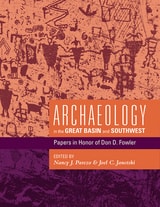
Archaeology in the Great Basin and Southwest
Papers in Honor of Don D. FowlerNancy J. Parezo
University of Utah Press, 2014
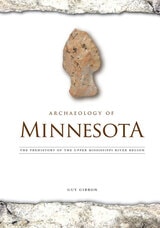
Archaeology of Minnesota
The Prehistory of the Upper Mississippi River RegionGuy Gibbon
University of Minnesota Press, 2012
Histories of Minnesota typically begin with seventeenth-century French fur traders exploring the western shores of Lake Superior. And yet, archaeology reveals that Native Americans lived in the region at least 13,000 years before such European incursions. Archaeology of Minnesota tells their story—or as much as the region’s wealth of artifacts, evidence of human activity, and animal and plant remains can convey.
From archaeological materials, Guy Gibbon reconstructs the social, economic, and political systems—the lifeways—of those who inhabited what we now call Minnesota for thousands of years before the first contact between native peoples and Europeans. From the boreal coniferous forests to the north, to the tall grass prairie to the west and southwest, to the deciduous forest to the east and southeast, the richly diverse land of the upper Mississippi River region, crossed and bordered by all manner of waterways, was a virtual melting pot of prehistoric cultures.
Demonstrating how native cultures adapted and evolved over time, Gibbon provides an explanation that is firmly rooted in the nature of local environments. In doing so, he shows how the study of Minnesota archaeology is relevant to a broader understanding of long-term patterns of change in human development throughout the world.

Archaeology of North Pacific Fisheries
Edited by Madonna L. Moss and Aubrey Cannon
University of Alaska Press, 2011
For thousands of years, fisheries were crucial to the sustenance of the First Peoples of the Pacific Coast. Yet human impact has left us with a woefully incomplete understanding of their histories prior to the industrial era. Covering Alaska, British Columbia, and Puget Sound, The Archaeology of North Pacific Fisheries illustrates how the archaeological record reveals new information about ancient ways of life and the histories of key species. Individual chapters cover salmon, as well as a number of lesser-known species abundant in archaeological sites, including pacific cod, herring, rockfish, eulachon, and hake. In turn, this ecological history informs suggestions for sustainable fishing in today’s rapidly changing environment.