Results by title
622 books match the query 'Language Study' and 96 start with a
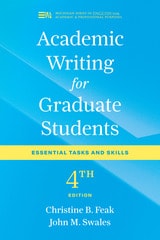
Academic Writing for Graduate Students
Essential Tasks and SkillsChristine B. Feak and John M. Swales
University of Michigan Press, 2027
For decades, Academic Writing for Graduate Students has introduced writers to the skills they need for successful academic writing. Now covering academic writing across an even broader range of disciplines, the new edition focuses on recurring rhetorical patterns found in academic texts and on the ways writers consider their audience, purpose, and disciplinary expectations as they make choices.
The book brings together short readings from published, student, and pedagogically-constructed texts with guided tasks to analyze how texts are organized and how claims are presented and supported. The first four units prepare students for academic writing while the following four units dive into genre-specific activities, such as the writing of summaries, critiques, and different research article sections. Throughout the book, readers will develop their rhetorical consciousness to see how strategic writing choices contribute to author positioning.
In Academic Writing for Graduate Students, 4th Edition, students will:
- Analyze real student writing for information flow, citation patterns, and authorial stance
- Learn to recognize different rhetorical patterns, such as cause and effect
- Engage with different types of writing, such as summaries, critiques, data commentary, book reviews, and research articles
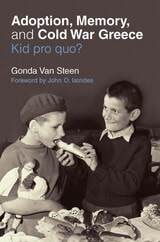
Adoption, Memory, and Cold War Greece
Kid pro quo?Gonda Van Steen
University of Michigan Press, 2019
This book presents a committed quest to unravel and document the postwar adoption networks that placed more than 3,000 Greek children in the United States, in a movement accelerated by the aftermath of the Greek Civil War and by the new conditions of the global Cold War. Greek-to-American adoptions and, regrettably, also their transactions and transgressions, provided the blueprint for the first large-scale international adoptions, well before these became a mass phenomenon typically associated with Asian children. The story of these Greek postwar and Cold War adoptions, whose procedures ranged from legal to highly irregular, has never been told or analyzed before. Adoption, Memory, and Cold War Greece answers the important questions: How did these adoptions from Greece happen? Was there any money involved? Humanitarian rescue or kid pro quo? Or both? With sympathy and perseverance, Gonda Van Steen has filled a decades-long gap in our understanding, and provided essential information to the hundreds of adoptees and their descendants whose lives are still affected today.
Advanced Standard Arabic through Authentic Texts and Audiovisual Materials
Part One, Textual MaterialsRaji M. Rammuny
University of Michigan Press, 1994
Advanced Standard Arabic through Authentic Texts and Audiovisual Materials
Part Two, Audiovisual MaterialsRaji M. Rammuny
University of Michigan Press, 1994
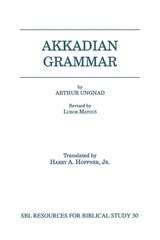
Akkadian Grammar
Arthur Ungnad
SBL Press, 1992
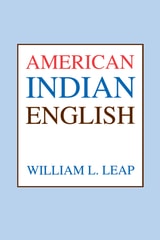
American Indian English
William L Leap
University of Utah Press, 1993
A distillation of over twenty years’ experience, William Leap’s pioneering work on the varieties of American Indian English explores the linguistic and sociolinguistic characteristics of language use among Navajo, Hopi, Mojave, Ute, Tsimshian, Kotzebue, Ponca, Chilcotin, Seminole, Cherokee, and other American Indian tribes.
Unlike contemporary studies on schooling, ethnicity, empowerment, and educational failure, American Indian English avoids postmodernist jargon and discourse strategies in favor of direct description and commentary. Data are derived from real-life conditions faced by speakers of Indian English in various English-speaking settings. This practical focus enhances the book’s accessibility to Indian educators and community-based teachers, as well as non-Indian academics.

American Legal English, 2nd Edition, Supplemental Audiofiles
Using Language in Legal ContextsDebra S. Lee, J.D., Charles Hall, Susan Barone
University of Michigan Press, 2012
This product contains the supplemental listening activities (21 tracks) to support the textbook American Legal English (978-0-472-03206-0), and are available via MP3 download. Running time: 000:36:43.
The American Legal English products were developed to help non-native speakers improve their ability to understand and communicate in English with their legal counterparts around the world. The text is an introduction to basic legal information and the U.S. legal system that addresses the major areas of law and provides actual cases and statutes so that students can become familiar with legal syntax and legal vocabulary.
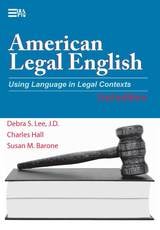
American Legal English, 2nd Edition
Using Language in Legal ContextsDebra S. Lee, J.D., Charles Hall, and Susan M. Barone
University of Michigan Press, 2012
Law is a profession that requires the ability to read critically, write well, synthesize sources from research, and speak concisely and clearly. American Legal English was developed to help non-native speakers improve their ability to understand and communicate in English with their legal counterparts around the world. The text is an introduction to basic legal information and the U.S. legal system that addresses the major areas of law and provides actual cases and statutes so that students can become familiar with legal syntax and legal vocabulary.
Each chapter addresses a particular area of the law and has three parts:
- Discovering Connections is a warm-up activity that focuses on non-legal concepts that lead into a discussion of the law.
- Legal Listening and Legally Speaking offer the opportunity to practice new vocabulary terms before they are used in context later in the chapter.
- Legal Thumbnail provides a simplified summary of the law with actual statutory and case materials.
In the second edition, the language development activities have been moved to the back of the book and are organized in the categories of writing, reading, oral communication, grammar, and culture.
Supplemental listening activities (21 tracks) are available via an audio CD (978-0-472-00325-9) or MP3 download (978-0-472-00360-0) is available for use in conjunction with this textbook. Running time: 000:40:02.
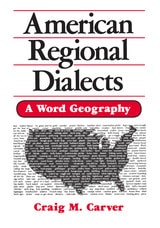
American Regional Dialects
A Word GeographyCraig M. Carver
University of Michigan Press, 1987
American Sign Language Green Books, A Teacher's Resource Text on Curriculum, Methods, and Evaluation
Charlotte Baker-Shenk
Gallaudet University Press, 1980
American Sign Language Green Books, A Teacher's Resource Text on Grammar and Culture
Charlotte Baker-Shenk
Gallaudet University Press, 1991
An A to W of Academic Literacy
Key Concepts and Practices for Graduate StudentsMary Jane Curry, Fangzhi He, Weijia Li, Ting Zhang, Yanhong Zuo, Mahmoud Altalouli, and Jihan Ayesh
University of Michigan Press, 2021
The guide includes 65 common academic literacy terms and explores how they relate to genres, writing conventions, and language use. Each entry briefly defines the term, identifies variations and tensions about its use across disciplines, provides examples, and includes reflection questions. An appendix lists further readings for each entry.
Unique to this volume are comments featuring the experiences of the graduate students who wrote the entries, comments that bring each entry to life and build a bridge to graduate student readers.
An Answer Key to 'A Primer of Ecclesiastical Latin'
John R. Dunlap
Catholic University of America Press, 2006
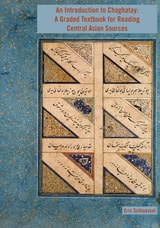
An Introduction to Chaghatay
A Graded Textbook for Reading Central Asian SourcesEric Schluessel
Michigan Publishing Services, 2018
An Introduction to Chaghatay is the first textbook in over a century to introduce this language to English-speaking students. This book is designed to build a foundation in reading Chaghatay without assuming any background knowledge on the part of the reader. These graded, cumulative lessons include common vocabulary, accessible grammar explanations, and examples of Chaghatay manuscripts. Authentic texts introduce the student to different genres, including hagiographies, documents, “stories of the prophets,” and newspapers while introducing critical skills in paleography.
Eric Schluessel is Assistant Professor of Chinese History and Politics at the University of Montana. He holds a PhD in History and East Asian Languages from Harvard University, an MA in Linguistics from the School of Oriental and African Studies, and an MA in Central Eurasian Studies from Indiana University. He is the author of several articles on the history of Chinese Central Asia and is currently preparing a critical edition and translation of Mullah Musa Sayrami’s Tarikh-i Hamidi, a chronicle of Xinjiang in the nineteenth century.
An Introduction to the Indo-European Languages
Philip Baldi
Southern Illinois University Press, 1983
This comprehensive linguistic survey of the Indo-European groups synthesizes the vast amount of information contained in the specialized handbooks of the individual stocks.
The text begins with an introduction to the concept of the Indo-European language family, the history of its discovery, and the techniques of analysis. The introduction also gives a structural sketch of Proto-Indo-European, the parent language from which the others are descended. Baldi then devotes a chapter to each of the 11 major branches of Indo-European (Italic, Celtic, Indo-Iranian, Greek, Armenian, Albanian, Baltic, Slavic, Germanic, Tocharian, and Anatolian).
Each chapter provides an outline of the external history of the branch, its people, dialects, and other relevant history. This outline is followed by a structural sketch of the most important language or languages of the branch (e.g., Old Irish for Celtic, Sanskrit and Avestan for Indo-Iranian, Latin and Osco-Umbrian for Italic). The sketch also contains the phonology, morphology, and syntax of each language. There is lastly a sample text of each language containing both interlinear and free translation. In those branches where there are special issues (e.g., the relation of Italic to Celtic and Baltic to Slavic, or the problem of archaism in Hittite), additional discussions of these issues are provided. Baldi’s final chapter gives a brief outline of the “minor” Indo-European languages such as Illyrian, Thracian, Raetic, and Phrygian. Adding further to the usefulness of the book are extensive bibliographies, an up-to-date map showing the geographical distribution of the Indo-European languages throughout the world, and a detailed family tree diagram of the members of each subgroup within the Indo-European language family and their interrelationships.
An Introduction to the Shoshoni Language
Dammen DaigwapeDrusilla Gould
University of Utah Press, 2003
Listen to the open source audio companion to this book:
An Introduction to the Shoshoni Language Chapter 1
An Introduction to the Shoshoni Language Chapter 2
An Introduction to the Shoshoni Language Chapter 3
An Introduction to the Shoshoni Language Chapter 4
An Introduction to the Shoshoni Language Chapter 5
An Introduction to the Shoshoni Language Chapter 6
An Introduction to the Shoshoni Language Chapter 7
An Introduction to the Shoshoni Language Chapter 8
An Introduction to the Study of Medieval Latin Versification
Dag Norberg
Catholic University of America Press, 2004
An Introductory New Testament Greek Course, Revised Edition
Francis T. Gignac, SJ
Catholic University of America Press, 2015
Answer Key for Grammar Choices for Graduate and Professional Writers, Second Edition
Nigel A. Caplan
University of Michigan Press, 2019
Arabic Sounds and Letters
A Beginning Programmed Course. Textbook and ManualRaji M. Rammuny
University of Michigan Press, 2006
The textbook includes twenty lessons aimed at introducing Arabic sounds and writing system in a programmed method of instruction, supported by images and audio tapes*. The Manual consists of two parts. Part One includes a suggested methodology to guide teachers and students and Part Two contains basic communication needs in both Arabic script and transliteration to create a climate of enjoyable learning while students are acquiring the sounds and letters.
Raji M. Rammuny is Professor of Arabic Studies, Department of Near Eastern Studies, University of Michigan. He is the author of numerous books, including Advanced Standard Arabic through Authentic Texts and Audiovisual Materials, Parts 1 and 2, also published by the University of Michigan Press.
*The CD accompanying Arabic Sounds and Letters can be obtained from the UM Language Resource Center. Contact them by email at flacs@umich.edu or by phone at 734-764-3521.
Arapaho Historical Traditions
Hinono'einoo3itoonoAlonzo Moss, Sr.
University of Manitoba Press, 2005
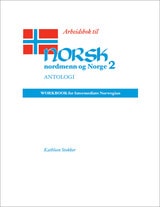
Arbeidsbok til Norsk, nordmenn og Norge 2, Antologi
Workbook for Intermediate NorwegianKathleen Stokker
University of Wisconsin Press, 1993
Toward these ends, the workbook features:
•an extensive overview of the basics of Norwegian grammar, providing a ready reference throughout the course
•a thorough review of elementary Norwegian vocabulary and grammar, allowing students whose preparation in the language differs to share a common knowledge base
•Hvem er du? sections that encourage the learner to personalize the material
•Litt av hvert sections that provide short summaries of the anthology’s reading passages (lesestykker) while reviewing common problems with vocabulary and grammar
•crossword puzzles and cartoons.
Norsk, nordmenn og Norge: Arbeidsbok (Workbook) is a companion to the Norsk, nordmenn og Norge: Antologi (Anthology) and Lærerveiledning (Teacher’s Manual).
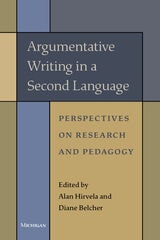
Argumentative Writing in a Second Language
Perspectives on Research and PedagogyAlan R. Hirvela and Diane D. Belcher
University of Michigan Press, 2021
Part I of the volume is topic-oriented and focuses on explorations of important issues and perspectives, while Part II features several chapters reporting classroom-based studies of a variety of instructional approaches that expand our understanding of how argumentative writing can be taught. The book will be of value to pre-service and in-service teachers in varying instructional contexts, as well as teacher educators and L2 writing scholars/researchers.
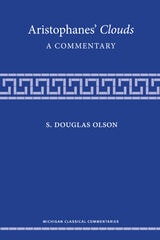
Aristophanes' Clouds
A CommentaryS. Douglas Olson
University of Michigan Press, 2021
This is the first substantial commentary on Clouds since Dover’s 1968 edition. Intended for intermediate Greek students at undergraduate and graduate levels, the commentary pays careful attention to the basic characteristics of ancient Greek syntax, as well as to how Greek words are formed and can be analyzed. It offers robust staging notes, information about daily life in late 5th-century Athens, and constant reference to the rhetorical and dramatic strategies of the text. Full support is offered for those interested in the metrical structure of the songs, but in a way that allows instructors to leave such issues aside, should they choose to do so. The first and second appendices offer a basic means of entry into the rich but complex world of the comic fragments. An English-language bibliography is provided. The edition will interest professional classicists of all sorts seeking an accessible introduction to one of Aristophanes’ greatest plays, to philosophers concerned with Socrates and the sophistic movement, and to theater professionals who wish to stage the play.
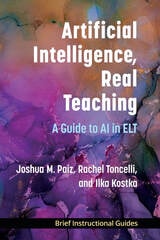
Artificial Intelligence, Real Teaching
A Guide to AI in ELTJoshua M. Paiz, Rachel Toncelli, and Ilka Kostka
University of Michigan Press, 2025
Aspects of Article Introductions, Michigan Classics Ed.
John M. Swales
University of Michigan Press, 2011
Aspects of Article Introductions has bee reissued to make it more easily available than it has ever been, particularly for the use of university libraries and for younger and newer practitioners and researchers in the rapidly expanding and increasingly global field of EAP.
The original Aspects of Article Introductions appeared in fall 1981 as a ring-bound 90-page monograph. The “publisher” was the Language Studies Unit at the University of Aston in Birmingham. Although essentially an “underground” work, it has remained a relevant part of the short intellectual history of English for Academic Purposes, particularly as genre-based or genre-driven approaches to EAP research and pedagogical practice have become more popular. Its longevity is also a testament to the genre analysis work of John Swales, but in addition, the research article has become the most influential genre in most areas of scholarship, and introductions are at least supposed to be read first and to be designed in such a way as to attract as large readership as possible.
“If I were asked to list the most influential texts in applied linguistics over the last 30 years, John Swales' Aspects of Article Introductions would be in the top three or four. This was a seminal work which not only presented a novel way of analysing texts and a commentary on academic discourse, but one which helped to establish a foundation for the massive interest we see today in describing the structure and features of academic articles. This is not just a text which offers us a glimpse of an intellectual history, but it remains full of fascinating insights and observations about texts and the workings of academic discourse. While the ideas may have evolved and the genre it describes moved on, both the style of writing and the methodology it describes are as fresh and as revealing as anything written on the topic since.” ---Ken Hyland, Hong Kong University
Assessing English Language Learners in the Content Areas
A Research-into-Practice Guide for EducatorsFlorin M. Mihai
University of Michigan Press, 2010
Assessing English Language Learners in the Content Areas: A Research-into-Practice Guide for Educators seeks to provide guidance to classroom teachers, staff developers, and test-item designers who want to improve ELL assessment outcomes, particularly in the areas of math, science and social studies. The first two chapters of the book establish the background for the discussion of content-area assessment for ELLs, examining several important characteristics of this rapidly growing student population (as well as critical legislation affecting ELLs) and providing a description of various forms of assessment, including how ELL assessment is different from the assessment of English-proficient students. Important assessment principles that educators should use in their evaluation of tests or other forms of measurement are provided.
Other chapters review ELL test accommodations nationwide (because, surprisingly, most teachers do not know what they can and cannot allow) and the research on the effectiveness of these types of accommodations. The book analyzes the characteristics of alternative assessment; it discusses three popular alternative assessment instruments (performance assessment, curriculum-based measurement, and portfolios) and makes recommendations as to how to increase the validity, reliability, and practicality of alternative assessments. The book proposes fundamental assessment practices to help content area teachers in their evaluation of their ELL progress.
Assessing English Learners in the Content Areas, Second Edition
A Research-into-Practice Guide for EducatorsFlorin M. Mihai
University of Michigan Press, 2017
Significant modifications in education legislation since the publication of the first edition have necessitated this new volume, which includes updated EL demographics as they relate to the Common Core Standards and Every Student Succeeds Act and revised state-by-state test accommodation information. New to this edition is information about the assessment of language arts (in addition to math, science, and social studies). The Second Edition also features new research-based recommendations for large-scale and classroom-based assessments.
Like the previous edition, the first two chapters of the book establish the background for the discussion of content-area assessment for ELs, examining several important characteristics of this rapidly growing student population and providing a description of various forms of assessment, including how EL assessment is different from the assessment of English-proficient students. Important assessment principles that educators should use in their evaluation of tests or other forms of measurement are provided.
Other chapters review EL test accommodations nationwide (because, surprisingly, most teachers do not know what they can and cannot allow) and the research on the effectiveness of these types of accommodations. The book analyzes the characteristics of alternative assessment and makes recommendations as to how to increase the validity, reliability, and practicality of alternative assessments. The book proposes fundamental assessment practices to help content area teachers in their evaluation of their students’ progress. Two extensive appendixes outline TESOL Proficiency Standards and academic vocabulary for the content areas.
Assessing Writing, Assessing Learning
A Practical Guide for Evaluating and Reporting on Writing Instruction ProgramsDudley W. Reynolds
University of Michigan Press, 2010
The goals of this resource are broader than many standard books on writing assessment, which focus on evaluating an individual’s ability to create an effective piece of writing for a particular purpose. Assessing Writing, Assessing Learning seeks to support teachers, administrators, program directors, and funding entities who want to make the best use of the resources at their disposal to understand what students are learning and why and then take actions based on what they have learned. It also seeks to provide a common basis for communication among all the interested parties—the writing professionals, the people who identified the need for the program, and the students.
The book has sections on planning, tools (different ways of collecting data and links to instruments), and reporting (examples provided). Each section includes a discussion of issues and advice for working through the issue along with numerous examples, plus a list of resources to consult to learn more. The final chapter provides worksheets that may be reproduced and used to help those in charge of setting up and delivering a writing program to think through the issues presented. A glossary of terms is also included.
Assessment Myths
Applying Second Language Research to Classroom TeachingLia Plakans and Atta Gebril
University of Michigan Press, 2015
The book opens with an introduction that reviews many key assessment terms and concepts.
The myths examined in this book are:
- Assessment is just writing tests and using statistics.
- A comprehensive final exam is the best way to evaluate students.
- Scores on performance assessments are preferable because of their accuracy and authenticity.
- Multiple choice tests are inaccurate measures of language but are easy to write.
- We should test only one skill at a time.
- A test’s validity can be determined by looking at it.
- Issues of fairness are not a concern with standardized testing.
- Teachers should never be involved in preparing students for tests.
Assessment in the Second Language Writing Classroom
Deborah Crusan
University of Michigan Press, 2010
Assessment in the Second Language Writing Classroom is a teacher and prospective teacher-friendly book, uncomplicated by the language of statistics. The book is for those who teach and assess second language writing in several different contexts: the IEP, the developmental writing classroom, and the sheltered composition classroom. In addition, teachers who experience a mixed population or teach cross-cultural composition will find the book a valuable resource. Other books have thoroughly covered the theoretical aspects of writing assessment, but none have focused as heavily as this book does on pragmatic classroom aspects of writing assessment. Further, no book to date has included an in-depth examination of the machine scoring of writing and its effects on second language writers.
Crusan not only makes a compelling case for becoming knowledgeable about L2 writing assessment but offers the means to do so. Her highly accessible, thought-provoking presentation of the conceptual and practical dimensions of writing assessment, both for the classroom and on a larger scale, promises to engage readers who have previously found the technical detail of other works on assessment off-putting, as well as those who have had no previous exposure to the study of assessment at all.
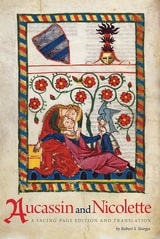
Aucassin and Nicolette
A Facing-Page Edition and TranslationRobert S. Sturges
Michigan State University Press, 2015
Audio Companion to Norsk, nordmenn og Norge 1 [DOWNLOADABLE MP3]
Beginning NorwegianLouis E. Janus
University of Wisconsin Press, 1981
Audio Companion to Norsk, nordmenn og Norge 1 is the audio component designed to complement the textbook and workbook of the beginning Norwegian language series Norsk, nordmenn og Norge 1. The audio companion supplements the language textbook, Norsk, nordmenn og Norge 1, by Kathleen Stokker and Odd Haddal, by featuring listening exercises tied to each chapter of the textbook. The audio companion also contains listening exercises and dictations related to each chapter of the beginning Norwegian language workbook Workbook for Norsk, nordmenn og Norge 1 by Louis E. Janus. The final four tracks of the audio companion are dedicated to pronunciation exercises covered in the workbook.
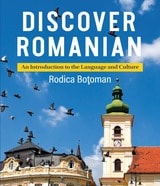
Audio Files to Accompany Discover Romanian, Chapters 1 and 2
Rodica Botoman
The Ohio State University Press, 1994
This comprehensive introduction to Romanian for English-speaking students emphasizes communication with a complete treatment of grammar, an extensive vocabulary, and a focus on the four major language skills—listening, speaking, reading, and writing. Cultural information, an integral part of the textbook, is presented both formally, in sections on culture and civilization, and informally, as the setting for dialogues and exercises. Tables of verb conjugations and a glossary round out the book’s primary materials.
Straightforward and accessible, Discover Romanian is an essential textbook for all those teaching and learning the language and provides important information for those seeking to understand Romanian culture. Together with the accompanying audio files and workbook, it provides a complete language course.
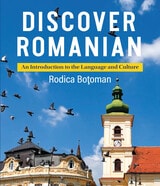
Audio Files to Accompany Discover Romanian, Chapters 11 and 12
Rodica Botoman
The Ohio State University Press, 1994
This comprehensive introduction to Romanian for English-speaking students emphasizes communication with a complete treatment of grammar, an extensive vocabulary, and a focus on the four major language skills—listening, speaking, reading, and writing. Cultural information, an integral part of the textbook, is presented both formally, in sections on culture and civilization, and informally, as the setting for dialogues and exercises. Tables of verb conjugations and a glossary round out the book’s primary materials.
Straightforward and accessible, Discover Romanian is an essential textbook for all those teaching and learning the language and provides important information for those seeking to understand Romanian culture. Together with the accompanying audio files and workbook, it provides a complete language course.
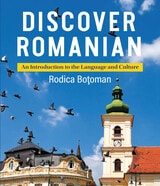
Audio Files to Accompany Discover Romanian, Chapters 13 and 14
Rodica Botoman
The Ohio State University Press, 1994
This comprehensive introduction to Romanian for English-speaking students emphasizes communication with a complete treatment of grammar, an extensive vocabulary, and a focus on the four major language skills—listening, speaking, reading, and writing. Cultural information, an integral part of the textbook, is presented both formally, in sections on culture and civilization, and informally, as the setting for dialogues and exercises. Tables of verb conjugations and a glossary round out the book’s primary materials.
Straightforward and accessible, Discover Romanian is an essential textbook for all those teaching and learning the language and provides important information for those seeking to understand Romanian culture. Together with the accompanying audio files and workbook, it provides a complete language course.
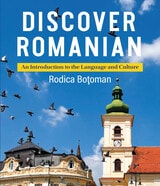
Audio Files to Accompany Discover Romanian, Chapters 15 and 16
Rodica Botoman
The Ohio State University Press, 1994
This comprehensive introduction to Romanian for English-speaking students emphasizes communication with a complete treatment of grammar, an extensive vocabulary, and a focus on the four major language skills—listening, speaking, reading, and writing. Cultural information, an integral part of the textbook, is presented both formally, in sections on culture and civilization, and informally, as the setting for dialogues and exercises. Tables of verb conjugations and a glossary round out the book’s primary materials.
Straightforward and accessible, Discover Romanian is an essential textbook for all those teaching and learning the language and provides important information for those seeking to understand Romanian culture. Together with the accompanying audio files and workbook, it provides a complete language course.
Audio Files to Accompany Discover Romanian, Chapters 17 and 18
Rodica Botoman
The Ohio State University Press, 1994
This comprehensive introduction to Romanian for English-speaking students emphasizes communication with a complete treatment of grammar, an extensive vocabulary, and a focus on the four major language skills—listening, speaking, reading, and writing. Cultural information, an integral part of the textbook, is presented both formally, in sections on culture and civilization, and informally, as the setting for dialogues and exercises. Tables of verb conjugations and a glossary round out the book’s primary materials.
Straightforward and accessible, Discover Romanian is an essential textbook for all those teaching and learning the language and provides important information for those seeking to understand Romanian culture. Together with the accompanying audio files and workbook, it provides a complete language course.
Audio Files to Accompany Discover Romanian, Chapters 19 and 20
Rodica Botoman
The Ohio State University Press, 1994
This comprehensive introduction to Romanian for English-speaking students emphasizes communication with a complete treatment of grammar, an extensive vocabulary, and a focus on the four major language skills—listening, speaking, reading, and writing. Cultural information, an integral part of the textbook, is presented both formally, in sections on culture and civilization, and informally, as the setting for dialogues and exercises. Tables of verb conjugations and a glossary round out the book’s primary materials.
Straightforward and accessible, Discover Romanian is an essential textbook for all those teaching and learning the language and provides important information for those seeking to understand Romanian culture. Together with the accompanying audio files and workbook, it provides a complete language course.
Audio Files to Accompany Discover Romanian, Chapters 3 and 4
Rodica Botoman
The Ohio State University Press, 1994
This comprehensive introduction to Romanian for English-speaking students emphasizes communication with a complete treatment of grammar, an extensive vocabulary, and a focus on the four major language skills—listening, speaking, reading, and writing. Cultural information, an integral part of the textbook, is presented both formally, in sections on culture and civilization, and informally, as the setting for dialogues and exercises. Tables of verb conjugations and a glossary round out the book’s primary materials.
Straightforward and accessible, Discover Romanian is an essential textbook for all those teaching and learning the language and provides important information for those seeking to understand Romanian culture. Together with the accompanying audio files and workbook, it provides a complete language course.
Audio Files to Accompany Discover Romanian, Chapters 5 and 6
Rodica Botoman
The Ohio State University Press, 1994
This comprehensive introduction to Romanian for English-speaking students emphasizes communication with a complete treatment of grammar, an extensive vocabulary, and a focus on the four major language skills—listening, speaking, reading, and writing. Cultural information, an integral part of the textbook, is presented both formally, in sections on culture and civilization, and informally, as the setting for dialogues and exercises. Tables of verb conjugations and a glossary round out the book’s primary materials.
Straightforward and accessible, Discover Romanian is an essential textbook for all those teaching and learning the language and provides important information for those seeking to understand Romanian culture. Together with the accompanying audio files and workbook, it provides a complete language course.
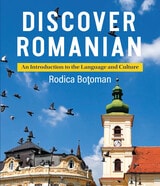
Audio Files to Accompany Discover Romanian, Chapters 7 and 8
Rodica Botoman
The Ohio State University Press, 1994
This comprehensive introduction to Romanian for English-speaking students emphasizes communication with a complete treatment of grammar, an extensive vocabulary, and a focus on the four major language skills—listening, speaking, reading, and writing. Cultural information, an integral part of the textbook, is presented both formally, in sections on culture and civilization, and informally, as the setting for dialogues and exercises. Tables of verb conjugations and a glossary round out the book’s primary materials.
Straightforward and accessible, Discover Romanian is an essential textbook for all those teaching and learning the language and provides important information for those seeking to understand Romanian culture. Together with the accompanying audio files and workbook, it provides a complete language course.
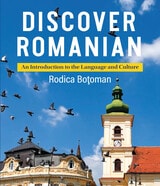
Audio Files to Accompany Discover Romanian, Chapters 9 and 10
Rodica Botoman
The Ohio State University Press, 1994
This comprehensive introduction to Romanian for English-speaking students emphasizes communication with a complete treatment of grammar, an extensive vocabulary, and a focus on the four major language skills—listening, speaking, reading, and writing. Cultural information, an integral part of the textbook, is presented both formally, in sections on culture and civilization, and informally, as the setting for dialogues and exercises. Tables of verb conjugations and a glossary round out the book’s primary materials.
Straightforward and accessible, Discover Romanian is an essential textbook for all those teaching and learning the language and provides important information for those seeking to understand Romanian culture. Together with the accompanying audio files and workbook, it provides a complete language course.
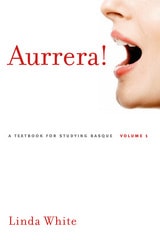
Aurrera!
A Textbook for Studying Basque, Volume 1Linda White
University of Nevada Press, 2008
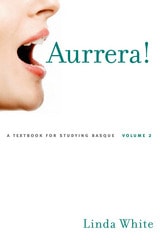
Aurrera!
A Textbook for Studying Basque, Volume 2Linda White
University of Nevada Press, 2010
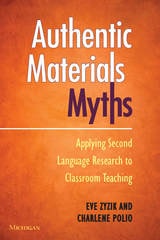
Authentic Materials Myths
Applying Second Language Research to Classroom TeachingEve Zyzik and Charlene Polio
University of Michigan Press, 2017
The myths examined in this book are:
- Authentic texts are inaccessible to beginners.
- Authentic texts cannot be used to teach grammar.
- Shorter texts are more beneficial for language learners.
- Activating background knowledge or making a word list is sufficient to prepare students for authentic texts.
- Authentic texts can be used to teach only listening and reading.
- Modifying or simplifying authentic texts always helps language learners.
- For learners to benefit from using authentic texts, the associated tasks must also be authentic.