Results by title
8113 books match the query 'Literary Criticism' and 619 start with a
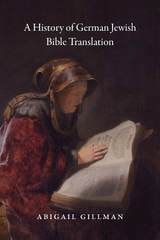
A History of German Jewish Bible Translation
Abigail Gillman
University of Chicago Press, 2018
This book is the first in English to offer a close analysis of German Jewish translations as part of a larger cultural project. Looking at four distinct waves of translations, Abigail Gillman juxtaposes translations within each that sought to achieve similar goals through differing means. As she details the history of successive translations, we gain new insight into the opportunities and problems the Bible posed for different generations and gain a new perspective on modern German Jewish history.
A History of Reading in the West
Guglielmo Cavallo
University of Massachusetts Press, 1999
A History of Russian Literature
From Its Beginnings to 1900D.S. Mirsky
Northwestern University Press, 1999

A History of Scandinavian Literature, 1870-1980
Sven Rossel
University of Minnesota Press, 1982
A History of the "Atlantic Monthly," 1857-1909
Yankee Humanism at High Tide and EbbEllery Sedgwick
University of Massachusetts Press, 1994
From its founding in 1857 until its sale by Houghton Mifflin in 1908, the Atlantic Monthly was the most respected literary periodical in the United States. This study focuses on the magazine's first seven editors: James Russell Lowell, James T. Fields, William Dean Howells, Thomas Bailey Aldrich, Horace Scudder, Walter Hines Page, and Bliss Perry. Ellery Sedgwick examines their personalities, editorial policies, and literary tastes, and shows how each balanced his role as advocate of “high” culture with the demands of the literary marketplace and American democracy.
Although the Atlantic was rooted in the Yankee humanism of Boston, Cambridge, and Concord, its scope was national. Sedgwick points out that while the magazine spoke for high culture, its tradition was one of intellectual tolerance and of moderate liberalism on social and political issues. It supported abolition, women's rights, and religious tolerance, and published incisive criticism of unregulated industrial capitalism. The Atlantic also played an important role in the rise of American literary realism, and published early work not only by such authors as James, Jewett, and Howells, but also by Chesnutt, Du Bois, Cahan, and Zitkala-Sa.
A Horror and a Beauty
The World of Peter Ackroyd's London NovelsPetr Chalupský
Karolinum Press, 2016
This idiosyncratic London construct is particularly prominent in Ackroyd’s novels, in which his ideas about the city’s nature and his connection to English literary sensibilities combine to create a distinct chronotope with its own spatial and temporal properties. A Horror and a Beauty explores this world through six defining aspects of the city as Ackroyd identifies them: the relationship between London’s past and present, its uncanny manifestations, its felonious tendencies, its inhabitants’ psychogeographic and antiquarian strategies, its theatricality, and its inherently literary character.
A Hundred Acres of America
The Geography of Jewish American Literary HistoryHoberman, Michael
Rutgers University Press, 2019
Jewish writers have long had a sense of place in the United States, and interpretations of American geography have appeared in Jewish American literature from the colonial era forward. But troublingly, scholarship on Jewish American literary history often limits itself to an immigrant model, situating the Jewish American literary canon firmly and inescapably among the immigrant authors and early environments of the early twentieth century. In A Hundred Acres of America, Michael Hoberman combines literary history and geography to restore Jewish American writers to their roles as critical members of the American literary landscape from the 1850s to the present, and to argue that Jewish history, American literary history, and the inhabitation of American geography are, and always have been, contiguous entities.
A Hundred Himalayas
Essays on Life and LiteratureSydney Lea
University of Michigan Press, 2012
In A Hundred Himalayas, Sydney Lea has collected a group of essays written over 30 years, representing what he refers to as the persistence of preoccupations and the absence of theory---a group of speculations, each one a single Himalaya, together a great elevation achieved in small increments. His musings on his own "favored genius," Robert Frost, his own approach to literary criticism, imagination, the American nature essay, rural life, the process of writing a poem, and fitting writing into everyday life all combine to create a picture of the things that interest Lea. "If there is grandeur at all in this volume," he says, "then, it must come in small increments." All of his small increments of gentle and insightful writing combine to create a collection that is, indeed, grand.
A Jewish Word or Two
Charles Reznikoff's ModernismJoel Bettridge
University of Iowa Press, 2026
The son of Jewish immigrants from Russia to New York, Charles Reznikoff found himself at the intersection of modernist innovation, ethnic otherness, and economic hardship. He both appreciated the modernists’ formal radicalism and critiqued their political failings—a task he accomplished by writing short lyric poems depicting the hardship and charm of urban life, as well as long poems presenting histories of horrific violence, from factory accidents to the Holocaust. But despite his contributions to American poetry, Reznikoff has remained a somewhat secondary figure, in part because his work—at times—is painful to read.
A Jewish Word or Two recasts Reznikoff ’s poetry as pleasurable and masterful even when disturbing. In their humor, their encounters with Jewish history, holiness, and identity, as well as their use of drama, horror, joy, and beauty, Reznikoff ’s poems help us celebrate what is simultaneously strange, surprising, lovely, and uncanny in our everyday lives.
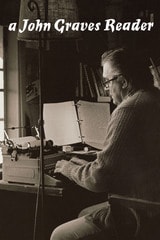
A John Graves Reader
By John Graves
University of Texas Press, 1996
Since the publication of his haunting, elegiac Goodbye to a River in 1960, John Graves has become one of Texas' most beloved writers, whose circle of loyal readers extends far beyond the borders of his home state. A "regional" writer only by virtue of his gift for vividly evoking the spirit of the land and its people, Mr. Graves is also admired for the unerring craftsmanship of his prose.
Now the University of Texas Press takes great pleasure in publishing A John Graves Reader to introduce his writing to a new generation of readers. This anthology contains selections from Goodbye to a River and his two other major books, Hard Scrabble (1974) and From a Limestone Ledge (1980). It also includes short stories and essays, some of which have never been published before and others that Mr. Graves has reworked especially for this book.
All of the pieces in this anthology were chosen by Mr. Graves himself to be, in his words, "representative of my writing, for better or worse." They reflect various stages of his life and writing career—youth in Texas, World War II, sojourns in New York, Mexico, and Europe during the 1940s and 1950s, and his final return to Texas as home and as subject matter—as well as recurring themes in his writing, from the land and the people to fishing, traveling, and the enduring friendships that have enriched his life.
For those who have never read John Graves, this anthology will be the perfect introduction to the range and excellence of his work. At the same time, those who have read him faithfully for many years will find new pieces to enjoy, as well as old favorites to savor once again.
A Karamazov Companion
Commentary on the Genesis, Language, and Style of Dostoevsky's NovelVictor Terras
University of Wisconsin Press, 1981
In his introduction, Terras outlines the genesis, main ideas, and structural peculiarities of the novel as well as Dostoevsky’s political, philosophical, and aesthetic stance. The detailed commentary takes the reader through the novel, clarifying aspects of Russian life, the novel’s sociopolitical background, and a number of polemic issues. Terras identifies and explains hundreds of literary and biblical quotations and allusions. He discusses symbols, recurrent images, and structural stylistic patterns, including those lost in English translation.
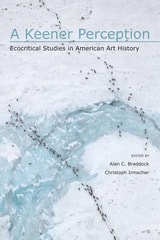
A Keener Perception
Ecocritical Studies in American Art HistoryEdited by Alan C. Braddock and Christoph Irmsher
University of Alabama Press, 2009
Issues of ecology--both as they appear in the works of nature writers and in the works of literary writers for whom place and the land are central issues--have long been of interest to literary critics, and have given rise over the last two decades to the now firmly established field of ecocriticism. The essays in this volume, written by art historians and literary critics, seek to bring the study of American art into the expanding discourse of ecocriticism.
A Keener Perception offers a series of case studies on topics ranging from John White's watercolors of the Carolina landscape executed during Sir Walter Raleigh's 1585 Roanoke expedition to photographs by environmental activist Eliot Porter. Rather than merely resurrect past instances of ecologically attuned art, this volume features essays that resituate many canonical figures, such as Thomas Eakins, Aaron Douglas, and Thomas Cole, in an ecocritical light by which they have yet to be viewed. Studying such artists and artworks through an ecocritical lens not only provides a better understanding of these works and the American landscape, but also brings a new interpretive paradigm to the field of art history--a field that many of these critics believe would do well to embrace environmental concerns as a vital area of research.
In highlighting the work of scholars who bring ecological agendas to their study of American art, as well as providing models for literary scholars who might like to better incorporate the visual arts into their own scholarship and teaching, A Keener Perception is truly a landmark collection--timely, consequential, and controversial.
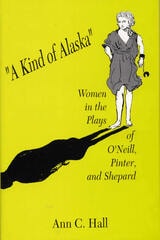
A Kind of Alaska
Women in the Plays of O'Neill, Pinter, and ShepardAnn C. Hall
Southern Illinois University Press, 1993
In an effort to define what constitutes a feminist reading of literary works, Ann C. Hall offers an analytic technique that is both a feminist and a psychoanalytic approach, applying this technique to her study of women characters in the modern dramatic texts of Eugene O’Neill, Harold Pinter, and Sam Shepard.
This is the first study to treat these three writers in tandem, and while Hall uses the work of Jacques Lacan, Luce Irigaray, and other psychoanalytic feminist critics in her close readings of specific dramatic texts, she also brings in commentaries by critics, directors, performers, and historians. Her technique thereby provides us with a new and significant method for addressing female characters as written by male playwrights, a task that she argues is not only a valid and necessary part of feminist dramatic criticism but a part of theatrical production as well.
From Pinter’s play A Kind of Alaska, Hall extracts a metaphor for the patriarchal oppression of women, contextualizing such oppression through an examination of O’Neill’s madonnas, Pinter’s whores, and Shepard’s female saviors as they are represented in O’Neill’s Iceman Cometh, Long Day’s Journey into Night, and A Moon for theMisbegotten; Pinter’s Homecoming, No Man’s Land, Betrayal, and A Kind of Alaska; and Shepard’s Buried Child, True West, and A LieoftheMind.
Since the works of O’Neill, Pinter, and Shepard continue to be performed to popular acclaim, Hall hopes that a better understanding of the female characters in these plays will influence the performances themselves.
A Kiss from Thermopylae
Emily Dickinson and LawJames R. Guthrie
University of Massachusetts Press, 2015
Yet Dickinson was also capable of criticizing, even satirizing, law and lawyers. Her poetic personae inhabit various legal roles including those of jurymen, judges, and attorneys, and some poems simulate courtroom contests pitting the rights of individuals against the power of the state. She was keenly interested in legal matters pertaining to women, such as breach of promise, dower, and trusts. With her tone ranging from subservient to domineering, from reverential to ridiculing, Dickinson's writings reflect an abiding concern with philosophic and political principles underpinning the law, as well as an identification with the plight of individuals who dared confront authority.
A Kiss from Thermopylae reveals a new dimension of Dickinson's writing and thinking, one indicating that she was thoroughly familiar with the legal community's idiomatic language, actively engaged with contemporary political and ethical questions, and skilled at deploying a poetic register ranging from high romanticism to low humor.
A Latin Lover in Ancient Rome
Readings in Propertius and His GenreW. R. Johnson
The Ohio State University Press, 2009

A Literary Guide to Provence
Daniel Vitaglione
Ohio University Press, 2001
Provence through the eyes of its writers—those who wrote of it in Provençal or French and also those visitors who were moved by its beauty—that is the inspiration behind A Literary Guide to Provence. In this compact travel guide, Marseilles native Daniel Vitaglione presents a literary panorama of the region of southern France from the Avignon of Mistral to Colette’s St. Tropez.
Including such sites as the birthplace of Nostradamus and the ruins of the Marquis de Sade’s castle, A Literary Guide to Provence presents a thousand years of history entwined with maps and photos that provide readers on tour with a sense of the historical import of this most beautiful of regions even as they experience it firsthand.
Both authors of Provençal ancestry and those who came to love and live in Provence are featured in this comprehensive and enchanting picture of the garden place of France. The Riviera enticed Virginia Woolf. Toulon inspired two novels by Georges Sand. Robert Louis Stevenson resided in Hyères, as did Edith Wharton. Le Lavandou was Willa Cather’s favorite place. F. Scott Fitzgerald lived in St. Raphael and Juan-les-Pins, where he wrote Tender is the Night.
This illustrated guide follows in these writers’ footsteps, and the practical information on hotels and restaurants (phones, web sites, email, etc.) make it the ideal traveling companion for armchair tourists and those who cannot resist seeing Provence for themselves.
A Literary History of Iowa
Clarence A. Andrews
University of Iowa Press, 1972
A Literature of Questions
Nonfiction for the Critical ChildJoe Sutliff Sanders
University of Minnesota Press, 2018
Nonfiction books for children—from biographies and historical accounts of communities and events to works on science and social justice—have traditionally been most highly valued by educators and parents for their factual accuracy. This approach, however, misses an opportunity for young readers to participate in the generation and testing of information.
In A Literature of Questions, Joe Sutliff Sanders offers an innovative theoretical approach to children’s nonfiction that goes beyond an assessment of a work’s veracity to develop a book’s equivocation as a basis for interpretation. Addressing how such works are either vulnerable or resistant to critical engagement, Sanders pays special attention to the attributes that nonfiction shares with other forms of literature, including voice and character, and those that play a special role in the genre, such as peritexts and photography.
The first book-length work to theorize children’s nonfiction as nonfiction from a literary perspective, A Literature of Questions carefully explains how the genre speaks in unique ways to its young readers and how it invites them to the project of understanding. At the same time, it clearly lays out a series of techniques for analysis, which it then applies and nuances through extensive close readings and case studies of books published over the past half century, including recent award-winning books such as Tanya Lee Stone’s Almost Astronauts: Thirteen Women Who Dared to Dream and We Are the Ship: The Story of Negro League Baseball by Kadir Nelson. By looking at a text’s willingness or reluctance to let children interrogate its information and ideological context, Sanders reveals how nonfiction can make young readers part of the project of learning rather than passive recipients of information.
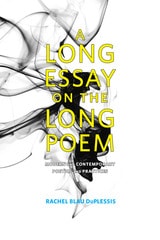
A Long Essay on the Long Poem
Modern and Contemporary Poetics and PracticesRachel Blau DuPlessis
University of Alabama Press, 2023
A masterful meditation on our most mercurial and abiding of poetic forms—the long poem
For decades, Rachel Blau DuPlessis has shown readers how genres, forms, and the literal acts of writing and reception can be understood as sites of struggle. In her own words, “writing is . . . a praxis . . . in which the author disappears into a process, into a community, into discontinuities, and into a desire for discovery.” It is cause for celebration, then, that we have another work of warm, incisive, exploratory writing from DuPlessis in A Long Essay on the Long Poem.
Long poems, DuPlessis notes, are elusive, particularly in the slippery forms that have emerged in the postmodern mode. She cites both Nathaniel Mackey and Anne Waldman in thinking of the poem as a “box,” both in the sense of a vessel that contains and as a machine that processes, an instrument on which language is played. This study’s central attention is on the long poem as a sociocultural Book, distinctively envisioned by a range of authors.
To reckon with these shifting and evolving forms, DuPlessis works in a polyvalent mode, a hybrid of critical analysis and speculative essay. She divides the long poem and the long poets into three genres: epics, quests, and a composite she terms “assemblages.” The poets she surveys include T. S. Eliot, Ezra Pound, H.D., Louis Zukofsky, Gwendolyn Brooks, Charles Olson, Alice Notley, Nathaniel Mackey, Ron Silliman, Robert Duncan, Kamau Brathwaite, and, finally, Mallarmé and Dante. Instead of a traditional lineage, she deliberately seeks intersecting patterns of connection between poems and projects, a nexus rather than a family tree. In doing so she navigates both some challenges of long poems and her own attempt to “essay” them. The result is a fascinating and generous work that defies categorization as anything other than essential.
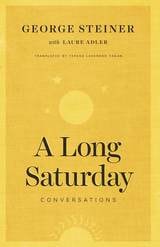
A Long Saturday
ConversationsGeorge Steiner with Laure Adler
University of Chicago Press, 2017
In a stimulating series of conversations, Steiner and journalist Laure Adler discuss a range of topics, including Steiner’s boyhood in Vienna and Paris, his education at the University of Chicago and Harvard, and his early years in academia. Books are a touchstone throughout, but Steiner and Adler’s conversations also range over music, chess, psychoanalysis, the place of Israel in Jewish life, and beyond. Blending thoughts on subjects of broad interest in the humanities—the issue of honoring Richard Wagner and Martin Heidegger in spite of their politics, or Virginia Woolf’s awareness of the novel as a multivocal form, for example—with personal reflections on life and family, Steiner demonstrates why he is considered one of today’s greatest minds. Revealing and exhilarating, A Long Saturday invites readers to pull up a chair and listen in on a conversation with a master.
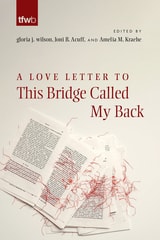
A Love Letter to This Bridge Called My Back
Edited by gloria j. wilson, Joni B. Acuff, and Amelia M. Kraehe
University of Arizona Press, 2022
In A Love Letter, creators illuminate, question, and respond to current politics, progressive struggles, transformations, acts of resistance, and solidarity, while also offering readers a space for renewal and healing. The central theme of the original Bridge is honored, exposing the lived realities of women of color at the intersections of race, class, gender, ethnicity, and sexuality, advancing those early conversations on what it means to be Third World feminist conscious.
A Love Letter recognizes the challenges faced by women of color in a twenty-first-century world of climate and economic crises, increasing gun violence, and ever-changing social media constructs for women of color. It also retains the clarion call Bridge set in motion, as Moraga wrote: “A theory in the flesh means one where the physical realities of our lives—our skin color, the land or concrete we grew up on, our sexual longing—all fuse to create a politic born of necessity.”
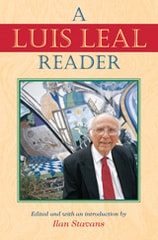
A Luis Leal Reader
Luis Leal
Northwestern University Press, 2007
Instrumental in establishing Mexican literary studies in the United States, Leal’s writings on the topic are especially instructive, ranging from essays on the significance of symbolism, culture, and history in early Chicano literature to studies of the more recent use of magical realism and of individual New Mexican, Tejano, and Mexican authors such as Juan Rulfo, Carlos Fuentes, José Montoya, and Mariano Azuela. Clearly and cogently written, these writings bring to bear an encyclopedic knowledge, a deep understanding of history and politics, and an unparalleled command of the aesthetics of storytelling, from folklore to theory. This collection affords readers the opportunity to consider—or reconsider—Latino literature under the deft guidance of its greatest reader.
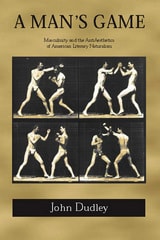
A Man's Game
Masculinity and the Anti-Aesthetics of American Literary NaturalismJohn Dudley
University of Alabama Press, 2004
Demonstrates how concepts of masculinity shaped the aesthetic foundations of literary naturalism
A Man’s Game explores the development of American literary naturalism as it relates to definitions of manhood in many of the movement’s key texts and the aesthetic goals of writers such as Stephen Crane, Jack London, Frank Norris, Edith Wharton, Charles Chestnutt, and James Weldon Johnson. John Dudley argues that in the climate of the late 19th century, when these authors were penning their major works, literary endeavors were widely viewed as frivolous, the work of ladies for ladies, who comprised the vast majority of the dependable reading public. Male writers such as Crane and Norris defined themselves and their work in contrast to this perception of literature. Women like Wharton, on the other hand, wrote out of a skeptical or hostile reaction to the expectations of them as woman writers.
Dudley explores a number of social, historical, and cultural developments that catalyzed the masculine impulse underlying literary naturalism: the rise of spectator sports and masculine athleticism; the professional role of the journalist, adopted by many male writers, allowing them to camouflage their primary role as artist; and post-Darwinian interest in the sexual component of natural selection. A Man’s Game also explores the surprising adoption of a masculine literary naturalism by African American writers at the beginning of the 20th century, a strategy, despite naturalism's emphasis on heredity and genetic determinism, that helped define the black struggle for racial equality
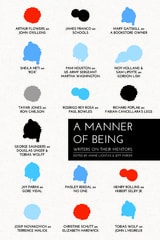
A Manner of Being
Writers on Their MentorsAnnie Liontas
University of Massachusetts Press, 2015
What do the punk singer Henry Rollins, the Guatemalan writer Rodrigo Rey Rosa, the American authors Tobias Wolff, Tayari Jones, and George Saunders, the Canadian writer Sheila Heti, and the Russian poet Polina Barskova have in common? At some point they all studied the art of writing deeply with someone.
The nearly seventy short essays in A Manner of Being, by some of the best contemporary writers from around the world, pay homage to mentors—the writers, teachers, nannies, and sages—who enlighten, push, encourage, and sometimes hurt, fail, and limit their protégés. There are mentors encountered in the schoolhouse and on farms, in NYC and in MFA programs; mentors who show up exactly when needed, offering comfort, a steadying hand, a commiseration, a dose of tough love. This collection is rich with anecdotes from the heartfelt to the salacious, gems of writing advice, and guidance for how to live the writing life in a world that all too often doesn't care whether you write or not.
Each contribution is intimate and distinct—yet a common theme is that mentors model a manner of being.
Selections include:
Arthur Flowers on John O'Killens
James Franco on Harmony Korine
Mary Gaitskill on an Ann Arbor bookstore owner
Noy Holland and Sam Lipsyte on Gordon Lish
Tayari Jones on Ron Carlson
Henry Rollins on Hubert Selby Jr.
Rodrigo Rey Rosa on Paul Bowles
George Saunders on Douglas Unger and Tobias Wolff
Christine Schutt on Elizabeth Hardwick
Tobias Wolff on John L'Heureux
. . . and many more
A Map of Mexico City Blues
Jack Kerouac as PoetJames T. Jones
Southern Illinois University Press, 1992
In this pioneering critical study of Jack Kerouac’s book-length poem, Mexico City Blues—apoetic parallel to the writer’s fictional saga, the Duluoz Legend—James T. Jones uses a rich and flexible neoformalist approach to argue his case for the importance of Kerouac’s rarely studied poem.
After a brief summary of Kerouac’s poetic career, Jones embarks on a thorough reading of Mexico City Blues from several different perspectives: he first focuses on Kerouac’s use of autobiography in the poem and then discusses how Kerouac’s various trips to Mexico, his conversion to Buddhism, his theory of spontaneous poetics, and his attraction to blues and jazz influenced the theme, structure, and sound of Mexico City Blues.
A Martian Muse
Further Essays on Identity, Politics, and the Freedom of PoetryReginald Shepherd
University of Michigan Press, 2010
Those who have read Orpheus in the Bronx, Reginald Shepherd's previous collection of essays about the act of creating poetry, and those who take on the task, can immediately understand why it was a national finalist for a prestigious National Book Critics Circle Award. Shepherd was candid and disarming, practical and funny, able to mix thoughts about the Transformers with meditations on the realities of growing up poor.
This is Reginald Shepherd's final opportunity to speak his mind about the craft he loved, the art of using words to express the soul and the wit of every person's experience. Edited by Shepherd's longtime partner and intellectual confidant, Robert Philen, A Martian Muse stands as a final monument to a master in the craft, but is also a readable, important work in its own right.
"Reginald Shepherd died September 10, 2008, after a hard struggle with cancer. While he had completed the essays presented here and had selected them from his available essays to form a collection, he didn't have time to organize the presentation of the essays within the collection.
"The task of editing this collection has been a daunting challenge as I struggle to live up to the level of intellectual engagement, clarity, and coherence that Reginald always expected. While daunting, it has also been a labor of love and a compulsion for me, based on the many years I spent with him as a partner, friend, lover, intellectual companion, and sharer of common passions."
---Robert Philen, from the Introduction
Reginald Shepherd was the editor of The Iowa Anthology of New American Poetries and Lyric Postmodernisms: An Anthology of Contemporary Innovative Poetries and the author of five books of poetry. He was a finalist for the 2009 National Book Critics Circle Award and was the recipient of grants from the NEA, the Illinois Arts Council, the Saltonstall Foundation, the Florida Arts Council, and the Vogelstein Foundation, among many other awards and honors.
A Master on the Periphery of Capitalism
Machado de AssisRoberto Schwarz
Duke University Press, 2001
Widely acknowledged as the most important novelist to have written in Latin America before 1940, Machado had a surprisingly modern style. Schwarz notes that the unprecedented wit, sarcasm, structural inventiveness, and mercurial changes of tone and subject matter found in The Posthumous Memoirs of Brás Cubas marked a crucial moment in the history of Latin American literature. He argues that Machado’s vanguard narrative reflects the Brazilian owner class and its peculiar status in both national and international contexts, and shows why this novel’s success was no accident. The author was able to confront some of the most prestigious ideologies of the nineteenth century with some uncomfortable truths, not the least of which was that slavery remained the basis of the Brazilian economy.
A Master on the Periphery of Capitalism will appeal to those with interests in Latin American literature, nineteenth century history, and Marxist literary theory.
A Menorah for Athena
Charles Reznikoff and the Jewish Dilemmas of Objectivist PoetryStephen Fredman
University of Chicago Press, 2001
Stephen Fredman illuminates the relationship of Jewish intellectuals to modernity through a close look at Reznikoff's life and writing. He shows that when we regard the Objectivists as modern Jewish poets, we can see more clearly their distinctiveness as modernists and the reasons for their profound impact upon later poets, such as Allen Ginsberg and Charles Bernstein. Fredman also argues that to understand Reznikoff's work more completely, we must see it in the context of early, nonsectarian attempts to make the study of Jewish culture a force in the construction of a more pluralistic society. According to Fredman, then, the indelible images in Reznikoff's poetry open a window onto the vexed but ultimately successful entry of Jewish immigrants and their children into the mainstream of American intellectual life.
A Midsummer Night's Dream
Shakespeare William
St. Augustine's Press, 2024
"This edition of A Midsummer Night’s Dream takes the comedy seriously. Like my previous Hackett editions, it gives full weight to Shakespeare’s dramatic setting, which other editors (and scholars) almost always ignore or at least fail adequately to consider. Ancient Athens is the core, not the mere background, of Midsummer Night's Dream. As we shall see, Shakespeare focuses, in particular, on the love of the beautiful and the triumph of learning and art, along with the rise of democracy, which, as Pericles’ famously claims, are the hallmarks of Athens. 'We are lovers of the beautiful with thrift, and lovers of wisdom without softness' (Thucydides, The Peloponnesian War, 2.40.1). […]
Failure to consider classical Athens as central to Midsummer Night's Dream will cause a reader to miss not only the play’s remarkable substance, but much of its sparkling comedy as well. Far from impeding the play’s humor, focusing on Athens helps to bring out multi-layers of comedy that Shakespeare put there."
A Mieke Bal Reader
Mieke Bal
University of Chicago Press, 2006
This Reader is organized into four parts, reflecting the fields that Bal has most profoundly influenced: literary study, interdisciplinary methodology, visual analysis, and postmodern theology. The essays include some of Bal’s most characteristic and provocative work, capturing her at the top of her form. “Narration and Focalization,” for example, provides the groundwork for Bal’s ideas on narrative, while “Reading Art?” clearly outlines her concept of reading images. “Religious Canon and Literary Identity” reenvisions Bal’s own work at the intersection of theology and cultural analysis, while “Enfolding Feminism” argues for a new feminist rallying cry that is not a position but a metaphor. More than a dozen other essays round out the four sections, each of which is interdisciplinary in its own right: the section devoted to literature, for instance, ranges widely over psychoanalysis, theology, photography, and even autobiography.
A Mieke Bal Reader is the product of a capacious intellect and a sustained commitment to critical thinking. It will prove to be instructive, maddening, and groundbreaking—in short, all the hallmarks of intellectual inquiry at its best.
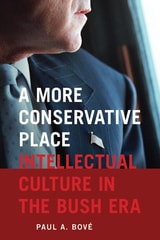
A More Conservative Place
Intellectual Culture in the Bush EraPaul A. Bové
Dartmouth College Press, 2013
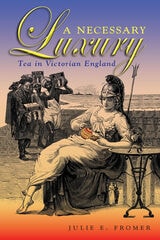
A Necessary Luxury
Tea in Victorian EnglandJulie E. Fromer
Ohio University Press, 2008
In A Necessary Luxury: Tea in Victorian England, Julie E. Fromer analyzes tea histories, advertisements, and nine Victorian novels, including Alice’s Adventures in Wonderland, Wuthering Heights, and Portrait of a Lady. Fromer demonstrates how tea functions within the literature as an arbiter of taste and middle-class respectability, aiding in the determination of class status and moral position. She reveals the way in which social identity and character are inextricably connected in Victorian ideology as seen through the ritual of tea.
Drawing from the fields of literary studies, cultural studies, history, and anthropology, A Necessary Luxury offers in-depth analysis of both visual and textual representations of the commodity and the ritual that was tea in nineteenth-century England.
A New Anatomy of Storyworlds
What Is, What If, As IfMarie-Laure Ryan
The Ohio State University Press, 2022
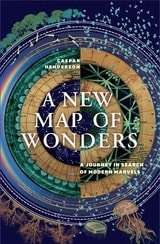
A New Map of Wonders
A Journey in Search of Modern MarvelsCaspar Henderson
University of Chicago Press, 2017
Henderson’s brilliant exploration borrows from the form of one of the oldest and most widely known sources of wonder: maps. Large, detailed mappae mundi invited people in medieval Europe to vividly imagine places and possibilities they had never seen before: manticores with the head of a man, the body of a lion, and the stinging tail of a scorpion; tribes of one-eyed men who fought griffins for diamonds; and fearsome Scythian warriors who drank the blood of their enemies from their skulls. As outlandish as these maps and the stories that went with them sound to us today, Henderson argues that our views of the world today are sometimes no less incomplete or misleading. Scientists are only beginning to map the human brain, for example, revealing it as vastly more complex than any computer we can conceive. Our current understanding of physical reality is woefully incomplete. A New Map of Wonders explores these and other realms of the wonderful, in different times and cultures and in the present day, taking readers from Aboriginal Australian landscapes to sacred sites in Great Britain, all the while keeping sight questions such as the cognitive basis of wonder and the relationship between wonder and science.
Beautifully illustrated and written with wit and moral complexity, this sequel to The Book of Barely Imagined Beings is a fascinating account of the power of wonder and an unforgettable meditation on its importance to our future.
A New Word on The Brothers Karamazov
Robert Louis Jackson
Northwestern University Press, 2004
Edited by the nation's most respected senior Dostoevsky scholar, this collection brings together original work by notable writers of varying backgrounds and interests. While drawing on Dostoevsky's other fiction, journalism, and correspondence, the writing of his contemporaries, the state of Russian culture to illuminate the unfolding novel--these essays also make use of new fields of scholarship, such as cognitive psychology, as well as recent theoretical approaches and critical insights. The authors propose readings remarkable for their attentiveness to detail, relatively peripheral characters, and heretofore overlooked incidents, passages, or fragments of dialogue. Some contributors suggest readings so new that they are subvert our usual modes of approaching this novel; all reflect the immediacy of adventuresome, informed encounters with Dostoevsky's final novel. Treating The Brothers Karamazov in terms of a broad range of genres (poetry, narrative, parody, confession, detective fiction) and discourses (medical, scientific, sexual, judicial, philosophical, and theological), these essays embody on a critical and analytic level a search for coherence, meaning, and harmony that continues to animate Dostoevsky's novel in our day.
A Nickel and a Prayer
Jane Edna Hunter, Edited by Rhondda Robinson Thomas, with a foreword by Joycelyn Moody
West Virginia University Press, 2010
This new and annotated edition of A Nickel and a Prayer includes the final chapter, “Fireside Musings,” that Hunter added to the second, limited printing of her autobiography and an introduction that lauds her as a multifaceted social activist who not only engaged in racial uplift work, but impacted African American cultural production, increased higher education opportunities for women, and invigorated African American philanthropy. This important text restores Jane Edna Harris Hunter to her rightful place among prominent African American race leaders of the twentieth century.
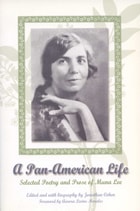
A Pan-American Life
Selected Poetry and Prose of Muna LeeMuna Lee; Edited and with biography by Jonathan M. Cohen
University of Wisconsin Press, 2004
A Passion for Specificity
Confronting Inner Experience in Literature and ScienceMarco Caracciolo and Russell Hurlburt
The Ohio State University Press, 2016
A Passion for Specificity, with its personal revelations, unexpected twists, and confrontational style, reads like an epistolary novel, but it is a serious exploration of ideas at the heart of literature and science. It is a thoughtful attempt at advancing the emerging “cognitive humanities,” clarifying a number of core issues in the cross-pollination of literature, psychology, philosophy, and consciousness science.
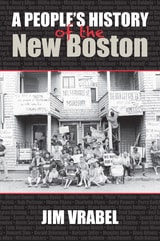
A People's History of the New Boston
Jim Vrabel
University of Massachusetts Press, 2014
Credit for the city's turnaround since that time is often given to a select group of people, all of them men, all of them white, and most of them well off. In fact, a large group of community activists, many of them women, people of color, and not very well off, were also responsible for creating the Boston so many enjoy today. This book provides a grassroots perspective on the tumultuous 1960s and 1970s, when residents of the city's neighborhoods engaged in an era of activism and protest unprecedented in Boston since the American Revolution.
Using interviews with many of those activists, contemporary news accounts, and historical sources, Jim Vrabel describes the demonstrations, sit-ins, picket lines, boycotts, and contentious negotiations through which residents exerted their influence on the city that was being rebuilt around them. He includes case histories of the fights against urban renewal, highway construction, and airport expansion; for civil rights, school desegregation, and welfare reform; and over Vietnam and busing. He also profiles a diverse group of activists from all over the city, including Ruth Batson, Anna DeFronzo, Moe Gillen, Mel King, Henry Lee, and Paula Oyola. Vrabel tallies the wins and losses of these neighborhood Davids as they took on the Goliaths of the time, including Boston's mayors. He shows how much of the legacy of that activism remains in Boston today.
A Philosophical Novelist
George Santayana and the Last PuritanH. T. Kirby-Smith
Southern Illinois University Press, 1997
H. T. Kirby-Smith uses Santayana’s 1936 novel, The Last Puritan, as both an occasion and a means for bringing into focus the complex relations between Santayana’s life, his personality, and his philosophy. Opening with an account of Santayana’s various literary styles and arguing for the significance of Santayana’s writing of philosophy as literature, Kirby-Smith notes that Santayana saw the rational life as a continual adjustment and accommodation of contradictory claims. And he saw a literary style as an accommodation of the author to the reader.
Chapters 2 through 5 provide the philosophical background for a consideration of The Last Puritan, summarizing exactly how Santayana assimilated other philosophies into his own.
Chapters 6 and 7 incorporate Santayana’s three-volume autobiography, his letters and memoirs, and biographical studies by others into a psychological portrait of the author. All of this is in preparation for chapters 8 and 9, which focus on The Last Puritan. Kirby-Smith closes with a chapter that serves as a legal brief in defense of the author against the harsh, sometimes malicious attacks of his critics.
A Piece Of Work
Five Writers Discuss Their RevisionsJay Woodruff
University of Iowa Press, 1993
Books on writing generally offer prescriptions and proscriptions about this "craft so hard to learn" instead of evidence. But in A Piece of Work Woodruff's incisive questions guide five writers—Tobias Wolff, Tess Gallagher, Robert Coles, Joyce Carol Oates, and Donald Hall—through specific examples that enable the reader to see how good writing becomes better. From the first draft through various revisions and finally to the printed version of a single piece of each author's work, Woodruff traces the full course of the revision process.
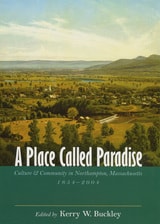
A Place Called Paradise
Culture and Community in Northampton, Massachusetts, 1654-2004Kerry W. Buckley
University of Massachusetts Press, 2004
Northampton evoked equally powerful visions in others. To minister Jonathan Edwards it was a stage for the enactment of God's drama of saving grace and redemption, while to Swedish soprano Jenny Lind it was simply a "paradise." During the 1920s Northampton became Main Street USA—a reassuring backdrop for the presidency of the city's former mayor, Calvin Coolidge. But for Smith College professor Newton Arvin, it was the dark side of small-town America that surfaced during the early decades of the Cold War. From witchcraft trials to Shays' Rebellion, from Sojourner Truth and the utopian abolitionists to Sylvester Graham and diet reform, many of the main currents of American life have flowed through this New England river town.
To commemorate the 350th anniversary of the founding of Northampton, A Place Called Paradise brings together a broad range of writing on the city's rich heritage. Edited with an introduction by Kerry W. Buckley, the volume includes essays by John Demos, Christopher Clark, Nell Irvin Painter, David W. Blight, and other distinguished scholars who have found this region fertile ground for research. Together their writings not only chronicle the history of a place but illustrate, in microcosm, the dynamics at work in the larger sweep of America's past.
A Place for Humility
Whitman, Dickinson, and the Natural WorldChristine Gerhardt
University of Iowa Press, 2014
Dickinson and Whitman developed their environmentally suggestive poetics at roughly the same historical moment, at a time when a major shift was occurring in American culture’s view and understanding of the natural world. Just as they were achieving poetic maturity, the dominant view of wilderness was beginning to shift from obstacle or exploitable resource to an endangered treasure in need of conservation and preservation.
A Place for Humility examines Dickinson’s and Whitman’s poetry in conjunction with this important change in American environmental perception, exploring the links between their poetic projects within the context of developing nineteenth-century environmental thought. Christine Gerhardt argues that each author's poetry participates in this shift in different but related ways, and that their involvement with their culture’s growing environmental sensibilities constitutes an important connection between their disparate poetic projects. There may be few direct links between Dickinson’s “letter to the World” and Whitman’s “language experiment,” but via a web of environmentally-oriented discourses, their poetry engages in a cultural conversation about the natural world and the possibilities and limitations of writing about it—a conversation in which their thematic and formal choices meet on a surprising number of levels.
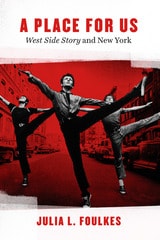
A Place for Us
“West Side Story” and New YorkJulia L. Foulkes
University of Chicago Press, 2016
That vision of postwar New York is at the heart of Julia L. Foulkes’s A Place for Us. A lifelong fan of the show, Foulkes became interested in its history when she made an unexpected discovery: scenes for the iconic film version were shot on the demolition site destined to become part of the Lincoln Center redevelopment area—a crowning jewel of postwar urban renewal. Foulkes interweaves the story of the creation of the musical and film with the remaking of the Upper West Side and the larger tale of New York’s postwar aspirations. Making unprecedented use of director and choreographer Jerome Robbins’s revelatory papers, she shows the crucial role played by the political commitments of Robbins and his fellow gay, Jewish collaborators, Leonard Bernstein and Arthur Laurents. Their determination to evoke life in New York as it was actually lived helped give West Side Story its unshakable sense of place even as it put forward a vision of a new, vigorous, determinedly multicultural American city.
Beautifully written and full of surprises for even the most dedicated West Side Story fan, A Place for Us is a revelatory new exploration of an American classic.
A Planet in Hospice
Environmental Justice in Existential EcofictionLauren S. Cardon
The Ohio State University Press, 2026
How do we continue to love and care for a planet it’s too late to save? In A Planet in Hospice, Lauren S. Cardon analyzes works of “existential ecofiction” that invite us to reflect on our mortality and the many ways that people are already affected by disaster, while also encouraging hope and connection. These texts from authors such as N. K. Jemisin, Paolo Bacigalupi, Darcie Little Badger, Rivers Solomon, Richard Powers, and Margaret Atwood are characterized by themes of ecological crisis, planetary demise, and human extinction, and they center environmental justice and human oppression. Cardon argues that, by invoking the end of the world, these writers directly engage with death anxiety and consequently intervene in current theories of existential psychology and intersectional ecocriticism. They highlight the inextricability of environmental care and social justice and offer visions of a path forward through the global climate crisis humans now face.
A Plot of Her Own
The Female Protagonist in Russian LiteratureSona Stephan Hoisington
Northwestern University Press, 1995
A Poet's Craft
A Comprehensive Guide to Making and Sharing Your PoetryAnnie Finch
University of Michigan Press, 2012
A Poet's Ear
A Handbook of Meter and FormAnnie Finch
University of Michigan Press, 2013
Praise for Annie Finch
“A self-proclaimed ‘postmodern poetess,’ Annie Finch lives up to the moniker, presenting a simultaneously thorough and mercurial array of musings on poetics focusing on form and meter, remaining three beats ahead of the rank-and-file herd of traditional prosodists.”
—Art New England
For beginning or advanced students of poetry focused on the art of structuring a poem, A Poet’s Ear serves as a handbook to writing in numerous fixed forms. Here, Annie Finch’s remarkably in-depth introduction to poetic form in English opens a new and exciting world to contemporary poets. From the basic meters and traditional European forms of the ballad and the sonnet to poetic forms brought to English from worldwide cultures and postmodern forms and techniques, A Poet’s Ear serves as both a survey and a guide to the exploration of poetic form. More diverse and comprehensive than any other form handbook, A Poet’s Ear will be essential to the serious student of poetry.
A Poet's Guide to Poetry, Second Edition
Mary Kinzie
University of Chicago Press, 2013
The three parts of A Poet’s Guide to Poetry lead the reader through a carefully planned introduction to the ways we understand poetry. The first section provides careful, step-by-step instruction to familiarize students with the formal elements of poems, from the most obvious feature through the most subtle. The second part carefully examines meter and rhythm, as well as providing a theoretical and practical overview of free verse. The final section offers helpful chapters on writing in form. Rounding out the volume are writing exercises for beginning and advanced writers, a dictionary of poetic terms, and a bibliography of further reading.
For this new edition, Kinzie has carefully reworked the introductory material and first chapter, as well as amended the annotated bibliography to include the most recent works of criticism. The updated guide also contains revised exercises and adjustments throughout the text to make the work as lucid and accessible as possible.
A Poet's Truth
Conversations with Latino/Latina PoetsBruce Allen Dick
University of Arizona Press, 2003
As Bruce Dick's insightful questions reveal, the key threads linking these writers are their connections to their families and communities and their concern for civil rights—believing like Chicana writer Pat Mora that "the work of the poet is for the people." The interviews also reveal diversity among and within the three communities, from Victor Hernández Cruz, who traces Latino collective identity to Africa and claims that all Latinos are "swimming in olive oil," to Cuban writer Gustavo Perez Firmat, who considers nationality more important than ethnicity and says that "the term Latino erases [his] nationality."
The dialogues also offer new insights on the place of Chicano/a writings in the U.S.-Mexico borderlands, on the Puerto Rican/Nuyorican establishment, and on the anti-Castro stand of Cuban-born poets. As these writers answer questions about their work, background, ethnic identity, and political ideology, they provide a wealth of biographical, intellectual, and literary material collected here for the first time. A Poet's Truth is a provocative and revealing book that not only conveys the fire of these writers' passions but also sheds important light on a whole literary movement.Interviews with:
Miguel Algarín
Martín Espada
Sandra María Esteves
Victor Hernández Cruz
Carolina Hospital and Carlos Medina
Demetria Martínez
Pat Mora
Judith Ortiz Cofer
Ricardo Pau-Llosa
Gustavo Pérez Firmat
Leroy Quintana
Aleida Rodríguez
Luis Rodríguez
Benjamin Alire Sáenz
Virgil Suárez