Results by title
3785 books match the query 'Poetry' and 303 start with a
A New Geography of Poets
Edward Field
University of Arkansas Press, 1993
A Pan-American Life
Selected Poetry and Prose of Muna LeeMuna Lee; Edited and with biography by Jonathan M. Cohen
University of Wisconsin Press, 2004
A Place for Humility
Whitman, Dickinson, and the Natural WorldChristine Gerhardt
University of Iowa Press, 2014
Dickinson and Whitman developed their environmentally suggestive poetics at roughly the same historical moment, at a time when a major shift was occurring in American culture’s view and understanding of the natural world. Just as they were achieving poetic maturity, the dominant view of wilderness was beginning to shift from obstacle or exploitable resource to an endangered treasure in need of conservation and preservation.
A Place for Humility examines Dickinson’s and Whitman’s poetry in conjunction with this important change in American environmental perception, exploring the links between their poetic projects within the context of developing nineteenth-century environmental thought. Christine Gerhardt argues that each author's poetry participates in this shift in different but related ways, and that their involvement with their culture’s growing environmental sensibilities constitutes an important connection between their disparate poetic projects. There may be few direct links between Dickinson’s “letter to the World” and Whitman’s “language experiment,” but via a web of environmentally-oriented discourses, their poetry engages in a cultural conversation about the natural world and the possibilities and limitations of writing about it—a conversation in which their thematic and formal choices meet on a surprising number of levels.
A Poet's Craft
A Comprehensive Guide to Making and Sharing Your PoetryAnnie Finch
University of Michigan Press, 2012
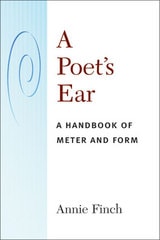
A Poet's Ear
A Handbook of Meter and FormAnnie Finch
University of Michigan Press, 2013
Praise for Annie Finch
“A self-proclaimed ‘postmodern poetess,’ Annie Finch lives up to the moniker, presenting a simultaneously thorough and mercurial array of musings on poetics focusing on form and meter, remaining three beats ahead of the rank-and-file herd of traditional prosodists.”
—Art New England
For beginning or advanced students of poetry focused on the art of structuring a poem, A Poet’s Ear serves as a handbook to writing in numerous fixed forms. Here, Annie Finch’s remarkably in-depth introduction to poetic form in English opens a new and exciting world to contemporary poets. From the basic meters and traditional European forms of the ballad and the sonnet to poetic forms brought to English from worldwide cultures and postmodern forms and techniques, A Poet’s Ear serves as both a survey and a guide to the exploration of poetic form. More diverse and comprehensive than any other form handbook, A Poet’s Ear will be essential to the serious student of poetry.
A Poet's Guide to Poetry
Mary Kinzie
University of Chicago Press, 1999
The three parts of A Poet's Guide to Poetry lead the reader through a carefully planned introduction to the ways we understand poetry. The first section provides careful, step-by-step instruction to familiarize students with the formal elements of poems, from the most obvious feature through the most devious.
Part I presents the style, grammar, and rhetoric of poems with a wealth of examples from various literary periods.
Part II discusses the way the elements of a poem are controlled in time through a careful explanation and exploration of meter and rhythm. The "four freedoms" of free verse are also examined.
Part III closes the book with helpful practicum chapters on writing in form. Included here are writing exercises for beginning as well as advanced writers, a dictionary of poetic terms replete with poetry examples, and an annotated bibliography for further explanatory reading.
This useful handbook is an ideal reference for literature and writing students as well as practicing poets.
A Poet's Guide to Poetry, Second Edition
Mary Kinzie
University of Chicago Press, 2013
The three parts of A Poet’s Guide to Poetry lead the reader through a carefully planned introduction to the ways we understand poetry. The first section provides careful, step-by-step instruction to familiarize students with the formal elements of poems, from the most obvious feature through the most subtle. The second part carefully examines meter and rhythm, as well as providing a theoretical and practical overview of free verse. The final section offers helpful chapters on writing in form. Rounding out the volume are writing exercises for beginning and advanced writers, a dictionary of poetic terms, and a bibliography of further reading.
For this new edition, Kinzie has carefully reworked the introductory material and first chapter, as well as amended the annotated bibliography to include the most recent works of criticism. The updated guide also contains revised exercises and adjustments throughout the text to make the work as lucid and accessible as possible.
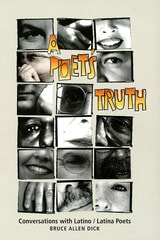
A Poet's Truth
Conversations with Latino/Latina PoetsBruce Allen Dick
University of Arizona Press, 2003
As Bruce Dick's insightful questions reveal, the key threads linking these writers are their connections to their families and communities and their concern for civil rights—believing like Chicana writer Pat Mora that "the work of the poet is for the people." The interviews also reveal diversity among and within the three communities, from Victor Hernández Cruz, who traces Latino collective identity to Africa and claims that all Latinos are "swimming in olive oil," to Cuban writer Gustavo Perez Firmat, who considers nationality more important than ethnicity and says that "the term Latino erases [his] nationality."
The dialogues also offer new insights on the place of Chicano/a writings in the U.S.-Mexico borderlands, on the Puerto Rican/Nuyorican establishment, and on the anti-Castro stand of Cuban-born poets. As these writers answer questions about their work, background, ethnic identity, and political ideology, they provide a wealth of biographical, intellectual, and literary material collected here for the first time. A Poet's Truth is a provocative and revealing book that not only conveys the fire of these writers' passions but also sheds important light on a whole literary movement.Interviews with:
Miguel Algarín
Martín Espada
Sandra María Esteves
Victor Hernández Cruz
Carolina Hospital and Carlos Medina
Demetria Martínez
Pat Mora
Judith Ortiz Cofer
Ricardo Pau-Llosa
Gustavo Pérez Firmat
Leroy Quintana
Aleida Rodríguez
Luis Rodríguez
Benjamin Alire Sáenz
Virgil Suárez
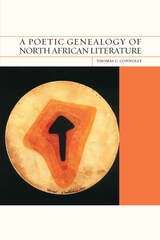
A Poetic Genealogy of North African Literature
Thomas C. Connolly
Northwestern University Press, 2025
Engaging the poetic to expand our imagination of Maghrebi literature in French
Poetry, as the Moroccan writer Abdelkébir Khatibi describes it, is a form of dissymmetry that exposes readers to the unexpected, and to the possibility of a transformative encounter with the text. Drawing on literary, philosophical, theoretical, and theological texts in multiple languages and scripts, as well as on the visual arts, Thomas C. Connolly delves into the poetic works of Khatibi and six other major Maghrebi authors—Jean Amrouche, Tahar Djaout, Nabile Farès, Mohammed Khaïr-Eddine, Abdelwahab Meddeb, and Jean Sénac—as well as the French poet Arthur Rimbaud, to think anew about the origins and legacy of Francophone poetry in the Maghreb. Instead of turning away from the poetic when it becomes indecipherable, A Poetic Genealogy of North African Literature engages poetic texts on their own terms, allowing them to dictate the search for meaning, thereby expanding our understanding of what Maghrebi literature in French was, is, and might become.
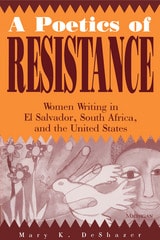
A Poetics of Resistance
Women Writing in El Salvador, South Africa, and the United StatesMary DeShazer
University of Michigan Press, 1994
Engaging the works of critics such as Chandra Mohanty, Barbara Harlow, Claribel Alegria, Albie Sachs, and Audre Lorde, among others, Mary DeShazer reconceptualizes traditional notions of resistance and literature and the relationship between them. She argues that women’s voices have been underrepresented in previous analyses of Third World resistance poetry, and that when examined collectively, their work reveals overtly gendered concerns that distinguish it from that of their male counterparts.
DeShazer defines resistance as an active quest for justice and a means of collective empowerment. She looks at the diasporic consciousness of exiled and dislocated women, examines the tensions between claims of identity and claims of difference, and explores the ways in which gender and struggle connect women across nationalities and historical imperatives. Her analysis of Salvadoran and South African women’s poetry reveal the ways in which poetic conventions can be seen as “political declarations of privilege,” casting a new light on women’s resistance poetry in the United States.
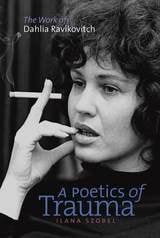
A Poetics of Trauma
The Work of Dahlia RavikovitchIlana Szobel
Brandeis University Press, 2013
A Poetry Criticism Reader
Jerry Harp
University of Iowa Press, 2006
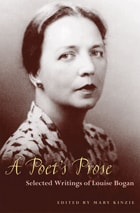
A Poet’s Prose
Selected Writings Of Louise BoganLouise Bogan
Ohio University Press, 2005
Although best known as a master of the formal lyric poem, Louise Bogan (1897–1970) also published fiction and what would now be called lyrical essays. A Poet’s Prose: Selected Writings of Louise Bogan showcases her devotion to compression, eloquence, and sharp truths.
Louise Bogan was poetry reviewer for the New Yorker for thirty-eight years, and her criticism was remarkable for its range and effect. Bogan was responsible for the revival of interest in Henry James and was one of the first American critics to notice and review W. H. Auden. She remained intellectually and emotionally responsive to writers as different from one another as Caitlin Thomas, Dorothy Richardson, W. B. Yeats, André Gide, and Rainer Maria Rilke.
Bogan’s short stories appeared regularly in magazines during the 1930s, penetrating the social habits of the city as well as the loneliness there. The autobiographical element in her fiction and journals, never entirely confessional, spurred some of her finest writing. The distinguished poet and critic Mary Kinzie provides in A Poet’s Prose a selection of Bogan's best criticism, prose meditations, letters, journal entries, autobiographical essays, and published and unpublished fiction.
Louise Bogan won the Bollingen Prize in 1954 for her collected poems. She is the subject of the Pulitzer Prize-winning biography by Elizabeth Frank, Louise Bogan: A Portrait.
A Point Is That Which Has No Part
Liz Waldner
University of Iowa Press, 2000
The innocence and Keatsian beauty of Euclid's geometry become poignant from a perspective that encompasses all that is non-Euclidean as well as space, time, and the theory of matter. With rare wit and linguistic daring, Waldner opens resonant channels of communication that show there is indeed more than meets the eye—or the mind—in her poems.
Hand to Mouth (Twist and Shout)
Cold comes slow up out
of the darkness among the leaves
that smell so good when bruised
Do you, too, recognize me
god so soon?
Her First Reckoning
Pour wine into vessels the violet of woods,
wine of the reddening stars.
You are god, you can do it.
Your lover calls you St. John the Conqueror.
I have heard her.
This is the name of a root.
Asperge the thousands and thousands of rooms
in which photosynthesis promises sun
to the acolyte cells. Rain yourself on a leaf.
Birch. The bark is malleable as mushroom flesh.
Show that you know me. Scratch out my name
with this tree. My name of trees.
On the day I arrive at the door of my death,
myself now hard to tell
from the trees that had hid it from me,
I will demand that you love me.
You made me like this.
Why did you make me like this?
Transitive, Intransitive: Extemporary Measures
Two crows above the marsh: sew.
Stitch the seventeen sleek shades of blue
to the shadow-patterned greens below.
See fit to make me a suitable view who
having nowhere to else to go
might as well wear this world well.
Llama necks periscope the view:
yonder, across the water, you
testing the air now a crow
chases a redwing blackbird through.
What can I show you who sees
I don't believe? For now,
what the eye of the needle sees:
through through through:
clouds, birds, me, trees;
soon: in, out, with, to;
something moving, something moved:
a stitch in time's an avenue,
future's sutures' revenue—
“the shining hour” improved.
A Profile of Twentieth-Century American Poetry
Edited by Jack Myers and David Wojahn
Southern Illinois University Press, 1991
Seven chronologically arranged essays—each covering roughly a decade from 1908 through 1988—plus two special-focus essays on black and female poets, an introduction by Ed Folsom, and a preface by editors Jack Myers and David Wojahn, outline the critical, creative, aesthetic, and cultural forces at work in the American poetry of this century. Several contributors, including Michael Heller, Richard Jackson, and Jonathan Holden, have recently published important book-length critical studies in their essay area; all have published well-regarded collections of their own poetry.

A Psalm for Cottondale
PoemsSharony A. Green
University of Alabama Press, 2026
A lyrical journey through memory, place, and resilience in the heart of Alabama
A Psalm for Cottondale is a lyrical meditation on memory, place, and survival in the American South. Through a sequence of interconnected free-verse poems, Sharony Green reflects on life in Cottondale, Alabama, where change unfolds in ways that can be both poignant and unexpected. Rooted in the histories, landscapes, and cultural currents of an Alabama college town, the collection explores how one place can evoke the memory of many others, inviting readers to consider broader questions of identity, belonging, and endurance.
Written in a clear, steady voice, these poems balance intimacy with historical awareness, allowing inherited stories, silences, and everyday moments to emerge with quiet power. Green’s careful craftsmanship and emotional restraint lend authority to the collection, while a subtle psalmic undercurrent adds spiritual depth without sacrificing nuance. As the poems move through themes of joy, grief, witness, and renewal, Cottondale becomes both a physical community and a symbolic terrain shaped by race, land, memory, and hope.
Inspired by writings that engage history, geography, and culture, A Psalm for Cottondale offers an elegant and deeply attentive reflection on Southern and American life, illuminating the ways people endure, adapt, and find meaning in a changing world. Ideal for readers of contemporary poetry, Southern literature, African American studies, place-based writing, and works that explore history, memory, faith, and community through a lyrical lens.
A Question of Seeing
PoemsDonald Finkel
University of Arkansas Press, 1998
In lines electrified with lyricism and wit, Donald Finkel carves a clearing out of the backyard brush and the intellectual brambles of existence.
Whether he writes a short lyric or a long experimental series, Finkel relies on concrete images—a breeze through grass, a cigarette in a piano player’s hand—to ground his central questions about the clash of order and chaos in our everyday lives.
He delights in naming weeds and towering trees, cars and streets. Yet, in each poem, there is a constant tension between the actual wind and the words we must use to convey the wind’s force.
Working fluently in formal lines and in free verse, he can write with equal authority of butchers or great painters, aged bookkeepers or schizophrenics, Greek gods or house cats. In this new collection, Finkel has given us the priceless keepsakes, the best gifts from the clearing his words have won.
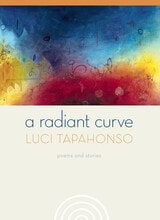
A Radiant Curve
Poems and StoriesLuci Tapahonso
University of Arizona Press, 2008
These engaging words draw us into a workaday world that, magically but never surprisingly, has room for the Diyin Dine’é (the Holy People), Old Salt Woman, and Dawn Boy. When she describes her grandson’s First Laugh Ceremony—explaining that it was originally performed for White Shell Girl, who grew up to be Changing Woman—her account enriches us and we long to hear more. Tapahonso weaves the Navajo language into her work like she weaves “the first four rows of black yarn” into a rug she is making “for my little grandson, who inherited my father’s name: Hastiin Tsétah Naaki Bísóí.”
As readers, we find that we too are surrounded by silent comfort, held lovingly in the confident hands of an accomplished writer who has a great deal to tell us about life.
A Readable Beowulf
The Old English Epic Newly TranslatedStanley B. Greenfield. Introduction by Alain Renoir
Southern Illinois University Press, 1982
Stanley B. Greenfield, one of the world’s foremost Anglo-Saxon scholars, writes of why, after more than thirty years of study, he undertook the Herculean task of rendering Beowulf into contemporary verse: “I wanted my translation to be not only faithful to the original but, as the late John Lennon would have put it, ‘A Poem in Its Own Write.’ I wanted it to ‘flow,’ to be easy to read, with the narrative movement of a modern prose story; yet to suggest the rhythmic cadences of the Old English poem. I wanted it both modern and Old English in its reflexes and sensibilities, delighting both the general reader and the Anglo-Saxon specialist. . . . I wanted it to reproduce the intoxication of aural contours which… might have pleased and amused warriors over their cups in the Anglo-Saxon mead-hall, or those monks in Anglo-Saxon monasteries who paid more attention to song and to stories of Ingeld than to the lector and the gospels.”
Greenfield has succeeded to a remarkable degree in reaching his goals. An early reviewer of the manuscript, Daniel G. Calder of UCLA, wrote: “I find it the best translation of Beowulf.
One of the great problems with other translations is that they make the reading of Beowulf difficult. Greenfield’s translation speeds along with considerable ease. . . Scholars will find the translation fascinating as an exercise in the successful recreating of various aspects of Old English poetic style.”
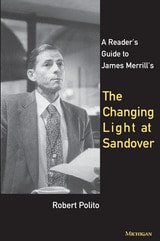
A Reader's Guide to James Merrill's The Changing Light at Sandover
Robert Polito
University of Michigan Press, 1995
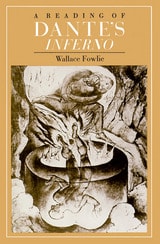
A Reading of Dante's Inferno
Wallace Fowlie
University of Chicago Press, 1981

A Romantic View of Poetry
Being Lectures Given at the Johns Hopkins University on the Percy Turnbull Memorial Foundation in November 1941Joseph Warren Beach
University of Minnesota Press, 1944
A Romantic View of Poetry was first published in 1944. Minnesota Archive Editions uses digital technology to make long-unavailable books once again accessible, and are published unaltered from the original University of Minnesota Press editions.
Poetry is of the very essence of living. In this belief Joseph Warren Beach discusses the ways in which poet and reader create and live "a being more intense" and thereby fulfill the function of poetry. "Wherever there is life," says Beach, "there poetry is present potentially and in its rudiments . . . and poetry, as I conceive it, is the sovereign means we have of realizing the satisfaction which we take in living."
Against the background of the Romantic School, he develops a pattern for the understanding of poetry that applies to all schools and to all readers. Poetry of realization and release cannot be circumscribed. Wordsworth, Coleridge, Byron, Keats, and Shelley stand here as examples of the poetic artist. And every person who responds to the work of the poet shares with him the imaginative stimulus of poetic creation.
A Romantic View of Poetry consists of a series of lectures delivered by Mr. Beach at the Johns Hopkins University in 1941 on the Percy Turnball Memorial Foundation.
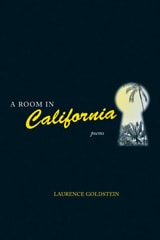
A Room in California
Laurence Goldstein
Northwestern University Press, 2005
His most ambitious book to date, the subjects in this collection range from the aging pear tree and the domestic living room, to Nordic witches and Nazi demons. Some poems are in fixed forms including the villanelle "Rock Star," the sonnet translation from Verlaine, "Langueur," and the rhymed quatrains of a narrative poem adapted from a short story by Arthur Miller. Other poems employ organic style to explore the poet's situation, or predicament, in the culture he has outlived and the culture he has inherited.
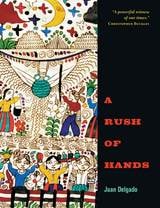
A Rush of Hands
Juan Delgado
University of Arizona Press, 2003
These poems deal honestly with the realities of urban life, whether dramatizing the effects of drive-by shootings, unfolding a labor protest that "spreads across the city like a prayer," or summoning a ghostlike immigrant damned to retrace his journey across the border. Daily and historical struggles are elevated to the level of myth. Yet, amid these poems there are images of life and love: a girl leaving hickeys rich as chocolate, a boy pledging to rescue his mother from poverty, a man studying the desert ground for tracks signaling immigrants in distress.
Delgado is unflinching in showing us the harshness surrounding the lives he cherishes, and with resonant details and lyrical language he urges us to examine those lives-and ultimately our own. A Rush of Hands is a spellbinding book that will captivate both the ear and the heart.
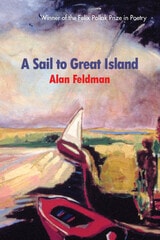
A Sail to Great Island
Alan Feldman
University of Wisconsin Press, 2004
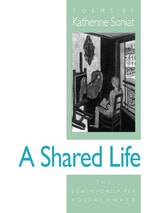
A Shared Life
Katherine Soniat
University of Iowa Press, 1993
There is a controlled, unpretentious constancy to Katherine Soniat's passionate, wise poetry that reminds one of the language of Elizabeth Bishop. Yet her voice is singular; there is an elegance of line, a centered quality that makes the poems more courtly than visceral. One tends to trust what is given in these beautifully rendered images and this gentle music.
The poems are particularly crafted, partly meditative, yet the poet handles larger themes easily and with grace, without the shrillness that sometimes seems common in our time. Her gift for metaphoric language is evident. She has an even-tempered, deeply intelligent mode which carries from poem to poem.
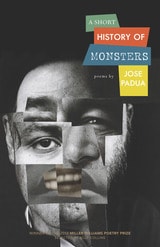
A Short History of Monsters
PoemsJose Padua
University of Arkansas Press, 2019
Winner, 2019 Miller Williams Poetry Prize
“We are the happy riders on the stream of Padua’s consciousness . . . a smart, sympathetic mind at work.”
—Billy Collins
Drawing on the spirit of New York City in decades past, A Short History of Monsters presents the sins and obsessions of a poet nimble in beat and slam traditions. In his first full-length collection, Jose Padua wrestles with an American dream interrupted by failure, excess, and other nightmares. Often brash and unruly, these poems range from recollections of lost, drunken days to unadorned manifestations of hope. Throughout, the speaker redefines his relationship to pop culture, praising it, skewering it, and mourning it by turns.
The poems that make up A Short History of Monsters tend toward both dark humor and epiphany, diving deeply into their own despair and rising up again with existential absurdity. This is a poetry that gets down into the grit and grime of the real world, digging out a space to experience being alive as miraculous in and of itself.
A Sinister Assassin
Last Writings, Ivry-Sur-Seine, September 1947 to March 1948Antonin Artaud
Diaphanes, 2022
A Sinister Assassin presents translations of Antonin Artaud’s largely unknown final work of 1947–48, revealing new insights into his obsessions with human anatomy, sexuality, societal power, creativity, and ill-will—notably, preoccupations of the contemporary world.
Artaud’s last conception of performance is that of a dance-propelled act of autopsy, generating a ”body without organs” which negates malevolent microbial epidemics. This book assembles Artaud’s crucial writings and press interviews from September 1947 to March 1948, undertaken at a decrepit pavilion in the grounds of a convalescence clinic in Ivry-sur-Seine, on the southern edge of Paris, as well as in-transit through Paris’s streets. It also draws extensively on Artaud’s manuscripts and original interviews with his friends, collaborators, and doctors throughout the 1940s, illuminating the many manifestations of Artaud’s final writings: the contents of his last, death-interrupted notebook; his letters; his two final key texts; his glossolalia; the magazine issue which collected his last fragments; and the two extraordinary interviews he gave to national newspaper journalists in the final days of his life, in which he denounces and refuses both his work’s recent censorship and his imminent death.
Edited, translated, and with an introduction by Stephen Barber, A Sinister Assassin illuminates Artaud’s last, most intensive, and terminal work for the first time.
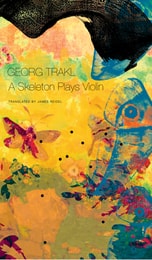
A Skeleton Plays Violin
Book Three of Our TraklGeorg Trakl
Seagull Books, 2017
A Skeleton Plays Violin comprises the final volume in a trilogy of works by Trakl published by Seagull Books. This selection gathers Trakl’s early, middle, and late work, none of it published in book form during his lifetime. The work here ranges widely, from his haunting prose pieces to his darkly beautiful poems documenting the first bloody weeks of World War I on the Eastern Front.
Book Three of Our Trakl—the series that began with Trakl’s first book Poems and his posthumously published Sebastian Dreaming—also includes translations of unpublished poems and significant variants. Interpolated throughout this comprehensive and chronological selection is a biographical essay that provides more information about Trakl’s gifted and troubled life, especially as it relates to his poetry, as well as the necessary context of his relationship with his favorite sibling, his sister Grete, whose role as a muse to her brother is still highly controversial. Trakl’s life was mysterious and fascinating, a fact reflected in his work. A Skeleton Plays Violin should not be missed.
A Social Edition of the Devonshire Manuscript (BL MS Add 17,492)
Edited by Raymond Siemens, Karin Armstrong, and Constance Crompton
Iter Press, 2015
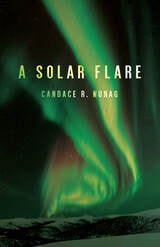
A Solar Flare
Candace R. Nunag
University of Alabama Press, 2025
A hybrid of short works exploring the 1859 Carrington solar flare
A flood of illumination, a cosmic cataclysm frozen in time—the Carrington Event of 1859 was the most disruptive solar flare in recorded history, an electromagnetic storm that wiped out telegraph systems across the world and which, if it were to occur today, might well destroy anything on the planet with an electrical circuit.
Candace Nunag’s A Solar Flare is a hybrid of short essays, research notes, poems, graphite rubbings, and instant photographs, as well as bits of flash fiction, all simultaneously contemplating technology and memory, while preoccupied with the 1859 solar flare. The ghost of the Carrington Event haunts A Solar Flare with the promise of definitive answers about the narrator’s many severed connections: her digital, supernatural, eastern, western, and analog past. It is an attempt to illuminate the path of thought, wending its way through the tangles of rumination and irreconcilable spaces of wonder.
A Sourcebook for Ancient Greek
Grammar, Poetry, and ProseJohn Tomarchio
Catholic University of America Press, 2022
A Sourcebook for Classical Rhetoric
John Tomarchio
Catholic University of America Press, 2023
A Sourcebook for English Lyric Poetry
John Tomarchio
Catholic University of America Press, 2023
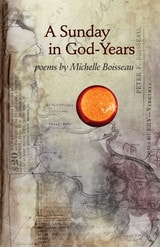
A Sunday in God-Years
PoemsMichelle Boisseau
University of Arkansas Press, 2009
A Sunday in God-Years takes its title from the notion that if we consider ourselves inside the long stretch of geologic time, human history happens in the blink of God’s eye as he rolls over during a Sunday nap. The book is centered around the long poem “A Reckoning” made up of fifteen shorter poems/sections (some sections are documents like wills and runaway slave notices). This long poem tries to reckon and recognize the sticky webs that bind the heirs of those who were slave holders (like the Boisseaus) and of those who were held as slaves.
“A Reckoning” builds the context for the rest of the book which, among other things, looks through the metaphors from geology to confront the historic and personal: Boisseau’s paternal ancestors fled religious persecution in France in 1685 and soon after their arrival in Virginia became entangled in slave ownership. When one looks on human history through the lens of geologic time, when one shifts the scale from the now and near to the distant, and takes a sky-perch, like God, some fascinating things begins to happens. Looking down on us from a satellite, from a conjectural place in deeper spaces from which our cameras have never looked, or from a moment long before humans ventured from trees, human history is thrillingly diminished and immediate human compassion becomes essential as air.
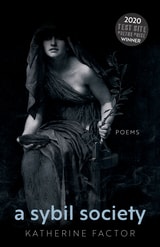
A Sybil Society
PoemsKatherine Factor
University of Nevada Press, 2022
In a time when only a select few are prosperous, A Sybil Society paints a portrait of the present moment and unveils a restless truth. The collection is fearless in the face of convention and gives readers a sense of devastating sorrow in a world gone mad.
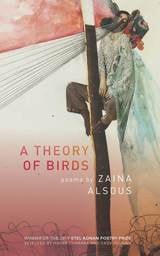
A Theory of Birds
PoemsZaina Alsous
University of Arkansas Press, 2019
Winner of the 2019 Etel Adnan Poetry Prize
Inside the dodo bird is a forest, Inside the forest
a peach analog, Inside the peach analog a woman, Inside
the woman a lake of funerals
This layering of bird, woman, place, technology, and ceremony, which begins this first full-length collection by Zaina Alsous, mirrors the layering of insights that marks the collection as a whole. The poems in A Theory of Birds draw on inherited memory, historical record, critical theory, alternative geographies, and sharp observation. In them, birds—particularly extinct species—become metaphor for the violences perpetrated on othered bodies under the colonial gaze.
Putting ecological preservation in conversation with Arab racial formation, state vernacular with the chatter of birds, Alsous explores how categorization can be a tool for detachment, domination, and erasure. Stretching their wings toward de-erasure, these poems—their subjects and their logics—refuse to stay put within a single category. This is poetry in support of a decolonized mind.
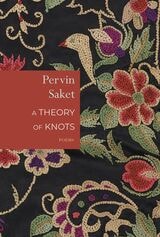
A Theory of Knots
Pervin Saket
Seagull Books, 2026
These lyric, unsparing poems stitch together a story of identity, belonging, and dissolution.
A Theory of Knots explores the loops of how identity and belonging are constructed, broken, resurrected, and dissolved. In sections, knots weave DNA and cords, memory and mythology, home and tongue; they draw on desire, Zoroastrian rituals, tradition and transgression, and the legacies of womanhood, asking what connects us, and at what cost.
As layers of identity are examined, Pervin Saket's poems return to language: heirloom, hazard, half-truth. Soon enough, language is both subject and suspect; having exposed the artificial nature of our truths, the poems confront the artificial nature of language itself. At the end, poetry reaches the wilderness of earth, collapses upon itself, dissolving on the page—untangling the final knot.

A Timeshare
Margaret Ross
Omnidawn, 2015
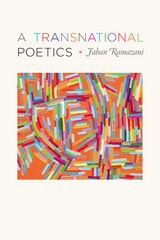
A Transnational Poetics
Jahan Ramazani
University of Chicago Press, 2009
Poetry is often viewed as culturally homogeneous—“stubbornly national,” in T. S. Eliot’s phrase, or “the most provincial of the arts,” according to W. H. Auden. But in A Transnational Poetics, Jahan Ramazani uncovers the ocean-straddling energies of the poetic imagination—in modernism and the Harlem Renaissance; in post–World War II North America and the North Atlantic; and in ethnic American, postcolonial, and black British writing. Cross-cultural exchange and influence are, he argues, among the chief engines of poetic development in the twentieth and twenty-first centuries.
Reexamining the work of a wide array of poets, from Eliot, Yeats, and Langston Hughes to Elizabeth Bishop, Lorna Goodison, and Agha Shahid Ali, Ramazani reveals the many ways in which modern and contemporary poetry in English overflows national borders and exceeds the scope of national literary paradigms. Through a variety of transnational templates—globalization, migration, travel, genre, influence, modernity, decolonization, and diaspora—he discovers poetic connection and dialogue across nations and even hemispheres.
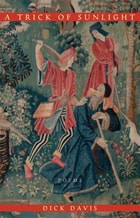
A Trick of Sunlight
PoemsDick Davis
Ohio University Press, 2006
In his new collection of poems, Dick Davis, the acclaimed author of Belonging, addresses themes that he has long worked with—travel, the experience of being a stranger, the clash of cultures, the vagaries of love, the pleasures and epiphanies of meaning that art allows us. But A Trick of Sunlight introduces a new theme that revolves around the idea of happiness—is it possible, must it be illusory, is its fleetingness an essential part of its nature so that disillusion is inevitable?
Many of the poems are shaded by the poet’s awareness of growing older, and by the ways that this both shuts down many of life’s possibilities and frees us from their demands. The levity of some verses here is something of a departure for Davis, but his insights can be mordant too, revealing darknesses as often as they invoke frivolity.
As Davis’s readers have come to expect, the poems in A Trick of Sunlight. aim at the aesthetic satisfactions that accompany accurate observations expressed with wit, intelligence, and grace. But they achieve as well an immediacy and rawness of vision that seem to belie his careful craft.
A Voice
Selected PoemsAnzhelina Polonskaya
Northwestern University Press, 2004
Drawn from her most recent Russian collections, A Voice: Selected Poems explores the poet's ongoing fascinations—desolate places, long journeys, a synesthesia of sensory stimulation, and the presence of death. Also on display is her Chekhovian gift for unexpected closure. This is a promising English-language debut from a poet already gaining international attention.
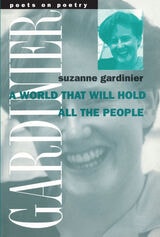
A World That Will Hold All the People
Suzanne Gardinier
University of Michigan Press, 1996
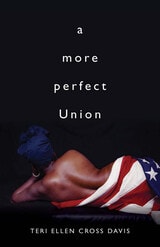
A more perfect Union
Teri Ellen Cross Davis
The Ohio State University Press, 2021
In the tender, sensual, and bracing poems of a more perfect Union, Teri Ellen Cross Davis reclaims the experience of living and mothering while Black in contemporary America, centering Black women’s pleasure by wresting it away from the relentless commodification of the White gaze. Cross Davis deploys stunning emotional range to uplift the mundane, interrogate the status quo, and ultimately create her own goddesses. Parenting, lust, household chores—all are fair game for Cross Davis’s gimlet eye. Whether honoring her grief for Prince’s passing while examining his role in midwifing her sexual awakening or contemplating travel and the gamble of being Black across this wide world, these poems tirelessly seek a path out of the labyrinth to hope.
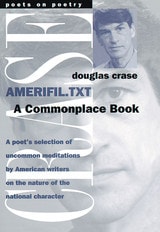
AMERIFIL.TXT
A Commonplace BookDouglas Crase
University of Michigan Press, 1996
The twenty-three American writers who appear in the book range chronologically from the colonial thinker John Wise to the contemporary poet John Ashbery. Their appearances are arranged to comment almost interactively on identifiable American issues like "Doing Your Thing," "How Writing Is Written," "Pursuit of Happiness," and "Right to Privacy." Douglas Crase has said that he finds rearrangement morally and artistically more interesting than opinions, as rearrangement involves choice and commitment, while opinions are only held. In the end, readers may conclude that Amerifil.Txt is not a commonplace book at all, but rather a spiritual autobiography of its compiler.
Douglas Crase is a widely anthologized poet, essayist, and critic. His acclaimed volume of poetry The Revisionist earned nominations for the National Book Critics Circle Award and the American Book Award in poetry. He has received an Ingram-Merrill Award, a Whiting Writer's Award, and fellowships from the MacArthur and Guggenheim foundations and the American Academy and Institute of Arts and Letters.
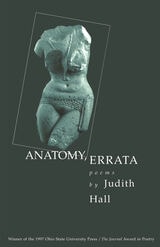
ANATOMY ERRATA
Judith Hall
The Ohio State University Press, 1998
ARCHICEMBALO
G.C. Waldrep
Tupelo Press, 2009
ARRIVAL
PoemsCheryl Boyce-Taylor
Northwestern University Press, 2017
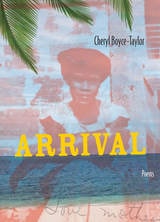
ARRIVAL is a poetic love story between mother and daughter. The poems are road maps, intertwining generations with a narrative beginning in 1950 with a woman who is pregnant with twins. In her seventh month she delivers a stillborn boy and a baby girl weighing less than two pounds. From there, the evocation of a series of catastrophic family events brings forth Cheryl Boyce-Taylor’s power to strip her readers down to their most vulnerable. Boyce-Taylor is steeped in the narratives of Trinidad and New York City, colored with metaphorical stew-pot images. She revels in her lyrical range as she weaves these poetic retellings of family, place, and identity.
Abacus of Loss
A Memoir in VerseSholeh Wolpé
University of Arkansas Press, 2022
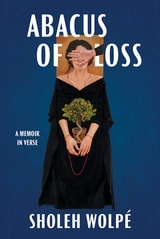
lbert Einstein said, “Not everything that can be counted counts, and not everything that counts can be counted.” It is in this vein that Sholeh Wolpé’s mesmerizing memoir in verse unfolds. In this lyrical and candid work, her fifth collection of poems, Wolpé invokes the abacus as an instrument of remembering. Through different countries and cultures, she carries us bead by bead on a journey of loss and triumph, love and exile. In the end, the tally is insight, not numbers, and we arrive at a place where nothing is too small for gratitude.
Abandoned Women and Poetic Tradition
Lawrence Lipking
University of Chicago Press, 1988