Results by title
18284 books match the query 'United States' and 1653 start with a
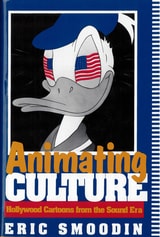
Animating Culture
Hollywood Cartoons from the Sound EraSmoodin, Eric
Rutgers University Press, 1993
Long considered "children's entertainment" by audiences and popular media, Hollywood animation has received little serious attention. Eric Smoodin's Animating Culture is the first and only book to thoroughly analyze the animated short film.
Usually running about seven or eight minutes, cartoons were made by major Hollywood studios––such as MGM, Warner Bros., and Disney––and shown at movie theaters along with a newsreel and a feature-length film. Smoodin explores animated shorta and the system that mass-produced them. How were cartoons exhibited in theaters? How did they tell their stories? Who did they tell them to? What did they say about race, class, and gender? How were cartoons related to the feature films they accompanied on the evening's bill of fare? What were the social functions of cartoon stars like Donald Duck and Minnie Mouse?
Smoodin argues that cartoons appealed to a wide audience––not just children––and did indeed contribute to public debate about political matters. He examines issues often ignored in discussions of animated film––issues such as social control in the U.S. army's "Private Snafu" cartoons, and sexuality and race in the "sites" of Betty Boop's body and the cartoon harem. Smoodin's analysis of the multiple discourses embedded in a variety of cartoons reveals the complex and sometimes contradictory ways that animation dealt with class relations, labor, imperialism, and censorship. His discussion of Disney and the Disney Studio's close ties with the U.S. government forces us to rethink the place of the cartoon in political and cultural life. Smoodin reveals the complex relationship between cartoons and the Hollywood studio system, and between cartoons and their audiences.
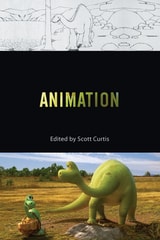
Animation
Curtis, Scott
Rutgers University Press, 2019
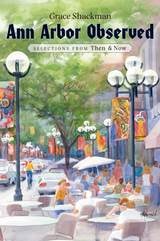
Ann Arbor Observed
Selections from Then and NowGrace Shackman
University of Michigan Press, 2010
Packed with photographs from Ann Arbor of yesteryear and the present day, Ann Arbor Observed compiles the best of Shackman’s articles in one book divided into eight sections: public buildings and institutions, the University of Michigan, transportation, industry, downtown Ann Arbor, recreation and culture, social fabric and communities, and architecture.
For long-time residents, Ann Arbor expatriates, University of Michigan alumni, and visitors alike, Ann Arbor Observed provides a rare glimpse of the bygone days of a town with a rich and varied history.
Grace Shackman is a history columnist for the Ann Arbor Observer, the Community Observer, and the Old West Side News, as well as a writer for University of Michigan publications. She is the author of two previous books: Ann Arbor in the 19th Century and Ann Arbor in the 20th Century.
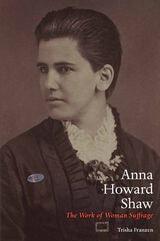
Anna Howard Shaw
The Work of Woman SuffrageTrisha Franzen
University of Illinois Press, 2014
With this first scholarly biography of Anna Howard Shaw (1847-1919), Trisha Franzen sheds new light on an important woman suffrage leader who has too often been overlooked and misunderstood.
An immigrant from a poor family, Shaw grew up in an economic reality that encouraged the adoption of non-traditional gender roles. Challenging traditional gender boundaries throughout her life, she put herself through college, worked as an ordained minister and a doctor, and built a tightly-knit family with her secretary and longtime companion Lucy E. Anthony.
Drawing on unprecedented research, Franzen shows how these circumstances and choices both impacted Shaw's role in the woman suffrage movement and set her apart from her native-born, middle- and upper-class colleagues. Franzen also rehabilitates Shaw's years as president of the National American Woman Suffrage Association, arguing that Shaw's much-belittled tenure actually marked a renaissance of both NAWSA and the suffrage movement as a whole.
Anna Howard Shaw: The Work of Woman Suffrage presents a clear and compelling portrait of a woman whose significance has too long been misinterpreted and misunderstood.
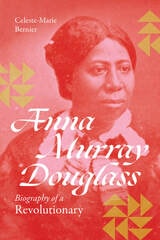
Anna Murray Douglass
Biography of a RevolutionaryCeleste-Marie Bernier
Duke University Press, 2026
Working with family descendants and based on thirty years of research digging through public and private archives, Celeste-Marie Bernier presents the first standalone biography of Anna Murray Douglass, wife and co-revolutionary of Frederick Douglass, honoring her history-making role as a campaigner, liberator, and freedom-fighter.
Anna Murray Douglass was born legally free in Maryland to Mary and Bambarra Murray. From working with her future husband, Frederick Douglass, to secure his self-liberation from enslavement to converting her family homes to command centers for the Underground Railroad, she dedicated her entire life to the fight for all freedoms and to supporting loved ones and strangers alike in their fight for equal, independent lives. Her deeds have long gone unsung until now.
In this first-ever standalone biography of the wife and co-revolutionary of Frederick Douglass, Celeste-Marie Bernier provides a detailed and illustrated history of Anna Murray Douglass’s leadership roles in fighting against the injustices of enslavement, racism, and white supremacy, as well as how she laid the foundation for her family to follow in her and her husband’s footsteps. After over three decades of archival research, Bernier presents a wide-ranging collection of stories, writings, letters, and photographs in a comprehensive and illuminating biography of Anna Murray Douglass’s life and work as an educator, activist, intellectual, orator, political thinker, artist, philosopher, and strategist. Ultimately, Bernier aims to combat the widespread misrepresentation that the liberation movement bearing the Douglass name was the work of one individual when it was, in reality, a family institution. Anna Murray Douglass is the first book in a ten-volume collection detailing the life and work of the entire Douglass family including their children, Rosetta, Lewis Henry, Frederick, Jr., Charles Remond and Annie Douglass, all freedom-fighters in their own right.

Anne Sexton
Telling the TaleSteven E. Colburn, Editor
University of Michigan Press, 1988

Anne Tyler as Novelist
Dale Salwak
University of Iowa Press, 1994

Annie Adams Fields
Woman of LettersRita Gollin
University of Massachusetts Press, 0

Annotated Book Lists Teen Reader
The Best from the Experts at YALSA-BKAmerican Library Association, 2011
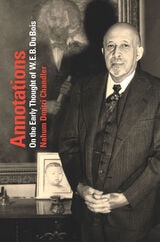
Annotations
On the Early Thought of W. E. B. Du BoisNahum Dimitri Chandler
Duke University Press, 2022

Anonymous in Their Own Names
Doris E. Fleischman, Ruth Hale, and Jane GrantSusan Henry
Vanderbilt University Press, 2012
Yet these women's achievements have been invisible to countless authors who have written about their husbands. This invisibility is especially ironic given that all three were feminists who kept their birth names when they married as a sign of their equality with their husbands, then battled the government and societal norms to retain their names. Hale and Grant so believed in this cause that in 1921 they founded the Lucy Stone League to help other women keep their names, and Grant and Fleischman revived the league in 1950. This was the same year Grant and her second husband, William Harris, founded White Flower Farm, pioneering at that time and today one of the country's most celebrated commercial nurseries.
Despite strikingly different personalities, the three women were friends and lived in overlapping, immensely stimulating New York City circles. Susan Henry explores their pivotal roles in their husbands' extraordinary success and much more, including their problematic marriages and their strategies for overcoming barriers that thwarted many of their contemporaries.
Another Aesthetics Is Possible
Arts of Rebellion in the Fourth World WarJennifer Ponce de León
Duke University Press, 2021
Another City upon a Hill
A New England MemoirJoseph A. Conforti
Tagus Press, 2013

Another Mother
Co-Parenting with the Foster Care SystemSarah Gerstenzang
Vanderbilt University Press, 2007
One night after midnight social workers brought a baby girl to the author's home, and her life as a foster mother began. A social worker herself, Gerstenzang discovered that raising Cecilia, despite all the personal joys, would be a complex and frustrating process of "co-parenting" with the foster care system in New York City. Foster parents are in great demand, but they are not necessarily treated well. We follow the author through the home visits, the Early Intervention evaluation, the WIC program that (with much bureaucratic hassle) provides free formula and cereal, and the mandatory parenting training sessions. She comments, "When Michael and I became foster parents, we learned how stigmatizing, demoralizing, and just plain inconvenient and time-consuming being part of the 'unentitled' population can be. With the exception of Early Intervention, we often felt that the programs were more concerned with regulating our behavior than with providing services."
Regular meetings with the birth family were also part of the process. Not only were they awkward for all concerned, but each visit involved a commute of several hours. One social worker admitted that she preferred a foster parent who didn't work because that person could more easily comply with the time-consuming regulations. Sarah and her husband Michael also agonize over complying with special regulations about hiring babysitters or traveling ("anytime we left New York State we needed to ask the agency's permission, which in turn had to get the signed consent from the birth mother").
Central to Another Mother is the issue of transracial placement. Sarah remembers, "That first day the contrast between my pale skin and Cecilia's brown skin seemed glaring. Not only did I feel that I had someone else's child, I felt that I had a child from another culture. Would I owe someone an explanation?" (Gerstenzang is recalling the 1972 opposition of the National Association of Black Social Workers.) Her account is full of anecdotes and reflections about race: acceptance and prejudice from others; the feelings of her two children about having a sibling of a different race; and culture keeping, beginning with skin and hair care.

Another Road to Justice
Antonio Orendain and the Texas Farmworkers’ RevoltTimothy Paul Bowman
University of Texas Press, 0
A new perspective on the farmworker movement that recenters Texas and activist Antonio Orendain.
Another Road to Justice chronicles an important yet overlooked chapter in US labor history: the farmworker movement in Texas. Eclipsed by the activities of the United Farm Workers in California during the 1960s through ‘80s, Texas organizers were, nonetheless, diligent radicals, deeply engaged in consciousness raising, social reform, and labor action.
In this engrossing account, Timothy Paul Bowman explores the lives and impact of Texas activists, above all Antonio Orendain—a key figure in the struggle of Mexican and Mexican American workers along the international border in the Lower Rio Grande Valley. A formerly undocumented immigrant who became the leading organizer in the region, Orendain went from Cesar Chavez’s righthand man in the UFW to one of his biggest rivals by the middle of the 1970s. Through efforts like the Starr County Strike of 1966–1967 and the 1975 melon strike, Orendain and other workers achieved significant gains. At the same time, tensions between organizers splintered the UFW, leading Orendain to form the Texas Farm Workers Union. Bowman shines light on this history and the often-overlooked activists who earnestly fought to overcome oppression, often at great personal cost.
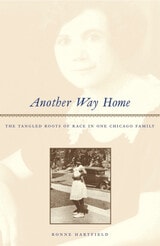
Another Way Home
The Tangled Roots of Race in One Chicago FamilyRonne Hartfield
University of Chicago Press, 2004
Hartfield begins with the early life of her mother, Day Shepherd. Born to a wealthy British plantation owner and the mixed-race daughter of a former slave, Day negotiates the complicated circumstances of plantation life in the border country of Louisiana and Mississippi and, as she enters womanhood, the quadroon and octoroon societies of New Orleans. Equally a tale of the Great Migration, Another Way Home traces Day's journey to Bronzeville, the epicenter of black Chicago during the first half of the twentieth century. Here, through the eyes of Day and, ultimately, her daughter, we witness the bustling city streets and vibrant middle-class culture of this iconic black neighborhood. We also relive crucial moments in African American history as they are experienced by the author's family and others in Chicago's South Side black community, from the race riots of 1919 and the Great Depression to the murder of Emmett Till and the dawn of the civil rights movement.
Throughout her book, Hartfield portrays mixed-race Americans navigating the challenges of their lives with resilience and grace, making Another Way Home an intimate and compelling encounter with one family's response to our racially charged culture.

Another Year Finds Me in Texas
The Civil War Diary of Lucy Pier StevensBy Vicki Adams Tongate
University of Texas Press, 2016
Lucy Pier Stevens, a twenty-one-year-old woman from Ohio, began a visit to her aunt’s family near Bellville, Texas, on Christmas Day, 1859. Little did she know how drastically her life would change on April 4, 1861, when the outbreak of the Civil War made returning home impossible. Stranded in enemy territory for the duration of the war, how would she reconcile her Northern upbringing with the Southern sentiments surrounding her?
Lucy Stevens’s diary—one of few women’s diaries from Civil War–era Texas and the only one written by a Northerner—offers a unique perspective on daily life at the fringes of America’s bloodiest conflict. An articulate, educated, and keen observer, Stevens took note seemingly of everything—the weather, illnesses, food shortages, parties, church attendance, chores, schools, childbirth, death, the family’s slaves, and political and military news. As she confided her private thoughts to her journal, she unwittingly revealed how her love for her Texas family and the Confederate soldier boys she came to care for blurred her loyalties, even as she continued to long for her home in Ohio. Showing how the ties of heritage, kinship, friendship, and community transcended the sharpest division in US history, this rare diary and Vicki Adams Tongate’s insightful historical commentary on it provide a trove of information on women’s history, Texas history, and Civil War history.
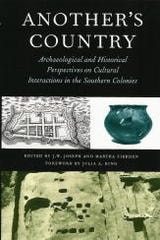
Another's Country
Archaeological and Historical Perspectives on Cultural Interactions in the Southern ColoniesEdited by J.W. Joseph and Martha Zierden
University of Alabama Press, 2001
The 18th-century South was a true melting pot, bringing together colonists from England, France, Germany, Ireland, Switzerland, and other locations, in addition to African slaves—all of whom shared in the experiences of adapting to a new environment and interacting with American Indians. The shared process of immigration, adaptation, and creolization resulted in a rich and diverse historic mosaic of cultures.
The cultural encounters of these groups of settlers would ultimately define the meaning of life in the nineteenth-century South. The much-studied plantation society of that era and the Confederacy that sprang from it have become the enduring identities of the South. A full understanding of southern history is not possible, however, without first understanding the intermingling and interactions of the region’s eighteenth-century settlers. In the essays collected here, some of the South’s leading historical archaeologists examine various aspects of the colonial experience, attempting to understand how cultural identity was expressed, why cultural diversity was eventually replaced by a common identity, and how the various cultures intermeshed.
Written in accessible language, this book will be valuable to archaeologists and non-archaeologists alike. Cultural, architectural, and military historians, cultural anthropologists, geographers, genealogists, and others interested in the cultural legacy of the South will find much of value in this book.
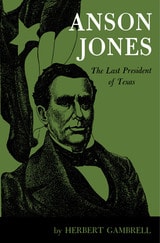
Anson Jones
The Last President of TexasBy Herbert Gambrell
University of Texas Press, 1964
This is the story of a New Englander who came penniless to Mexican Texas in 1833 and within the next decade helped to bring his adopted country through the turbulent disorders of settlement, revolution, political experimentation, and statehood.
Within a year of his arrival, Anson Jones was successfully practicing medicine, acquiring land, and resolving to avoid politics; but then the Revolution erupted and Jones became a private in the Texas Army, doubling as surgeon at San Jacinto. Military duty done, he resumed medical practice but some acts of the First Congress so irked him that he became a member of the Second and began a political career that lasted from 1837 to 1846 during which he served successively as congressman, minister to the United States, Texas senator, secretary of state, and president of the Republic of Texas. Anson Jones took his own life on January 9, 1858.
Told with imagination and insight, Herbert Gambrell's account of the life of Anson Jones is also a colorful and concurrent biography of Texas and its people.
Answering Teens' Tough Questions
mk Eagle
American Library Association, 2012
Ante-Bellum Alabama
Town and CountryWeymouth T. Jordan
University of Alabama Press, 1986
Ante-Bellum Alabama: Town and Country was written to give the reader insight into important facets of Alabama’s ante-bellum history. Presented in the form of case studies from the pre-Civil War period, the book deals with a city, a town, a planter’s family, rural social life, attitudes concerning race, and Alabama’s early agricultural and industrial development.
Ante-bellum Alabama’s primary interest was agriculture; the chief crop was King Cotton; and most of the people were agriculturalists. Towns and cities came into existence to supply the agricultural needs of the state and to process and distribute farm commodities. Similarly, Alabama’s industrial development began with the manufacture of implements for farm use, in response to the state’s agricultural needs. Rural-agriculture influences dominated the American scene; and in this respect Alabama was typical of her region as well as of most of the United States.
Anthems, Sonnets, and Chants
Recovering the African American Poetry of the 1930sJon Woodson
The Ohio State University Press, 2011
Anthropological Intelligence
The Deployment and Neglect of American Anthropology in the Second World WarDavid H. Price
Duke University Press, 2008
Anthropological Intelligence is based on interviews with anthropologists as well as extensive archival research involving many Freedom of Information Act requests. Price looks at the role played by the two primary U.S. anthropological organizations, the American Anthropological Association and the Society for Applied Anthropology (which was formed in 1941), in facilitating the application of anthropological methods to the problems of war. He chronicles specific projects undertaken on behalf of government agencies, including an analysis of the social effects of postwar migration, the design and implementation of OSS counterinsurgency campaigns, and the study of Japanese social structures to help tailor American propaganda efforts. Price discusses anthropologists’ work in internment camps, their collection of intelligence in Central and South America for the FBI’s Special Intelligence Service, and their help forming foreign language programs to assist soldiers and intelligence agents. Evaluating the ethical implications of anthropological contributions to World War II, Price suggests that by the time the Cold War began, the profession had set a dangerous precedent regarding what it would be willing to do on behalf of the U.S. government.

Anthropology At the Dawn of the Cold War
The Influence of Foundations, Mccarthyism and the CIAEdited by Dustin M. Wax
Pluto Press, 2008
This book breaks new ground in the history of anthropology, opening up an explicit examination of anthropology in the Cold War era. With historical distance, Cold War anthropology has begun to emerge as a distinct field within the discipline. This book brings a number of different approaches to bear on the questions raised by anthropology's Cold War history.
The contributors show how anthropologists became both tools and victims of the Cold War state during the rise of the United States in the post-War period. Examining the intersection between science and power, this book is a compelling read for anthropologists, historians, sociologists, and anyone interested in the way in which colonial and neo-colonial knowledge is produced and constructed.
Anthropology and Global Counterinsurgency
Edited by John D. Kelly, Beatrice Jauregui, Sean T. Mitchell, and Jeremy Walton
University of Chicago Press, 2010
Global events of the early twenty-first century have placed new stress on the relationship among anthropology, governance, and war. Facing prolonged insurgency, segments of the U.S. military have taken a new interest in anthropology, prompting intense ethical and scholarly debate. Inspired by these issues, the essays in Anthropology and Global Counterinsurgency consider how anthropologists can, should, and do respond to military overtures, and they articulate anthropological perspectives on global war and power relations.
This book investigates the shifting boundaries between military and civil state violence; perceptions and effects of American power around the globe; the history of counterinsurgency doctrine and practice; and debate over culture, knowledge, and conscience in counterinsurgency. These wide-ranging essays shed new light on the fraught world of Pax Americana and on the ethical and political dilemmas faced by anthropologists and military personnel alike when attempting to understand and intervene in our world.
Anthropology and Politics
Visions, Traditions, and TrendsJoan Vincent
University of Arizona Press, 1990
Anthropology and Radical Humanism
Native and African American Narratives and the Myth of RaceJack Glazier
Michigan State University Press, 2020

Anti-Apocalypse
Exercises in Genealogical CriticismLee Quinby
University of Minnesota Press, 1994
Anti-Apocalypse was first published in 1994. Minnesota Archive Editions uses digital technology to make long-unavailable books once again accessible, and are published unaltered from the original University of Minnesota Press editions.
As the year 2000 looms, heralding a new millennium, apocalyptic thought abounds-and not merely among religious radicals. In politics, science, philosophy, popular culture, and feminist discourse, apprehensions of the End appear in images of cultural decline and urban chaos, forecasts of the end of history and ecological devastation, and visions of a new age of triumphant technology or a gender-free utopia. There is, Lee Quinby contends, a threatening "regime of truth" prevailing in the United States-and this regime, with its enforcement of absolute truth and morality, imperils democracy. In Anti-Apocalypse, Quinby offers a powerful critique of the millenarian rhetoric that pervades American culture. In doing so, she develops strategies for resisting its tyrannies.
Drawing on feminist and Foucauldian theory, Quinby explores the complex relationship between power, truth, ethics, and apocalypse. She exposes the ramifications of this relationship in areas as diverse as jeanswear magazine advertising, the Human Genome project, contemporary feminism and philosophy, texts by Henry Adams and Zora Neale Hurston, and radical democratic activism. By bringing together such a wide range of topics, Quinby shows how apocalypse weaves its way through a vast network of seemingly unrelated discourses and practices. Tracing the deployment of power through systems of alliance, sexuality, and technology, Quinby reveals how these power relationships produce conflicting modes of subjectivity that create possibilities for resistance. She promotes a variety of critical stances—genealogical feminism, an ethics of the flesh, and "pissed criticism"—as challenges to apocalyptic claims for absolute truth and universal morality. Far-reaching in its implications for social and cultural theory as well as for political activism, Anti-Apocalypse will engage readers across the cultural spectrum and challenge them to confront one of the most subtle and insidious orthodoxies of our day.Lee Quinby is associate professor of English and American studies at Hobart and William Smith Colleges. She is the author of Freedom, Foucault, and the Subject of America (1991) and coeditor (with Irene Diamond) of Feminism and Foucault: Reflections on Resistance (1988).
Anti-Arab Racism in the USA
Where It Comes From and What It Means For Politics TodaySteven Salaita
Pluto Press, 2006
Miriam Cooke, Professor, Duke University
"An impassioned and deeply compelling look at the origins, evolution, manifestations and implications of anti-Arab racism today. ... A tour-de-force."
Lisa Suhair Majaj, co-editor, Etel Adnan: Critical Reflections on the Arab-American Writer and Artist and Intersections: Gender, Nation, and Community in Arab Women¹s Novels
"Salaita dives head-first into the heart of racism in America and uses his personal experiences to help readers understand the mechanics of racism as it applies to Arabs, Muslims and people who look Middle Eastern in the post-Sept. 11 world."
Ray Hanania, journalist and filmmaker, author of I¹m Glad I Look Like a Terrorist: Growing up Arab in America and Arabs of Chicagoland
"A highly recommended read, not only for students of Middle East history, but for the average American who wants to know how we have become so intimately and yet so bitterly entwined with the people of the Middle East. ... Salaita has thoughtfully articulated a very regretful era of unabashed racism in American history."
Ramzy Baroud, editor, Palestine Chronicle and author of Searching Jenin
Today is a difficult time to be both Arab and American. Since 9/11 there has been a lot of criticism of America¹s involvement in the middle east. Yet there has been little analysis of how America treats citizens of Arab or middle eastern origin within its own borders.
Steven Salaita explores the reality of Anti-Arab racism in America. He blends personal narrative, theory and polemics to show how this deep-rooted racism affects everything from legislation to cultural life, shining a light on the consequences of Anti-Arab racism both at home and abroad.
Uniquely, the book shows how ingrained racist attitudes can be found within the progressive movements on the political left, as well as the right. Salaita argues that, under the guise of patriotism, Anti-Arab racism fuels support for policies such as the Patriot Act.
Salaita breaks down the façade of Anti-Arab racism with an insightful analysis, arguing for the urgency of a commitment to openness and inclusion in today¹s political climate.
Steven Salaita is Assistant Professor of English at the University of Wisconsin -Whitewater. He writes frequently about Arab America and the Arab World.
Anti-Catholicism in Arkansas
How Politicians, the Press, the Klan, and Religious Leaders Imagined an Enemy, 1910–1960Kenneth C. Barnes
University of Arkansas Press, 2016
Winner, 2017 Ragsdale Award
A timely study that puts current issues—religious intolerance, immigration, the separation of church and state, race relations, and politics—in historical context.
The masthead of the Liberator, an anti-Catholic newspaper published in Magnolia, Arkansas, displayed from 1912 to 1915 an image of the Whore of Babylon. She was an immoral woman sitting on a seven-headed beast, holding a golden cup “full of her abominations,” and intended to represent the Catholic Church.
Propaganda of this type was common during a nationwide surge in antipathy to Catholicism in the early twentieth century. This hostility was especially intense in largely Protestant Arkansas, where for example a 1915 law required the inspection of convents to ensure that priests could not keep nuns as sexual slaves.
Later in the decade, anti-Catholic prejudice attached itself to the campaign against liquor, and when the United States went to war in 1917, suspicion arose against German speakers—most of whom, in Arkansas, were Roman Catholics.
In the 1920s the Ku Klux Klan portrayed Catholics as “inauthentic” Americans and claimed that the Roman church was trying to take over the country’s public schools, institutions, and the government itself. In 1928 a Methodist senator from Arkansas, Joe T. Robinson, was chosen as the running mate to balance the ticket in the presidential campaign of Al Smith, a Catholic, which brought further attention.
Although public expressions of anti-Catholicism eventually lessened, prejudice was once again visible with the 1960 presidential campaign, won by John F. Kennedy.
Anti-Catholicism in Arkansas illustrates how the dominant Protestant majority portrayed Catholics as a feared or despised “other,” a phenomenon that was particularly strong in Arkansas.
Anti-Imperialist Modernism
Race and Transnational Radical Culture from the Great Depression to the Cold WarBenjamin Balthaser
University of Michigan Press, 2015
Anti-Indianism in Modern America
A Voice from Tatekeya's EarthElizabeth Cook-Lynn
University of Illinois Press, 2000
Addressing Native American studies past, present, and future, the essays in New Indians, Old Wars tackle the discipline head-on, presenting a radical revision of the popular view of the American West in the process. Instead of luxuriating in the West's past glories or accepting the widespread historians' view of it as a shared place, Elizabeth Cook-Lynn argues that the American West should be fundamentally understood as stolen.
Cook-Lynn says that the Indian Wars of Resistance to the nineteenth- and twentieth-century colonial effort to seize native lands and resources must be given standing in the face of the ever-growing imperial narrative of America--because the terror the world is now witnessing may be the direct consequence of events which began in America's earliest dealings with the natives of this continent. Cook-Lynn's story examines the ongoing and perennial relationship of conflict between colonizers and indigenous people, and it is a story that every American must read.
Cook-Lynn understands that the story of the American West teaches the political language of land theft and tyranny. She argues that to remedy this situation, Native American studies must be considered and pursued as its own discipline, rather than as a subset of history or anthropology. She makes an impassioned claim that such a shift, not merely an institutional or theoretical change, could allow Native American studies to play an important role in defending the sovereignty of indigenous nations today.
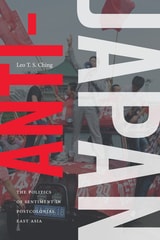
Anti-Japan
The Politics of Sentiment in Postcolonial East AsiaLeo T. S. Ching
Duke University Press, 2019

Antidiscrimination Law and Minority Employment
Recruitment Practices and Regulatory ConstraintsFarrell Bloch
University of Chicago Press, 1994
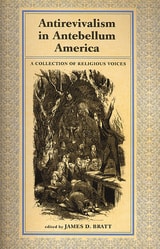
Antirevialism in Antebellum America
A Collection of Religious VoicesBratt, James D
Rutgers University Press, 2005
But revivalism has always generated opposition, too, even in its century of glory. In Anti-Revivalism in Antebellum America, James D. Bratt offers extensive introductions to primary anti-revivalist documents. These works range from the Philadelphia Methodist John F. Watson's protests against camp meetings in 1819, to Elizabeth Cady Stanton's "Eighty Years and More," written in 1898, in which she recalls her youthful encounter with revival preaching and her rebound into political activism and religious agnosticism. Through the recovered voices of antebellum religious critics, Bratt shows how American culture was already being reshaped a generation before the Civil War and how evangelical religion stood at the center of a "culture war."
If revivals typified the era when Americans launched and defined their new nation, then objections to these revivals embodied the growing discontent at what the nation had become. An important and long overdue collection, this book urges an understanding of anti-revival literature both in the context of the era when it emerged as well as in terms of the broader dynamic of American life.
Includes selections from Orestes Brownson, Horace Bushnell, Calvin Colton, Orville Dewey, Albert Baldwin Dod, George Elley, Charles G. Finney, John Williamson Nevin, Stephen Olin, Phoebe Palmer, Daniel Alexander Payne, Ephraim Perkins, Elizabeth Cady Stanton, Joseph Smith, Harriet Beecher Stowe, La Roy Sunderland, John Fanning Watson, Ellen G. White, and Friedrich C. D. Wyneken.

Antisubmarine Warrior in the Pacific
Six Subs Sunk in Twelve DaysJohn A. Williamson
University of Alabama Press, 2005
A commanding firsthand account of the most successful antisubmarine campaign in U.S. Naval History.
The USS England was a 1200-ton, 306-foot, long-hull destroyer escort. Commissioned into service in late 1943 and dispatched to the Pacific the following February, the England and its crew, in one 12-day period in 1944, sank more submarines than any other ship in U.S. naval history: of the six targets attacked, all six were destroyed. For this distinction, legendary in the annals of antisubmarine warfare, the ship and her crew were honored with the Presidential Unit Citation.
After convoying in the Atlantic, John A. Williamson was assigned to the England—first as its executive officer, then as its commanding officer—from the time of her commissioning until she was dry-docked for battle damage repairs in the Philadelphia Naval Yard fifteen months later. Besides being a key participant in the remarkable antisubmarine actions, Williamson commanded the England in the battle of Okinawa, where she was attacked by kamikaze planes.
Williamson narrates his memoir with authority and authenticity, describes naval tactics and weaponry precisely, and provides information gleaned from translations of the orders from the Japanese high command to Submarine Squadron 7. The author details the challenges of communal life aboard ship and explains the intense loyalty that bonds crew members for life. Ultimately, Williamson offers a compelling portrait of himself, an inexperienced naval officer who, having come of age in Alabama during the Depression, rose to become the most successful World War II antisubmarine warfare officer in the Pacific.

Antitrust Law, Second Edition
Richard A. Posner
University of Chicago Press, 2001
Antitrust Law was fundamental to redefining the field of antitrust law and it remains the definitive textbook for those teaching or learning the subject, Richard Posner's book has played a major role in transforming the field of antitrust law into a body of economically rational principles largely in accord with the ideas set forth in the first edition. Today's antitrust professionals may disagree on specific practices and rules, but most litigators, prosecutors, judges, and scholars agree that the primary goal of antitrust laws should be to promote economic welfare, and that economic theory should be used to determine how well business practices conform to that goal.
In this thoroughly revised edition, Posner explains the economic approach to new generations of lawyers and students.
"The antitrust laws are here to stay," Posner writes, "and the practical question is how to administer them better-more rationally, more accurately, more expeditiously, more efficiently." This fully revised classic will continue to be the standard work in the field.
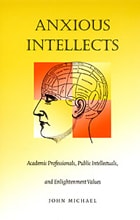
Anxious Intellects
Academic Professionals, Public Intellectuals, and Enlightenment ValuesJohn Michael
Duke University Press, 2000
As part of his investigation of intellectuals’ self-conceptions and their roles in society, Michael concentrates on several well-known contemporary African American intellectuals, including Henry Louis Gates Jr. and Cornel West. To illuminate public debates over pedagogy and the role of university, he turns to the work of Todd Gitlin, Michael Bérubé, and Allan Bloom. Stanley Fish’s pragmatic tome, Doing What Comes Naturally, along with a juxtaposition of Fredric Jameson and Samuel Huntington’s work, proves fertile ground for Michael’s argument that democratic politics without intellectuals is not possible. In the second half of Anxious Intellects, Michael relies on three popular conceptions of the intellectual—as critic, scientist, and professional—to discuss the work of scholars Constance Penley, Henry Jenkins, the celebrated physicist Stephen Hawking, and others, insisting that ambivalence, anxiety, projection, identification, hybridity, and various forms of psychosocial complexity constitute the real meaning of Enlightenment intellectuality. As a new and refreshing contribution to the recently emergent culture and science wars, Michael’s take on contemporary intellectuals and their place in society will enliven and redirect these ongoing debates.

Anyplace But Here
Arna Bontemps & Jack Conroy
University of Missouri Press, 1997
Originally published in 1945 as They Seek a City, this classic was revised and expanded in 1966 to include chapters on Marcus Garvey, the Black Muslims, Malcolm X, and the racial disturbances in Detroit, Chicago, and Watts. Filled with stories about real men and women who sought a new life in the North, Anyplace But Here depicts the theme of hope, undercut by disappointment, and hope renewed as it details the African American's search for a home.
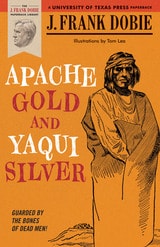
Apache Gold and Yaqui Silver
By J. Frank Dobie
University of Texas Press, 1985
Buried vaults stacked with gold bars, secret caches of coins and jewels plundered from the Spaniards and the Church, exposed veins of ore with nuggets the size of turkey eggs. Guarded by the bones of dead men, the legendary treasures of the Southwest still wait for those foolhardy or desperate enough to seek them.
Death is the cure for gold fever, and the lucky few who saw the riches and lived to tell of them spent the rest of their lives searching, haunted by faulty memories, changed landscapes, and quirks of fate. It is the stories of these men and the wealth they pursued that J. Frank Dobie tells in Apache Gold and Yaqui Silver.
In this masterful collection of tales, Dobie introduces us to Pedro Loco, General Mexhuira's ghost, the German, and a colorful group of oddfellows driven to roam the hills in an eternal quest for the hidden entrance, the blazed tree, the box canyon, for fabulous wealth glimpsed, lost, and never forgotten.
Are treasures really there? Searchers still seek them. But for the reader, the treasure is here—Dobie's tales are pure gold.
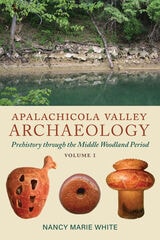
Apalachicola Valley Archaeology, Volume 1
Prehistory through the Middle Woodland PeriodNancy Marie White
University of Alabama Press, 2024
The definitive archaeological record and what is known or speculated about the ancient Apalachicola and lower Chattahoochee Valley region of northwest Florida, southeast Alabama, and southwest Georgia.
In this meticulously researched volume, Nancy Marie White provides a major holistic synthesis of the archaeological record and what is known or surmised about the peoples of the Apalachicola and lower Chattahoochee Valley region of northwest Florida, southeast Alabama, and southwest Georgia. White transforms a neglected research area into a lively saga that spans the time of the first human settlement, around 14,000 years ago, through the Middle Woodland period, ending about AD 700.
White reveals that Paleoindian habitation was more extensive than once surmised. Archaic sites were widespread, and those societies persisted when the Ice Age ended 10,000 years ago. Pottery appeared in the Late Archaic period (before 4000 BP), and Early Woodland–period burial mounds demonstrate a flowering of religious and ritual systems. Middle Woodland societies expanded this mortuary ceremony, and the complex pottery of the Swift Creek and the early Weeden Island ceramic series show an increased fascination with the ornate and unusual. Yet, basic Native American lifeways continued with gathering-fishing-hunting subsistence traditions similar to those of their ancestors.
This volume and its companion form the definitive work on the Apalachicola–lower Chattahoochee Valley region for both scholars and general readers interested in Native Americans of the Southeast.
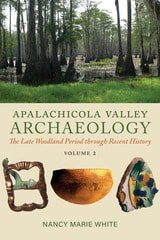
Apalachicola Valley Archaeology, Volume 2
The Late Woodland Period through Recent HistoryNancy Marie White
University of Alabama Press, 0
A comprehensive synthesis tracing 1,300 years of cultural transformation in the Apalachicola–lower Chattahoochee Valley, from Late Woodland societies to the modern era.
Apalachicola Valley Archaeology: The Late Woodland Period through Recent History, Volume 2, synthesizes the archaeology and history of the Native Americans, African Americans, and Euro-Americans of the Apalachicola–lower Chattahoochee Valley region of northwest Florida, southeast Alabama, and southwest Georgia from about 1300 years ago until the present. The region extends from Columbia, Alabama, to the Gulf of Mexico. It is culturally and environmentally distinct but little known archaeologically because it crosses historic political boundaries at the frontier.
Early chapters overview the environment and archaeology. Coverage then surveys time periods, from the Late Woodland to present. Topics include settlement, archaeological findings and material culture, subsistence and seasonality, history, sociopolitical systems, and peoples.
White’s prodigious work reveals that the prehistoric Late Woodland cultures who developed maize agriculture developed into Fort Walton chiefdoms. Post-invasion and Spanish and British colonization, these peoples were replaced by consolidated groups of Native American survivors and maroons moving around the region. These multiethnic societies with blended material cultures developed new identities, living at the edges of colonial territories. Creek societies, many becoming Seminoles, fought on all sides of European and American conflicts until most Indians were forcibly removed in the 1830s. Then the region became important for cotton, cattle, and timber, which were often produced by enslaved labor and transported by steamboat. Later expansion of agriculture and silviculture, as well as turpentine, tupelo honey, and other industries, left material evidence. The usefulness of the information to modern society is noted. Copious illustrations enhance the scientific analyses and the telling of the human stories.
Aphrodite's Daughters
Three Modernist Poets of the Harlem RenaissanceHoney, Maureen
Rutgers University Press, 2016
Apocalypse Man
The Death Drive and the Rhetoric of White Masculine VictimhoodCasey Ryan Kelly
The Ohio State University Press, 2020
Exemplified by President Donald J. Trump’s slogan “Make American Great Again,” white masculinity has become increasingly organized around melancholic attachments to an imagined past when white men were still atop the social hierarchy. How and why are white men increasingly identifying as victims of social, economic, and political change? Casey Ryan Kelly’s Apocalypse Man seeks to answer this question by examining textual and performative examples of white male rhetoric—as found among online misogynist and incel communities, survivalists and “doomsday preppers,” gender-motivated mass shooters, gun activists, and political demagogues. Using sources ranging from reality television and Reddit manifestos to gun culture and political rallies, Kelly ultimately argues that death, victimhood, and fatalism have come to underwrite the constitution of contemporary white masculinity.

Apocalyptic Anxiety
Religion, Science, and America's Obsession with the End of the WorldAnthony Aveni
University Press of Colorado, 2016
The book begins with the Millerites, the nineteenth-century religious sect of Pastor William Miller, who used biblical calculations to predict October 22, 1844 as the date for the Second Advent of Christ. Aveni also examines several other religious and philosophical movements that have centered on apocalyptic themes—Christian millennialism, the New Age movement and the Age of Aquarius, and various other nineteenth- and early twentieth-century religious sects, concluding with a focus on the Maya mystery of 2012 and the contemporary prophets who connected the end of the world as we know it with the overturning of the Maya calendar.
Apocalyptic Anxiety places these seemingly never-ending stories of the world’s end in the context of American history. This fascinating exploration of the deep historical and cultural roots of America’s voracious appetite for apocalypse will appeal to students of American history and the histories of religion and science, as well as lay readers interested in American culture and doomsday prophecies.
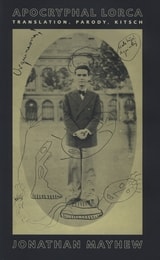
Apocryphal Lorca
Translation, Parody, KitschJonathan Mayhew
University of Chicago Press, 2009
Federico García Lorca (1898–1936) had enormous impact on the generation of American poets who came of age during the cold war, from Robert Duncan and Allen Ginsberg to Robert Creeley and Jerome Rothenberg. In large numbers, these poets have not only translated his works, but written imitations, parodies, and pastiches—along with essays and critical reviews. Jonathan Mayhew’s Apocryphal Lorca is an exploration of the afterlife of this legendary Spanish writer in the poetic culture of the United States.
The book examines how Lorca in English translation has become a specifically American poet, adapted to American cultural and ideological desiderata—one that bears little resemblance to the original corpus, or even to Lorca’s Spanish legacy. As Mayhew assesses Lorca’s considerable influence on the American literary scene of the latter half of the twentieth century, he uncovers fundamental truths about contemporary poetry, the uses and abuses of translation, and Lorca himself.
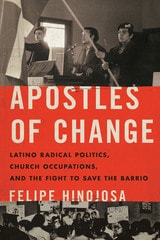
Apostles of Change
Latino Radical Politics, Church Occupations, and the Fight to Save the BarrioBy Felipe Hinojosa
University of Texas Press, 2021
2021 Finalist Raul Yzaguirre Best Political/Current Affairs Book, International Latino Book Awards
Winner of the Texas Association of Chicanos in Higher Education Inaugural Book Award
Unraveling the intertwined histories of Latino radicalism and religion in urban America, this book examines how Latino activists transformed churches into staging grounds for protest against urban renewal and displacement.
In the late 1960s, the American city found itself in steep decline. An urban crisis fueled by federal policy wreaked destruction and displacement on poor and working-class families. The urban drama included religious institutions, themselves undergoing fundamental change, that debated whether to stay in the city or move to the suburbs. Against the backdrop of the Black and Brown Power movements, which challenged economic inequality and white supremacy, young Latino radicals began occupying churches and disrupting services to compel church communities to join their protests against urban renewal, poverty, police brutality, and racism.
Apostles of Change tells the story of these occupations and establishes their context within the urban crisis; relates the tensions they created; and articulates the activists' bold, new vision for the church and the world. Through case studies from Chicago, Los Angeles, New York City, and Houston, Felipe Hinojosa reveals how Latino freedom movements frequently crossed boundaries between faith and politics and argues that understanding the history of these radical politics is essential to understanding the dynamic changes in Latino religious groups from the late 1960s to the early 1980s.
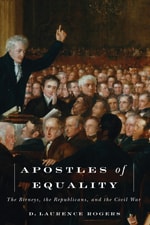
Apostles of Equality
The Birneys, the Republicans, and the Civil WarD. Laurence Rogers
Michigan State University Press, 2011
The first biographical account of the life of James Gillespie Birney in more than fifty years, this fabulously insightful history illuminates and elevates an all-but-forgotten figure whose political career contributed mightily to the American political fabric. Birney was a southern-born politician at the heart of the antislavery movement, with two southern-born sons who were major generals involved in key Union Army activities, including the leadership of the black troops. The interaction of the Birneys with historical figures (Abraham Lincoln, Harriet Beecher Stowe, and Henry Clay) highlights the significance of the family’s activities in politics and war. D. Laurence Rogers offers a unique historiography of the abolition movement, the Civil War, and Reconstruction through the experiences of one family navigating momentous developments from the founding of the Republic until the late 19th century.

Apostolic Religious Life in America Today
A Response to the CrisisRichard Gribble
Catholic University of America Press, 2011
Appalachia North
A MemoirMatthew Ferrence
West Virginia University Press, 2018
Appalachia North is the first book-length treatment of the cultural position of northern Appalachia—roughly the portion of the official Appalachian Regional Commission zone that lies above the Mason-Dixon line. For Matthew Ferrence this region fits into a tight space of not-quite: not quite “regular” America and yet not quite Appalachia.
Ferrence’s sense of geographic ambiguity is compounded when he learns that his birthplace in western Pennsylvania is technically not a mountain but, instead, a dissected plateau shaped by the slow, deep cuts of erosion. That discovery is followed by the diagnosis of a brain tumor, setting Ferrence on a journey that is part memoir, part exploration of geology and place. Appalachia North is an investigation of how the labels of Appalachia have been drawn and written, and also a reckoning with how a body always in recovery can, like a region viewed always as a site of extraction, find new territories of growth.