Results by title
1947 books match the query 'Music' and 127 start with a
An Unnatural Attitude
Phenomenology in Weimar Musical ThoughtBenjamin Steege
University of Chicago Press, 2021
An Unnatural Attitude traces a style of musical thought that coalesced in the intellectual milieu of the Weimar Republic—a phenomenological style that sought to renew contact with music as a worldly circumstance. Deeply critical of the influence of naturalism in aesthetics and ethics, proponents of this new style argued for the description of music as something accessible neither through introspection nor through experimental research, but rather in an attitude of outward, open orientation toward the world. With this approach, music acquires meaning in particular when the act of listening is understood to be shared with others.
Benjamin Steege interprets this discourse as the response of a young, post–World War I generation amid a virtually uninterrupted experience of war, actual or imminent—a cohort for whom disenchantment with scientific achievement was to be answered by reasserting the value of imaginative thought. Steege draws on a wide range of published and unpublished texts from music theory, pedagogy, criticism, and philosophy of music, some of which appear for the first time in English translation in the book’s appendixes. An Unnatural Attitude considers the question: What are we thinking about when we think about music in non-naturalistic terms?

Analyzing NES Music
Harmony, Form, and the Art of Technological ConstraintAndrew Schartmann
Intellect Books, 2025
Faced with severe technological constraints on system memory, composers of the Nintendo Entertainment System (NES) sought ways to disguise repetition in music that repeats extensively. Their efforts gave rise to a set of compositional techniques for creating the illusion of variety.
This book distills these techniques into a theory of harmony and form for the analysis of NES music. It then uses this theory to analyze five landmark scores of the NES era: Super Mario Bros., Dragon Warrior, Metroid, Mega Man 2, and Silver Surfer. The book also includes a detailed description of the NES hardware and its attendant constraints, highlighting the ever-evolving dialogue between technology, commercial demand, and artistic sensibility that characterizes video game music of the 1980s and 1990s.
Androids in the Enlightenment
Mechanics, Artisans, and Cultures of the SelfAdelheid Voskuhl
University of Chicago Press, 2013
Angela Gheorghiu
A Life for ArtAngela Gheorghiu
University Press of New England, 2018
Angelic Airs, Subversive Songs
Music as Social Discourse in the Victorian NovelAlisa Clapp-Itnyre
Ohio University Press, 2027
Music was at once one of the most idealized and one of the most contested art forms of the Victorian period. Yet this vitally important nineteenth-century cultural form has been studied by literary critics mainly as a system of thematic motifs. Angelic Airs, Subversive Songs positions music as a charged site of cultural struggle, promoted concurrently as a transcendent corrective to social ills and as a subversive cause of those ills. Alisa Clapp-Itnyre examines Victorian constructions of music to advance patriotism, Christianity, culture, and domestic harmony, and suggests that often these goals were undermined by political tensions in song texts or “immoral sensuality” in the “spectacle” of live music-making. Clapp-Itnyre turns her focus to the novels of Elizabeth Gaskell, George Eliot, and Thomas Hardy, who present complex engagements with those musical genres most privileged by Victorian society: folk songs, religious hymns, and concert music. Angelic Airs, Subversive Songs recovers the pervasive ambiguities of the Victorian musical period, ambiguities typically overlooked by both literary scholars and musicologists. To the literary critic and cultural historian, Clapp-Itnyre demonstrates the necessity of further exploring the complete aesthetic climate behind some of the Victorian period’s most powerful literary works. And to the feminist scholar and the musicologist, Clapp-Itnyre reveals the complexities of music as both an oppressive cultural force and an expressive, creative outlet for women.
Anthem Quality
National Songs: A Theoretical SurveyChristopher Kelen
Intellect Books, 2014
Thought of most often in the context of the Olympics or other sporting events, national anthems are a significant way for a nation and its citizens to express their identity and unity. Despite their prevalence, anthems as an expression of national self-image and culture have rarely been examined—until now. Anthem Quality analyzes the lyrics of many anthems in order to explore their historical and contemporary context. Christopher Kelen’s research reveals how many of the world’s most famous and best-known national anthems, including “The Marseillaise,” “The Star-Spangled Banner,” and “God Save the Queen” deal with such topics as authority, religion, and political devotion.

Antonio Salieri and Viennese Opera
John A. Rice
University of Chicago Press, 1999
Bringing Salieri, his operas, and eighteenth-century Viennese theater vividly to life, Rice places Salieri where he belongs: no longer lurking in Mozart's shadow, but standing proudly among the leading opera composers of his age. Rice's research in the archives of Vienna and close study of his scores reveal Salieri to have been a prolific, versatile, and adventurous composer for the stage. Within the extraordinary variety of Salieri's approaches to musical dramaturgy, Rice identifies certain habits of orchestration, melodic style, and form as distinctively "Salierian"; others are typical of Viennese opera in general. A generous selection of excerpts from Salieri's works, most previously unpublished, will give readers a fuller appreciation for his musical style—and its influence on Mozart—than was previously possible.
Applications of Research in Music Behavior
Clifford K. Madsen
University of Alabama Press, 1991
Applications of Research in Music Behavior stresses the practical applications and implications of investigating music behavior in a systematic, objective manner. Specifically, the book focuses on factors influencing the teaching of children; efficient methods for instructing future teachers; elements affecting musical perception, likes, and dislikes; and innovative efforts to investigate new areas of study. Recent studies by twenty-six nationally known educators that use objective strategies associated with experimental and behavioral research are presented to illustrate how people learn about music and how people are taught to make music.
The research studies are introduced by an article emphasizing the usefulness of research literature in devising a teaching strategy and are grouped into four sections: Teaching Music to Children, Teaching Future Teachers, Preference and Perception, and New Horizons. The concluding article is an allegorical proposal for balance and perspective in the consideration of music education.
Are We Not New Wave?
Modern Pop at the Turn of the 1980sTheo Cateforis
University of Michigan Press, 2011
“Are We Not New Wave? is destined to become the definitive study of new wave music.”
—Mark Spicer, coeditor of Sounding Out Pop
New wave emerged at the turn of the 1980s as a pop music movement cast in the image of punk rock’s sneering demeanor, yet rendered more accessible and sophisticated. Artists such as the Cars, Devo, the Talking Heads, and the Human League leapt into the Top 40 with a novel sound that broke with the staid rock clichés of the 1970s and pointed the way to a more modern pop style.
In Are We Not New Wave? Theo Cateforis provides the first musical and cultural history of the new wave movement, charting its rise out of mid-1970s punk to its ubiquitous early 1980s MTV presence and downfall in the mid-1980s. The book also explores the meanings behind the music’s distinctive traits—its characteristic whiteness and nervousness; its playful irony, electronic melodies, and crossover experimentations. Cateforis traces new wave’s modern sensibilities back to the space-age consumer culture of the late 1950s/early 1960s.
Three decades after its rise and fall, new wave’s influence looms large over the contemporary pop scene, recycled and celebrated not only in reunion tours, VH1 nostalgia specials, and “80s night” dance clubs but in the music of artists as diverse as Rihanna, Lady Gaga, Miley Cyrus, and the Killers.
Arkansas Godfather
The Story of Owney Madden and How He Hijacked Middle AmericaGraham Nown
Butler Center for Arkansas Studies, 2013

Armida
Dramma per musica in Three Acts by Giovanni SchmidtGioachino Rossini
University of Chicago Press, 1998
The critical edition presents Armida in its original form, reintegrating passages missing from the autograph score and restoring cuts made in printed editions.
Arnold Schoenberg
Charles Rosen
University of Chicago Press, 1996
"Arnold Schoenberg is one of the most brilliant monographs ever to be published on any composer, let alone the most difficult master of the present age. . . . Indispensable to anyone seeking to understand the crucial musical ideas of the first three decades."—Robert Craft, New York Review of Books
"What Mr. Rosen does far better than one could reasonably expect in so concise a book is not only elucidate Schoenberg's composing techniques and artistic philosophy but to place them in history."—Donal Henahan, New York Times Book Review
"For the novice and the knowledgeable, Mr. Rosen's book is very important reading, either as an introduction to the master or as a stimulus to rethinking our opinions of him. Mr. Rosen's accomplishment is enviable."—Joel Sachs, Musical Quarterly
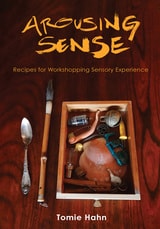
Arousing Sense
Recipes for Workshopping Sensory ExperienceTomie Hahn
University of Illinois Press, 2021
User-friendly and practical, Arousing Sense is a guide to how teaching through sensory experience can lead to positive, transformative impact in the classroom and everyday life.
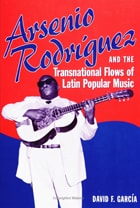
Arsenio Rodríguez and the Transnational Flows of Latin Popular Music
David F. García
Temple University Press, 2006
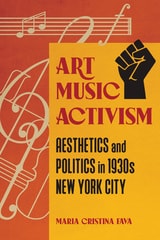
Art Music Activism
Aesthetics and Politics in 1930s New York CityMaria Cristina Fava
University of Illinois Press, 2024
Maria Cristina Fava explores the rich creative milieu shaped by artists dedicated to using music and theater to advance the promotion, circulation, and acceptance of leftist ideas in 1930s New York City. Despite tensions between aesthetic and pragmatic goals, the people and groups produced works at the center of the decade’s sociopolitical and cultural life. Fava looks at the Composers’ Collective of New York and its work on proletarian music and workers’ songs before turning to the blend of experimentation and vernacular idioms that shaped the political use of music within the American Worker’s Theater Movement. Fava then reveals how composers and theater practitioners from these two groups achieved prominence within endeavors promoted by the Works Project Administration.
Fava’s history teases out fascinating details from performances and offstage activity attached to works by composers such as Marc Blitzstein, Charles Seeger, Ruth Crawford Seeger, Elie Siegmeister, and Harold Rome. Endeavors encouraged avant-garde experimentation while nurturing innovations friendly to modernist approaches and an interest in non-western music. Blitzstein’s The Cradle Will Rock offered a memorable example that found popular success, but while the piece achieved its goals, it became so wrapped up in myths surrounding workers’ theater that critics overlooked Blitzstein’s musical ingenuity.
Provocative and original, Art Music Activism considers how innovative classical composers of the 1930s balanced creative aims with experimentation, accessible content, and a sociopolitical message to create socially meaningful works.
Art and Freedom
E. E. Sleinis
University of Illinois Press, 2002
What does a life with art offer that a life without art does not? Art and Freedom asserts that the fundamental point of the enterprise of art is the creation and delivery of values that are not singularly available in the nonart world.
E. E. Sleinis discusses visual art, literature, music, theater, and other art forms, arguing that as art both liberates and provides new points of focus and awareness, the art enterprise depends on a positive freeing from the nonart world, rather than on mere addition to it.
Art and Freedom introduces a novel classificatory system for representation, expression, and formalist theories of art. Sleinis argues that a characteristic defect of contemporary theories of art is their neglect of the issue of value. Challenging these reductive, formalist notions of art, he emphasizes the potential, and the need, for art to evolve and make progress in ways comparable to the sciences, albeit on a very different model.
A smart blend of incisive commentary and illuminating philosophy, Art and Freedom provides a useful context for transforming a sometimes baffling medium into a means of fostering personal growth and creating and sharing values.
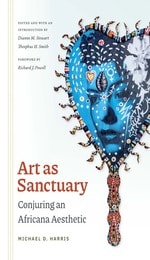
Art as Sanctuary
Conjuring an Africana AestheticMichael D. Harris. Edited and with an introduction by Dianne M. Stewart and Theophus H. Smith. Foreword by Richard J. Powell.
Duke University Press, 2026
Art, Music, and Literature, 1897-1902
Theodore Dreiser. Edited by Yoshinobu Hakutani
University of Illinois Press, 2007
In this volume, liberally seasoned with period illustrations, Yoshinobu Hakutani has collected and annotated a rich selection of Theodore Dreiser's pre-fame writings on the cultural milieu of his day.
In these brief essays, Dreiser sallies into the vibrant world of creative work in turn-of-the-century America. He inspects the eccentric and revealing paraphernalia of artists' studios, probes the work habits of writers, and goes behind the scenes in the popular song-writing business, where this week's celebrity is next week's has-been. He profiles famous figures and introduces numerous women artists, novelists, and musicians, including the prolific and tireless Amelia Barr (mother of fourteen children and author of thirty-two novels), the illustrator Alice B. Stephens, and the opera singer Lillian Nordica. Hakutani's notes provide biographical detail on dozens of now-obscure individuals mentioned by Dreiser.
Artful Noise
Percussion Literature in the Twentieth CenturyThomas Siwe
University of Illinois Press, 2020
Percussionist Thomas Siwe organizes and analyzes the groundbreaking musical literature that arose during the twentieth century. Focusing on innovations in style and the evolution of the percussion ensemble, Siwe offers a historical overview that connects the music to scoring techniques, new instrumentation and evolving technologies as well as world events. Discussions of representative pieces by seminal composers examines the resources a work requires, its construction, and how it relates to other styles that developed during the same period. In addition, Siwe details the form and purpose of many of the compositions while providing background information on noteworthy artists. Each chapter is supported with musical examples and concludes with a short list of related works specifically designed to steer musicians and instructors alike toward profitable explorations of composers, styles, and eras.
Aspects of Orality and Formularity in Gregorian Chant
Theodore Karp
Northwestern University Press, 1998
The essays are loosely connected through their bearing on one or more of three themes: the role of orality in the transmission of chant circa 700-1400; varying degrees of stability or instability in the transmission of chant; and the role of the formula in the construction of chant. Throughout, Karp uses 202 musical examples.
The first essay evaluates forms of evidence that may shed light on the nature of orality that led to the surviving notational records of Gregorian chant and assembles evidence that supports the conclusion that fidelity of transmission represented an important goal of the Franks. The second essay treats formulas that cross the boundaries of individual liturgical genres and modes. The third essay defines the varying kinds of musical formulas in chant and proposes a chronological ordering of the genre of second-mode tracts.
The fourth essay treats the transmission of a stable melody and explores the ways in which one basic melody may be adapted to texts of widely differing structures and lengths. The fifth essay deals with a group of unstable melodies that furnished difficulties in modal classification. The sixth essay explores the problems faced by scribes seeking to represent in diastematic notation melodies employing tones not normally admitted into the medieval gamut. The seventh essay takes up the role of the formula in introits, a neumatic genre intended forchoral performance.
The two final essays look at second-mode tracts and at the interrelationship between Roman and Gregorian chant.
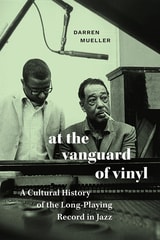
At the Vanguard of Vinyl
A Cultural History of the Long-Playing Record in JazzDarren Mueller
Duke University Press, 2024

Attila
Dramma lirico in a Prologue and Three ActsGiuseppe Verdi
University of Chicago Press, 2013
Verdi’s Attila, his ninth opera, had its premiere at Venice’s Teatro La Fenice in March 1846. Based on the German play Attila, King of the Huns, the libretto has its own storied history: as Verdi fell seriously ill before the work’s completion, the main librettist moved permanently to Madrid, leaving the last act of Attila only a sketch. It was then that Verdi called upon Francesco Maria Piave, the librettist for two of his earlier works, who at the composer’s behest scratched plans for a large choral finale and decided instead to concentrate on the dramatic roles of the protagonists.
In years since, Attila has become one of Verdi’s most popular and oft-staged early works. The composer's inimitable vitality, soaring arcs of melody, grand choruses, and passion are here amply apparent. This critical edition, based on Verdi’s autograph full score preserved at the British Library, restores the opera’s original text and accurately reflects the composer's colorful and elaborate musical setting, while Helen M. Greenwald’s masterful introduction discusses the opera’s origins, sources, and performance questions, and her critical commentary details editorial problems and their solutions.
Audible Empire
Music, Global Politics, CritiqueRonald Radano and Tejumola Olaniyan, editors
Duke University Press, 2016
Contributors: Kofi Agawu, Philip V. Bohlman. Michael Denning, Brent Hayes Edwards, Nan Enstad, Andrew Jones, Josh Kun, Morgan Luker, Jairo Moreno, Tejumola Olaniyan, Marc Perry, Ronald Radano, Nitasha Sharma, Micol Seigel, Gavin Steingo, Penny Von Eschen, Amanda Weidman.
Aurality
Listening and Knowledge in Nineteenth-Century ColombiaAna María Ochoa Gautier
Duke University Press, 2014

Avant-Garde Jazz Musicians
Performing "Out There"David G. Such
University of Iowa Press, 1993
Avant-Garde Jazz Musicians focuses on performers whose out styles, by definition, transcend traditional boundaries of jazz and most Western forms of music; some of these performers are well known, such as John Coltrane, Ornette Coleman, and Cecil Taylor, and others are not, including Daniel Carter, Billy Bang, and Jemeel Moondoc. David Such uses an interdisciplinary approach, ranging from philosophy to ethnomusicology to psychobiology, to examine how both cultural and personal factors have influenced the out musicians and their music and what the music symbolizes to listeners and to the musicians themselves.
Such strikes a balance between out music itself and the cultural domain as he explores the social contexts and economic pressures that affect out musical performance. Using material from extensive personal interviews, Such evaluates the impact of civil rights, postindustrialization, and urbanization on the beliefs and attitudes of out musicians.
By performing with many of the out musicians he interviews, Such is able to examine out music and the worldviews of out musicians in a uniquely comprehensive manner and to resolve some of the more controversial issues surrounding out jazz. In the process, he makes out music more understandable to jazz fans and scholars alike and clarifies its role in the overall development of jazz.
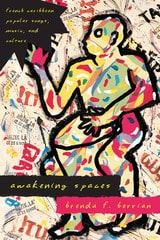
Awakening Spaces
French Caribbean Popular Songs, Music, and CultureBrenda F. Berrian
University of Chicago Press, 2000
Based on personal interviews and discussions of song texts, Berrian shows how these musicians express their feelings about current and past events, about themselves, their islands, and the French. Through their lyrical themes, these songs create metaphorical "spaces" that evoke narratives of desire, exile, subversion, and Creole identity and experiences. Berrian opens up these spaces to reveal how the artists not only engage their listeners and effect social change, but also empower and identify themselves. She also explores the music as it relates to the art of drumming, and to genres such as African American and Latin jazz and reggae. With Awakening Spaces, Berrian adds fresh insight into the historical struggles and arts of the French Caribbean.
Aztec Music and Dance in California
Kristina F. Nielsen
University of Illinois Press, 2026