Results by title
4038 books match the query 'Social aspects' and 296 start with a
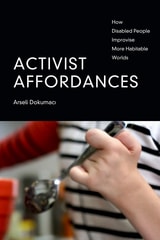
Activist Affordances
How Disabled People Improvise More Habitable WorldsArseli Dokumaci
Duke University Press, 2023
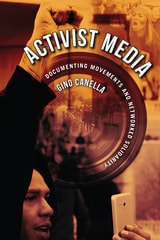
Activist Media
Documenting Movements and Networked SolidarityGino Canella
Rutgers University Press, 2022
Now more than ever, activists are using media to document injustice and promote social and political change. Yet with so many media platforms available, activists sometimes fail to have a coherent media and communication strategy.
Drawing from his experiences as a documentary filmmaker with Black Lives Matter 5280 and Service Employees International Union (SEIU) Local 105 in Denver, Colorado, Gino Canella argues that activist media create opportunities for activists to navigate conflict and embrace their political and ideological differences. Canella details how activist media practices—interviewing organizers, script writing, video editing, posting on social media, and hosting community screenings—foster solidarity among grassroots organizers.
Informed by media theory, this book explores how activists are using media to mobilize supporters, communicate their values, and reject anti-union rhetoric. Furthermore, it demonstrates how collaborative media projects can help activists build broad-based coalitions and amplify their vision for a more equitable and just society.
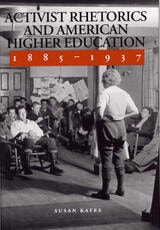
Activist Rhetorics and American Higher Education, 1885-1937
Susan Kates
Southern Illinois University Press, 2000
In this study of the history of rhetoric education, Susan Kates focuses on the writing and speaking instruction developed at three academic institutions founded to serve three groups of students most often excluded from traditional institutions of higher education in late-nineteenth-and early-twentieth-century America: white middle-class women, African Americans, and members of the working class.
Kates provides a detailed look at the work of those students and teachers ostracized from rhetorical study at traditional colleges and universities. She explores the pedagogies of educators Mary Augusta Jordan of Smith College in Northhampton, Massachusetts; Hallie Quinn Brown of Wilberforce University in Wilberforce, Ohio; and Josephine Colby, Helen Norton, and Louise Budenz of Brookwood Labor College in Katonah, New York.
These teachers sought to enact forms of writing and speaking instruction incorporating social and political concerns in the very essence of their pedagogies. They designed rhetoric courses characterized by three important pedagogical features: a profound respect for and awareness of the relationship between language and identity and a desire to integrate this awareness into the curriculum; politicized writing and speaking assignments designed to help students interrogate their marginalized standing within the larger culture in terms of their gender, race, or social class; and an emphasis on service and social responsibility.

Acts of Possession
Collecting in AmericaDilworth, Leah
Rutgers University Press, 2003
Drawing upon the body of theoretical work on collecting and focusing on individual as opposed to museum collections, the contributors investigate how, what, and why Americans have collected and explore the inherent meanings behind systems of organization and display. Essays consider the meanings of Thomas Jefferson's Indian Hall at Monticello; the pedagogical theories behind nineteenth-century children's curiosity cabinets; collections of Native American artifacts; and the ability of the owners of doll houses to construct meaning within the context of traditional ideals of domesticity.
The authors also consider some darker aspects of collecting-hoarding, fetishism, and compulsive behavior-scrutinizing collections of racist memorabilia and fascist propaganda. The final essay posits the serial killer as a collector, an investigation into the dangerous objectification of humans themselves.
By bringing fresh, interdisciplinary critical perspectives to bear on these questions, Dilworth and her coauthors weave a fascinating cultural history of collecting in America.
Adoption and Multiculturalism
Europe, the Americas, and the PacificJenny Heijun Wills, Tobias Hübinette, and Indigo Willing, Editors
University of Michigan Press, 2020
The contributors represent a wide range of disciplines, cultures, and connections in relation to the adoption constellation, bringing perspectives from Europe (including Scandinavia), Canada, the United States, and Australia. The book brings together the various methodologies of literary criticism, history, anthropology, sociology, and cultural theory to demonstrate the multifarious and robust ways that adoption and multiculturalism might be studied and considered. Edited by three transnational and transracial adoptees, Adoption and Multiculturalism: Europe, the Americas, and the Pacific offers bold new scholarship that revises popular notions of transracial and transnational adoption as practice and phenomenon.
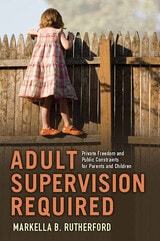
Adult Supervision Required
Private Freedom and Public Constraints for Parents and ChildrenRutherford, Markella B
Rutgers University Press, 2011
Adult Supervision Required considers the contradictory ways in which contemporary American culture has imagined individual autonomy for parents and children. In many ways, today’s parents and children have more freedom than ever before. There is widespread respect for children’s autonomy as distinct individuals, and a broad range of parenting styles are flourishing. Yet it may also be fair to say that there is an unprecedented fear of children’s and parents’ freedom. Dread about Amber Alerts and “stranger danger” have put an end to the unsupervised outdoor play enjoyed by earlier generations of suburban kids. Similarly, fear of bad parenting has not only given rise to a cottage industry of advice books for anxious parents, but has also granted state agencies greater power to police the family.
Using popular parenting advice literature as a springboard for a broader sociological analysis of the American family, Markella B. Rutherford explores how our increasingly psychological conception of the family might be jeopardizing our appreciation for parents’ and children’s public lives and civil liberties.
Adventures in Shondaland
Identity Politics and the Power of RepresentationGriffin, Rachel Alicia
Rutgers University Press, 2018
Shonda Rhimes is one of the most powerful players in contemporary American network television. Beginning with her break-out hit series Grey’s Anatomy, she has successfully debuted Private Practice, Scandal, How to Get Away with Murder, The Catch, For The People, and Station 19. Rhimes’s work is attentive to identity politics, “post-” identity politics, power, and representation, addressing innumerable societal issues. Rhimes intentionally addresses these issues with diverse characters and story lines that center, for example, on interracial friendships and relationships, LGBTIQ relationships and parenting, the impact of disability on familial and work dynamics, and complex representations of womanhood. This volume serves as a means to theorize Rhimes’s contributions and influence by inspiring provocative conversations about television as a deeply politicized institution and exploring how Rhimes fits into the implications of twenty-first century television.
Adventures in the Play-Ritual Continuum
Audun Kjus
Utah State University Press, 2025
Adventures in the Play-Ritual Continuum explores the connectivity between the playful and the ritualized through a fresh theoretical perspective, highlighting the creative messiness and the cultural paradoxes such intersections allow. The chapters span topics such as hen parties, marriage proposals, ash scatterings, extreme sports races, football fans, computer game festivals, celebrations of fandom, migration heritages, and antiracist protests. While the case studies are selected to show a range of diversity with various mergings of play, game, ritual, ceremony, rite, and ritualizing, the introductory and concluding discussions offer sharpened perspectives on common aspects.
Following these excursions through the play-ritual continuum will be enjoyable for readers interested in how people make sense of their own existence and profitable for scholars in folklore, anthropology, religion, pedagogy, cultural studies, and social sciences and humanities more generally.
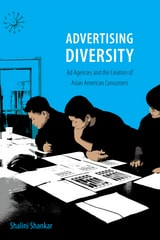
Advertising Diversity
Ad Agencies and the Creation of Asian American ConsumersShalini Shankar
Duke University Press, 2015

Advertising and Identity in Europe
The I of the BeholderRobin Warner
Intellect Books, 2013
Advertising as Culture
Edited by Chris Wharton
Intellect Books, 2013

Aesthetics of Excess
The Art and Politics of Black and Latina EmbodimentJillian Hernandez
Duke University Press, 2020
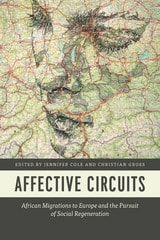
Affective Circuits
African Migrations to Europe and the Pursuit of Social RegenerationEdited by Jennifer Cole and Christian Groes
University of Chicago Press, 2016
The contributors point to the intersecting streams of goods, people, ideas, and money as they circulate between African migrants and their kin who remain back home. They also show the complex ways that emotions become entangled in these exchanges. Examining how these circuits operate in domains of social life ranging from child fosterage to binational marriages, from coming-of-age to healing and religious rituals, the book also registers the tremendous impact of state officials, laws, and policies on migrant experience. Together these essays paint an especially vivid portrait of new forms of kinship at a time of both intense mobility and ever-tightening borders.
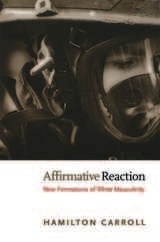
Affirmative Reaction
New Formations of White MasculinityHamilton Carroll
Duke University Press, 2011
Throughout Affirmative Reaction, Carroll examines the kinds of difference white masculinity claims for itself as it attempts to hold onto or maintain majority privilege. Whether these are traditional sites of minority difference—such as Irishness, white trash, or domestic melodrama—or reworked sites of masculinist investment—including laboring bodies, public-sphere politics, and vigilantism—the outcome is the same: the foregrounding of white masculinity over and against women, people of color, and the non-heteronormative. By revealing the strategies through which white masculinity is produced as a formal difference, Carroll sheds new light on the ways that privilege is accrued and maintained.

Africa's World Cup
Critical Reflections on Play, Patriotism, Spectatorship, and SpaceEdited by Peter Alegi and Chris Bolsmann
University of Michigan Press, 2013
Africa’s World Cup: Critical Reflections on Play, Patriotism, Spectatorship, and Spacefocuses on a remarkable month in the modern history of Africa and in the global history of football. Peter Alegi and Chris Bolsmann are well-known experts on South African football, and they have assembled an impressive team of local and international journalists, academics, and football experts to reflect on the 2010 World Cup and its broader significance, its meanings, complexities, and contradictions.
The World Cup’s sounds, sights, and aesthetics are explored, along with questions of patriotism, nationalism, and spectatorship in Africa and around the world. Experts on urban design and communities write on how the presence of the World Cup worked to refashion urban spaces and negotiate the local struggles in the hosting cities. The volume is richly illustrated by authors’ photographs, and the essays in this volume feature chronicles of match day experiences; travelogues; ethnographies of fan cultures; analyses of print, broadcast, and electronic media coverage of the tournament; reflections on the World Cup’s private and public spaces; football exhibits in South African museums; and critiques of the World Cup’s processes of inclusion and exclusion, as well as its political and economic legacies.
The volume concludes with a forum on the World Cup, including Thabo Dladla, Director of Soccer at the University of KwaZulu-Natal, Mohlomi Kekeletso Maubane, a well-known Soweto-based writer and a soccer researcher, and Rodney Reiners, former professional footballer and current chief soccer writer for the Cape Argus newspaper in Cape Town. This collection will appeal to students, scholars, journalists, and fans.
Cover illustration: South African fan blowing his vuvuzela at South Africa vs. France, Free State Stadium, Bloemfontein, June 22, 2010. Photo by Chris Bolsmann.
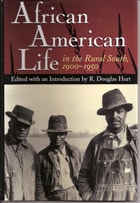
African American Life in the Rural South, 1900-1950
Edited with an introduction by R. Douglas Hurt
University of Missouri Press, 2003
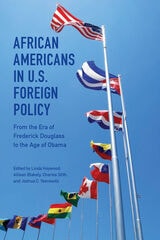
African Americans in U.S. Foreign Policy
From the Era of Frederick Douglass to the Age of ObamaEdited by Linda Heywood, Allison Blakely, Charles Stith, and Joshua C. Yesnowitz
University of Illinois Press, 2015
Groundbreaking and critical, African Americans in U.S. Foreign Policy expands on the scope and themes of recent collections to offer the most up-to-date scholarship to students in a range of disciplines, including U.S. and African American history, Africana studies, political science, and American studies.
African Art Reframed
Reflections and Dialogues on Museum CultureBennetta Jules-Rosette and J. R. Osborn; Foreword by Simon Njami
University of Illinois Press, 2020
The authors take a three-pronged approach. Part One ranges from curiosity cabinets to virtual websites to offer a history of ethnographic and art museums and look at their organization and methods of reaching out to the public. In the second part, the authors examine museums as ecosystems and communities within communities, and they use semiotic methods to analyze images, signs, and symbols drawn from the experiences of curators and artists. The third part introduces innovative strategies for displaying, disseminating, and reclaiming African art. The authors also propose how to reinterpret the art inside and outside the museum and show ways of remixing the results.
Drawing on extensive conversations with curators, collectors, and artists, African Art Reframed is an essential guide to building new exchanges and connections in the dynamic worlds of African and global art.
African Filmmaking
Five FormationsKenneth W. Harrow
Michigan State University Press, 2017
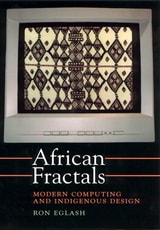
African Fractals
Modern Computing and Indigenous DesignEglash, Ron
Rutgers University Press, 1999
Anthropologists have observed that the patterns produced in different cultures can be characterized by specific design themes. In Europe and America, we often see cities laid out in a grid pattern of straight streets and right-angle corners. In contrast, traditional African settlements tend to use fractal structures-circles of circles of circular dwellings, rectangular walls enclosing ever-smaller rectangles, and streets in which broad avenues branch down to tiny footpaths with striking geometric repetition. These indigenous fractals are not limited to architecture; their recursive patterns echo throughout many disparate African designs and knowledge systems.
Drawing on interviews with African designers, artists, and scientists, Ron Eglash investigates fractals in African architecture, traditional hairstyling, textiles, sculpture, painting, carving, metalwork, religion, games, practical craft, quantitative techniques, and symbolic systems. He also examines the political and social implications of the existence of African fractal geometry. His book makes a unique contribution to the study of mathematics, African culture, anthropology, and computer simulations.
African Masks and Emotions
In Theory and in PracticeZ. S. Strother
J. Paul Getty Trust, The, 0
In this groundbreaking book, Z. S. Strother, inspired by dialogues with African masquerade patrons and performers, disputes assumptions that masks universally hide, reveal, or transform.
In Western European languages, the word mask exerts a powerful presence as a figure of speech. To masquerade is to pretend to be someone or something one is not. By extension, unmasking is a heroic metaphor for exposing a hidden truth. In this volume, art historian Z. S. Strother counters that narrative, using African case studies to offer an alternative vision of masquerading. She explores the aesthetic emotions aroused by masks, or more precisely, by “dances of masks”: joy, wonder, awe, fear, and the release of laughing out loud. She also investigates the uncanny—a sensation of “delicious shiveriness” triggered when familiar spaces and individuals become strange and changeable. Inspired by Strother’s studies in DR Congo, African Masks and Emotions takes a comparative perspective and moves emotion from the periphery to the center of analysis.
Reflecting Getty's commitment to open content, African Masks and Emotions is available for free download in ePub and PDF formats at: https://www.getty.edu/publications-reports/item/2F27A4. This paperback edition is available for sale for readers who wish to have a bound reference copy.
African Motors
Technology, Gender, and the History of DevelopmentJoshua Grace
Duke University Press, 2021
African Pharmakon
The Asylum as Shrine from Slavery to the ReturnNana Osei Quarshie
University of Chicago Press, 2025
For centuries, mental distress in West Africa has been subject to a mix of healing, harming, ritual, and regulation. In African Pharmakon, Nana Osei Quarshie questions conventional narratives about colonial psychiatry. Instead of displacing African therapeutic traditions, he argues, European psychiatric institutions in fact built upon them, adapting long-standing techniques of social control and healing.
With a focus on Ghana, Quarshie explores the shifting landscape of West African mental health practices, tracking their transformation from shrine-based rituals to colonial asylums and modern psychiatric institutions. Combining extensive archival research and ethnographic fieldwork, including the first scholarly examination of patient records from the Accra Psychiatric Hospital, Quarshie identifies five enduring techniques that have shaped the treatment of mental distress: spiritual pawning, logging, manhunting, mass expulsion, and pharmacotherapy.
Rejecting the simplistic opposition of Indigenous healing versus colonial oppression, African Pharmakon provides a nuanced account of how psychiatric care in Ghana became a tool of empowerment as well as exclusion. This pioneering study reframes our understanding of psychiatry and mental health governance in West Africa, past and present.
African Print Cultures
Newspapers and Their Publics in the Twentieth CenturyEdited by Derek R. Peterson, Emma Hunter, and Stephanie Newell
University of Michigan Press, 2016
The essays collected in African Print Cultures claim African newspapers as subjects of historical and literary study. Newspapers were not only vehicles for anticolonial nationalism. They were also incubators of literary experimentation and networks by which new solidarities came into being. By focusing on the creative work that African editors and contributors did, this volume brings an infrastructure of African public culture into view.
The first of four thematic sections, “African Newspaper Networks,” considers the work that newspaper editors did to relate events within their locality to happenings in far-off places. This work of correlation and juxtaposition made it possible for distant people to see themselves as fellow travellers. “Experiments with Genre” explores how newspapers nurtured the development of new literary genres, such as poetry, realist fiction, photoplays, and travel writing in African languages and in English. “Newspapers and Their Publics” looks at the ways in which African newspapers fostered the creation of new kinds of communities and served as networks for public interaction, political and otherwise. The final section, “Afterlives, ” is about the longue durée of history that newspapers helped to structure, and how, throughout the twentieth century, print allowed contributors to view their writing as material meant for posterity.
African Sacred Groves
Ecological Dynamics and Social ChangeMichael J. Sheridan
Ohio University Press, 2007
book by an international group of scholars and conservation practitioners provides a methodological framework for understanding these forests by examining their ecological characteristics, delineating how they relate to social dynamics and historical contexts, exploring their ideological aspects, and evaluating their strengths and weaknesses as sites for community-based resource management and the conservation of cultural and biological diversity.
African Video Movies and Global Desires
A Ghanaian HistoryCarmela Garritano
Ohio University Press, 2013
Afrocentric Idea Revised
Molefi Asante
Temple University Press, 1998
Afrofuturism Rising
The Literary Prehistory of a MovementIsiah Lavender III
The Ohio State University Press, 2019
By engaging with authors as diverse as Phillis Wheatley, David Walker, Frederick Douglass, Harriet Ann Jacobs, Samuel R. Delany Jr., Pauline Hopkins, Zora Neale Hurston, and Richard Wright, Afrofuturism Rising extends existing scholarly conversations about who creates and what is created via science fiction. Through a trans-historical rereading of texts by these authors as science fiction, Lavender highlights the ways black experience in America has always been an experience of spatial and temporal dislocation akin to science fiction. Compelling and ambitious in scope, Afrofuturism Rising redefines both science fiction and literature as a whole.
After Dark
The Nocturnal Urban Landscape and Lightscape of Ancient CitiesNancy Gonlin
University Press of Colorado, 2022
Sensory archaeology focuses on the sensual experience of the nocturnal environment—the sights, sounds, smells, tastes, and feel of an ancient city—and the multi-faceted stimuli that diverse urban populations experienced in the dark. Contributors investigate night work—for example, standing guard or pursuing nocturnal trades—and nightlife, such as gambling at Chaco Canyon. They also examine how urban architecture, infrastructure, and the corresponding lighting were inextricably involved in enabling nighttime pursuits and signaling social status.
The subjects of the night, darkness, and illumination taken together form a comprehensive framework for analyzing city life. After Dark embraces night as a conceptual lens through which to view the material and visual cultures of the ancient world and, in doing so, demonstrates a wealth of activities, behaviors, and beliefs that took place between dusk and dawn. This perspective greatly enriches the understanding of urban life and its evolution and has much to offer archaeologists in deepening an examination of complexity and inequality. This volume will be of interest to any scholar or student of the past who is interested in urban activities and the significance of the night in urban settings.
Contributors: Susan M. Alt, J. Antonio Ochatoma Cabrera, Martha Cabrera Romero, Tiffany Earley-Spadoni, Kirby Farrah, Nancy Gonlin, Anna Guengerich, Christopher Hernandez, John Janusek, Kristin V. Landau, Maggie L. Popkin, Monica L. Smith, Meghan E. Strong, Susan Toby Evans, Robert S. Weiner
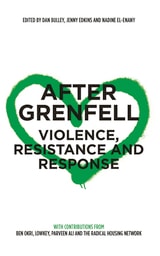
After Grenfell
Violence, Resistance and ResponseEdited by Dan Bulley, Jenny Edkins and Nadine El-Enany
Pluto Press, 2019
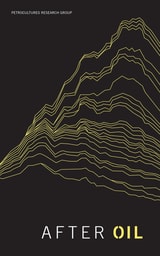
After Oil
Imre Szeman
West Virginia University Press, 2016
Energy plays a critical role in determining the shape, form and character of our daily existence, which is why a genuine shift in our energy usage demands a wholesale transformation of the petrocultures in which we live. After Oil provides readers with the resources to make this happen.
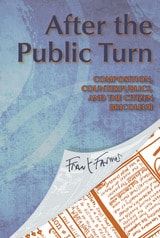
After the Public Turn
Composition, Counterpublics, and the Citizen BricoleurFrank Farmer
Utah State University Press, 2013
Farmer examines two very different kinds of publics, cultural and disciplinary, and discusses two counterpublics within those broad categories: zine discourses and certain academic discourses. By juxtaposing these two significantly different kinds of publics, Farmer suggests that each discursive world can be seen, in its own distinct way, as a counterpublic, an oppositional social formation that has a stake in widening or altering public life as we know it.
Drawing on major figures in rhetoric and cultural theory, Farmer builds his argument about composition teaching and its relation to the public sphere, leading to a more sophisticated understanding of public life and a deeper sense of what democratic citizenship means for our time.
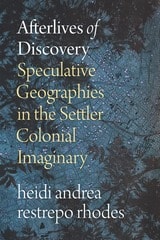
Afterlives of Discovery
Speculative Geographies in the Settler Colonial Imaginaryheidi andrea restrepo rhodes
Duke University Press, 2025
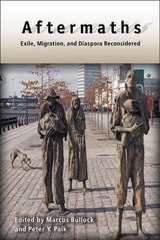
Aftermaths
Exile, Migration, and Diaspora ReconsideredBullock, Marcus
Rutgers University Press, 2008
Marcus Bullock and Peter Y. Paik, in bringing this collection together, show we have reached a moment in history when it is imperative to question prevailing intellectual models. The interconnectedness of the world's economies, the contributors argue, can exacerbate existing antagonisms or create new ones. With essays by Ihab Hassan, Paul Brodwin, and Helen Fehervary, among others, Aftermaths engages not only with important academic topics but also with the leading political issues of the day.
Against Innocence
Undoing and Remaking the WorldMiriam Ticktin
University of Chicago Press, 2025
In this timely and bold book, Miriam Ticktin explores how a concept that consistently appears as a moral good actually ends up creating harm for so many. Claims to innocence protect migrant children, but often at the expense of their parents; claims to the innocence of the fetus work to punish women. Ticktin shows how innocence structures political relationships, focusing on individual victims and saviors, while foreclosing forms of collective responsibility. Ultimately, she wants to understand how the discourse around innocence functions, what gives it such power, and why we are so compelled by it, while showing that alternative political forms already exist. She examines this process across various domains, from migration, science, and environmentalism to racial and reproductive justice.
Throughout the book, Ticktin shows how the concept of innocence intimately shapes why, how, and for whom we should care and whose lives matter—and how this can have devastating consequences when only an exceptional few can qualify as innocent. A politics grounded on innocence justifies a world built on inequality, designating most people—especially the racialized poor—as unworthy, undeserving, and less than human. As an alternative, she explores the aesthetics and politics of “commoning”—a collective regime of living that refuses a liberal politics of individual identity and victimhood.
Against Marginalization
Convergences in Black and Latinx LiteraturesJose O. Fernandez
The Ohio State University Press, 2022
Against Money
J. W. Mason and Arjun Jayadev
University of Chicago Press, 2026
A powerful deconstruction of humanity’s most influential invention, from the acclaimed economists J. W. Mason and Arjun Jayadev.
Money is everywhere in our daily lives. It lurks in the swipe of a card at the grocery store, in looming student-loan debts, in the prices of things we want, and in our subconscious navigation of the modern world. Money is an invisible convenience that saves us, as a society, the hassle of bartering for goods and services—a reflection, in our pockets and on our phones, of the hard facts of scarcity and desire. Or is it something more?
In this revelatory book, economists J. W. Mason and Arjun Jayadev explain how and why money is so deeply misunderstood by the world it dominates—as well as the dangerous social implications of this misunderstanding. Against Money tackles the most dearly held “truths” of economics, arguing that the world of money has never been an impartial representation of the world of things. Instead, its existence in different forms—debt, capital, liquidity, and interest—increasingly shapes events in the real world rather than just reflecting them. Sometimes money enables new forms of cooperation; more oftenit facilitates domination. Human existence is not just facilitated by money but also governed by it.
In the tradition of works by Thomas Piketty and David Graeber, Against Money is an erudite, disruptive exposé of the illusions and tyrannies of money. Mason and Jayadev present a radically different way of thinking about money—imagining a hopeful future in which it no longer dictates the possibilities of our collective existence.
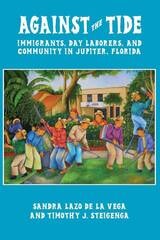
Against the Tide
Immigrants, Day Laborers, and Community in Jupiter, FloridaSandra Lazo de la Vega and Timothy J. Steigenga
University of Wisconsin Press, 2013
At the beginning of the twenty-first century, Jupiter was in the throes of immigration debates. A decade earlier, this small town had experienced an influx of migrants from Mexico and Guatemala. Immigrants seeking work gathered daily on one of the city’s main streets, creating an ad-hoc, open-air labor market that generated complaints and health and human safety concerns. What began as a local debate rapidly escalated as Jupiter’s situation was thrust into the media spotlight and attracted the attention of state and national anti-immigrant groups. But then something unexpected happened: immigrants, neighborhood residents, university faculty and students, and town representatives joined together to mediate community tensions and successfully moved the informal labor market to the new El Sol Neighborhood Resource Center.
Timothy J. Steigenga, who helped found the center, and Lazo de la Vega, who organized students in support of its mission, describe how El Sol engaged the residents of Jupiter in a two-way process of immigrant integration and helped build trust on both sides. By examining one city’s search for a positive public policy solution, Against the Tide offers valuable practical lessons for other communities confronting similar challenges.
Aged by Culture
Margaret Morganroth Gullette
University of Chicago Press, 2003
In this illuminating book, Margaret Morganroth Gullette reveals that aging doesn't start in our chromosomes, but in midlife downsizing, the erosion of workplace seniority, threats to Social Security, or media portrayals of "aging Xers" and "greedy" Baby Boomers. To combat the forces aging us prematurely, Gullette invites us to change our attitudes, our life storytelling, and our society. Part intimate autobiography, part startling cultural expose, this book does for age what gender and race studies have done for their categories. Aged by Culture is an impassioned manifesto against the pernicious ideologies that steal hope from every stage of our lives.
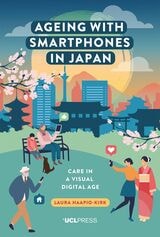
Ageing with Smartphones in Japan
Care in a Visual Digital AgeLaura Haapio-Kirk
University College London, 2024
Ageing with Smartphones in Japan examines sixteen months of ethnographic research following older adults, age fifty and up, in urban Kyoto and rural Kochi Prefecture, Japan as they navigate social and personal shifts post-retirement in the age of the smartphone. It attempts to answer what this transition means for friendship, gendered labor, multigenerational living, internal migration, health, as well as life purpose for older adults. This book closely investigates how the smartphone challenges gender-based norms and how older adults creatively navigate them. Using comics, drawings, and fieldwork sketches it also explores how they use digital visual communication to socialize with friends and family.
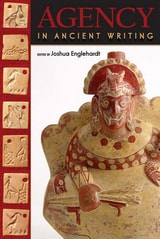
Agency in Ancient Writing
Joshua Englehardt
University Press of Colorado, 2012
Individual agents are frequently evident in early writing and notational systems, yet these systems have rarely been subjected to the concept of agency as it is traceable in archeology. Agency in Ancient Writing addresses this oversight, allowing archeologists to identify and discuss real, observable actors and actions in the archaeological record.
Embracing myriad ways in which agency can be interpreted, ancient writing systems from Mesoamerica, Mesopotamia, Egypt, Crete, China, and Greece are examined from a textual perspective as both archaeological objects and nascent historical documents. This allows for distinction among intentions, consequences, meanings, and motivations, increasing understanding and aiding interpretation of the subjectivity of social actors. Chapters focusing on acts of writing and public recitation overlap with those addressing the materiality of texts, interweaving archaeology, epigraphy, and the study of visual symbol systems.
Agency in Ancient Writing leads to a more thorough and meaningful discussion of agency as an archaeological concept and will be of interest to anyone interested in ancient texts, including archaeologists, historians, linguists, epigraphers, and art historians, as well as scholars studying agency and structuration theory.
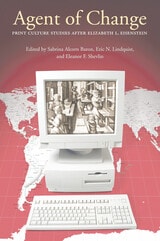
Agent of Change
Print Culture Studies after Elizabeth L. EisensteinSabrina Alcorn Baron
University of Massachusetts Press, 2007
Inspiring debate since the early days of its publication, Elizabeth L. Eisenstein's The Printing Press as an Agent of Change: Communications and Cultural Transformations in Early-Modern Europe (1979) has exercised its own force as an agent of change in the world of scholarship. Its path-breaking agenda has played a central role in shaping the study of print culture and “book history”—fields of inquiry that rank among the most exciting and vital areas of scholarly endeavor in recent years.
Joining together leading voices in the field of print scholarship, this collection of twenty essays affirms the catalytic properties of Eisenstein's study as a stimulus to further inquiry across geographic, temporal, and disciplinary boundaries. From early modern marginalia to the use of architectural title pages in Renaissance books, from the press in Spanish colonial America to print in the Islamic world, from the role of the printed word in nation-building to changing histories of reading in the electronic age, this book addresses the legacy of Eisenstein's work in print culture studies today as it suggests future directions for the field.
In addition to a conversation with Elizabeth L. Eisenstein, the book includes contributions by Peng Hwa Ang, Margaret Aston, Tony Ballantyne, Vivek Bhandari, Ann Blair, Barbara A. Brannon, Roger Chartier, Kai-wing Chow, James A. Dewar, Robert A. Gross, David Scott Kastan, Harold Love, Paula McDowell, Jane McRae, Jean-Dominique Mellot, Antonio Rodriguez-Buckingham, Geoffrey Roper, William H. Sherman, Peter Stallybrass, H. Arthur Williamson, and Calhoun Winton.
Agewise
Fighting the New Ageism in AmericaMargaret Morganroth Gullette
University of Chicago Press, 2011
Let’s face it: almost everyone fears growing older. We worry about losing our looks, our health, our jobs, our self-esteem—and being supplanted in work and love by younger people. It feels like the natural, inevitable consequence of the passing years, But what if it’s not? What if nearly everything that we think of as the “natural” process of aging is anything but?
In Agewise, renowned cultural critic Margaret Morganroth Gullette reveals that much of what we dread about aging is actually the result of ageism—which we can, and should, battle as strongly as we do racism, sexism, and other forms of bigotry. Drawing on provocative and under-reported evidence from biomedicine, literature, economics, and personal stories, Gullette probes the ageism thatdrives discontent with our bodies, our selves, and our accomplishments—and makes us easy prey for marketers who want to sell us an illusory vision of youthful perfection. Even worse, rampant ageism causes society to discount, and at times completely discard, the wisdom and experience acquired by people over the course of adulthood. The costs—both collective and personal—of this culture of decline are almost incalculable, diminishing our workforce, robbing younger people of hope for a decent later life, and eroding the satisfactions and sense of productivity that should animate our later years.
Once we open our eyes to the pervasiveness of ageism, however, we can begin to fight it—and Gullette lays out ambitious plans for the whole life course, from teaching children anti-ageism to fortifying the social safety nets, and thus finally making possible the real pleasures and opportunities promised by the new longevity. A bracing, controversial call to arms, Agewise will surprise, enlighten, and, perhaps most important, bring hope to readers of all ages.
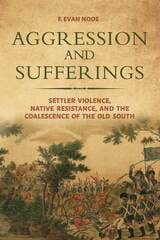
Aggression and Sufferings
Settler Violence, Native Resistance, and the Coalescence of the Old SouthF. Evan Nooe
University of Alabama Press, 2024
WINNER OF THE FRANCIS B. SIMKINS AWARD, SOUTHERN HISTORICAL ASSOCIATION
WINNER OF THE 2024 BEST FIRST BOOK AWARD FROM PHI ALPHA THETA, THE NATIONAL HISTORY HONOR SOCIETY
A bold reconceptualization of how settler expansion and narratives of victimhood, honor, and revenge drove the conquest and erasure of the Native South and fed the emergence of a distinct white southern identity.
In 1823, Tennessee historian John Haywood encapsulated a foundational sentiment among the white citizenry of Tennessee when he wrote of a “long continued course of aggression and sufferings” between whites and Native Americans. According to F. Evan Nooe, “aggression” and “sufferings” are broad categories that can be used to represent the framework of factors contributing to the coalescence of the white South.
Traditionally, the concept of coalescence is an anthropological model used to examine the transformation of Indigenous communities in the Eastern Woodlands from chieftaincies to Native tribes, confederacies, and nations in response to colonialism. Applying this concept to white southerners, Nooe argues that through the experiences and selective memory of settlers in the antebellum South, white southerners incorporated their aggression against and suffering at the hands of the Indigenous peoples of the Southeast in the coalescence of a regional identity built upon the violent dispossession of the Native South. This, in turn, formed a precursor to Confederate identity and its later iterations in the long nineteenth century.
Geographically, Aggression and Sufferings prioritizes events in South Carolina, Florida, Tennessee, Georgia, and Alabama. Nooe considers how divergent systems of violence and justice between Native Americans and white settlers (such as blood revenge and concepts of honor) functioned in the region and examines the involved societies’ conflicting standards on how to equitably resolve interpersonal violence. Finally, Nooe explores how white southerners constructed, propagated, and perpetuated harrowing tales of colonizers as both victims and heroes in the violent expulsion of the region’s Native peoples from their homelands. This constructed sense of regional history and identity continued to flower into the antebellum period, during western expansion, and well through the twentieth century.
Aging Nationally in Contemporary Poland
Memory, Kinship, and PersonhoodJessica C. Robbins
Rutgers University Press, 2021
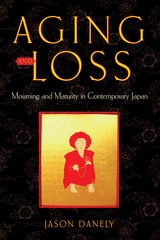
Aging and Loss
Mourning and Maturity in Contemporary JapanDanely, Jason
Rutgers University Press, 2015
Based on nearly a decade of research, Aging and Loss examines how the landscape of aging is felt, understood, and embodied by older adults themselves. In detailed portraits, anthropologist Jason Danely delves into the everyday lives of older Japanese adults as they construct narratives through acts of reminiscence, social engagement and ritual practice, and reveals the pervasive cultural aesthetic of loss and of being a burden.
Aging in the Church
How Social Relationships Affect HealthNeal M. Krause
Templeton Press, 2008
A growing number of studies indicate that older people in the church form social ties that have a significant positive impact on their physical and mental health. In Aging in the Church, Neal Krause comprehensively assesses the various relationships that stem from church involvement.
Among the many types of relationships Krause explores are close companion friendships, social-support structures (such as assistance provided by fellow church members during difficult times), and interactions that arise from Bible study and prayer groups. Through his thorough investigation of the underlying links between these relationships and the ways they relate to attributes like forgiveness, hope, gratitude, and altruism, the author hopes to explain why older adults who are involved in religious activities tend to enjoy better physical and mental health than those who are not engaged in religious communities. Going beyond merely reviewing the existing research on this subject, Aging in the Church provides a blueprint for taking research on church-based social relationships and health to the next level by identifying conceptual and methodological issues that investigators will confront as they delve more deeply into these connections.
Though these are complex issues, readers will find plain language and literature drawn from a wide array of disciplines, including sociology, psychology, public health, medicine, psychiatry, nursing, social work, gerontology, and theology. Literature, poetry, philosophy, and ethical ideas supplement the insights from these diverse fields. As a result, Aging in the Church takes on a genuinely interdisciplinary focus that will appeal to various scholars, researchers, and students.
Aguecheek's Beef, Belch's Hiccup, and Other Gastronomic Interjections
Literature, Culture, and Food Among the Early ModernsRobert Appelbaum
University of Chicago Press, 2006
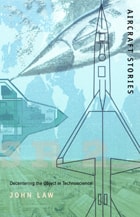
Aircraft Stories
Decentering the Object in TechnoscienceJohn Law
Duke University Press, 2002
Law works to upset the binary between the modernist concept of knowledge, subjects, and objects as having centered and concrete essences and the postmodernist notion that all is fragmented and centerless. The structure and content of Aircraft Stories reflect Law’s contention that knowledge, subjects, and—particularly— objects are “fractionally coherent”: that is, they are drawn together without necessarily being centered. In studying the process of this particular aircraft’s design, construction, and eventual cancellation, Law develops a range of metaphors to describe both its fractional character and the ways its various aspects interact with each other. Offering numerous insights into the way we theorize the working of systems, he explores the overlaps between singularity and multiplicity and reveals rich new meaning in such concepts as oscillation, interference, fractionality, and rhizomatic networks.
The methodology and insights of Aircraft Stories will be invaluable to students in science and technology studies and will engage others who are interested in the ways that contemporary paradigms have limited our ability to see objects in their true complexity.

Alchemy in the Rain Forest
Politics, Ecology, and Resilience in a New Guinea Mining AreaJerry K. Jacka
Duke University Press, 2015