Results by title
5159 books match the query 'Biography' and 527 start with a

A Pryor Commitment
David Pryor
Butler Center for Arkansas Studies, 2009
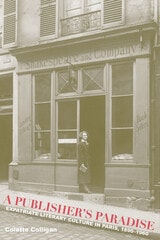
A Publisher's Paradise
Expatriate Literary Culture in Paris, 1890-1960Colette Colligan
University of Massachusetts Press, 2014
From 1890 to 1960, some of Anglo-America's most heated cultural contests over books, sex, and censorship were staged not at home, but abroad in the City of Light. Paris, with its extraordinary liberties of expression, became a special place for interrogating the margins of sexual culture and literary censorship, and a wide variety of English language “dirty books” circulated through loose expatriate publishing and distribution networks.
A Publisher's Paradise explores the political and literary dynamics that gave rise to this expatriate cultural flourishing, which included everything from Victorian pornography to the most daring and controversial modernist classics. Colette Colligan tracks the British and French politicians and diplomats who policed Paris editions of banned books and uncovers offshore networks of publishers, booksellers, authors, and readers. She looks closely at the stories the “dirty books” told about this publishing haven and the smut peddlers and literary giants it brought together in transnational cultural formations. The book profiles an eclectic group of expatriates living and publishing in Paris, from relatively obscure figures such as Charles Carrington, whose list included both The Picture of Dorian Gray and the pornographic novel Randiana, to bookshop owner Sylvia Beach, famous for publishing James Joyce's Ulysses in 1922.
A Publisher's Paradise is a compelling exploration of the little-known history of foreign pornography in Paris and the central role it played in turning the city into a modernist outpost for literary and sexual vanguardism, a reputation that still lingers today in our cultural myths of midnight in Paris.
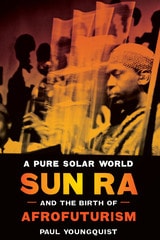
A Pure Solar World
Sun Ra and the Birth of AfrofuturismBy Paul Youngquist
University of Texas Press, 2016
Surveying the range of Sun Ra’s extraordinary creativity, this book explores how the father of Afrofuturism brought “space music” to a planet in need of transformation, supporting the aspirations of black people in an inhospitable white world.
Sun Ra said he came from Saturn. Known on earth for his inventive music and extravagant stage shows, he pioneered free-form improvisation in an ensemble setting with the devoted band he called the “Arkestra.” Sun Ra took jazz from the inner city to outer space, infusing traditional swing with far-out harmonies, rhythms, and sounds. Described as the father of Afrofuturism, Sun Ra created “space music” as a means of building a better future for American blacks here on earth.
A Pure Solar World: Sun Ra and the Birth of Afrofuturism offers a spirited introduction to the life and work of this legendary but underappreciated musician, composer, and poet. Paul Youngquist explores and assesses Sun Ra’s wide-ranging creative output—music, public preaching, graphic design, film and stage performance, and poetry—and connects his diverse undertakings to the culture and politics of his times, including the space race, the rise of technocracy, the civil rights movement, and even space-age bachelor-pad music. By thoroughly examining the astro-black mythology that Sun Ra espoused, Youngquist masterfully demonstrates that he offered both a holistic response to a planet desperately in need of new visions and vibrations and a new kind of political activism that used popular culture to advance social change. In a nation obsessed with space and confused about race, Sun Ra aimed not just at assimilation for the socially disfranchised but even more at a wholesale transformation of American society and a more creative, egalitarian world.
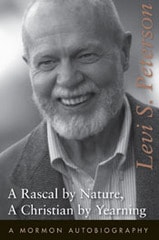
A Rascal by Nature, A Christian by Yearning
A Mormon AutobiographyPeterson, Levi S
University of Utah Press, 2006
Peterson has won a wide readership for his novels and short stories, his prize-winning biography of historian Juanita Brooks, and the essays that have appeared with regularity in western and Mormon literary and historical journals. In his autobiography, Peterson describes growing up on the Mormon frontier of rural Arizona, his growing skepticism with his Mormon faith, his teaching career at Weber State University, and his struggle to understand and master personal crises of confidence that kept him in therapy for almost two decades. Of particular interest to readers familiar with Peterson’s fiction are the many pages devoted to the creative process.
Winner of the Mormon History Association Turner-Bergera Best Biography Award.
A Recipe for Success
Lizzie Kander and Her CookbookBob Kann
Wisconsin Historical Society Press, 2007
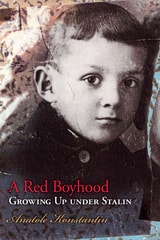
A Red Boyhood
Growing Up Under StalinAnatole Konstantin
University of Missouri Press, 2008
Many children growing up in the Soviet Union before World War II knew the meaning of deprivation and dread. But for the son of an “enemy of the people,” those apprehensions were especially compounded.
When the secret police came for his father in 1938, ten-year-old Anatole Konstantin saw his family plunged into a morass of fear. His memoir of growing up in Stalinist Russia re-creates in vivid detail the daily trials of people trapped in this regime before and during the repressive years of World War II—and the equally horrific struggles of refugees after that conflict.
Evicted from their home, their property confiscated, and eventually forced to leave their town, Anatole’s family experienced the fate of millions of Soviet citizens whose loved ones fell victim to Stalin’s purges. His mother, Raya, resorted to digging peat, stacking bricks, and even bootlegging to support herself and her two children. How she managed to hold her family together in a rapidly deteriorating society—and how young Anatole survived the horrors of marginalization and war—form a story more compelling than any novel.
Looking back on those years from adulthood, Konstantin reflects on both his formal education under harsh conditions and his growing awareness of the contradictions between propaganda and reality. He tells of life in the small Ukrainian town of Khmelnik just before World War II and of how some of its citizens collaborated with the German occupation, lending new insight into the fate of Ukrainian Jews and Nazi corruption of local officials. And in recounting his experiences as a refugee, he offers a new look at everyday life in early postwar Poland and Germany, as well as one of the few firsthand accounts of life in postwar Displaced Persons camps.
A Red Boyhood takes readers inside Stalinist Russia to experience the grim realities of repression—both under a Soviet regime and German occupation. A moving story of desperate people in desperate times, it brings to life the harsh realities of the twentieth century for young and old readers alike.
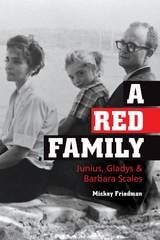
A Red Family
Junius, Gladys, and Barbara ScalesMickey Friedman. Afterword by Barbara Scales. Historical Essay by Gail O'Brien.
University of Illinois Press, 2008
Through the distinct perspectives of Junius, his wife Gladys, and his daughter Barbara, this book deepens and personalizes the story of American radicalism. Conversational, intimate, and exceptionally accessible, A Red Family offers a unique look at the American communist experience from the inside out.
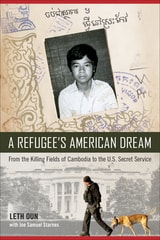
A Refugee's American Dream
From the Killing Fields of Cambodia to the U.S. Secret ServiceLeth Oun with Joe Samuel Starnes
Temple University Press, 2023
“I saw many killed. I almost starved. But I escaped to refugee camps in Thailand and eventually made it to the U.S.” Thus begins Leth Oun’s poignant and vivid memoir. A survivor of the Cambodian Killing Fields—having spent a torturous three years, eight months, and ten days imprisoned by the Khmer Rouge—Oun thrived in America, learning English, becoming a citizen, and working as an officer in the United States Secret Service Uniformed Division.
In A Refugee’s American Dream, Oun shares hard memories of Cambodia, where his father was executed, and his family enslaved in labor camps.
Following the fall of the Khmer Rouge, Oun survived a year of homelessness then nearly four years in refugee camps. Arriving in America, 17 and penniless, Oun struggled, washing dishes at a Chinese restaurant for $3.15 an hour. Still, he persevered, graduating from Widener University and completing thousands of hours of training to pursue a career in the Secret Service.
While on President Obama’s protection team, he returns to Cambodia after 32 years, reunites with family, and bonds with Reik, the Secret Service dog he handles. Through his most difficult moments, Oun displays truly inspiring resilience that ultimately leads to great achievements.
The authors’ proceeds will go to help Cambodians in need
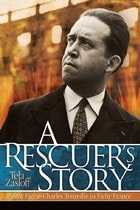
A Rescuer's Story
Pastor Pierre-Charles Toureille in Vichy FranceTela Zasloff
University of Wisconsin Press, 2014
This is the story of a Holocaust rescuer, Pierre Toureille, a French Protestant pastor whose efforts resulted in the rescue of hundreds of refugees, most of them Jewish. Inspired by his Huguenot heritage, Pastor Toureille participated in international Protestant church efforts to combat Nazism during the 1930s and headed a major refugee aid organization in Vichy France during World War II. After the war, Pastor Toureille was honored by the Jewish organization Yad Vashem as one of the "Righteous Among the Nations."
In telling Toureille’s story, Tela Zasloff also depicts the wide-ranging network of Protestant pastors and lay people in southern French villages who participated in an aggressive rescue effort. She delves into their motivations, including their heritage as members of a religious minority. Toureille’s rescue work under the Vichy regime, partly official and then increasingly clandestine as the war progrressed. was a crucial part of the French non-violent "spiritual resistance" against Nazism.
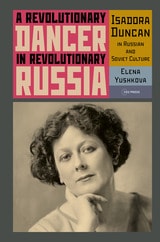
A Revolutionary Dancer in Revolutionary Russia
Isadora Duncan in Russian and Soviet CultureElena Yushkova
Central European University Press, 2026
This monograph offers a compelling exploration of Duncan’s Russian years—both before and after the October Revolution—drawing on rare archival sources and never-before-published Russian materials. It illuminates her artistic vision, her role in shaping early Soviet cultural debates, and the shifting political and aesthetic landscapes she navigated. From Silver Age reimaginations of antiquity to the rise of Socialist Realism and the modern revival of Duncan’s dance, this book traces the enduring legacy of a revolutionary artist in a world undergoing radical transformation.
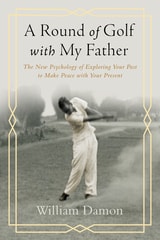
A Round of Golf with My Father
The New Psychology of Exploring Your Past to Make Peace with Your PresentDamon, William
Templeton Press, 2021
Viewing our past through the eyes of maturity can reveal insights that our younger selves could not see. Lessons that eluded us become apparent. Encounters that once felt like misfortunes now become understood as valued parts of who we are. We realize what we’ve learned and what we have to teach. And we’re encouraged to chart a future that is rich with purpose.
In A Round of Golf with My Father, William Damon introduces us to the “life review.” This is a process of looking with clarity and curiosity at the paths we’ve traveled, examining our pasts in a frank yet positive manner, and using what we’ve learned to write purposeful next chapters for our lives.
For Damon, that process began by uncovering the mysterious life of his father, whom he never met and never gave much thought to. What he discovered surprised him so greatly that he was moved to reassess the events of his own life, including the choices he made, the relationships he forged, and the career he pursued.
Early in his life, Damon was led to believe that his father had been killed in World War II. But the man survived and went on to live a second life abroad. He married a French ballerina, started a new family, and forged a significant Foreign Service career. He also was an excellent golfer, a bittersweet revelation for Damon, who wishes that his father had been around to teach him the game.
We follow Damon as he struggles to make sense of his father’s contradictions and how his father, even though living a world apart, influenced Damon’s own development in crucial ways. In his life review, Damon uses what he learned about his father to enhance his own newly emerging self-knowledge.
Readers of this book may come away inspired to conduct informal life reviews for themselves. By uncovering and assembling the often overlooked puzzle pieces of their pasts, readers can seek present-day contentment and look with growing optimism to the years ahead.
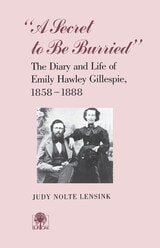
A Secret To Be Burried
Diary Emily Hawley GillespieJudy Nolte Lensink
University of Iowa Press, 1989
The sound of nineteenth-century women, once thought lost to us, is alive because ordinary women like Emily Hawley Gillespie gave voice to their thoughts in diaries. This condensed version of the 2,500-page journals of Emily Gillespie, faithfully written from 1858 to 1888, is a detailed account of rural Iowa life. More than this, it contains the reflections of a woman who dreamed of being a painter and writer and instead became a wife and a mother, a woman whose radical convictions were recorded in her diary, while publicly she conformed to the prescribed life of a Victorian pioneer woman. Through Emily's journals, readers are offered immediate and unmodified contact with settlers in Iowa one hundred years ago. A wealth of facts are included—what produce she harvested and preserved from her garden, how her husband tended his fields and what he raised, the challenges and rewards of family life.
Judy Lensink's skillful analysis shows the larger patterns in Emily Gillespie's life and provides keys that unlock the diary's secrets. Emily's life is revealed as a youth full of promise fading into middle and declining years of lost dreams and eventual tragedy, which caused her to write, "I have written many things in my journal, but the worst is a secret to be burried when I shall cease to be."
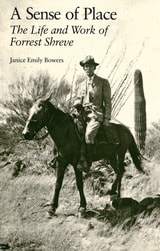
A Sense of Place
The Life and Work of Forrest ShreveJanice Emily Bowers
University of Arizona Press, 1988
Tracing Shreve's development from student to scientist, Bowers evokes the rigors and delights of fieldwork in the first half of this century and shows how Shreve's sense of place informed his scientific thought—making him, in his own words, "not an exile from some better place, but a man at home in an environment to which his life can be adjusted without physical or intellectual loss."
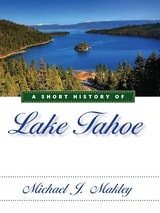
A Short History of Lake Tahoe
Michael J. Makley
University of Nevada Press, 2011
Lake Tahoe is one of the scenic wonders of the American West, a sapphire jewel that attracts millions of visitors each year. But the lake drew Native Americans to its summer shores for millennia, as well as more recent fortune hunters, scientists, and others.
A Short History of Lake Tahoe recounts the long, fascinating history of Lake Tahoe. Author Michael J. Makley examines the geology and natural history of the lake and introduces the people who shaped its history, including the Washoe Indians and such colorful characters as Mark Twain and legendary teamster Hank Monk, and later figures like entertainer Frank Sinatra and Olympic skier Julia Mancuso. He also covers the development of the lake's surrounding valley, including the impacts of mining, logging, and tourism, and the economic, political, and social controversies regarding the use and misuse of the lake's resources.
Generously illustrated with historic photographs, this book is an engaging introduction to one of the most magnificent sites in the world. It also illuminates the challenges of protecting natural beauty and a fragile environment while preserving public access and a viable economy in the surrounding communities.
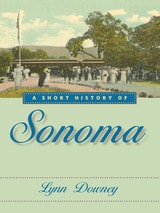
A Short History of Sonoma
Lynn Downey
University of Nevada Press, 2013
The book also addresses such topics as the development of local ranching and businesses and of transportation links to San Francisco that helped to make Sonoma and the surrounding Valley of the Moon a popular location for summer homes and resorts. It discusses the role of the nearby hot springs in attracting visitors and permanent residents, including people seeking cures for various ailments. There are also accounts of some of the famous people who lived in or near Sonoma and helped establish its mystique, including Mexican general Mariano Vallejo, the town’s first leader; Hungarian winemaker Agoston Haraszthy, who first saw the region’s potential for producing superior wines; and writers Jack London and M. F. K. Fisher, who made their homes in the Valley of the Moon, drawn by its beauty and bucolic lifestyle.
A Short History of Sonoma is generously illustrated with vintage photographs. It is a delightful account of one of America’s most charming towns and its evolution from rowdy frontier settlement to the paragon of sophisticated living that it is today.
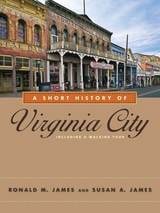
A Short History of Virginia City
Ronald M. James
University of Nevada Press, 2014
The city’s story did not end when the Comstock Lode played out. Beginning in the 1930s, bohemian artists, literati, and tourists were intrigued by this remnant of the Old West. The leader of Manhattan’s café society, Lucius Beebe, moved here and relaunched the Territorial Enterprise in 1950. Television’s most popular western from 1959 to 1973, Bonanza, located its fictional Ponderosa Ranch nearby. In the summer of 1965, a handful of Bay Area musicians, including Big Brother and the Holding Company, performed at the Red Dog Saloon and launched psychedelic rock, part of the inspiration for a defining decade of youth culture. Today it is both a National Historic Landmark District and a living community. Visitors come to enjoy its saloons and restaurants, admire its architecture, and learn from its museums and exhibits. A Short History of Virginia City will enhance their experience and will also be enjoyed by anyone interested in the history of Nevada, mining, and the Old West.
• Includes an illustrated walking tour describing more than thirty buildings and sites
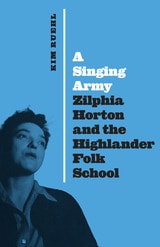
A Singing Army
Zilphia Horton and the Highlander Folk SchoolBy Kim Ruehl
University of Texas Press, 2021
Zilphia Horton was a pioneer of cultural organizing, an activist and musician who taught people how to use the arts as a tool for social change, and a catalyst for anthems of empowerment such as “We Shall Overcome” and “We Shall Not Be Moved.” Her contributions to the Highlander Folk School, a pivotal center of the labor and civil rights movements in the mid-twentieth century, and her work creating the songbook of the labor movement influenced countless figures, from Woody Guthrie to Eleanor Roosevelt to Rosa Parks. Despite her outsized impact, Horton’s story is little known. A Singing Army introduces this overlooked figure to the world.
Drawing on extensive archival and oral history research, as well as numerous interviews with Horton's family and friends, Kim Ruehl chronicles her life from her childhood in Arkansas coal country, through her formative travels and friendship with radical Presbyterian minister Claude C. Williams, and into her instrumental work in desegregation and fostering the music of the civil rights era. Revealing these experiences—as well as her unconventional marriage and controversial death by poisoning—A Singing Army tells the story of an all-but-forgotten woman who inspired thousands of working-class people to stand up and sing for freedom and equality.
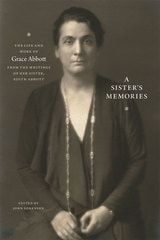
A Sister's Memories
The Life and Work of Grace Abbott from the Writings of Her Sister, Edith AbbottEdited by John Sorensen
University of Chicago Press, 2015
A Sister’s Memories is the inspiring story of Grace Abbott (1878–1939), as told by her sister and social justice comrade, Edith Abbott (1876–1957). Edith recalls in vivid detail the Nebraska childhood, impressive achievements, and struggles of her sister who, as head of the Immigrants’ Protective League and the U.S. Children’s Bureau, championed children’s rights from the slums of Chicago to the villages of Appalachia. Grace’s crusade can perhaps be best summed up in her well-known credo: “Justice for all children is the high ideal in a democracy.” Her efforts saved the lives of thousands of children and immigrants and improved those of millions more. These trailblazing social service works led the way to the creation of the Social Security Act and UNICEF and caused the press to nickname her “The Mother of America’s 43 Million Children.” She was the first woman in American history to be nominated to the presidential cabinet and the first person to represent the United States at a committee of the League of Nations.
Edited by Abbott scholar John Sorensen, A Sister’s Memories is destined to become a classic. It shapes the diverse writings of Edith Abbott into a cohesive narrative for the first time and fills in the gaps of our understanding of Progressive Era reforms. Readers of all backgrounds will find themselves engrossed by this history of the unstoppable, pioneer feminist Abbott sisters.
A Sniper in the Tower
The Charles Whitman MurdersGary M. Lavergne
University of North Texas Press, 1997
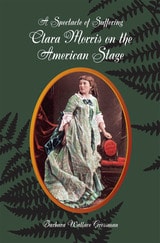
A Spectacle of Suffering
Clara Morris on the American StageBarbara Wallace Grossman
Southern Illinois University Press, 2009
Once called "America's greatest actress," renowned for the passion and power of her performances, Clara Morris (1847-1925) has been largely forgotten. A Spectacle of Suffering: Clara Morris on the American Stage is the first full-length study of the actress's importance as a feminist in the late nineteenth and early twentieth centuries. Detailing her daunting health problems and the changing tastes in entertainment that led to her retirement from the stage, Barbara Wallace Grossman explores Morris's dramatic reinvention as an author. During a second robust career, she published hundreds of newspaper and magazine articles and nine books—six works of fiction and three memoirs.
Grossman draws on the fifty-four-volume diary that Morris kept from 1868 until 1924, as well as on the manuscript fragments and notes of journalist George T. MacAdam, who died in 1929 before completing the actress's biography. Grossman provides a dramatic account of Morris's life and work from her troubled early years, through an unhappy marriage, morphine addiction, and invalidism, to the challenges of touring, the decline of her artistic reputation, and the demands of the writing career she pursued so tenaciously. A Spectacle of Suffering reveals how Morris, even after experiencing blindness and the loss of her home, livelihood, and family, did not succumb to despair and found comfort in the small pleasures of her circumscribed life.
A Spectacle of Suffering recovers an important figure in American theatre and ensures that Morris will be remembered not simply as an actress but as a respected writer and beloved public figure, admired for her courage in dealing with adversity. The book, which is enhanced by twenty-four illustrations, is the only published biography of Clara Morris. It is as much a tribute to the power of the human spirit as it is an effective means of exploring American theatre and society in the Gilded Age.
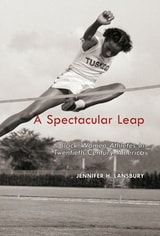
A Spectacular Leap
Black Women Athletes in Twentieth-Century AmericaJennifer H. Lansbury
University of Arkansas Press, 2014
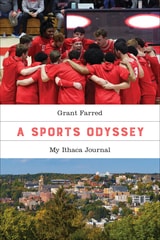
A Sports Odyssey
My Ithaca JournalGrant Farred
Temple University Press, 2025
As readers of his Long Distance Love know, Grant Farred has been a supporter of the English Premier League club, Liverpool Football Club, for decades. His fandom for that team launched an unexpected connection with a world beyond the limits of the apartheid state of his upbringing in South Africa. However, A Sports Odyssey shows that as Farred’s fervor for Liverpool ended, he developed a new set of sports attachments in Ithaca, New York: to his son’s youth basketball career, to the men’s basketball team at Cornell University and its coach, and even to professional teams like the New York Knicks. Farred’s bemusement at finding himself a sports parent, a New Yorker, and a company man, only underline the sincerity of his affections.
In A Sports Odyssey, Farred writes elegantly and eloquently about how sports and sports fandom create a sense of belonging, but also loss. This is a heartfelt examination of how we find “home” in who and what we love.
In the series Sporting
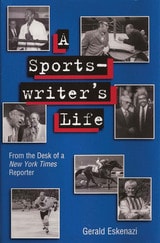
A Sportswriter's Life
From the Desk of a New York Times ReporterGerald Eskenazi
University of Missouri Press, 2004
In 1959, Gerald Eskenazi dropped out of City College, not for the first time, and made his way to the New York Times. That day the paper had two openings—one in news and one in sports. Eskenazi was offered either for thirty-eight dollars a week. He chose sports based on his image of the sports department as a cozier place than the news department. Forty-one years and more than eighty-four hundred stories later, New Yorkers know he made the right decision.
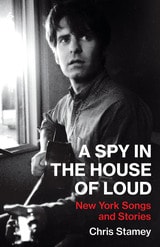
A Spy in the House of Loud
New York Songs and StoriesBy Chris Stamey
University of Texas Press, 2018
Popular music was in a creative upheaval in the late 1970s. As the singer-songwriter and producer Chris Stamey remembers, “the old guard had become bloated, cartoonish, and widely co-opted by a search for maximum corporate profits, and we wanted none of it.” In A Spy in the House of Loud, he takes us back to the auteur explosion happening in New York clubs such as the Bowery’s CBGB as Television, Talking Heads, R.E.M., and other innovative bands were rewriting the rules. Just twenty-two years old and newly arrived from North Carolina, Stamey immersed himself in the action, playing a year with Alex Chilton before forming the dB’s and recording the albums Stands for deciBels and Repercussion, which still have an enthusiastic following.
A Spy in the House of Loud vividly captures the energy that drove the music scene as arena rock gave way to punk and other new streams of electric music. Stamey tells engrossing backstories about creating in the recording studio, describing both the inspiration and the harmonic decisions behind many of his compositions, as well as providing insights into other people’s music and the process of songwriting. Photos, mixer-channel and track assignment notes, and other inside-the-studio materials illustrate the stories. Revealing another side of the CBGB era, which has been stereotyped as punk rock, safety pins, and provocation, A Spy in the House of Loud portrays a southern artist’s coming-of-age in New York’s frontier abandon as he searches for new ways to break the rules and make some noise.
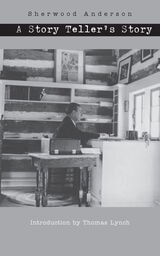
A Story Teller's Story
A MemoirSherwood Anderson
University of Michigan Press, 2005
"The voice of the soliloquist . . . amplifies the drama of A Story Teller's Story, as does the persistent theme of escape, from an America of fact and factories, marketing and manufacturing, to the borderless Ohios of imagination and creation."
—From the introduction by Thomas Lynch
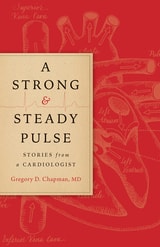
A Strong and Steady Pulse
Stories from a CardiologistGregory D. Chapman, MD
University of Alabama Press, 2021
A seasoned cardiologist shares his experiences, opinions, and recommendations about heart disease and other cardiac problems.
A Strong and Steady Pulse: Stories from a Cardiologist provides an insider’s perspective on the field of cardiovascular medicine told through vignettes and insights drawn from Gregory D. Chapman’s three decades as a cardiologist and professor of medicine. In twenty-six bite-sized chapters based on real-life patients and experiences, Chapman provides an overview of contemporary cardiovascular diseases and treatments, illuminating the art and science of medical practice for lay audiences and professionals alike.
With A Strong and Steady Pulse, Chapman provides medical students and general readers with a better understanding of cardiac disease and its contributing factors in modern life, and he also provides insights on the diagnostic process, medical decision making, and patient care. Each chapter presents a patient and their initial appearance, described in clear detail as Chapman gently walks us through his evaluation and the steps he and his associates take to determine the underlying problem. Chapman’s stories are about real people dealing with life and death situations—including the physicians, nurses, medical students, and other team members who try to save lives in emergent, confusing conditions.
The sometimes hard-won solutions to these medical challenges combine new technology and cutting-edge research together with insights drawn from Chapman’s past experiences as an intern and resident in Manhattan during the AIDS epidemic, as a postdoctoral fellow at Duke University in the 1990s, and in practice in Nashville, Tennessee, and Birmingham, Alabama. Conditions addressed include the recognition and management of heart attack, heart failure, arrhythmia, valvular heart disease, cardiac transplantation, broken heart syndrome, hypertension, and the depression some people experience after a heart attack, as well as related topics like statin drugs, the Apple Watch ECG feature, and oral anticoagulants. Finally, the emergence of the COVID-19 virus and its disruption of normal hospital routines as the pandemic unfolded is addressed in an epilogue.
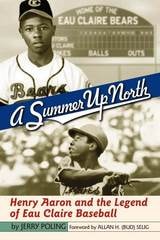
A Summer Up North
Henry Aaron and the Legend of Eau Claire BaseballJerry Poling
University of Wisconsin Press, 2002
June 12, 1952—only a local sportswriter showed up at the Eau Claire airport to greet a newly signed eighteen-year-old shortstop from Alabama toting a cardboard suitcase. "I was scared as hell," said Henry Aaron, recalling his arrival as the new recruit on the city’s Class C minor league baseball team.
Forty-two years later, as Aaron approached the stadium where the Eau Claire Bears once played, an estimated five thousand people surrounded a newly raised bronze statue of a young "Hank" Aaron at bat. "I had goosebumps," he said later. "A lot of things happened to me in my twenty-three years as a ballplayer, but nothing touched me more than that day in Eau Claire." For the people of Eau Claire, Aaron’s summer two years before his Major League debut with the Milwaukee Braves symbolizes a magical time, when baseball fans in a small city in northern Wisconsin could live a part of the dream.
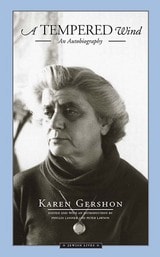
A Tempered Wind
An AutobiographyKaren Gershon
Northwestern University Press, 2010
Poet Karen Gershon opens A Tempered Wind, the sequel to volume 1 of her autobiography A Lesser Child, in 1943. It begins tragically with the death of Karen’s sister Anne in England, where they had escaped from Nazi Germany with their third sister Lise via the Kindertransport mission. A Tempered Wind proceeds to chart the difficult period from 1939 to 1943 as Karen adapts to a new culture and undertakes the complicated passage from adolescence to adulthood in the British Isles.
Now orphans—their parents were murdered by the Nazis—the sisters are separated, and Karen is left haunted by feelings of abandonment by her sister as well as her parents who sent her away from them. Such feelings, along with her struggle with her imperiled Jewish identity, make their way into Karen’s writing, which includes stories, essays, and poems. In writing, she starts to find a home in language. Charting the creative growth of an astonishing Jewish author, A Tempered Wind concludes with Karen making her own urgent way as a writer with a mission to tell the world her archetypal German Jewish story.

A Thomas More Source Book
Gerard B. Wegemer
Catholic University of America Press, 2004
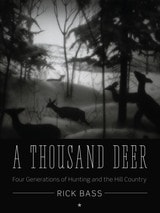
A Thousand Deer
Four Generations of Hunting and the Hill CountryBy Rick Bass
University of Texas Press, 2012
In November, countless families across Texas head out for the annual deer hunt, a ritual that spans generations, ethnicities, socioeconomics, and gender as perhaps no other cultural experience in the state. Rick Bass’s family has returned to the same hardscrabble piece of land in the Hill Country—“the Deer Pasture”—for more than seventy-five years. In A Thousand Deer, Bass walks the Deer Pasture again in memory and stories, tallying up what hunting there has taught him about our need for wildness and wilderness, about cycles in nature and in the life of a family, and particularly about how important it is for children to live in the natural world.
The arc of A Thousand Deer spans from Bass’s boyhood in the suburbs of Houston, where he searched for anything rank or fecund in the little oxbow swamps and pockets of woods along Buffalo Bayou, to his commitment to providing his children in Montana the same opportunity—a life afield—that his parents gave him in Texas. Inevitably this brings him back to the Deer Pasture and the passing of seasons and generations he has experienced there. Bass lyrically describes his own passage from young manhood, when the urge to hunt was something primal, to mature adulthood and the waning of the urge to take an animal, his commitment to the hunt evolving into a commitment to family and to the last wild places.
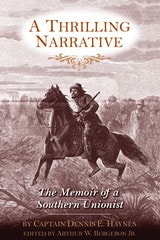
A Thrilling Narrative
The Memoir of a Southern UnionistDennis E. Haynes
University of Arkansas Press, 2006
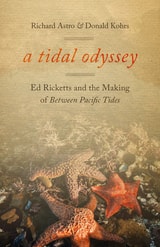
A Tidal Odyssey
Ed Ricketts and the Making of Between Pacific TidesRichard Astro
Oregon State University Press, 2021
In A Tidal Odyssey, literary scholar Richard Astro and archivist Donald Kohrs explore how Between Pacific Tides came to be, covering both the writing process and the long journey to publication. They tell three interwoven stories: the development of ecology as a valuable new approach to the study of marine life in the intertidal zone; a case study of how new and dynamic science is published and reaches a larger audience; and the intellectual development of Ed Ricketts.
Not only a scientist but also an expert in music, philosophy, history, and literature, Ricketts and his work impacted a broad range of writers and scholars. A number of these intellectual figures appear in A Tidal Odyssey, including Ricketts’s co-author, Jack Calvin, and illustrator, Ritch Lovejoy; mythologist Joseph Campbell; novelist Henry Miller; composer John Cage; and of course John Steinbeck. The authors have drawn extensively from Ricketts’s archive, including previously unpublished letters, memoranda, notebooks, and photographs.
A Tidal Odyssey is for anyone interested in the world of Ed Ricketts as well as marine biology, intertidal ecology, and how ecological studies underpin our understanding of the impact of environmental change on the well-being of our planet.

A Time for Spies
Theodore Stephanovich Mally and the Era of the Great IllegalsWilliam E. Duff
Vanderbilt University Press, 1999

A Time to Speak
The Story of a Young American Lawyer's Struggle for His City—and HimselfCharles Morgan Jr., With a New Foreword by Senator Doug Jones
University of Alabama Press, 2022
Brings back into print a classic account of courage and calamity in the long march toward racial justice in the South, and the nation
On September 15, 1963, a bomb exploded at the Sixteenth Street Baptist Church in Birmingham, Alabama, killing four young Black girls. The very next day, a prominent white lawyer named Charles Morgan Jr. was scheduled to speak at a luncheon held by the Young Men’s Business Club of Birmingham. A well-regarded figure in the city’s legal and business establishment, Morgan had been mentioned frequently as a candidate for political office. To the shock of his longtime friends and associates, Morgan deviated from his planned remarks, instead using his platform to place the blame for the murder of the four young girls squarely on the shoulders of the city’s white middle-class establishment, those seated before him.
As much as his stand was admired nationally, in Birmingham the results were destructive for him personally. Threats against his life and the lives of his family poured in daily by phone and mail, his political career was finished, and he was faced with financial ruin. Within weeks, he moved his family out of the state, and thenceforward committed himself to legal action in the name of racial justice. In 1964, he established the regional office of the ACLU in Atlanta. In the 1964 Supreme Court case Reynolds v. Sims, Morgan successfully argued that districts in state legislatures needed to be of nearly equal size, establishing the principle of “one man, one vote” to effectively end the use of gerrymandering.
A Time to Speak was originally published in 1964, a mere year after Morgan and his family fled Birmingham. The memoir recounts not only his speech, but his entire upbringing and the political, cultural, and social milieus in which he was raised and which gave rise to the cowardice, institutional silence, fear, and hate that those conditions nursed. This new edition features a foreword from US Senator Doug Jones.
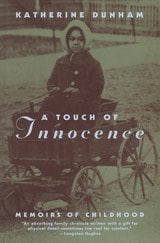
A Touch of Innocence
A Memoir of ChildhoodKatherine Dunham
University of Chicago Press, 1994
In stark prose, she tells of growing up in both black and white households and of the divisions of race and class in Chicago that become the harsh realities of her young life. A riveting narrative of one girl's struggle to transcend the painful confusions of a family and culture in turmoil, Dunham's story is full of the clarity, candor, and intelligence that lifted her above her troubled beginnings.
"A Touch of Innocence is an absorbing family chronicle written with a gift for physical detail sometimes too real for comfort. In quietly graphic prose the growing girl, the slightly older brother, the ambitious father and the kind stepmother are pictured in such human terms that when their lives get tied into harder and harder knots beyond their undoing, one can only continue to read helplessly as doom closes in upon the household."—Langston Hughes, New York Herald Tribune
"A Touch of Innocence is one of the most extraordinary life stories I have ever read . . . . The content of this book is so heartbreaking that only the strongest artistic skills can keep it from leaking out into sobbing self-pity, but Katherine Dunham's art contains it, understands it and refuses to be overwhelmed by its terrors."—Elizabeth Janeway, New York Times
"The first eighteen years of the famous dancer and choreographer's life are brought vividly to the reader in this first volume of her autobiography. She writes of what it is like to be a special, gifted young woman growing up in a racially mixed family in the American Middle West. A beautiful, touching and sometimes discomforting book."—Publishers Weekly
"As writing it is honest, searing, graphic and touching, giving us a rather heartbreaking early view of the young American Negro who was later to make a name for herself as a dancer and choreographer."—Arthur Todd, Saturday Review

A Triptych from the Russian Theatre
An Artistic Biography of the Komissarzhevsky FamilyVictor Borovsky
University of Iowa Press, 2001
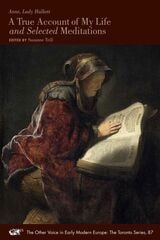
A True Account of My Life and Selected Meditations
Lady Anne Halkett
Iter Press, 2022
Born in the early 1620s, Anne, Lady Halkett (née Murray) grew up on the fringes of the English court during a period of increasing political tension. From 1644 to 1699, Halkett recorded her personal and political experiences in both England and Scotland in a series of manuscript meditations and an autobiographical narrative called A True Account of My Life. Royalism, romance, and contemporary religious debates are central to Halkett’s vivid portrayal of her life as a single woman, wife, mother, and widow. Collectively, the materials edited here offer the opportunity to explore how Halkett’s meditational practice informed her life writing in the only version of her writings to date available in a fully modernized edition. The forty-four meditations in this volume redefine the importance of Halkett’s contribution to seventeenth-century life writing.

A Two-Spirit Journey
The Autobiography of a Lesbian Ojibwa-Cree ElderMa-Nee Chacaby
University of Manitoba Press, 2016
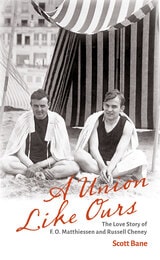
A Union Like Ours
The Love Story of F. O. Matthiessen and Russell CheneyScott Bane
University of Massachusetts Press, 2022
After a chance meeting aboard the ocean liner Paris in 1924, Harvard University scholar and activist F. O. Matthiessen and artist Russell Cheney fell in love and remained inseparable until Cheney’s death in 1945. During the intervening years, the men traveled throughout Europe and the United States, achieving great professional success while contending with serious personal challenges, including addiction, chronic disease, and severe depression.
During a hospital stay, years into their relationship, Matthiessen confessed to Cheney that “never once has the freshness of your life lost any trace of its magic for me. Every day is a new discovery of your wealth.” Situating the couple’s private correspondence alongside other sources, Scott Bane tells the remarkable story of their relationship in the context of shifting social dynamics in the United States. From the vantage point of the present day, with marriage equality enacted into law, Bane provides a window into the realities faced by same-sex couples in the early twentieth century, as they maintained relationships in the face of overt discrimination and the absence of legal protections.
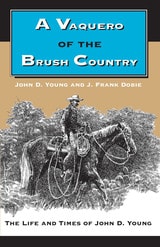
A Vaquero of the Brush Country
The Life and Times of John D. YoungBy John D. Young and J. Frank Dobie
University of Texas Press, 1998
This true story of the Texas brush range and the first cowboys, as thrilling as any tale of fiction, has become a classic in Western literature. It is the story of the land where cattle by tens of thousands were killed on the prairie and where the "Skinning War" was fought. It is the story of the Chisholm Trail up to Abilene and the Platte and of establishing a ranch on the free grass of the Texas Panhandle, of roping elk in Colorado, of trailing Billy the Kid in New Mexico, of the grim lands of the Pecos. And it is the story of John Young, old-time vaquero who was trail driver, hog chaser, sheriff, ranger, hunter of Mexican bandits, horse thief killer, prairie fire fighter, ranch manager, and other things—a man who was also something of a dreamer, a man of imagination.
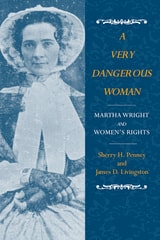
A Very Dangerous Woman
Martha Wright and Women's RightsSharon H. Penney
University of Massachusetts Press, 2004
In telling Wright's story, the authors make good use of her lively letters to her family, friends, and colleagues, including Susan B. Anthony and Elizabeth Cady Stanton. These letters reveal Wright's engaging wit and offer an insider's view of nineteenth-century reform and family life. Her correspondence with slaveholding relatives in the South grew increasingly contentious with the approach of the Civil War. One nephew became a hero of the Confederacy with his exploits at the Battle of Fredericksburg, and her son in the Union artillery was seriously wounded at Gettysburg while repelling Pickett's Charge.
Wright's life never lacked for drama. She survived a shipwreck, spent time at a frontier fort, experienced the trauma of the deaths of a fiancé, her first husband, and three of her seven children, and navigated intense conflicts within the women's rights and abolition movements. Throughout her tumultuous career, she drew on a reservoir of humor to promote her ideas and overcome the many challenges she faced. This accessible biography, written with the general reader in mind, does justice to her remarkable life.
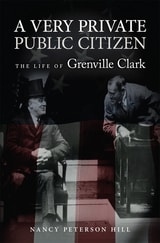
A Very Private Public Citizen
The Life of Grenville ClarkNancy Peterson Hill
University of Missouri Press, 2016
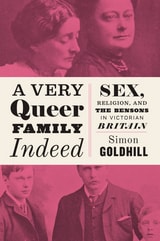
A Very Queer Family Indeed
Sex, Religion, and the Bensons in Victorian BritainSimon Goldhill
University of Chicago Press, 2016
So begins A Very Queer Family Indeed, which introduces us to the extraordinary Benson family. Edward White Benson became Archbishop of Canterbury at the height of Queen Victoria’s reign, while his wife, Mary, was renowned for her wit and charm—the prime minister once wondered whether she was “the cleverest woman in England or in Europe.” The couple’s six precocious children included E. F. Benson, celebrated creator of the Mapp and Lucia novels, and Margaret Benson, the first published female Egyptologist.
What interests Simon Goldhill most, however, is what went on behind the scenes, which was even more unusual than anyone could imagine. Inveterate writers, the Benson family spun out novels, essays, and thousands of letters that open stunning new perspectives—including what it might mean for an adult to kiss and propose marriage to a twelve-year-old girl, how religion in a family could support or destroy relationships, or how the death of a child could be celebrated. No other family has left such detailed records about their most intimate moments, and in these remarkable accounts, we see how family life and a family’s understanding of itself took shape during a time when psychoanalysis, scientific and historical challenges to religion, and new ways of thinking about society were developing. This is the story of the Bensons, but it is also more than that—it is the story of how society transitioned from the high Victorian period into modernity.

A Voice of Thunder
A BLACK SOLDIER'S CIVIL WAREdited by Donald Yacovone
University of Illinois Press, 1997
important African-American war correspondent of his era, served in the
famed black Fifty-fourth Massachusetts Regiment, subject of the film Glory.
His letters from the front, published in the New York Weekly Anglo-African,
brilliantly detail two wars: one against the Confederacy and one against
the brutal, debilitating racism within his own Union Army. Together with
Donald Yacovone's biographical introduction detailing Stephens's life
and times, they provide a singular perspective on the greatest crisis
in the history of the United States.
Stephens chronicled the African-American
quest for freedom in reports from southern Maryland and eastern Virginia
in 1861 and 1862 that detailed, among other issues of the day, the Army
of the Potomac's initial encounter with slavery, the heroism of fugitive
slaves, and the brutality both Southerners and Union troops inflicted
on them.
From the inception of the
Fifty-fourth early in 1863 Stephens was the unit's voice, telling of its
struggle against slavery and its quest to win the pay it had been promised.
His description of the July 18, 1863, assault on Battery Wagner near Charleston,
South Carolina, and his writings on the unit's eighteen-month campaign
to be paid as much as white troops are gripping accounts of continued
heroism in the face of persistent insult.
The Weekly Anglo-African
was the preeminent African-American newspaper of its time. Stephens's
correspondence, intimate and authoritative, takes in an expansive array
of issues and anticipates nearly all modern assessments of the black role
in the Civil War. His commentary on the Lincoln administration's wartime
policy and his conviction that the issues of race and slavery were central
to nineteenth-century American life mark him as a major American social
critic.
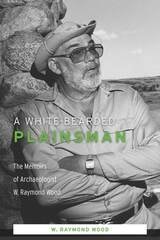
A White-Bearded Plainsman
The Memoirs of Archaeologist W. Raymond WoodW. Raymond Wood
University of Utah Press, 2011
W. Raymond Wood played a leading role in the early days of Great Plains archaeology. In A White-Bearded Plainsman, he tells how his own career emerged, as the discipline of Plains archaeology developed during the post-World War II era. Readers will learn of the childhood influences that lead Wood to pursue the path of archaeologist, and of the events and people that shaped his professional life. In addition to telling Wood’s personal story, the book provides an intellectual history of the discipline of mid-continental archaeology over the last half century. It will thus be valuable to students and scholars in the field, as it describes how the paradigms in Plains and midwestern prehistory have changed over time. To understand the discipline, one must understand the cultural and intellectual underpinnings that shaped it. Wood’s book helps map for a new generation of archaeologists from whence they’ve come, and his role in the developments along the way.
A Woman of the Times
Journalism, Feminism, and the Career of Charlotte CurtisMarilyn S. Greenwald
Ohio University Press, 1999
For twenty-five years, Charlotte Curtis was a society/women's reporter and editor and an op-ed editor at the New York Times. As the first woman section editor at the Times, Curtis was a pioneering journalist and one of the first nationwide to change the nature and content of the women's pages from fluffy wedding announcements and recipes to the more newsy, issue-oriented stories that characterize them today. In this riveting biography, Marilyn Greenwald describes how a woman reporter from Columbus, Ohio, broke into the ranks of the male-dominated upper echelon at the New York Times. It documents what she did to succeed and what she had to sacrifice.
Charlotte Curtis paved the way for the journalists who followed her. A Woman of the Times offers a chronicle of her hard-won journey as she invents her own brand of feminism during the 1960s and 1970s. In the telling of this remarkable woman’s life is the story, as well, of a critical era in the nation’s social history.
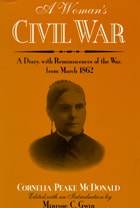
A Woman's Civil War
A Diary with Reminiscences of the War, from March 1862Cornelia Peake McDonald; Edited, with an Introduction by Minrose C. Gwin
University of Wisconsin Press, 1992
McDonald’s story of the Civil War records a personal and distinctly female battle of her own—a southern woman’s lonely struggle in the midst of chaos to provide safety and shelter for herself and her children. For McDonald, history is what happens “inside the house.” She relates the trauma that occurs when the safety of the home is disrupted and destroyed by the forces of war—when women and children are put out of their houses and have nowhere to go.
Whether she is describing a Union soldier’s theft of her Christmas cakes, the discovery of a human foot in her garden, or the death of her baby daughter, McDonald’s story of the Civil War at home is compelling and disturbing. Her tremendous determination and unyielding spirit in the face of the final collapse of her world is testimony to a woman’s will to preserve her family and her own sense of purpose as a “rebel” against all that she regarded as tyrannical and brutal in war itself.
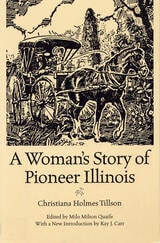
A Woman's Story of Pioneer Illinois
Christiana Holmes Tillson
Southern Illinois University Press, 1995
Christiana and John Tillson moved from Massachusetts to central Illinois in 1822. Upon arriving in Montgomery County near what would soon be Hillsboro, they set up a general store and real estate business and began to raise a family.
A half century later, Christiana Tillson wrote about her early days in Illinois in a memoir published by R. R. Donnelley in 1919. In it she describes her husband’s rise to wealth through the speculative land boom during the 1820s and 1830s and his loss of fortune when the land business went bust after the Specie Circular was issued in 1836.
The Tillsons lived quite ordinary lives in extraordinary times, notes Kay J. Carr, introducing this edition. Their views and sensibilities, Carr says, might seem strange to us, but they were entirely normal to people in the early nineteenth century. Thus Tillson’s memoir provides vignettes of ordinary nineteenth-century American life.

A Wrestling Life 2
More Inspiring Stories of Dan GableDan Gable and Kyle Klingman
University of Iowa Press, 2018
Through stories funny, heartfelt, intense, and always engaging, Gable shares more about the life he has lead and what can be learned from those experiences. He goes on to detail what have come to be known as the Gable Trained principles that he follows to keep his life full of “wins,” the revelations about how to cultivate success at the highest levels, and the reasons behind these steps for living well.
A Wrestling Life spent two months on the New York Times sports bestseller list, and has become an instant classic of sports memoirs. A Wrestling Life 2 is sure to add to Gable’s ever-growing legacy and entertain and inspire wrestling fans everywhere.
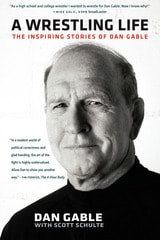
A Wrestling Life
The Inspiring Stories of Dan GableDan Gable and Scott Schulte
University of Iowa Press, 2016
Whether we are athletes or not, we all dream of extreme success and are all looking to make our future the best it can be, but along the way we will undoubtedly need time to recover and rejuvenate. Let these stories inspire you to find your path to strength and achievement along whatever path you take.