Results by title
3785 books match the query 'Poetry' and 303 start with a
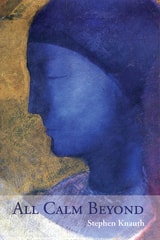
All Calm Beyond
Stephen Knauth
Four Way Books, 2025
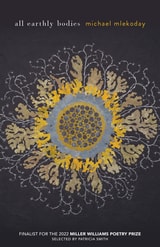
All Earthly Bodies
Michael Mlekoday
University of Arkansas Press, 2022
Finalist, 2022 Miller Williams Poetry Prize
From cities and cross-country bus rides to swamps and fern forests, Michael Mlekoday’s All Earthly Bodies celebrates the ungentrifiable, ungovernable wildness of life. This is anarchist ecology, nonbinary environmentalism, an earthbound theology against empire in all its forms. These poems ask how our lives and language, our prayers and politics, might evolve if we really listened to the world and its more-than-human songs.
“Sometimes I wish I could / peel myself from myself / without discarding the shell,” Mlekoday writes. Through a kind of lyric dreamwork, Mlekoday sounds the depths—of ancestry and identity, race and gender, earth and self—to track the unbecoming and re-membering of the body.
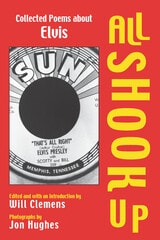
All Shook Up
Collected Poems about ElvisWill Clemens
University of Arkansas Press, 2001
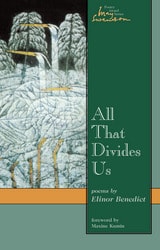
All That Divides Us
PoemsElinor Benedict foreword by Maxine Kumin
Utah State University Press, 2000
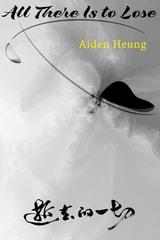
All There Is to Lose
Aiden Heung
Four Way Books, 2026
Marking Aiden Heung’s debut collection, All There Is to Lose is the 2024 winner of the Four Way Books Levis Prize in Poetry. The selecting judge, National Book Award Finalist Ilya Kaminsky, praises the resonant particularities and depth of feeling found in these poems, which convert “elegy [into] its driving force.” Poet and Critic Felicity Plunkett observes, “Dreams and memory move through these porous, venturesome poems. The spectral jostles with the sensual to tell ‘a story in which I could be found.’ Achily tender, they open to light, love and the jab of a joke.” Poet David Tait notes, “Unsettling and luminous, the poems preserve the memory of Village 915: its volatile seasons and hard-worn inhabitants, its headstones, spirits, and myriad forms of water. Here you’ll find not only poems of lyrical beauty, but of grim exactness.” The result is a stunning achievement of a first book, what Kaminsky identifies as an exemplar of “that ages-old mode of poetry wherein the poet uses language to break bread with the dead, to bring them back to life, if only for the moment, for a portion of the moment, an instant, before the line breaks.” Channeling the poet as medium, “I am the tension on the bow that draws the arrow,” Heung writes in “Epilogue.” “To lose myself — that is my destiny.”
All Things At Once
Sonnets and SongsRoger Armbrust
Parkhurst Brothers, Inc., 2022
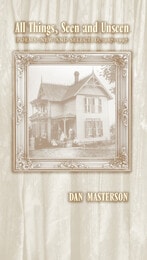
All Things, Seen and Unseen
Poems: New and Selected, 1967-1997Dan Masterson
University of Arkansas Press, 1997
With clarity and precise detail, Dan Masterson creates a narrative of how we live, love, and die. In blank verse and rhymed stanzas, in free verse and taut lyrics, he delivers the story of a woman trap ped in an avalanche, a husband daring himself to death in an ocean swim, or a son arranging the final affairs of his parents. There is always an edge to Masterson’s characters—they are everyday people, but we meet them on the one day when the stakes are highest.
He holds a reverence for the particulars of a place, for gardens and homes, for dresser drawers and work benches, for cabins in the Adirondacks, ponds, tree houses, and ornamental stones. The leavings of loved ones—strong boxes, pajamas, rosaries—are passed on as relics that both heal and trouble. In Masterson’s world, characters learn how to lose, how to change, and even how to survive their most painful memories.
Selected from thirty years of work, and including an eclectic selection of new poems, this book unfurls Masterson’s full canvas of abilities: his penchant for startling descriptions, his keen insight into our nobility and fallibility, and his skill at making us live his poems.

All You Do Is Perceive
Joy Katz
Four Way Books, 2013
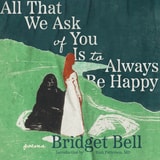
All that We Ask of You Is to Always Be Happy
Bridget Bell
CavanKerry Press, 2025
Maternal mental illness is an ongoing health crisis and deserves awareness, not only in the medical world but in the poetry world, too. Bridget Bell’s All that We Ask of You Is to Always Be Happy offers support to current mothers, mothers-to-be, family members of people suffering from perinatal mental illnesses, OB-GYNs, nurses, and any other healthcare providers. Bell uses various poetic forms to shed light on the challenges that come with motherhood, including the physical and emotional challenges of childbirth while celebrating the beauty of women’s strength and resilience. Written with deep care and fearlessness, Bell’s debut collection is both an educational tool and a powerful component of recovery in that shares others’ similar stories.

All the Fun’s in How You Say a Thing
An Explanation of Meter and VersificationTimothy Steele
Ohio University Press, 1999
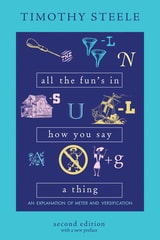
All the Fun’s in How You Say a Thing
An Explanation of Meter and VersificationTimothy Steele
Ohio University Press, 2024
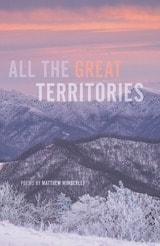
All the Great Territories
Matthew Wimberley
Southern Illinois University Press, 2020
In 2012 Matthew Wimberley took a two-month journey, traveling and living out of his car, during which time he had planned to spread his father’s ashes. By trip’s end, the ashes remained, but Wimberley had begun a conversation with his deceased father that is continued here in his debut collection.
All the Great Territories is a book of elegies for a father as well as a confrontation with the hostile, yet beautiful landscape of southern Appalachia. In the wake of an estranged father’s death, the speaker confronts that loss while celebrating the geography of childhood and the connections formed between the living and the dead. The narrative poems in this collection tell one story through many: a once failed relationship, the conversations we have with those we love after they are gone. In an attempt to make sense of the father-son relationship, Wimberley embraces and explores the pain of personal loss and the beauty of the natural world.
Stitching together sundered realms—from Idaho to the Blue Ridge Mountains and from the ghost of memory to the iron present of self—Wimberley produces a map for reckoning with grief and the world’s darker forces. At once a labor of love and a searing indictment of those who sensationalize and dehumanize the people and geography of Appalachia, All the Great Territories sparks the reader forward, creating a homeland all its own. “Because it’s my memory I can give it to you,” Wimberley’s speaker declares, and it’s a promise well kept in this tender and remarkable debut.
All the Lavish in Common
Allan Peterson
University of Massachusetts Press, 2006
All the Rage
William Logan
University of Michigan Press, 1998
Logan was among the first critics to review a generation of poets now in creative maturity, and his comments on the early works of Jorie Graham, Gjertrud Schnackenberg, and the late Amy Clampitt show the enthusiasm of fresh discovery. But he is no respecter of old reputation, as his reviews of John Ashbery and Robert Penn Warren demonstrate. In total, his criticism considers virtues with their defects and always speaks its author's mind. Some contemporary poetry has had few better friends, and some few greater enemies, than William Logan.
William Logan is the author of Sad-Faced Men, Difficulty, Sullen Weedy Lakes, and Vain Empires. He is Alumni/ae Professor of English, University of Florida.

All-American Dad
Conor Bracken
Bridwell Press, 2026
If the list, as Umberto Eco once claimed, is the basis of culture, then the poems in this collection are a soil sample of all the rotted fauna and toxic waste that make up the loam contemporary white fatherhood plants its monoculture in—girldad fighterjets, midwestern vanity license plates, Clark Griswold prodding a caged ape, Fabio bleeding in the bathroom as reckless gender reveals incinerate a blasted landscape. In a world that is more poison than paradise, that is as much microplastic as it is polycrisis, a world that has been hacked into nations and stitched back together by oily supply chains and fuzzy diasporic memory, these poems wonder what a father is, can be, and should teach to their offspring when all they’ve been taught has been how to blend into a country intent on transforming difference and dissent into knickknacks. Knuckled like a crayfish and sieving the trash-clogged streams of our era, Conor Bracken’s poetry is bent—in self-defense? in prayer? supplication?—on bringing the contradictions of creating life in a necrophagous era into the kind of tension necessary to strike a chord or fire an arrow.

Allah Forgive Us
Maryam Ghafoor
University of Arkansas Press, 2027
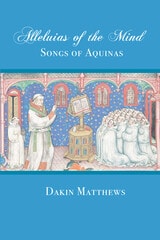
Alleluias of the Mind
The Songs of AquinasDakin Matthews
St. Augustine's Press, 2024
Matthews' particular attention is given to "Lauda Sion," and he breaks it down, verse by verse, providing an analysis of the Latin text and commentary on its poetic structure, but also illuminates the doctrinal references to Aquinas' other scholarly works and Scripture. His approach is both technical and intermittently personal, and as such this book might serve as a two-week source of daily meditations.
The Alleluias of the Mind is a wonderful contribution to the body of Thomistic commentary and will appear before the close of the 750th anniversary of the death of Thomas Aquinas. It is also a wonderful complement to the year devoted to Eucharistic revival in the American Catholic Church.
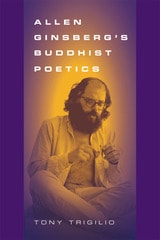
Allen Ginsberg's Buddhist Poetics
Tony Trigilio
Southern Illinois University Press, 2007
The book also considers the place of Ginsberg’s poetry in the cultural and aesthetic contexts of his career, covering the rise of an “American Buddhism”; the antiwar, drug decriminalization, and gay civil rights movements; and the shift from modern to postmodern strategies in contemporary U.S. poetry.

Allen Tate
John V. Glass III
Catholic University of America Press, 2016

Allen Tate and His Work
Critical EvaluationsRadcliffe Squires, EditorIntroduction by Radcliffe Squires
University of Minnesota Press, 1972
Allen Tate and His Work was first published in 1972. Minnesota Archive Editions uses digital technology to make long-unavailable books once again accessible, and are published unaltered from the original University of Minnesota Press editions.
The thirty-five essays and memoirs about Allen Tate which are collected in this volume along with the introduction by Radcliffe Squires provide a perceptive, many-windowed view of Tate's work and his life. Poet, critic, novelist -- Tate is all of these, and the selections, reflecting these various aspects of his career, are arranged in sections entitled "The Man," "The Essayist," "The Novelist," and "The Poet." As Professor Squires points out, the last three divisions take cognizance of the astounding diversity of Tate's achievement. "But in a last analysis," he continues, "the divisions are an Aristotelian nicety, an arbitrary convenience. His work is really all of a piece. It has all derived from the same energy, the same insights. It has all had a single aim."
What is that aim? Squires compares it to a simple physics experiment in which students are taught the principles of pressure, and he goes on to explain: "The synergy of Allen Tate's poetry, fiction, and essays has had the aim of applying pressure—think of the embossed, bitterly stressed lines, his textured metaphors—until it brings up before our eyes a blanched parody of the human figure, which is our evil, the world's evil, so that we begin to long for God. That has seemed to him a worthwhile task to perform for modern man threatened by such fatal narcissism, such autotelic pride that he is in danger of disappearing into a glassy fantasy of his own concoction. We shall need his help for a long time to come."
The selections were first published in a variety of periodicals and books over the years. The volume includes a substantial bibliography.
Alliance and Condemnation / Alianza y Condena
Claudio Rodríguez
Swan Isle Press, 2014
Of all his creations, the radiant poems in Alliance and Condemnation offer the best imaginable introduction to his extraordinary life and work.
Alliance, Illinois
Dave Etter
Northwestern University Press, 2005

Alone in the House of My Heart
PoemsKari Gunter-Seymour
Ohio University Press, 2022
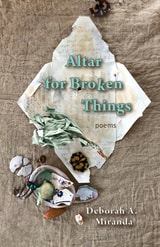
Altar for Broken Things
PoemsDeborah A. Miranda
BkMk Press, 2020
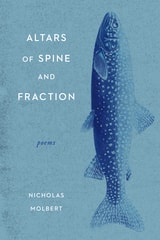
Altars of Spine and Fraction
PoemsNicholas Molbert
Northwestern University Press, 2024
A debut poetry collection set in and around Louisiana’s fishing village of Cocodrie
Altars of Spine and Fraction follows its protagonist through the joys and dangers of childhood on the rural Gulf Coast, through familial loss, and into adulthood. Refusing to romanticize what has been lost, Molbert instead interrogates how nostalgia is most often enjoyed by those with the privilege to reject or indulge it.
Violent hurricanes sweep across the landscapes of the poems, and Molbert probes the class inequalities that these climate crises lay bare. Moving from outdoor rural spaces in its first half to indoor domestic spaces in its second half, the collection explores family history, generational trauma, and the toxic masculinity that is shouldered by boys raised in the Deep South.
Alternative Medicine
Rafael Campo
Duke University Press, 2013
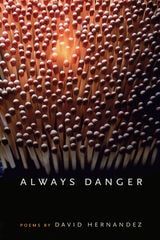
Always Danger
David Hernandez
Southern Illinois University Press, 2006
Always Danger offers a lyrical and highly imaginative exploration into the hazards that surround people’s lives—whether it’s violence, war, mental illness, car accidents, or the fury of Mother Nature. In his second collection of poems, David Hernandez embraces the element of surprise: a soldier takes refuge inside a hollowed-out horse, a man bullies a mountain, and a giant pink donut sponsors age-old questions about beliefs. Hernandez typically eschews the politics that often surround the inner circle of contemporary literature, but in this volume he quietly sings a few bars with a political tone: one poem shadows the conflict in Iraq, another reflects our own nation’s economic and cultural divide. Always Danger parallels Hernandez’s joy of writing: unmapped, spontaneous, and imbued with nuanced revelation.
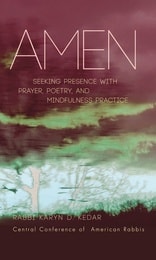
Amen
Seeking Presence with Prayer, Poetry, and Mindfulness PracticeRabbi Karyn D. Kedar
Central Conference of American Rabbis, 2020

America that island off the coast of France
Jesse lee Kercheval
Tupelo Press, 2019
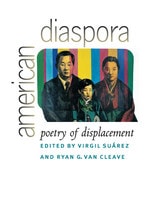
American Diaspora
Poetry of DisplacementVirgil Suarez
University of Iowa Press, 2001
Diaspora constitutes a powerful descriptor for the modern condition of the contemporary poet, the spokesperson for the psyche of America. The poems in American Diaspora: Poetry of Displacement focus on the struggles and pleasures of creating a home-physical and mental-out of displacement, exile, migration, and alienation.
To fully explore the concept of diaspora, the editors have broadened the scope of their definition to include not only the physical act of moving and immigration but also the spiritual and emotional dislocations that can occur-as for Emily Dickinson and other poets-even in a life spent entirely in one location.
v
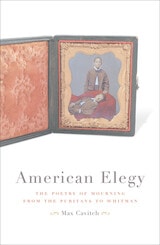
American Elegy
The Poetry of Mourning from the Puritans to WhitmanMax Cavitch
University of Minnesota Press, 2007

American Flamingo
Greg Pape
Southern Illinois University Press, 2005
Taking its title from an Audubon painting, American Flamingo shares with the artist an exquisite attention to detail and the suggestion of a larger sense of time and place through depictions of the intimate interactions between creatures and their habitats. In his fifth collection of poetry, Greg Pape melds memorable images from the natural world with the drama of ordinary experience to capture small transformations of human character in American settings from Arizona’s Sonora Desert to the icy streets of Washington, D.C. Through elegies, character sketches, and lyric and narrative evocations of family and place, Pape offers lucid and startling poems that bridge the spaces between the past and the present, men and women, and urban and rural landscapes.
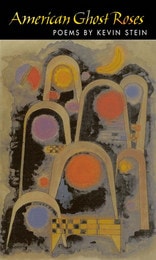
American Ghost Roses
Kevin Stein
University of Illinois Press, 2005
American Linden
Matthew Zapruder
Tupelo Press, 2002
American Massif
Nicholas Regiacorte
Tupelo Press, 2022
The massif’s landscapes are as varied as pinewoods, clay hills and prairie, but grow more abstract. In his naive way, A.M. moves through or ponders the Higgs Field, art, national and family states of emergency. From his own house to an airport, from volcano to museum, he goes foraging for images good enough to eat, for friends, for antidotes to apocalypse.
Perhaps no more human by the end, A.M. still bears his “girth and melancholy,” though having shed some of the illusions, like vestiges, with which he started. Dazed as much as sobered, he feels himself released into the world like a new habitat—however threatened. Rather, like the Pompeian who returns to her city, the Mastodon comes into his own.
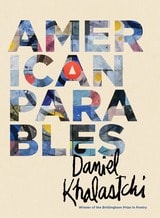
American Parables
Daniel Khalastchi
University of Wisconsin Press, 2021
Through unnerving gallows humor and radical honesty, these poems redefine the American experience by asking the reader to consider what it means to live in the shadow of a perceived sense of freedom and to have faith when believing feels hopeless. Khalastchi's perspective as an Iraqi Jewish American brings sharp focus to the holistic uncertainties of religion, politics, assimilation, illness, love, and loss—with absurd, visceral, and wry acclaim.
the internet your high school
has the flu. We are sick
everyone is fine.
—Excerpt from "First Generation: Our Escape"
American Poetry after 1975, Volume 36
Charles Bernstein, ed.
Duke University Press, 0
Writing from the forefront of American poetry criticism, contributors to this special issue address topics such as the poetics of disability and the work of clairvoyant poet Hannah Weiner, ambience and the work of Tan Lin, the continuing influence of Wallace Stevens, and the use of found text in Susan Howe’s “The Midnight.” Two younger critics address their generation’s poetics, one by considering the social relevance of the lyric and the other by examining resistance to innovative poetry practice. The intersection of poetry and technology is explored in articles about digital spaces and radical poetry’s relationship with the digital archive. One contributor applies the work of philosopher J. L. Austin to the language of hip-hop and the work of rapper Rakim. Also included are four short poems, a panegyric for the poetics of sophism in critical discourse, and essays that address the aesthetics of sentimental poetry and the poetics of place.
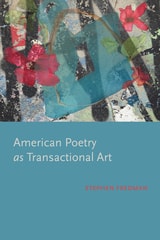
American Poetry as Transactional Art
Stephen Fredman
University of Alabama Press, 2020
Explores the ways American poetry engages with visual art, music, fiction, spirituality, and performance art
Many people think of poetry as a hermetic art, as though poets wrote only about themselves or as if the subject of poetry were finally only poetry—its forms and traditions. Indeed much of what constitutes poetry in the lyric tradition depends on a stringently controlled point of view and aims for a timeless, intransitive utterance. Stephen Fredman’s study proposes a different perspective.
American Poetry as Transactional Art explores a salient quality of much avant-garde American poetry that has so far lacked sustained treatment: namely, its role as a transactional art. Specifically Fredman describes this role as the ways it consistently engages in conversation, talk, correspondence, going beyond the scope of its own subjects and forms—its existential interactions with the outside world. Poetry operating in this vein draws together images, ideas, practices, rituals, and verbal techniques from around the globe, and across time—not to equate them, but to establish dialogue, to invite as many guests as possible to the World Party, which Robert Duncan has called the “symposium of the whole.”
Fredman invites new readers into contemporary poetry by providing lucid and nuanced analyses of specific poems and specific interchanges between poets and their surroundings. He explores such topics as poetry’s transactions with spiritual traditions and practices over the course of the twentieth century; the impact of World War II on the poetry of Charles Olson and George Oppen; exchanges between poetry and other art forms including sculpture, performance art, and ambient music; the battle between poetry and prose in the early work of Paul Auster and in Lyn Hejinian’s My Life. The epilogue looks briefly at another crucial transactional occasion: teaching American poetry in the classroom in a way that demonstrates that it is at the center of the arts and at the heart of American culture.
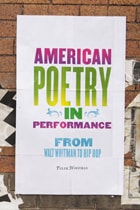
American Poetry in Performance
From Walt Whitman to Hip HopTyler Hoffman
University of Michigan Press, 2013
"Tyler Hoffman brings a fresh perspective to the subject of performance poetry, and this comes at an excellent time, when there is such a vast interest across the country and around the world in the performance of poetry. He makes important connections, explaining things in a manner that remains provocative, interesting, and accessible."
---Jay Parini, Middlebury College
American Poetry in Performance: From Walt Whitman to Hip Hop is the first book to trace a comprehensive history of performance poetry in America, covering 150 years of literary history from Walt Whitman through the rap-meets-poetry scene. It reveals how the performance of poetry is bound up with the performance of identity and nationality in the modern period and carries its own shifting cultural politics. This book stands at the crossroads of the humanities and the social sciences; it is a book of literary and cultural criticism that deals squarely with issues of "performance," a concept that has attained great importance in the disciplines of anthropology and sociology and has generated its own distinct field of performance studies. American Poetry in Performance will be a meaningful contribution both to the field of American poetry studies and to the fields of cultural and performance studies, as it focuses on poetry that refuses the status of fixed aesthetic object and, in its variability, performs versions of race, class, gender, and sexuality both on and off the page.
Relating the performance of poetry to shifting political and cultural ideologies in the United States, Hoffman argues that the vocal aspect of public poetry possesses (or has been imagined to possess) the ability to help construct both national and subaltern communities. American Poetry in Performance explores public poets' confrontations with emergent sound recording and communications technologies as those confrontations shape their mythologies of the spoken word and their corresponding notions about America and Americanness.
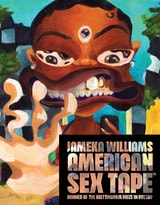
American Sex Tape
Jameka Williams
University of Wisconsin Press, 2022
Fiercely feminist, Black, American, and powerful, Williams speaks for a generation of obsessive social media influencers and consumers, revealing the complex ways in which we are all actors, witnesses, and victims in our public and private performances. Though we may be permanent residents of this soulless cultural landscape, this stunning collection refuses to let it define us.
off the conveyor belt, hugging the bolts & wires
spilling from her vivisection. I’m last year’s model
with a sleeker, softer system of cool disdain for
my Internet addictions.
—Excerpt from "I Intend to Outlast"
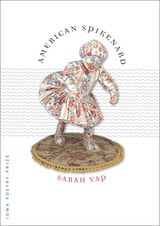
American Spikenard
Sarah Vap
University of Iowa Press, 2007
“If everyone decided to call themselves a girl / that word would stop.” In this award-winning volume of authoritative and assertive poems, Sarah Vap embarks on an emotional journey to the land of America’s female children. Questioning, contradicting, radically and restlessly demanding acceptance, she searches for a way to move from serious girlhood to womanly love. Demonstrating the seriousness of female childhood—which is as dangerous and profound as war, economics, and history, that is, as manhood, in her view—Vap reveals the extremes of self-doubt and self-righteousness inherent in being a contemporary American girl.
“When we’re overcome / by everything we think we love—then by morning / we’re adults.” Just as the oil of American spikenard may provide relief from childhood, so does Sarah Vap provide the kind of holy and extravagant love and honor that can relieve the growing pains of “everyone’s little girl.”
American Women Poets of the Nineteenth Century
Edited by Cheryl Walker
Rutgers University Press, 1992
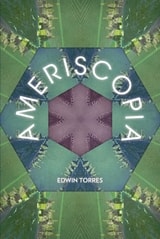
Ameriscopia
Edwin Torres
University of Arizona Press, 2014
Ameriscopia reimagines New York City and its expansive inspirations, which for Torres capture the contradictions of America. Allusions to the Twin Towers, Coney Island hot dogs, and the Nuyorican Poet’s Cafe continuously recolor the pages. But even as he makes these iconic references, Torres allows his poems to invert and refract the identities they evoke—New-Yorker-American-Latino-Dad-Performer-Boy-Writer—to invigorate poetry out of its slumber into a deep cultural urgency. Torres’s kaleidoscopic vision is borne of decades of poetic experimentation. Audiences have delighted in his spontaneous mashups of disparate topic matters; writers have studied his skilled technique at synthesizing—for example, from a mundane curbside view to an imagined conversation with artists Marcel Duchamp and Yves Tanguy.
Torres writes, “I discovered that, this world uncovered / is like the soul / of The Puerto Rican man — occupied / by the weight of his balance.” Ameriscopia is Torres’s statement on growing up and the inspirational facets that accompany his journey into fatherhood. From conversations in cars to fast-beat lullabies, Torres’s poetry taps into rhythms both distinctive and dynamic. In Ameriscopia Torres is at full force, a poet in control, a writer emboldened by the page—in flight.
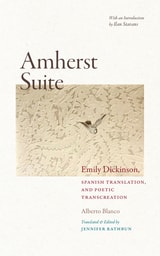
Amherst Suite
Emily Dickinson, Spanish Translation & Poetic TranscreationBy Alberto Blanco, Translated and Edited by Jennifer Rathbun, with an Introduction by Ilan Stavans
Amherst College Press, 2026
Opening with a creative essay by renowned author Ilan Stavans, the volume also includes a conversation between Blanco and scholar Ronald J. Friis; Blanco’s own essay on Dickinson, translated into English by Jennifer Rathbun; as well as an introduction by Rathbun that helpfully situates this interlinguistic, intercultural, and inter-generational network. Amherst Suite is a fascinating and unique look into the work and worlds of poets and their translators and will be an invaluable text for students, scholars, and all readers of Emily Dickinson.
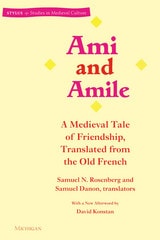
Ami and Amile
A Medieval Tale of Friendship, Translated from the Old FrenchSamuel N. Rosenberg and Samuel Danon
University of Michigan Press, 1996
This prose translation of the medieval French verse narrative Ami and Amile recounts the legendary friendship of two valiant knights who are as indistinguishable as twin brothers. Ami and Amile serve Charlemagne together, face together the hatred of an archetypal villain, confront the daunting challenges of women and love, and accept extraordinary sacrifices for each other's sake. Miracles mark the end of their lives, and their shared tomb becomes a pilgrims' shrine. The compelling translation by Samuel N. Rosenberg and Samuel Danon is accompanied by an introduction on the background, genre, and general sense of the tale. The volume also includes an afterword by David Konstan, which examines the medieval work's concept of friendship within a perspective extending back to classical antiquity. This translation will reveal Ami and Amile as a major work of the French Middle Ages. In elegant and forceful prose, it weaves together the themes of friendship and love and the status of women, of sin and punishment, the moral problem of doing wrong for the right reason, and the mythic affliction of leprosy. The work will foster lively literary and philosophical discussion. Ami and Amile is of interest to a wide range of readers, including students of history, comparative literature, and gender studies. Medievalists will find it a welcome addition to their libraries and a captivating experience for their students.
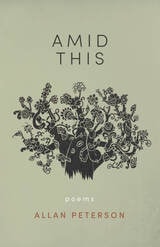
Amid This
Allan Peterson
Bridwell Press, 2026
The title of Allan Peterson’s seventh full-length book, Amid This, vividly describes the astonishments of being alive and surrounded by a world in which there is no ordinary. Nature intersects thought and language in surprising and revealing observations. The fact that life has term limits invests everything with poignancy. Using illuminating language, poems often arise from the physics of perception. Whether domestic, ecological, or galactic, the poems are like being spoken to privately in a thoughtful voice.
The poems follow multiple intuitive leads, combining evocative language with equally evocative observations, discovering ideas of order as easily as putting a glove on the wrong hand. “Wisteria close to hysteria in its gorgeous profusion” (from the poem Realization). For the reader, there is a full immersion in a poem’s clear delivery. As the poems speak among themselves the reader participates in the reflections of a curious mind. With influences from the Florida Gulf Coast to the mountains of Oregon, landscape and its creature inhabitants, each with its own expressive power, are always primary advisors, not just metaphors, but participants. These are the celebratory insights of a natural philosopher with a parallel life as a visual artist.
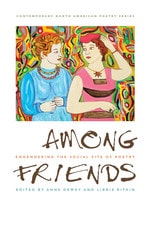
Among Friends
Engendering the Social Site of PoetryAnne Dewey and Libbie Rifkin
University of Iowa Press, 2013
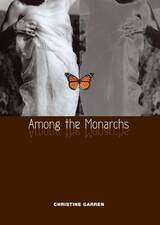
Among the Monarchs
Christine Garren
University of Chicago Press, 2000
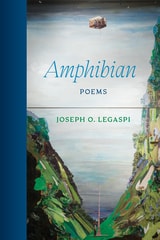
Amphibian
PoemsJoseph O. Legaspi
Northwestern University Press, 2026
Exploring queerness, belonging, and the meaning of home through the lens of a Filipino American
How does a queer brown body move through the American panorama? In Amphibian, Joseph O. Legaspi explores the metaphor of “amphibious living”—adapting, surviving, and flourishing in varying geographies—as it pertains to immigrants and to queerness. These poems draw on the natural world to illuminate personal experiences and, in turn, closely examine cultural, environmental, and societal constructs and concerns.
Legaspi searches in nature for evidence of the validity of his own existence, determined to declare his belonging. Dwelling in landscape as a guide into the interior, Amphibian journeys not only between earth, water, and air, but also into the past, cataloging an immigrant’s departures, arrivals, and returns to native soil. This moving collection is at every turn liberating, fraught, and altered.
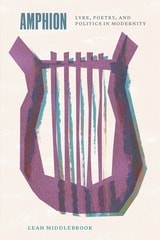
Amphion
Lyre, Poetry, and Politics in ModernityLeah Middlebrook
University of Chicago Press, 2024
Amphion is the figure in Greek mythology who played so skillfully on a lyre that stones moved of their own accord to build walls for Thebes. While Amphion still presides over music and architecture, he was once fundamental to the concept of lyric poetry. Amphion figured the human power to inspire action, creating and undoing polities by means of language. In contrast to the individual inspiration we associate with the better-known Orpheus, Amphion represents the relentless, often violent, play of harmony and disorder in human social life.
In this wide-ranging study, Leah Middlebrook introduces readers to Amphion-inspired poetics and lyrics and traces the tradition of the Amphionic from the Renaissance through modernist and postmodern poetry and translation from the Hispanic, Anglophone, French, Italian, and ancient Roman worlds. Amphion makes a significant contribution to scholarship on the connection between poetry and politics and the history of the lyric, offering an account well-suited to our times.