Results by title
18284 books match the query 'United States' and 1653 start with a
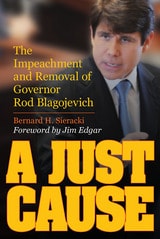
A Just Cause
The Impeachment and Removal of Governor Rod BlagojevichBernard H. Sieracki. Foreword by Jim Edgar
Southern Illinois University Press, 2016
During the predawn hours of December 9, 2008, an FBI team swarmed the home of Illinois governor Rod Blagojevich and took him away in handcuffs. The shocking arrest, based on allegations of corruption and extortion, launched a chain of political events never before seen in Illinois. In A Just Cause, Bernard H. Sieracki delivers a dynamic firsthand account of this eight-week political crisis, beginning with Blagojevich’s arrest, continuing through his impeachment and trial, and culminating in his conviction and removal from office. Drawing on his own eyewitness observations of the hearings and trial, the comments of interviewees, trial transcripts, and knowledge gained from decades of work with the Illinois legislature, Sieracki tells the compelling story of the first impeachment and removal from office of an Illinois governor, while providing a close look at the people involved.
A Just Cause depicts Blagojevich as a master of political gamesmanship, a circus ringmaster driven by personal ambition and obsessed with private gain. Sieracki examines in depth the governor’s unethical behavior while in office, detailing a litany of partisan and personal hostilities that spanned years. He thoroughly covers the events leading to Blagojevich’s downfall and the reactions of the governor’s cohorts. The author discusses the numerous allegations against Blagojevich, including attempts to “sell” appointments, jobs, and contracts in exchange for financial contributions. Sieracki then exhaustively recounts Blagojevich’s senate trial and the governor’s removal from office.
This engrossing volume is both a richly detailed case study of the American checks-and-balances system and an eyewitness account of unprecedented events. It will appeal to anyone interested in the stunning, true tale of a state upholding the maxim “The welfare of the people is the supreme law.”
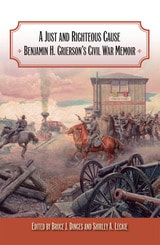
A Just and Righteous Cause
Benjamin H. Grierson’s Civil War MemoirEdited by Bruce J. Dinges and Shirley A. Leckie
Southern Illinois University Press, 2008
General Benjamin H. Grierson is most widely known as the brilliant cavalryman whose actions in the Civil War's Mississippi Valley campaign facilitated Ulysses S. Grant's capture of Vicksburg. There is, however, much more to this key Union officer than a successful raid into Confederate-held Mississippi. In A Just and Righteous Cause: Benjamin H. Grierson's Civil War Memoir, edited by Bruce J. Dinges and Shirley A. Leckie, Grierson tells his story in forceful, direct, and highly engaging prose.
A Just and Righteous Cause paints a vivid picture of Grierson's prewar and Civil War career, touching on his antislavery views, Republican Party principles, and military strategy and tactics. His story begins with his parents' immigration to the United States and follows his childhood, youth, and career as a musician; the early years of his arriage; his business failures prior to becoming a cavalry officer in an Illinois regiment; his experiences in battle; and his Reconstruction appointment. Grierson also provides intimate accounts of his relationships with such prominent politicians and Union leaders as Abraham Lincoln, Richard Yates, Andrew Johnson, William T. Sherman, Ulysses S.
Grant, John C. Frémont, and Benjamin Prentiss.
Because Grierson wrote the memoir mainly with his family as the intended audience, he manages to avoid the self-promotion that plagues many of his contemporaries' chronicles. His reliance on military records and correspondence, along with family letters, lends an immediacy rarely found in military memoirs. His reminiscences also add fuel to a reemerging debate on soldiers' motivations for enlisting—in Grierson's case, patriotism and ideology—and shed new light on the Western theater of the Civil War, which has seen a recent surge in interest among Civil War enthusiasts.
A non-West Point officer, Grierson owed his developing career to his independent studies of the military and his connections to political figures in his home state of Illinois and later to important Union leaders. Dinges and Leckie provide a helpful introduction, which gives background on the memoir and places Grierson's career into historical context. Aided by fourteen photos and two maps, as well as the editors' superb annotations, A Just and Righteous Cause is a valuable addition to Civil War history.
A Keener Perception
Ecocritical Studies in American Art HistoryEdited by Alan C. Braddock and Christoph Irmsher
University of Alabama Press, 2009
Issues of ecology--both as they appear in the works of nature writers and in the works of literary writers for whom place and the land are central issues--have long been of interest to literary critics, and have given rise over the last two decades to the now firmly established field of ecocriticism. The essays in this volume, written by art historians and literary critics, seek to bring the study of American art into the expanding discourse of ecocriticism.
A Keener Perception offers a series of case studies on topics ranging from John White's watercolors of the Carolina landscape executed during Sir Walter Raleigh's 1585 Roanoke expedition to photographs by environmental activist Eliot Porter. Rather than merely resurrect past instances of ecologically attuned art, this volume features essays that resituate many canonical figures, such as Thomas Eakins, Aaron Douglas, and Thomas Cole, in an ecocritical light by which they have yet to be viewed. Studying such artists and artworks through an ecocritical lens not only provides a better understanding of these works and the American landscape, but also brings a new interpretive paradigm to the field of art history--a field that many of these critics believe would do well to embrace environmental concerns as a vital area of research.
In highlighting the work of scholars who bring ecological agendas to their study of American art, as well as providing models for literary scholars who might like to better incorporate the visual arts into their own scholarship and teaching, A Keener Perception is truly a landmark collection--timely, consequential, and controversial.
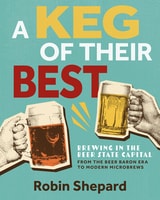
A Keg of Their Best
Brewing in the Beer State Capital—From the Beer Baron Era to Modern MicrobrewsRobin Shepard
Wisconsin Historical Society Press, 2026
Wisconsin has long been known as “The Beer State,” and the history of its capital city brims with stories of brewing innovation—from the city’s earliest beer-makers and long-forgotten farmstead breweries to today’s experimental microbrewers and enterprising taprooms. In A Keg of Their Best: Brewing in the Beer State Capital—From the Beer Baron Era to Modern Microbrews, journalist and beer expert Robin Shepard offers an authoritative history of Madison’s brewing legacy and its key figures from the 1830s to the present.
A Keg of Their Best documents how the beer industry emerged before Madison became a city, starting with the arrival of its first white residents, Roseline and Eben Peck, who opened a tavern in the back room of their cabin in 1837. Subsequent waves of German and English immigrants brought their lager and ale recipes and brewing traditions—some of which live on today. The book also explores how the region’s environment—its rich soil and abundant water sources—made it ideal for beer-making. And it reveals how beer barons created and funded much of the early infrastructure that established Madison as the territorial capital.
Readers will discover how brewmasters, bootleggers, and homebrewers survived during Prohibition and the ways the post-Prohibition beer-making renaissance gave rise to the modern craft beer movement. Shepard brings Wisconsin’s brewing history up through today by highlighting the craft brewers, microbrewers, and regional breweries that are producing inspiring pilsners, IPAs, stouts, sours, and other tasty brews in Madison and Dane County’s thriving beer scene.
Drawing from newspaper accounts, ancestry and property records, and hundreds of personal interviews, Shepard has compiled a thorough and engrossing tribute to Madison’s beer-making heritage—including every known brewery in Dane County since the 1840s. Richly illustrated with historical and modern photos, maps, and breweriana, A Keg of Their Best is a must-have for beer enthusiasts, history lovers, and anyone who has raised a pint in the Beer State Capital.
A Kennecott Story
Three Mines, Four Men, and One Hundred Years, 1887-1997Charles Caldwell Hawley
University of Utah Press, 2014
As it traces the story of the three mines, the narrative follows four mining engineers—Stephen Birch, Daniel Cowan Jackling, William Burford Braden, and E. Toppan Stannard—self-made men whose technological ingenuity was responsible for much of Kennecott’s success. While Jackling developed economies of scale for massive open-pit mining in Utah, Braden went underground in Chile for a caving operation of unprecedented scale for copper. Meanwhile, Birch and Stannard overcame the extreme challenges of mining rich ore in the difficult climate of Alaska and transporting it to market. The Guggenheims, who brought these three operations together provided the funding without which the infrastructure necessary for the mining operations might not have been built. The railroad required for the Alaska mine alone cost more than three times what the United States had paid to buy all of Alaska only forty-five years earlier.
As a geologist with first-hand knowledge of mining, author Charles Hawley aptly describes the technology behind the Kennecott story in a way that both specialists and the general reader will appreciate. Through engaging stories and pertinent details, he places Kennecott and the copper industry within their historical context and also allows the reader to consider the controversial aspects of mineral discovery and sustainability in a crowded world where resources are limited.
A Kinder, Gentler America
Melancholia and the Mythical 1950sMary Caputi
University of Minnesota Press, 2005
Analyzing these competing uses of the past, A Kinder, Gentler America reveals how longing for the era of “the greatest generation” actually exposes a disillusionment with the present. Caputi draws on the theoretical frameworks of Julia Kristeva and Walter Benjamin to look at how the decade has been portrayed in movies such as Pleasantville and Far from Heaven and delves further to investigate our disenchantment’s lost origins in early modernity through a reading of the poetry of Baudelaire. What emerges is a stark contrast between the depictions of a melancholic present and a cheerful, shiny past. In the right’s invocation of the mythical 1950s and the left’s criticism of the same, Caputi recognizes a common unfulfilled desire, and proposes that by understanding this loss both sides can begin to accept that American identity, despite chaos and confusion, lies in the here and now.
Mary Caputi is professor of political science at California State University, Long Beach, and is author of Voluptuous Yearnings: A Feminist Theory of the Obscene.

A Kiss across the Ocean
Transatlantic Intimacies of British Post-Punk and US LatinidadRichard T. Rodríguez
Duke University Press, 2022
A Knight of Another Sort
Prohibition Days and Charlie Birger, Second EditionGary DeNeal. Foreword by Jim Ballowe
Southern Illinois University Press, 1998
In 1913 Charlie Birger began his career as a bootlegger, supplying southern Illinois with whiskey and beer. He was charismatic, with an easygoing manner and a cavalier generosity that made him popular. The stuff of legend, he was part monster, part Robin Hood. In the early days, he would emerge from his restaurant/saloon in tiny Ledford in Saline County with a cigar box full of coins and throw handfuls in the air for the children. Echoing the consensus on Birger, an anonymous gang member called him "enigmatic," noting that "he had a wonderful quality, a heart of gold. There in Harrisburg sometimes he'd support twelve or fifteen families, buy coal, groceries. . . . [But] he had cold eyes, a killer's eyes. He would kill you for something somebody else would punch you in the nose for."
Drawing from the colorful cast of the living, the dead, and the soon-to-be-dead—a state shared by many associated with Birger and his enemies, the Shelton gang—DeNeal re-creates Prohibition-era southern Illinois. He depicts the fatal shootout between S. Glenn Young and Ora Thomas, the battle on the Herrin Masonic Temple lawn in which six were slain and the Ku Klux Klan crushed, and the wounding of Williamson County state's attorney Arlie O. Boswell. As the gang wars escalated and the roster of corpses lengthened, the gangsters embraced technology. The Sheltons bombed Birger's roadhouse, Shady Rest, from a single-engine airplane. Both Birger and the Sheltons used armored vehicles to intimidate their enemies, and the chatter of machine gun fire grew common.
The gang wars ended with massive arrests, trials, and convictions of gangsters who once had seemed invincible. Charlie Birger was convicted of the murder of West City mayor Joe Adams and sentenced to death. On April 19, 1928, he stood on the gallows looking down on the large crowd that had come to see him die. "It's a beautiful world," Birger said softly as he prepared to leave it.

A Kosher Christmas
'Tis the Season to be JewishJoshua Eli Plaut
Rutgers University Press, 2012
Christmas is not everybody’s favorite holiday. Historically, Jews in America, whether participating in or refraining from recognizing Christmas, have devised a multitude of unique strategies to respond to the holiday season. Their response is a mixed one: do we participate, try to ignore the holiday entirely, or create our own traditions and make the season an enjoyable time? This book, the first on the subject of Jews and Christmas in the United States, portrays how Jews are shaping the public and private character of Christmas by transforming December into a joyous holiday season belonging to all Americans.
Creative and innovative in approaching the holiday season, these responses range from composing America’s most beloved Christmas songs, transforming Hanukkah into the Jewish Christmas, creating a national Jewish tradition of patronizing Chinese restaurants and comedy shows on Christmas Eve, volunteering at shelters and soup kitchens on Christmas Day, dressing up as Santa Claus to spread good cheer, campaigning to institute Hanukkah postal stamps, and blending holiday traditions into an interfaith hybrid celebration called “Chrismukkah” or creating a secularized holiday such as Festivus.
Through these venerated traditions and alternative Christmastime rituals, Jews publicly assert and proudly proclaim their Jewish and American identities to fashion a universally shared message of joy and hope for the holiday season.
See also: http://www.akosherchristmas.org
A Lakeside Companion
Ted J. Rulseh
University of Wisconsin Press, 2018
You'll discover the interconnected worlds of a lake: the water; the sand, gravel, rocks, and muck of the bottom; the surface of the lake; the air above; and the shoreline, a belt of land incredibly rich in flora and fauna. Explained, too, are the physical, biological, and chemical processes that determine how many and what kinds of fish live in the lake, which plants grow there, the color and clarity of the water, how ice forms in winter and melts in spring, and much more. Useful advice will help you look out for your lake and advocate for its protection.
A Land Apart
The Southwest and the Nation in the Twentieth CenturyFlannery Burke
University of Arizona Press, 2017
Winner, Spur Award for Best Contemporary Nonfiction (Western Writers of America)
A Land Apart is not just a cultural history of the modern Southwest—it is a complete rethinking and recentering of the key players and primary events marking the Southwest in the twentieth century. Historian Flannery Burke emphasizes how indigenous, Hispanic, and other non-white people negotiated their rightful place in the Southwest. Readers visit the region’s top tourist attractions and find out how they got there, listen to the debates of Native people as they sought to establish independence for themselves in the modern United States, and ponder the significance of the U.S.-Mexico border in a place that used to be Mexico. Burke emphasizes policy over politicians, communities over individuals, and stories over simple narratives.
Burke argues that the Southwest’s reputation as a region on the margins of the nation has caused many of its problems in the twentieth century. She proposes that, as they consider the future, Americans should view New Mexico and Arizona as close neighbors rather than distant siblings, pay attention to the region’s history as Mexican and indigenous space, bear witness to the area’s inequalities, and listen to the Southwest’s stories. Burke explains that two core parts of southwestern history are the development of the nuclear bomb and subsequent uranium mining, and she maintains that these are not merely a critical facet in the history of World War II and the militarization of the American West but central to an understanding of the region’s energy future, its environmental health, and southwesterners’ conception of home.
Burke masterfully crafts an engaging and accessible history that will interest historians and lay readers alike. It is for anyone interested in using the past to understand the present and the future of not only the region but the nation as a whole.
A Language of Song
Journeys in the Musical World of the African DiasporaSamuel Charters
Duke University Press, 2009
Each of the book’s fourteen chapters is a vivid rendering of a particular location that Charters visited. While music is always his focus, the book is filled with details about individuals, history, landscape, and culture. In first-person narratives, Charters relates voyages including a trip to the St. Louis home of the legendary ragtime composer Scott Joplin and the journey to West Africa, where he met a man who performed an hours-long song about the Europeans’ first colonial conquests in Gambia. Throughout the book, Charters traces the persistence of African musical culture despite slavery, as well as the influence of slaves’ songs on subsequent musical forms. In evocative prose, he relates a lifetime of travel and research, listening to brass bands in New Orleans; investigating the emergence of reggae, ska, and rock-steady music in Jamaica’s dancehalls; and exploring the history of Afro-Cuban music through the life of the jazz musician Bebo Valdés. A Language of Song is a unique expedition led by one of music’s most observant and well-traveled explorers.
A Latina in the Land of Hollywood
and Other Essays on Media CultureAngharad N. Valdivia
University of Arizona Press, 2000
A Leaf of Voices
Stories of the American Civil War in the Words of Those Who Lived and Died, 1861-65Jennifer McSpadden
Indiana Historical Society Press, 2014

A Librarian's Guide to an Uncertain Job Market
Jeannette American Library Association
American Library Association, 2011
A Life In The Struggle
Ivory Perry and the Culture of OppositionGeorge Lipsitz
Temple University Press, 1995
A Life Teaching Languages
A Memoir from Mississippi to the BronxLinda Watkins-Goffman
University of Michigan Press, 2015
In this memoir of an educator, Watkins-Goffman offers insights she has gained from her years of traveling, teaching, and writing and shares how her experiences have shaped her teaching philosophy. According to Watkins-Goffman, teachers must communicate authentically to teach effectively and, to accomplish this, they must connect their own experiences in some way with those of their students. The stories she tells are sure to resonate with pre-service and practicing teachers alike. Her reflections about her own experiences will be useful to readers who plan to become ESL educators, or those who simply seek inspiration about teaching.
A Life of Albert Pike
Walter Lee Brown
University of Arkansas Press, 1997
Drawing on original documents, Pike’s copious writings, and interviews with Pike’s descendants, Walter Lee Brown presents a fascinating personal history that also serves as a rich compendium of Arkansas’s antebellum history.
A Literary History of Iowa
Clarence A. Andrews
University of Iowa Press, 1972
A Little More Freedom
African Americans Enter the Urban Midwest, 1860–1930Jack S. Blocker
The Ohio State University Press, 2008

A Living Exhibition
The Smithsonian and the Transformation of the Universal MuseumWilliam S. Walker
University of Massachusetts Press, 2013
Since its founding in 1846 “for the increase and diffusion of knowledge,” the Smithsonian Institution has been an important feature of the American cultural landscape. In A Living Exhibition, William S. Walker examines the tangled history of cultural exhibition at the Smithsonian from its early years to the chartering of the National Museum of the American Indian in 1989. He tracks the transformation of the institution from its original ideal as a “universal museum” intended to present the totality of human experience to the variegated museum and research complex of today.
Walker pays particular attention to the half century following World War II, when the Smithsonian significantly expanded. Focusing on its exhibitions of cultural history, cultural anthropology, and folk life, he places the Smithsonian within the larger context of Cold War America and the social movements of the 1960s, '70s, and '80s. Organized chronologically, the book uses the lens of the Smithsonian's changing exhibitions to show how institutional decisions become intertwined with broader public debates about pluralism, multiculturalism, and decolonization.
Yet if a trend toward more culturally specific museums and exhibitions characterized the postwar history of the institution, its leaders and curators did not abandon the vision of the universal museum. Instead, Walker shows, even as the Smithsonian evolved into an extensive complex of museums, galleries, and research centers, it continued to negotiate the imperatives of cultural convergence as well as divergence, embodying both a desire to put everything together and a need to take it all apart.
A Long Fight for the Vote
Navajos, Utes, and the Path to Equal Voting RightsDaniel C. McCool
University of Arizona Press, 2027
In A Long Fight for the Vote, Daniel C. McCool offers a deeply researched and compelling account of the fight for equal voting rights in San Juan County, Utah—homeland to the Navajo and Ute peoples and a flashpoint of persistent Anglo–Native conflict.
Centering on landmark voting rights cases that culminated in the historic election of two Navajo county commissioners, McCool situates these legal battles within a broader history of discrimination, shifting federal Indian policy, and the gradual political empowerment of Native communities across the American West. Through meticulous analysis, the book reveals how local elections became a crucible for national debates over citizenship, sovereignty, and democracy.
Drawing on court records, expert testimony, and decades of engagement with voting rights litigation, McCool demonstrates that Native peoples have never been passive victims of disenfranchisement but active protagonists in a sustained struggle for political equality. Richly contextualized and powerfully argued, A Long Fight for the Vote speaks to scholars and students of law, politics, and Western history, as well as legal professionals and engaged readers seeking to understand how race, power, and the ballot box intersect in Indian Country—and why these struggles continue to shape American democracy today.
A Long, Deep Furrow
Three Centuries of Farming in New EnglandHoward S. Russell
Brandeis University Press, 1982

A Love Affair with Birds
The Life of Thomas Sadler RobertsSue Leaf
University of Minnesota Press, 2021
The father of Minnesota ornithology, whose life story opens a window on a lost world of nature and conservation in the state’s early days
Imagine a Minneapolis so small that, on calm days, the roar of St. Anthony Falls could be heard in town, a time when passenger pigeons roosted in neighborhood oak trees. Now picture a dapper professor conducting his ornithology class (the university’s first) by streetcar to Lake Harriet for a morning of bird-watching. The students were mostly young women—in sunhats, sailor tops, and long skirts, with binoculars strung around their necks. The professor was Thomas Sadler Roberts (1858–1946), a doctor for three decades, a bird lover virtually from birth, the father of Minnesota ornithology, and the man who, perhaps more than any other, promoted the study of the state’s natural history. A Love Affair with Birds is the first full biography of this key figure in Minnesota’s past.
Roberts came to Minnesota as a boy and began keeping detailed accounts of Minneapolis’s birds. These journals, which became the basis for his landmark work The Birds of Minnesota, also inform this book, affording a view of the state’s rich avian life in its early days—and of a young man whose passion for birds and practice of medicine in a young Minneapolis eventually dovetailed in his launching of the beloved Bell Museum of Natural History.
Bird enthusiast, doctor, author, curator, educator, conservationist: every chapter in Roberts’s life is also a chapter in the state’s history, and in his story acclaimed author Sue Leaf—an avid bird enthusiast and nature lover herself—captures a true Minnesota character and his time.

A Love Letter to This Bridge Called My Back
Edited by gloria j. wilson, Joni B. Acuff, and Amelia M. Kraehe
University of Arizona Press, 2022
In A Love Letter, creators illuminate, question, and respond to current politics, progressive struggles, transformations, acts of resistance, and solidarity, while also offering readers a space for renewal and healing. The central theme of the original Bridge is honored, exposing the lived realities of women of color at the intersections of race, class, gender, ethnicity, and sexuality, advancing those early conversations on what it means to be Third World feminist conscious.
A Love Letter recognizes the challenges faced by women of color in a twenty-first-century world of climate and economic crises, increasing gun violence, and ever-changing social media constructs for women of color. It also retains the clarion call Bridge set in motion, as Moraga wrote: “A theory in the flesh means one where the physical realities of our lives—our skin color, the land or concrete we grew up on, our sexual longing—all fuse to create a politic born of necessity.”

A Lydia Maria Child Reader
Carolyn L. Karcher, ed.
Duke University Press, 1997
This rich collection is the first to represent the full range of Child’s contributions as a literary innovator, social reformer, and progressive thinker over a career spanning six decades. It features stories, editorials, articles, and letters to politicians culled from rare newspapers and periodicals and never before published in book form; extracts from her trailblazing childrearing manual, history of women, and primer for the emancipated slaves; and a generous sampling of her best-known writings on slavery, the Indian question, poverty, and women’s rights. Witty, incisive, and often daringly unconventional, Child’s writings open a panoramic window on nineteenth-century American culture while addressing issues still relevant to our own time. In this anthology, the editor of Harriet Jacobs’s Incidents in the Life of a Slave Girl reemerges in her own right as one of the nation’s greatest prophets.

A Machine-Gunner in France
The Memoirs of Ward Schrantz, 35th Division, 1917-1919Ward Schrantz
University of North Texas Press, 2019
A Mad Mess
Community Mental Health in CrisisOwen Whooley
University of Chicago Press, 2026
A sobering assessment of the systematic failures of mental health work.
The United States is in the midst of a mental health crisis that cannot be ignored. Its effects are visible in overcrowded emergency rooms, homeless encampments, and frequent encounters between police and people with serious mental illness. And yet, our attempts to support people with mental illness—from medical care to housing support to basic hygiene—seem to never take meaningful hold despite the tireless work of professionals who attempt to help people bring together the pieces of a life. The problem is not in any individual effort though; it’s in the many ways these programs fail to work together. For those with serious mental illness, and those who work to ameliorate it, there is no system. There is only mess.
In A Mad Mess, sociologist Owen Whooley uncovers the exasperating barriers, bureaucratic mismatches, and threadbare resources that have made a mess of what should be a supportive system. Set in Albuquerque, New Mexico—a city whose struggles echo those of communities nationwide—the book reveals the challenges mental health workers face daily, from tedious paperwork to occasional violence. Whooley follows workers across local outpatient service organizations, specialized police mental health units, and a psychiatric emergency department. Despite mostly good intentions and sometimes heroic efforts, he shows why this important work so often ends in failure.
Written with deep sympathy and unflinching honesty, A Mad Mess reveals how the lack of a cohesive mental health system obstructs critical care and places roadblocks before front-line mental health workers at every turn. Most critically, for those who suffer from severe mental illness, these setbacks are a constant reminder that the institutions charged with helping them have left them on their own.
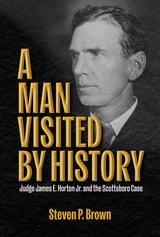
A Man Visited by History
Judge James E. Horton Jr. and the Scottsboro CaseSteven P. Brown
University of Alabama Press, 2026
A revealing portrait of Judge James E. Horton Jr., whose quiet moral courage reshaped one of the most explosive legal battles in American history
A Man Visited by History illuminates what author Steven P. Brown calls the “last major Scottsboro trials–related subject to have eluded careful study”: the life of Judge James E. Horton Jr., the white Alabama Eighth Circuit judge who set aside an all-white jury’s guilty verdict and death sentence in the second trial of African American defendant Haywood Patterson. Of the three trial judges and more than one hundred jurors who considered the cases of the Scottsboro defendants, Horton was the only one to find that the evidence against them was virtually nonexistent. Horton was then removed from further involvement with the cases and, despite being on the fast track to political prominence before the 1933 retrial of the Scottsboro defendants, was defeated for reelection as circuit judge in 1934. His ruling in the Patterson case impacted the Scottsboro defendants’ lives and continues to affect their legacies today.
Brown researched largely untapped resources that, for the first time, illuminate who Horton was before the Scottsboro trials, what he faced presiding over Patterson’s case, the factors that led him to overturn the jury’s verdict, and his later life raising award-winning cattle. What emerges is a remarkably consistent picture of a man who, Brown argues, for more than ninety years, sought nothing more than to do what he thought was right. Historians of the South, the early twentieth century, the law, and race relations as well as general readers will find this intimate account of the judge in the infamous trials to be riveting and instructive.
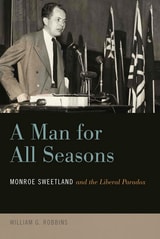
A Man for All Seasons
Monroe Sweetland and the Liberal ParadoxWilliam Robbins
Oregon State University Press, 2015
Historian William G. Robbins illuminates the wrenching transformation of American political culture in A Man for All Seasons: Monroe Sweetland and the Liberal Paradox. Racial and economic inequalities motivated much of Sweetland’s civic life, including his lifelong memberships in the American Civil Liberties Committee, the National Association for the Advancement of Colored People, the Urban League, the Japanese American Citizens League, and the Red Cross, where Sweetland worked repatriating American prisoners of war after Japan’s surrender.
Robbins’ portrait is holistic, exploring Sweetland’s socialist beginnings, inconsistencies in his politics—especially during the Cold War—and his regional legacy. He was the most important person in the resurgence of the modern, liberal Oregon Democratic Party from the late 1940s to the 1960s. He joined the National Education Association in 1964 and became the driving force behind the Bilingual Education Act of 1968 and the fight for the age-18 vote, achieved in the ratification of the 26th amendment in 1971. Monroe Sweetland was a nationally prominent figure, whose fights bequeathed to modern America important legislation that shaped its political landscape.
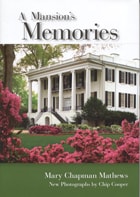
A Mansion's Memories
Mary Chapman Mathews
University of Alabama Press, 2006
An engaging history of The University of Alabama President’s Mansion
As part of The University of Alabama’s 175th anniversary celebration (2006), the new edition of A Mansion’s Memories includes details of the tenures of the four presidents who have served since the Mathews term. Profusely illustrated with 69 black-and-white and 17 color photographs, this classic is sure to be welcomed anew by alumni and friends of the University and all lovers of fine old buildings that still function in their original capacities.
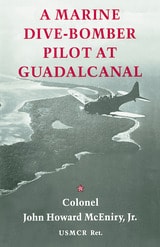
A Marine Dive-bomber Pilot at Guadalcanal
John Howard McEniry
University of Alabama Press, 1987
This book chronicles the World War II experiences of the author, who served as a Marine Corps pilot in the South Pacific. Colonel McEniry describes the organization and deployment of a Marine dive-bombing squadron (VMSB-132) in the early days of the war and follows the squadron through its actions in November and December of 1942.
The participation by the squadron in the naval battle of Guadalcanal, November 12-15, 1942, is related in detail and includes the personal experiences of the author on several bombing missions. This battle, described by Admiral Ernest J. King, the Chief of Naval Operations, as “the fiercest naval battle ever fought,” resulted in the loss by the Japanese of two battleships, ten transport ships, and numerous cruisers and destroyers.
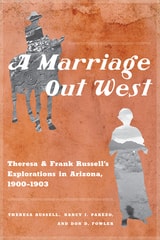
A Marriage Out West
Theresa and Frank Russell’s Explorations in Arizona, 1900–1903Theresa Russell, Nancy J. Parezo, and Don D. Fowler
University of Arizona Press, 2020
During their brief marriage, the Russells surveyed almost all of Arizona Territory, traveling by horse over rugged terrain and camping in the back of a Conestoga wagon in harsh environmental conditions. Nancy J. Parezo and Don D. Fowler detail the grit and determination of the Russells’ unique collaboration over the course of three field seasons. Delivering the first biographical account of Frank Russell’s life, this book brings detail to his life and work from childhood until his death in 1903. Parezo and Fowler analyze the important contributions Theresa and Frank made to the bourgeoning field of archaeology and Akimel O’odham (Pima) ethnography. They also offer never-before-published information on Theresa’s life after Frank’s death and her subsequent career as a professor of English literature and philosophy at Stanford University.
In 1906 Theresa Russell published In Pursuit of a Graveyard: Being the Trail of an Archaeological Wedding Journey, a twelve-part serial in Out West magazine. Theresa’s articles constituted an experiential narrative based on field journals and remembrances of life in the northern Southwest. The work offers both a biography and a seasonal field narrative that emphasized personal experiences rather than traditional scientific field notes. Included in A Marriage Out West, Theresa’s writing provides an invaluable participant’s perspective of early 1900s American archaeology and ethnography and life out West.

A Matter of Choices
Memoirs of a Female PhysicistFay Ajzenberg-Selove
Rutgers University Press, 1994
Ajzenberg-Selove came to America at the age of 15 after narrowly escaping the Nazi takeover of France. She had planned to become an engineer like her father, but switched to physics after she was told the only engineering jobs open to women were in drafting: Marie Curie's example proved to her that women could do physics. Her first attempt at graduate work at Columbia University was a disaster, but she was sturck with the intellectual beauty of the field. After taking a Ph.D. in physics at University of Wisconsin, she did post-doctoral work with Thomas Lauritsen at the California Institute of Technology, where she began writing the first of a series of major review papers on the nuclear spectroscopy of the light nuclei, a subject of fundamental importance to nuclear physics, astrophysics, and applied physics. She continued this work and experimental research for thirty-eight years while teaching at Boston University, Haverford College, and the University of Pennsylvania.
During her early career, Ajzenberg-Selove was shielded by her male mentors from experiencing much of the discrimination directed against women in science. Her simultaneous battles to become a tenured professor and to overcome breast cancer opened her eyes and confirmed her as a feminist.
The lay reader and the scientist alike will be fascinated by Ajzenberg-Selove's clear portrayal of her interlinked lives as physicist, teacher, wife of particle physicist, Walter Selove, and a woman who relishes both competition and friendship in a male-dominated field. An invaluable book for anyone contemplating a career in science.

A Matter of Life and Death
Hunting in Contemporary VermontMarc Boglioli
University of Massachusetts Press, 2009
In A Matter of Life and Death, anthropologist Marc Boglioli puts a human face on a group widely regarded as morally suspect, one that currently stands in the crossfire of America's so-called culture wars. Drawing on extensive ethnographic fieldwork in Addison County, Vermont, which took him from hunting camps and sporting goods stores to local bars and kitchen tables, Boglioli focuses on how contemporary hunters, women as well as men, understand their relationship to their prey. He shows how hunters' attitudes toward animals flow directly from the rural lifeways they have continued to maintain in the face of encroaching urban sensibilities. The result is a rare glimpse into a culture that experiences wild animals in a way that is at once violent, consumptive, and respectful, and that regards hunting as an enduring link to a vanishing past. It is a book that will challenge readers—hunters, non-hunters, and anti-hunters alike—to reconsider what constitutes a morally appropriate relationship with the non-human residents of this planet.
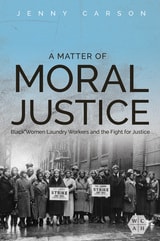
A Matter of Moral Justice
Black Women Laundry Workers and the Fight for JusticeJenny Carson
University of Illinois Press, 2021
Like thousands of African American women, Charlotte Adelmond and Dollie Robinson worked in New York’s power laundry industry in the 1930s. Jenny Carson tells the story of how substandard working conditions, racial and gender discrimination, and poor pay drove them to help unionize the city’s laundry workers. Laundry work opened a door for African American women to enter industry, and their numbers allowed women like Adelmond and Robinson to join the vanguard of a successful unionization effort. But an affiliation with the powerful Congress of Industrial Organizations (CIO) transformed the union from a radical, community-based institution into a bureaucratic organization led by men. It also launched a difficult battle to secure economic and social justice for the mostly women and people of color in the plants. As Carson shows, this local struggle highlighted how race and gender shaped worker conditions, labor organizing, and union politics across the country in the twentieth century.
Meticulous and engaging, A Matter of Moral Justice examines the role of African American and radical women activists and their collisions with labor organizing and union politics.
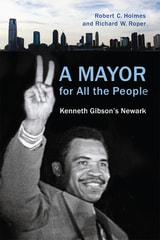
A Mayor for All the People
Kenneth Gibson's NewarkRobert C. Holmes
Rutgers University Press, 2020
In 1970, Kenneth Gibson was elected as Newark, New Jersey’s first African-American mayor, a position he held for an impressive sixteen years. Yet even as Gibson served as a trailblazer for black politicians, he presided over a troubled time in the city’s history, as Newark’s industries declined and its crime and unemployment rates soared.
This book offers a balanced assessment of Gibson’s leadership and his legacy, from the perspectives of the people most deeply immersed in 1970s and 1980s Newark politics: city employees, politicians, activists, journalists, educators, and even fellow big-city mayors like David Dinkins. The contributors include many of Gibson’s harshest critics, as well as some of his closest supporters, friends, and family members—culminating in an exclusive interview with Gibson himself, reflecting on his time in office.
Together, these accounts provide readers with a compelling inside look at a city in crisis, a city that had been rocked by riots three years before Gibson took office and one that Harper’s magazine named “America’s worst city” at the start of his second term. At its heart, it raises a question that is still relevant today: how should we evaluate a leader who faced major structural and economic challenges, but never delivered all the hope and change he promised voters?
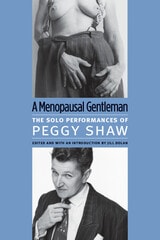
A Menopausal Gentleman
The Solo Performances of Peggy ShawPeggy Shaw
University of Michigan Press, 2011
"With classic butch finesse---that handsome combination of vulnerability and toughness---Peggy Shaw pieces together the challenges of growing up butch in the 1950s. Shaw is an engaging performer and inspired writer."
---Gay Community News
Obie-award-winning performer and writer Peggy Shaw has been playing her gender-bending performances on Off Broadway, regional, and international stages for three decades. Co-founder of the renowned troupe Split Britches, Shaw has gone on to create memorable solo performances that mix achingly honest introspection with campy humor, reflecting on everything from her Irish-American working-class roots to her aging butch body.
This collection of Shaw's solo performance scripts evokes a 54-year-old grandmother who looks like a 35-year-old man (in her classic Menopausal Gentleman); a mother's ambivalent ministrations to a daughter she treated like a son (in the raw You're Just Like My Father); Shaw's love for her biracial grandson, for whom she models masculinity (in the musically punctuated To My Chagrin); and a mapping of her body's long, bittersweet history (in the lyrical Must: The Inside Story, a collaboration with the UK's Clod Ensemble). The book also includes a selection of Shaw's other classic monologues and an extensive introduction by Jill Dolan, Professor of English and Theater and Dance at Princeton University and the blogger behind The Feminist Spectator website.
A volume in the series Triangulations: Lesbian/Gay/Queer Theater/Drama/Performance
Cover photos by Eva Weiss (top) and Robin Holland/robinholland.com (bottom).
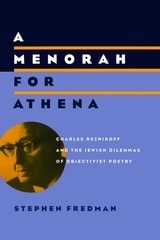
A Menorah for Athena
Charles Reznikoff and the Jewish Dilemmas of Objectivist PoetryStephen Fredman
University of Chicago Press, 2001
Stephen Fredman illuminates the relationship of Jewish intellectuals to modernity through a close look at Reznikoff's life and writing. He shows that when we regard the Objectivists as modern Jewish poets, we can see more clearly their distinctiveness as modernists and the reasons for their profound impact upon later poets, such as Allen Ginsberg and Charles Bernstein. Fredman also argues that to understand Reznikoff's work more completely, we must see it in the context of early, nonsectarian attempts to make the study of Jewish culture a force in the construction of a more pluralistic society. According to Fredman, then, the indelible images in Reznikoff's poetry open a window onto the vexed but ultimately successful entry of Jewish immigrants and their children into the mainstream of American intellectual life.

A Mexican State of Mind
New York City and the New Borderlands of CultureMelissa Castillo-Garsow
Rutgers University Press, 2020
A Mighty Change
An Anthology of Deaf American Writing, 1816 - 1864Christopher Krentz
Gallaudet University Press, 2000
“I need not tell you that a mighty change has taken place within the last half century, a change for the better,” Alphonso Johnson, the president of the Empire State Association of Deaf-Mutes, signed to hundreds of assembled deaf people in 1869. Johnson pointed to an important truth: the first half of the 19th century was a period of transformation for deaf Americans, a time that saw the rise of deaf education and the coalescence of the nation’s deaf community.
This volume contains original writing by deaf people that both directed and reflected this remarkable period of change. It begins with works by Laurent Clerc, the deaf Frenchman who came to the United Sates in 1816 to help found the first permanent school for deaf students in the nation. Partially through is writing, Clerc impressed hearing Americans–most of whom had never met an educated deaf person before–with his intelligence and humanity.
Other deaf writers shared their views with society through the democratic power of print. Included here are selections by James Nack, a deaf poet who surprised readers with his mellifluous verse; John Burnet, who published a book of original essays, fiction, and poetry; Edmund Booth, a frontiersman and journalist; John Carlin, who galvanized the drive for a national college for deaf people; Laura Redden, a high-achieving student who would go on to become an accomplished reporter; and Adele Jewel, a homeless deaf woman living in Michigan.
The final sections contain documents related to deaf events and issues at mid-century: the grand reunion of alumni of the American Asylum for the Deaf in 1850; the dedication of the Thomas Hopkins Gallaudet monument in Hartford; the debate over the viability of a deaf state; and the triumphant inauguration of the National Deaf-Mute College (now Gallaudet University) in 1864, which in many ways culminated this period of change. Taken together, the individual texts in this remarkable collection provide a valuable historical record and a direct glimpse of the experiences, attitudes, and rhetoric of deaf Americans during this time of change.
A Million Miles
My Peace Corps JourneyJody Olsen
University of Utah Press, 2024
Olsen’s captivating memoir, A Million Miles, reveals the personal and professional challenges she faced throughout her career, which spanned the Reagan era, 9/11, and the Trump administration. She writes candidly about her struggles as a woman in leadership, as well as personal hardships such as the
sudden death of her brother and her emotionally difficult divorce after her husband’s coming out. This memoir is a sharp, vulnerable portrait, a testament to the transformative power of leadership and self-discovery.
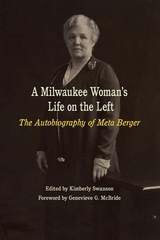
A Milwaukee Woman's Life on the Left
The Autobiography of Meta BergerMeta Berger
Wisconsin Historical Society Press, 2001
A Mind of Her Own
Helen Connor Laird and Family, 1888–1982Helen L. Laird
University of Wisconsin Press, 2006
A Mind of Her Own: Helen Connor Laird and Family 1888–1982 captures the public achievement and private pain of a remarkable Wisconsin woman and her family, whose interests and influence extended well beyond the borders of the state. Spanning almost a century, the history speaks to the way we were and are: a stridently materialistic nation with a deep and persistent spiritual component.
A Ministry of Presence
Chaplaincy, Spiritual Care, and the LawWinnifred Fallers Sullivan
University of Chicago Press, 2014
In A Ministry of Presence, Winnifred Fallers Sullivan explores how chaplaincy works in the United States—and in particular how it sits uneasily at the intersection of law and religion, spiritual care, and government regulation. Responsible for ministering to the wandering souls of the globalized economy, the chaplain works with a clientele often unmarked by a specific religious identity, and does so on behalf of a secular institution, like a hospital. Sullivan's examination of the sometimes heroic but often deeply ambiguous work yields fascinating insights into contemporary spiritual life, the politics of religious freedom, and the never-ending negotiation of religion's place in American institutional life.
A Missouri Railroad Pioneer
The Life of Louis HouckJoel P. Rhodes
University of Missouri Press, 2013
Lawyer and journalist, entrepreneur and philanthropist, Louis Houck is often called the “Father of Southeast Missouri” because he brought the railroad to the region and opened this backwater area to industrialization and modernization. Although Houck’s name is little known today outside Missouri, Joel Rhodes shows how his story has relevance for both the state and the nation.
Rhodes presents a more complete picture of Houck than has ever been available: reviewing his life from his German immigrant roots, considering his career from both social and political perspectives, and grounding the story in both state and national history. He especially tells how, from 1880 to the 1920s, this self-taught railroader constructed a network of five hundred miles of track through the wilderness of wetlands known as “Swampeast Missouri”—and how these “Houck Roads” provided a boost for population, agriculture, lumbering, and commerce that transformed Cape Girardeau and the surrounding area.
Rhodes discusses how Houck fits into the era of economic individualism—a time when men with little formal training shaped modern industry—and also gives voice to Houck’s critics and shows that he was not always an easy man to work with. In telling the story of his railroading enterprise, Rhodes chronicles Houck’s battle with the Jay Gould railroad empire and offers key insight into the development of America’s railway system, from the cutthroat practices of ruthless entrepreneurs to the often-comic ineptness of start-up rail lines.
More than simply a biography of a business entrepreneur, the book tells how Houck not only developed the region economically but also followed the lead of Andrew Carnegie by making art, culture, and formal education available to all social classes. Houck also served for thirty-six years as president of the Board of Regents of Southeast Missouri State Teacher’s College, and as a self-taught historian he wrote the first comprehensive accounts of Missouri’s territorial period.
A Missouri Railroad Pioneer chronicles a multifaceted career that transformed a region. Solidly researched, this lively narrative also offers an entertaining read for anyone interested in Missouri history.
A Monument to Deceit
Sam Adams and the Vietnam Intelligence WarsC. Michael Hiam
University Press of New England, 2014
A More Conservative Place
Intellectual Culture in the Bush EraPaul A. Bové
Dartmouth College Press, 2013
A More Dangerous Game
How a Young Sportswriter Met Patty Hearst and Landed in Federal PrisonJay Weiner
University of Minnesota Press, 2027
From precocious sportswriter to Federal Prisoner #01150-134: The intersection of sports and the revolutionary 1970s, with one ambitious young man caught in the middle
Jay Weiner was an aspiring teenage sportswriter when he met Jack Scott, the charismatic, activist journalist who would become his mentor, immersing him in the political and social issues roiling sports—and so much else—in the late 1960s and 1970s. Weiner became a zealous student of Scott, joining a new tradition of sports journalism that interrogated questions of race, power, and politics alongside the games themselves. But his blind devotion took a treacherous turn when Scott took Weiner, as a surprise for his twentieth birthday, to a secluded Pennsylvania farmhouse where heiress-turned-FBI-most-wanted Patty Hearst was hiding out with her Symbionese Liberation Army kidnappers-turned-comrades.
A More Dangerous Game is Weiner’s story of coming of age in a shocking fashion. A wild mosaic of sports, journalism, betrayal, justice, courage, and redemption, his memoir charts the meeting of sports and the radical left in the 1970s, with Weiner unwittingly caught in the middle and left behind by his mentor. In the engaged, edgy style of a seasoned sportswriter, Weiner describes the fallout after that fateful encounter with the country’s most wanted fugitives: three years of federal subpoenas, impossible decisions, and, ultimately, four months in prison for refusing to testify before a grand jury.
With exhaustive background reporting, Weiner fits together the seemingly disparate pieces of his unlikely journey from young sportswriter to frightened FBI target to emboldened Federal Prisoner #01150-134. From its examination of the life and work of Jack Scott to its surprising angle on the well-chronicled saga of Patty Hearst, A More Dangerous Game is the engrossing story of a time when examining sports as a mirror of society put a writer on the cutting edge of one of the most notorious stories of a generation.
Retail e-book files for this title are screen-reader friendly with images accompanied by short alt text and/or extended descriptions.
A Morning in June
Defending Outpost HarryJames W. Evans, with a foreword by John S. D. Eisenhower
University of Alabama Press, 2010
Exploring the strategic and human dimensions of the defense of Outpost Harry.
By June 1953 the Korean War, marked at the outset by extremely fluid advances and retreats up and down the peninsula, had settled into position warfare very near the original pre-war demarcation line between North and South Korea. At this point both sides were fighting to win a peace, to achieve incremental advantages that could be translated into gains at the peace negotiations in Panmunjom. The battle at Outpost Harry devolved into hand-to-hand combat during a period of constant, intense fighting that lasted two days. The author, although seriously wounded that night, refused evacuation and remained on the hill to successfully lead his company in defense of the outpost. It wasn’t romantic; it wasn’t chivalrous; and many died or were badly wounded. Some of the survivors never fully overcame the mental and physical damage they suffered during the nightmare.
With this book, one of those scarred by that experience recounts the events of the battle and his lifelong efforts to deal with the residual horrors. The Korean Conflict may be called "the forgotten war" by some, but not by those who were on the front lines.