Results by title
28164 books match the query 'History' and 2536 start with a

A Historian and His World
A Life of Christopher Dawson, 1889-1970Christina Scott
Catholic University of America Press, 2023
A Historical Archaeology of Jerusalem
Bronze and Iron AgesYuval Gadot
SBL Press, 2026

A Historical Atlas of Tibet
Karl E. Ryavec
University of Chicago Press, 2015
Cradled among the world’s highest mountains—and sheltering one of its most devout religious communities—Tibet is, for many of us, an ultimate destination, a place that touches the heavens, a place only barely in our world, at its very end. In recent decades Western fascination with Tibet has soared, from the rise of Tibetan studies in academia to the rock concerts aimed at supporting its independence to the simple fact that most of us—far from any base camp—know exactly what a sherpa is. And yet any sustained look into Tibet as a place, any attempt to find one’s way around its high plateaus and through its deep history, will yield this surprising fact: we have barely mapped it. With this atlas, Karl E. Ryavec rights that wrong, sweeping aside the image of Tibet as Shangri-La and putting in its place a comprehensive vision of the region as it really is, a civilization in its own right. And the results are absolutely stunning.
The product of twelve years of research and eight more of mapmaking, A Historical Atlas of Tibet documents cultural and religious sites across the Tibetan Plateau and its bordering regions from the Paleolithic and Neolithic times all the way up to today. It ranges through the five main periods in Tibetan history, offering introductory maps of each followed by details of western, central, and eastern regions. It beautifully visualizes the history of Tibetan Buddhism, tracing its spread throughout Asia, with thousands of temples mapped, both within Tibet and across North China and Mongolia, all the way to Beijing. There are maps of major polities and their territorial administrations, as well as of the kingdoms of Guge and Purang in western Tibet, and of Derge and Nangchen in Kham. There are town plans of Lhasa and maps that focus on history and language, on population, natural resources, and contemporary politics.
Extraordinarily comprehensive and absolutely gorgeous, this overdue volume will be a cornerstone in cartography, Asian studies, Buddhist studies, and in the libraries or on the coffee tables of anyone who has ever felt the draw of the landscapes, people, and cultures of the highest place on Earth.

A Historical Commentary on Thucydides
A Companion to Rex Warner's Penguin TranslationDavid Cartwright
University of Michigan Press, 1997
A Historical Guidebook to Old Columbus
Finding the Past in the Present in Ohio’s Capital CityBob Hunter
Ohio University Press, 2012
Ever look at a modern skyscraper or a vacant lot and wonder what was there before? Or maybe you have passed an old house and been curious about who lived there long ago. This richly illustrated new book celebrates Columbus, Ohio’s, two-hundred-year history and supplies intriguing stories about the city’s buildings and celebrated citizens, stopping at individual addresses, street corners, parks, and riverbanks where history was made. As Columbus celebrates its bicentennial in 2012, a guide to local history is very relevant.
Like Columbus itself, the city’s history is underrated. Some events are of national importance; no one would deny that Abraham Lincoln’s funeral procession down High Street was a historical highlight. But the authors have also included a wealth of social and entertainment history from Columbus’s colorful history as state capital and destination for musicians, artists, and sports teams.
The book is divided into seventeen chapters, each representing a section of the city, including Statehouse Square, German Village, and Franklinton, the city’s original settlement in 1797. Each chapter opens with an entertaining story that precedes the site listings. Sites are clearly numbered on maps in each section to make it easy for readers to visit the places that pique their interest. Many rare and historic photos are reproduced along with stunning contemporary images that offer insight into the ways Columbus has changed over the years.
A Historical Guidebook to Old Columbus invites Columbus’s families to rediscover their city with a treasure trove of stories from its past and suggests to visitors and new residents many interesting places that they might not otherwise find. This new book is certain to amuse and inform for years to come.
A Historical and Etymological Dictionary of American Sign Language
The Origin and Evolution of More Than 500 SignsEmily Shaw
Gallaudet University Press, 2014
Through rigorous study of historical texts, field research in communities throughout France and the U.S., and an in-depth analysis of the cultural groups responsible for the lexicon, authors Emily Shaw and Yves Delaporte present a compelling and detailed account of the origins of over 500 ASL signs, including regional variations. Organized alphabetically by equivalent English glosses, each sign is accompanied by a succinct description of its origin and an LSF sign where appropriate. Featuring an introductory chapter on the history of the development of ASL and the etymological methodology used by the authors, this reference resource breaks new ground in the study of America’s sign language.
A History Of Geology
Gabriel Gohau
Rutgers University Press, 1991
This book is by far the best history of geology available. It begins with the Greeks and ends with continental drift and plate tectonics. Gabriel Gohau also looks at the early theories of the formation of the world and then moves to philosophical debates over mountains, fossils, the Flood, volcanoes, and cycles of earth history that preoccupied the geologists and biologists of the late eighteenth and nineteenth century. After discussing the late nineteenth-century consolidation of theories about the mechanisms of changes in the earth, he concludes with an account of twentieth century geology's scientific revolution.
A History Of Hispanics In Southern Nevada
M. L. Miranda
University of Nevada Press, 1997
Hispanics were among the first people of European descent to venture into the territory that became Nevada, and they have participated in every stage of the state’s history and development since then--its mines, railroads, and ranches, the growth of its cities, and its modern industries. Until recently, however, their role in the development of the state and their lively cultural contributions have escaped the scrutiny of scholars. Now, in this important pioneering study, M. L. Miranda offers a thoughtful account of Nevada’s largest ethnic minority. Miranda analyzes their growing role in the state—especially in the booming urban South—and offers some projections for their future.
A History in Indigenous Voices
Menominee, Ho-Chunk, Oneida, Stockbridge, and Brothertown Interactions in the Removal EraCarol Cornelius
Wisconsin Historical Society Press, 2023
Treaties made in the 1800s between the United States and the Indigenous nations of what is now Wisconsin have had profound influence on the region’s cultural and political landscape. Yet few people realize that in the early part of that century, the Menominee and Ho-Chunk Nations of Wisconsin signed land treaties with several Indigenous nations from New York State. At the onset of the removal era, these eastern nations, including the Oneida Nation and the Six Nations Confederacy, were under constant pressure from the federal government and land speculators to move to lands around Green Bay and Lake Winnebago.
In this groundbreaking book, Carol A. Cornelius has compiled a careful account of these nation-to-nation treaties, in large part in the words of those Indigenous leaders who served as the voices and representatives of their nations. Drawing on a rich collection of primary sources, Cornelius walks readers through how, why, and for whom these treaties were made and how the federal government’s failure and unwillingness to acknowledge their legitimacy led to the further loss of Indigenous lands. The living documents transcribed here testify to the complexity and sovereignty of Indigenous governance then and now, making this volume a vital resource for historians and an accessible introduction to Indigenous treatymaking in Wisconsin.
Winner of the 2024 Wisconsin Historical Society’s Book of Merit Award
Finalist for the 2023 Foreword INDIES Book of the Year Award for Adult Nonfiction History

A History of ALA Policy on Intellectual Freedom
A Supplement to the Intellectual Freedom ManualTrina Magi
American Library Association, 2015
Collecting several key documents and policy statements, this supplement to the tenth edition of the Intellectual Freedom Manual traces a history of ALA's commitment to fighting censorship. Beginning with an introductory essay that chronicles ALA policy making on intellectual freedom, this important resource includes sections discussing such foundational issues as
- library advocacy on social and political issues, from post-World War I disarmament, to Vietnam-era protests, to the call to revisit the field’s rhetoric concerning neutrality;
- the evolution of the Library Bill of Rights, such as the 1978 revision that eliminated its use of sex-linked pronouns and ALA Council actions rescinding the 2018 interpretation on meeting rooms;
- protecting the freedom to read;
- diverse collections and equity, diversity, and inclusion, new to this edition;
- ALA’s complicated history on race, including a 1936 statement opposing discrimination, inaction amidst litigation to desegregate libraries in the 1950s and 1960s, and protests over Florida’s Stand Your Ground Law;
- ALA's Code of Ethics;
- how to respond to challenges and concerns about library resources;
- internet filtering, minors and online activity, and education and information literacy;
- programs and displays;
- policy on governmental intimidation;
- copyright; and
- privacy and confidentiality, including the retention of library usage records.
A History of Accountancy in the United States
The Cultural Significance of Accounting. Revised EditionGary John Previts
The Ohio State University Press, 1998
A History of America in 100 Maps
Susan Schulten
University of Chicago Press, 2018
In this book Susan Schulten uses maps to explore five centuries of American history, from the voyages of European discovery to the digital age. With stunning visual clarity, A History of America in 100 Maps showcases the power of cartography to illuminate and complicate our understanding of the past.
Gathered primarily from the British Library’s incomparable archives and compiled into nine chronological chapters, these one hundred full-color maps range from the iconic to the unfamiliar. Each is discussed in terms of its specific features as well as its larger historical significance in a way that conveys a fresh perspective on the past. Some of these maps were made by established cartographers, while others were made by unknown individuals such as Cherokee tribal leaders, soldiers on the front, and the first generation of girls to be formally educated. Some were tools of statecraft and diplomacy, and others were instruments of social reform or even advertising and entertainment. But when considered together, they demonstrate the many ways that maps both reflect and influence historical change.
Audacious in scope and charming in execution, this collection of one hundred full-color maps offers an imaginative and visually engaging tour of American history that will show readers a new way of navigating their own worlds.
A History of American Legislatures, 1619-2024
Peverill Squire
University of Missouri Press, 2026
What might the members of the first Virginia assembly think if they could visit today’s Virginia House of Delegates? The air-conditioning and diversity of the current membership surely would surprise them, but would the legislative process itself strike them as odd?
In his latest work, Peverill Squire demonstrates that the way the modern legislature goes about its work would seem familiar to visitors from the past. Squire traces a nearly uninterrupted path from that first assembly in Virginia in 1619 to the contemporary Virginia General Assembly, and to the U.S. Congress and the other forty-nine state legislatures.
Each chapter examines discrete topics rather than historical eras, distinguishing the book from other studies of American legislatures. Topics covered include the fundamentals of legislative structure and operation, how qualification standards for legislative service became more inclusive, and how legislative professionalization unfolded at both congressional and state levels.
Though covering more than 400 years, Squire manages to present a comprehensive and accessible history of American legislatures that both scholars and students will find valuable.
A History of American Literary Journalism
The Emergence of a Modern Narrative FormJohn C. Hartsock
University of Massachusetts Press, 2000
During the 1960s, such works as Truman Capote's In Cold Blood and Joan Didion's Slouching Towards Bethlehem were cited as examples of the “new journalism.” True stories that read like novels, they combined the journalist's task of factual reporting with the art of fictional narration.
Yet as John C. Hartsock shows in this revealing study, the roots of this distinctive form of writing—whether called new journalism, literary journalism, or creative nonfiction—can be traced at least as far back as the late nineteenth century. In the decades following the American Civil War, Stephen Crane, Lafcadio Hearn, and other journalists challenged the notion, then just emerging, that the reporter's job was to offer a concise statement of the “objective truth.” Drawing on the techniques of the realistic novel, these writers developed a new narrative style of reporting aimed at lessening the distance between observer and observed, subject and object.
By the 1890s, Hartsock argues, literary journalism had achieved critical recognition as a new form of writing, different not only from “objective” reporting but also from the sensationalistic “yellow press” and at times the socially engaged “muckrakers.” In the twentieth century, the form has continued to evolve and maintain its vitality, despite being marginalized by the academic establishment.
A former journalist who covered Capitol Hill for UPI and reported on the collapse of the Soviet Union for the San Francisco Examiner, Hartsock brings a fresh and informed perspective to the issues he examines. The result is a concise introduction to the genesis and development of a significant literary genre.
A History of Ann Arbor
Jonathan Marwil
University of Michigan Press, 1991
A History of Anthropology
Thomas Hylland Eriksen and Finn Sivert Nielsen
Pluto Press, 2013
This is a thoroughly updated and revised edition of a popular classic of modern anthropology. The authors provide summaries of ‘Enlightenment’, ‘Romantic’ and ‘Victorian’ anthropology, from the cultural theories of Morgan and Taylor to the often neglected contributions of German scholars. The ambiguous relationship between anthropology and national cultures is also considered.
The book provides an unparalleled account of theoretical developments in anthropology from the 1920s to the present, including functionalism, structuralism, hermeneutics, neo-Marxism and discourse analysis. There are brief biographies of major anthropologists and coverage of key debates including totemism, kinship and globalisation.
This essential text on anthropology is highly engaging, authoritative and suitable for students at all levels.
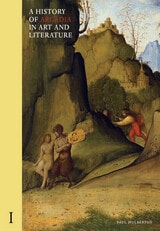
A History of Arcadia in Art and Literature
Volume I: Earlier RenaissancePaul Holberton
Paul Holberton Publishing, 2021
A History of Arcadia in Art and Literature is an unprecedented exploration of the pastoral through the close examination of original texts of classical and early and later modern pastoral poetry, literature, and drama in ancient Greek, Latin, Italian, French, Spanish, Portuguese, Dutch, German, and English, as well as of a wide range of visual imagery. The book is an iconographic study of Renaissance and Baroque pastoral and related subject matter, with an important chapter on the eighteenth century, both in the visual arts, where pastoral is poorly understood, and in words and performance, about which many false preconceptions prevail.
The book begins with Virgil’s use of Theocritus and an analysis of what basis Virgil provided for Renaissance pastoral and what, by contrast, stemmed from the medieval pastourelle. Paul Holberton then moves through a remarkable range of works, addressing authors such as Petrarch, Tasso, Guarino, Lope de Vega, Cervantes, and Shakespeare, and artists such as Giorgione, Claude, Poussin, Watteau, Gainsborough, and many more. The book serves simultaneously as a careful study, an art book full of beautiful reproductions, and an anthology, presenting all texts both in the original language and in English translation.

A History of Arcadia in Art and Literature
Volume II: Later Renaissance, Baroque and NeoclassicismPaul Holberton
Paul Holberton Publishing, 2021
A History of Arcadia in Art and Literature is an unprecedented exploration of the pastoral through the close examination of original texts of classical and early and later modern pastoral poetry, literature, and drama in ancient Greek, Latin, Italian, French, Spanish, Portuguese, Dutch, German, and English, as well as of a wide range of visual imagery. The book is an iconographic study of Renaissance and Baroque pastoral and related subject matter, with an important chapter on the eighteenth century, both in the visual arts, where pastoral is poorly understood, and in words and performance, about which many false preconceptions prevail.
The book begins with Virgil’s use of Theocritus and an analysis of what basis Virgil provided for Renaissance pastoral and what, by contrast, stemmed from the medieval pastourelle. Paul Holberton then moves through a remarkable range of works, addressing authors such as Petrarch, Tasso, Guarino, Lope de Vega, Cervantes, and Shakespeare, and artists such as Giorgione, Claude, Poussin, Watteau, Gainsborough, and many more. The book serves simultaneously as a careful study, an art book full of beautiful reproductions, and an anthology, presenting all texts both in the original language and in English translation.
A History of Argentina
From the Spanish Conquest to the PresentEzequiel Adamovsky
Duke University Press, 2024

A History of Argos to 500 B.C
Thomas Kelly
University of Minnesota Press, 1977
A History of Argos to 500 B.C was first published in 1977. Minnesota Archive Editions uses digital technology to make long-unavailable books once again accessible, and are published unaltered from the original University of Minnesota Press editions.
Specialists in ancient history will find some long-held beliefs challenged by this study. Professor Kelly reconstructs and discusses the history of the ancient Greek city of Argos, which was located in the northeastern Peloponnese, from the Bronze Age through the Archaic period. He relies primarily on the archeological evidence and considers the literary evidence in the context of the physical remains. In determining the broad pattern of historical development, his findings and conclusions frequently contradict previous conceptions about the city and its role in history.
The study shows that Argos existed in the shadow of Mycenae in the Bronze Age but that throughout the Dark Age it was one of the most progressive centers in Greece, though not a wealthy or powerful community. Its contacts with other areas were limited and it had no influence beyond its own village and fields. By the end of the Dark Age the city was growing and extending its influence throughout the Argive plain, but its external contacts remained limited. Contrary to theories of earlier historians, Professor Kelly finds that Argive foreign policy was not dominated by a rivalry with Sparta, and reports that the two states fought on numerous occasions, the Battle of Hysiae included, are erroneous. The present study also indicates that the tyrant Pheidon of Argos fits more logically into the early decades of the sixth century B.C.E. rather than the seventh century as had been thought. The fragmentary nature of the evidence does not make possible an assessment of the long-range impact of Pheidon's policies on the history of Argos, but it is clear that his reign was followed by important political changes in the city.
A History of Badger Baseball
The Rise and Fall of America's Pastime at the University of WisconsinSteven D. Schmitt
University of Wisconsin Press, 2017
There is painful history here, too. African Americans played on Wisconsin's first Big Ten championship team in 1902, including team captain Julian Ware, but there were none on the team between 1904 and 1960. Heartbreaking to many fans was the 1991 decision to discontinue baseball as a varsity sport at the university. Today, Wisconsin is the only member of the Big Ten conference without a men's baseball team.
Appendixes provide details of team records and coaches, All Big Ten and All American selections, Badgers in the major leagues, and Badgers in the amateur free-agent draft.
A History of Bicycling in Illinois
160 Years of Booms and BustsChristopher Sweet
University of Illinois Press, 2026

A History of Bisexuality
Steven Angelides
University of Chicago Press, 2001
In a book that will become the center of debate about the nature of sexuality for years to come, A History of Bisexuality compels us to rethink contemporary discourses of sexual theory and politics.
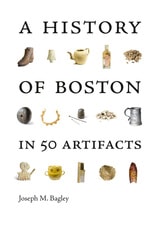
A History of Boston in 50 Artifacts
Joseph M. Bagley
University Press of New England, 2016
A History of Boston in 50 Artifacts
Joseph M. Bagley
Brandeis University Press, 2021
Joseph M. Bagley, the city archaeologist of Boston, uncovers a fascinating hodgepodge of history—from ancient fishing grounds to Jazz Age red-light districts—that will surprise and delight even longtime residents. Each artifact is shown in full color with a description of the item’s significance to its site location and Boston’s larger history. From cannonballs to drinking cups and from ancient spears to chinaware, A History of Boston in 50 Artifacts offers a unique and accessible introduction to Boston’s history and physical culture while revealing the ways objects can offer a tantalizing entrée into our past. Packed with vivid descriptions and art, this lively history of Boston will appeal to all manner of readers, locals, and visitors alike. This new edition showcases an important fact which has come to light since its first publication, that a chapter about a cat has now been shown to be a dog, thus demonstrating the perils of the archaeologist.
A History of Chicago, Volume I
The Beginning of a City 1673-1848Bessie Louise Pierce
University of Chicago Press, 1937
Originally conceived as a centennial history of Chicago, the project became, under the guidance of renowned historian Bessie Louise Pierce, a definitive, three-volume set describing the city’s growth—from its humble frontier beginnings to the horrors of the Great Fire, the construction of some of the world’s first skyscrapers, and the opulence of the 1893 World’s Fair. Pierce and her assistants spent over forty years transforming historical records into an inspiring human story of growth and survival.
Rich with anecdotal evidence and interviews with the men and women who made Chicago great, all three volumes will now be available for the first time in years. A History of Chicago will be essential reading for anyone who wants to know this great city and its place in America.
“With this rescue of its history from the bright, impressionable newspapermen and from the subscription-volumes, Chicago builds another impressive memorial to its coming of age, the closing of its first ‘century of progress.’”—E. D. Branch, New York Times (1937)

A History of Chicago, Volume II
From Town to City 1848-1871Bessie Louise Pierce
University of Chicago Press, 1940
Originally conceived as a centennial history of Chicago, the project became, under the guidance of renowned historian Bessie Louise Pierce, a definitive, three-volume set describing the city’s growth—from its humble frontier beginnings to the horrors of the Great Fire, the construction of some of the world’s first skyscrapers, and the opulence of the 1893 World’s Fair. Pierce and her assistants spent over forty years transforming historical records into an inspiring human story of growth and survival.
Rich with anecdotal evidence and interviews with the men and women who made Chicago great, all three volumes will now be available for the first time in years. A History of Chicago will be essential reading for anyone who wants to know this great city and its place in America.
“With this rescue of its history from the bright, impressionable newspapermen and from the subscription-volumes, Chicago builds another impressive memorial to its coming of age, the closing of its first ‘century of progress.’”—E. D. Branch, New York Times (1937)
A History of Chicago, Volume III
The Rise of a Modern City, 1871-1893Bessie Louise Pierce
University of Chicago Press, 1957
Originally conceived as a centennial history of Chicago, the project became, under the guidance of renowned historian Bessie Louise Pierce, a definitive, three-volume set describing the city’s growth—from its humble frontier beginnings to the horrors of the Great Fire, the construction of some of the world’s first skyscrapers, and the opulence of the 1893 World’s Fair. Pierce and her assistants spent over forty years transforming historical records into an inspiring human story of growth and survival.
Rich with anecdotal evidence and interviews with the men and women who made Chicago great, all three volumes will now be available for the first time in years. A History of Chicago will be essential reading for anyone who wants to know this great city and its place in America.
“With this rescue of its history from the bright, impressionable newspapermen and from the subscription-volumes, Chicago builds another impressive memorial to its coming of age, the closing of its first ‘century of progress.’”—E. D. Branch, New York Times (1937)
A History of Clouds
99 MeditationsHans Magnus Enzensberger
Seagull Books, 2010
In these 99 meditations, poet and novelist Hans Magnus Enzensberger celebrates the tenacity of the normal and routine in everyday life, where the survival of the objects we use without thinking—a pair of scissors, perhaps—is both a small, human victory and a quiet reminder of our own ephemeral nature. He sets his quotidian reflections against a broad historical and political backdrop: the cold war and its accompanying atomic threat; the German student revolt; would-be socialism in Cuba, China, and Africa; and World War II as experienced by the youthful poet.
Enzensberger’s poems are conversational, skeptical, and serene; they culminate in the extended set of observations that gives the collection its title. Clouds, alien and yet symbols of human life, are for Enzensberger at once a central metaphor of the Western poetic tradition and “the most fleeting of all masterpieces.” “Cloud archaeology,” writes Enzensberger, is “a science for angels.”
Praise for the German edition
“After reading this wonderful volume of poetry one would like to call Enzensberger simply the lyric voice of transience.”— Sueddeutsche Zeitung
“With this book Enzensberger reveals himself both as a spokesman of persistence and as a decelerator.”—Neue Zuercher Zeitung

A History of Control Engineering 1800-1930
S. Bennett
The Institution of Engineering and Technology, 1979
A History of Control Engineering 1930-1955
Stuart Bennett
The Institution of Engineering and Technology, 1993

A History of Cooks and Cooking
Michael Symons
University of Illinois Press, 1998
Fueled by James Boswell's definition of humans as cooking animals (for "no beast can cook"), Symons sets out to explore the civilizing role of cooks in history. His wanderings take us to the clay ovens of the prehistoric eastern Mediterranean and the bronze cauldrons of ancient China, to fabulous banquets in the temples and courts of Mesopotamia, Egypt, and Persia, to medieval English cookshops and southeast Asian street markets, to palace kitchens, diners, and modern fast-food eateries.
Symons samples conceptions and perceptions of cooks and cooking from Plato and Descartes to Marx and Virginia Woolf, asking why cooks, despite their vital and central role in sustaining life, have remained in the shadows, unheralded, unregarded, and underappreciated. "People think of meals as occasions where you share food," he notes; "they rarely think of cooks as sharers of food."
Considering such notions as the physical and political consequences of sauce, connections between food and love, and cooking as a regulator of clock and calendar, Symons provides a spirited and diverting defense of a cook-centered view of the world.

A History of Corporate Governance around the World
Family Business Groups to Professional ManagersEdited by Randall K. Morck
University of Chicago Press, 2005
In this volume, some of the brightest minds in the field of economics present new empirical research that suggests that each side of the debate has something to offer the other. Free enterprise and well-developed financial systems are proven to produce growth in those countries that have them. But research also suggests that in some other capitalist countries, arrangements truly do concentrate corporate ownership in the hands of a few wealthy families.
A History of Corporate Governance around the World provides historical studies of the patterns of corporate governance in several countries-including the large industrial economies of Canada, France, Germany, Italy, Japan, the United Kingdom, and the United States; larger developing economies like China and India; and alternative models like those of the Netherlands and Sweden.
A History of Crete
Chris Moorey
Haus Publishing, 2019
To guide us through this spectacular history, Chris Moorey, who has lived in Crete for over twenty years, provides an engaging and lively account of the island spanning from the Stone Age to the present day. A History of Crete steps in to fill a gap in scholarship on this fascinating island, providing the first complete history of Crete to be published for over twenty years, and the first ever that is written with a wide readership in mind.

A History of Disability
Henri-Jacques Stiker
University of Michigan Press, 2000
A History of Disability
Henri-Jacques Stiker
University of Michigan Press, 2019
This new edition of the classic volume features a new foreword by David T. Mitchell and Sharon L. Snyder that assesses the impact of Stiker’s history on Disability Studies and beyond, twenty years after the book’s translation into English. The book will be of interest to scholars of disability, historians, social scientists, cultural anthropologists, and those who are intrigued by the role that culture plays in the development of language and thought surrounding people with disabilities.

A History of Earliest Italy
Massimo Pallottino
University of Michigan Press, 1991
A History of Education in Antiquity
H.I. Marrou
University of Wisconsin Press, 1982

A History of Fascism, 1914–1945
Stanley G. Payne
University of Wisconsin Press, 1996
“A History of Fascism is an invaluable sourcebook, offering a rare combination of detailed information and thoughtful analysis. It is a masterpiece of comparative history, for the comparisons enhance our understanding of each part of the whole. The term ‘fascist,’ used so freely these days as a pejorative epithet that has nearly lost its meaning, is precisely defined, carefully applied and skillfully explained. The analysis effectively restores the dimension of evil.”—Susan Zuccotti, The Nation
“A magisterial, wholly accessible, engaging study. . . . Payne defines fascism as a form of ultranationalism espousing a myth of national rebirth and marked by extreme elitism, mobilization of the masses, exaltation of hierarchy and subordination, oppression of women and an embrace of violence and war as virtues.”—Publishers Weekly

A History of Fisk University, 1865-1946
Joe M. Richardson
University of Alabama Press, 1980
Fisk University has been a leading black educational institution for more than a century. In this volume, the author attempts to trace its evolution and development from 1866 when it was little more than a primary school to the 1930s and 1940s when it became a center of culture and scholarship; from 1871 when it was necessary to send out Fisk Jubilee Singers to earn operating expenses to the 1940s then it a several million dollar endowment; and from 1866 when black children eagerly sought any education whites gave them to 1925 when students joined alumni to oust a white president they considers dictatorial.

A History of Fort Worth in Black & White
165 Years of African-American LifeRichard F. Selcer
University of North Texas Press, 2015

A History of Free Verse
Chris Beyers
University of Arkansas Press, 2001

A History of German Jewish Bible Translation
Abigail Gillman
University of Chicago Press, 2018
This book is the first in English to offer a close analysis of German Jewish translations as part of a larger cultural project. Looking at four distinct waves of translations, Abigail Gillman juxtaposes translations within each that sought to achieve similar goals through differing means. As she details the history of successive translations, we gain new insight into the opportunities and problems the Bible posed for different generations and gain a new perspective on modern German Jewish history.
A History of Gold Dredging in Idaho
Clark C. Spence
University Press of Colorado, 2016
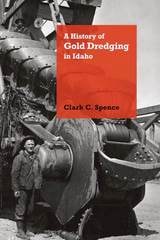
Author Clark Spence focuses on the two most important types of dredges in the state—the bucket-line dredge and the dragline dredge—and describes their financing, operation, problems, and effect on the state and environment. These dredges made it possible to work ground previously deemed untouchable because bedrock where gold collected could now be reached. But they were also highly destructive to the environment. As these huge machines floated along, they dumped debris that harmed the streams and destroyed wildlife habitat, eventually prompting state regulations and federal restoration of some of the state’s crippled waterways.
Providing a record of Idaho’s dredging history for the first time, this book is a significant contribution to the knowledge and understanding of Western mining, its technology, and its overall development as a major industry of the twentieth century.
A History of Hands
A NovelRod Val Moore
University of Massachusetts Press, 2014
Soon, however, an elderly and possibly criminal doctor, offering free therapy, moves in, much to the dismay of bedridden Virge. While the physician endeavors to restore the patient's hands with a series of highly suspect injections, Virge recovers his sense of autonomy and an urge to escape the suffocating domestic circumstances that have perhaps caused his illnesses in the first place.
A History of Hands is a novel that invites the reader into a richly and eccentrically detailed world where fevered imaginations and dark comedy prevail, but where the determination to escape the ambiguities of illness leads to the equal ambiguities of health and freedom.

A History of Hate in Ohio
Then and NowMichael E. Brooks and Bob Fitrakis with an introduction by Marilyn K. Howard
The Ohio State University Press, 2021

A History of Hazardous Objects
A NovelYxta Maya Murray
University of Nevada Press, 2024
Simultaneously, Laura is trying to write the history section of a Congressional report titled the National Near-Earth Object Preparedness Strategy and Action Plan. This report will advise Congress that it must develop a system to detect and deflect PHOs, and the section Laura is working on cites several historical meteorite impacts as proof that the Earth is now undefended against a significant impact event.
A story about family, love, risk, and science, A History of Hazardous Objects contemplates how experiencing trauma and pain may help us secure a safer and more just world.
A History of Hispanic Theatre in the United States
Origins to 1940By Nicolás Kanellos
University of Texas Press, 1990
Hispanic theatre flourished in the United States from the mid-nineteenth century until the beginning of the Second World War—a fact that few theatre historians know. A History of Hispanic Theatre in the United States: Origins to 1940 is the very first study of this rich tradition, filled with details about plays, authors, artists, companies, houses, directors, and theatrical circuits.
Sixteen years of research in public and private archives in the United States, Mexico, Spain, and Puerto Rico inform this study. In addition, Kanellos located former performers and playwrights, forgotten scripts, and old photographs to bring the life and vitality of live theatre to his text. He organizes the book around the cities where Hispanic theatre was particularly active, including Los Angeles, San Antonio, New York, and Tampa, as well as cities on the touring circuit, such as Laredo, El Paso, Tucson, and San Francisco.
Kanellos charts the major achievements of Hispanic theatre in each city—playwriting in Los Angeles, vaudeville and tent theatre in San Antonio, Cuban/Spanish theatre in Tampa, and pan-Hispanism in New York—as well as the individual careers of several actors, writers, and directors. And he uncovers many gaps in the record—reminders that despite its popularity, Hispanic theatre was often undervalued and unrecorded.
A History of Horror
Wheeler Winston Dixon
Rutgers University Press, 2010
Arranged by decades, with outliers and franchise films overlapping some years, this one-stop sourcebook unearths the historical origins of characters such as Dracula, Frankenstein, and the Wolfman and their various incarnations in film from the silent era to comedic sequels. A History of Horror explores how the horror film fits into the Hollywood studio system and how its enormous success in American and European culture expanded globally over time.
Dixon examines key periods in the horror film-in which the basic precepts of the genre were established, then banished into conveniently reliable and malleable forms, and then, after collapsing into parody, rose again and again to create new levels of intensity and menace. A History of Horror, supported by rare stills from classic films, brings over fifty timeless horror films into frightfully clear focus, zooms in on today's top horror Web sites, and champions the stars, directors, and subgenres that make the horror film so exciting and popular with contemporary audiences.
A History of Horror, 2nd Edition
Wheeler Winston Dixon
Rutgers University Press, 2023
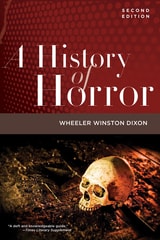
Ever since horror leapt from popular fiction to the silver screen in the late 1890s, viewers have experienced fear and pleasure in exquisite combination. Wheeler Winston Dixon's fully revised and updated A History of Horror is still the only book to offer a comprehensive survey of this ever-popular film genre.
Arranged by decades, with outliers and franchise films overlapping some years, this one-stop sourcebook unearths the historical origins of characters such as Dracula, Frankenstein, and the Wolfman and their various incarnations in film from the silent era to comedic sequels. In covering the last decade, this new edition includes coverage of the resurgence of the genre, covering the swath of new groundbreaking horror films directed by women, Black and queer horror films, and a new international wave in body horror films.
A History of Horror explores how the horror film fits into the Hollywood studio system, how the distribution and exhibition of horror films have changed in a post-COVID world, and how its enormous success in American and European culture expanded globally over time.
Dixon examines key periods in the horror film-in which the basic precepts of the genre were established, then banished into conveniently reliable and malleable forms, and then, after collapsing into parody, rose again and again to create new levels of intensity and menace. A History of Horror, supported by rare stills from classic films, brings over sixty timeless horror films into frightfully clear focus, zooms in on today's top horror Web sites, and champions the stars, directors, and subgenres that make the horror film so exciting and popular with contemporary audiences.