Results by title
8812 books match the query 'Political Science' and 626 start with a

Alfarabi and the Foundation of Islamic Political Philosophy
Muhsin S. Mahdi
University of Chicago Press, 2001
Beginning with a survey of Islamic philosophy and a discussion of its historical background, Mahdi considers the interrelated spheres of philosophy, political thought, theology, and jurisprudence of the time. He then turns to Alfarabi's concept of "the virtuous city," and concludes with an in-depth analysis of the trilogy, Philosophy of Plato and Aristotle.
This philosophical engagement with the writings of and about Alfarabi will be essential reading for anyone interested in medieval political philosophy.

Alfredo Jaar
Decolonial Time and the Aesthetics of the UnfinishedFlorencia San Martin. With a Foreword by Wolfgang Kaleck.
Duke University Press, 2026
In Alfredo Jaar, Florencia San Martín analyzes the work of the prominent Chilean-born artist Alfredo Jaar, whose work challenges the linear and triumphalist temporality of Western modernity that obscures the violence of colonization and globalization. San Martín argues that Jaar’s work represents decolonial time, exposing the limits of the violent systems we inhabit. His art, she maintains, is informed by and responds to two interconnected historical events relevant to his own life: the US-backed military coup that established Pinochet’s dictatorship in Chile and the implementation around the world of the corollary neoliberal economic system. San Martín explores the key themes in Jaar’s artistic practice—mourning, accountability, and failure—which situates the victims of the Chilean regime in a global context, directly confronts the architects of atrocity, and questions how ideas of diversity and inclusion have been co-opted by modern neoliberal discourses. Alfredo Jaar enables us to reimagine art history, offering a fresh paradigm with which to think about global contemporary art.

Alienated Women
A Study on Polish Women's Writing, 1845 -1918Grazyna Borkowska
Central European University Press, 2001

Alignment, Alliance, and American Grand Strategy
Zachary Selden
University of Michigan Press, 2016
Amid calls for retrenchment or restraint, Selden makes the case that a policy focused on maintaining American military preeminence and the demonstrated willingness to use force may be what sustains the cooperation of second-tier states, which in turn help to maintain US hegemony at a manageable cost.
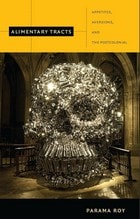
Alimentary Tracts
Appetites, Aversions, and the PostcolonialParama Roy
Duke University Press, 2010
Interpreting texts that have addressed cooking, dining, taste, hungers, excesses, and aversions in South Asia and its diaspora since the mid-nineteenth century, Roy relates historical events and literary figures to tropes of disgust, abstention, dearth, and appetite. She analyzes the fears of pollution and deprivation conveyed in British accounts of the so-called Mutiny of 1857, complicates understandings of Mohandas K. Gandhi’s vegetarianism, examines the “famine fictions” of the novelist-actor Mahasweta Devi, and reflects on the diasporic cookbooks and screen performances of Madhur Jaffrey. This account of richly visceral global modernity furnishes readers with a new idiom for understanding historical action and cultural transformation.
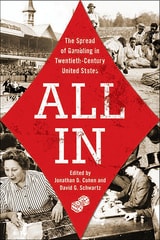
All In
The Spread of Gambling in Twentieth-Century United StatesJonathan D Cohen
University of Nevada Press, 2018
A fresh take on the history of modern American gambling, All In provides a closer look at the shifting economic, cultural, religious, and political conditions that facilitated gambling’s expansion and prominence in American consumerism and popular culture. In its pages, a diverse range of essays covering commercial and Native American casinos, sports betting, lotteries, bingo, and more piece together a picture of how gambling became so widespread over the course of the twentieth century.
Drawing from a range of academic disciplines, this collection explores five aspects of American gambling history: crime, advertising, politics, religion, and identity.
In doing so, All In illuminates the on-the-ground debates over gambling’s expansion, the failed attempts to thwart legalized betting, and the consequences of its present ubiquity in the United States.
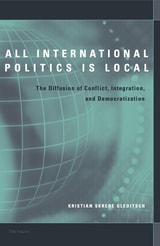
All International Politics Is Local
The Diffusion of Conflict, Integration, and DemocratizationKristian Skrede Gleditsch
University of Michigan Press, 2002
How does regional interdependence influence the prospects for conflict, integration, and democratization? Some researchers look at the international system at large and disregard the enormous regional variations. Others take the concept of sovereignty literally and treat each nation-state as fully independent. Kristian Skrede Gleditsch looks at disparate zones in the international system to see how conflict, integration, and democracy have clustered over time and space. He argues that the most interesting aspects of international politics are regional rather than fully global or exclusively national. Differences in the local context of interaction influence states' international behavior as well as their domestic attributes.
In All International Politics Is Local, Gleditsch clarifies that isolating the domestic processes within countries cannot account for the observed variation in distribution of political democracy over time and space, and that the likelihood of transitions is strongly related to changes in neighboring countries and the prior history of the regional context. Finally, he demonstrates how spatial and statistical techniques can be used to address regional interdependence among actors and its implications.
Kristian Skrede Gleditsch is Assistant Professor of Political Science at the University of California, San Diego.
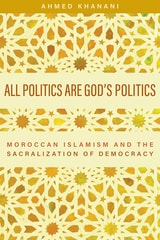
All Politics Are God’s Politics
Moroccan Islamism and the Sacralization of DemocracyAhmed Khanani
Rutgers University Press, 2021

All in the Family
On Community and IncommensurabilityKennan Ferguson
Duke University Press, 2012
By closely observing the attachments that arise in families despite profound disagreements and incommensurabilities, Ferguson argues, we can imagine a political engagement that accommodates radical differences without sacrificing community. After examining how the concept of the family has been deployed and misused in political philosophy, Ferguson turns to the ways in which families actually operate: the macropolitical significance of family coping strategies such as silence and the impact that disability and caregiving have on conceptions of spatiality, sameness, and disparity. He also considers the emotional attachment between humans and their pets as an acknowledgment that compassion and community can exist even under conditions of profound difference.
Aloha Betrayed
Native Hawaiian Resistance to American ColonialismNoenoe K. Silva
Duke University Press, 2004
Alt-Labor and the New Politics of Workers' Rights
Daniel J. Galvin
Russell Sage Foundation, 2024
Alt-labor groups have long offered their members services and organizing opportunities to contest their unfair treatment on the job. But many groups have grown frustrated by the limited impact of these traditional strategies and have turned to public policy to scale up their work. They have successfully led campaigns to combat wage theft, raise the minimum wage, improve working conditions, strengthen immigrants’ rights, and more. These successes present something of a puzzle: relative to their larger, wealthier, and better-connected opponents, alt-labor groups are small, poor, and weak. Their members are primarily low-wage immigrant workers and workers of color who are often socially, economically, and politically marginalized. With few exceptions, the groups lack large dues-paying memberships and are dependent on philanthropic foundations and other unpredictable sources of funding. How, given their myriad challenges, have alt-labor groups managed to make gains for their members?
Galvin reveals that alt-labor groups are leveraging their deep roots in local communities, their unique position in the labor movement, and the flexibility of their organizational forms to build their collective power and extend their reach. A growing number of groups have also become more politically engaged and have set out to alter their political environments by cultivating more engaged citizens, influencing candidate selection processes, and expanding government capacities. These efforts seek to enhance alt-labor groups’ probabilities of success in the near term while incrementally shifting the balance of power over the long term.
Alt-Labor and the New Politics of Workers’ Rights comprehensively details alt-labor’s turn to policy and politics, provides compelling insights into the dilemmas the groups now face, and illuminates how their efforts have both invigorated and complicated the American labor movement.
Alt-Right
From 4Chan to the White HouseMike Wendling
Pluto Press, 2018
Journalist Mike Wendling knows. He’s been following the Alt-Right closely for years, and with this book he shares the deep knowledge he’s gleaned. Media accounts to the contrary, the Alt-Right didn’t just burst out of nowhere in 2016—rather, they have been building their network quietly for years, using bulletin boards and social media to spread a toxic hybrid of technological utopianism, reactionary philosophy, and racial hatred. Wendling traces clearly the rise of the movement and the evolution of its ideas, and he introduces us to some of its key figures—many of whom he interviewed personally for the book. He explores links between Alt-Right rhetoric and hate crimes and terrorism, showing that the evidence connecting them is undeniable. Ultimately, however, he builds a strong case that the movement’s lack of a coherent base and its contradictory tendencies are already sapping its strength and will lead to its downfall.
A shocking exposé of a movement whose emergence stunned the world, Alt-Right presents a disturbing picture of our current political moment.
Altering Party Systems
Strategic Behavior and the Emergence of New Political Parties in Western DemocraciesSimon Hug
University of Michigan Press, 2001
Altering States
Ethnographies of Transition in Eastern Europe and the Former Soviet UnionDaphne Berdahl, Matti Bunzl, and Martha Lampland, Editors
University of Michigan Press, 2000

Alterity Politics
Ethics and Performative SubjectivityJeffrey T. Nealon
Duke University Press, 1998
While discussing the work of others who have refused to thematize difference in terms of the possibility or impossibility of sameness—Levinas, Butler, Derrida, Foucault, Deleuze, Guattari, Zizek, Jameson, Heidegger, Bakhtin—Nealon argues that ethics is constituted as inexorable affirmative response to different identities, not through an inability to understand or totalize the other. Alterity Politics combines this theoretical itinerary with crucial discussions of specific and diverse sites of literary and cultural production—the work of William S. Burroughs, Amiri Baraka, Andy Warhol, Ishmael Reed, Rush Limbaugh, and Vincent Van Gogh—along with analyses of the social formation of subjects as found in identity politics, and in multicultural and whiteness studies. In the process, Nealon takes on a wide variety of issues including white male anger, the ethical questions raised by drug addiction, the nature of literary meaning, and the concept of “becoming-black.”
In seeking to build an ethical structure around poststructuralist discourse and to revitalize the applied use of theoretical concepts to notions of performative identity, Alterity Politics marks a decisive intervention in literary theory, cultural studies, twentieth-century philosophy, and performance studies.
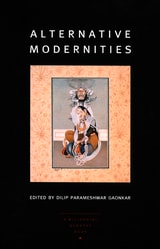
Alternative Modernities, Volume 11
Dilip Parameshwar Gaonkar, ed.
Duke University Press, 2001
The idea of “alternative modernities” holds that modernity always unfolds within specific cultures or civilizations and that different starting points of the transition to modernity lead to different outcomes. Without abandoning the Western discourse on the subject, the contributors to this volume write from the standpoint that modernity is in truth a richly mulitiplicitous concept. Believing that the language and lessons of Western modernity must be submitted to comparative study of its global receptions, they focus on such sites as China, Russia, India, Trinidad, and Mexico. Other essays treat more theoretical aspects of modernity, such as its self-understanding and the potential reconcilability of cosmopolitanism and diversity.
Contributors. Homi Bhabha, William Cunningham Bissell, Dipesh Chakrabarty, Dilip Parameshwar Gaonkar, Michael Hanchard, Beatriz Jaguaribe, Leo Ou-fan Lee, Claudio Lomnitz, Thomas McCarthy, Tejaswini Niranjana, Elizabeth A. Povinelli, Shahzia Sikander, Charles Taylor, Andrew Wachtel
Alternatives to Democracy in Twentieth-Century Europe
Collectivist Visions of ModernitySabrina P. Ramet
Central European University Press, 2019

Althusser and His Contemporaries
Philosophy's Perpetual WarWarren Montag
Duke University Press, 2013

Althusser, The Infinite Farewell
Emilio de Ipola
Duke University Press, 2018

Altruistically Inclined?
The Behavioral Sciences, Evolutionary Theory, and the Origins of ReciprocityAlexander J. Field
University of Michigan Press, 2004
Altruistically Inclined? examines the implications of recent research in the natural sciences for two important social scientific approaches to individual behavior: the economic/rational choice approach and the sociological/anthropological. It considers jointly two controversial and related ideas: the operation of group selection within early human evolutionary processes and the likelihood of modularity—domain-specific adaptations in our cognitive mechanisms and behavioral predispositions.
Experimental research shows that people will often cooperate in one-shot prisoner's dilemma (PD) games and reject positive offers in ultimatum games, contradicting commonly accepted notions of rationality. Upon first appearance, predispositions to behave in this fashion could not have been favored by natural selection operating only at the level of the individual organism.
Emphasizing universal and variable features of human culture, developing research on how the brain functions, and refinements of thinking about levels of selection in evolutionary processes, Alexander J. Field argues that humans are born with the rudiments of a PD solution module—and differentially prepared to learn norms supportive of it. His emphasis on failure to harm, as opposed to the provision of affirmative assistance, as the empirically dominant form of altruistic behavior is also novel.
The point of departure and principal point of reference is economics. But Altruistically Inclined? will interest a broad range of scholars in the social and behavioral sciences, natural scientists concerned with the implications of research and debates within their fields for the conduct of work elsewhere, and educated lay readers curious about essential features of human nature.

Always at War
British Public Narratives of WarThomas Colley
University of Michigan Press, 2019
Compelling narratives are integral to successful foreign policy, military strategy, and international relations. Yet often narrative is conceived so broadly it can be hard to identify. The formation of strategic narratives is informed by the stories governments think their people tell, rather than those they actually tell. This book examines the stories told by a broad cross-section of British society about their country’s past, present, and future role in war, using in-depth interviews with 67 diverse citizens. It brings to the fore the voices of ordinary people in ways typically absent in public opinion research.
Always at War complements a significant body of quantitative research into British attitudes to war, and presents an alternative case in a field dominated by US public opinion research. Rather than perceiving distinct periods between war and peace, British citizens see their nation as so frequently involved in conflict that they consider the country to be continuously at war. At present, public opinion appears to be a stronger constraint on Western defense policy than ever.
AmBushed
A Critique of Machtpolitik, Volume 105Dana D. Nelson
Duke University Press, 0
One essay argues that the Left has ceded its political vision—forgoing active political organization in favor of simply voicing political criticism of the president—allowing its activist sensibilities and abilities to atrophy. Others explore the Bush administration, its masterful machtpolitik (power politics), its strategic feminization of its opposition, its aggressive expansion of executive-branch powers, and its flirtation with what some have labeled American fascism or totalitarianism; still others reflect on how the Left has insulated itself from both reality and politics. A contributor from South Africa draws parallels between apartheid proponents and their tactics and President Bush. Others analyze “Bush II” as the leader of the Christian Right, as a skillful exploiter and manipulator of the mainstream media, as the chief spokesman for “evangelical capitalism,” and as the world’s most powerful lobbyist for corporate interests.
Contributors. Wendell Berry, Michael Bérubé, Timothy Brennan, Sharad Chari, Matthew A. Crenson, Ariel Dorfman, Thomas L. Dumm, Keya Ganguly, Benjamin Ginsberg, Pierre Guerlain, Stephen Hartnett, Dana D. Nelson, Chris Newfield, Melissa A. Orlie, Stanley G. M. Ridge, Larry Schehr, Nikhil Singh, Neil Smith, Laura Ann Stengrim
Amazigh Politics in the Wake of the Arab Spring
Bruce Maddy-Weitzman
University of Texas Press, 2022
On television, the Arab Spring took place in Cairo, Tunis, and the city-states of the Persian Gulf. Yet the drama of 2010, and the decade of subsequent activism, extended beyond the cities—indeed, beyond Arabs. Bruce Maddy-Weitzman brings to light the sustained post–Arab Spring political movement of North Africa’s Amazigh people.
The Amazigh movement did not begin with the Arab Spring, but it has changed significantly since then. Amazigh Politics in the Wake of the Arab Spring details the increasingly material goals of Amazigh activism, as protest has shifted from the arena of ethnocultural recognition to that of legal and socioeconomic equality. Amazigh communities responded to the struggles for freedom around them by pressing territorial and constitutional claims while rejecting official discrimination and neglect. Arab activists, steeped in postcolonial nationalism and protective of their hegemonic position, largely refused their support, yet flailing regimes were forced to respond to sharpening Amazigh demands or else jeopardize their threadbare legitimacy. Today the Amazigh question looms larger than ever, as North African governments find they can no longer ignore the movement’s interests.

Amazonia at the Crossroads
The Challenge of Sustainable DevelopmentEdited by Anthony Hall
University of London Press, 2000
The challenge at this critical juncture is how to integrate such policies and practices into mainstream development within Amazonia. Contributors: David Cleary, Rene Dreifuss, Philip Fearnside, Jessica Groenendijk, Anthony Hall, Judith Kimerling, Tom Lovejoy, Dennis Mahar, David McGrath, Emilio Moran, Darrel Posey, Nigel Smith, and Wouter Veening.

Amazons of the Huk Rebellion
Gender, Sex, and Revolution in the PhilippinesVina A. Lanzona
University of Wisconsin Press, 2009
Drawing on interviews with over one hundred veterans of the movement, Vina A. Lanzona explores the Huk rebellion from the intimate and collective experiences of its female participants, demonstrating how their presence, and the complex questions of gender, family, and sexuality they provoked, ultimately shaped the nature of the revolutionary struggle.

Ambassadors at Sea
The High and Low Adventures of a DiplomatBy Henry E. Catto, Jr.
University of Texas Press, 1998
In 1969, Henry Catto was selling insurance in San Antonio, Texas. Just twenty years later, he presented his credentials as ambassador to the Court of St. James's to Her Majesty, Queen Elizabeth II, at Buckingham Palace. In this engaging memoir, he retraces his journey from Texas outsider to Washington insider, providing a fascinating look at the glamour, day-to-day work, and even occasional danger that come with being a high-level representative of the United States government.
Catto's posts brought him into contact with the world's most powerful leaders and left him with a wealth of stories, which he recounts amusingly in these pages. He was the official host for Queen Elizabeth's visit to America during the Bicentennial year—and one of José Napoleon Duarte's protectors after his failed 1972 coup attempt in El Salvador. Catto accompanied Richard Nixon on his historic trip to Russia, sparred with Bill Moyers and the producers of "60 Minutes" as Caspar Weinberger's spokesman at the Pentagon, and hosted George Bush's planning meeting with Margaret Thatcher at the beginning of the Persian Gulf War. In telling these and other stories, he offers behind-the-scenes glimpses into how political power really works in Washington, London, and other world capitals.
Ambassadors of the Working Class
Argentina's International Labor Activists and Cold War Democracy in the AmericasErnesto Semán
Duke University Press, 2017

Ambiguities of Domination
Politics, Rhetoric, and Symbols in Contemporary SyriaLisa Wedeen
University of Chicago Press, 1999
Wedeen concludes that Asad's cult acts as a disciplinary device, generating a politics of public dissimulation in which citizens act as if they revered their leader. By inundating daily life with tired symbolism, the regime exercises a subtle, yet effective form of power. The cult works to enforce obedience, induce complicity, isolate Syrians from one another, and set guidelines for public speech and behavior. Wedeen's ethnographic research demonstrates how Syrians recognize the disciplinary aspects of the cult and seek to undermine them. Provocative and original, Ambiguities of Domination is a significant contribution to comparative politics, political theory, and cultural studies.
Ambiguities of Domination
Politics, Rhetoric, and Symbols in Contemporary SyriaLisa Wedeen
University of Chicago Press, 2015
Wedeen shows how such flagrantly fictitious claims were able to produce a politics of public dissimulation in which citizens acted as if they revered the leader. By inundating daily life with tired symbolism, the regime exercised a subtle, yet effective form of power. The cult worked to enforce obedience, induce complicity, isolate Syrians from one another, and set guidelines for public speech and behavior. Wedeen‘s ethnographic research demonstrates how Syrians recognized the disciplinary aspects of the cult and sought to undermine them. In a new preface, Wedeen discusses the uprising against the Syrian regime that began in 2011 and questions the usefulness of the concept of legitimacy in trying to analyze and understand authoritarian regimes.
Ambition, Competition, and Electoral Reform
The Politics of Congressional Elections Across TimeJamie L. Carson and Jason M. Roberts
University of Michigan Press, 2013
In Ambition, Competition, and Electoral Reform, Jamie L. Carson and Jason M. Roberts present an original study of U.S. congressional elections and electoral institutions for 1872-1944 from a contemporary political science perspective. Using data on late nineteenth and early twentieth century congressional elections, the authors test the applicability in a historical context of modern political science theories, assess the effects of institutional reforms, and identify the factors that shape the competitiveness of elections. They present several key findings: the strategic politicians theory is applicable in an era without candidate-centered campaigns; there was an incumbency advantage prior to the full development of candidate-centered campaigns; institutional reforms have had a significant effect on elections; and the degree of electoral competition frequently correlates with elected officials' responsiveness to citizens.

Amending the Past
Europe's Holocaust Commissions and the Right to HistoryAlexander Karn
University of Wisconsin Press, 2017
Alexander Karn analyzes more than a dozen Holocaust commissions—in Germany, Switzerland, France, Poland, Austria, Latvia, Lithuania, and elsewhere—in a comparative framework, situating each in the context of past and present politics, to evaluate their potential for promoting justice and their capacity for bringing the perspectives of rival groups more closely together. Karn also evaluates the media coverage these commissions received and probes their public reception from multiple angles.
Arguing that historical commissions have been underused as a tool for conflict management, Karn develops a program for historical mediation and moral reparation that can deepen democratic commitment and strengthen human rights in both transitional regimes and existing liberal states.

America Beyond Black and White
How Immigrants and Fusions Are Helping Us Overcome the Racial DivideRonald Fernandez
University of Michigan Press, 2007
“This book is both powerful and important. Powerful for the testimony it provides from Americans of many different (and even mixed races) about their experiences. And important because there is a racial revolution underway that will upend race as we know it during the twenty-first century.”
—John Kenneth White, Catholic University of America
America Beyond Black and White is a call for a new way of imagining race in America. For the first time in U.S. history, the black-white dichotomy that has historically defined race and ethnicity is being challenged, not by a small minority, but by the fastest-growing and arguably most vocal segment of the increasingly diverse American population—Mexicans, Chinese, Japanese, Koreans, Indians, Arabs, and many more—who are breaking down and recreating the very definitions of race.
Drawing on interviews with hundreds of Americans who don’t fit conventional black/white categories, the author invites us to empathize with these “doubles” and to understand why they may represent our best chance to throw off the strictures of the black/white dichotomy.
The revolution is already underway, as newcomers and mixed-race “fusions” refuse to engage in the prevailing Anglo- Protestant culture. Americans face two choices: understand why these individuals think as they do, or face a future that continues to define us by what divides us rather than by what unites us.
America Works
Thoughts on an Exceptional U.S. Labor MarketRichard B. Freeman
Russell Sage Foundation, 2007
America and the Blitz
The Shaping of US Public Opinion and Policy on Great BritainSean Dettman
University of Missouri Press, 2026
In this work, Sean Dettman traces an observable correlation over the course of late summer 1940 between the bombings of London and other UK cities and the changing attitude of the American people towards adopting a moderate pro-aid position, and argues that these processes were aided by pro-aid US journalists who deployed a positive Blitz narrative centered on themes of resilience, courage, and fortitude. This shift in US public opinion allowed the Roosevelt Administration and pro-aid pressure groups to advance conversations in Washington towards aiding Britain, even at the risk of war.
Dettman also argues that this shift in opinion was caused by fear that a Nazi victory would threaten US national security and the American way of life, rather than an interest in expanding pro-democratic structures and institutions in Britain.
Whereas the vast body of literature examining US public opinion during the ‘Great Debate’ reduces the Blitz narrative to a minor cause, America and the Blitz demonstrates how the Blitz narrative influenced domestic conversations regarding US national security and the American way of life. The author reveals that when the events and themes of the Blitz come into dialogue with conversations about US aid to Britain and national security, the traditional narrative changes.
America and the Blitz offers a new framework for understanding the ‘Great Debate,’ revealing the relationship between US journalists’ Blitz narrative and its effect on US public opinion towards aiding Britain and the ascendancy of American global power.
America and the Political Philosophy of Common Sense
Scott Philip Segrest
University of Missouri Press, 2009
America at Risk
Threats to Liberal Self-Government in an Age of UncertaintyRobert Faulkner and Susan Shell, Editors
University of Michigan Press, 2009
America at Risk gathers original essays by a distinguished and bipartisan group of writers and intellectuals to address a question that matters to Americans of every political persuasion: what are some of the greatest dangers facing America today? The answers, which range from dwindling political participation to rising poverty, and religion to empire, add up to a valuable and timely portrait of a particular moment in the history of American ideas.
While the opinions are many, there is a central theme in the book: the corrosion of the liberal constitutional order that has long guided the country at home and abroad. The authors write about the demonstrably important dangers the United States faces while also breaking the usual academic boundaries: there are chapters on the family, religious polarization, immigration, and the economy, as well as on governmental and partisan issues.
America at Risk is required reading for all Americans alarmed about the future of their country.
Contributors
- Traci Burch
- James W. Ceaser
- Robert Faulkner
- Niall Ferguson
- William A. Galston
- Hugh Heclo
- Pierre Manent
- Harvey C. Mansfield
- Peter Rodriguez
- Kay Lehman Schlozman
- Susan Shell
- Peter Skerry
- James Q. Wilson
- Alan Wolfe
Robert Faulkner is Professor of Political Science at Boston College. Susan Shell is Professor of Political Science at Boston College.
"America at Risk goes well beyond the usual diagnoses of issues debated in public life like immigration, war, and debt, to consider the Republic’s founding principles, and the ways in which they have been displaced by newer thoughts and habits in contemporary America. A critical book for understanding our present condition."
—Francis Fukuyama, Bernard L. Schwartz Professor of International Political Economy, Johns Hopkins School of Advanced International Studies
"In this penetrating book, the nation’s finest social and political thinkers from across the spectrum take a careful and no-holds-barred look at the dangers facing the American political system. The conclusions are more unsettling than reassuring---but that is because they are honest and real."
—Norm Ornstein, Resident Scholar, American Enterprise Institute
"In the midst of overwrought pundits, irate soccer moms, and outraged bloggers, it is difficult to distinguish genuine dangers from false alarms and special pleading. This book enables us to do so, in a way that helps us to actually think about, not just feel anxious about, threats to those features of American society that are worth cherishing. The authors range in ideology and expertise, but they are uniformly judicious, incisive, and informative. This is a fascinating book about issues that the political system usually ignores or exaggerates."
—Jennifer L. Hochschild, Henry LaBarre Jayne Professor of Government and Professor of African and African American Studies, Harvard University
America's Americans
Population Issues in U.S. Society and PoliticsEdited by Philip D. Davies
University of London Press, 2007
Topics include:
Latino immigrant incorporation
- racial and ethnic integration in metropolitan contexts
- population self-determination, and Native Americans
- public policy issues relating to immigration
- growth of the U.S. prison population
- changing nature of poverty in the United States
- politics of demographic and social change at national and local levels
- historical change in the labor force participation of women
America's Children
Resources from Family, Government, and the EconomyDonald J. Hernandez
Russell Sage Foundation, 1993

America's Demographic Tapestry
Baseline for the New MillenniumEdited by James W. Hughes and Joseph J. Seneca
Rutgers University Press, 1999
Beneath the surface of public-policy concerns that seem temporary are powerful evolutionary forces with long-term effects. One of the most important of these is the profound demographic change taking place in America-change which has extraordinary social and economic consequences, and far-reaching public-policy implications for the future of the nation.
James W. Hughes and Joseph J. Seneca have assembled experts on demography, immigration, policy, and family life to explain and document both changes and prospects for changes. Contributors profile the contours of demographic change in America and identify select public-policy challenges arising from this change. They cover a wide range of demographic shifts-"baby booms" and "baby busts," rising immigration, increasing ethnic and racial diversity, the proliferation of different household configurations, economic upward mobility that stems from the information-age rather than the industrial economy, and suburban and sunbelt gains.

America's Founding Fruit
The Cranberry in a New EnvironmentSusan Playfair
University Press of New England, 2014
America's Inequality Trap
Nathan J. Kelly
University of Chicago Press, 2019
Nathan J. Kelly argues that a key reason for this is that rising concentrations of wealth create a politics that makes reducing economic inequality more difficult. Kelly convincingly shows that, when a small fraction of the people control most of the economic resources, they also hold a disproportionate amount of political power, hurtling us toward a self-perpetuating plutocracy, or an “inequality trap.” Among other things, the rich support a broad political campaign that convinces voters that policies to reduce inequality are unwise and not in the average voter’s interest, regardless of the real economic impact. They also take advantage of interest groups they generously support to influence Congress and the president, as well as state governments, in ways that stop or slow down reform. One of the key implications of this book is that social policies designed to combat inequality should work hand-in-hand with political reforms that enhance democratic governance and efforts to fight racism, and a coordinated effort on all of these fronts will be needed to reverse the decades-long trend.
America's Miracle Man in Vietnam
Ngo Dinh Diem, Religion, Race, and U.S. Intervention in Southeast AsiaSeth Jacobs
Duke University Press, 2004
A diplomatic and cultural history, America’s Miracle Man in Vietnam draws on government archives, presidential libraries, private papers, novels, newspapers, magazines, movies, and television and radio broadcasts. Jacobs shows in detail how, in the 1950s, U.S. policymakers conceived of Cold War anticommunism as a crusade in which Americans needed to combine with fellow Judeo-Christians against an adversary dangerous as much for its atheism as for its military might. He describes how racist assumptions that Asians were culturally unready for democratic self-government predisposed Americans to excuse Diem’s dictatorship as necessary in “the Orient.” By focusing attention on the role of American religious and racial ideologies, Jacobs makes a crucial contribution to our understanding of the disastrous commitment of the United States to “sink or swim with Ngo Dinh Diem.”
America, Compromised
Lawrence Lessig
University of Chicago Press, 2018
So begins Lawrence Lessig's sweeping indictment of contemporary American institutions and the corruption that besets them. We can all see it—from the selling of Congress to special interests to the corporate capture of the academy. Something is wrong. It’s getting worse.
And it’s our fault. What Lessig shows, brilliantly and persuasively, is that we can’t blame the problems of contemporary American life on bad people, as our discourse all too often tends to do. Rather, he explains, “We have allowed core institutions of America’s economic, social, and political life to become corrupted. Not by evil souls, but by good souls. Not through crime, but through compromise.” Every one of us, every day, making the modest compromises that seem necessary to keep moving along, is contributing to the rot at the core of American civic life. Through case studies of Congress, finance, the academy, the media, and the law, Lessig shows how institutions are drawn away from higher purposes and toward money, power, quick rewards—the first steps to corruption.
Lessig knows that a charge so broad should not be levied lightly, and that our instinct will be to resist it. So he brings copious, damning detail gleaned from years of research, building a case that is all but incontrovertible: America is on the wrong path. If we don’t acknowledge our own part in that, and act now to change it, we will hand our children a less perfect union than we were given. It will be a long struggle. This book represents the first steps.
American Arms Supermarket
By Michael T. Klare
University of Texas Press, 1985
U.S. arms sales to Third World countries rapidly escalated from $250 million per year in the 1950s and 1960s to $10 billion and above in the 1970s and 1980s. But were these military sales, so critical in their impact on Third World nations and on America’s perception of its global role, achieving the ends and benefits attributed to them by U.S. policymakers? In American Arms Supermarket, Michael T. Klare responds to this troubling, still-timely question with a resounding no, showing how a steady growth in arms sales places global security and stability in jeopardy.
Tracing U.S. policies, practices, and experiences in military sales to the Third World from the 1950s to the 1980s, Klare explains how the formation of U.S. foreign policy did not keep pace with its escalating arms sales—how, instead, U.S. arms exports proved to be an unreliable instrument of policy, often producing results that diminished rather than enhanced fundamental American interests. Klare carefully considers the whole spectrum of contemporary American arms policy, focusing on the political economy of military sales, the evolution of U.S. arms export policy from John F. Kennedy to Ronald Reagan, and the institutional framework for arms export decision making. Actual case studies of U.S. arms sales to Latin America, Iran, and the Middle East provide useful data in assessing the effectiveness of arms transfer programs in meeting U.S. foreign policy objectives.
The author also rigorously examines trouble spots in arms policy: the transfer of arms-making technology to Third World arms producers, the relationship between arms transfers and human rights, and the enforcement of arms embargoes on South Africa, Chile, and other “pariah” regimes. Klare also compares the U.S. record on arms transfers to the experiences of other major arms suppliers: the Soviet Union and the “big four” European nations—France, Britain, the former West Germany, and Italy. Concluding with a reasoned, carefully drawn proposal for an alternative arms export policy, Klare vividly demonstrates the need for cautious, restrained, and sensitive policy.
American Atrocity
The Types of Violence in LynchingGuy Lancaster
University of Arkansas Press, 2021
Lynching is often viewed as a narrow form of violence: either the spontaneous act of an angry mob against accused individuals, or a demonstration of white supremacy against an entire population considered subhuman. However, in this new treatise, historian Guy Lancaster exposes the multiple forms of violence hidden beneath the singular label of lynching.
Lancaster, who has written extensively on racial violence, details several lynchings of Blacks by white posses in post-Reconstruction Arkansas. Drawing from the fields of history, philosophy, cognitive science, sociology, and literary theory, and quoting chilling contemporary accounts, he argues that the act of lynching encompasses five distinct but overlapping types of violence. This new framework reveals lynching to be even more of an atrocity than previously understood: that mobs did not disregard the humanity of their victims but rather reveled in it; that they were not simply enacting personal vengeance but manifesting an elite project of subjugation. Lancaster thus clarifies and connects the motives and goals of seemingly isolated lynch mobs, embedding the practice in the ongoing enforcement of white supremacy. By interrogating the substance of lynching, American Atrocity shines new light on both past anti-Black violence and the historical underpinnings of our present moment.

American Bloodlands
Race and the Making of the Plasma EconomyKelsey Johnson
Duke University Press, 2027
American Business and Political Power
Public Opinion, Elections, and DemocracyMark A. Smith
University of Chicago Press, 2000
Rather than succumbing to corporate America, Smith argues, representatives paradoxically become more responsive to their constituents when facing a united corporate front. Corporations gain the most influence over legislation when they work with organizations such as think tanks to shape Americans' beliefs about what government should and should not do.
American Catastrophe
Fundamentalism, Climate Change, Gun Rights, and the Rhetoric of Donald J. TrumpLuke Winslow
The Ohio State University Press, 2020
Luke Winslow introduces the rhetorical homology as a critical tool useful for understanding how catastrophic appeals unite Americans across disparate religious, ecological, cultural, and political spheres. More specifically, the four case study chapters examining Christian fundamentalism, anti-environmentalism, gun rights messaging, and the administration of Donald Trump reveal a consistent formal pattern oriented toward catastrophe. In teasing out this orientation toward catastrophe, Winslow offers a fresh, provocative, and insightful contribution to our most pressing social challenges.

American City
A Rank and File History of MinneapolisCharles Rumford Walker
University of Minnesota Press, 2005
American Civilization
Charles A. Jones
University of London Press, 2007