Results by title
1563 books match the query 'African American & Black Studies' and 221 start with b
B Jenkins
Fred Moten
Duke University Press, 2010
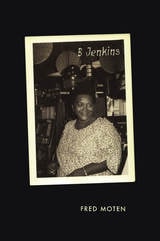
The first and last poems in the collection are explicitly devoted to Moten’s mother; the others relate more obliquely to her life and legacy. They invoke performers, writers, artists, and thinkers including not only James Baldwin, Roland Barthes, Frederick Douglass, Billie Holiday, Audre Lorde, Charlie Parker, and Cecil Taylor, but also contemporary scholars of race, affect, and queer theory. The book concludes with an interview conducted by Charles Henry Rowell, the editor of the journal Callaloo. Rowell elicits Moten’s thoughts on the relation of his poetry to theory, music, and African American vernacular culture.
Babylon Girls
Black Women Performers and the Shaping of the ModernJayna Brown
Duke University Press, 2008
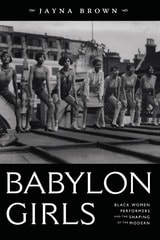
Investigating both well-known performers such as Ada Overton Walker and Josephine Baker and lesser-known artists such as Belle Davis and Valaida Snow, Brown weaves the histories of specific singers and dancers together with incisive theoretical insights. She describes the strange phenomenon of blackface performances by women, both black and white, and she considers how black expressive artists navigated racial segregation. Fronting the “picaninny choruses” of African American child performers who toured Britain and the Continent in the early 1900s, and singing and dancing in The Creole Show (1890), Darktown Follies (1913), and Shuffle Along (1921), black women variety-show performers of the early twentieth century paved the way for later generations of African American performers. Brown shows not only how these artists influenced transnational ideas of the modern woman but also how their artistry was an essential element in the development of jazz.
Babylost
Racism, Survival, and the Quiet Politics of Infant Mortality, from A to ZMonica J. Casper
Rutgers University Press, 2021
Backstory in Blue
Ellington at Newport '56John Fass Morton
Rutgers University Press, 2008
Certificate of Merit for the 2009 Association for Recorded Sound Collections Award for Excellence in Historical Recorded Sound Research
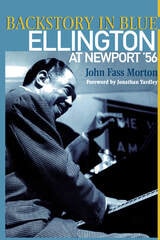
It may be that the song most baby boomers identify from July 1956 is a simple twelve-bar blues, hyped on national television by a twenty-one-year-old Elvis Presley and his handlers. But it is a very different song, with its elongated fourteen-bar choruses of rhythm and dissonance, played on the night of July 7, 1956, by a fifty-seven-year-old Duke Ellington and his big band that got everybody on their feet and moving as one. More than fifty years later, “Diminuendo and Crescendo in Blue,” recorded at the 1956 Newport Jazz Festival, still makes a profound statement about postwar America—how we got there and where it all went.
Backstory in Blue is a behind-the-scenes look at this epic moment in American cultural history. It is the story of who and what made Ellington’s composition so compelling and how one piece of music reflected the feelings and shaped the sensibilities of the postwar generation. As John Fass Morton explains, it was music expressed as much by those who performed offstage as by those who performed on.
Written from the point of view of the audience, this unique account draws on interviews with fans and music professionals of all kinds who were there and whose lives were touched, and in some cases changed, by the experience. Included are profiles of George Avakian, who recorded and produced Ellington at Newport 1956; Paul Gonsalves, the tenor sax player responsible for the legendary twenty-seven choruses that enabled the rebirth of Ellington’s career; and the “Bedford Blonde,” Elaine Anderson, whose dance ignited both the band and the crowd.
Duke Ellington once remarked, “I was born at Newport.” Here we learn that Newport was much more than the turning point for Ellington’s career. It was the tipping point for a generation and a musical genre.

Backtalk
Women Writers Speak OutDonna Perry
Rutgers University Press, 1993
Agents or victims, liberated or oppressed, "bad girls" or "good girls." What do these labels mean and do they further or hinder women's progress? How are today's visions of female sexuality and power like or unlike those of the past? How do younger women define feminism? Isn't the personal still political?
Dismayed by the media's tendency to reduce the feminist enterprise to labels and superstars, Donna Perry and Nan Bauer Maglin decided to find out what a diverse group of feminists think about women, sex, and power in the nineties. The result is a provocative and varied collection of twenty-four essays by second- and third-wave feminists; artists and activists; professors and graduate students; professional journalists and just-published writers; mothers and daughters. By focusing on society's construction, containment, and exploitation of female sexuality, in particular, these essays offer fresh perspectives on women's agency or lack of it.
The contributors focus on the oversimplifications and false dichotomies in current discussions of female sexuality, as well as the privileged perspective and individualism that currently dominate the popularized feminist message. Individual writers--including Emma Amos, bell hooks, Ann Jones, Lisa Jones, Paula Kamen, Matuschka, Marge Piercy, Katha Pollitt, Anna Quindlen, Elayne Rapping, Lillian S. Robinson, and Ellen Willis--reexamine women's empowerment in the light of issues like AIDS, battering, acquaintance rape, narratives of childhood sexual abuse, and pornography. Several draw political conclusions from their personal struggles, while others read stories and texts--from history, the art world, the media, popular culture, and social science research--in new and controversial ways.
Bad Boys
Public Schools in the Making of Black MasculinityAnn Arnett Ferguson
University of Michigan Press, 2020
Baltimore '68
Riots and Rebirth in an American CityEdited by Jessica I. Elfenbein, Thomas L. Hollowak and Elizabeth M. Nix
Temple University Press, 2011
In 1968, Baltimore was home to a variety of ethnic, religious, and racial communities that, like those in other American cities, were confronting a quickly declining industrial base. In April of that year, disturbances broke the urban landscape along lines of race and class.
This book offers chapters on events leading up to the turmoil, the riots, and the aftermath as well as four rigorously edited and annotated oral histories of members of the Baltimore community. The combination of new scholarship and first-person accounts provides a comprehensive case study of this period of civil unrest four decades later.
This engaging, broad-based public history lays bare the diverse experiences of 1968 and their effects, emphasizing the role of specific human actions. By reflecting on the stories and analysis presented in this anthology, readers may feel empowered to pursue informed, responsible civic action of their own.
Baltimore '68 is the book component of a larger public history project, "Baltimore '68 Riots: Riots and Rebirth." The project's companion website (http://archives.ubalt.edu/bsr/index.html ) offers many more oral histories plus photos, art, and links to archival sources. The book and the website together make up an invaluable teaching resource on cities, social unrest, and racial politics in the 1960s. The project was the corecipient of the 2009 Outstanding Public History Project Award from the National Council on Public History.
Baltimore Revisited
Stories of Inequality and Resistance in a U.S. CityEdited by P. Nicole King, Kate Drabinski, and Joshua Clark Davis
Rutgers University Press, 2019
To help untangle these apparent paradoxes, the editors of Baltimore Revisited have assembled a collection of over thirty experts from inside and outside academia. Together, they reveal that Baltimore has been ground zero for a slew of neoliberal policies, a place where inequality has increased as corporate interests have eagerly privatized public goods and services to maximize profits. But they also uncover how community members resist and reveal a long tradition of Baltimoreans who have fought for social justice.
The essays in this collection take readers on a tour through the city’s diverse neighborhoods, from the Lumbee Indian community in East Baltimore to the crusade for environmental justice in South Baltimore. Baltimore Revisited examines the city’s past, reflects upon the city’s present, and envisions the city’s future.
Baltimore's Black Arts Then & Now
Behind the Scenes of a Collaborative Public Humanities ProjectMary Rizzo
University of Iowa Press, 2026
Since 2017, a group of former Chicory editors, scholars, librarians, poets, teachers, and young writers have collaborated to use Chicory as a catalyst for intergenerational dialogue on social justice, race, and place. Baltimore’s Black Arts Then & Now documents this joint effort, offering valuable insights for public historians, educators, and humanists.
Bankers and Empire
How Wall Street Colonized the CaribbeanPeter James Hudson
University of Chicago Press, 2017
Barack Obama and African Diasporas
Dialogues and DissensionsPaul Tiyambe Zeleza
Ohio University Press, 2009
In the title essay, Zeleza analyzes the significance of the election of a member of the African diaspora to the presidency of the United States. He also addresses Africa’s urgent political concerns: China’s role in Africa, South Africa's difficulties in making the transition to a postapartheid society, the agony of Zimbabwe, and a discussion of Pan-Africanism, its history and contemporary challenges. Other posts introduce the reader to the rhythms of daily life, including football and other leisure activities, in capturing the different aspects of Africa.
An original and respected voice, Zeleza engages the reader in a series of passionate public conversations on issues and events of utmost importance to the globalized world. He deserves a wide readership.
Barnstorming to Heaven
Syd Pollock and His Great Black TeamsAlan J. Pollock
University of Alabama Press, 2006
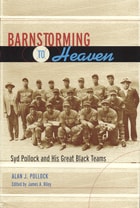
The Indianapolis Clowns were a black touring baseball team that featured an entertaining mix of comedy, showmanship, and skill. Sometimes referred to as the Harlem Globetrotters of baseball—though many of the Globetrotters’ routines were borrowed directly from the Clowns—they captured the affection of Americans of all ethnicities and classes. Author Alan Pollock was the son of the Clowns' owner Syd Pollock, who owned a series of black barnstorming teams that crisscrossed the country from the late 1920s until the mid-1960s. They played every venue imaginable, from little league fields to Yankee Stadium, and toured the South, the Northeast, the Midwest, the Canadian Rockies, the Dakotas, the Southwest, the Far West—anywhere there was a crowd willing to shell out a few dollars for an unforgettable evening.
Alan grew up around the team and describes in vivid detail the comedy routines of Richard “King Tut” King, “Spec Bebob” Bell, Reece “Goose” Tatum; the “warpaint” and outlandish costumes worn by players in the early days; and the crowd-pleasing displays of amazing skill known as pepperball and shadowball. These men were entertainers, but they were also among the most gifted athletes of their day, making a living in sports the only way a black man could. They played to win.
More than just a baseball story, these recollections tell the story of great societal changes in America from the roaring twenties, through the years of the Great Depression and World War II, and into the Civil Rights era.
Bayard Rustin and the Civil Rights Movement
Levine, Daniel
Rutgers University Press, 1999
Rustin's long activist career began with his association with A. Phillip Randolph of the Brotherhood of Sleeping Car Porters. Then, as a member of A. J. Muste's Fellowship of Reconciliation, he participated in the "Journey of Reconciliation" (an early version of the "Freedom Rides" of 1961). He was a close associate of Martin Luther King in Montgomery and Atlanta and rose to prominence as organizer of the 1963 March on Washington. Rustin played a key role in applying nonviolent direct action to American race relations while rejecting the separatism of movements like Black Power in the 1960s, even at the risk of his being marginalized by the younger generation of civil rights activists. In his later years he tried to hold the civil rights coalition together and to fight for the economic changes he thought were necessary to decrease racism.
Daniel Levine has written the first scholarly biography that examines Rustin's public as well as private persona in light of his struggles as a gay black man and as an activist who followed his own principles and convictions. The result is a rich portrait of a complex, indomitable advocate for justice in American society.
Bearing Witness
Memories of Arkansas SlaveryGeorge E. Lankford
University of Arkansas Press, 2006
Beautiful Bottom, Beautiful Shame
Where "Black" Meets "Queer"Kathryn Bond Stockton
Duke University Press, 2006
Stockton engages the domains of African American studies, queer theory, psychoanalysis, film theory, photography, semiotics, and gender studies. She brings together thinkers rarely, if ever, read together in a single study—James Baldwin, Radclyffe Hall, Jean Genet, Toni Morrison, Robert Mapplethorpe, Eldridge Cleaver, Todd Haynes, Norman Mailer, Leslie Feinberg, David Fincher, and Quentin Tarantino—and reads them with and against major theorists, including Georges Bataille, Sigmund Freud, Eve Kosofsky Sedgwick, Jacques Lacan, Roland Barthes, and Leo Bersani. Stockton asserts that there is no clear, mirrored relation between the terms “black” and “queer”; rather, seemingly definitive associations attached to each are often taken up or crossed through by the other. Stockton explores dramatic switchpoints between these terms: the stigmatized “skin” of some queers’ clothes, the description of blacks as an “economic bottom,” the visual force of interracial homosexual rape, the complicated logic of so-called same-sex miscegenation, and the ways in which a famous depiction of slavery (namely, Morrison’s Beloved) seems bound up with depictions of AIDS. All of the thinkers Stockton considers scrutinize the social nature of shame as they examine the structures that make debasements possible, bearable, pleasurable, and creative, even in their darkness.
Beauty Shop Politics
African American Women's Activism in the Beauty IndustryTiffany M. Gill
University of Illinois Press, 2010
Looking through the lens of black business history, Beauty Shop Politics shows how black beauticians in the Jim Crow era parlayed their economic independence and access to a public community space into platforms for activism. Tiffany M. Gill argues that the beauty industry played a crucial role in the creation of the modern black female identity and that the seemingly frivolous space of a beauty salon actually has stimulated social, political, and economic change.
From the founding of the National Negro Business League in 1900 and onward, African Americans have embraced the entrepreneurial spirit by starting their own businesses, but black women's forays into the business world were overshadowed by those of black men. With a broad scope that encompasses the role of gossip in salons, ethnic beauty products, and the social meanings of African American hair textures, Gill shows how African American beauty entrepreneurs built and sustained a vibrant culture of activism in beauty salons and schools. Enhanced by lucid portrayals of black beauticians and drawing on archival research and oral histories, Beauty Shop Politics conveys the everyday operations and rich culture of black beauty salons as well as their role in building community.
Becoming Belafonte
Black Artist, Public RadicalBy Judith E. Smith
University of Texas Press, 2014
A son of poor Jamaican immigrants who grew up in Depression-era Harlem, Harry Belafonte became the first black performer to gain artistic control over the representation of African Americans in commercial television and film. Forging connections with an astonishing array of consequential players on the American scene in the decades following World War II—from Paul Robeson to Ed Sullivan, John Kennedy to Stokely Carmichael—Belafonte established his place in American culture as a hugely popular singer, matinee idol, internationalist, and champion of civil rights, black pride, and black power.
In Becoming Belafonte, Judith E. Smith presents the first full-length interpretive study of this multitalented artist. She sets Belafonte’s compelling story within a history of American race relations, black theater and film history, McCarthy-era hysteria, and the challenges of introducing multifaceted black culture in a moment of expanding media possibilities and constrained political expression. Smith traces Belafonte’s roots in the radical politics of the 1940s, his careful negotiation of the complex challenges of the Cold War 1950s, and his full flowering as a civil rights advocate and internationally acclaimed performer in the 1960s. In Smith’s account, Belafonte emerges as a relentless activist, a questing intellectual, and a tireless organizer. From his first national successes as a singer of Calypso-inflected songs to the dedication he brought to producing challenging material on television and film regardless of its commercial potential, Belafonte stands as a singular figure in American cultural history—a performer who never shied away from the dangerous crossroads where art and politics meet.
Becoming Black
Creating Identity in the African DiasporaMichelle M. Wright
Duke University Press, 2004
Wright argues that three nineteenth-century American and European works addressing race—Thomas Jefferson’s Notes on the State of Virginia, G. W. F. Hegel’s Philosophy of History, and Count Arthur de Gobineau’s Essay on the Inequality of the Human Races—were particularly influential in shaping twentieth-century ideas about Black subjectivity. She considers these treatises in depth and describes how the revolutionary Black thinkers W. E. B. Du Bois, Aimé Césaire, Léopold Sédar Senghor, and Frantz Fanon countered the theories they promulgated. She explains that while Du Bois, Césaire, Senghor, and Fanon rejected the racist ideologies of Jefferson, Hegel, and Gobineau, for the most part they did so within what remained a nationalist, patriarchal framework. Such persistent nationalist and sexist ideologies were later subverted, Wright shows, in the work of Black women writers including Carolyn Rodgers and Audre Lorde and, more recently, the British novelists Joan Riley, Naomi King, Jo Hodges, and Andrea Levy. By considering diasporic writing ranging from Du Bois to Lorde to the contemporary African novelists Simon Njami and Daniel Biyaoula, Wright reveals Black subjectivity as rich, varied, and always evolving.
Becoming Trustworthy White Allies
Melanie S. Morrison
Duke University Press, 2025
Before Brown
Civil Rights and White Backlash in the Modern SouthGlenn Feldman
University of Alabama Press, 2004
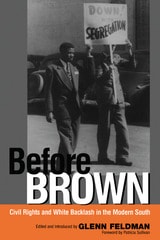
Details the ferment in civil rights that took place across the South before the momentous Brown vs. Board of Education decision in 1954
This collection refutes the notion that the movement began with the Supreme Court decision, and suggests, rather, that the movement originated in the 1930s and earlier, spurred by the Great Depression and, later, World War II—events that would radically shape the course of politics in the South and the nation into the next century.
This work explores the growth of the movement through its various manifestations—the activities of politicians, civil rights leaders, religious figures, labor unionists, and grass-roots activists—throughout the 1940s and 1950s. It discusses the critical leadership roles played by women and offers a new perspective on the relationship between the NAACP and the Communist Party.
Before Brown shows clearly that, as the drive toward racial equality advanced and national political attitudes shifted, the validity of white supremacy came increasingly into question. Institutionalized racism in the South had always offered white citizens material advantages by preserving their economic superiority and making them feel part of a privileged class. When these rewards were threatened by the civil rights movement, a white backlash occurred.
Before Brown
Heman Marion Sweatt, Thurgood Marshall, and the Long Road to JusticeBy Gary M. Lavergne
University of Texas Press, 2010
Winner, Coral Horton Tullis Memorial Prize for Best Book on Texas History, Texas State Historical Association, 2010
Carr P. Collins Award, Texas Institute of Letters, 2011
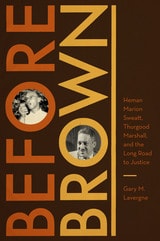
On February 26, 1946, an African American from Houston applied for admission to the University of Texas School of Law. Although he met all of the school's academic qualifications, Heman Marion Sweatt was denied admission because he was black. He challenged the university's decision in court, and the resulting case, Sweatt v. Painter, went to the U.S. Supreme Court, which ruled in Sweatt's favor. The Sweatt case paved the way for the landmark Brown v. Board of Education of Topeka rulings that finally opened the doors to higher education for all African Americans and desegregated public education in the United States.
In this engrossing, well-researched book, Gary M. Lavergne tells the fascinating story of Heman Sweatt's struggle for justice and how it became a milestone for the civil rights movement. He reveals that Sweatt was a central player in a master plan conceived by the National Association for the Advancement of Colored People (NAACP) for ending racial segregation in the United States. Lavergne masterfully describes how the NAACP used the Sweatt case to practically invalidate the "separate but equal" doctrine that had undergirded segregated education for decades. He also shows how the Sweatt case advanced the career of Thurgood Marshall, whose advocacy of Sweatt taught him valuable lessons that he used to win the Brown v. Board of Education case in 1954 and ultimately led to his becoming the first black Associate Justice of the Supreme Court.
Behind the Mask of the Strong Black Woman
Voice and the Embodiment of a Costly PerformanceTamara Beauboeuf-Lafontant
Temple University Press, 2009
The author, a noted sociologist, interviews 58 Black women about being strong and proud, to illustrate their “performance” of invulnerability. Beauboeuf-Lafontant explains how such behavior leads to serious symptoms for these women, many of whom suffer from eating disorders and depression.
Drawing on Black feminist scholarship, cultural studies, and women’s history, Behind the Mask of the Strong Black Woman traces the historical and social influences of normative Black femininity, looking at how notions of self-image and strength create a distraction from broader forces of discrimination and power.

Believing in South Central
Everyday Islam in the City of AngelsPamela J. Prickett
University of Chicago Press, 2021
Prickett offers deep insights into the day-to-day lived religion of the Muslims who call this community home, showing how the mosque provides a system of social support and how believers deepen their spiritual practice not in spite of, but through, conditions of poverty. Prickett breaks past the stigmas of urban poverty, revealing a complex and vibrant community by telling the stories of longstanding residents of South Central—like Sister Ava, who offers food to the local unhoused people and finds the sacred in her extensive DVD collection. In addition to her portraits of everyday life among Muslims in South Central, Prickett also provides vivid and accessible descriptions of Ramadan and histories of the mosque, situates this community within the larger story of the Nation of Islam, explores gender issues, and unpacks the interaction between African American Muslims and South Asian and Arab American Muslims, revealing both the global and local significance of this religious tradition.
Benching Jim Crow
The Rise and Fall of the Color Line in Southern College Sports, 1890-1980Charles H. Martin
University of Illinois Press, 2010
Bending Toward Justice
The Voting Rights Act and the Transformation of American DemocracyGary May
Duke University Press, 2015

Beneath the Skin of Sorrow
Improvisations on LossNnenna Freelon
Duke University Press, 2025
Part love story, part homage to jazz, and part guide to creative practice within bereavement, Beneath the Skin of Sorrow follows Freelon’s difficult and personal journey to healing. Calling on the improvisational skills that she had built over her forty-year career as a jazz singer, Freelon crafted her new reality by improvising—thinking about grieving as a series of small, daily engagements with the world around her. Slowly, Freelon regained the pieces of her musical sensibility, realizing that flowing between words spoken and words sung allowed her to understand what could not be fully realized in either realm.
By improvising a new life, Freelon forged a new companionship between grief, art, and daily life. In the essays, poems, lyrics, and explorations of jazz standards that comprise this lyrical and elegiac memoir, Freelon shows how thinking about grief as an exercise in improvisation can lead to a creative coexistence with grief in all its forms.
Beside You in Time
Sense Methods and Queer Sociabilities in the American Nineteenth CenturyElizabeth Freeman
Duke University Press, 2019
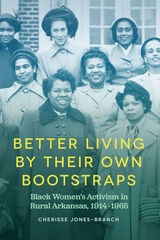
Better Living by Their Own Bootstraps
Black Women's Activism in Rural Arkansas, 1914-1965Cherisse Jones-Branch
University of Arkansas Press, 2021
The first major study to consider Black women’s activism in rural Arkansas, Better Living by Their Own Bootstraps foregrounds activists’ quest to improve Black communities through language and foodways as well as politics and community organizing. In reexamining these efforts, Cherisse Jones-Branch lifts many important figures out of obscurity, positioning them squarely within Arkansas’s agrarian history.
The Black women activists highlighted here include home demonstration agents employed by the Arkansas Agricultural Cooperative Extension Service and Jeanes Supervising Industrial Teachers, all of whom possessed an acute understanding of the difficulties that African Americans faced in rural spaces. Examining these activists through a historical lens, Jones-Branch reveals how educated, middle-class Black women worked with their less-educated rural sisters to create all-female spaces where they confronted economic, educational, public health, political, and theological concerns free from white regulation and interference.
Centered on the period between 1914 and 1965, Better Living by Their Own Bootstraps brings long-overdue attention to an important chapter in Arkansas history, spotlighting a group of Black women activists who uplifted their communities while subverting the formidable structures of white supremacy.
Between Good and Ghetto
African American Girls and Inner-City ViolenceNikki Jones
Rutgers University Press, 2009
Drawing on personal encounters, traditions of urban ethnography, Black feminist thought, gender studies, and feminist criminology, Nikki Jones gives readers a richly descriptive and compassionate account of how African American girls negotiate schools and neighborhoods governed by the so-called "code of the street"ùthe form of street justice that governs violence in distressed urban areas. She reveals the multiple strategies they use to navigate interpersonal and gender-specific violence and how they reconcile the gendered dilemmas of their adolescence. Illuminating struggles for survival within this group, Between Good and Ghetto encourages others to move African American girls toward the center of discussions of "the crisis" in poor, urban neighborhoods.
Between Race and Ethnicity
Cape Verdean American Immigrants, 1860-1965Marilyn Halter
University of Illinois Press, 1993
Marilyn Halter combines oral history with analyses of ships' records to chart the history and adaptation patterns of the Cape Verdean Americans. Though identifying themselves in ethnic terms, Cape Verdeans found that their African-European ancestry led their new society to view them as a racial group. Halter emphasizes racial and ethnic identity formation to show how Cape Verdeans set themselves apart from the African Americans while attempting to shrug off white society's exclusionary tactics. She also contrasts rural life on the bogs of Cape Cod with New Bedford’s urban community to reveal the ways immigrants established their own social and religious groups as they strove to maintain their Crioulo customs.
Beyoncé in Formation
Remixing Black FeminismBy Omise'eke Tinsley
University of Texas Press, 2018
Making headlines when it was launched in 2015, Omise’eke Tinsley’s undergraduate course “Beyoncé Feminism, Rihanna Womanism” has inspired students from all walks of life. In Beyoncé in Formation, Tinsley now takes her rich observations beyond the classroom, using the blockbuster album and video Lemonade as a soundtrack for vital new-millennium narratives.
Woven with candid observations about her life as a feminist scholar of African studies and a cisgender femme married to a trans spouse, Tinsley’s “Femme-onade” mixtape explores myriad facets of black women’s sexuality and gender. Turning to Beyoncé’s “Don’t Hurt Yourself,” Tinsley assesses black feminist critiques of marriage and then considers the models of motherhood offered in “Daddy Lessons,” interspersing these passages with memories from Tinsley’s multiracial family history. Her chapters on nontraditional bonds culminate in a discussion of contemporary LGBT politics through the lens of the internet-breaking video “Formation,” underscoring why Beyoncé’s black femme-inism isn’t only for ciswomen. From pleasure politics and the struggle for black women’s reproductive justice to the subtext of blues and country music traditions, the landscape in this tour is populated by activists and artists (including Loretta Lynn) and infused with vibrant interpretations of Queen Bey’s provocative, peerless imagery and lyrics.
In the tradition of Roxanne Gay’s Bad Feminist and Jill Lepore’s best-selling cultural histories, Beyoncé in Formation is the work of a daring intellectual who is poised to spark a new conversation about freedom and identity in America.
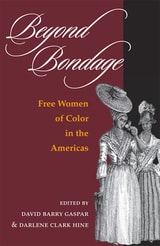
Beyond Bondage
Free Women of Color in the AmericasEdited by David Barry Gaspar and Darlene Clark Hine
University of Illinois Press, 2004
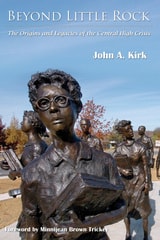
Beyond Little Rock
The Origins and Legacies of the Central High CrisisJohn A. Kirk
University of Arkansas Press, 2007
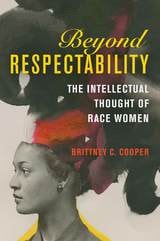
Beyond Respectability
The Intellectual Thought of Race WomenBrittney C. Cooper
University of Illinois Press, 2017

Beyond the Battlefield
Race, Memory, and the American Civil WarDavid W. Blight
University of Massachusetts Press, 2002
The book as a whole demonstrates several ways to probe the history of memory, to understand how and why groups of Americans have constructed versions of the past in the service of contemporary social needs. Topics range from the writing and thought of Frederick Douglass and W.E.B. Du Bois to a comparison of Abraham Lincoln and Douglass on the level of language and memory. The volume also includes a compelling study of the values of a single Union soldier, an analysis of Ken Burns's PBS series The Civil War, and a retrospective treatment of the distinguished African American historian Nathan I. Huggins.
Taken together, these lucidly written pieces offer a thoroughgoing assessment of the stakes of Civil War memory and their consequences for American race relations. Beyond the Battlefield demonstrates not only why we should preserve and study our Civil War battlefields, but also why we should lift our vision above those landscapes and ponder all the unfinished questions of healing and justice, of racial harmony and disharmony, that still bedevil our society and our historical imagination.
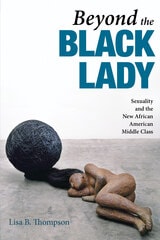
Beyond the Black Lady
Sexuality and the New African American Middle ClassLisa B. Thompson
University of Illinois Press, 2012
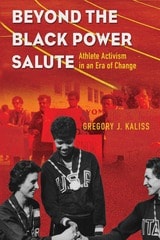
Beyond the Black Power Salute
Athlete Activism in an Era of ChangeGregory J. Kaliss
University of Illinois Press, 2023
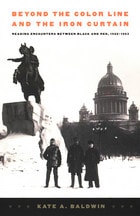
Beyond the Color Line and the Iron Curtain
Reading Encounters between Black and Red, 1922-1963Kate A. Baldwin
Duke University Press, 2002
Langston Hughes, W. E. B. Du Bois, Claude McKay, and Paul Robeson each lived or traveled extensively in the Soviet Union between the 1920s and the 1960s, and each reflected on Communism and Soviet life in works that have been largely unavailable, overlooked, or understudied. Kate A. Baldwin takes up these writings, as well as considerable material from Soviet sources—including articles in Pravda and Ogonek, political cartoons, Russian translations of unpublished manuscripts now lost, and mistranslations of major texts—to consider how these writers influenced and were influenced by both Soviet and American culture. Her work demonstrates how the construction of a new Soviet citizen attracted African Americans to the Soviet Union, where they could explore a national identity putatively free of class, gender, and racial biases. While Hughes and McKay later renounced their affiliations with the Soviet Union, Baldwin shows how, in different ways, both Hughes and McKay, as well as Du Bois and Robeson, used their encounters with the U. S. S. R. and Soviet models to rethink the exclusionary practices of citizenship and national belonging in the United States, and to move toward an internationalism that was a dynamic mix of antiracism, anticolonialism, social democracy, and international socialism.
Recovering what Baldwin terms the "Soviet archive of Black America," this book forces a rereading of some of the most important African American writers and of the transnational circuits of black modernism.
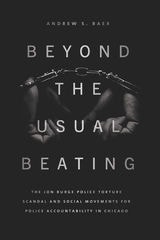
Beyond the Usual Beating
The Jon Burge Police Torture Scandal and Social Movements for Police Accountability in ChicagoAndrew S. Baer
University of Chicago Press, 2020
A story of institutionalized police brutality and how Chicago's public outcry led to long-lasting criminal justice reforms.
The malign and long-lasting influence of Chicago police commander Jon Burge cannot be overestimated, particularly as fresh examples of local and national criminal-justice abuse continue to surface with dismaying frequency. Burge’s decades-long tenure on the Chicago police force was marked by racist and barbaric interrogation methods, including psychological torture, burnings, and mock executions—techniques that went far “beyond the usual beating.” After being exposed in 1989, he became a symbol of police brutality and the unequal treatment of nonwhite people, and the persistent outcry against him led to reforms such as the abolition of the death penalty in Illinois.
But Burge hardly developed or operated in a vacuum, as Andrew S. Baer explores to stark effect here. He identifies the darkness of the Burge era as a product of local social forces, arising from a specific milieu beyond the nationwide racialized reactionary fever of the 1960s and 1970s. Similarly, the popular resistance movements that rallied in his wake actually predated Burge’s exposure but cohered with unexpected power due to the galvanizing focus on his crimes and abuses. For more than thirty years, a shifting coalition including torture survivors, their families, civil rights attorneys, and journalists helped to corroborate allegations of violence, free the wrongfully convicted, have Burge fired and incarcerated, and win passage of a municipal reparations package, among other victories. Beyond the Usual Beating reveals that though the Burge scandal underscores the relationship between personal bigotry and structural racism in the criminal justice system, it also shows how ordinary people held perpetrators accountable in the face of intransigent local power.
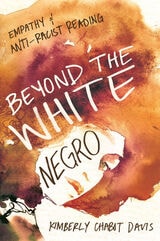
Beyond the White Negro
Empathy and Anti-Racist ReadingKimberly Chabot Davis
University of Illinois Press, 2014
Davis analyzes how white engagement with African American novels, film narratives, and hip-hop can help form anti-racist attitudes that may catalyze social change and racial justice. Though acknowledging past failures to establish cross-racial empathy, she focuses on examples that show avenues for future progress and change. Her study of ethnographic data from book clubs and college classrooms shows how engagement with African American culture and pedagogical support can lead to the kinds of white self-examination that make empathy possible. The result is a groundbreaking text that challenges the trend of focusing on society's failures in achieving cross-racial empathy and instead explores possible avenues for change.
Beyond the Whiteness of Whiteness
Memoir of a White Mother of Black SonsJane Lazarre
Duke University Press, 1996
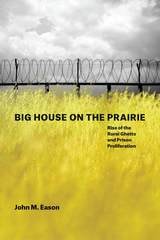
Big House on the Prairie
Rise of the Rural Ghetto and Prison ProliferationJohn M. Eason
University of Chicago Press, 2017
In 2007, John M. Eason moved his family to Forrest City, Arkansas, in search of answers to key questions about this trend: Why is America building so many prisons? Why now? And why in rural areas? Eason quickly learned that rural demand for prisons is complicated. Towns like Forrest City choose to build prisons not simply in hopes of landing jobs or economic wellbeing, but also to protect and improve their reputations. For some rural leaders, fostering a prison in their town is a means of achieving order in a rapidly changing world. Taking us into the decision-making meetings and tracking the impact of prisons on economic development, poverty, and race, Eason demonstrates how groups of elite whites and black leaders share power. Situating prisons within dynamic shifts that rural economies are undergoing and showing how racially diverse communities lobby for prison construction, Big House on the Prairie is a remarkable glimpse into the ways a prison economy takes shape and operates.
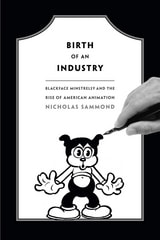
Birth of an Industry
Blackface Minstrelsy and the Rise of American AnimationNicholas Sammond
Duke University Press, 2015
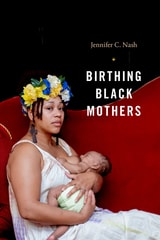
Birthing Black Mothers
Jennifer C. Nash
Duke University Press, 2021
Black Aliveness, or A Poetics of Being
Kevin Quashie
Duke University Press, 2021
Black America in the Shadow of the Sixties
Notes on the Civil Rights Movement, Neoliberalism, and PoliticsClarence Lang
University of Michigan Press, 2015
Black Arts West
Culture and Struggle in Postwar Los AngelesDaniel Widener
Duke University Press, 2010
Along with the politicization of black culture, Widener explores the rise of a distinctive regional Black Arts Movement. Originating in the efforts of wartime cultural activists, the movement was rooted in the black working class and characterized by struggles for artistic autonomy and improved living and working conditions for local black artists. As new ideas concerning art, racial identity, and the institutional position of African American artists emerged, dozens of new collectives appeared, from the Watts Writers Workshop, to the Inner City Cultural Center, to the New Art Jazz Ensemble. Spread across generations of artists, the Black Arts Movement in Southern California was more than the artistic affiliate of the local civil-rights or black-power efforts: it was a social movement itself. Illuminating the fundamental connections between expressive culture and political struggle, Black Arts West is a major contribution to the histories of Los Angeles, black radicalism, and avant-garde art.
Black Atlas
Geography and Flow in Nineteenth-Century African American LiteratureJudith Madera
Duke University Press, 2015
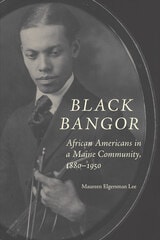
Black Bangor
African Americans in a Maine Community, 1880-1950Maureen Elgersman Lee
University of New Hampshire Press, 2005
Blacks have lived and worked in Maine as early as the seventeenth century, but historically have constituted less than one percent of Maine's population. Probably for this reason, books on Blacks in New England have largely ignored the experience of African American Mainers. Black Bangor is the first major published study of a Black community in Maine.
This tightly woven case study examines the African American community in Bangor during its heyday, 1880–1950, the period that saw an unprecedented migration of Blacks to that city. Blacks migrated to Bangor not just from other New England states, but from the Caribbean and Canadian Maritime Provinces as well, creating a heterogeneous community with roots in two hemispheres. Constituting an “ultraminority” in Bangor (according to the census, Blacks never numbered more than 300 souls during this period), this diverse community nonetheless came together to establish an impressive range of institutions, including local chapters of the NAACP and Odd Fellows, as well as of Mothers and Junior Mothers Clubs. Concentrated in an area known as the Parker Street neighborhood, Black women in Bangor became domestics and cooks, caterers and beauticians, clerks and stenographers. Men worked as loggers, teamsters, porters, chefs, and barbers; a few owned businesses.
Organized thematically, with sections on migration, labor, daily life, and community, Black Bangor's topics include not just migration patterns, work, and religious and cultural organizations, but also African American homes, furniture, clothing, and foodways. Elgersman Lee also examines race relations and depictions of Blacks in the local media, and draws comparisons between the experiences of Bangor's African American population and those of Blacks in other New England cities.
This fascinating and exhaustive study will appeal to anyone from Maine, as well as those interested in African American history and the rich texture of the region's cultural life.
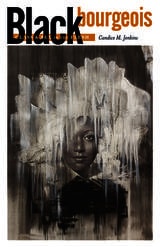
Black Bourgeois
Class and Sex in the FleshCandice M. Jenkins
University of Minnesota Press, 2019
Exploring the forces that keep black people vulnerable even amid economically privileged lives
At a moment in U.S. history with repeated reminders of the vulnerability of African Americans to state and extralegal violence, Black Bourgeois is the first book to consider the contradiction of privileged, presumably protected black bodies that nonetheless remain racially vulnerable. Examining disruptions around race and class status in literary texts, Candice M. Jenkins reminds us that the conflicted relation of the black subject to privilege is not, solely, a recent phenomenon.
Focusing on works by Toni Morrison, Spike Lee, Danzy Senna, Rebecca Walker, Reginald McKnight, Percival Everett, Colson Whitehead, and Michael Thomas, Jenkins shows that the seemingly abrupt discursive shift from post–Civil Rights to Black Lives Matter, from an emphasis on privilege and progress to an emphasis on vulnerability and precariousness, suggests a pendulum swing between two interrelated positions still in tension. By analyzing how these narratives stage the fraught interaction between the black and the bourgeois, Jenkins offers renewed attention to class as a framework for the study of black life—a necessary shift in an age of rapidly increasing income inequality and societal stratification.
Black Bourgeois thus challenges the assumed link between blackness and poverty that has become so ingrained in the United States, reminding us that privileged subjects, too, are “classed.” This book offers, finally, a rigorous and nuanced grasp of how African Americans live within complex, intersecting identities.