Results by title
936 books match the query 'LGBTQ+ Studies' and 51 start with b
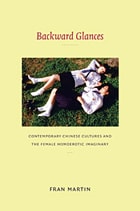
Backward Glances
Contemporary Chinese Cultures and the Female Homoerotic ImaginaryFran Martin
Duke University Press, 2010
As Martin explains, memorial schoolgirl love stories are popular throughout contemporary Chinese cultures. The same-sex attracted young woman appears in both openly homophobic and proudly queer-affirmative narratives, as well as in stories whose ideological valence is less immediately clear. Martin demonstrates that the stories, television programs, and films she analyzes are not idiosyncratic depictions of marginal figures, but manifestations of a broader, mainstream cultural preoccupation. Her investigation of representations of same-sex love between women sheds new light on contemporary Chinese understandings of sex, love, gender, marriage, and the cultural ordering of human life.
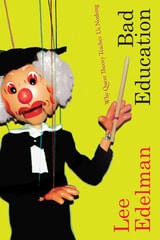
Bad Education
Why Queer Theory Teaches Us NothingLee Edelman
Duke University Press, 2022
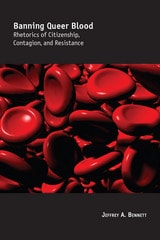
Banning Queer Blood
Rhetorics of Citizenship, Contagion, and ResistanceJeffrey A. Bennett
University of Alabama Press, 2009
In Banning Queer Blood, Jeffrey Bennett frames blood donation as a performance of civic identity closely linked to the meaning of citizenship. However, with the advent of HIV came the notion of blood donation as a potentially dangerous process. Bennett argues that the Food and Drug Administration, by employing images that specifically depict gay men as contagious, has categorized gay men as a menace to the nation. The FDA's ban on blood donation by gay men served to propagate the social misconceptions about gay men that continue to circulate within both the straight and LGBT/Queer communities.
Bennett explores the role of scientific research cited by these banned-blood policies and its disquieting relationship to government agencies, including the FDA. Bennett draws parallels between the FDA's position on homosexuality and the historical precedents of discrimination by government agencies against racial minorities. The author concludes by describing the resistance posed by queer donors, who either lie in order to donate blood or protest discrimination at donation sites, and by calling for these prejudiced policies to be abolished.

Barbie's Queer Accessories
Erica Rand
Duke University Press, 1995
Rand begins by focusing on the production and marketing of Barbie, starting in 1959, including Mattel’s numerous tie-ins and spin-offs. These variations, which include the much-promoted multiethnic Barbies and the controversial Earring Magic Ken, helped make the doll one of the most profitable toys on the market. In lively chapters based on extensive interviews, the author discusses adult testimony from both Barbie "survivors" and enthusiasts and explores how memories of the doll fit into women’s lives. Finally, Rand looks at cultural reappropriations of Barbie by artists, collectors, and especially lesbians and gay men, and considers resistance to Barbie as a form of social and political activism.
Illustrated with photographs of various interpretations and alterations of Barbie, this book encompasses both Barbie glorification and abjection as it testifies to the irrefutably compelling qualities of this bestselling toy. Anyone who has played with Barbie—or, more importantly, thought or worried about playing with Barbie—will find this book fascinating.
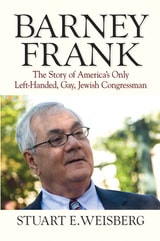
Barney Frank
The Story of America's Only Left-Handed, Gay, Jewish CongressmanStuart Weisberg
University of Massachusetts Press, 2009
Based on interviews with over 150 people, including more than thirty hours with Frank himself, this biography reconstructs for the first time his life and career, from his working-class childhood in Bayonne, New Jersey, to his years at Harvard and in Boston politics, through his rise to national prominence. Stuart Weisberg captures Frank in all his quirkiness, irreverence, and complexity. He also examines his less appealing side—his gruff exterior, his legendary impatience, his aversion to wasting time. Weisberg reveals the pressure Frank has felt as the most prominent openly gay politician in the United States, one whose career was nearly derailed by a highly publicized sex scandal involving a male prostitute.
Above all, this book shows Frank to be a superb legislator—a pragmatic politician who has dedicated his career to pursuing an unabashedly liberal agenda and whose depth of intellect and sense of humor have made him one of the most influential and colorful figures in Washington.
Be Not Deceived
The Sacred and Sexual Struggles of Gay and Ex-gay Christian MenWolkomir, Michelle
Rutgers University Press, 2006
Homosexuality has become increasingly accepted in mainstream America over the past two decades. Yet despite indications of progress that can be found everywhere from academia to popular culture, gay men and women remain the target of much discrimination and stigma, particularly within conservative Christianity.
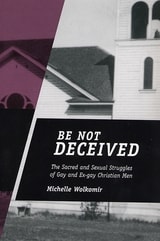
In Be Not Deceived, Michelle Wolkomir explores the difficult dilemma that gay Christians face in their attempts to reconcile their religious and sexual identities. She introduces the ideologies and practices of two alternative and competing ministries that offer solutions for Christians who experience homosexual desire.
One organization—the Universal Fellowship of Metropolitan Community Churches—believes that God made people gay to suit divine purposes. Changing one’s sexuality is therefore impossible and a defiance of God. In contrast, Exodus International preaches that homosexuality is a sin and a symptom of disordered psychological development—one that can be cured through redemptive prayer. By comparing participant experiences in these ministries, Wolkomir explores the paths and processes by which members learn to become gay or ex-gay Christians.
Through careful analysis of the groups’ ideologies, interactions, and symbolic resources, Be Not Deceived goes far beyond the obvious differences between the ministries to uncover their similarities, namely that both continue to define heterosexuality as the normative and dominant lifestyle.
Beautiful Bottom, Beautiful Shame
Where "Black" Meets "Queer"Kathryn Bond Stockton
Duke University Press, 2006
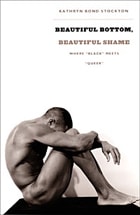
Stockton engages the domains of African American studies, queer theory, psychoanalysis, film theory, photography, semiotics, and gender studies. She brings together thinkers rarely, if ever, read together in a single study—James Baldwin, Radclyffe Hall, Jean Genet, Toni Morrison, Robert Mapplethorpe, Eldridge Cleaver, Todd Haynes, Norman Mailer, Leslie Feinberg, David Fincher, and Quentin Tarantino—and reads them with and against major theorists, including Georges Bataille, Sigmund Freud, Eve Kosofsky Sedgwick, Jacques Lacan, Roland Barthes, and Leo Bersani. Stockton asserts that there is no clear, mirrored relation between the terms “black” and “queer”; rather, seemingly definitive associations attached to each are often taken up or crossed through by the other. Stockton explores dramatic switchpoints between these terms: the stigmatized “skin” of some queers’ clothes, the description of blacks as an “economic bottom,” the visual force of interracial homosexual rape, the complicated logic of so-called same-sex miscegenation, and the ways in which a famous depiction of slavery (namely, Morrison’s Beloved) seems bound up with depictions of AIDS. All of the thinkers Stockton considers scrutinize the social nature of shame as they examine the structures that make debasements possible, bearable, pleasurable, and creative, even in their darkness.
Becoming a Visible Man
Second EditionJamison Green
Vanderbilt University Press, 2020
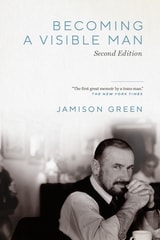
Since the first edition's publication, author Jamison Green's writings and advocacy among business and governmental organizations around the world have led to major changes in the fields of law, medicine, and social policy, and his (mostly invisible) work has had significant effects on trans people globally. This new edition captures the changes of the last two decades, while also imparting a message of self-acceptance and health.
With profoundly personal and eminently practical threads, Green clarifies transgender experience for transgender people and their families, friends, and coworkers. Medical and mental health care providers, educators, business leaders, and advocates seeking information about transgender concerns can all gain from Green's integrative approach to the topic. This book candidly addresses emotional relationships that are affected by a transition, and brings refined integrity to the struggle to self-define, whether one undergoes a transition or chooses not to.
Emphasizing the lives of transgender men—who are often overlooked—he elucidates the experience of masculinity in a way that is self-assured and inclusive of feminist values. Green's inspirational wisdom has informed and empowered thousands of readers. There is still no other book like Becoming a Visible Man in the transgender canon.
Becoming a Visible Man
Second EditionJamison Green
Vanderbilt University Press, 2020
Since the first edition's publication, author Jamison Green's writings and advocacy among business and governmental organizations around the world have led to major changes in the fields of law, medicine, and social policy, and his (mostly invisible) work has had significant effects on trans people globally. This new edition captures the changes of the last two decades, while also imparting a message of self-acceptance and health.
With profoundly personal and eminently practical threads, Green clarifies transgender experience for transgender people and their families, friends, and coworkers. Medical and mental health care providers, educators, business leaders, and advocates seeking information about transgender concerns can all gain from Green's integrative approach to the topic. This book candidly addresses emotional relationships that are affected by a transition, and brings refined integrity to the struggle to self-define, whether one undergoes a transition or chooses not to.
Emphasizing the lives of transgender men—who are often overlooked—he elucidates the experience of masculinity in a way that is self-assured and inclusive of feminist values. Green's inspirational wisdom has informed and empowered thousands of readers. There is still no other book like Becoming a Visible Man in the transgender canon.
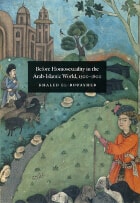
Before Homosexuality in the Arab-Islamic World, 1500-1800
Khaled El-Rouayheb
University of Chicago Press, 2005
Attitudes toward homosexuality in the pre-modern Arab-Islamic world are commonly depicted as schizophrenic—visible and tolerated on one hand, prohibited by Islam on the other. Khaled El-Rouayheb argues that this apparent paradox is based on the anachronistic assumption that homosexuality is a timeless, self-evident fact to which a particular culture reacts with some degree of tolerance or intolerance. Drawing on poetry, biographical literature, medicine, dream interpretation, and Islamic texts, he shows that the culture of the period lacked the concept of homosexuality.
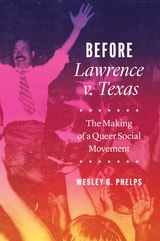
Before Lawrence v. Texas
The Making of a Queer Social MovementWesley G. Phelps
University of Texas Press, 2022
2024 Coral Horton Tullis Memorial Prize, Texas State Historical Association
2024 Award of Merit, The Philosophical Society of Texas Nonfiction Book Prize
The grassroots queer activism and legal challenges that led to a landmark Supreme Court decision in favor of gay and lesbian equality.
In 2003 the US Supreme Court overturned anti-sodomy laws across the country, ruling in Lawrence v. Texas that the Constitution protects private consensual sex between adults. To some, the decision seemed to come like lightning from above, altering the landscape of America’s sexual politics all at once. In actuality, many years of work and organizing led up to the legal case, and the landmark ruling might never have happened were it not for the passionate struggle of Texans who rejected their state’s discriminatory laws.
Before Lawrence v. Texas tells the story of the long, troubled, and ultimately hopeful road to constitutional change. Wesley G. Phelps describes the achievements, setbacks, and unlikely alliances along the way. Over the course of decades, and at great risk to themselves, gay and lesbian Texans and their supporters launched political campaigns and legal challenges, laying the groundwork for Lawrence. Phelps shares the personal experiences of the people and couples who contributed to the legal strategy that ultimately overturned the state’s discriminatory law. Even when their individual court cases were unsuccessful, justice seekers and activists collectively influenced public opinion by insisting that their voices be heard. Nine Supreme Court justices ruled, but it was grassroots politics that vindicated the ideal of equality under the law.

Before Pictures
Douglas Crimp
University of Chicago Press, 2016
Before Pictures tells the story of Crimp’s life as a young gay man and art critic in New York City during the late 1960s through the turbulent 1970s. Crimp participated in all of what made the city so stimulating in that vibrant decade. The details of his professional and personal life are interwoven with this the particularly rich history of New York City at that time, producing a vivid portrait of both the critic and his adopted city. The book begins with his escape from his hometown in Idaho, and we quickly find Crimp writing criticism for ArtNews while working at the Guggenheim—where, as a young curatorial assistant, he was one of the few to see Daniel Buren’s Peinture-Sculpture before it was removed amid cries of institutional censorship. We also travel to the Chelsea Hotel (where Crimp helped the down-on-his-luck couturier Charles James organize his papers) through to his days as a cinephile and balletomane to the founding of the art journal October, where he remained a central figure for many years. As he was developing his reputation as a critic, he was also partaking of the New York night life, from drugs and late nights alongside the Warhol crowd at the Max’s Kansas City to discos, roller-skating, and casual sex with famous (and not-so-famous) men. As AIDS began to ravage the closely linked art and gay communities, Crimp eventually turned his attention to activism dedicated to rethinking AIDS.
Part biography and part cultural history, Before Pictures is a courageous account of an exceptional period in both Crimp’s life and the life of New York City. At the same time, it offers a deeply personal and engaging point of entry into important issues in contemporary art.

Before the Closet
Same-Sex Love from "Beowulf" to "Angels in America"Allen J. Frantzen
University of Chicago Press, 1998
With its ambitious scope and elegant style, Before the Closet sets same-sex relations in Anglo-Saxon sources in relation to the sexual themes of contemporary opera, dance, and theatre. Frantzen offers a comprehensive analysis of sources from the seventh to the twelfth century and traces Anglo-Saxon same-sex behavior through the age of Chaucer and into the Renaissance.
"Frantzen's marvelous book . . . opens up a world most readers will never have even known was there. It's a difficult topic, but Frantzen's comprehensive, readable and even wryly funny treatment makes this an unexpected pleasure."—Publishers Weekly, starred review
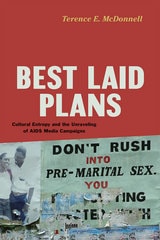
Best Laid Plans
Cultural Entropy and the Unraveling of AIDS Media CampaignsTerence E. McDonnell
University of Chicago Press, 2016
McDonnell argues that these well-designed campaigns are undergoing “cultural entropy”: the process through which the intended meanings and uses of cultural objects fracture into alternative meanings, new practices, failed interactions, and blatant disregard. Using AIDS media campaigns in Accra, Ghana, as its central case study, the book walks readers through best-practice, evidence-based media campaigns that fall totally flat. Female condoms are turned into bracelets, AIDS posters become home decorations, red ribbons fade into pink under the sun—to name a few failures. These damaging cultural misfires are not random. Rather, McDonnell makes the case that these disruptions are patterned, widespread, and inevitable—indicative of a broader process of cultural entropy.
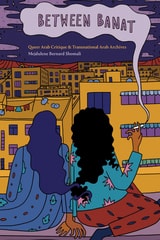
Between Banat
Queer Arab Critique and Transnational Arab ArchivesMejdulene Bernard Shomali
Duke University Press, 2023
Between Shadows and Noise
Sensation, Situatedness, and the UndisciplinedAmber Jamilla Musser
Duke University Press, 2024
Between You and Me
Queer Disclosures in the New York Art World, 1948-1963Gavin Butt
Duke University Press, 2005
Focusing on the period from 1948 to 1963, Butt draws on the accusations and denials of homosexuality that appeared in the popular press, on early homophile publications such as One and the Mattachine Review, and on biographies, autobiographies, and interviews. In a stunning exposition of Larry Rivers’s work, he shows how Rivers incorporated gossip into his paintings, just as his friend and lover Frank O’Hara worked it into his poetry. He describes how the stories about Andy Warhol being too “swish” to be taken seriously as an artist changed following his breakthrough success, reconstructing him as an asexual dandy. Butt also speculates on the meanings surrounding a MoMA curator’s refusal in 1958 to buy Jasper Johns’s Target with Plaster Casts on the grounds that it was too scandalous for the museum to acquire. Between You and Me sheds new light on a pivotal moment in American cultural production as it signals new directions for art history.
Between the Sheets, in the Streets
Queer, Lesbian, Gay DocumentaryChris Holmlund
University of Minnesota Press, 1997
The first book to focus on the connections between sexuality, activism, and documentary film.
From film festivals to university campuses, from private homes to first-run theaters, people everywhere are viewing and discussing gay, lesbian, queer, bisexual, and transgender films and videos. Between the Sheets, In the Streets considers these videos and films, testifying to the unavoidable connections between sexuality (the sheets) and activism (the streets) for all who identify as gay, lesbian, or queer in the 1990s.
This first collection of essays to focus exclusively on queer, lesbian, and gay documentary argues that documentary films and videos speak with a sense of political and social urgency, acting as testaments to the importance of reclaiming history and asserting the importance of these points of view. Among the topics discussed are representations of young queers on such shows as MTV’s The Real World; pre-Stonewall films; portrayals of lesbians and aging; video activism in Oregon and the South; and the works of Derek Jarman, Su Friedrich, Cheryl Dunye, and Sadie Benning. A range of films and videos is examined, including Strangers in Good Company, Paris Is Burning, Juggling Gender, Silverlake Life, and Without You I’m Nothing.Tracing an exhilarating range of perspectives and subject positions, Between the Sheets, In the Streets is an essential guide to current developments in queer, lesbian, and gay documentary. Contributors: Chris Cagle, Brown U; Linda Dittmar, U of Massachusetts, Boston; Lynda Goldstein, Pennsylvania State U, Wilkes-Barre Campus; Ronald Gregg, Drake U; Janet Jakobsen, U of Arizona; Lynda McAfee, New York Public Library; Kathleen McHugh, U of California, Riverside; Beverly Seckinger, U of Arizona; Marc Siegel, UCLA; Chris Straayer, Tisch School of the Arts; Erika Suderburg, U of California, Riverside; Thomas Waugh, Concordia U, Montreal; Justin Wyatt, U of North Texas.
Beverley Ditsie's Fearless Speech
A Dialogue on the Pitfalls of Queer StruggleSharad Chari with Beverley Palesa Ditsie
Temple University Press, 2027
Beverley Palesa Ditsie is a key South African Black lesbian activist, part of a world of queer activism during South Africa’s decade of transition from apartheid, when sexuality was crucial to recircuiting post-apartheid power and possibility. Part of the Gay and Lesbian Organization of the Witwatersrand (GLOW) which organized the continent’s first Pride March, she has stood steadfastly for Black lesbian self-determination and African queer representation.
Beverley Ditsie’s Fearless Speech enters this recent history of sexuality politics through an activist and a critical theorist in conversation. This book bends an account of Ditsie’s life and work in the critique of racial and sexual capitalism. Grounded in South Africa, the conversation is cut through with radical queer, materialist, and feminist critique in an internationalist frame.
Through this dialogic form, Beverley Ditsie emerges alongside other figures of fearless speech willing to stand for Black and African queer liberation, yet aware of pitfalls in these struggles that point to work that remains to be done. Beverley Ditsie’s Fearless Speech is a cautionary tale of hope for radical change in a world of deepening injustice and political homophobia.
Beyond Carnival
Male Homosexuality in Twentieth-Century BrazilJames N. Green
University of Chicago Press, 1999
Ranging from the late nineteenth century to the rise of a politicized gay and lesbian rights movement in the 1970s, Green's study focuses on male homosexual subcultures in Rio de Janeiro and Sao Paulo. He uncovers the stories of men coping with arrests and street violence, dealing with family restrictions, and resisting both a hostile medical profession and moralizing influences of the Church. Green also describes how these men have created vibrant subcultures with alternative support networks for maintaining romantic and sexual relationships and for surviving in an intolerant social environment. He then goes on to trace how urban parks, plazas, cinemas, and beaches are appropriated for same-sex erotic encounters, bringing us into the world of street cruising, male hustlers, and cross-dressing prostitutes.
Through his creative use of police and medical records, newspapers, literature, newsletters, and extensive interviews, Green has woven a fascinating history, the first of its kind for Latin America, that will set the standard for future works.
"Green brushes aside outworn cultural assumptions about Brazil's queer life to display its full glory, as well as the troubles which homophobia has sent its way. . . . This latest gem in Chicago's 'World of Desire' series offers a shimmering view of queer Brazilian life throughout the 20th century."—Kirkus Reviews
Winner of the 2000 Lambda Literary Awards' Emerging Scholar Award of the Monette/Horwitz Trust
Winner of the 1999 Hubert Herring Award, Pacific Coast Council on Latin American Studies
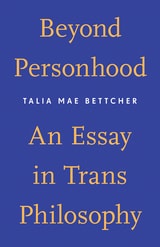
Beyond Personhood
An Essay in Trans PhilosophyTalia Mae Bettcher
University of Minnesota Press, 2025
A bold intervention in the philosophical concepts of gender, sex, and self
Beyond Personhood provides an entirely new philosophical approach to trans experience, trans oppression, gender dysphoria, and the relationship between gender and identity. Until now, trans experience has overwhelmingly been understood in terms of two reductive frameworks: trans people are either “trapped in the wrong body” or they are oppressed by the gender binary. Both accounts misgender large trans constituencies while distorting their experience, and neither can explain the presentation of trans people as make-believers and deceivers or the serious consequences thereof. In Beyond Personhood, Talia Mae Bettcher demonstrates how taking this phenomenon seriously affords a new perspective on trans oppression and trans dysphoria—one involving liminal states of “make-believe” that bear positive possibilities for self-recognition and resistance.
Undergirding this account is Bettcher’s groundbreaking theory of interpersonal spatiality—a theory of intimacy and distance that requires rejection of the philosophical concepts of person, self, and subject. She argues that only interpersonal spatiality theory can successfully explain trans oppression and gender dysphoria, thus creating new possibilities for thinking about connection and relatedness.
An essential contribution to the burgeoning field of trans philosophy, Beyond Personhood offers an intersectional trans feminism that illuminates transphobic, sexist, heterosexist, and racist oppressions, situating trans oppression and resistance within a much larger decolonial struggle. By refusing to separate theory from its application, Bettcher shows how a philosophy of depth can emerge from the everyday experiences of trans people, pointing the way to a reinvigoration of philosophy.
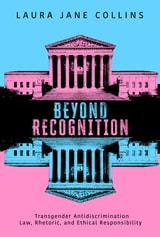
Beyond Recognition
Transgender Antidiscrimination Law, Rhetoric, and Ethical ResponsibilityCollins, Laura Jane
University of Alabama Press, 2026
A bold and original analysis of how the complexity of legal struggles over transgender rights is shaped not only by politics but by a deeper cultural anxiety about the meaning of sex itself.
Beyond Recognition: Transgender Antidiscrimination Law, Rhetoric, and Ethical Responsibility is a timely analysis that challenges the idea of transgender antidiscrimination law as a simple matter of inclusion or exclusion. Far from treating the law as a straightforward recognition project, Laura Jane Collins employs a rhetorically responsive approach that reveals how legal systems both reflect and shape our deepest uncertainties about sex, identity, and justice.
Through close readings of Title VII case law, state-level legislation such as California’s Fair Employment and Housing Act, and legislative debates surrounding bathroom access and trans rights, Collins exposes the deep-seated anxieties driving contemporary legal debates. While courts, policymakers, and advocates struggle to construct legal protections, the very act of defining sex within the law exposes law’s limitations.
Rather than condemning the law’s failures or romanticizing its liberatory potential, Collins calls for a more self-reflective, ethically engaged response. She argues that our demand for legal clarity often conceals a broader discomfort with ambiguity—and that the law’s so-called shortcomings may in fact reflect our own refusal to confront the complexity of sex as a category and system of power.
A vital contribution to scholarship in law and rhetoric, gender studies, and critical legal theory, Beyond Recognition invites a deeper reckoning with both legal frameworks and personal responsibility. It offers a compelling perspective on the evolving landscape of transgender rights and the cultural anxieties that continue to shape it.
Bible Trouble
Queer Reading at the Boundaries of Biblical ScholarshipTeresa J. Hornsby
SBL Press, 2011
The essays in Bible Trouble all engage queer theories for purposes of biblical interpretation, a rare effort to date within biblical scholarship. The title phrase “Bible Trouble” plays on Judith Butler's Gender Trouble, gesturing toward a primary text for contemporary queer theory. The essays consider, among others, the Lazarus story, the Ethiopian eunuch, “gender trouble” in Judges 4 and 5, the Song of Songs, and an unorthodox coupling of the books of Samuel and the film Paris Is Burning. This volume “troubles” not only the boundaries between biblical scholarship and queer theory but also the boundaries between different frameworks currently used in the analysis of biblical literature, including sexuality, gender, race, class, history, and literature. The contributors are Ellen T. Armour, Michael Joseph Brown, Sean D. Burke, Heidi Epstein, Deryn Guest, Jione Havea, Teresa J. Hornsby, Lynn R. Huber, S. Tamar Kamionkowski, Joseph A. Marchal, Jeremy Punt, Erin Runions, Ken Stone, Gillian Townsley, Jay Twomey, and Manuel Villalobos.
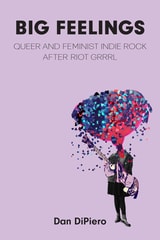
Big Feelings
Queer and Feminist Indie Rock After Riot GrrrlDan DiPiero
University of Michigan Press, 2025
By bringing listeners’ experiences into the analysis, DiPiero shows how indie rock feminisms have shifted since the 1990s, rejecting overt political messages in favor of sonic catharsis, and reflecting the complex, ambivalent feeling of being young while the world burns. In reprising the sounds of an alt-rock associated in public consciousness with white male pain, Big Feelings doubles down on the stereotypical association between femininity and emotionality to perform whole spectrums of feeling in varied states of overwhelm. In doing so, these artists draw attention to overlooked histories of women and queer musicians who have been forging indie rock all along, while also remaking how the music matters in the present.
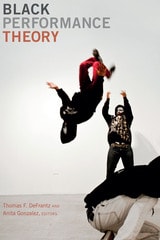
Black Performance Theory
Thomas F. DeFrantz and Anita Gonzalez, eds.
Duke University Press, 2014
Contributors. Melissa Blanco Borelli, Daphne A. Brooks, Soyica Diggs Colbert, Thomas F. DeFrantz, Nadine George-Graves, Anita Gonzalez, Rickerby Hinds, Jason King, D. Soyini Madison, Koritha Mitchell, Tavia Nyong'o, Carl Paris, Anna B. Scott, Wendy S. Walters, Hershini Bhana Young
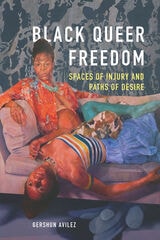
Black Queer Freedom
Spaces of Injury and Paths of DesireGerShun Avilez
University of Illinois Press, 2020
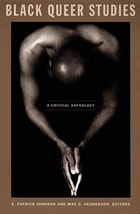
Black Queer Studies
A Critical AnthologyE. Patrick Johnson and Mae G. Henderson, eds.
Duke University Press, 2005
The contributors consider representations of the black queer body, black queer literature, the pedagogical implications of black queer studies, and the ways that gender and sexuality have been glossed over in black studies and race and class marginalized in queer studies. Whether exploring the closet as a racially loaded metaphor, arguing for the inclusion of diaspora studies in black queer studies, considering how the black lesbian voice that was so expressive in the 1970s and 1980s is all but inaudible today, or investigating how the social sciences have solidified racial and sexual exclusionary practices, these insightful essays signal an important and necessary expansion of queer studies.
Contributors. Bryant K. Alexander, Devon Carbado, Faedra Chatard Carpenter, Keith Clark, Cathy Cohen, Roderick A. Ferguson, Jewelle Gomez, Phillip Brian Harper, Mae G. Henderson, Sharon P. Holland, E. Patrick Johnson, Kara Keeling, Dwight A. McBride, Charles I. Nero, Marlon B. Ross, Rinaldo Walcott, Maurice O. Wallace

Black Trans Feminism
Marquis Bey
Duke University Press, 2022
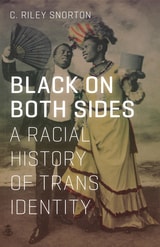
Black on Both Sides
A Racial History of Trans IdentityC. Riley Snorton
University of Minnesota Press, 2017
Winner of the John Boswell Prize from the American Historical Association 2018
Winner of the William Sanders Scarborough Prize from the Modern Language Association 2018
Winner of an American Library Association Stonewall Honor 2018
Winner of Lambda Literary Award for Transgender Nonfiction 2018
Winner of the Sylvia Rivera Award in Transgender Studies from the Center for Lesbian and Gay Studies
The story of Christine Jorgensen, America’s first prominent transsexual, famously narrated trans embodiment in the postwar era. Her celebrity, however, has obscured other mid-century trans narratives—ones lived by African Americans such as Lucy Hicks Anderson and James McHarris. Their erasure from trans history masks the profound ways race has figured prominently in the construction and representation of transgender subjects. In Black on Both Sides, C. Riley Snorton identifies multiple intersections between blackness and transness from the mid-nineteenth century to present-day anti-black and anti-trans legislation and violence.
Drawing on a deep and varied archive of materials—early sexological texts, fugitive slave narratives, Afro-modernist literature, sensationalist journalism, Hollywood films—Snorton attends to how slavery and the production of racialized gender provided the foundations for an understanding of gender as mutable. In tracing the twinned genealogies of blackness and transness, Snorton follows multiple trajectories, from the medical experiments conducted on enslaved black women by J. Marion Sims, the “father of American gynecology,” to the negation of blackness that makes transnormativity possible.
Revealing instances of personal sovereignty among blacks living in the antebellum North that were mapped in terms of “cross dressing” and canonical black literary works that express black men’s access to the “female within,” Black on Both Sides concludes with a reading of the fate of Phillip DeVine, who was murdered alongside Brandon Teena in 1993, a fact omitted from the film Boys Don’t Cry out of narrative convenience. Reconstructing these theoretical and historical trajectories furthers our imaginative capacities to conceive more livable black and trans worlds.
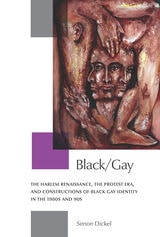
Black/Gay
The Harlem Renaissance, the Protest Era, and the Constructions of Black Gay Identity in the 1980s and 90sSimon Dickel
Michigan State University Press, 2011
This book explores key texts of the black gay culture of the 1980s and ’90s. Starting with an analysis of the political discourse in anthologies such as In the Life and Brother to Brother, it identifies the references to the Harlem Renaissance and the Protest Era as common elements of black gay discourse. This connection to African American cultural and political traditions legitimizes black gay identity and criticizes the construction of gay identity as white. Readings of Isaac Julien’s Looking for Langston, Samuel R. Delany’s “Atlantis: Model 1924” and The Motion of Light in Water, Melvin Dixon’s Vanishing Rooms, Randall Kenan’s A Visitation of Spirits, and Steven Corbin’s No Easy Place to Be demonstrate how these strategies of signifying are used in affirmative, humorous, and ironic ways.
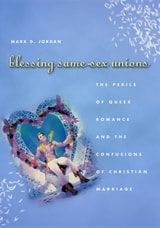
Blessing Same-Sex Unions
The Perils of Queer Romance and the Confusions of Christian MarriageMark D. Jordan
University of Chicago Press, 2005
Why then, asks noted gay commentator Mark D. Jordan, are so many churches vehemently opposed to blessing same-sex unions? In this incisive work, Jordan shows how carefully selected ideals of Christian marriage have come to dominate recent debates over same-sex unions. Opponents of gay marriage, he reveals, too often confuse simplified ideals of matrimony with historical facts. They suppose, for instance, that there has been a stable Christian tradition of marriage across millennia, when in reality Christians have quarreled among themselves for centuries about even the most basic elements of marital theology, authorizing experiments like polygamy and divorce.
Jordan also argues that no matter what the courts do, Christian churches will have to decide for themselves whether to bless same-sex unions. No civil compromise can settle the religious questions surrounding gay marriage. And queer Christians, he contends, will have to discover for themselves what they really want out of marriage. If they are not just after legal recognition as a couple or a place at the social table, do they really seek the blessing of God? Or just the garish melodrama of a white wedding? Posing trenchant questions such as these, Blessing Same-Sex Unions will be a must-read for both sides of the debate over gay marriage in America today.
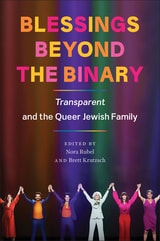
Blessings Beyond the Binary
Transparent and the Queer Jewish FamilyNora Rubel
Rutgers University Press, 2024
Blessings beyond the Binary brings together leading scholars to analyze and offer commentary on what scholar Josh Lambert calls “the most important work of Jewish culture of the century so far.” The book explores the show’s depiction of Jewish life, religion, and history, as well as Transparent’s scandals and criticisms and how it fits into and diverges from today’s transgender and queer politics.
The first book to focus on Transparent, Blessings beyond the Binary offers a rich analysis of the groundbreaking series and its connections to contemporary queer, trans, and Jewish life.
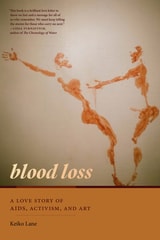
Blood Loss
A Love Story of AIDS, Activism, and ArtKeiko Lane
Duke University Press, 2024
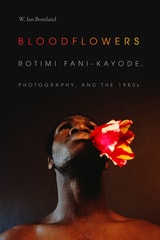
Bloodflowers
Rotimi Fani-Kayode, Photography, and the 1980sW. Ian Bourland
Duke University Press, 2019

Bodies Unbound
Gender-Specific Cancer and BiolegitimacyPiper Sledge
Rutgers University Press, 2021
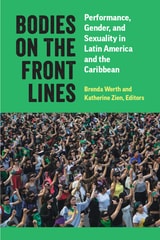
Bodies on the Front Lines
Performance, Gender, and Sexuality in Latin America and the CaribbeanBrenda Werth and Katherine Zien, Editors
University of Michigan Press, 2024
The volume’s contributors draw from rich legacies of theater, performance, and activism in the region, as well as decolonial and intersectional theorizing, to demonstrate the ways that performance practices enable activists to sustain their movements. The chapters engage diverse perspectives from Argentina, Brazil, Bolivia, Chile, Colombia, Cuba, the Dominican Republic, transnational Central America, Peru, Puerto Rico, and Mexico.
Rather than taking an approach that simplifies complexities among states, Bodies on the Front Lines takes seriously the geopolitical stakes of examining Latin America and the Caribbean as a heterogeneous site of nations and networks. In chapters covering this wide geographical area, leading scholars in the fields of theater and performance studies showcase the aesthetic, social, and political work of performance in generating and fortifying gender and sexual activism in the Americas.
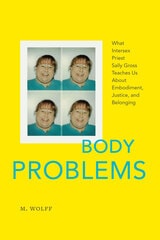
Body Problems
What Intersex Priest Sally Gross Teaches Us About Embodiment, Justice, and BelongingM. Wolff
Duke University Press, 2025
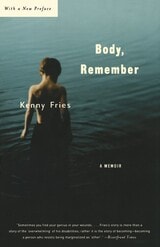
Body, Remember
A MemoirKenny Fries
University of Wisconsin Press, 2003
In this poetic, introspective memoir, Kenny Fries illustrates his intersecting identities as gay, Jewish, and disabled. While learning about the history of his body through medical records and his physical scars, Fries discovers just how deeply the memories and psychic scars run. As he reflects on his relationships with his family, his compassionate doctor, the brother who resented his disability, and the men who taught him to love, he confronts the challenges of his life. Body, Remember is a story about connection, a redemptive and passionate testimony to one man’s search for the sources of identity and difference.
Borderpunk
Non-Respectable Narratives of the Post-SixtiesSophia Martínez Abbud
University of Arizona Press, 2027
The U.S.-Mexico border has long been a home to artists, poets, emos, and punks. In the clandestine undergrounds of borderlands cultural production, there lies an impulse to live below and beyond border surveillance technologies. This book is about the utopic stories that narrate this impulse and the punk literary scenes that facilitate these fabulations.
Using an innovative methodology of “scene-work”—a blend of literary analysis, queer theory, critical regionalism, and auto-ethnography—Borderpunk identifies, aggregates, and outlines the emergent genre of borderpunk cultural productions. Beginning with the post-1960s through the present, author Sophia Martínez Abbud examines how music, playlists, literature, art, and performance borderpunk narratives teach us to elide, undermine, and work against the border’s presumed authority. Through these narratives, readers become attuned to the anarchic sense of abjection that permeates the border regions and the kinds of punk subjectivities emerging from these sites of re-mediation.
Borderpunk offers scenes that refuse notions of respectability at different time periods, geographies, and scales. Following the mechanics of other narrative punk genres, such as cyberpunk or solarpunk, it sketches out the uses of “punk” as a way of being in border spaces—where abjection, relajo, and illegibility become useful tools that encourage us to divest from the norm, participate in horizontal community building, and imagine borders in radical new ways.
Born to Belonging
Writings on Spirit and JusticeMab Segrest
Rutgers University Press, 2002
Boston Marriages
Romantic but Asexual Relationships among Contemporary LesbiansEdited by Esther D. Rothblum and Kathleen A. Brehony
University of Massachusetts Press, 1993
For decades the term “Boston marriage” was used to describe single women who lived together and shared their lives. The presumption then was that these partnerships were nonsexual. In recent years, however, the opposite assumption has prevailed, causing some women involved in such relationships to hide the asexual nature of their attachments in the lesbian community.
Convinced that Boston marriages are both legitimate and important, Esther D. Rothblum and Kathleen A. Brehony argue that in a society that defines intimacy by the occurrence of sexual activity, we have no word for—and thus no understanding of—the intensely romantic but asexual relationships that some lesbians form. By bringing these relationships “out of the closet” and discussing them openly, the editors and other contributors to this volume challenge our views about lesbianism and address larger questions concerning the construction of sexuality and sexual identity. How, for example, do we define a lesbian relationship? What constitutes a romantic involvement? If a couple does not engage in sex, are they still considered lovers?
This book includes ten personal accounts by women involved in Boston marriages as well as theoretical essays by Lillian Faderman, Marnie Hall, JoAnn Loulan, Suzanna Rose, Debra Zand, Marie Cini, and Laura Brown.
Boys Abducted
The Homoerotics of Empire and Race in Early ModernityAbdulhamit Arvas
Duke University Press, 2025
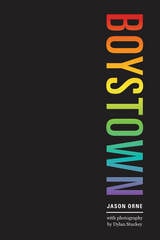
Boystown
Sex and Community in ChicagoJason Orne
University of Chicago Press, 2017
In Boystown, Orne takes readers on a detailed, lively journey through Chicago’s Boystown, which serves as a model for gayborhoods around the country. The neighborhood, he argues, has become an entertainment district—a gay Disneyland—where people get lost in the magic of the night and where straight white women can “go on safari.” In their original form, though, gayborhoods like this one don’t celebrate differences; they create them. By fostering a space outside the mainstream, gay spaces allow people to develop an alternative culture—a queer culture that celebrates sex.
Orne spent three years doing fieldwork in Boystown, searching for ways to ask new questions about the connective power of sex and about what it means to be not just gay, but queer. The result is the striking Boystown, illustrated throughout with street photography by Dylan Stuckey. In the dark backrooms of raunchy clubs where bachelorettes wouldn’t dare tread, people are hooking up and forging “naked intimacy.” Orne is your tour guide to the real Boystown, then, where sex functions as a vital center and an antidote to assimilation.

Brazil's Sex Wars
The Aesthetics of Queer Activism in São PauloJoseph Jay Sosa
University of Texas Press, 2024
An ethnography and media analysis of LGBT+ activism in São Paulo during Brazil’s conservative turn from 2010 to 2018.
For decades, LGBT+ activists across the globe have secured victories by persuasively articulating rights to sexual autonomy. Brazilian activists, some of the world’s most energetic, have kept pace. But since 2010, a backlash has set in, as defenders of “tradition” and “family” have countered LGBT+ rights discourses using a rights-based language of their own.
To understand this shifting ground, Joseph Jay Sosa collaborated with Brazilian LGBT+ activists, who use the language of rights while knowing that rights are not what they seem. Drawing on the symbolic and affective qualities of rights, activists mobilize slogans, bodies, and media to articulate an alternative democratic sensorium. Beyond conventional notions of rights as tools for managing the obligations of states vis-à-vis citizens, activists show how rights operate aesthetically—enjoining the public to see and feel as activists do. Sosa tracks the fate of LGBT+ rights in a growing authoritarian climate that demands “human rights for the right humans.” Interpreting conflicts between advocates and opponents over LGBT+ autonomy as not just an ideological struggle but an aesthetic one, Brazil’s Sex Wars rethinks a style of politics that seems both utterly familiar and counterintuitive.

Bread and Roses
Gender and Class Under CapitalismAndrea D'Atri
Pluto Press, 2021
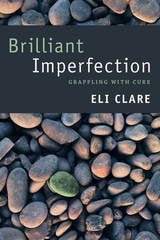
Brilliant Imperfection
Grappling with CureEli Clare
Duke University Press, 2017

Bringing Wreck
Megan Thee Stallion, Monica Roberts, and Other Houston HurricanesOmise'eke Natasha Tinsley
University of Texas Press, 2026
A whirling exploration of how Megan Thee Stallion inspires Black women and femmes like the late Monica Roberts, framed by the storm-making work of both.
While rap megastar Megan Thee Stallion needs no introduction, fewer will be familiar with Monica Roberts, a Houston journalist, community historian, and trans activist with the popular blog TransGriot. Though the two women never met, their work has inspired Black LGBTQ+ activists to love, resist violence, speak truth to power, and dance like life depends on it. With a written energy that’s infectious, Omise’eke Tinsley highlights just how intertwined these artists are.
An incisive look at the impactful sisterhood between Black women and femmes, Bringing Wreck is a book of empowerment. From Megan’s first performance on Saturday Night Live calling to “Protect Black Women,” to Roberts’s use of Hurricane Hanna to poke fun at Donald Trump’s border wall, Tinsley digs into the world-changing power of disruption and joyful expression in the face of racial injustice, anti-trans and queer violence, mental health crises, and community disparities. Reveling in both women’s love of Houston, calling-out of gendered violence, penchant for political humor, and staunch mental health advocacy, Bringing Wreck is an ode to the Bayou City, Black music, and the difference that one woman’s voice can make when we listen carefully.
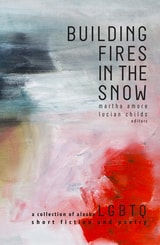
Building Fires in the Snow
A Collection of Alaska LGBTQ Short Fiction and PoetryEdited by Martha Amore and Lucian Childs
University of Alaska Press, 2016
In these pages we see the panoply of LGBTQ life in Alaska today, from the quotidian urban adventures of a family—shopping, going out, working—to intimate encounters with Alaska’s breathtaking natural beauty. At a time of great change and major strides in LGBTQ civil rights, Building Fires in the Snow shows us an Alaska that shatters stereotypes and reveals a side of Alaska that’s been little seen until now.
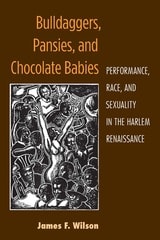
Bulldaggers, Pansies, and Chocolate Babies
Performance, Race, and Sexuality in the Harlem RenaissanceJames F. Wilson
University of Michigan Press, 2011
—David Krasner, author of A Beautiful Pageant: African American Theatre, Drama, and Performance in the Harlem Renaissance, 1910-1927
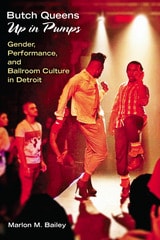
Butch Queens Up in Pumps
Gender, Performance, and Ballroom Culture in DetroitMarlon M. Bailey
University of Michigan Press, 2013
Butch Queens Up in Pumpsexamines Ballroom culture, in which inner-city LGBT individuals dress, dance, and vogue to compete for prizes and trophies. Participants are affiliated with a house, an alternative family structure typically named after haute couture designers and providing support to this diverse community. Marlon M. Bailey’s rich first-person performance ethnography of the Ballroom scene in Detroit examines Ballroom as a queer cultural formation that upsets dominant notions of gender, sexuality, kinship, and community.