Results by title
941 books match the query 'Military' and 35 start with b
Backcountry War
The Rise of Francis Marion, Banastre Tarleton, and Thomas SumterAndrew Waters
Westholme Publishing, 2026
Over the past several decades, the history of the American Revolution in the South has undergone a transformation to better incorporate regional events into the greater narrative of the war. Among these events was the vicious “backcountry” war from the Georgia border, across the South Carolina wilderness, to the North Carolina Piedmont between rebel Americans and loyalist and British forces. Centered in South Carolina, this running battle saw some of the most intense and continuous fighting of the war, and from its skirmishes, feints, and sieges, three key leaders emerged: American partisans Francis “Swamp Fox” Marion and Thomas “Gamecock” Sumter, and British Legion commander Banastre “Bloody Ban” Tarleton.
For the first time, Backcountry War: The Rise of Francis Marion, Banastre Tarleton, and Thomas Sumter by Andrew Waters frames the history of these three men into in a single narrative, focusing on the events of 1780 in South Carolina that witnessed their collective ascendance from common soldiers to American legends. It was a time when British victories at Charleston and Camden left the Continental Army in tatters and the entire American South vulnerable to British conquest. Yet in those dark hours, Sumter, Marion, and others like them rose in the swamps and hills of the South Carolina wilderness. Fighting a wildly successful partisan war against better trained and better equipped British forces, including Tarleton’s British Legion, with victories at lesser-known places like Hanging Rock and Nelson’s Ferry, they gained precious months for the reorganizing Continental Army. Their collective efforts led to the stunning American victory at Cowpens and a stalemate at Guilford’s Courthouse the following year that finally convinced British general Charles Cornwallis to abandon the Carolinas for Virginia.
With background biographies of its three main protagonists, a thorough sketch of Great Britain’s Southern Strategy, and a sociocultural examination of the South Carolina frontier in the years leading up to the American Revolution, Backcountry War offers a fresh perspective on an extraordinary chapter of American history and a compelling account of the deadly contest between three of the war’s most charismatic leaders.
Bataan Survivor
A POW’s Account of Japanese Captivity in World War IIDavid L. Hardee, Edited by Frank A. Blazich, Jr.
University of Missouri Press, 2026
A forgotten account, written in the immediate aftermath of World War II, which vividly portrays the valor, sacrifice, suffering, and liberation of the defenders of Bataan and Corregidor through the eyes of one survivor.
The personal memoir of Colonel David L. Hardee, first drafted at sea from April-May 1945 following his liberation from Japanese captivity, is a thorough treatment of his time in the Philippines. A career infantry officer, Hardee fought during the Battle of Bataan as executive officer of the Provisional Air Corps Regiment. Captured in April 1942 after the American surrender on Bataan, Hardee survived the Bataan Death March and proceeded to endure a series of squalid prison camps. A debilitating hernia left Hardee too ill to travel to Japan in 1944, making him one of the few lieutenant colonels to remain in the Philippines and subsequently survive the war. As a primary account written almost immediately after his liberation, Hardee’s memoir is fresh, vivid, and devoid of decades of faded memories or contemporary influences associated with memoirs written years after an experience. This once-forgotten memoir has been carefully edited, illustrated and annotated to unlock the true depths of Hardee’s experience as a soldier, prisoner, and liberated survivor of the Pacific War.
Battle
The Nature and Consequences of Civil War CombatEdited by Kent Gramm
University of Alabama Press, 2008
A critical, multidisciplinary examination of Civil War combat that interrogates the technological, medical, psychological, and cultural forces shaping battlefield experience and its enduring national legacy.
“In our youth, our hearts were touched with fire,” wrote Oliver Wendell Holmes of his generation’s Civil War days. Through the ages, war stories have gleamed with romantic glory, and American memories of the cataclysmic Civil War inspire pageantry and poetry even today.
The essays in Battle form a corrective to such celebratory histories by examining the lethal realities of Civil War combat—Enlightenment science applied to the creation of weapons that maimed and killed, which far outpaced advances in diet, sanitation, and medical treatment. The book reveals that behind the drums and trumpets, sashes and swords, the armies of the Union and Confederacy alike were haunted by fear, pain, and death.
The collection includes an introduction and afterword by editor Kent Gramm, who also contributes an essay titled “Numbers” that reveals the war in statistics. Paul Fussell contributes a powerful essay titled “The Culture of War.” D. Scott Hartwig examines the face of battle at Gettysburg. Bruce A. Evans discusses medical technology in “Wounds, Death, and Medical Care in the Civil War.” Eric T. Dean challenges the meanings and consequences of combat in “The Awful Shock and Rage of Battle.” The collection is rounded out by Alan T. Nolan’s masterful review of the national consequences of battle and the resultant myth of the Confederacy’s Lost Cause.

Battlefield Pennsylvania
A Guide to the Keystone State's Most Sacred GroundBrady J. Crytzer
Westholme Publishing, 2018
Pennsylvania is a battlefield. Fort Necessity. Brandywine. Gettysburg. The Homestead Strike. Flight 93. In many ways battlefields are like scars on the landscape. They remind us that history is real, and their effects stay with us forever. In Battlefield Pennsylvania: A Guide to the Keystone State’s Most Sacred Ground, award-winning historian Brady J. Crytzer takes the reader on a fascinating tour of over three hundred years of Pennsylvania history through twenty-nine of the state’s most significant battlegrounds, based on his popular Pennsylvania Cable Network television program. The author shows that debates and neighborly disputes have been present throughout the history of William Penn’s “Peaceable Kingdom,” but that battles are not the natural resolution of these conflicts; they are a failure of the system. Understanding how these systems break down and descend into violence and chaos is one of the most important purposes of this book. When the forces of Britain and France met on the battleground of North America, they each waged war in the name of a vision—a defense of the future, not merely the present. The same can be said for the Indian warriors and settlers of the backcountry, and the striking workers of the industrial age. When the young men of the American Civil War era donned the Butternut and Blue, they were not just fighting over a hill or a railroad junction, but for an American future. Illustrated with maps and period and contemporary images, Battlefield Pennsylvania presents each event through background information, a description of the battle itself, the legacy of the battle, and what a visitor can see today. Rather than viewing preserved battlefields as a hollow tribute to days gone by, the author demonstrates that these sites are a great inheritance provided by past generations, and just as they entrusted them to us, we will entrust them to future generations as well.
Battles and Leaders of the Civil War, Volume 5
Edited by Peter Cozzens
University of Illinois Press, 2001
Indispensable must-reads for all Civil War buffs and historians, bringing together little-known and never before gathered first-hand accounts, articles, maps, and illustrations
The first four volumes of Battles and Leaders of the Civil War, published in the late nineteenth century, became the best-selling and most frequently cited works ever published on the Civil War. Volume 5, assembled by the acclaimed military historian Peter Cozzens, carries on the tradition of its namesake, offering a dazzling new collection of fresh material written by military and civilian leaders, North and South, on a broad array of war-related topics. Featured articles include General Grant on the second battle of Bull Run, General Beauregard on the Shiloh campaign, General Sherman on the conference at City Point, Joshua Chamberlain on the Fredericksburg campaign, and many more. Also presented are dozens of maps and more than one hundred illustrations.
Battles and Leaders of the Civil War, Volume 6
Edited by Peter Cozzens
University of Illinois Press, 2001
Behind the Gas Mask
The U.S. Chemical Warfare Service in War and PeaceThomas Faith
University of Illinois Press, 2014
As Faith shows, the believers in chemical weapons staffing the CWS allied with supporters in the military, government, and private industry to lobby to add chemical warfare to the country's permanent arsenal. Their argument: poison gas represented an advanced and even humane tool in modern war, while its applications for pest control and crowd control made a chemical capacity relevant in peacetime. But conflict with those aligned against chemical warfare forced the CWS to fight for its institutional life--and ultimately led to the U.S. military's rejection of battlefield chemical weapons.
Behind the Guns
The History of Battery I, 2nd Regiment, Illinois Light ArtilleryThaddeus C. S. Brown, Samuel J. Murphy, and William G. Putney. Edited with a Foreword by Clyde C. Walton
Southern Illinois University Press, 2000
Much has been written of the infantry and the cavalry during the Civil War, but little attention has been paid the artillery. Through the battles of Chickamauga and Missionary Ridge in 1863 and the Atlanta Campaign of 1864 and with General Sherman’s forces on the famous March to the Sea, the acts of a courageous fighting group are vividly recounted in Behind the Guns: The History of Battery I, 2nd Regiment, Illinois Light Artillery. Originally published in 1965 in a limited edition, this regimental history of a light artillery unit was written by three of its soldiers, including the bugler.
Battery I was formed in 1861 by Charles W. Keith of Joliet and Henry B. Plant of Peoria. More than a hundred men were mustered into service in December near Springfield and left for Cairo in February 1862. The battery trained at Camp Paine across the Ohio River in Kentucky until March, when the men were dispatched to the South. During the war, the Battery was attached to three different armies: the Army of the Mississippi, the Army of the Ohio, and the Army of the Cumberland.
Clyde C. Walton’s foreword and the narrative discuss the variety of weapons used by the unit, including James, Parrott, and Rodman guns and the bronze, muzzle-loading Napoleons that fired twelve-pound projectiles. The book also includes an account of the prisoner-of-war experience of Battery I lieutenant Charles McDonald, biographical sketches of the battery soldiers, and eighteen maps and five line drawings.
Belisarius
The Last Roman GeneralIan Hughes
Westholme Publishing, 2009
Hughes has written a lively and detailed account of Belisarius’s remarkable career.” - Adrian Goldsworthy, author of The Complete Roman Army
Belisarius (c. 505–565 AD) was the greatest general of the Eastern Roman Empire and is among history’s most notable military personalities. At the age of 29, he twice defeated the Persians and reconquered North Africa from the Vandals, before going on to regain the Italian peninsula from the Ostrogoths, including the Eternal City, Rome. Fighting in the name of Justinian I, Belisarius recaptured large portions of the original territory of the ancient Roman Empire. However, Byzantium was both unwilling and incapable of retaining much of Belisarius’s hard-won advances, and soon after his death, the empire once again retracted.
In Belisarius: The Last Roman General, historian Ian Hughes recounts the life of this great soldier. In addition, he explains the evolution of classical Roman armies and systems of warfare into those of the Byzantine Empire, as well as those of their chief enemies, the Persians, Goths, and Vandals. Based on ancient source and drawing on a wealth of modern research, Belisarius’s career is set in the context of the turbulent times in which he lived and his reputation is reassessed to give a balanced portrait of this neglected giant among ancient commanders.
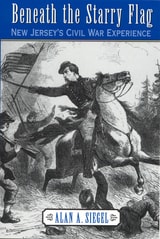
Beneath the Starry Flag
New Jersey's Civil War ExperienceSiegel, Alan A
Rutgers University Press, 2001
Few events in American history can match the triumph and tragedy of the Civil War. Many books have been written about the War between the States, but until now, none has chronicled—in their own words—the many important roles played by people from New Jersey.
Beneath the Starry Flag is a collection of richly detailed eyewitness accounts by New Jerseyans who lived during the Civil War. Drawing from letters, journals, regimental histories, and newspaper accounts, Alan A. Siegel places the reader in the midst of these desperate times. The book depicts the war years chronologically, from the tense days when one state, then another seceded from the Union, through battles lost and won, to the victory at Appomattox and Lincoln’s funeral procession across New Jersey.
Readers will learn of the remarkable valor of New Jersey soldiers such as John Beech, a Trenton potter who won a Medal of Honor for bravery at Spotsylvania’s Bloody Angle. They will learn too of the sacrifices made by civilians, such as Cornelia Hancock of Salem County, who ministered to soldiers wounded on battlefields from Gettysburg to Petersburg. Siegel also tells of other people and institutions who played very different roles in the war, including Somerset County’s Daniel Cory, who said he would shoot the president if he could, the state’s leading Copperhead newspapers, which denounced the draft and discouraged enlistments, and the State Legislature, which at one point called for a truce and negotiations to end the conflict.
Siegel allows them all, enlisted men and officers, politicians and plain citizens, patriots and conspirators, to speak in their own words in often moving firsthand accounts. Their motives, emotions, and deeds are chronicled in this collection of stories, some which have been out of print for many years, others that have not been heard since they were first written more than a century ago.
[Beneath the Starry Flag is an invaluable addition to what we know about this remarkable time in American history, perfect for the general reader or Civil War historian.]

Between Tedium and Terror
A Soldier's World War II Diary, 1943-45Sy M. KahnForeword by Ronald Spector
University of Illinois Press, 1993
Often writing in tents by candlelight, in foxholes, or on board ships, Kahn documents life during four campaigns and over three hundred air attacks. He describes the 244th Port Company's backbreaking work of loading and unloading ships, the suffocating heat, the debilitating tropical diseases, and the relentless, sometimes terrifying bombings, accidents, casualties, and deaths.
His wartime odyssey also includes encounters with civilians in Australia, in the Philippines, and, as among the earliest occupation troops, in Japan. A detailed record of the daily cost of war, Kahn's journal reflects his increasing maturity and his personal coming of age, representative of thousands of young Americans who served in World War II.

Bio-Imperialism
Disease, Terror, and the Construction of National FragilityGwen Shuni D'Arcangelis
Rutgers University Press, 2021
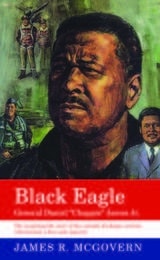
Black Eagle
General Daniel "Chappie" James Jr.James R. Mcgovern
University of Alabama Press, 2002
Born in Pensacola, Florida, the youngest of seventeen children in a relatively poor family, "Chappie" James (1920-1978) rose to attain the rank of four-star general-the highest rank of the peacetime American military. His parents had early on imbued him with personal and national pride and a singular drive that motivated him his whole life.
At Tuskegee Institute, James enrolled in the Army Air Corps unit formed to train black pilots. After combat service in World War II, James became the leader of a fighter group in the Korean War, during which he developed innovative tactics for providing close air support for advancing ground forces. He served with distinction in Vietnam and then became a public affairs officer in the Department of Defense. Between 1970 and 1974, James served as the Pentagon's chief spokesman to youth and civic organizations.
General James's importance transcends his unprecedented achievements as an African American in the military and his role as a spokesman for the patriotic community. He was an early and important proponent of black self-improvement through education, training, and the tireless pursuit of excellence. He became the very embodiment of the American dream.
First published in 1985 in hardcover, this reissue of Black Eagle in paperback makes the inspiring story of a notable Tuskegee airman available again.
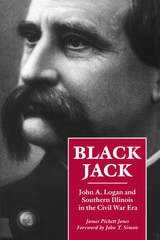
Black Jack
John A. Logan and Southern Illinois in the Civil War EraJames Pickett Jones. Foreword by John Y. Simon
Southern Illinois University Press, 1995
John A. Logan, called "Black Jack" by the men he led in Civil War battles from the Henry-Donelson campaign to Vicksburg, Chattanooga, and on to Atlanta, was one of the Union Army’s most colorful generals.
James Pickett Jones places Logan in his southern Illinois surroundings as he examines the role of the political soldier in the Civil War. When Logan altered his stance on national issues, so did the southern part of the state. Although secession, civil strife, Copperheadism, and the new attitudes created by the war contributed to this change of position in southern Illinois, Logan’s role as political and military leader was important in the region’s swing to strong support of the war against the Confederacy, to the policies of Lincoln, and eventually, to the Republican party.
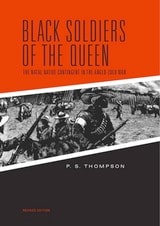
Black Soldiers of the Queen
The Natal Native Contingent in the Anglo-Zulu WarP. S. Thompson
University of Alabama Press, 2006
Africans who fought alongside the British against the Zulu king
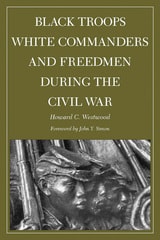
Black Troops, White Commanders and Freedmen during the Civil War
Howard C. Westwood
Southern Illinois University Press, 2008
Recounting the experiences of black soldiers in the Civil War
In the ten probing essays collected in this volume, Howard C. Westwood recounts the often bitter experiences of black men who were admitted to military service and the wrenching problems associated with the shifting status of African Americans during the Civil War.
Black Troops, White Commanders and Freedmen during the Civil War covers topics ranging from the roles played by Lincoln and Grant in beginning black soldiery to the sensitive issues that arose when black soldiers (and their white officers) were captured by the Confederates. The essays relate the exploits of black heroes such as Robert Smalls, who single-handedly captured a Confederate steamer, as well as the experiences of the ignoble Reverend Fountain Brown, who became the first person charged with violating the Emancipation Proclamation.
Although many thousands were enlisted as soldiers, blacks were barred from becoming commissioned officers and for a long time they were paid far less than their white counterparts. These and other blatant forms of discrimination understandably provoked discontent among black troops which, in turn, sparked friction with their white commanders. Westwood's fascinating account of the artillery company from Rhode Island amply demonstrates how frustrations among black soldiers came to be seen as "mutiny" by some white officers.
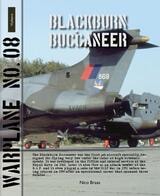
Blackburn Buccaneer
Nico Braas
Amsterdam University Press, 2023
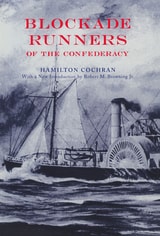
Blockade Runners of the Confederacy
Hamilton Cochran
University of Alabama Press, 2004
An authoritative account of blockade running in Civil War history.
Within four weeks of the fall of Fort Sumter, President Abraham Lincoln had declared a blockade of over four thousand miles of Confederate coastline, from Cape Henry in Virginia to the Mexican border. In response, professional runners, lured by both profits and patriotism, built faster, sleeker, low-profile ships and piloted them through the ever-thickening Northern cordon. The tonnage they imported, including items ranging from straight pins to marine engines, sustained the South throughout the conflict. This exciting chronicle of the men and ships that ran federal naval blockades during the Civil War also provides an overall assessment of the blockades conception, effectiveness, and impact on the Southern populace.
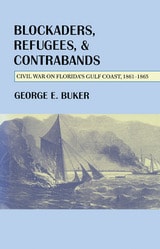
Blockaders, Refugees, and Contrabands
Civil War on Florida's Gulf Coast, 1861-1865George E. Buker
University of Alabama Press, 2004
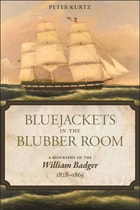
Bluejackets in the Blubber Room
A Biography of the William Badger,1828-1865Kurtz, Peter
University of Alabama Press, 2013
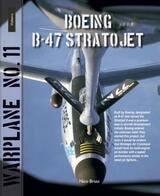
Boeing B-47 Stratojet
the cold war jet bomberNico Braas
Amsterdam University Press, 2023
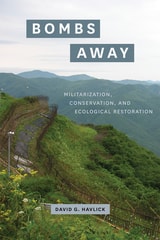
Bombs Away
Militarization, Conservation, and Ecological RestorationDavid G. Havlick
University of Chicago Press, 2018
Looking at particular international sites of transition—from Indiana’s Big Oaks National Wildlife Refuge to Cold War remnants along the former Iron Curtain—Havlick argues that these new frontiers of conservation must accomplish seemingly antithetical aims: rebuilding and protecting ecosystems, or restoring life, while also commemorating the historical and cultural legacies of warfare and militarization. Developing these ideas further, he shows that despite the ecological devastation often wrought by military testing and training, these activities need not be inconsistent with environmental goals, and in some cases can even complement them—a concept he calls ecological militarization. A profound, clear explication of landscapes both fraught and fecund, marked by death but also reservoirs of life, Bombs Away shows us how “military activities, conservation goals, and ecological restoration efforts are made to work together to create new kinds of places and new conceptions of place.”
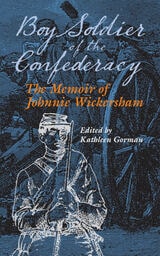
Boy Soldier of the Confederacy
The Memoir of Johnnie WickershamEdited by Kathleen Gorman
Southern Illinois University Press, 2006
Johnnie Wickersham was fourteen when he ran away from his Missouri home to fight for the Confederacy. Fifty years after the war, he wrote his memoir at the request of family and friends and distributed it privately in 1915. Boy Soldier of the Confederacy: The Memoir of Johnnie Wickersham offers not only a rare look into the Civil War through the eyes of a child but also a coming-of-age story.
Edited by Kathleen Gorman, the volume presents a new introduction and annotations that explain how the war was glorified over time, the harsh realities suppressed in the nation’s collective memory. Gorman describes a man who nostalgically remembers the boy he once was. She maintains that the older Wickersham who put pen to paper decades later likely glorified and embellished the experience, accepting a polished interpretation of his own past.
Wickersham recounts that during his first skirmish he was "wild with the ecstasy of it all" and notes that he was "too young to appreciate the danger." The memoir traces his participation in an October 1861 Confederate charge against Springfield, Missouri; his fight at the battle of Pea Ridge in March 1862; his stay at a plantation he calls Fairyland; and the battle of Corinth.
The volume details Wickersham’s assignment as an orderly for General Sterling Price, his capture at Vicksburg in 1863, his parole, and later his service with General John Bell Hood for the 1864 fighting around Atlanta. Wickersham also describes the Confederate surrender in New Orleans, the reconciliation of the North and the South, and his own return and reunification with his family.
While Gorman’s incisive introduction and annotations allow readers to consider how memories can be affected by the passage of time, Wickersham’s boy-turned-soldier tale offers readers an engaging narrative, detailing the perceptions of a child on the cusp of adulthood during a turbulent period in our nation’s history.
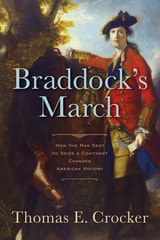
Braddock's March
How the Man Sent to Seize a Continent Changed American HistoryThomas E. Crocker
Westholme Publishing, 2009
Winner of the 2011 New York Society of Colonial Wars Distinguished Book Award
“The strength of this book lies in Crocker’s presentation of the battle and the complicated logistics involved.”—Times Literary Supplement “Braddock’s March is arguably the first truly comprehensive history devoted exclusively to the calamitous march that remade North America. . . . Braddock’s story is superb history.”—Weekly Standard “Drawing on original sources, Crocker grittily reconstructs the advance of Edward Braddock’s army on Fort Duquesne. . . . Attentive to detail, Crocker will engage colonial-history readers in this well illustrated book.”—Booklist
“Both Braddock’s epic march and subsequent destruction are brought to life by Thomas E. Crocker in Braddock’s March, his impeccably researched account of an important but largely forgotten chapter in American history. . . . It all adds up to a stirring tale.”—Washington Times
“Before we parted, the General told me he should never see me more; for he was going with a handful of men to conquer whole nations; and to do this they must cut their way through unknown woods. He produced a map of the country, saying at the same time, ‘Dear Pop, we are sent like sacrifices to the altar.’” - George Anne Bellamy on General Edward Braddock’s departure
In January 1755, Major General Edward Braddock was sent by Great Britain on a mission to drive France once and for all from the New World. Accompanied by the largest armed expeditionary force ever sent to North America, Braddock’s primary target was the Forks of the Ohio, where he planned to seize Fort Duquesne (at present-day Pittsburgh, Pennsylvania), and then march north into Canada. After landing in Alexandria, Virginia, and organizing his troops and supply chain, Braddock and his expedition began its nearly 250-mile trek, heroically cutting through uncharted wilderness, fording rivers, and scaling the Appalachian mountains, all while hauling baggage and heavy artillery. Braddock was joined on this epic mission by a young Virginia colonel, George Washington, and others who would later play major roles in the American Revolution, including Horatio Gates, Thomas Gage, and Charles Lee; among those driving the expedition’s wagons were Daniel Boone and Daniel Morgan. Having withstood the harsh frontier and finally marching upon Fort Duquesne on a hot July morning, Braddock’s exhausted column was ambushed by a combined French and Indian force. Over two-thirds of Braddock’s British and colonial troops were killed or wounded, including Braddock himself, struck by a bullet in the chest while attempting to rally his disoriented troops. George Washington miraculously escaped harm despite four bullet holes through his clothing. With this battle, North America became the greatest stake in the global war between France and Great Britain.
In Braddock’s March: How the Man Sent to Seize a Continent Changed American History, Thomas E. Crocker tells the riveting story of one of the most important events in colonial America. Not only did Braddock’s expedition have a profound impact on American political and military developments, this fateful march laid the foundation for the “National Pike,” the major road for westward expansion, launched the career of George Washington, and sowed the seeds of dissent between England and its colonies that would ultimately lead to the American Revolution.
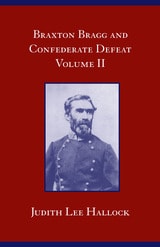
Braxton Bragg and Confederate Defeat V. II
Judith Lee Hallock
University of Alabama Press, 2009
In the summer of 1863, Confederate General Braxton Bragg was commander of the Army of Tennessee., still reeling from its defeat in January at Murfreesboro, Tennessee. Failing to establish a strong defensive position at either Tullahoma or Chattanooga, Bragg saw the heartland of the South gradually slip away from him. Victory at Chickamauga Creek in September—Bragg’s last military success—was followed by disaster at Missionary Ridge and, shortly thereafter, his removal from army command.
Within three months, however, President Jefferson Davis had restored Bragg to active military involvement, naming him military adviser for the Confederacy. Here, finally, Bragg’s skills as an administrator and organizer bore fruit—as did his penchant for provoking quarrels and disunity within the military establishment. Reassigned to field command in late 1864, Bragg concluded his army service with defeats at Wilmington and Bentonville, North Carolina. The prevailing view of Bragg’s is a false one. Rather, he was a valuable asset to the Confederacy, a talented organizer whose gifts were misused by the nation he served. For the first time, Bragg’s tenure in Richmond is examined carefully and evaluated. Contrary to the common view that Bragg was nothing more than a sycophant to President Davis, this study shows that he and Davis often disagreed on policy. Much of Bragg’s present reputation among civil war scholars is based upon how contemporaries viewed him. Despite Bragg’s determined devotion to the Confederacy, his frailties have shaped the literature to such an extent that his real accomplishments have been distorted or ignored. In this study the author has tried, as General Joseph E. Johnston once advised, to “have a little charity for Bragg.”
Judith Lee Hallock draws a balanced picture of Bragg and of his important role in the Confederacy beginning in 1863. Her volume continues and completes the biography of Bragg published in Volume I by Grady McWhiney in 1969. Along with the military details, the author provides a full accounting of Bragg’s fractious relationships with other members of the military, a critical factor in this period for the entire Confederate command. This sympathetic biography of Bragg gives valuable insight into the workings of the Confederacy in the last two years of its struggle for independence.
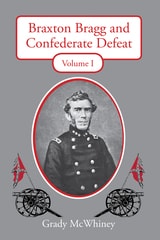
Braxton Bragg and Confederate Defeat
Volume 1Grady McWhiney
University of Alabama Press, 1991
McWhiney intended this work – first published in 1969 – to be the first of two volumes covering the life of the Confederacy’s most problematic general. This reprint edition is issued along with Braxton Bragg and Confederate Defeat, Volume II by Judith Lee Hallock. McWhiney’s work carries Bragg through the defeat at Murfreesboro in January 1863, and Hallock’s book continues through the staff appointment in Richmond and Bragg’s final days as a private citizen.
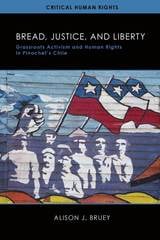
Bread, Justice, and Liberty
Grassroots Activism and Human Rights in Pinochet's ChileAlison J. Bruey
University of Wisconsin Press, 2020
As Bruey shows, crucial to the popular movement built in the 1970s were the activism of both men and women and the coalition forged by liberation-theology Catholics and Marxist-Left militants. These alliances made possible the mass protests of the 1980s that paved the way for Chile's return to democracy, but the changes fell short of many activists' hopes. Their grassroots demands for human rights encompassed not just an end to state terror but an embrace of economic opportunity and participatory democracy for all.
Deeply grounded by both extensive oral history interviews and archival research, Bread, Justice, and Liberty offers innovative contributions to scholarship on Chilean history, social movements, popular protest and democratization, neoliberal economics, and the Cold War in Latin America.
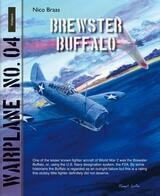
Brewster Buffalo
Nico Braas
Amsterdam University Press, 2023
This book presents an overview of the development and operational use of the Buffalo with many photos including a number not published before.
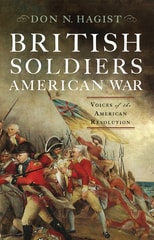
British Soldiers, American War
Voices of the American RevolutionDonald N. Hagist
Westholme Publishing, 2012
Nine Rare and Fascinating First-Person Profiles of Soldiers Who Fought for the British Crown
Much has been written about the colonists who took up arms during the American Revolution and the army they created. Far less literature, however, has been devoted to their adversaries. The professional soldiers that composed the British army are seldom considered on a personal level, instead being either overlooked or inaccurately characterized as conscripts and criminals. Most of the British Redcoats sent to America in defense of their government’s policies were career soldiers who enlisted voluntarily in their late teens or early twenties. They came from all walks of British life, including those with nowhere else to turn, those aspiring to improve their social standing, and all others in between. Statistics show that most were simply hardworking men with various amounts of education who had chosen
the military in preference to other occupations. Very few of these soldiers left writings from which we can learn their private motives and experiences.
British Soldiers, American War: Voices of the American Revolution is the first collection of personal narratives by British common soldiers ever assembled and published. Author Don N. Hagist has located first-hand accounts of nine soldiers who served in America in the 1770s and 1780s. In their own words we learn of the diverse population—among them a former weaver, a boy who quarelled with his family, and a man with wanderlust—who joined the army and served tirelessly and dutifully, sometimes faithfully and sometimes irresolutely, in the uniform of their nation. To accompany each narrative, the author provides a contextualizing essay based on archival research giving background on the soldier and his military service. Taken as a whole these true stories reveal much about the individuals who composed what was, at the time, the most formidable fighting force in the world.
Broadcasting Empire
The American Forces Network and the Postwar Projection of US PowerStacy Takacs
University of Illinois Press, 2026
Stacy Takacs traces the AFN’s role in the worldwide expansion of American-style broadcasting and illuminates its impact on how foreign audiences viewed the United States. The AFN’s transformation emerged from collaborations between military leaders, foreign governments, commercial media companies, and local communities and turned the sprawling archipelago of US military bases into a potent instrument of soft power. Yet at times shifting alliances, practical problems, and the everyday routines of military life led to problems that complicated its mission
Knowledgeable and multidimensional, Broadcasting Empire combines big-picture analysis with case studies and oral history to reveal an important but overlooked tool of American influence.
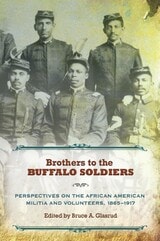
Brothers to the Buffalo Soldiers
Perspectives on the African American Militia and Volunteers, 1865-1917Bruce A. Glasrud
University of Missouri Press, 2011
Many black Americans continued to serve in times of military need. Nearly 180,000 African Americans served in units of the U.S. Colored Troops during the Civil War, and others, from states such as Massachusetts, Rhode Island, Missouri, and Kansas, participated in state militias organized to protect local populations from threats of Confederate invasion. As such, the Civil War was a turning point in the acceptance of black soldiers for national defense. By 1900, twenty-two states and the District of Columbia had accepted black men into some form of military service, usually as state militiamen—brothers to the “buffalo soldiers” of the regular army regiments, but American military men regardless.
Little has been published about them, but Brothers to the Buffalo Soldiers: Perspectives on the African American Militia and Volunteers, 1865–1919, offers insights into the varied experiences of black militia units in the post–Civil War period. The book includes eleven articles that focus either on “Black Participation in the Militia” or “Black Volunteer Units in the War with Spain.” The articles, collected and introduced by author and scholar Bruce A. Glasrud, provide an overview of the history of early black citizen-soldiers and offer criticism from prominent academics interested in that experience.
Brothers to the Buffalo Soldiers discusses a previously little-known aspect of the black military experience in U.S. history, while deliberating on the discrimination these men faced both within and outside the military. Chosen on the bases of scholarship, balance, and readability, these articles provide a rare composite picture of the black military man’s life during this period. Brothers to the Buffalo Soldiers offers both a valuable introductory text for students of military studies and a solid source of material for African American historians.
Bugle Resounding
Music and Musicians of the Civil War EraEdited by Bruce C. Kelley & Mark A. Snell
University of Missouri Press, 2004
Although numerous academic resources examine the music and musicians of the Civil War era, the research is spread across a variety of disciplines and is found in a wide array of scholarly journals, books, and papers. It is difficult to assimilate this diverse body of research, and few sources are dedicated solely to a rigorous and comprehensive investigation of the music and the musicians of this era. This anthology, which grew out of the first two National Conferences on Music of the Civil War Era, is an initial attempt to address that need.
Those conferences established the first academic setting solely devoted to exploring the effects of the Civil War on music and musicians. Bridging musicology and history, these essays represent the forefront of scholarship in music of the Civil War era. Each one makes a significant contribution to research in the music of this era and will ultimately encourage more interdisciplinary research on a subject that has relevance both for its own time and for ours. The result is a readable, understandable volume on one of the few understudied—yet fascinating—aspects of the Civil War era.

Burning Country
Syrians in Revolution and WarRobin Yassin-Kassab and Leila Al-Shami
Pluto Press, 2018
Burning Country explores the complicated reality of life in present-day Syria with unprecedented detail and sophistication, drawing on new firsthand testimonies from opposition fighters, exiles lost in an archipelago of refugee camps, and courageous human rights activists. Robin Yassin-Kassab and Leila Al-Shami expertly interweave these stories with an incisive analysis of the militarization of the uprising, the rise of the Islamists and sectarian warfare, and the role of Syria’s government in exacerbating the brutalization of the conflict. Through these accounts and a broad range of secondary source material, the authors persuasively argue that the international community has failed in its stated commitments to support the Syrian opposition movements.
This new edition brings the story up to the present, with a new chapter that covers the internationalization of the conflict, including interventions by the United States, Russia, and Iran; the rollback of ISIS; the fall of Daraya and Aleppo; the crushing of local democracy; sectarian cleansing; and the forced exile of millions of Syrians.
By Wind and Iron
Naval Campaigns in the Champlain Valley, 1665–1815Michael Laramie
Westholme Publishing, 2027
For more than 150 years, the natural invasion route along the waterways of the Champlain and Richelieu valleys into northeastern North America was among the most fiercely contested in the history of the continent. Whether the French and their Indian allies attacking British forts and settlements during the Seven Years’ War, the American Continentals striking north into Canada during the American Revolution, or the British battling French and later American forces in these wars and the War of 1812, it was clear to policy makers in Quebec, London, Paris, Philadelphia, and Washington that whoever controlled this corridor and its lakes and rivers, controlled the heart of the continent. In By Wind and Iron: Naval Campaigns in the Champlain Valley, 1665–1815, Michael G. Laramie details the maritime history of this region from the first French fortifications along the Richelieu River in the late seventeenth century through the tremendous American victory over the British at the Battle of Plattsburgh on Lake Champlain in 1814. Using period letters, journals, and other primary source materials, the author examines the northeastern waterways and their tributaries within the framework of the soldiers and sailors who faced the perils of the campaigns, while at the same time clarifying the key role played by this region in the greater struggle for North America and American independence.
In support of the narrative, the book also contains appendices that include after action reports from various fleet commanders, tables of fleet strengths, additional battle maps, a glossary, and a dictionary of lake warships with notes on vessel types, typical armament, construction, deployment, and fates.
By the Noble Daring of Her Sons
The Florida Brigade of the Army of TennesseeJonathan C. Sheppard
University of Alabama Press, 2012
A fascinating account of Floridians who served in the Confederate army and the changes to Florida society and politics that resulted from the state's Confederate experience
Until recently Florida’s Confederate soldiers have received scant attention. This volume explores the story of Florida soldiers going to war, families left behind, a white population fighting to maintain a society built on slavery, and a state torn by political and regional strife.
Before the war Florida’s inhabitants engaged in bitter political rivalries. Sheppard argues that prior to secession Florida citizens maintained regional loyalties rather than considering themselves “Floridians.” He argues that service in Confederate armies eased tensions between political factions and fostered solidarity among white Floridians. In this illuminated account, Sheppard also addresses the practices of prisoner parole and exchange, unit consolidation and its effects on morale and unit identity, politics within the Army of Tennessee, and conscription and desertion in the Southern armies. These issues come together to demonstrate the connection between the front lines and the home front.