Results by title
3785 books match the query 'Poetry' and 173 start with b
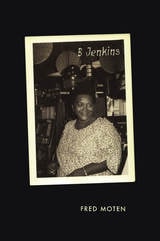
B Jenkins
Fred Moten
Duke University Press, 2010
The first and last poems in the collection are explicitly devoted to Moten’s mother; the others relate more obliquely to her life and legacy. They invoke performers, writers, artists, and thinkers including not only James Baldwin, Roland Barthes, Frederick Douglass, Billie Holiday, Audre Lorde, Charlie Parker, and Cecil Taylor, but also contemporary scholars of race, affect, and queer theory. The book concludes with an interview conducted by Charles Henry Rowell, the editor of the journal Callaloo. Rowell elicits Moten’s thoughts on the relation of his poetry to theory, music, and African American vernacular culture.
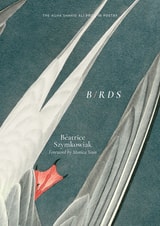
B/RDS
Béatrice Szymkowiak
University of Utah Press, 2023
B/RDS endeavors to dismantle discourses that create an artificial distinction between nature and humanity through a subversive erasure of an iconic work of natural history: John James Audubon’s Birds of America (1827-1838). This process of erasure considers the text of Birds of America as an archival cage. The author selectively erases words from the textual cage to reveal its ambiguity and the complex relationship between humanity and the other-than-human world. As the cage disappears, leaving a space for scarce, lyrical poems, birds break free, their voices inextricably entangled with ours.
Prose poems written in the author’s own words and prompted by the erasure process are also interspersed throughout the collection. These migratory poems, like ripples, trace the link between past and present and reveal the human-nature disconnect at the root cause of environmental and social problems, including the COVID-19 pandemic.
Along its five movements, B/RDS also explores how we can reimagine our relationship to environment through language within new frameworks of interconnectedness. Thus, as the collection resists the distinction between nature and culture on which traditional nature poetry relies, it also acts as an ecopoetic manifesto. It suggests that a critical, lyrical poetry could contribute to ecological awareness by singing humanity back within nature.
Babel's Moon
Brandon Som
Tupelo Press, 2011
Back to the Woods
Cynthia Cruz
Four Way Books, 0
National Book Critics Circle Award Winner Cynthia Cruz reevaluates the paradox of the death drive in her eighth collection of poetry, Back to the Woods. Could it be that in ceaselessly snuffing ourselves out we are, in fact, trying to survive? In “Shine,” Cruz’s speaker attests that “if [she] had a home, it would be // a still in a film / where the sound / got jammed.” This book inhabits the silence of the empty orchestra pit, facing “dread, and its many / instruments of sorrow.” The quiet asks, “Did you love this world / and did this world / not love you?” We return to the site of our suffering, we perform the symphony of all our old injuries, to master what has broken us. To make possible the future, we retreat into the past. “I don’t know / the ending. // I don’t know anything,” our speaker insists, but she follows the wind’s off-kilter song of “winter / in the pines” and “the dissonance / of siskins.” Cruz heeds the urgency of our wandering, the mandate that we must get back to the woods, not simply for the forest to devour us — she recognizes in the oblivion “flooding out / from its spiral branches” an impossible promise. At the tree line, we might vanish to begin again.

Background of Thomson’s Seasons
Alan Dugald McKillop
University of Minnesota Press, 1942
Background of Thomson's Seasons was first published in 1942. Minnesota Archive Editions uses digital technology to make long-unavailable books once again accessible, and are published unaltered from the original University of Minnesota Press editions.
There have been many valuable scattered studies of James Thomson's famous Seasons,but this is the first comprehensive book on the subject to be published in this country. This most popular long poem published in England in the eighteenth century well deserves reexamination. It is interesting not only to students of literature but also to those concerned with the history of ideas and the relationship of the fields of human knowledge.
Thomson's Seasons reflects the trends of his time in literature, philosophy, science, history, and religion. Professor McKillop presents an illuminating and systematic analysis of the general philosophic and literary situation in which Thomson worked. Then he discusses Thomson's use of the natural sciences and of the literature of history, geography, and travel. He shows that the poet was also concerned with the patterns of human society, both primitive and civilized.
The author reveals clearly how Thomson was indebted to the classical tradition; to the literary inspiration of Milton; to the scientific discussions and theories of Newton, Halley, Burnet, and the writers of popular physico-theological manuals; to the philosophical discussions of Shaftesbury and Locke; to the contemporary periodical essay; to the religious works of Blackmore and Hill; to the descriptions of remote regions and peoples in such writers as Scheffer, Varenius, and Maupertuis. All Thomson's borrowings and characteristic ideas fall into the framework of his poem.
As this book was leaving the bindery, discovery was made in Glasgow of a catalogue of Thomson's library. The document substantiates many of Professor McKillop's deductions.
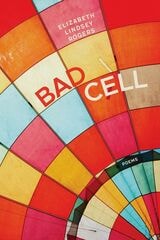
Bad Cell
PoemsElizabeth Lindsey Rogers
Acre Books, 2027
Chronicling reproduction and parenting within a lesbian relationship, this poetry collection reveals both the anxieties and awe inspired by rearing children.
In her frank, vulnerable third book of poetry, Elizabeth Lindsey Rogers considers queer kinship through scientific, cultural, and personal lenses. Bad Cell presents perspectives on family and inheritance that are at once granular and comprehensive. From a pregnant woman being mistaken as a man by a store clerk to some “FAQs Re: Queers & Reproduction” that dispel stereotypes, the collection celebrates the fluidity of gender.
Early in the volume, Rogers addresses the emotional and physical complications of fertility treatment and pregnancy loss, a medical journey that, though harrowing, is gorgeously rendered in taut lyric language. Later, in forms like the abecedarian, definition poem, questionnaire, haibun, and a sonnet crown, the poet looks at how cells themselves—the stuff of life—divide and recombine. As in previous collections, Rogers leans into science-inspired verse, showcasing her talent for turning small-scale mechanics into meaningful metaphors.
The book also supports an openness to neurodivergence in children: “I want to assemble / something that can speak / for everyone,” says the speaker of “Apraxia.” And Rogers does, with the skill of a seasoned poet and essay writer, whose eye for the particularness of the world is encompassing and gives new insight into the experience of parenting: “But I’m not mom, I tell / writers who think I’ve gone soft, given up deeper subjects. As if these wild, / xenogeneic offspring aren’t a full-on wrestle with the deep.”
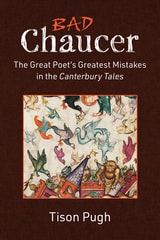
Bad Chaucer
The Great Poet’s Greatest Mistakes in the Canterbury TalesTison Pugh
University of Michigan Press, 2024

Bad Mexican, Bad American
PoemsJose Hernandez Diaz
Acre Books, 2024
In Bad Mexican, Bad American, the minimalist, working-class aesthetic of a “disadvantaged Brown kid” takes wing in prose poems that recall and celebrate that form’s ties to Surrealism. With influences like Alberto Ríos and Ray Gonzalez on one hand, and James Tate and Charles Baudelaire on the other, the collection spectacularly combines “high” art and folk art in a way that collapses those distinctions, as in the poem “My Date with Frida Kahlo”: “Frida and I had Cuban coffee and then vegetarian tacos. We sipped on mescal and black tea. At the end of the night, following an awkward silence during a conversation on Cubism, we kissed for about thirty minutes beneath a protest mural by David Alfaro Siqueiros.”
Bad Mexican, Bad American demonstrates how having roots in more than one culture can be both unsettling and rich: van Gogh and Beethoven share the page with tattoos, graffiti, and rancheras; Quetzalcoatl shows up at Panda Express; a Mexican American child who has never had a Mexican American teacher may become that teacher; a parent’s “broken” English is beautiful and masterful. Blending reality with dream and humility with hope, Hernandez Diaz contributes a singing strand to the complex cultural weave that is twenty-first-century poetry.
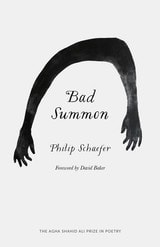
Bad Summon
Philip Schaefer
University of Utah Press, 2017
Winner of the Agha Shahid Ali Poetry Prize
Bad Summon explores the relationship between the majesty of nature and the quiet violence humans inflict upon themselves and others. The poems are dipped in loss, traveling between death and mountains, romance and rivers. They are addicted to the truth of experience and the energy behind regret. Bad Summon conjures its own ghost. According to David Baker, the judge who selected the winning manuscript, this is a “surprising, coherent, original collection of lyric poems. I felt peril, heartbreak, catastrophe, sorrow, genuine soulfulness. It’s also funny, yet its humor is not comic but possesses a terrible gravity.” This is a volume every poetry lover will want to explore.
[In this one we aren’t exactly drowning]
but we are falling through water.
Quieter than we expect. Churning
is how we’ll later describe it.
Our arms dig out two wet Cs,
a heart if you want to look at it
that way. Though the body is always
in between—that unoriginal arrow.
Bardic Deadlines
Reviewing Poetry, 1984-95Geoffrey O'Brien
University of Michigan Press, 1998
In Bardic Deadlines, writer and editor Geoffrey O'Brien collects twenty of his essays on poetry that originally appeared in the Voice Literary Supplement and the New York Review of Books. O'Brien surveys an array of some of the most striking and innovative poets to emerge in recent decades, including Susan Howe, August Kleinzahler, Clark Coolidge, Nathaniel Mackey, Gustaf Sobin, and Michael O'Brien. Discussions of contemporary work are juxtaposed with considerations of other traditions going as far back as the second-century Chinese anthology The Songs of the South and the Sanskrit master Kalidasa, traditions considered highly relevant to current practice. There are engaging, in-depth portraits of the work of poets John Clare, Hugh MacDiarmid, Emily Brontë, Kenji Miyazawa, and Frank O'Hara, among others. There is also an exploration of the poetics of Walt Whitman that highlights themes addressed throughout the collection: the physicality and musicality of language, the spatial dimension of poetry, the intimate bond between poet and reader, and the secret and often obsessive strategies by which the poet hides secrets in plain sight and enlists the reader in the making of the poem. Each essay focuses on poetry as an experience that impinges on basic questions of identity and being.
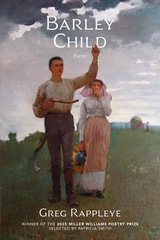
Barley Child
Greg Rappleye
University of Arkansas Press, 2025
Winner, 2026 Society of Midland Authors Book Award
Finalist, 2026 Kingsley Tufts Poetry Award
Finalist, 2026 Griffin Poetry Prize
Barley Child, Greg Rappleye’s fifth collection, draws from family legends, whispered stories, and sworn denials across four generations of Irish American lives—recalled, imagined, and reconstructed from census records, old letters, church registries, yellowed newspaper clippings, and a few odd photographs in which the human figures are often unnamed. The sum of these affidavits, arrayed across the lyric and narrative lines of these poems, is an electrifying human choir—male and female, child and adult, Irish and American—their voices rising out of shame, poverty, absurdity, violence, a strained Catholic faith, and a virulent legacy of madness and alcoholism.
Free of nostalgia and cant, with a sharp Irish wit that often braves nearly monstrous subject matter, and reported with eyes that seldom mist over, Barley Child is a volume that once again confirms Greg Rappleye as a poet of witness.
Barrier of a Common Language
An American Looks at Contemporary British PoetryDana Gioia
University of Michigan Press, 2003
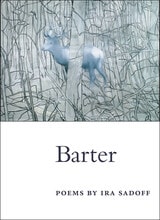
Barter
POEMSIra Sadoff
University of Illinois Press, 2003
Rooted firmly in the “fleeting world,” Sadoff’s poems find epiphanies of meaning in unexpected and even unpleasant experiences and emotions. The poems in Barter delve deeply into the past, the personal past of regret, travel, love, divorce, and bereavement, as well as the global past of Beethoven, Vietnam, and the fall of communism. Each poem is offered up by Sadoff as a barter, something to be traded for a little more time, a little more understanding.
The poems in Barter comment on the power of culture to interject itself into our desire for an idealized self, the way our inner and outer lives lack correspondence, harmony, and integration. They also talk about commerce, the trading of bodies, the way we as a nation “use” and exchange and appropriate -- and like Tolstoy’s Ivan Ilyich, try to bargain with and evade the urgency of our time on earth.
In the poem “Self-Portrait with a Critic,” Sadoff makes what could be a succinct statement of purpose: “And inside, let’s not make it pretty, / let’s save the off-rhyme and onomatopoeia / / for the concert hall, let’s go to the wormy place / where the problematic stirs inside his head.”
Bastards of the Reagan Era
Reginald Dwayne Betts
Four Way Books, 2015
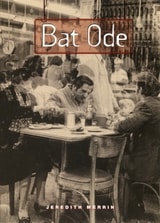
Bat Ode
Jeredith Merrin
University of Chicago Press, 2001

Battle Of Kosovo
John Matthias
Ohio University Press, 1987
The Battle of Kosovo cycle of heroic ballads is generally considered the finest work of Serbian folk poetry. Commemorating the Serbian Empire’s defeat at the hands of the Turks in the late fourteenth century, these poems and fragments have been known for centuries in Eastern Europe. With the appearance of the collections of Serbian folk poems by Vuk Stefanovic Karasdzic, the brilliance of the poetry in the Kosovo and related cycles of ballads was affirmed by poets and critics as deeply influential as Goethe, Jacob Brimm, Adam Mickiewicz, and Alexander Pushkin. Although translations into English have been attempted before, few of them, as Charles Simic notes in his preface, have been persuasive until now. Simic compares the movement of the verse in these translations to the “variable foot” effect of William Carlos Williams’s later poetry, and argues that John Matthias “grasps the poetic strategies of the anonymous Serbian poet as well as Pound did those of Chinese poetry.”
First published in 1987, the translation of the Battle of Kosovo is now reprinted both because of its intrinsic merits and because the recent crisis in Kosovo itself compels the entire world to understand the nature of the ancient conflicts and passions that fuel it. Although Matthias and Simic have elected to retain their original preface and introduction, Christopher Merrill, a scholar of the region and author of Only the Nails Remain, has contributed a brief afterword explaining the importance of this poetry in the context of NATO’s first military action ever against a sovereign nation.
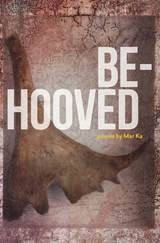
Be-Hooved
Mar Ka
University of Alaska Press, 2019
Entrancing, profound, and startling, this book is a testament to hope before change, persistence before confusion, and empathy before difference: all the world’s light and all the world’s dark / can fit into an eye into a heart.

Beachlight
PoemsCyril Wong
Seagull Books, 2023
Beachlight is a sustained poem divided into smaller parts that take on the anonymous voices of those lost and forgotten. A walk along a Singaporean beach transforms into a meditation that bridges an ecological consciousness to the sexual and the homoerotic. The poems in Beachlight expose revelations about the nature of desire, inviting readers to walk beside—and inside—them, reminding us of what we gain when we abandon ourselves to nature and exhorting us to reclaim our primordial connections to the world and to one another.

Bear Tracks
Memories of a Ho-Chunk ElderSherman Funmaker
Wisconsin Historical Society Press, 2026
“For me, writing is a form of therapy. I write thoughts down and send them out to the universe. I miss the ones I loved, and when I write about them it feels good to put these stories onto paper. It allows me to visit them when I need to.”
Sherman Funmaker—poet and musician, designer and teacher, son and brother—shares his life story in his intensely personal debut, Bear Tracks: Memories of a Ho-Chunk Elder. In this collection of poems and short essays, Funmaker explores themes of childhood and familial ties, finding and leaving home, coming of age, experiencing love and loss, creating art, and seeking belonging.
A Ho-Chunk Nation Bear Clan elder and grandson of renowned Ho-Chunk storyteller Xéhachiwinga (Mountain Wolf Woman), Funmaker illuminates how his Ho-Chunk culture has had a lasting impact on his life, self-expression, and point of view. With emotional depth and clarity, Bear Tracks confronts hard topics, such as poverty, racism, and personal loss, leavening them with optimism and a wry sense of humor.
Family photos from across generations accompany Funmaker’s reflections on the people and places that have shaped his life and art. Bear Tracks concludes with a reader’s guide offering additional topics for discussion and reflection.
With a voice both distinct and entirely relatable, Funmaker creates space for readers to find resilience and hope for the future while reckoning with the struggles of their past.
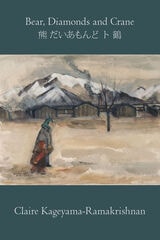
Bear, Diamonds and Crane
Claire Kageyama-Ramakrishnan
Four Way Books, 2011
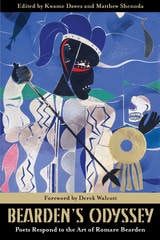
Bearden's Odyssey
Poets Respond to the Art of Romare BeardenEdited by Kwame Dawes and Matthew Shenoda, Foreword by Derek Walcott
Northwestern University Press, 2017
Borrowing from Romare Bearden’s aesthetic palette and inspired by his Odysseus series, Bearden’s Odyssey gathers, for the first time, poems from thirty-five of the most revered African diaspora poets in the United States. Poetic echoes come forth in themes of inspiration with historical intersections of one of the greatest visual artists of the twentieth century.
The award-winning editors, Kwame Dawes and Matthew Shenoda, assemble an esteemed literary congregation, with original poems by Chris Abani, Rita Dove, Lyrae Van Clief-Stefanon, Ed Roberson, Aracelis Girmay, Yusef Komunyakaa, and more. With a powerful foreword by Nobel laureate Derek Walcott and stunning visual reproductions of select Bearden masterpieces, this anthology fuses art and literature, standing as a testament to Romare Bearden’s power and influence in the contemporary artistic world.
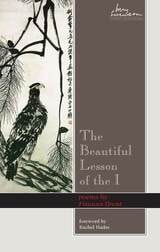
Beautiful Lesson of the I
poemsFrances Brent
Utah State University Press, 2005
The Beautiful Lesson of the I is a collection of finely made poems by an accomplished poet. It will reward the scholar and the student of poetry, as well as the reader looking for the simple pleasures of poetic insight authentically felt. Winner of the Swenson Poetry Award 2005. Now in paperback.
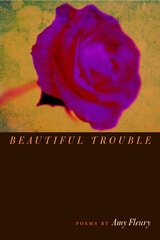
Beautiful Trouble
Amy Fleury
Southern Illinois University Press, 2004
In her first collection of poems, Kansas native Amy Fleury captures images of dragging clotheslines, baked lawns, and sweet potato babies, inserting them with an earnest dignity into her stories of midwestern life. Beautiful Trouble explores the subtleties of landscape, place, families, girlhood, womanhood, and everyday existence on the prairie. Fleury writes of the Midwest with authenticity, speaks of romance with delicate allure, and recalls the heartbreak of childhood without self-pity. In meditations on resilience and life’s contradictions, Fleury engages her characters fully and paints their souls and sensations evenly in language both rare and beautiful. She is a poet in love with sound and its power to summon majesty from quotidian scenes. Her poems are brief and striking, depending on exquisite word choice and balance to achieve a simple order on the page.
Beauty Refracted
Carol Moldaw
Four Way Books, 2018
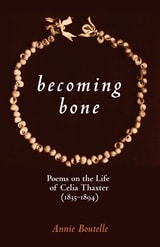
Becoming Bone
Poems on the Life of Celia Thaxter (1836-1894)Annie Boutelle
University of Arkansas Press, 2005
In the tradition of such outstanding biography-in-poetry collections as Maurice Manning’s A Companion of Owls about Daniel Boone and Sharon Chmielarz’s The Other Mozart, Annie Boutelle’s first collection probes the layered life of one of nineteenth-century America’s most popular poets, who is now almost forgotten. The Celia Thaxter who speaks these poems disturbs the placid myth created around her public persona, and focuses on the fierce mysteries and ironies that frame her. Boutelle carefully reveals Thaxter’s childhood on the stark Isles of Shoals off the New Hampshire coast; the trap of a Victorian marriage; the struggle to invent herself as a writer and painter; her celebrated circle of friends, which included Nathaniel Hawthorne, John Greenleaf Whittier, Sarah Orne Jewett, and Childe Hassam; and the hard-won serenity of her last decade. At the fringes of Thaxter’s life a wider world clamors, particularly with the onset of the Civil War. At the center rests a quiet, almost elliptical silence.
Like fine champagne, these poems ravish. Clear, airy, crystalline, they move us into an elemental world where “nothing is left but water, / air, and the uncertain space between.” The spare language resonates. With restraint and lyric tenderness, Boutelle leads us toward a woman who shifts from pose to necessary pose, who survives in these pages with intelligence and grace: “The grave / flesh melts. What’s left / is light as bone.”
Becoming Ebony
Patricia Jabbeh Wesley
Southern Illinois University Press, 2003
Recapturing the celebratory voice of Africa in poems that are both contemporary and traditional, Liberian-born Patricia Jabbeh Wesley weaves lyrical storytelling with oral history and images of Africa and America, revealing powerful insights about the relationship between strength and tragedy—and finding reason to celebrate even in the presence of war, difficulties, and death. Rooted in myths that can be traced to the Grebo tradition, Becoming Ebony portrays Liberian-born Wesley’s experiences of village talk and civil war as well as her experiences of the pain of her mother’s death and the difficulties of rearing a family away from home in the United States, and explores the questions of living in the African Diaspora. Turning on the African proverb of “the wandering child” and the metaphor of the ebony tree—which is beautiful in life and death— these poems delve into issues of human suffering and survival, plainly and beautifully chronicling what happens “after the sap is gone.”

Becoming Hybrid
J. Mae Barizo
University of Michigan Press, 2027
Becoming Hybrid offers an intimate exploration of creative process and hybrid poetics. Weaving together essays, interviews, personal narrative, and pedagogical reflections, this book explores what it means to be “hybrid” in the twenty-first century, as artists increasingly produce work that challenges traditional formal boundaries. The book examines the transdisciplinary practice of artists like Cecilia Vicuña, Don Mee Choi, and Claudia Rankine, many of whom write from diasporic experience or from identities historically pushed to the margins. Emerging from Barizo’s lifelong engagements with music, philosophy, art, and literature, the book illuminates the idiosyncratic pathways she has taken to unsettle disciplinary boundaries as an author, artist, and performer. Becoming Hybrid traces how disciplinary and genre-bound conventions have shifted and dissolved across time, offering tools for decolonial pedagogy and collaborative writing workshops that honor multiple voices, lived experiences, and cultural traditions. Accessible yet intellectually rigorous, the book opens up a conversation about hybridity and creativity, making it an essential guide for anyone interested in how contemporary art and literature are reshaping the ways we think, write, and create today.
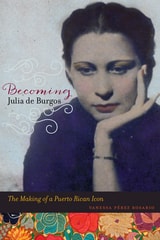
Becoming Julia de Burgos
The Making of a Puerto Rican IconVanessa Perez Rosario
University of Illinois Press, 2014
In the first book-length study written in English, Vanessa Pérez-Rosario examines poet and political activist Julia de Burgos's development as a writer, her experience of migration, and her legacy in New York City, the poet's home after 1940. Pérez-Rosario situates Julia de Burgos as part of a transitional generation that helps to bridge the historical divide between Puerto Rican nationalist writers of the 1930s and the Nuyorican writers of the 1970s. Becoming Julia de Burgos departs from the prevailing emphasis on the poet and intellectual as a nationalist writer to focus on her contributions to New York Latino/a literary and visual culture. It moves beyond the standard tragedy-centered narratives of de Burgos's life to place her within a nuanced historical understanding of Puerto Rico's peoples and culture to consider more carefully the complex history of the island and the diaspora. Pérez-Rosario unravels the cultural and political dynamics at work when contemporary Latina/o writers and artists in New York revise, reinvent, and riff off of Julia de Burgos as they imagine new possibilities for themselves and their communities.
Becoming a Poet
Elizabeth Bishop with Marianne Moore and Robert LowellDavid Kalstone
University of Michigan Press, 2001

Bed
Elizabeth Metzger
Tupelo Press, 2021
Bede and Aethelthryth
An Introduction to Christian Latin PoeticsStephen J. Harris
West Virginia University Press, 2016
Bede and Aethelthryth asks why Christians in Britain around the year 700 enjoyed Latin poetry. What did they see in it? What did they get from it? This book attempts to reconstruct the horizon of expectation of a highly learned, Latin-speaking nun as she encounters a fifty-line poem by the Venerable Bede, the Hymn to Aethelthryth.
The reconstruction is hypothetical and derived from grammatical manuals, learned commentaries from the early medieval period (especially Servius’s commentary on Virgil), and a wide variety of aesthetic observations by classical and medieval readers. The first four chapters describe basic expectations of a reader of Christian Latin poetry. The fifth chapter places the Hymn in its context within Bede’s Ecclesiastical History. A few pages after Bede records his hymn, Caedmon will recite his own hymn under the watchful eye of Whitby’s Abbess Hild, who was a friend of Aethelthryth.
Both hymns are attempts to reform the lyric traditions of pagan Rome and pagan Anglo-Saxon England in the light of Christian teaching. The last three chapters contain a line-by-line commentary on Bede’s alphabetic, epanaleptic elegy.
Before It All Ends
Breathless SonnetsRoger Armbrust
Parkhurst Brothers, Inc., 2022
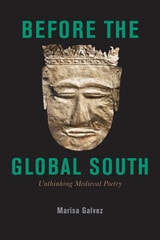
Before the Global South
Unthinking Medieval PoetryMarisa Galvez
University of Chicago Press, 2026
A bold approach to the work of contemporary, Indigenous, and other emergent artists as revisionist adaptations of medieval lyric poetry.
In this book, Marisa Galvez gathers an eclectic array of contemporary poets, artists, writers, and translators—from Brazilian poet Augusto de Campos and Irish painter Louis le Brocquy, to Occitanists Gérard Zuchetto and Jean-Louis Séverac, to Martinican writer Édouard Glissant, poet Rosanna Warren, and essayist Eliot Weinberg—to explore how they reimagine medieval European lyric forms. Galvez calls these adaptations unthought medievalism, and in Before the Global South, she argues that we should understand them as a mode of inquiry that is at once scholarly, critical, and creative. In these modern innovations, Galvez finds an expression of the medieval that challenges popular and scholarly dogmas alike, one she believes can inspire us to create a more shared, global world.
Begging for It
Alex Dimitrov
Four Way Books, 2013
Begin Where You Are
The Colorado Poets Laureate AnthologyTurner Wyatt
University Press of Colorado, 2025
This book contains celebrated works from Thomas Hornsby Ferril and others, alongside never-before-published pieces from Bobby LeFebre, Joseph Hutchison, David Mason, and Mary Crow. Contemporary poets offer perspectives on how serving as Colorado poet laureate shaped their writing and worlds.
Spearheaded by award-winning social entrepreneur Turner Wyatt, this book is a movement with a mission: A portion of the proceeds will fund poetry programming in underserved Colorado schools, libraries, and rural areas, making each purchase an investment in expanding access to this essential art form.
Featured poets: Andrea Gibson, Bobby LeFebre, Joseph Hutchison, David Mason, Mary Crow, Thomas Hornsby Ferril, Milford E. Shields, Margaret Clyde Robertson, Nellie Burget Miller, Alice Polk Hill
Beginning with Plato
PoemsJoseph Warren Beach
University of Minnesota Press, 1944
Beginning with Plato was first published in 1944. Minnesota Archive Editions uses digital technology to make long-unavailable books once again accessible, and are published unaltered from the original University of Minnesota Press editions.
These selected poems of Joseph Warren Beach range in time from the present year to the age of Pericles; in place from California to Shangri-La, from Paris to the Middle West; in theme from current political issues to the timeless problems of Greek philosophy; in mood from tender love to trenchant satire. In these fifty-odd poems is a rich variety—Anthony Eden and Cordell Hull, the French capital in the summer preceding the first World War, the skylines of the American West, the skylines of Minneapolis, soldier and swan maiden, and the inner life of man wherever lived. Mr. Beach can tell home truths without bitterness, and handle nostalgic emotion without sentimentality.
Behind the Lines
War Resistance Poetry on the American Home Front since 1941Philip Metres
University of Iowa Press, 2007
Behind the Lines investigates American war resistance poetry from the Second World War through the Iraq wars. Rather than simply chronicling the genre, Philip Metres argues that this poetry gets to the heart of who is authorized to speak about war and how it can be represented. As such, he explores a largely neglected area of scholarship: the poet’s relationship to dissenting political movements and the nation.
In his elegant study, Metres examines the ways in which war resistance is registered not only in terms of its content but also at the level of the lyric. He proposes that protest poetry constitutes a subgenre that—by virtue of its preoccupation with politics, history, and trauma—probes the limits of American lyric poetry. Thus, war resistance poetry—and the role of what Shelley calls unacknowledged legislators—is a crucial, though largely unexamined, body of writing that stands at the center of dissident political movements.
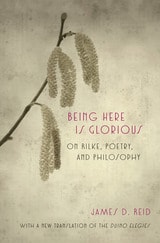
Being Here Is Glorious
On Rilke, Poetry, and PhilosophyJames D. Reid
Northwestern University Press, 2015
With a new translation of the Duino Elegies
“Who, if I cried out, would hear me among the angels’/orders?” Rainer Maria Rilke’s Duino Elegies opens with one of the most powerful poetic expressions of the search for meaning in the modern world. Published in 1923, the Elegies would influence important philosophers on the Continent, including Heidegger. But with a few exceptions, Rilke’s poetry has not had an impact on philosophy in the Anglo-American world. In Being Here Is Glorious, James D. Reid offers a fresh translation of the Elegies, which hews to the form of the original and provides his own meditation on the place of poetry in philosophy. Reid makes a convincing case that poetry and philosophy can address the problem of finding things significant and worth affirming in light of various reasons to doubt the value of the world in which we find ourselves cast.
Belated Heavens
Daniel Tobin
Four Way Books, 2010
Beleaguered Poets and Leftist Critics
Stevens, Cummings, Frost, and Williams in the 1930sMilton A. Cohen
University of Alabama Press, 2011
A critical examination of modernist poetry and the demands of leftist literary theory.
Different as they were as poets, Wallace Stevens, E. E. Cummings, Robert Frost, and William Carlos Williams grappled with the highly charged literary politics of the 1930s in comparable ways. As other writers moved sharply to the Left, and as leftist critics promulgated a proletarian aesthetics, these modernist poets keenly felt the pressure of the times and politicized literary scene. All four poets saw their reputations critically challenged in these years and felt compelled to respond to the new politics, literary and national, in distinct ways, ranging from rejection to involvement.
Beleaguered Poets and Leftist Critics closely examines the dynamics of these responses: what these four poets wrote—in letters, essays, lectures, fiction (for Williams), and most importantly, in their poems; what they believed politically and aesthetically; how critics, particularly leftist critics, reviewed their work; how these poets reacted to that criticism and to the broader milieu of leftism. Each poet’s response and its subsequent impact on his poetic output is a unique case study of the conflicting demands of art and politics in a time of great social change.
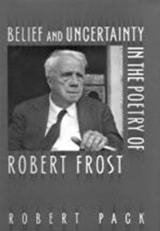
Belief and Uncertainty in the Poetry of Robert Frost
Robert Pack
University Press of New England, 2004
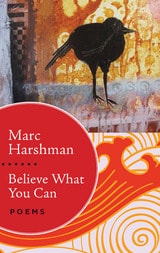
Believe What You Can
PoemsMarc Harshman
West Virginia University Press, 2016
These difficulties come “not quite haphazardly” and not without a “last light”—something “beyond” and as “sweet as apples.” With these moments of grace, Harshman taps into the satisfying richness that comes from unexpected revelations, helping us rise above the fragile recesses of life and death, all while portraying the lost rural worlds of the Midwest and Appalachia in ways untouched by sentiment or nostalgia.
Belonging
PoemsDick Davis
Ohio University Press, 2002
Beltane At Aphelion
Longer PoemsJohn Matthias
Ohio University Press, 1995
Beltane at Aphelion collects all of John Matthias’s longer poems and is published simultaneously with Swimming at Midnight, which collects his shorter poems. The volume includes his exuberant experiments from the 1960s, Poem in Three Parts and Bucyrus, followed by The Stefan Bathory & Mihail Lermontov Poems, his comedic diptych from the 1970s set on a Polish and a Russian ocean liner, and by Northern Summer, his meditation on history and language set in Scotland. It concludes with the three long poems first published in A Gathering of Ways which explore ancient paths and river routes in the East Anglian region of Britain and the American Midwest, and, in the most ambitious poem he has yet written, the famous pilgrim trails to Santiago de Compostela in Spain. About the books in which these poems originally appeared, critics and poets have written with enthusiasm.

Benchmarks
New and Selected Poems 1963-2013Richard Dauenhauer
University of Alaska Press, 2013
Bend
Natasha Sajé
Tupelo Press, 2004
—C.D. Wright
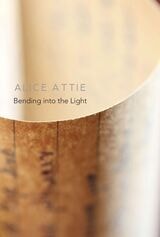
Bending into the Light
Alice Attie
Seagull Books, 2023
The poems in Alice Attie’s new volume, Bending into the Light, are poised on an ever-shifting threshold where words “up and down, side to side” appear as “figures in the distance approaching, each a declaration, each persisting”. Beings, things, ideas, present or vanishing, flow through the vessel of language wherein each exudes “its own aura, its own being, its own disappearance.” Attie’s voice is intricate and intimate, shaping and reshaping the space of being and the space of non-being. These contemplative poems, interspersed with a few haunting photographs and artworks, extol, and mourn, melding the quotidian with the philosophical where we are formed and transformed in the profound knowledge that “the voice has no center.”
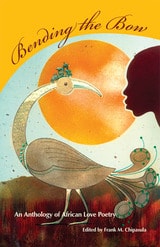
Bending the Bow
An Anthology of African Love PoetryEdited by Frank M. Chipasula
Southern Illinois University Press, 2008
From the ancient Egyptian inventors of the love lyric to contemporary poets, Bending the Bow: An Anthology of African Love Poetry gathers together both written and sung love poetry from Africa.
This anthology is a work of literary archaeology that lays bare a genre of African poetry that has been overshadowed by political poetry. Frank Chipasula has assembled a historically and geographically comprehensive wealth of African love poetry that spans more than three thousand years. By collecting a continent’s celebrations and explorations of the nature of love, he expands African literature into the sublime territory of the heart.
Bending the Bow traces the development of African love poetry from antiquity to modernity while establishing a cross-millennial dialogue. The anonymously written love poems fromPharaonic Egypt that open the anthology both predate Biblical love poetry and reveal the longevity of written love poetry in Africa. The middle section is devoted to sung love poetry from all regions of the continent. These great works serve as the foundation for modern poetry and testify to love poetry’s omnipresence in Africa. The final section, showcasing forty-eight modern African poets, celebrates the genre’s continuing vitality. Among those represented are Muyaka bin Hajji and Shaaban Robert,two major Swahili poets; Gabriel Okara, the innovative though underrated Nigerian poet; Léopold Sédar Senghor, the first president of Senegal and a founder of the Negritude Movement in francophone African literature; Rashidah Ismaili from Benin; Flavien Ranaivo from Madagascar; and Gabeba Baderoon from South Africa.
Ranging from the subtly suggestive to the openly erotic, this collection highlights love’s endurance in a world too often riven by contention. Bending the Bow bears testimony to poetry’s role as conciliator while opening up a new area of study for scholars and students.
Beowulf and the Grendel-Kin
Politics and Poetry in Eleventh-Century EnglandHelen Damico
West Virginia University Press, 2014
In Beowulf and the Grendel-kin: Politics and Poetry in Eleventh-Century England, Helen Damico presents the first concentrated discussion of the initiatory two-thirds of Beowulf’s 3,182 lines in the context of the sociopolitically turbulent years that composed the first half of the eleventh century in Anglo-Danish England.
Damico offers incisive arguments that major historical events and personages pertaining to the reign of Cnut and those of his sons recorded in the Anglo-Saxon Chronicle, the Encomium Emmae Reginae, and major continental and Scandinavian historical texts, hold striking parallels with events and personages found in at least eight vexing narrative units, as recorded by Scribe A in BL, Cotton Vitellius A.xv, that make up the poem’s quasi sixth-century narrative concerning the fall of the legendary Scyldings.
Given the poet’s compositional skill—widely relational and eclectic at its core—and his affinity with the practicing skalds, these strings of parallelisms could scarcely have been coincidental. Rather, Damico argues that examined within the context of other eleventh-century texts that either bemoaned or darkly satirized or obversely celebrated the rise of the Anglo-Danish realm, the Beowulfian units may bring forth a deeper understanding of the complexity of the poet’s compositional process.
Damico illustrates the poet’s use of the tools of his trade—compression, substitution, skillful encoding of character—to reinterpret and transform grave sociopolitical “facts” of history, to produce what may be characterized as a type of historical allegory, whereby two parallel narratives, one literal and another veiled are simultaneously operative.
Beowulf and the Grendel-Kin lays out the story of Beowulf, not as a monster narrative nor a folklorish nor solely a legendary tale, but rather as a poem of its time, a historical allegory coping with and reconfiguring sociopolitical events of the first half of eleventh-century Anglo-Saxon England.
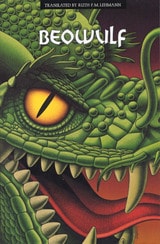
Beowulf
An Imitative TranslationBy Ruth P. M. Lehmann
University of Texas Press, 1988
The name "Beowulf" lingers in our collective memory, although today fewer people have heard the tale of the Germanic hero's fight with Grendel, the dreadful Monster of the Mere, as recounted in this Anglo-Saxon epic.
This edition of Beowulf makes the poem more accessible than ever before. Ruth Lehmann's imitative translation is the only one available that preserves both the story line of the poem and the alliterative versification of the Anglo-Saxon original. The characteristic features of Anglo-Saxon poetry— alliterative verse with first-syllable stress, flexible word order, and inflectional endings—have largely disappeared in Modern English, creating special problems for the translator. Indeed, many other translations of Beowulf currently available are either in prose or in some modern poetic form. Dr. Lehmann's translation alone conveys the "feel" of the original, its rhythm and sound, the powerful directness of the Germanic vocabulary.
In her introduction, Dr. Lehmann gives a succinct summary of the poem's plot, touching on the important themes of obligation and loyalty, of family feuds, unforgivable crimes, the necessity of revenge, and the internal and external struggles of the Scandinavian tribes. She also describes the translation process in some detail, stating the guiding principles she used and the inevitable compromises that were sometimes necessary.