Results by title
28167 books match the query 'History' and 1262 start with b
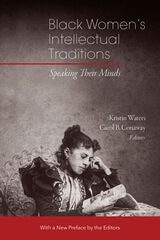
Black Women’s Intellectual Traditions
Speaking Their MindsEdited by Kristin Waters and Carol B. Conaway
Brandeis University Press, 2022
An astonishing wealth of literary and intellectual work by nineteenth-century Black women is being rediscovered and restored to print in scholarly and popular editions. In Kristin Waters’s and Carol B. Conaway’s landmark edited collection, Black Women’s Intellectual Traditions: Speaking Their Minds, sophisticated commentary on this rich body of work chronicles a powerful and interwoven legacy of activism based in social and political theories that helped shape the history of North America. The book meticulously reclaims this American legacy, providing a collection of critical analyses of the primary sources and their vital traditions. Written by leading scholars, Black Women’s Intellectual Traditions is particularly powerful in its exploration of the pioneering thought and action of the nineteenth-century Black woman lecturer and essayist Maria W. Stewart, abolitionist Sojourner Truth, novelist and poet Frances Ellen Watkins Harper, educator Anna Julia Cooper, newspaper editor Mary Ann Shadd Cary, and activist Ida B. Wells. The distinguished contributors are Hazel V. Carby, Patricia Hill Collins, Karen Baker-Fletcher, Kristin Waters, R. Dianne Bartlow, Carol B. Conaway, Olga Idriss Davis, Vanessa Holford Diana, Evelyn Simien, Janice W. Fernheimer, Michelle N. Garfield, Joy James, Valerie Palmer-Mehta, Carla L. Peterson, Marilyn Richardson, Evelyn M. Simien, Ebony A. Utley, Mary Helen Washington, Melina Abdullah, and Lena Ampadu. The volume will interest scholars and readers of African-American and women’s studies, history, rhetoric, literature, poetry, sociology, political science, and philosophy. This updated edition features a new preface by the editors in the light of new developments in current scholarship.
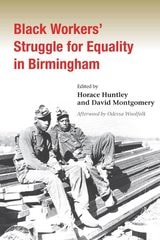
Black Workers' Struggle for Equality in Birmingham
Edited by Horace Huntley and David Montgomery
University of Illinois Press, 2004
Horace Huntley and David Montgomery curate a collection of annotated oral interviews of black workers who served on the front lines of the Civil Rights Movement in Birmingham, Alabama. As the interviewees recount their struggles against discrimination, they show how collective action--whether through unions, the Movement, or networks of workplace activists--sought to gain access to better jobs, municipal services, housing, and less restrictive voter registration.
Powerful and honest, Black Workers' Struggle for Equality in Birmingham draws on work by the Birmingham Civil Rights Institute to offer readers vivid eyewitness accounts of American history in the making.
Black Writing, Culture, and the State in Latin America
Jerome C. Branche
Vanderbilt University Press, 2015
All too often, the disciplines of film studies, literary criticism, and art history ignore the opportunity to collaborate in a dialogue. Branche and his contributors present a unified approach, however, suggesting that cultural production should not be viewed narrowly, especially when studying the achievements of the Afro-Latin world.
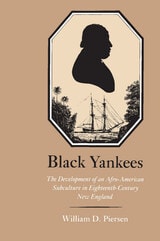
Black Yankees
The Development of an Afro-American Subculture in Eighteenth-Century New EnglandWilliam D. Piersen
University of Massachusetts Press, 1988
On the face of it, the master class called the tunes and slaves danced the beat. Blacks who were taken into New England's bondage were clearly engulfed in a pervasive, narrow-minded Euro-American society that had no interest in fostering Afro-American autonomy. The New England experience was often cruel, and the numbers alone suggest it was among the most unequal of black/white cultural contacts in the New World. Nonetheless, despite the strictures of bondage, the black Yankees of eighteenth-century New England created a sustaining folk culture of their own.
Black and Green
Afro-Colombians, Development, and Nature in the Pacific LowlandsKiran Asher
Duke University Press, 2009
The Pacific region had yet to be overrun by drug traffickers, guerrillas, and paramilitary forces in the early 1990s. It was better known as the largest area of black culture in the country (90 percent of the region’s population is Afro-Colombian) and as a supplier of natural resources, including timber, gold, platinum, and silver. Colombia’s Law 70, passed in 1993, promised ethnic and cultural rights, collective land ownership, and socioeconomic development to Afro-Colombian communities. At the same time that various constituencies sought to interpret and implement Law 70, the state was moving ahead with large-scale development initiatives intended to modernize the economically backward coastal lowlands. Meanwhile national and international conservation organizations were attempting to protect the region’s rich biodiversity. Asher explores this juxtaposition of black rights, economic development, and conservation—and the tensions it catalyzed. She analyzes the meanings attached to “culture,” “nature,” and “development” by the Colombian state and Afro-Colombian social movements, including women’s groups. In so doing, she shows that the appropriation of development and conservation discourses by the social movements had a paradoxical effect. It legitimized the presence of state, development, and conservation agencies in the Pacific region even as it influenced those agencies’ visions and plans.

Black and Green
The Fight For Civil Rights in Northern Ireland & Black AmericaBrian Dooley
Pluto Press, 1998
'Focusing on the period from the 1960s onward, Brian Dooley suggests that the black rights struggle in the US had a formative influence on Northern Ireland's civil rights movement which adopted similar tactics of protest marches and sit-ins ... A well researched book, written from an unusual angle that illuminates this understudied international influence on the Ulster conflict' Political Studies
Ties between political activists in Black America and Ireland span several centuries, from the days of the slave trade to the close links between Frederick Douglass and Daniel O’Connell, and between Marcus Garvey and Eamon de Valera. This timely book traces those historic links and examines how the struggle for black civil rights in America in the 1960s helped shape the campaign against discrimination in Northern Ireland. The author includes interviews with key figures such as Angela Davis, Bernadette McAliskey and Eamonn McCann.
Black and Mormon
Edited by Newell G. Bringhurst and Darron T. Smith
University of Illinois Press, 2004
This challenging collection is required reading for anyone concerned with the history of racism, discrimination, and the Latter-day Saints.

Black and White Cinema
A Short HistoryWheeler Winston Dixon
Rutgers University Press, 2015
Black and White Cinema is the first study to consider the use of black-and-white as an art form in its own right, providing a comprehensive and global overview of the era when it flourished, from the 1900s to the 1960s. Acclaimed film scholar Wheeler Winston Dixon introduces us to the masters of this art, discussing the signature styles and technical innovations of award-winning cinematographers like James Wong Howe, Gregg Toland, Freddie Francis, and Sven Nykvist. Giving us a unique glimpse behind the scenes, Dixon also reveals the creative teams—from lighting technicians to matte painters—whose work profoundly shaped the look of black-and-white cinema.
More than just a study of film history, this book is a rallying cry, meant to inspire a love for the artistry of black-and-white film, so that we might work to preserve this important part of our cinematic heritage. Lavishly illustrated with more than forty on-the-set stills, Black and White Cinema provides a vivid and illuminating look at a creatively vital era.

Black and White Strangers
Race and American Literary RealismKenneth W. Warren
University of Chicago Press, 1993
Black and White in Colour
African History on ScreenVivian Bickford-Smith
Ohio University Press, 2007
Black and White in Colour: African History on Screen considers how the African past has been represented in a wide range of historical films. Written by a team of eminent international scholars, the volume provides extensive coverage of both place and time and deals with major issues in the written history of Africa. Themes include the slave trade, imperialism and colonialism, racism, and anticolonial resistance. Many of the films will be familiar to readers: they include Out of Africa, Hotel Rwanda, Breaker Morant, Cry Freedom, The Battle of Algiers, and Chocolat.
This collection of essays is a highly original and useful contribution to African historiography, as well as a significant addition to the growing body of work within the emerging subdiscipline of “film and history.” It will appeal to those interested in African history and the ways in which films use the past to raise questions about the present.
Contributors: Mahir Saul, Ralph A. Austen, Robert Baum, Robert Harms, Nigel Worden, Carolyn Hamilton and Litheko Modisane, Richard Mendelsohn, Shamil Jeppie, Bill Nasson, Nigel Penn, Ruth Watson, Patrick Harries, David Moore, Teresa Barnes, Vivian Bickford-Smith, Mohamed Adhikari, and David Philips.

Black behind the Ears
Dominican Racial Identity from Museums to Beauty ShopsGinetta E. B. Candelario
Duke University Press, 2007
Candelario draws on her participant observation in a Dominican beauty shop in Washington Heights, a New York City neighborhood with the oldest and largest Dominican community outside the Republic, and on interviews with Dominicans in New York City, Washington, D.C., and Santo Domingo. She also analyzes museum archives and displays in the Museo del Hombre Dominicano and the Smithsonian Institution as well as nineteenth- and early-twentieth-century European and American travel narratives.
Black in Selma
The Uncommon Life of J. L. Chestnut Jr.J. L. Chestnut
University of Alabama Press, 2007
One man’s fight for justice. One town’s reckoning with history.
Born in Selma in 1930, J. L. Chestnut left home to study law at Howard University in Washington, DC. Returning to Selma, Chestnut was the town’s first and only African American attorney in the late 1950s. As the turbulent struggle for civil rights spread across the South, Chestnut became an active and ardent promoter of social and legal equality in his hometown. A key player on the local and state fronts, Chestnut accrued deep insights into the racial tensions in his community and deftly opened paths toward a more equitable future.
Though intimately involved in many events that took place in Selma, Chestnut was nevertheless often identified in history books simply as “a local attorney.” Black in Selma reveals his powerful yet little-known story.
In the 2014 film Selma, director Ava DuVernay takes audiences to the climactic confrontation between civil rights advocates and the state’s security forces of March 1965. Readers looking for a deeper understanding of the events that preceded that epic moment, as well as how racial integration unfolded in Selma in the decades that followed, will find Chestnut’s story and memories both a vital primary source and an inspiration.

Black in White Space
The Enduring Impact of Color in Everyday LifeElijah Anderson
University of Chicago Press, 2021
A birder strolling in Central Park. A college student lounging on a university quad. Two men sitting in a coffee shop. Perfectly ordinary actions in ordinary settings—and yet, they sparked jarring and inflammatory responses that involved the police and attracted national media coverage. Why? In essence, Elijah Anderson would argue, because these were Black people existing in white spaces.
In Black in White Space, Anderson brings his immense knowledge and ethnography to bear in this timely study of the racial barriers that are still firmly entrenched in our society at every class level. He focuses in on symbolic racism, a new form of racism in America caused by the stubbornly powerful stereotype of the ghetto embedded in the white imagination, which subconsciously connects all Black people with crime and poverty regardless of their social or economic position. White people typically avoid Black space, but Black people are required to navigate the “white space” as a condition of their existence. From Philadelphia street-corner conversations to Anderson’s own morning jogs through a Cape Cod vacation town, he probes a wealth of experiences to shed new light on how symbolic racism makes all Black people uniquely vulnerable to implicit bias in police stops and racial discrimination in our country.
An unwavering truthteller in our national conversation on race, Anderson has shared intimate and sharp insights into Black life for decades. Vital and eye-opening, Black in White Space will be a must-read for anyone hoping to understand the lived realities of Black people and the structural underpinnings of racism in America.
Black on the Block
The Politics of Race and Class in the CityMary Pattillo
University of Chicago Press, 2007
“To see how diversity creates strange and sometimes awkward bedfellows . . . turn to Mary Pattillo's Black on the Block.”—Boston Globe
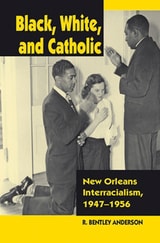
Black, White, and Catholic
New Orleans Interracialism, 1947-1956R. Bentley Anderson
Vanderbilt University Press, 2005
Anderson leads readers through the tumultuous years just after World War II when the Roman Catholic Church in the American South struggled to reconcile its commitment to social justice with the legal and social heritage of Jim Crow society. Though these early efforts at reform, by and large, failed, they did serve to galvanize Catholic supporters and opponents of the Civil Rights Movement and provided a model for more successful efforts at desegregation in the '60s.
As a Jesuit himself, Anderson has access to archives that remain off-limits to other scholars. His deep knowledge of the history of the Catholic Church also allows him to draw connections between this historical period and the present. In the resistance to desegregation, Anderson finds expression of a distinctly American form of Catholicism, in which lay people expect Church authorities to ratify their ideas and beliefs in an almost democratic fashion. The conflict he describes is as much between popular and hierarchical models of the Church as between segregation and integration.
This book has been made possible through a grant from the Louisiana Endowment for the Humanities, a state affiliate of the National Endowment for the Humanities.
Black, White, and Huckleberry Finn
Re-imagining the American DreamElaine Mensh
University of Alabama Press, 2001
Takes a hard, systematic look at the depiction of blacks, whites, and race relations in Mark Twain's classic novel, raising questions about its canonical status in American literature
Huckleberry Finn, one of the most widely taught novels in American literature, has long been the subject of ongoing debates over issues ranging from immorality to racism. Here, Elaine Mensh and Harry Mensh enter the debate with a careful and thoughtful examination of racial messages imbedded in the tale of Huck and Jim.Using as a gauge for analysis the historical record left by both slaves and slaveholders, the Menshes compare Twain's depiction with historical reality, attempting to determine where the book either undermines or upholds traditional racial attitudes. Surveying the opinions of fellow critics, they challenge the current consensus that Huckleberry Finn fosters rapport between blacks and whites, arguing that the book does not subvert ingrained beliefs about race, and demonstrating that the argument over black-white relations in the novel is also an argument over non-fictional racial relations and conflicting perceptions of racial harmony.
Reading the novel in its historical context, the Menshes conclude that Twain, in the character of Huck, never questions the institution of slavery, and even supports it in both thought and action. In response to student and parent challenges to the inclusion of the book in literature classes, they suggest that it should remain in school libraries but not be required reading.Of importance to scholars of Mark Twain and American literature, African American cultural studies, or anyone interested in issues of literature and race, this book adds a strong voice to the long-ranging debate over Huckleberry Finn.

Black-Body Theory and the Quantum Discontinuity, 1894-1912
Thomas S. Kuhn
University of Chicago Press, 1987
"Every scientist should have this book."—Paul Davies, New Scientist
Black-Brown Solidarity
Racial Politics in the New Gulf SouthBy John D. Márquez
University of Texas Press, 2014
Houston is the largest city in the Gulf South, a region sometimes referred to as the “black belt” because of its sizeable African American population. Yet, over the last thirty years, Latinos have become the largest ethnic minority in Houston, which is surpassed only by Los Angeles and New York in the number of Latino residents. Examining the history and effects of this phenomenon, Black-Brown Solidarity describes the outcomes of unexpected coalitions that have formed between the rapidly growing Latino populations and the long-held black enclaves in the region.
Together, minority residents have put the spotlight on prominent Old South issues such as racial profiling and police brutality. Expressions of solidarity, John D. Márquez argues, have manifested themselves in expressive forms such as hip-hop music, youth gang cultural traits, and the storytelling of ordinary residents in working-class communities. Contrary to a growing discourse regarding black-brown conflict across the United States, the blurring of racial boundaries reflects broader arguments regarding hybrid cultures that unsettle the orders established by centuries-old colonial formations. Accentuating what the author defines as a racial state of expendability—the lynchpin of vigilante violence and police brutality—the new hybridization has resulted in shared wariness of a linked fate. Black-Brown Solidarity also explores the ways in which the significance of African American history in the South has influenced the structures through which Latinos have endured and responded to expendability. Mining data from historical archives, oral histories, legal documents, popular media, and other sources, this work is a major contribution to urban studies, ethnic studies, and critical race theory.
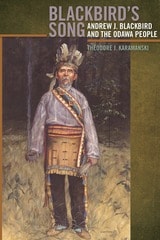
Blackbird's Song
Andrew J. Blackbird and the Odawa PeopleTheodore J. Karamanski
Michigan State University Press, 2012
For much of U.S. history, the story of native people has been written by historians and anthropologists relying on the often biased accounts of European-American observers. Though we have become well acquainted with war chiefs like Pontiac and Crazy Horse, it has been at the expense of better knowing civic-minded intellectuals like Andrew J. Blackbird, who sought in 1887 to give a voice to his people through his landmark book History of the Ottawa and Chippewa People. Blackbird chronicled the numerous ways in which these Great Lakes people fought to retain their land and culture, first with military resistance and later by claiming the tools of citizenship. This stirring account reflects on the lived experience of the Odawa people and the work of one of their greatest advocates.

Blackburn Buccaneer
Nico Braas
Amsterdam University Press, 2023
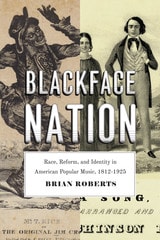
Blackface Nation
Race, Reform, and Identity in American Popular Music, 1812-1925Brian Roberts
University of Chicago Press, 2017
The Hutchinson Family Singers, the Northeast’s most popular middle-class singing group during the mid-nineteenth century, is perhaps the best example of the first strain of music. The group’s songs expressed an American identity rooted in communal values, with lyrics focusing on abolition, women’s rights, and socialism. Blackface minstrelsy, on the other hand, emerged out of an audience-based coalition of Northern business elites, Southern slaveholders, and young, white, working-class men, for whom blackface expressed an identity rooted in individual self-expression, anti-intellectualism, and white superiority. Its performers embodied the love-crime version of racism, in which vast swaths of the white public adored African Americans who fit blackface stereotypes even as they used those stereotypes to rationalize white supremacy. By the early twentieth century, the blackface version of the American identity had become a part of America’s consumer culture while the Hutchinsons’ songs were increasingly regarded as old-fashioned. Blackface Nation elucidates the central irony in America’s musical history: much of the music that has been interpreted as black, authentic, and expressive was invented, performed, and enjoyed by people who believed strongly in white superiority. At the same time, the music often depicted as white, repressed, and boringly bourgeois was often socially and racially inclusive, committed to reform, and devoted to challenging the immoralities at the heart of America’s capitalist order.

Blackland Prairies of the Gulf Coastal Plain
Nature, Culture, and SustainabilityEdited by Evan Peacock and Timothy Schauwecker
University of Alabama Press, 2003
Underscores the relevance of archaeological research in understanding long-term cultural change
Taking a holistic approach, this compilation gathers ecological, historical, and archaeological research written on the distinctive region of the Southeast called the Gulf coast blackland prairie. Ranging from the last glacial period to the present day, the case studies provide a broad picture of how the area has changed through time and been modified by humans, first with nomadic bands of Indians trailing the grazing animals and then by Euro-American settlers who farmed the rich agricultural area. Contemporary impacts include industrialization, aquaculture, population growth, land reclamation, and wildlife management.
It is believed that the Black Belt and the Great Plains were contiguous in the past and shared the same prairie vegetation, insects, and large fauna, such as bison. Swaths and patches of limestone-based soils still weave a biological corridor through what is now Alabama, Mississippi, Arkansas, Louisiana, and Texas. In analyzing this distinct grassland ecosystem, the essays compare both the mega and minute flora and fauna sustained by the land in the past and present; reveal what foods were harvested by early inhabitants, their gathering techniques, and diet changes over the 10,000-year period of native occupancy; survey the documents of early explorers for descriptions of the landform, its use, and the lives of inhabitants at the time of contact; and look at contemporary efforts to halt abuse and reverse damage to this unique and shrinking biome.
This book demonstrates that the blackland prairie has always been an important refuge for a teeming array of biological species, including humans. It will have wide scholarly appeal as well as general interest and will be welcomed by archaeologists, biologists, botanists, ecologists, historians, librarians, politicians, land managers, and national, state, and local administrators.
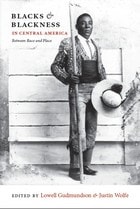
Blacks and Blackness in Central America
Between Race and PlaceLowell Gudmundson and Justin Wolfe, eds.
Duke University Press, 2010
Contributors. Rina Cáceres Gómez, Lowell Gudmundson, Ronald Harpelle, Juliet Hooker, Catherine Komisaruk, Russell Lohse, Paul Lokken, Mauricio Meléndez Obando, Karl H. Offen, Lara Putnam, Justin Wolfe
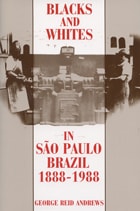
Blacks and Whites in Sao Paulo, Brazil, 1888-1988
George Reid Andrews
University of Wisconsin Press, 1991
For much of the twentieth century Brazil enjoyed an international reputation as a “racial democracy,” but that image has been largely undermined in recent decades by research suggesting the existence of widespread racial inequality. George Reid Andrews provides the first thoroughly documented history of Brazilian racial inequality from the abolition of slavery in 1888 up to the late 1980s, showing how economic, social, and political changes in Brazil during the last one hundred years have shaped race relations.
No laws of segregation or apartheid exist in Brazil, but by looking carefully at government policies, data on employment, mainstream and Afro-Brazilian newspapers, and a variety of other sources, Andrews traces pervasive discrimination against Afro-Brazilians over time. He draws his evidence from the country’s largest and most economically important state, São Paulo, showing how race relations were affected by its transformation from a plantation-based economy to South America’s most urban, industrialized society.
The book focuses first on Afro-Brazilians' entry into the agricultural and urban working class after the abolition of slavery. This transition, Andrews argues, was seriously hampered by state policies giving the many European immigrants of the period preference over black workers. As immigration declined and these policies were overturned in the late 1920s, black laborers began to be employed in agriculture and industry on nearly equal terms with whites. Andrews then surveys efforts of blacks to move into the middle class during the 1900s. He finds that informal racial solidarity among middle-class whites has tended to exclude Afro-Brazilians from the professions and other white-collar jobs.
Andrews traces how discrimination throughout the century led Afro-Brazilians to mobilize, first through the antislavery movement of the 1880s, then through such social and political organizations of the 1920s and 1930s as the Brazilian Black Front, and finally through the anti-racism movements of the 1970s and 1980s. These recent movements have provoked much debate among Brazilians over their national image as a racial democracy. It remains to be seen, Andrews concludes, whether that debate will result in increased opportunities for black Brazilians.
Winner of the 1993 Arthur P. Whitaker Prize
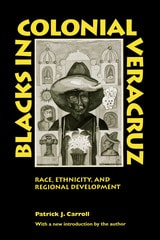
Blacks in Colonial Veracruz
Race, Ethnicity, and Regional DevelopmentBy Patrick J. Carroll
University of Texas Press, 1991
Beginning with the Spanish conquest, Mexico has become a racially complex society intermixing Indian, Spanish, and African populations. Questions of race and ethnicity have fueled much political and scholarly debate, sometimes obscuring the experiences of particular groups, especially blacks. Blacks in Colonial Veracruz seeks to remedy this omission by studying the black experience in central Veracruz during virtually the entire colonial period.
The book probes the conditions that shaped the lives of inhabitants in Veracruz from the first European contact through the early formative period, colonial years, independence era, and the postindependence decade. While the primary focus is on blacks, Carroll relates their experience to that of Indians, Spaniards, and castas (racially hybrid people) to present a full picture of the interplay between local populations, the physical setting, and technological advances in the development of this important but little-studied region.
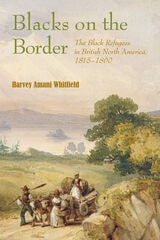
Blacks on the Border
The Black Refugees in British North America, 1815–1860Harvey Whitfield
University Press of New England, 2006

Blacks, Coloureds and National Identity in Nineteenth-century Latin America
Edited by Nancy Priscilla Naro
University of London Press, 2003
Blacks, Reds, and Russians
Sojourners in Search of the Soviet PromiseJoy Gleason Carew
Rutgers University Press, 2010
In Blacks, Reds, and Russians, Joy Gleason Carew offers insight into the political strategies that often underlie relationships between different peoples and countries. She draws on the autobiographies of key sojourners, including Harry Haywood and Robert Robinson, in addition to the writings of Claude McKay, W.E.B. Du Bois, and Langston Hughes. Interviews with the descendents of figures such as Paul Robeson and Oliver Golden offer rare personal insights into the story of a group of emigrants who, confronted by the daunting challenges of making a life for themselves in a racist United States, found unprecedented opportunities in communist Russia.
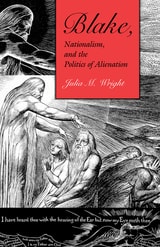
Blake, Nationalism, and the Politics of Alienation
Julia M. Wright
Ohio University Press, 2027
William Blake’s reputation as a staunch individualist is based in large measure on his repeated attacks on institutions and belief systems that constrain the individual’s imagination. Blake, however, rarely represents isolation positively, suggesting that the individual’s absolute freedom from communal pressures is not the ideal. Instead, as Julia Wright argues in her award-winning study Blake, Nationalism, and the Politics of Alienation, Blake’s concern lies with the kind of community that is being established. Moreover, writing at the moment of the emergence of modern nationalism, Blake reveals a concern with the national community in particular.
Beginning with a discussion of the priority of national narrative in late-eighteenth-century art theory and antiquarianism, Blake, Nationalism, and the Politics of Alienation traces its relevance in Blake’s printed works, from The Poetical Sketches and the Lambeth Prophecies to The Laocoön. Professor Wright then turns to Europe, America, and Visions of the Daughters of Albion, focusing on Blake’s portrayals of particular characters’ alienation from the groups and ideologies represented in the texts. The book closes by arguing that Blake’s major printed works, Milton and Jerusalem, are explicit and extensive engagements with the question of nation—and empire.
Although nationalism existed in various forms during the Romantic period, Blake’s contemporaries generally assumed that nations should progress continuously, producing a clear narrative line from an auspicious origin to the perfect fulfillment of that promise. Wright argues that these mutually determining constructs of national character and national narrative inform Blake’s handling of the problem of the individual-within-a-community.
Blaming Teachers
Professionalization Policies and the Failure of Reform in American HistoryDiana D'Amico Pawlewicz
Rutgers University Press, 2020
Historically, Americans of all stripes have concurred that teachers were essential to the success of the public schools and nation. However, they have also concurred that public school teachers were to blame for the failures of the schools and identified professionalization as a panacea.
In Blaming Teachers, Diana D'Amico Pawlewicz reveals that historical professionalization reforms subverted public school teachers’ professional legitimacy. Superficially, professionalism connotes authority, expertise, and status. Professionalization for teachers never unfolded this way; rather, it was a policy process fueled by blame where others identified teachers’ shortcomings. Policymakers, school leaders, and others understood professionalization measures for teachers as efficient ways to bolster the growing bureaucratic order of the public schools through regulation and standardization. Beginning in the mid-nineteenth century with the rise of municipal public school systems and reaching into the 1980s, Blaming Teachers traces the history of professionalization policies and the discourses of blame that sustained them.
Blaming the Poor
The Long Shadow of the Moynihan Report on Cruel Images about PovertyGreenbaum, Susan D
Rutgers University Press, 2015
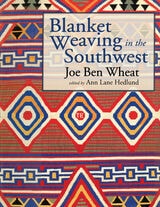
Blanket Weaving in the Southwest
Joe Ben Wheat; edited by Ann Lane Hedlund
University of Arizona Press, 2003
During much of his career, anthropologist Joe Ben Wheat (1916-1997) earned a reputation as a preeminent authority on southwestern and plains prehistory. Beginning in 1972, he turned his scientific methods and considerable talents to historical questions as well. He visited dozens of museums to study thousands of nineteenth-century textiles, oversaw chemical tests of dyes from hundreds of yarns, and sought out obscure archives to research the material and documentary basis for textile development. His goal was to establish a key for southwestern textile identification based on the traits that distinguish the Pueblo, Navajo, and Spanish American blanket weaving traditions—and thereby provide a better way of identifying and dating pieces of unknown origin.
Wheat's years of research resulted in a masterful classification scheme for southwestern textiles—and a book that establishes an essential baseline for understanding craft production. Nearly completed before Wheat's death, Blanket Weaving in the Southwest describes the evolution of southwestern textiles from the early historic period to the late nineteenth century, establishes a revised chronology for its development, and traces significant changes in materials, techniques, and designs.
Wheat first relates what Spanish observers learned about the state of native weaving in the region—a historical review that reveals the impact of new technologies and economies on a traditional craft. Subsequent chapters deal with fibers, yarns, dyes, and fabric structures—including an unprecedented examination of the nature, variety, and origins of bayeta yarns—and with tools, weaves, and finishing techniques.
A final chapter, constructed by editor Ann Hedlund from Wheat's notes, provides clues to his evolving ideas about the development of textile design. Hedlund—herself a respected textile scholar and a protégée of Wheat's—is uniquely qualified to interpret the many notes he left behind and brings her own understanding of weaving to every facet of the text. She has ensured that Wheat's research is applicable to the needs of scholars, collectors, and general readers alike. Throughout the text, Wheat discusses and evaluates the distinct traits of the three textile traditions. More than 200 photos demonstrate these features, including 191 color plates depicting a vast array of chief blankets, shoulder blankets, ponchos, sarapes, diyugi, mantas, and dresses from museum collections nationwide. In addition, dozens of line drawings demonstrate the fine points of technique concerning weaves, edge finishes, and corner tassels. Through his groundbreaking and painstaking research, Wheat created a new view of southwestern textile history that goes beyond any other book on the subject. Blanket Weaving in the Southwest addresses a host of unresolved issues in textile research and provides critical tools for resolving them. It is an essential resource for anyone who appreciates the intricacy of these outstanding creations.
Blazing Cane
Sugar Communities, Class, and State Formation in Cuba, 1868–1959Gillian McGillivray
Duke University Press, 2009
Focusing on sugar communities in eastern and central Cuba, McGillivray recounts how farmers and workers pushed the Cuban government to move from exclusive to inclusive politics and back again. The revolutionary caudillo networks that formed between 1895 and 1898, the farmer alliances that coalesced in the 1920s, and the working-class groups of the 1930s affected both day-to-day local politics and larger state-building efforts. Not limiting her analysis to the island, McGillivray shows that twentieth-century Cuban history reflected broader trends in the Western Hemisphere, from modernity to popular nationalism to Cold War repression.
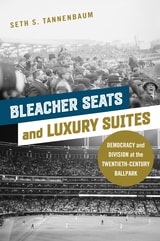
Bleacher Seats and Luxury Suites
Democracy and Division at the Twentieth-Century BallparkSeth S. Tannenbaum
University of Illinois Press, 2026
Major League Baseball owners and executives masked exclusion and division by touting the game’s accessibility and instituting few overtly discriminatory policies. Affluent white males enjoyed a comfortable, safe space that reinforced their status as the prototypical American citizen. At the same time, ballparks relocated in response to how these favored fans felt about cities. Tannenbaum traces this journey from the urban locales of the Polo Grounds and Yankee Stadium through the suburban-oriented Dodger Stadium and Houston Astrodome to the cloistered fantasy of city life offered by Camden Yards. As he shows, owners’ pursuit of greater profits incorporated existing barriers that helped shape the structure of modern parks.
A revealing social history, Bleacher Seats and Luxury Suites revises the persistent myth of the ballpark as an egalitarian melting pot.
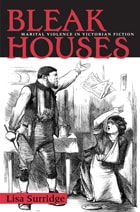
Bleak Houses
Marital Violence in Victorian FictionLisa Surridge
Ohio University Press, 2005
The Offenses Against the Person Act of 1828 opened magistrates' courts to abused working-class wives. Newspapers in turn reported on these proceedings, and in this way the Victorian scrutiny of domestic conduct began. But how did popular fiction treat “private” family violence? Bleak Houses: Marital Violence in Victorian Fiction traces novelists' engagement with the wife-assault debates in the public press between 1828 and the turn of the century.
Lisa Surridge examines the early works of Charles Dickens and reads Dombey and Son and Anne Brontë's The Tenant of Wildfell Hall in the context of the intense debates on wife assault and manliness in the late 1840s and early 1850s. Surridge explores George Eliot's Janet's Repentance in light of the parliamentary debates on the 1857 Divorce Act. Marital cruelty trials provide the structure for both Wilkie Collins's The Woman in White and Anthony Trollope's He Knew He Was Right.
Locating the New Woman fiction of Mona Caird and the reassuring detective investigations of Sherlock Holmes in the context of late-Victorian feminism and the great marriage debate in the Daily Telegraph, Surridge illustrates how fin-de-siècle fiction brought male sexual violence and the viability of marriage itself under public scrutiny. Bleak Houses thus demonstrates how Victorian fiction was concerned about the wife-assault debates of the nineteenth century, debates which both constructed and invaded the privacy of the middle-class home.
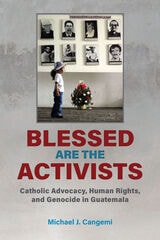
Blessed Are the Activists
Catholic Advocacy, Human Rights, and Genocide in GuatemalaMichael J. Cangemi
University of Alabama Press, 2024
Blessed Are the Activists examines US Catholic activists’ influence on US-Guatemalan relations during the Guatemalan civil war’s most violent years in the 1970s and 1980s. Cangemi argues that Catholic activists’ definition of human rights, advocacy methods, and structure caused them to act as a transnational human rights NGO that engaged Guatemalan and US government officials on human rights issues, reported on Guatemala’s human rights violations, and criticized US foreign policy decisions as a contributing factor in Guatemala’s inequality, poverty, and violence. His work foregrounds how Catholic activists emphasized dignity for Guatemala’s poorest citizens and the connections they made between justice, solidarity, and peace and brought Guatemala’s violence, poverty, and inequality to greater global attention, often at great personal risk.
Cangemi pays considerable attention to multiple facets of the strained US-Guatemala diplomatic relationship, including how and why Guatemala’s military dictatorship exposed the internal flaws within the Carter administration’s decision to link military aid to human rights and how internal foreign policy debates in the Carter and Reagan administrations helped to intensify Guatemala’s bloody civil war. He also includes interviews conducted with Guatemalan genocide survivors and refugees to provide firsthand accounts of the consequences of those policymaking decisions. Finally, he offers readers an in-depth examination of the US Catholic press’s sharp rebukes of US policies on Guatemala and all of Central America when the broader Roman Catholic Church began to move farther toward the ideological right under John Paul II.
Blessed Are the Activists offers rich, original research and a gripping narrative. With Guatemala and other countries in Latin America still experiencing human rights abuses, this book will continue to provide context. It will appeal to a broad swath of readers, from scholars to the general public and students.
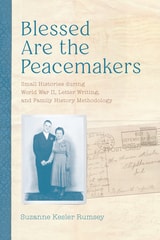
Blessed Are the Peacemakers
Small Histories during World War II, Letter Writing, and Family History MethodologySuzanne Kesler Rumsey
University of Alabama Press, 2021
Where family letters become history, and ordinary lives reveal the untold story of World War II.
In the summer of 2013, Suzanne Kesler Rumsey discovered hundreds of letters exchanged between her late grandparents, Miriam and Benjamin Kesler. The letters, written between 1941 and 1946, were filled with typical wartime sentiments: love and longing, anguish at being apart, uncertainty about the war and the country’s future, and attempts at humor to keep their spirits up. What is unusual about their story is that Ben Kesler was not writing from a theater of war. Instead, Ben, a member of the Dunkard Brethren Church, was a conscientious objector. He, along with about 12,000 other men, opted to join the Civilian Public Service (CPS) and contribute to “work of national importance” at one of the 218 CPS camps around the country.
In Blessed Are the Peacemakers: Small Histories during World War II, Letter Writing, and Family History Methodology, Rumsey has mined not only her grandparents’ letters but also archival research on CPS camps and historical data from several Mennonite and Brethren archives to recapture the narrative of Ben’s service at two different camps and of Miriam’s struggle to support herself and her husband financially at the young age of seventeen. Ben and Miriam’s life during the war was extraordinarily ordinary, spanning six years of unrecognized and humble work for their country. Ben was not compensated for his work in the camps, and Miriam stayed home and worked as a day laborer, as a live-in maid, as a farmhand, and in the family butcher shop in order to earn enough money to support them both. Small histories like that of her grandparents, Rumsey argues, provide a unique perspective on significant political and historical moments.
Blessed Are the Peacemakers also explores the rhetorical functions of letter writing as well as the methodology of family history writing. Ben and Miriam’s letters provide an apt backdrop to examine the genre, a relatively understudied mode of literacy. Rumsey situates the young couple’s correspondence within ars dictaminis, the art of letter writing, granting new insights into the genre and how personal accounts shape our understanding of historical events.

Blessed Mary and the Monks of England, 1000-1215
Matthew J. Mills
Catholic University of America Press, 2024

Blessed Rage for Order
The New Pluralism in TheologyDavid Tracy
University of Chicago Press, 1995
Blessing the World
Ritual and Lay Piety in Medieval ReligionDerek A. Rivard
Catholic University of America Press, 2009
Blessings from Beijing
Inside China's Soft-Power War on TibetGreg C. Bruno
University Press of New England, 2018
Blind in Early Modern Japan
Disability, Medicine, and IdentityWei Yu Wayne Tan
University of Michigan Press, 2022
Block by Block
Neighborhoods and Public Policy on Chicago's West SideAmanda I. Seligman
University of Chicago Press, 2005
Seligman's study reveals that the responses of white West Siders to racial changes occurring in their neighborhoods were both multifaceted and extensive. She shows that, despite rehabilitation efforts, deterioration in these areas began long before the color of their inhabitants changed from white to black. And ultimately, the riots that erupted on Chicago's West Side and across the country in the mid-1960s stemmed not only from the tribulations specific to blacks in urban centers but also from the legacy of accumulated neglect after decades of white occupancy. Seligman's careful and evenhanded account will be essential to understanding that the "flight" of whites to the suburbs was the eventual result of a series of responses to transformations in Chicago's physical and social landscape, occurring one block at a time.

Blockade Runners of the Confederacy
Hamilton Cochran
University of Alabama Press, 2004
An authoritative account of blockade running in Civil War history.
Within four weeks of the fall of Fort Sumter, President Abraham Lincoln had declared a blockade of over four thousand miles of Confederate coastline, from Cape Henry in Virginia to the Mexican border. In response, professional runners, lured by both profits and patriotism, built faster, sleeker, low-profile ships and piloted them through the ever-thickening Northern cordon. The tonnage they imported, including items ranging from straight pins to marine engines, sustained the South throughout the conflict. This exciting chronicle of the men and ships that ran federal naval blockades during the Civil War also provides an overall assessment of the blockades conception, effectiveness, and impact on the Southern populace.
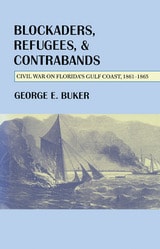
Blockaders, Refugees, and Contrabands
Civil War on Florida's Gulf Coast, 1861-1865George E. Buker
University of Alabama Press, 2004
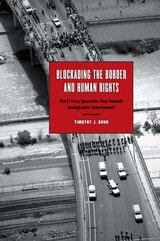
Blockading the Border and Human Rights
The El Paso Operation that Remade Immigration EnforcementBy Timothy J. Dunn
University of Texas Press, 2009
To understand border enforcement and the shape it has taken, it is imperative to examine a groundbreaking Border Patrol operation begun in 1993 in El Paso, Texas, "Operation Blockade." The El Paso Border Patrol designed and implemented this radical new strategy, posting 400 agents directly on the banks of the Rio Grande in highly visible positions to deter unauthorized border crossings into the urban areas of El Paso from neighboring Ciudad Juárez—a marked departure from the traditional strategy of apprehending unauthorized crossers after entry. This approach, of "prevention through deterrence," became the foundation of the 1994 and 2004 National Border Patrol Strategies for the Southern Border. Politically popular overall, it has rendered unauthorized border crossing far less visible in many key urban areas. However, the real effectiveness of the strategy is debatable, at best. Its implementation has also led to a sharp rise in the number of deaths of unauthorized border crossers.
Here, Dunn examines the paradigm-changing Operation Blockade and related border enforcement efforts in the El Paso region in great detail, as well as the local social and political situation that spawned the approach and has shaped it since. Dunn particularly spotlights the human rights abuses and enforcement excesses inflicted on local Mexican Americans and Mexican immigrants as well as the challenges to those abuses. Throughout the book, Dunn filters his research and fieldwork through two competing lenses, human rights versus the rights of national sovereignty and citizenship.

Blood Brothers and Peace Pipes
Performing the Wild West in German FestivalsA. Dana Weber
University of Wisconsin Press, 2019
This book, based on years of fieldwork observing and studying the festivals, plays, events, and groups that comprise this subculture, addresses a larger, timely issue: cultural transfer and appropriations. Are Germans dressing up in American Indian costumes paying tribute or offending the cultures they are representing? Avoiding simplistic answers, A. Dana Weber considers the complexity of cultural enactments as they relate both to the distinctly German phenomenon as well as to larger questions of cultural representations in American and European live performance traditions."
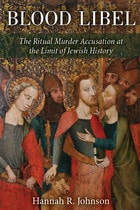
Blood Libel
The Ritual Murder Accusation at the Limit of Jewish HistoryHannah R. Johnson
University of Michigan Press, 2012
The ritual murder accusation is one of a series of myths that fall under the label blood libel, and describes the medieval legend that Jews require Christian blood for obscure religious purposes and are capable of committing murder to obtain it. This malicious myth continues to have an explosive afterlife in the public sphere, where Sarah Palin's 2011 gaffe is only the latest reminder of its power to excite controversy. Blood Libel is the first book-length study to analyze the recent historiography of the ritual murder accusation and to consider these debates in the context of intellectual and cultural history as well as methodology. Hannah R. Johnson articulates how ethics shapes methodological decisions in the study of the accusation and how questions about methodology, in turn, pose ethical problems of interpretation and understanding. Examining recent debates over the scholarship of historians such as Gavin Langmuir, Israel Yuval, and Ariel Toaff, Johnson argues that these discussions highlight an ongoing paradigm shift that seeks to reimagine questions of responsibility by deliberately refraining from a discourse of moral judgment and blame in favor of an emphasis on historical contingencies and hostile intergroup dynamics.
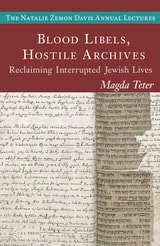
Blood Libels, Hostile Archives
Reclaiming Interrupted Jewish LivesMagda Teter
Central European University Press, 2025
As a minority group for most of their history, Jews were often marginalized and persecuted. Traces of their lives can be found in the archives of the dominant societies, but only as they intersected with the concerns of those in power. Just as Natalie Zemon Davis, Emmanuel Le Roy Ladurie, Carlo Ginzburg, and others recovered the voices of the peasants, so, too, scholars of Jewish history and culture have productively mined these reservoirs of evidence to retrieve glimpses of the ordinary lives of Jews. Blood Libels, Hostile Archives explores what can be reclaimed about everyday lives from what can be called “hostile archives”—from archival evidence produced and collected explicitly to manufacture malicious tales and pass them as “facts.” For Jewish history, in some places, these archival sources may be the only remaining records documenting the lives of Jews there.
The book explores two places: Trent, in northern Italy, and Sandomierz, in eastern Poland. Though hundreds of miles away, the towns have many things in common: both had been sites of anti-Jewish libels falsely accusing Jews of killing Christian children, Trent in 1475 and Sandomierz twice—in 1698 and 1710; in both, the instigators of the Jews’ persecution left unique and extensive archives, both towns have physical remnants of these deadly affairs, and, finally, neither town has an existing Jewish population. Yet, centuries later, these anti-Jewish libels have not been relegated to the past; in both towns, their legacies still reverberate today.

Blood Orchid
An Unnatural History of AmericaBy Charles Bowden, Foreword by William Langewiesche
University of Texas Press, 2018
Through stark observations and visceral experiences, Blood Orchid begins Charles Bowden’s dizzying excavation of the brutal, systemic violence and corruption at the roots of American society. Like a nightmarish fever dream that turns out to be our own reality, Bowden visits dying friends in skid row apartments in Los Angeles, traverses San Francisco byways lined with clubs and joints, and roams through village bars and streets in the Sierra Madre mountains. In these wanderings resides a yearning for the understanding of past and present sins, the human penchant for warfare, abuse, and oppression, and the true war between humanity, the industrialized world, and the immense tolls of our shared land. Deeply personal, hauntingly prophetic, and bracingly sharp, the start to Bowden’s harrowed quest to unearth our ugly truths remains strikingly poignant today.