Results by title
22279 books match the query 'Social Science' and 1147 start with b

Bruno
Conversations with a Brazilian Drug DealerRobert Gay
Duke University Press, 2015
Brushed by Cedar, Living by the River
Coast Salish Figures of PowerCrisca Bierwert
University of Arizona Press, 1999
Crisca Bierwert has created a fresh poststructural ethnography that offers new insights into Coast Salish cultures. Arguing against the existence of a master narrative, she presents her understanding of these Native American peoples of Washington state and British Columbia, Canada, through poetic bricolage, offering the reader a pastiche of rich cultural images. Bierwert employs postmodern literary and social analyses to examine many aspects of Salish culture: legends and their storytellers; domestic violence; longhouse ceremonies; the importance and power of place; and disputes over fishing rights. Her reflections overlap as a dialogue would, weaving throughout the book significant threads of Salish knowledge and creating a nonauthoritative text that nonetheless speaks knowingly.
This book represents the future of contemporary anthropology. Unlike traditional ethnography, it makes no attempt to portray a complete picture of the Coast Salish. Instead, Bierwert utilizes a critical and diffuse approach that defies colonial, syncretic, and hegemonic structures and applies advanced literary theory to the creation of ethnography.
Brushed by Cedar is an important guideline for anyone who writes about other cultures and will be expecially useful to classes in the methodology and history of ethnography, as well as to scholars specializing in Native American studies or oral literatures.

Brushed in Light
Calligraphy in East Asian CinemaMarkus Nornes
University of Michigan Press, 2021
Drawing on a millennia of calligraphy theory and history, Brushed in Light examines how the brushed word appears in films and in film cultures of Korea, Japan, Taiwan, Hong Kong, and PRC cinemas. This includes silent era intertitles, subtitles, title frames, letters, graffiti, end titles, and props. Markus Nornes also looks at the role of calligraphy in film culture at large, from gifts to correspondence to advertising. The book begins with a historical dimension, tracking how calligraphy is initially used in early cinema and how it is continually rearticulated by transforming conventions and the integration of new technologies. These chapters ask how calligraphy creates new meaning in cinema and demonstrate how calligraphy, cinematography, and acting work together in a single film. The last part of the book moves to other regions of theory. Nornes explores the cinematization of the handwritten word and explores how calligraphers understand their own work.

Brutal Ephemerality
Migrant Temporalities on China's Urban FringeYang Zhan
University of Michigan Press, 2027
How do you build a hopeful future when your present is designed to be temporary? Brutal Ephemerality reveals that the sprawling urban villages on the edge of megacities such as Beijing aren’t slums that grew by accident. Instead, urban villages are intentionally kept in a state of uncertainty, allowing the city to have a ready supply of cheap land and flexible labor to fuel its rapid growth. Yang Zhan proposes the concept of “migrant venturers” (chuǎngdàng de rén) and argues that “venturing” (chuǎngdàng) represents a distinct survival strategy of mobility, risk-taking, and opportunity seeking, rather than rooting oneself in a specific place or profession. This strategy is an active practice of “future-making”—an effort to project a meaningful future from an uncertain present.
Brutal Ephemerality demonstrates how time is not a neutral backdrop, but the central arena for political struggle, ethical practice, and imaginative creation among marginalized groups. Zhan shows how hope and suffering are paradoxically intertwined, and how the very struggle for a better life can, itself, become a source of harm.
Brutal Fantasies
Imagining North Korea in the Long Cold WarChristine Kim
Duke University Press, 2025

Brutal
Manhood and the Exploitation of AnimalsBrian Luke
University of Illinois Press, 2007
In Brutal, Brian Luke explores the gender divide over our treatment of animals, exposing the central role of masculinity in systems of animal exploitation. Employing philosophical analysis, reference to empirical research, and relevant personal experience, Luke develops a new theory of how exploitative institutions do not work to promote human flourishing but instead merely act as support for a particular construction of manhood. The resulting work is of significant interest both to animal advocates and opponents of sexism.
Brutalism
Achille Mbembe
Duke University Press, 2024
Bubbles and Machines
Gender, Information and Financial CrisesMicky Lee
University of Westminster Press, 2019

Buckeye Schoolmaster
A Chronicle of Midwestern Rural Life, 1853–1865J. Merton England
University of Wisconsin Press, 1996
The journals and diaries of John M. Roberts provide an intimate view of the life and dthoughts of a young schoolmaster, miller, itenerant bookseller, and farmer in centreal Ohio in a time of rising sectional crisis and Civil War.
Buckeye Women
The History of Ohio’s DaughtersStephane Elise Booth
Ohio University Press, 2001
By the last two decades of the twentieth century, Ohio women had held positions as university presidents, chief executive officers, judges, superintendents of schools, and lieutenant governor. They had won Pulitzer Prizes and, in one case, the Nobel Prize for Literature.
But these women stood on the shoulders of those who came before: the pioneering women who helped tame the Ohio frontier, who filled the breach, who worked for reform, and who struggled for their own rights as citizens of one of the most prosperous states in the Union.
Buckeye Women is an accessible and comprehensive account of the role Ohio women have assumed in the history of the state and a narrative of their hardships and of the victories that have been won in the past two hundred years.
In this timely contribution to the Ohio Bicentennial Series, Professor Stephane Booth has written a rich and well-researched volume, providing for the first time a record of the vast and pivotal accomplishments shared by the women of Ohio over the last two centuries and documenting their contribution to the state’s remarkable heritage.
Budapest and New York
Studies in Metropolitan Transformation, 1870-1930Thomas Bender
Russell Sage Foundation, 1994
Buena Vista in the Club
Rap, Reggaetón, and Revolution in HavanaGeoffrey Baker
Duke University Press, 2011

Buenos Aires
400 YearsEdited by Stanley R. Ross and Thomas F. McGann
University of Texas Press, 1982
Building Antebellum New Orleans
Free People of Color and Their InfluenceBy Tara A. Dudley
University of Texas Press, 2021
2024 Spiro Kostof Book Award, Society of Architectural Historians
2022 PROSE Award in Architecture and Urban Planning
2022 Summerlee Book Prize in Nonfiction, Center for History and Culture of Southeast Texas and the Upper Gulf Coast
2022 Best Book Prize, Southeast Chapter of the Society of Architectural Historians
2022 On the Brinck Book Award, University of New Mexico School of Architecture + Planning
A significant and deeply researched examination of the free nineteenth-century Black developers who transformed the cultural and architectural legacy of New Orleans.
The Creole architecture of New Orleans is one of the city’s most-recognized features, but studies of it largely have focused on architectural typology. In Building Antebellum New Orleans, Tara A. Dudley examines the architectural activities and influence of gens de couleur libres—free people of color—in a city where the mixed-race descendants of whites and other free Blacks could own property.
Between 1820 and 1850 New Orleans became an urban metropolis and industrialized shipping center with a growing population. Amidst dramatic economic and cultural change in the mid-antebellum period, the gens de couleur libres thrived as property owners, developers, building artisans, and patrons. Dudley writes an intimate microhistory of two prominent families of Black developers, the Dollioles and Souliés, to explore how gens de couleur libres used ownership, engagement, and entrepreneurship to construct individual and group identity and stability. With deep archival research, Dudley re-creates in fine detail the material culture, business and social history, and politics of the built environment for free people of color and adds new, revelatory information to the canon on New Orleans architecture.
Building Back Better in India
Development, NGOs, and Artisanal Fishers after the 2004 TsunamiRaja Swamy
University of Alabama Press, 2021
Disaster, development, and the struggle for coastal livelihoods in post-tsunami India.
Building Back Better in India: Development, NGOs, and Artisanal Fishers after the 2004 Tsunami addresses the ways in which natural disasters impact the strategies and priorities of neoliberalizing states in the contemporary era. In the light of growing scholarly and public concern over “disaster capitalism” and the tendency of states and powerful international financial institutions to view disasters as “opportunities” to “build back better,” Raja Swamy offers an ethnographically rich account of post-disaster reconstruction, its contested aims, and the mixed outcomes of state policy, humanitarian aid, and local resistance. Using the 2004 Indian Ocean tsunami as a case study, Swamy investigates the planning and implementation of a reconstruction process that sought to radically transform the geography of a coastal district in the Indian state of Tamil Nadu.
Drawing on an ethnographic study conducted in Tamil Nadu’s Nagapattinam District, Swamy shows how and why the state-led, multilaterally financed, and NGO-mediated reconstruction prioritized the displacement of coastal fisher populations. Exploring the substantive differences shaping NGO action, specifically in response to core political questions affecting the well-being of their ostensible beneficiaries, this account also centers the political agency of disaster survivors and their allies among NGOs in contesting the meanings of recovery while navigating the process of reconstruction.
If humanitarian aid brought together NGOs and fishers as givers and recipients of aid, it also revealed in its workings competing and sometimes contradictory assumptions, goals, interests, and strategies driving the fraught historical relationship between artisanal fishers and the state. Importantly, this research foregrounds the ambiguous role of NGOs involved in the distribution of aid, as well as the agency and strategic actions of the primary recipients of aid—the fishers of Nagapattinam—as they struggled with a reconstruction process that made receipt of the humanitarian gift of housing conditional on the formal abandonment of all claims to the coast. Building Back Better in India thus bridges scholarly concerns with disasters, humanitarianism, and economic development with those focused on power, agency, and resistance.

Building Community Choirs in the Twenty-First Century
Re-imagining Identity through Singing in Northern IrelandSarah-Jane Gibson
Intellect Books, 2026
Building Community Choirs explores the under-researched practice of community choral singing in Northern Ireland. Sarah-Jane Gibson conducted ethnographic research with five choirs in various locations over the course of five years and illustrates how choirs reimagine identity through the ways they organize, rehearse, and perform. By actively rethinking conceptions of identities within their groups, Gibson’s study shows how gender, age, religious faith, and ethnic diversity can both influence structures of community in the region and be influenced by them.
Building Confianza
Empowering Latinos/as Through Transcultural Health Care CommunicationDalia Magaña
The Ohio State University Press, 2021
Building Diaspora
Filipino Cultural Community Formation on the InternetIgnacio, Emily N
Rutgers University Press, 2004
In Building Diaspora, Emily Noelle Ignacio explores how Filipinos have used these subtle, cyber, but very real social connections to construct and reinforce a sense of national, ethnic, and racial identity with distant others. Through an extensive analysis of newsgroup debates, listserves, and website postings, she illustrates the significant ways that computer-mediated communication has contributed to solidifying what can credibly be called a Filipino diaspora. Lively cyber-discussions on topics including Eurocentrism, Orientalism, patriarchy, gender issues, language, and "mail-order-brides" have helped Filipinos better understand and articulate their postcolonial situation as well as their relationship with other national and ethnic communities around the world. Significant attention is given to the complicated history of Philippine-American relations, including the ways Filipinos are racialized as a result of their political and economic subjugation to U.S. interests.
As Filipinos and many other ethnic groups continue to migrate globally, Building Diaspora makes an important contribution to our changing understanding of "homeland." The author makes the powerful argument that while home is being further removed from geographic place, it is being increasingly territorialized in space.
Building Domestic Liberty
Charlotte Perkins Gilman's Architectural FeminismPolly Wynn Allen
University of Massachusetts Press, 1988
Building Domestic Liberty offers a critical and admiring analysis of feminist philosopher Charlotte Perkins Gilman (1860–1935). Polly Allen examines Gilman's approach to architecture, landscape, and neighborhood design and discusses Gilman's case against prevailing household design and looks at her philosophy of world improvement.
Building Filipino Hawai'i
Roderick Labrador
University of Illinois Press, 2015
In particular, Labrador speaks to the processes of identity making and the politics of representation among immigrant communities striving to resist marginalization in a globalized, transnational era. Critiquing the popular image of Hawai'i as a postracial paradise, he reveals how Filipino immigrants talk about their relationships to the place(s) they left and the place(s) where they've settled, and how these discourses shape their identities. He also shows how the struggle for community empowerment, identity territorialization, and the process of placing and boundary making continue to affect how minority groups construct the stories they tell about themselves, to themselves and others.
Building Financial Empowerment for Survivors of Domestic Violence
A Path to Hope and FreedomJudy L. Postmus
Rutgers University Press, 2023
Curiously, little of the research on domestic violence has sought to either fully understand the impact of financial abuse or to determine which intervention strategies are most effective for the financial empowerment of survivors. Building Financial Empowerment for Survivors of Domestic Violence aims to address this critical knowledge gap by providing those who work with survivors of domestic violence with practical knowledge on how to empower the financial well-being and stability of survivors. Specifically, every practitioner, human service provider, criminal justice practitioner, financial manager, and corporate supervisor should be screening the women they encounter for economic abuse, and when such abuse is found, they should work with the women toward developing financial safety plans and refer survivors to financial empowerment programs to assist survivors to become free from abuse.
Building Fires in the Snow
A Collection of Alaska LGBTQ Short Fiction and PoetryEdited by Martha Amore and Lucian Childs
University of Alaska Press, 2016
In these pages we see the panoply of LGBTQ life in Alaska today, from the quotidian urban adventures of a family—shopping, going out, working—to intimate encounters with Alaska’s breathtaking natural beauty. At a time of great change and major strides in LGBTQ civil rights, Building Fires in the Snow shows us an Alaska that shatters stereotypes and reveals a side of Alaska that’s been little seen until now.
Building Ghosts
Past Lives and Lost Places in a Changing CityWritten by Molly Lester, Photographs by Michael Bixler
Temple University Press, 2024
Building Ghosts features more than 100 striking contemporary color photographs and a deeply researched narrative about Philadelphia’s buildings, neighborhoods, and the ghosts that reveal new truths and provocations about the changing city. The text and images in this lavish volume illuminate these lost buildings and found ghosts. Building Ghosts is an invitation to see the city differently, with the past clinging visibly to the present.
Building Globalization
Transnational Architecture Production in Urban ChinaXuefei Ren
University of Chicago Press, 2011
From the years 2004 to 2008, Beijing and Shanghai witnessed the construction of an extraordinary number of new buildings, many of which were designed by architectural firms overseas. Combining ethnographic fieldwork, historical research, and network analysis, Building Globalization closely scrutinizes the growing phenomenon of transnational architecture and its profound effect on the development of urban space.
Roaming from construction sites in Shanghai to architects’ offices in Paris, Xuefei Ren interviews hundreds of architects, developers, politicians, residents, and activists to explore this issue. She finds that in the rapidly transforming cities of modern China, iconic designs from prestigious international architects help private developers to distinguish their projects, government officials to advance their careers, and the Chinese state to announce the arrival of modern China on the world stage.
China leads the way in the globalization of architecture, a process whose ramifications can be felt from Beijing to Dubai to Basel. Connecting the dots between real estate speculation, megaproject construction, residential displacement, historical preservation, housing rights, and urban activism, Building Globalization reveals the contradictions and consequences of this new, global urban frontier.
Building Little Saigon
Refugee Urbanism in American Cities and SuburbsErica Allen-Kim
University of Texas Press, 2024
2026 Spiro Kostof Book Award, Society of Architectural Historians
An in-depth look at the diverging paths of Vietnamese American communities, or “Little Saigons,” in America’s built environment.
In the final days before the fall of Saigon in 1975, 125,000 Vietnamese who were evacuated or who made their own way out of the country resettled in the United States. Finding themselves in unfamiliar places yet still connected in exile, these refugees began building their own communities as memorials to a lost homeland. Known both officially and unofficially as Little Saigons, these built landscapes offer space for everyday activities as well as the staging of cultural heritage and political events.
Building Little Saigon examines nearly fifty years of city building by Vietnamese Americans—who number over 2.2 million today. Author Erica Allen-Kim highlights architecture and planning ideas adapted by the Vietnamese communities who, in turn, have influenced planning policies and mainstream practices. Allen-Kim traveled to ten Little Saigons in the United States to visit archives, buildings, and public art and to converse with developers, community planners, artists, business owners, and Vietnam veterans. By examining everyday buildings—who made them and what they mean for those who know them—Building Little Saigon shows us the complexities of migration unfolding across lifetimes and generations.
Building Nature's Market
The Business and Politics of Natural FoodsLaura J. Miller
University of Chicago Press, 2017
Building Nature’s Market shows how the meaning of natural foods was transformed as they changed from a culturally marginal, religiously inspired set of ideas and practices valorizing asceticism to a bohemian lifestyle to a mainstream consumer choice. Laura J. Miller argues that the key to understanding this transformation is to recognize the leadership of the natural foods industry. Rather than a simple tale of cooptation by market forces, Miller contends the participation of business interests encouraged the natural foods movement to be guided by a radical skepticism of established cultural authority. She challenges assumptions that private enterprise is always aligned with social elites, instead arguing that profit-minded entities can make common cause with and even lead citizens in advocating for broad-based social and cultural change.
Building Partnerships in the Americas
A Guide for Global Health WorkersEdited by Margo J. Krasnoff
Dartmouth College Press, 2013
Building Resilience
Social Capital in Post-Disaster RecoveryDaniel P. Aldrich
University of Chicago Press, 2012
Building Socialism
The Afterlife of East German Architecture in Urban VietnamChristina Schwenkel
Duke University Press, 2020
Building Something Better
Environmental Crises and the Promise of Community ChangeStephanie A. Malin
Rutgers University Press, 2022
Sociologists Stephanie A. Malin and Meghan Elizbeth Kallman offer a clear, accessible volume that demonstrates the ways that communities adapt in the face of crises and explains that sociology can help us understand how and why they do this challenging work. Tackling neoliberalism head-on, these communities are making big changes by crafting distributive and regenerative systems that depart from capitalist approaches. The vivid case studies presented range from activist water protectors to hemp farmers to renewable energy cooperatives led by Indigenous peoples and nations. Alongside these studies, Malin and Kallman present incisive critiques of colonialism, extractive capitalism, and neoliberalism, while demonstrating how sociology’s own disciplinary traditions have been complicit with those ideologies—and must expand beyond them.
Showing that it is possible to challenge social inequality and environmental degradation by refusing to continue business-as-usual, Building Something Better offers both a call to action and a dose of hope in a time of crises.
Building Sustainable Worlds
Latinx Placemaking in the MidwestEdited by Theresa Delgadillo, Ramon H. Rivera-Servera, Geraldo L. Cadava, and Claire F. Fox
University of Illinois Press, 2022
A rare and crucial perspective on Latina/o/x people in the Midwest, Building Sustainable Worlds reveals how expressive culture contributes to, and sustains, a sense of place in an uncertain era.
Building Taliesin
Frank Lloyd Wright’s Home of Love and LossRon McCrea
Wisconsin Historical Society Press, 2012
Building Womanist Coalitions
Writing and Teaching in the Spirit of LoveEdited by Gary L. Lemons
University of Illinois Press, 2019
Building a House in Heaven
Pious Neoliberalism and Islamic Charity in EgyptMona Atia
University of Minnesota Press, 2013
Charity is an economic act. This premise underlies a societal transformation—the merging of religious and capitalist impulses that Mona Atia calls “pious neoliberalism.” Though the phenomenon spans religious lines, Atia makes the connection between Islam and capitalism to examine the surprising relations between charity and the economy, the state, and religion in the transition from Mubarak-era Egypt.
Mapping the landscape of charity and development in Egypt, Building a House in Heaven reveals the factors that changed the nature of Egyptian charitable practices—the state’s intervention in social care and religion, an Islamic revival, intensified economic pressures on the poor, and the subsequent emergence of the private sector as a critical actor in development. She shows how, when individuals from Egypt’s private sector felt it necessary to address poverty, they sought to make Islamic charities work as engines of development, a practice that changed the function of charity from distributing goods to empowering the poor. Drawing on interviews with key players, Atia explores the geography of Islamic charities through multiple neighborhoods, ideologies, sources of funding, projects, and wide social networks. Her work shifts between absorbing ethnographic stories of specific organizations and reflections on the patterns that appear across the sector.
An enlightening look at the simultaneous neoliberalization of Islamic charity work and Islamization of neoliberal development, the book also offers an insightful analysis of the political and socioeconomic movements leading up to the uprisings that ended Mubarak’s rule and that amplified the importance of not only the Muslim Brotherhood but also the broader forces of Islamic piety and charity.
Building a Nation
Chickasaw Museums and the Construction of History and HeritageJoshua M. Gorman
University of Alabama Press, 2011
A groundbreaking study of Indigenous museums and cultural self-representation.
The Chickasaw Nation, an American Indian nation headquartered in southeastern Oklahoma, entered into a period of substantial growth in the late 1980s. Following its successful reorganization and expansion, which was enabled by federal policies for tribal self-determination, the Nation pursued gaming and other industries to affect economic growth. From 1987 to 2009 the Nation’s budget increased exponentially as tribal investments produced increasingly large revenues for a growing Chickasaw population. Coincident to this growth, the Chickasaw Nation began acquiring and creating museums and heritage properties to interpret their own history, heritage, and culture through diverse exhibitionary representations. By 2009, the Chickasaw Nation directed representation of itself at five museum and heritage properties throughout its historic boundaries.
Josh Gorman examines the history of these sites and argues that the Chickasaw Nation is using museums and heritage sites as places to define itself as a coherent and legitimate contemporary Indian nation. In doing so, they are necessarily engaging with the shifting historiographical paradigms as well as changing articulations of how museums function and what they represent. The roles of the Chickasaw Nation’s museums and heritage sites in defining and creating discursive representations of sovereignty are examined within their historicized local contexts. The work describes the museum exhibitions’ dialogue with the historiography of the Chickasaw Nation, the literature of new museum studies, and the indigenous exhibitionary grammars emerging from indigenous museums throughout the United States and the world.
Building a New Biocultural Synthesis
Political-Economic Perspectives on Human BiologyAlan H. Goodman and Thomas L. Leatherman, Editors
University of Michigan Press, 1998
Building a New Table
A Community-Centered Handbook for Transformative Social ChangeBrittany Lewis
University of Minnesota Press, 2026
A vital guide to centering community knowledge to generate effective solutions to inequality
When organizations take on social problems, from school reform to conservation to healthcare disparities, community members are sometimes “invited to the table” to share their insights. But if the table has already been set with institutional assumptions about the issue at hand, the solutions that emerge often have little to do with the people and places they are meant to help. When this is the case, inclusion can only go so far: as Dr. Brittany Lewis argues, it’s time to build a new table.
Drawing on her work as a community researcher and nonprofit consultant, Dr. Lewis developed the Equity in Action (EIA) model as a framework for closing the gaps between communities, researchers, and institutions. By centering the knowledge of the community members who ostensibly benefit from the work of various organizations, EIA makes research questions more relevant and the research process more targeted, getting at the roots of social inequality to find sustainable, impactful solutions. In Building a New Table, Dr. Lewis guides readers through the steps of EIA: assessing the landscape, building the community action council, co-developing a research approach, data collection, community review, and identifying solutions. Along the way, she highlights the values imbued in each step and the skills needed for success as well as how the model can be adapted for different organizations.
Practical and hands-on, Building a New Table explores each phase of the Equity in Action model through case studies featuring commentary from organizational leaders and staff who have used it to reshape their engagement with the communities they serve. Demonstrating how to ground solutions in lessons from lived experience, this book teaches how authentic community engagement and community-driven research creates reciprocal, generative relationships that can enact real, systemic change.
Retail e-book files for this title are screen-reader friendly with images accompanied by short alt text and/or extended descriptions.
Building a Resilient Twenty-First-Century Economy for Rural America
Don E. Albrecht
Utah State University Press, 2020
Trump’s promises to restore rural industrial jobs simply cannot be fulfilled because his policies do not address the base cause for this job loss—technological change, the most significant factor being the machine replacement of human labor in the production process. Bringing a personal understanding of the effects on rural communities and residents, Albrecht focuses each chapter on a community that has traditionally been economically dependent on a single industry—manufacturing, coal mining, agriculture, logging, oil and gas production, and tourism—and the consequences of losing that industry. He also lays out a plan for rebuilding America’s rural areas and creating an economically vibrant country with a more sustainable future.
The rural economy cannot return to the past as it was structured and instead must look to a new future. Building a Resilient Twenty-First-Century Economy for Rural America describes the source of economic concerns in rural America and offers real ways to address them. It will be vital to students, scholars, practitioners, community leaders, politicians, and policy makers concerned with rural community development.
Building a Social Contract
Modern Workers' Houses in Early-Twentieth Century DetroitMcCulloch, Michael
Temple University Press, 2023
Through oral histories, letters, photographs, and period fiction, McCulloch traces wage earners’ agency in negotiating a new implicit social contract, one that rewarded hard work with upward mobility in modern houses. This promise reflected workers’ increased bargaining power but, at the same time, left them increasingly vulnerable to layoffs.
Building a Social Contract focuses on Detroit, the quintessential city of the era, where migrant workers came and were Americanized, and real estate agents and the speculative housebuilding industry thrived. The Motor City epitomized the struggle of Black workers in this period, who sought better lives through industrial labor but struggled to translate their wages into housing security amid racist segregation and violence. When Depression-era unemployment created an eviction crisis, the social contract unraveled, and workers rose up—at the polls and in the streets—to create a labor movement that reshaped American capitalism for decades.
Today, the lessons McCulloch provides from early twentieth-century Detroit are a necessary reminder that wages are not enough, and only working-class political power can secure affordable housing.
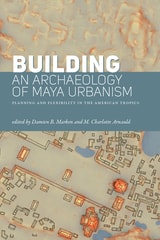
Building an Archaeology of Maya Urbanism
Planning and Flexibility in the American TropicsDamien B. Marken and M. Charlotte Arnauld
University Press of Colorado, 2023
Integrating recent lidar survey data with more traditional excavation and artifact-based archaeological practices, chapters in this volume offer broadened perspectives on the patterns of Maya urban design and planning by viewing bottom-up and self-organizing processes as integral to the form, development, and dissolution of Classic lowland cities alongside potentially centralized civic designs. Full of innovative examples of how to build an archaeology of urbanism that can be applied not just to the lowland Maya and across the region, Building an Archaeology of Maya Urbanism simultaneously improves interpretations of lowland Maya culture history and contributes to empirical and comparative discussions of tropical, non-Western cities worldwide.
Contributors: Divina Perla Barrera, Arianna Campiani, Cyril Castanet, Adrian S. Z. Chase, Lydie Dussol, Sara Dzul Góngora, Keith Eppich, Thomas Garrison, María Rocio González de la Mata, Timothy Hare, Julien Hiquet, Takeshi Inomata, Eva Lemonnier, José Francisco Osorio León, Marilyn Masson, Elsa Damaris Menéndez, Timothy Murtha, Philippe Nondédéo, Keith M. Prufer, Louise Purdue, Francisco Pérez Ruíz, Julien Sion, Travis Stanton, Rodrigo Liendo Stuardo, Karl A. Taube, Marc Testé, Amy E. Thompson, Daniela Triadan
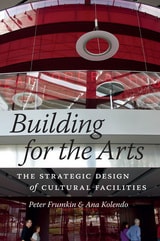
Building for the Arts
The Strategic Design of Cultural FacilitiesPeter Frumkin and Ana Kolendo
University of Chicago Press, 2014
With Building for the Arts, Peter Frumkin and Ana Kolendo explore how artistic vision, funding partnerships, and institutional culture work together—or fail to—throughout the process of major cultural construction projects. Drawing on detailed case studies and in-depth interviews at museums and other cultural institutions varying in size and funding arrangements, including the Art Institute of Chicago, Atlanta Opera, and AT&T Performing Arts Center in Dallas, Frumkin and Kolendo analyze the decision-making considerations and challenges and identify four factors whose alignment characterizes the most successful and sustainable of the projects discussed: institutional requirements, capacity of the institution to manage the project while maintaining ongoing operations, community interest and support, and sufficient sources of funding. How and whether these factors are strategically aligned in the design and execution of a building initiative, the authors argue, can lead an organization to either thrive or fail. The book closes with an analysis of specific tactics that can enhance the chances of a project’s success.
A practical guide grounded in the latest scholarship on nonprofit strategy and governance, Building for the Arts will be an invaluable resource for professional arts staff and management, trustees of arts organizations, development professionals, and donors, as well as those who study and seek to understand them.
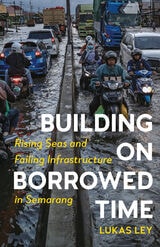
Building on Borrowed Time
Rising Seas and Failing Infrastructure in SemarangLukas Ley
University of Minnesota Press, 2021
A timely ethnography of how Indonesia’s coastal dwellers inhabit the “chronic present” of a slow-motion natural disaster
Ice caps are melting, seas are rising, and densely populated cities worldwide are threatened by floodwaters, especially in Southeast Asia. Building on Borrowed Time is a timely and powerful ethnography of how people in Semarang, Indonesia, on the north coast of Java, are dealing with this global warming–driven existential challenge. In addition to antiflooding infrastructure breaking down, vast areas of cities like Semarang and Jakarta are rapidly sinking, affecting the very foundations of urban life: toxic water oozes through the floors of houses, bridges are submerged, traffic is interrupted.
As Lukas Ley shows, the residents of Semarang are constantly engaged in maintaining their homes and streets, trying to live through a slow-motion disaster shaped by the interacting temporalities of infrastructural failure, ecological deterioration, and urban development. He casts this predicament through the temporal lens of a “meantime,” a managerial response that means a constant enduring of the present rather than progress toward a better future—a “chronic present.”
Building on Borrowed Time takes us to a place where a flood crisis has already arrived—where everyday residents are not waiting for the effects of climate change but are in fact already living with it—and shows that life in coastal Southeast Asia is defined not by the temporality of climate science but by the lived experience of tidal flooding.
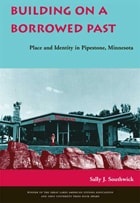
Building on a Borrowed Past
Place and Identity in Pipestone, MinnesotaSally J. Southwick
Ohio University Press, 2005
Why is there a national monument near a small town on the Minnesota prairie? Why do the town’s residents dress as Indians each summer and perform a historical pageant based on a Victorian-era poem? To answer such questions, Building on a Borrowed Past: Place and Identity in Pipestone, Minnesota shows what happens when one culture absorbs the heritage of another for civic advantage.
Founded in 1874, Pipestone was named for the quarries where regional tribes excavated soft stone for making pipes. George Catlin and Henry Wadsworth Longfellow described the place and its tribal history. Promotion by white residents of the quarries as central to America’s Indian heritage helped Pipestone obtain a federal Indian boarding school in the 1890s and a national monument in the 1930s. The annual “Song of Hiawatha” pageant attracted tourists after World War II. Sally J. Southwick’s prizewinning study demonstrates how average, small–town citizens contributed to the generic image of “the Indian” in American culture.
Examining oral histories, memoirs, newspapers, federal documents, civic group records, and promotional literature, Southwick focuses on the role of middle–class individuals in establishing a historical, place–based identity. Building on a Borrowed Past reveals how identities are formed through adaptation of cultural, spiritual, racial, and historical symbols.
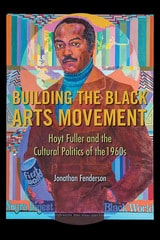
Building the Black Arts Movement
Hoyt Fuller and the Cultural Politics of the 1960sJonathan Fenderson
University of Illinois Press, 2019
Building the Black Metropolis
African American Entrepreneurship in ChicagoRobert Weems Jr., Jason Chambers
University of Illinois Press, 2017
Contributors: Jason P. Chambers, Marcia Chatelain, Will Cooley, Robert Howard, Christopher Robert Reed, Myiti Sengstacke Rice, Clovis E. Semmes, Juliet E. K. Walker, and Robert E. Weems Jr.
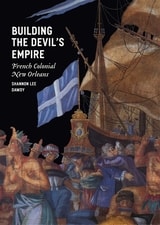
Building the Devil's Empire
French Colonial New OrleansShannon Lee Dawdy
University of Chicago Press, 2008
Building the Devil’s Empire is the first comprehensive history of New Orleans’s early years, tracing the town’s development from its origins in 1718 to its revolt against Spanish rule in 1768. Shannon Lee Dawdy’s picaresque account of New Orleans’s wild youth features a cast of strong-willed captives, thin-skinned nobles, sharp-tongued women, and carousing travelers. But she also widens her lens to reveal the port city’s global significance, examining its role in the French Empire and the Caribbean, and she concludes that by exemplifying a kind of rogue colonialism—where governments, outlaws, and capitalism become entwined—New Orleans should prompt us to reconsider our notions of how colonialism works.
"[A] penetrating study of the colony's founding."—Nation
“A brilliant and spirited reinterpretation of the emergence of French New Orleans. Dawdy leads us deep into the daily life of the city, and along the many paths that connected it to France, the North American interior, and the Greater Caribbean. A major contribution to our understanding of the history of the Americas and of the French Atlantic, the work is also a model of interdisciplinary research and analysis, skillfully bringing together archival research, archaeology, and literary analysis.”—Laurent Dubois, Duke University
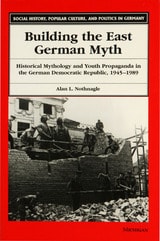
Building the East German Myth
Historical Mythology and Youth Propaganda in the German Democratic Republic, 1945-1989Alan L. Nothnagle
University of Michigan Press, 1999
Building the Prison State
Race and the Politics of Mass IncarcerationHeather Schoenfeld
University of Chicago Press, 2018
Reframing the story of mass incarceration, Heather Schoenfeld illustrates how the unfinished task of full equality for African Americans led to a series of policy choices that expanded the government’s power to punish, even as they were designed to protect individuals from arbitrary state violence. Examining civil rights protests, prison condition lawsuits, sentencing reforms, the War on Drugs, and the rise of conservative Tea Party politics, Schoenfeld explains why politicians veered from skepticism of prisons to an embrace of incarceration as the appropriate response to crime. To reduce the number of people behind bars, Schoenfeld argues that we must transform the political incentives for imprisonment and develop a new ideological basis for punishment.
Building the South Side
Urban Space and Civic Culture in Chicago, 1890-1919Robin F. Bachin
University of Chicago Press, 2004
Building the Urban Environment
Visions of the Organic City in the United States, Europe, and Latin AmericaHarold L Platt
Temple University Press, 2015
Building the Urban Environment is a comparative study of the contestation among planners, policymakers, and the grassroots over the production and meaning of urban space. Award-winning historian Harold Platt presents case studies of seven cities, including Rotterdam, Chicago, and Sao Paulo, to show how, over time, urban life created hybrid spaces that transformed people, culture, and their environments.
As Platt explains, during the post-1945 race to technological modernization, policymakers gave urban planners of the International Style extraordinary influence to build their utopian vision of a self-sustaining “organic city.” However, in the 1960s, they faced a revolt of the grassroots. Building the Urban Environment traces the rise and fall of the Modernist planners during an era of Cold War, urban crisis, unnatural disasters, and global restructuring in the wake of the oil-energy embargo of the ’70s.
Ultimately, Platt provides a way to measure different visions of the postwar city against actual results in terms of the built environment, contrasting how each city created a unique urban space.