Results by title
4155 books match the query 'State & Local' and 229 start with b
Bitters in the Honey
Tales of Hope and Disappointment across Divides of Race and TimeBeth Roy
University of Arkansas Press, 1999
Biz Mackey, a Giant behind the Plate
The Story of the Negro League Star and Hall of Fame CatcherRich Westcott
Temple University Press, 2020
“The best all-around catcher in black baseball history”—Cumberland Posey, Owner of the Homestead Grays
National Baseball Hall of Fame catcher James Raleigh “Biz” Mackey’s professional career spanned nearly three decades in the Negro Leagues and elsewhere. He distinguished himself as a defensive catcher who also had an impressive batting average and later worked as a manager of the Newark Eagles and the Baltimore Elite Giants.
Using archival materials and interviews with former Negro League players, baseball historian Rich Westcott chronicles the catcher’s life and remarkable career in Biz Mackey, a Giant behind the Plate as well as providing an in-depth look at Philadelphia Negro League history. Westcott traces Mackey’s childhood in Texas as the son of sharecroppers to his success on the baseball diamond where he displayed extraordinary defensive skills and an exceptional ability to hit and to handle pitchers. Mackey spent one third of his career playing in Philadelphia, winning championships with the Hilldale Daisies and the Philadelphia Stars. Mackey also mentored famed catcher Roy Campanella and had an unlikely role in the story of baseball’s development in Japan.
A celebrated ballplayer before African Americans were permitted to join Major League Baseball, Biz Mackey ranks as one of the top catchers ever to play the game. With Biz Mackey, he finally gets the biography he deserves.
Black Arts West
Culture and Struggle in Postwar Los AngelesDaniel Widener
Duke University Press, 2010
Along with the politicization of black culture, Widener explores the rise of a distinctive regional Black Arts Movement. Originating in the efforts of wartime cultural activists, the movement was rooted in the black working class and characterized by struggles for artistic autonomy and improved living and working conditions for local black artists. As new ideas concerning art, racial identity, and the institutional position of African American artists emerged, dozens of new collectives appeared, from the Watts Writers Workshop, to the Inner City Cultural Center, to the New Art Jazz Ensemble. Spread across generations of artists, the Black Arts Movement in Southern California was more than the artistic affiliate of the local civil-rights or black-power efforts: it was a social movement itself. Illuminating the fundamental connections between expressive culture and political struggle, Black Arts West is a major contribution to the histories of Los Angeles, black radicalism, and avant-garde art.
Black Bangor
African Americans in a Maine Community, 1880-1950Maureen Elgersman Lee
University of New Hampshire Press, 2005
Blacks have lived and worked in Maine as early as the seventeenth century, but historically have constituted less than one percent of Maine's population. Probably for this reason, books on Blacks in New England have largely ignored the experience of African American Mainers. Black Bangor is the first major published study of a Black community in Maine.
This tightly woven case study examines the African American community in Bangor during its heyday, 1880–1950, the period that saw an unprecedented migration of Blacks to that city. Blacks migrated to Bangor not just from other New England states, but from the Caribbean and Canadian Maritime Provinces as well, creating a heterogeneous community with roots in two hemispheres. Constituting an “ultraminority” in Bangor (according to the census, Blacks never numbered more than 300 souls during this period), this diverse community nonetheless came together to establish an impressive range of institutions, including local chapters of the NAACP and Odd Fellows, as well as of Mothers and Junior Mothers Clubs. Concentrated in an area known as the Parker Street neighborhood, Black women in Bangor became domestics and cooks, caterers and beauticians, clerks and stenographers. Men worked as loggers, teamsters, porters, chefs, and barbers; a few owned businesses.
Organized thematically, with sections on migration, labor, daily life, and community, Black Bangor's topics include not just migration patterns, work, and religious and cultural organizations, but also African American homes, furniture, clothing, and foodways. Elgersman Lee also examines race relations and depictions of Blacks in the local media, and draws comparisons between the experiences of Bangor's African American population and those of Blacks in other New England cities.
This fascinating and exhaustive study will appeal to anyone from Maine, as well as those interested in African American history and the rich texture of the region's cultural life.
Black Chicago's First Century
1833-1900Christopher Robert Reed
University of Missouri Press, 2005
Black Eden
The Idlewild CommunityLewis Walker
Michigan State University Press, 2002
Black Hawk
An AutobiographyBlack Hawk
University of Illinois Press, 1955
A foundational document, Black Hawk: An Autobiography is both an unsparing record of America's genocide against Native American peoples and the moving self-portrait of an extraordinary man.
Black Hills Forestry
A HistoryJohn F. Freeman
University Press of Colorado, 2023
One of the first forests actively managed by the federal government and the site of the first sale of federally owned timber to a private party, the Black Hills National Forest has served as a management model for all national forests. Its many uses, activities, and issues—recreation, timber, mining, grazing, tourism, First American cultural usage, and the intermingling of public and private lands—expose the ongoing tensions between private landowners and public land managers. Freeman shows how forest management in the Black Hills encapsulates the Forest Service's failures to keep up with changes in the public's view of forest values until compelled to do so by federal legislation and the courts. In addition, he explores how more recent events in the region like catastrophic wildfires and mountain pine beetle epidemics have provided forest managers with the chance to realign their efforts to create and maintain a biologically diverse forest that can better resist natural and human disturbances.
This study of the Black Hills offers an excellent prism through which to view the history of the US Forest Service's land management policies. Foresters, land managers, and regional historians will find Black Hills Forestry a valuable resource.

Black Hills Ghost Towns
Watson Parker
Ohio University Press, 1974
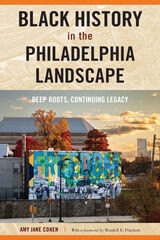
Black History in the Philadelphia Landscape
Deep Roots, Continuing LegacyAmy Jane Cohen
Temple University Press, 2024
Cohen also describes the path to erecting a statue of civil rights activist Octavius Catto at Philadelphia’s City Hall and profiles international celebrities Marian Anderson and Paul Robeson who are honored in the city. At the end of each chapter, she includes suggestions to continue readers’ exploration of this important cultural heritage.
Showing how increased attention to the role of African Americans in local and national history has resulted in numerous, sometimes controversial, alterations to the landscape, Cohen guides readers to Black history’s significance and its connections with today’s spotlight on racial justice.
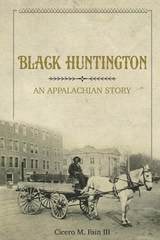
Black Huntington
An Appalachian StoryCicero M. Fain III
University of Illinois Press, 2019
How African Americans thrived in a West Virginia city
By 1930, Huntington had become West Virginia's largest city. Its booming economy and relatively tolerant racial climate attracted African Americans from across Appalachia and the South. Prosperity gave these migrants political clout and spurred the formation of communities that defined black Huntington--factors that empowered blacks to confront institutionalized and industrial racism on the one hand and the white embrace of Jim Crow on the other. Cicero M. Fain III illuminates the unique cultural identity and dynamic sense of accomplishment and purpose that transformed African American life in Huntington. Using interviews and untapped archival materials, Fain details the rise and consolidation of the black working class as it pursued, then fulfilled, its aspirations. He also reveals how African Americans developed a host of strategies--strong kin and social networks, institutional development, property ownership, and legal challenges--to defend their gains in the face of the white status quo. Eye-opening and eloquent, Black Huntington makes visible another facet of the African American experience in Appalachia.
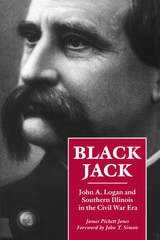
Black Jack
John A. Logan and Southern Illinois in the Civil War EraJames Pickett Jones. Foreword by John Y. Simon
Southern Illinois University Press, 1995
John A. Logan, called "Black Jack" by the men he led in Civil War battles from the Henry-Donelson campaign to Vicksburg, Chattanooga, and on to Atlanta, was one of the Union Army’s most colorful generals.
James Pickett Jones places Logan in his southern Illinois surroundings as he examines the role of the political soldier in the Civil War. When Logan altered his stance on national issues, so did the southern part of the state. Although secession, civil strife, Copperheadism, and the new attitudes created by the war contributed to this change of position in southern Illinois, Logan’s role as political and military leader was important in the region’s swing to strong support of the war against the Confederacy, to the policies of Lincoln, and eventually, to the Republican party.
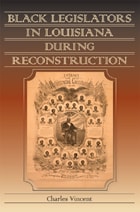
Black Legislators in Louisiana during Reconstruction
Charles Vincent
Southern Illinois University Press, 2011
Now updated with a new preface, this volume endures as an important work that illustrates the strength of minorities in state government during Reconstruction. It focuses on the achievements of the black representatives and senators in the Louisiana legislature who, through tireless fighting, were able to push forward many progressive reforms, such as universal public education, and social programs for the less fortunate.
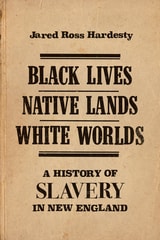
Black Lives, Native Lands, White Worlds
A History of Slavery in New EnglandJared Ross Hardesty
University of Massachusetts Press, 2019
In this concise yet comprehensive history, Jared Ross Hardesty focuses on the individual stories of enslaved people, bringing their experiences to life. He also explores larger issues such as the importance of slavery to the colonization of the region and to agriculture and industry, New England's deep connections to Caribbean plantation societies, and the significance of emancipation movements in the era of the American Revolution. Thoroughly researched and engagingly written, Black Lives, Native Lands, White Worlds is a must-read for anyone interested in the history of New England.
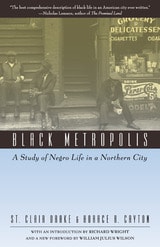
Black Metropolis
A Study of Negro Life in a Northern CitySt. Clair Drake and Horace R. Cayton
University of Chicago Press, 1993
"Black Metropolis is a rare combination of research and synthesis, a book to be deeply pondered. . . . No one who reads it intelligently can ever believe again that our racial dilemma can be solved by pushing buttons, or by gradual processes which may reach four or five hundred years into the future."—Bucklin Moon, The Nation
"This volume makes a great contribution to the building of the future American and the free world."—Louis Wirth, New York Times
"By virtue of its range, its labor and its insight, the book seems certain to become a landmark not only in race studies but in the broader field of social anthropology."—Thomas Sancton, New Republic
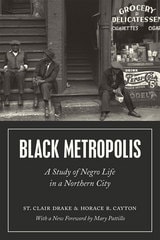
Black Metropolis
A Study of Negro Life in a Northern CitySt. Clair Drake and Horace R. Cayton
University of Chicago Press, 2015
Black Metropolis has been a foundational work for the study of race and urban life since its publication in 1945, and it remains indispensable today. Few studies since have been able to match its scope and magnitude, offering one of the most comprehensive looks at black life in America. Based on research conducted by Works Progress Administration field workers, it is a sweeping historical and sociological account of the people of Chicago's South Side from the 1840s through the 1930s. Its findings offer a comprehensive analysis of black migration, settlement, community structure, and black-white race relations in the first half of the twentieth century. It offers a dizzying and dynamic world filled with captivating people and startling revelations.
A new foreword from sociologist Mary Pattillo places the study in modern context, updating the story with the current state of black communities in Chicago and the larger United States and exploring what this means for the future. As the country continues to struggle with race and our treatment of black lives, Black Metropolis continues to be a powerful contribution to the conversation.
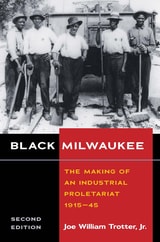
Black Milwaukee
The Making of an Industrial Proletariat, 1915-45Joe William Trotter, Jr.
University of Illinois Press, 2006
Praise for the first edition: “Trotter has written a valuable, provocative book that opens new areas for certain--and heated--debate.”--Journal of American Ethnic History
Other historians have tended to treat black urban life mainly in relation to the ghetto experience, but in Black Milwaukee, Joe William Trotter Jr. offers a new perspective that complements yet also goes well beyond that approach. The blacks in Black Milwaukee were not only ghetto dwellers; they were also industrial workers. The process by which they achieved this status is the subject of Trotter’s ground-breaking study.
This second edition features a new preface and acknowledgments, an essay on African American urban history since 1985, a prologue on the antebellum and Civil War roots of Milwaukee’s black community, and an epilogue on the post-World War II years and the impact of deindustrialization, all by the author. Brief essays by four of Trotter’s colleagues--William P. Jones, Earl Lewis, Alison Isenberg, and Kimberly L. Phillips--assess the impact of the original Black Milwaukee on the study of African American urban history over the past twenty years.

Black Moods
Collected PoemsFrank Marshall Davis
University of Illinois Press, 2001
John Edgar Tidwell’s introduction examines both Davis’s poetry and his politics, presenting a subtle portrait of a complex writer devoted to exposing discriminatory practices and reaffirming the humanity of the common people.
Black New Jersey
1664 to the Present DayGraham Russell Gao Hodges
Rutgers University Press, 2019
Black New Jersey tells the rich and complex story of the African American community’s remarkable accomplishments and the colossal obstacles they faced along the way. Drawing from rare archives, historian Graham Russell Gao Hodges brings to life the courageous black men and women who fought for their freedom and eventually built a sturdy and substantial middle class. He explores how the state’s unique mix of religious, artistic, and cultural traditions have helped to produce such world-renowned figures as Paul Robeson, Cory Booker, and Queen Latifah, as well as a host of lesser-known but equally influential New Jersey natives.
Black New Orleans, 1860-1880
John W. Blassingame
University of Chicago Press, 1976
“Blending historical and sociological perspectives, and drawing with skill and imagination upon a variety of sources, [Blassingame] offers fresh insights into an oft-studied period of Southern history. . . . In both time and place the author has chosen an extraordinarily revealing vantage point from which to view his subject. ”—Neil R. McMillen, American Historical Review
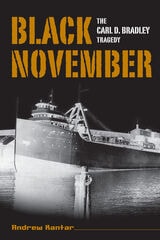
Black November
The Carl D. Bradley TragedyAndrew Kantar
Michigan State University Press, 2006
Michigan’s "storms of November" are famous in song, lore, and legend and have taken a tragic toll, breaking the hulls of many ships and sending them to cold, dark, and silent graves on the bottoms of the Great Lakes. On November 18, 1958, when the limestone carrier Carl D. Bradley broke up during a raging storm on Lake Michigan, it became the largest ship in Great Lakes' history to vanish beneath storm-tossed waves. Along with the Bradley, thirty-three crew members perished. Most of the casualties hailed from the little harbor town of Rogers City, Michigan, a community that was stung with grief when, in an instant, twenty-three women became widows and fifty- three children were left fatherless. Nevertheless, this is also a story of survival, as it recounts the tale of two of the ship’s crew, whose fifteen-hour ordeal on a life raft, in gale-force winds and 25 foot waves, is a remarkable story of endurance and tenacity.
Written in a style that is equally appealing to young adults and adult readers, Black November is a tale of adventure, courage, heroism, and tragedy. Kantar, the author of 29 Missing, a book about the loss of the great lakes freighter the Edmund Fitzgerald, has once again crafted a dramatic narrative that is both informative and compelling. Although the Carl D. Bradley has been called "the ship that time forgot," Black November recalls that tragic day nearly fifty years ago and is a moving tribute to the ship and its crew.
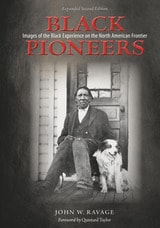
Black Pioneers
Images of the Black Experience on the North American FrontierJohn Ravage
University of Utah Press, 1997
Using public and private collections in every western state and in Canada, Ravage has gathered more than three hundred photographs, line drawings, lithographs, stereoviews, and other images. This new edition also adds sections on black entertainers and ranchers, a chapter on the dating of historic photographs and their genealogical significance, as well as an expanded bibliography. All aid understanding of the black frontier experience.
Ravage goes beyond the stereotypical photography of the era, which often reflected white fears and prejudices, to present the works of frontier photographers. Galveston’s Lucius Harper, Denver’s John Green, and the Northwest’s nomadic James Presley Ball all bring life to their subjects and meaning to their presence in the American West. Black Pioneers is a vibrant visual document of the profound influence blacks had on communal and frontier history.
Black Portsmouth
Three Centuries of African-American HeritageMark J. Sammons
University of New Hampshire Press, 2004
Few people think of a rich Black heritage when they think of New England. In the pioneering book Black Portsmouth, Mark J. Sammons and Valerie Cunningham celebrate it, guiding the reader through more than three centuries of New England and Portsmouth social, political, economic, and cultural history as well as scores of personal and site-specific stories.
Here, we meet such Africans as the likely negro boys and girls from Gambia, who debarked at Portsmouth from a slave ship in 1758, and Prince Whipple, who fought in the American Revolution. We learn about their descendants, including the performer Richard Potter and John Tate of the People's Baptist Church, who overcame the tragedies and challenges of their ancestors' enslavement and subsequent marginalization to build communities and families, found institutions, and contribute to their city, region, state, and nation in many capacities. Individual entries speak to broader issues—the anti-slavery movement, American religion, and foodways, for example. We also learn about the extant historical sites important to Black Portsmouth—including the surprise revelation of an African burial ground in October 2003—as well as the extraordinary efforts being made to preserve remnants of the city's early Black heritage.
Black Powder, White Lace
The du Pont Irish and Cultural Identity in Nineteenth-Century AmericaMargaret M. Mulrooney
University of Delaware Press, 2023
Black Power Praxis
Theory, Practice, and Activist Intellectuals in Detroit's Black Power MovementMatt Birkhold
University of Michigan Press, 2026
Black Power Praxis shows how four groups of activist-intellectuals—James and Grace Lee Boggs, Richard and Milton Henry, Reverend Albert Cleage, and a group of college students called Uhuru—shifted the consciousness and political perspectives of Black Detroiters in the 1960s and 1970s. By developing theories that they could unite with community-organizing practices, these activist-intellectuals turned the focus of the grassroots movement for racial equality from Civil Rights to Black Power. Following the 1967 Detroit Rebellion, these Black Power activist-intellectuals were already positioned to harness the energy that emerged from the uprising and directed it into the city’s first citywide Black Power organization, the Citywide Citizens Action Committee.
Even as Black Power theories became dominant over Detroit’s grassroots movement, their influence faltered when they failed to develop community organizing practices corresponding to the lived experiences of Black Detroiters. Black Power Praxis reveals how the relationships between ideas, practices, leadership, material reality, and consciousness drove the historical development of Black Power. Ideal for readers curious about social movements, Detroit history, African American history, and African American Studies, the book sheds light on how, why, and when Detroit’s activist-intellectual leaders successfully showed everyday people how their power might be used in transformative ways.
Black Power on Campus
The University of Illinois, 1965-75Joy Ann Williamson
University of Illinois Press, 2003
Drawing on student publications of the late 1960s and early 1970s, as well as interviews with student activists, former administrators, and faculty, Williamson discusses the emergence of Black Power ideology, what constituted "blackness," and notions of self-advancement versus racial solidarity. Promoting an understanding of the role of black youth in protest movements, Black Power on Campus is an important contribution to the literature on African American liberation movements and the reform of American higher education.
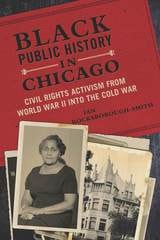
Black Public History in Chicago
Civil Rights Activism from World War II into the Cold WarIan Rocksborough-Smith
University of Illinois Press, 2018
Ian Rocksborough-Smith’s meticulous research and adept storytelling provide the first in-depth look at how these committed individuals leveraged Chicago’s black public history. Their goal: to engage with the struggle for racial equality. Rocksborough-Smith shows teachers working to advance curriculum reform in public schools, while well-known activists Margaret and Charles Burroughs pushed for greater recognition of black history by founding the DuSable Museum of African American History. Organizations like the Afro-American Heritage Association, meanwhile, used black public history work to connect radical politics and nationalism. Together, these people and their projects advanced important ideas about race, citizenship, education, and intellectual labor that paralleled the shifting terrain of mid-twentieth-century civil rights.
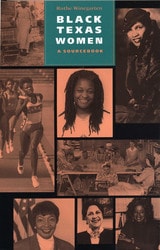
Black Texas Women
A SourcebookBy Ruthe Winegarten
University of Texas Press, 1994
When Black Texas Women: 150 Years of Trial and Triumph was published in 1995, it was acclaimed as the first comprehensive history of black women's struggles and achievements. This companion volume contains the original source materials that Ruthe Winegarten uncovered during her extensive research.
Like a time capsule of black women's history, A Sourcebook includes petitions from free women of color, lawsuits, slave testimonies, wills, plantation journals, club minutes, autobiographies, ads, congressional reports, contracts, prison records, college catalogues, newspaper clippings, protest letters, and much more.
In addition to the documents, a biographical section highlights the lives of women from various walks of life. The book concludes with a timeline that begins in 1777 and reaches to 1992. This wealth of original material will be a treasure trove for scholars and general readers interested in the emerging field of black women's history.
Black Visual Cultures of the Midwest
Freda L. Fair
University of Minnesota Press, 2027
Recentering black creativity and resistance in the history of the Midwest
African American creators have unsettled and upended racism in the Midwest region since as far back as 1787, and Black Visual Cultures of the Midwest examines the work of many such innovators, presenting an unruly, transgressive, and defiant vision of queer blackness that complicates fundamental American ideals of liberty, progress, life, and property.
Spanning the nineteenth century to the present, Freda L. Fair draws from a broad array of sources, including film, visual art, and even arrest records to examine concepts of freedom and resistance grounded in black cultural production in the Midwest. Through subjects such as Joshua Glover, who escaped slavery in Missouri and relocated to Wisconsin; sex workers in the Twin Cities; Ruth Ellis, a black lesbian elder in Detroit; and Nick Cave, who created Soundsuits in response to the police beating of Rodney King, Fair challenges monolithic formulations of blackness and black culture. Fair also queers Midwest history, engaging an LGBTQ lens to reexamine Wisconsin’s 1854 decision to declare the Fugitive Slave Act of 1850 unconstitutional, the Springfield Race Riot of 1908, and other historic moments.
Revealing how black visual cultures in the Midwest both illuminate black gendered and sexual difference and actively resist antiblackness, Fair shows that the region is a site that can advance freedom and social change.
Retail e-book files for this title are screen-reader friendly with images accompanied by short alt text and/or extended descriptions.
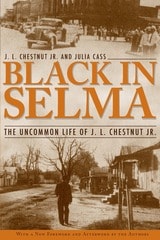
Black in Selma
The Uncommon Life of J. L. Chestnut Jr.J. L. Chestnut
University of Alabama Press, 2007
One man’s fight for justice. One town’s reckoning with history.
Born in Selma in 1930, J. L. Chestnut left home to study law at Howard University in Washington, DC. Returning to Selma, Chestnut was the town’s first and only African American attorney in the late 1950s. As the turbulent struggle for civil rights spread across the South, Chestnut became an active and ardent promoter of social and legal equality in his hometown. A key player on the local and state fronts, Chestnut accrued deep insights into the racial tensions in his community and deftly opened paths toward a more equitable future.
Though intimately involved in many events that took place in Selma, Chestnut was nevertheless often identified in history books simply as “a local attorney.” Black in Selma reveals his powerful yet little-known story.
In the 2014 film Selma, director Ava DuVernay takes audiences to the climactic confrontation between civil rights advocates and the state’s security forces of March 1965. Readers looking for a deeper understanding of the events that preceded that epic moment, as well as how racial integration unfolded in Selma in the decades that followed, will find Chestnut’s story and memories both a vital primary source and an inspiration.
Black on the Block
The Politics of Race and Class in the CityMary Pattillo
University of Chicago Press, 2007
“To see how diversity creates strange and sometimes awkward bedfellows . . . turn to Mary Pattillo's Black on the Block.”—Boston Globe

Blockaders, Refugees, and Contrabands
Civil War on Florida's Gulf Coast, 1861-1865George E. Buker
University of Alabama Press, 2004
Blood Passion
The Ludlow Massacre and Class War in the American West, First Paperback EditionScott Martelle
Rutgers University Press, 2008
By early April 1914, Colorado Governor Elias Ammons thought the violence in his state’s strike-bound southern coal district had eased enough that he could begin withdrawing the Colorado National Guard, deployed six months earlier as military occupiers. But Ammons misread the signals, and on April 20, 1914, a full-scale battle erupted between the remaining militiamen and armed strikers living in a tent colony at the small railroad town of Ludlow. Eight men were killed in the fighting, which culminated in the burning of the colony. The next day, the bodies of two women and eleven children were found suffocated in a below-ground shelter. The “Ludlow Massacre,” as it quickly became known, launched a national call-to-arms for union supporters to join a ten-day guerrilla war along more than two hundred miles of the eastern Rockies. The convulsion of arson and violence killed more than thirty people and didn’t end until President Woodrow Wilson sent in the U.S. Army. Overall at least seventy-five men, women, and children were killed in seven months, likely the nation’s deadliest labor struggle.
In Blood Passion, journalist Scott Martelle explores this little-noted tale of political corruption and repression and immigrants’ struggles against dominant social codes of race, ethnicity, and class. More than a simple labor dispute, the events surrounding Ludlow embraced some of the most volatile social movements of the early twentieth century, pitting labor activists, socialists, and anarchists against the era’s powerful business class, including John D. Rockefeller, Jr., and helped give rise to the modern twins of corporate public relations and political “spin.” But at its heart, Blood Passion is the dramatic story of small lives merging into a movement for change and of the human struggle for freedom and dignity.
Blood Runs Green
The Murder That Transfixed Gilded Age ChicagoGillian O'Brien
University of Chicago Press, 2015
It was the biggest funeral Chicago had seen since Lincoln’s. On May 26, 1889, four thousand mourners proceeded down Michigan Avenue, followed by a crowd forty thousand strong, in a howl of protest at what commentators called one of the ghastliest and most curious crimes in civilized history. The dead man, Dr. P. H. Cronin, was a respected Irish physician, but his brutal murder uncovered a web of intrigue, secrecy, and corruption that stretched across the United States and far beyond.
Blood Runs Green tells the story of Cronin’s murder from the police investigation to the trial. It is a story of hotheaded journalists in pursuit of sensational crimes, of a bungling police force riddled with informers and spies, and of a secret revolutionary society determined to free Ireland but succeeding only in tearing itself apart. It is also the story of a booming immigrant population clamoring for power at a time of unprecedented change.
From backrooms to courtrooms, historian Gillian O’Brien deftly navigates the complexities of Irish Chicago, bringing to life a rich cast of characters and tracing the spectacular rise and fall of the secret Irish American society Clan na Gael. She draws on real-life accounts and sources from the United States, Ireland, and Britain to cast new light on Clan na Gael and reveal how Irish republicanism swept across the United States. Destined to be a true crime classic, Blood Runs Green is an enthralling tale of a murder that captivated the world and reverberated through society long after the coffin closed.
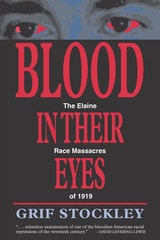
Blood in Their Eyes
The Elaine Massacre of 1919Grif Stockley
University of Arkansas Press, 2020
The first edition of Grif Stockley’s Blood in Their Eyes, published in 2001, brought renewed attention to the Elaine Massacre and sparked valuable new studies on racial violence and exploitation in Arkansas and beyond. With contributions from fellow historians Brian K. Mitchell and Guy Lancaster, this revised edition draws from recently uncovered source material and explores in greater detail the actions of the mob, the lives of those who survived the massacre, and the regime of fear and terror that prevailed under Jim Crow.
Blood in Their Eyes
The Elaine Race Massacres of 1919Grif Stockley
University of Arkansas Press, 2016
Winner of the 2002 Booker Worthen Literary Prize
American Association of State and Local History Award 2003
Stockley takes on this silence and shows that it resulted from sustained official efforts to convince the public that only blacks who had resisted lawful authority were killed. He shows too that it is part of a larger silence in which the fear and terror that were the daily staples of the African American experience have been summed up all too easily in the term "Jim Crow" in a failure to fully confront the anguish of the period.
Bloodstoppers and Bearwalkers
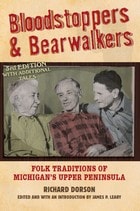
Folk Traditions of Michigan’s Upper PeninsulaRichard M. Dorson
University of Wisconsin Press, 2008

Bloody Williamson
A Chapter in American LawlessnessPaul M. Angle; Introduction by John Y. Simon
University of Illinois Press, 1952
"In Williamson County some men took to violence almost as a way of life. A shocking story, well told."--New Yorker
Williamson County in southern Illinois has been the scene of almost unparalleled violence, from the Bloody Vendetta between two families in the 1870s through the Herrin Massacre of 1922, Ku Klux Klan activities that ended in fatalities, and the gang war of the 1920s between the Charlie Birger and Shelton brothers gangs. Paul Angle was fascinated by this more-than-fifty-year history, and his account of this violence has become a classic.

Blue Desert
Charles Bowden; Foreword by Francisco Cantú
University of Arizona Press, 2018
Bowden presents a view of the Southwest that measures how rapid growth takes its toll on the land. Writing with a reporter’s objectivity and a desert rat’s passion, Bowden offers us his trademarked craft and wit to take us into the streets as well as the desert to depict not a fragile environment but the unavoidable reality of abuse, exploitation, and human cruelty. Blue Desert shows us the darker side of development—where “the land always makes promises of aching beauty and the people always fail the land”—and defies us to ignore it.
In a thoughtful new foreword, Francisco Cantú writes, “In Blue Desert, we follow Bowden in the processes of becoming. We see the version of Bowden that he would likely most want us to remember—someone who did their best to be an honest witness, someone who was haunted by modernity and his place in it, someone who grappled with his demons by gazing deeply into the desert.” Blue Desert is a critical piece in the oeuvre of Charles Bowden, and it continues to remind readers of the cruelty and beauty of the world around us.
Blue Jenkins
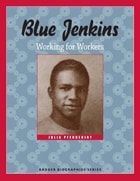
Working for WorkersJulia Pferdehirt
Wisconsin Historical Society Press, 2011
Blue Men and River Monsters
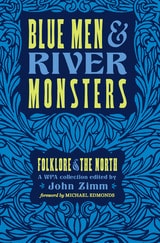
Folklore of the NorthJohn Zimm
Wisconsin Historical Society Press, 2014

Blue Shadows Farm
A NovelJerry Apps
University of Wisconsin Press, 2009
Silas Starkweather, a Civil War veteran, is drawn to Wisconsin and homesteads 160 acres in Ames County, where he is known as the mysterious farmer forever digging holes. After years of hardship and toil, however, Silas develops a commitment to farming his land and respect for his new community. When Silas’s son Abe inherits Blue Shadows Farm he chooses to keep the land out of reluctant necessity, distilling and distributing “purified corn water” throughout Prohibition and the Great Depression in order to stay solvent. Abe’s daughter, Emma, willingly takes over the farm after her mother’s death. Emma’s love for this place inspires her to open the farm to school-children and families who share her respect for it. As she considers selling the land, Emma is confronted with a difficult question—who, through thick and thin, will care for Blue Shadows Farm as her family has done for over a century? In the midst of a controversy that disrupts the entire community, Emma looks into her family’s past to help her make crucial decisions about the future of its land.
Through the story of the Starkweather family’s changing fortunes, and each generation’s very different relationship with the farm and the land, Blue Shadows Farm is in some ways the narrative of all farmers and the increasingly difficult challenges they face as committed stewards of the land.
Boathouse Row
Waves of Change in the Birthplace of American RowingDotty Brown
Temple University Press, 2016
The history of Philadelphia’s Boathouse Row is both wide and deep.Dotty Brown, an avid rower and former editor at the Philadelphia Inquirer, immersed herself in boathouse archives to provide a comprehensive history of rowing in Philadelphia. She takes readers behind the scenes to recount the era when rowing was the spectator sport of its time—and the subject of Thomas Eakins’ early artwork—through the heyday of the famed Kelly dynasty, and the fight for women to get the right to row. (Yes, it really was a fight, and it took generations to win.)
With more than 160 photographs, a third of them in full color, Boathouse Row chronicles the “waves of change” as various groups of different races, classes, and genders fought for access to water and the sport. Chapters also discuss the architectural one-upmanship that defined Boathouse Row after Frank Furness designed the stunning and eclectic Undine Barge Club, and the regattas that continue to take place today on the Schuylkill River, including the forgotten forces that propelled high school rowing.
Beautifully written and illustrated, Boathouse Row will be a keepsake for rowers and spectators alike.
Bob Bullock
God Bless TexasBy Dave McNeely and Jim Henderson
University of Texas Press, 2008
Renowned for his fierce devotion to the people of Texas—as well as his equally fierce rages and unpredictable temper—Bob Bullock was the most powerful political figure in Texas at the end of the twentieth century. First elected to the Texas House of Representatives in 1956, Bullock held several key statewide posts before capturing the lieutenant governor's office in 1990. Though nominally the state's number two official, Bullock in fact became Texas's top power broker, wielding tremendous influence over the legislative agenda and state budget through the 1990s while also mentoring and supporting a future president—George W. Bush.
In this lively, yet thoroughly researched biography, award-winning journalists Dave McNeely and Jim Henderson craft a well-rounded portrait of Bob Bullock, underscoring both his political adroitness and his personal demons. They trace Bullock's rise through state government as Assistant Attorney General, Secretary of State, State Comptroller, and Lieutenant Governor, showing how he increased the power of every office he held. The authors spotlight Bullock's substantial achievements, which included hiring an unprecedented number of women and minorities, instituting a performance review to increase the efficiency of state agencies, restructuring the public school funding system, and creating the state's first water conservation and management plan.
Bodies of Work
Civic Display and Labor in Industrial PittsburghEdward Slavishak
Duke University Press, 2008
Slavishak focuses on the workers whose bodies came to epitomize Pittsburgh, the men engaged in the arduous physical labor demanded by the city’s metals, glass, and coal industries. At the same time, he emphasizes how conceptions of Pittsburgh as quintessentially male limited representations of women in the industrial workplace. The threat of injury or violence loomed large for industrial workers at the turn of the twentieth century, and it recurs throughout Bodies of Work: in the marketing of artificial limbs, statistical assessments of the physical toll of industrial capitalism, clashes between labor and management, the introduction of workplace safety procedures, and the development of a statewide workmen’s compensation system.
Bodie’s Gold
Tall Tales and True History from a California Mining TownMarguerite Sprague
University of Nevada Press, 2011
Boll Weevil Blues
Cotton, Myth, and Power in the American SouthJames C. Giesen
University of Chicago Press, 2011
Between the 1890s and the early 1920s, the boll weevil slowly ate its way across the Cotton South from Texas to the Atlantic Ocean. At the turn of the century, some Texas counties were reporting crop losses of over 70 percent, as were areas of Louisiana, Arkansas, and Mississippi. By the time the boll weevil reached the limits of the cotton belt, it had destroyed much of the region’s chief cash crop—tens of billions of pounds of cotton, worth nearly a trillion dollars.
As staggering as these numbers may seem, James C. Giesen demonstrates that it was the very idea of the boll weevil and the struggle over its meanings that most profoundly changed the South—as different groups, from policymakers to blues singers, projected onto this natural disaster the consequences they feared and the outcomes they sought. Giesen asks how the myth of the boll weevil’s lasting impact helped obscure the real problems of the region—those caused not by insects, but by landowning patterns, antiquated credit systems, white supremacist ideology, and declining soil fertility. Boll Weevil Blues brings together these cultural, environmental, and agricultural narratives in a novel and important way that allows us to reconsider the making of the modern American South.
Bombast And Broadsides
The Lives of George JohnstoneRobin F. A. Fabel
University of Alabama Press, 1987
George Johnstone has never received the scholarly attention he fully merits. Historians have assessed him, usually briefly, as governor of West Florida, or as naval commander, or as a member of parliament. Nevertheless, none has considered his important role in East India Company politics, nor, until Bombast and Broadsides, has one synthesized the various roles in which Johnstone was entrusted with high responsibilities.
Through research in Cardiff, Edinburgh, Kew, London, Philadelphia, and Washington in largely unpublished manuscripts, together with the use of secondary sources, the author has been able to present the first coherent picture of Johnstone, a vigorous and intelligent but turbulent and always controversial figure. Johnstone was effective as a colonial governor at a difficult time; in the navy he performed several coups de main; in parliament he was formidable in debate but an opportunist; and at East India House he was a doughty, conservative, and largely successful defender of the proprietary interest.

Bombs in the Backyard
Atomic Testing and American PoliticsA. Constandina Titus
University of Nevada Press, 2001

Bonapartists in the Borderlands
French Exiles and Refugees on the Gulf Coast, 1815-1835Rafe Blaufarb
University of Alabama Press, 2005
Bonapartists in the Borderlands debunks the standard account of the Vine and Olive Colony, which stresses the failure of aristocratic, luxury-loving French to tame the wilderness. Rafe Blaufarb recounts how Napoleonic exiles and French refugees from Europe and the Caribbean joined forces with Latin American insurgents, Gulf pirates, and international adventurers to seek their fortune in the Gulf borderlands. The US Congress welcomed the French and granted them a capacious tract of rich Black Belt land near Demopolis, Alabama, on the condition that they would establish a Mediterranean-style Vine and Olive colony.
Blaufard shows that it was not a lack of grit that caused the enterprise to fail. Rather, the Napoleonic officers involved in the colony sold their land shares to speculators to finance an even more perilous adventure—invading the Texas borderlands contested by Spain and the US. Their departure left the Vine and Olive colony in the hands of French refugees from the Haitian slave revolt. They soon abandoned vine cultivation and fused with the neighboring communities of Anglo-American slaveholding cotton planters and speculators.
Rafe Blaufarb examines the underlying motivations and aims that inspired this endeavor and details the nitty-gritty politics, economics, and backroom bargaining that resulted in the settlement. He employs a wide variety of local, national, and international resources: from documents held by the Alabama State Archives, Marengo County court records, and French-language newspapers published in America to material from the War Ministry Archives at Vincennes, the Diplomatic Archives at the Quai d’Orasy, and the French National Archives.