Results by title
5448 books match the query 'History and criticism' and 252 start with b
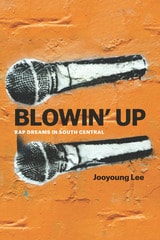
Blowin' Up
Rap Dreams in South CentralJooyoung Lee
University of Chicago Press, 2016
While most books on rap are written from the perspective of listeners and the market, Blowin’ Up looks specifically at the creative side of rappers. As Lee shows, learning how to rap involves a great deal of discipline, and it takes practice to acquire the necessary skills to put on a good show. Along with Lee—who is himself a pop-locker—we watch as the rappers at Project Blowed learn the basics, from how to hold a microphone to how to control their breath amid all those words. And we meet rappers like E. Crimsin, Nocando, VerBS, and Flawliss as they freestyle and battle with each other. For the men at Project Blowed, hip hop offers a creative alternative to the gang lifestyle, substituting verbal competition for physical violence, and provides an outlet for setting goals and working toward them.
Engagingly descriptive and chock-full of entertaining personalities and real-life vignettes, Blowin’ Up not only delivers a behind-the-scenes view of the underground world of hip hop, but also makes a strong case for supporting the creative aspirations of young, urban, black men, who are often growing up in the shadow of gang violence and dead-end jobs.
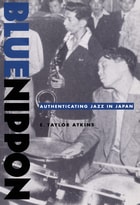
Blue Nippon
Authenticating Jazz in JapanE. Taylor Atkins
Duke University Press, 2001
Engagingly told through the voices of many musicians, Blue Nippon explores the true and legitimate nature of Japanese jazz. Atkins peers into 1920s dancehalls to examine the Japanese Jazz Age and reveal the origins of urban modernism with its new set of social mores, gender relations, and consumer practices. He shows how the interwar jazz period then became a troubling symbol of Japan’s intimacy with the West—but how, even during the Pacific war, the roots of jazz had taken hold too deeply for the “total jazz ban” that some nationalists desired. While the allied occupation was a setback in the search for an indigenous jazz sound, Japanese musicians again sought American validation. Atkins closes out his cultural history with an examination of the contemporary jazz scene that rose up out of Japan’s spectacular economic prominence in the 1960s and 1970s but then leveled off by the 1990s, as tensions over authenticity and identity persisted.
With its depiction of jazz as a transforming global phenomenon, Blue Nippon will make enjoyable reading not only for jazz fans worldwide but also for ethnomusicologists, and students of cultural studies, Asian studies, and modernism.
Blue Notes in Black and White
Photography and JazzBenjamin Cawthra
University of Chicago Press, 2011
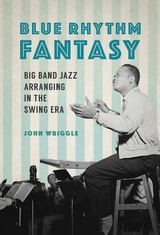
Blue Rhythm Fantasy
Big Band Jazz Arranging in the Swing EraJohn Wriggle
University of Illinois Press, 2016
Blue Rhythm Fantasy traces the extraordinary career of arranger Chappie Willet--a collaborator of Louis Armstrong, Cab Calloway, Duke Ellington, Gene Krupa, and many others--to revisit legendary Swing Era venues and performers from Harlem to Times Square. Wriggle's insightful music analyses of big band arranging techniques explore representations of cultural modernism, discourses on art and commercialism, conceptions of race and cultural identity, music industry marketing strategies, and stage entertainment variety genres.
Drawing on archives, obscure recordings, untapped sources in the African American press, and interviews with participants, Blue Rhythm Fantasy is a long-overdue study of the arranger during this dynamic era of American music history.
Blue Studios
Poetry and Its Cultural WorkRachel Blau DuPlessis
University of Alabama Press, 2006
Bluegrass Breakdown
The Making of the Old Southern SoundRobert Cantwell
University of Illinois Press, 1984
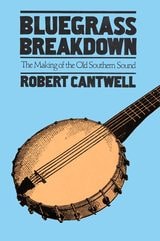
Bluegrass Breakdown is an expansive foray into the makings of bluegrass. More than any other book of its kind, it gets to the roots of a uniquely American music that is deeply linked to working-class ideals and romanticism.
Robert Cantwell engages the historical background, commercial origins, internal workings, and cultural and social significance of popular, old-time music to provide a unique musicological and sociological perspective. Well-versed in the history of the tradition and equally as interested in those who listen to the music as in those who create it, Cantwell links bluegrass to its hillbilly roots in Appalachia and shows how the music was transformed by African American folk traditions, the influence of jazz, ragtime, blues, and country music, and the growth of radio and recording technology.
Bluegrass Generation
A MemoirNeil V Rosenberg
University of Illinois Press, 2018
Rosenberg's memoir shines a light on the changing bluegrass scene of the early 1960s. Already a fan and aspiring musician, his appetite for banjo music quickly put him on the Jamboree stage. Rosenberg eventually played with Monroe and spent four months managing the Jamboree. Those heights gave him an eyewitness view of nothing less than bluegrass's emergence from the shadow of country music into its own distinct art form. As the likes of Bill Keith and Del McCoury played, Rosenberg watched Monroe begin to share a personal link to the music that tied audiences to its history and his life--and helped turn him into bluegrass's foundational figure.
An intimate look at a transformative time, Bluegrass Generation tells the inside story of how an American musical tradition came to be.
Bluegrass Odyssey
A Documentary in Pictures and Words, 1966-86Carl Fleischhauer and Neil V. Rosenberg
University of Illinois Press, 2006

Bluegrass
A HISTORY 20TH ANNIVERSARY EDITIONNeil V. Rosenberg
University of Illinois Press, 2005
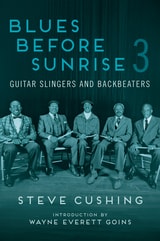
Blues Before Sunrise 3
Guitar Slingers and BackbeatersSteve Cushing. Introduction by Wayne Everett Goins
University of Illinois Press, 2025
Steve Cushing’s third volume of interviews from Blues Before Sunrise puts fans face-to-face with music legends and industry figures. The volume kicks off with a roundtable featuring drumming all-stars Earl Phillips, S.P. Leary, Odie Payne, Clifton James, and Fred Below discussing their lives and craft. Cushing segues to one-on-one interviews with Howlin’ Wolf sideman Phillips; Leary, a fellow Wolf alum and player with Sonny Boy Williamson II; Payne, known for his kick drum technique; longtime Muddy Waters drummer Willie “Big Eyes” Smith; next-generation standard bearer and session mainstay Casey Jones; and King Records house drummer Phillip Paul.
Interviews with guitarists include talks with Honeyboy Edwards, whose friendships with innumerable Chicago blues legends (and Robert Johnson) predated the Great Migration; jazz player turned bluesman Guitar Shorty; and figures like Texas native Roy Gaines, Johnny Heartsman of Oakland, and Memphis-born Floyd Murphy. A final section offers interviews with vocalists, record label founders, and other figures. Music scholar Wayne Everett Goins provides an introduction on blues history, blues style, and the careers of the featured artists.
Interviews: Joel Dorn, Honeyboy Edwards, Slim Gaillard, Roy Gaines, Johnny Heartsman, Franz Jackson, Casey Jones, S.P. Leary, Floyd Murphy, Jimmy “T-99” Nelson, Johnny Parth, Phillip Paul, Odie Payne, Earl Phillips, Art Sheridan, Guitar Shorty, Willie “Big Eyes” Smith, and Norvel Taborn
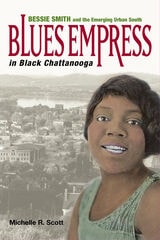
Blues Empress in Black Chattanooga
Bessie Smith and the Emerging Urban SouthMichelle R. Scott
University of Illinois Press, 2007
As one of the first African American vocalists to be recorded, Bessie Smith is a prominent figure in American popular culture and African American history. Michelle R. Scott uses Smith's life as a lens to investigate broad issues in history, including industrialization, Southern rural to urban migration, black community development in the post-emancipation era, and black working-class gender conventions.
Arguing that the rise of blues culture and the success of female blues artists like Bessie Smith are connected to the rapid migration and industrialization in the late nineteenth and early twentieth centuries, Scott focuses her analysis on Chattanooga, Tennessee, the large industrial and transportation center where Smith was born. This study explores how the expansion of the Southern railroads and the development of iron foundries, steel mills, and sawmills created vast employment opportunities in the postbellum era. Chronicling the growth and development of the African American Chattanooga community, Scott examines the Smith family's migration to Chattanooga and the popular music of black Chattanooga during the first decade of the twentieth century, and culminates by delving into Smith's early years on the vaudeville circuit.
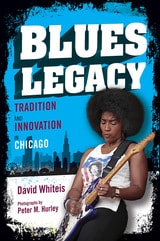
Blues Legacy
Tradition and Innovation in ChicagoDavid Whiteis
University of Illinois Press, 2019
David Whiteis delves into how the current and upcoming Chicago blues generations carry on this legacy. Drawing on in-person interviews, Whiteis places the artists within the ongoing social and cultural reality their work reflects and helps create. Beginning with James Cotton, Eddie Shaw, and other bequeathers, he moves through an all-star council of elders like Otis Rush and Buddy Guy and on to inheritors and today's heirs apparent like Ronnie Baker Brooks, Shemekia Copeland, and Nellie "Tiger" Travis.
Insightful and wide-ranging, Blues Legacy reveals a constantly adapting art form that, whatever the challenges, maintains its links to a rich musical past.
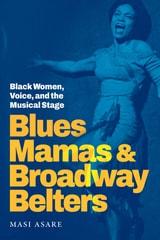
Blues Mamas and Broadway Belters
Black Women, Voice, and the Musical StageMasi Asare
Duke University Press, 2024
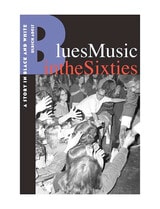
Blues Music in the Sixties
A Story in Black and WhiteUlrich Adelt
Rutgers University Press, 2010
In the 1960s, within the larger context of the civil rights movement and the burgeoning counterculture, the blues changed from black to white in its production and reception, as audiences became increasingly white. Yet, while this was happening, blackness--especially black masculinity--remained a marker of authenticity. Crossing color lines and mixing the beats of B.B. King, Eric Clapton, and Janis Joplin; the Newport Folk Festival and the American Folk Blues Festival; and publications such as Living Blues, Ulrich Adelt discusses these developments, including the international aspects of the blues. He highlights the performers and venues that represented changing racial politics and addresses the impact and involvement of audiences and cultural brokers.
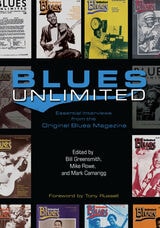
Blues Unlimited
Essential Interviews from the Original Blues MagazineEdited by Bill Greensmith, Mike Rowe, and Mark Camarigg
University of Illinois Press, 2015
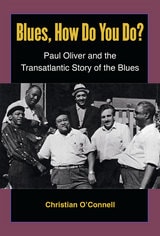
Blues, How Do You Do?
Paul Oliver and the Transatlantic Story of the BluesChristian O’Connell
University of Michigan Press, 2015
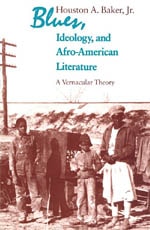
Blues, Ideology, and Afro-American Literature
A Vernacular TheoryHouston A. Baker Jr.
University of Chicago Press, 1987
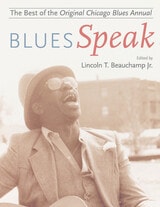
BluesSpeak
Best of the Original Chicago Blues AnnualLincoln T. Beauchamp, Jr.
University of Illinois Press, 2010
This incomparable anthology collects articles, interviews, fiction, and poetry from the Original Chicago Blues Annual, one of music history's most significant periodical blues publications. Founded and operated from 1989 to 1995 by African American musician and entrepreneur Lincoln T. Beauchamp Jr., OCBA gave voice to the blues community and often frankly addressed contentious issues within the blues such as race, identity, prejudice, wealth, gender, and inequity.
OCBA often expressed an explicitly black perspective, but its contributors were a mix of black and white, American and international. Likewise, although OCBA's roots and main focus were in Chicago, Beauchamp's vision for the publication (and his own activities as a blues performer and promoter) embraced an international dimension, reflecting a broad diversity of blues audiences and activities in locations as farflung as Iceland, Poland, France, Italy, and South Africa.
This volume includes key selections from OCBA's seven issues and features candid interviews with blues luminaries such as Koko Taylor, Eddie Boyd, Famoudou Don Moye, Big Daddy Kinsey, Lester Bowie, Junior Wells, Billy Boy Arnold, Herb Kent, Barry Dolins, and many more. Also featured are heartfelt memorials to bygone blues artists, insightful observations on the state of the blues in Chicago and beyond, and dozens of photographs of performers, promoters, and other participants in the worldwide blues scene.
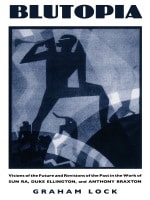
Blutopia
Visions of the Future and Revisions of the Past in the Work of Sun Ra, Duke Ellington, and Anthony BraxtonGraham Lock
Duke University Press, 2000
A century after Ellington’s birth, Lock reassesses his use of music as a form of black history and compares the different approaches of Ra, a band leader who focused on the future and cosmology, and Braxton, a contemporary composer whose work creates its own elaborate mythology. Arguing that the majority of writing on black music and musicians has—even if inadvertently—incorporated racial stereotypes, he explains how each artist reacted to criticism and sought to break free of categorical confines. Drawing on social history, musicology, biography, cultural theory, and, most of all, statements by the musicians themselves, Lock writes of their influential work.
Blutopia will be a welcome contribution to the literature on twentieth-century African American music and creativity. It will interest students of jazz, American music, African American studies, American culture, and cultural studies.
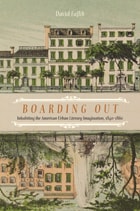
Boarding Out
Inhabiting the American Urban Literary Imagination, 1840-1860David Faflik
Northwestern University Press, 2012
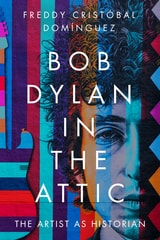
Bob Dylan in the Attic
The Artist as HistorianFreddy Cristóbal Domínguez
University of Massachusetts Press, 2022
Bob Dylan is an iconic American artist, whose music and performances have long reflected different musical genres and time periods. His songs tell tales of the Civil War, harken back to 1930s labor struggles, and address racial violence at the height of the civil rights movement, helping listeners to think about history, and history making, in new ways. While Dylan was warned by his early mentor, Dave Van Ronk, that, “You’re just going to be a history book writer if you do those things. An anachronism,” the musician has continued to traffic in history and engage with a range of source material—ancient and modern—over the course of his career.
In this beautifully crafted book, Freddy Cristóbal Domínguez makes a provocative case for Dylan as a historian, offering a deep consideration of the musician’s historical influences and practices. Utilizing interviews, speeches, and the close analysis of lyrics and live performances, Bob Dylan in the Attic is the first book to consider Dylan’s work from the point of view of historiography.
Boccaccio
A Critical Guide to the Complete WorksEdited by Victoria Kirkham, Michael Sherberg, and Janet Levarie Smarr
University of Chicago Press, 2013
Bodies of Modernism
Physical Disability in Transatlantic Modernist LiteratureMaren Tova Linett
University of Michigan Press, 2016
Bodies on the Line
Performance and the Sixties Poetry ReadingRaphael Allison
University of Iowa Press, 2014
By comparing these two dominant styles of reading, Allison argues that attention to sixties poetry readings reveals poets struggling between the kind of immediacy and presence that readings suggested and a private retreat from such performance-based publicity, one centered on the text itself. Recordings of Robert Frost, Charles Olson, Gwendolyn Brooks, Larry Eigner, and William Carlos Williams—all of whom emphasized voice, breath, and spoken language and who were inveterate professional readers in the sixties—expose this struggle in often surprising ways. In deconstructing assertions about the role and importance of the poetry reading during this period, Allison reveals just how dramatic, political, and contentious poetry readings could be. By discussing how to "hear" as well as "read" poetry, Bodies on the Line offers startling new vantage points from which to understand American poetry since the 1960s as both performance and text.
Bodily Desire, Desired Bodies
Gender and Desire in Early Twentieth-Century German and Austrian Novels and PaintingsEsther K. Bauer
Northwestern University Press, 2014
Bodily Desire, Desired Bodies examines the diverse ways that literary works and paintings can be read as screens onto which new images of masculinity and femininity are cast. Esther Bauer focuses on German and Austrian writers and artists from the 1910s and 1920s —specifically authors Franz Kafka, Vicki Baum, and Thomas Mann, and painters Otto Dix, Christian Schad, and Egon Schiele—who gave spectacular expression to shifting trends in male and female social roles and the organization of physical desire and the sexual body.
Bauer’s comparative approach reveals the ways in which artists and writers echoed one another in undermining the gender duality and highlighting sexuality and the body. As she points out, as sites of negotiation and innovation, these works reconfigured bodies of desire against prevailing notions of sexual difference and physical attraction and thus became instruments of social transformation.
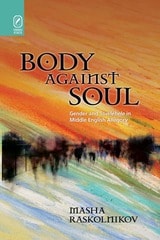
Body Against Soul
Gender and Sowlehele in Middle English AllegoryMasha Raskolnikov
The Ohio State University Press, 2009
The topic of this book is one that runs through all of Western history and remains of primary interest to modern theorists—how “my” body relates to “me.” In the allegorical tradition traced by this study, a male person could imagine himself as a being populated by female personifications, because Latin and Romance languages tended to gender abstract nouns as female. However, since Middle English had ceased to inflect abstract nouns as male or female, writers were free to gender abstractions like “Will” or “Reason” any way they liked. This permitted some psychological allegories to avoid the representational tension caused by placing a female soul inside a male body, instead creating surprisingly queer same-sex inner worlds. The didactic intent driving sowlehele is, it turns out, complicated by the erotics of the struggle to establish a hierarchy of the self’s inner powers.
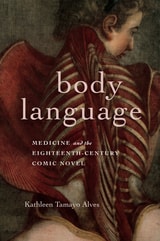
Body Language
Medicine and the Eighteenth-Century Comic NovelKathleen Tamayo Alves
Bucknell University Press, 2026
Body Language examines the complex intersections of British eighteenth-century comic fiction and medical discourse. By engaging medical writings of renowned and widely-read physicians of the Enlightenment such as John Freind, Thomas Sydenham, Albrecht von Haller, John Whytt, and William Cullen, with novels of humor by Henry Fielding, Tobias Smollett, Laurence Sterne, and Charlotte Lennox, Alves explains how medicine shaped comic language by dramatizing female-specific phenomena like menstruation, hysteria, nervous disorders, and pregnancy. In these novels, the medical belief that women are incapable of bodily self-regulation becomes an imperative for policing women’s bodies and highlights the enduring shortcomings of patriarchal systems. Ultimately, these comic representations offer a counternarrative of women’s bodies, agency, and selfhood, exposing masculine anxieties about the effectiveness of marriage to regulate women’s sexuality.
Published by Bucknell University Press. Distributed worldwide by Rutgers University Press.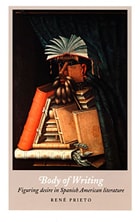
Body of Writing
Figuring Desire in Spanish American LiteratureRené Prieto
Duke University Press, 2000
Healthy, invalid, lustful, and confined bodies—as portrayed by Julio Cortázar, Guillermo Cabrera Infante, Gabriel García Márquez, Severo Sarduy, Rosario Castellanos, and Tununa Mercado—become evidence for Roland Barthes’s contention that works of fiction are “anagrams of the body.” Claiming that an author’s intentions can be uncovered by analyzing “the topography of a text,” Prieto pays particular attention not to the actions or plots of these writers’ fiction but rather to their settings and characterizations. In the belief that bodily traces left on the page reveal the motivating force behind a writer’s creative act, he explores such fictional themes as camouflage, deterioration, defilement, entrapment, and subordination. Along the way, Prieto reaches unexpected conclusions regarding topics that include the relationship of the female body to power, male and female transgressive impulses, and the connection between aggression, the idealization of women, and anal eroticism in men.
This study of how authors’ longings and fears become embodied in literature will interest students and scholars of literary and psychoanalytic criticism, gender studies, and twentieth-century and Latin American literature.
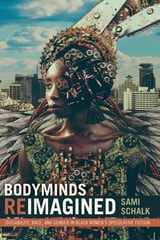
Bodyminds Reimagined
(Dis)ability, Race, and Gender in Black Women's Speculative FictionSami Schalk
Duke University Press, 2018
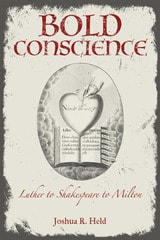
Bold Conscience
Luther to Shakespeare to MiltonJoshua R. Held
University of Alabama Press, 2023
Traces how conscience—inner moral conviction—came to shape public life, fueling martyrdom, free speech, and political revolts
Bold Conscience: Luther to Shakespeare to Milton is a sweeping, original study of how conscience became one of the most powerful ideas in early modern England. Tracing the emergence of what Joshua R. Held calls the “bold conscience,” the book shows how inner moral conviction moved from the realm of private guilt to public action, fueling debates about authority, obedience, free speech, and resistance. By placing conscience at the center of literary, religious, and political conflict, Bold Conscience reveals a vital intellectual throughline linking the Reformation to the birth of modern ideas of liberty and toleration.
The book unfolds chronologically, beginning with Martin Luther and Henry VIII and moving through Shakespeare’s Hamlet and Henry VIII, John Donne’s court sermons, and John Milton’s polemical and poetic works, including Areopagitica and Paradise Lost. Each chapter combines close literary reading with historical and theological analysis, showing how conscience operates across genres—drama, sermon, pamphlet, and epic poetry. Joshua R. Held is a distinguished scholar of early modern literature whose work bridges literary criticism, intellectual history, and religious studies, bringing clarity and narrative energy to complex debates.
Bold Conscience will appeal to scholars and students of early modern literature, Shakespeare, Milton, and Reformation history, as well as readers interested in the origins of religious freedom and political dissent. It will also engage anyone concerned with how moral conviction shapes public life then and now.
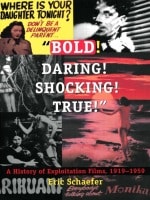
Bold! Daring! Shocking! True!
A History of Exploitation Films, 1919-1959Eric Schaefer
Duke University Press, 1999
Bold! Daring! Shocking! True! is a meticulously researched, interdisciplinary study that is informed by a wide range of sources—including both mainstream and industry newspapers and periodicals, archival accounts, personal interviews, and the films themselves. Schaefer begins by exploring the unique mode of production of exploitation movies, their distribution, and the outrageous exhibition practices that were rooted in the traditions of sideshows and carnivals. His close analysis of dozens of films, such as The Road to Ruin, Modern Motherhood, One Way Ticket to Hell, and The Wages of Sin demonstrates that these films were more than simply “bad” movies. By situating exploitation films in a historical context and organizing them according to the social problems they addressed, Schaefer shows how they evolved during a period of forty years and how, during that time, they shaped public policies and attitudes. Finally, he focuses on the changes in the postwar American film industry that led to the decline of the classical exploitation film and set the stage for the rise of “sexploitation” in the 1960s.
Engagingly written, illustrated with rare photographs, posters, production stills, and ad slicks, and offering a full filmography, Bold! Daring! Shocking! True! reveals a forgotten side of film history and American culture. It will delight and inform those interested in film history, cultural studies, American studies and history, and the many fans of exploitation films.
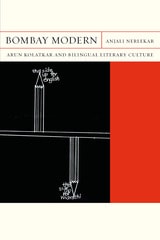
Bombay Modern
Arun Kolatkar and Bilingual Literary CultureAnjali Nerlekar
Northwestern University Press, 2016
Bombay Modern uncovers an alternative and provincial modernism through poetry, a genre that is marginal to postcolonial studies, and through bilingual scholarship across English and Marathi texts, a methodology that is currently peripheral at best to both modernist studies and postcolonial literary criticism in India. Eschewing any attempt to define an overarching or universal modernism, Bombay Modern delimits its sphere of study to "Bombay" and to the "post-1960" (the sathottari period) in an attempt to examine at close range the specific way in which this poetry redeployed the regional, the national, and the international to create a very tangible yet transient local.
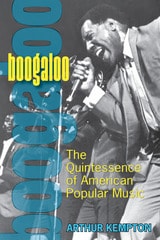
Boogaloo
The Quintessence of American Popular MusicArthur Kempton
University of Michigan Press, 2005
Praise for Boogaloo:
"From Thomas A. Dorsey and gospel to Sam Cooke and the classic age of boogaloo ('soul') to George Clinton and hip hop, this comprehensive analysis of African-American popular music is a deep and gorgeous meditation on its aesthetics and business."
---Henry Louis Gates, Jr., W.E.B. Du Bois Professor of the Humanities, Harvard
"Surpassingly sympathetic and probing. . . . a panoramic critical survey of black popular music over seventy-five years. . . .There is no book quite like it."
---New York Review of Books
". . . moving, dense, and fascinating. . . ."
---New Yorker
". . . a grand and sweeping survey of the history of soul music in America. . . . one of the best books of music journalism. . . ."
---Publisher's Weekly
". . . a fascinating and often original addition to the extensive literature. . . . an astute and witty account. . . . there is plenty in Boogaloo to set the mind and heart alight, as well as some flashes of brilliance and originality rare in music writing today."
---Times Literary Supplement
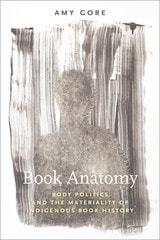
Book Anatomy
Body Politics and the Materiality of Indigenous Book HistoryAmy Gore
University of Massachusetts Press, 2023
Winner of the Beatrice Medicine Award for Scholarship in American Indian Studies
From the marginalia of their readers to the social and cultural means of their production, books bear the imprint of our humanity. Embodying the marks, traces, and scars of colonial survival, Indigenous books are contested spaces. A constellation of nontextual components surrounded Native American–authored publications of the long nineteenth century, shaping how these books were read and understood—including illustrations, typefaces, explanatory prefaces, appendices, copyright statements, author portraits, and more.
Centering Indigenous writers, Book Anatomy explores works from John Rollin Ridge, Sarah Winnemucca Hopkins, Pretty Shield, and D’Arcy McNickle published between 1854 and 1936. In examining critical moments of junction between Indigenous books and a mainstream literary marketplace, Amy Gore argues that the reprints, editions, and paratextual elements of Indigenous books matter: they embody a frontline of colonization in which Native authors battle the public perception and reception of Indigenous books, negotiate representations of Indigenous bodies, and fight for authority and ownership over their literary work.
Book Of The Incipit
Beginnings in the Fourteenth CenturyD. Vance Smith
University of Minnesota Press, 2001
An intriguing evaluation of the concept of beginnings in the medieval period.
Medieval Studies/Literary Theory
An intriguing evaluation of the concept of beginnings in the medieval period. In the first book to examine one of the most peculiar features of one of the greatest and most perplexing poems of England’s late Middle Ages-the successive attempts of Piers Plowman to begin, and to keep beginning-D. Vance Smith compels us to rethink beginning, as concept and practice, in both medieval and contemporary terms.The problem of beginning was invested with increasing urgency in the fourteenth century, imagined and grappled with in the courts, the churches, the universities, the workshops, the fields, and the streets of England. The Book of the Incipit reveals how Langland’s poem exemplifies a widespread interest in beginning in the thirteenth and fourteenth centuries, an interest that appears in such divergent fields as the physics of motion, the measurement of time, logic, grammar, rhetoric, theology, book production, and insurrection. Smith offers a theoretical understanding of beginning that departs from the structuralisms of Edward Said and the traditional formalisms of A. D. Nuttall and most medievalist and modernist treatments of closure. Instead, he conceives a work’s beginning as a figure of the beginning of the work itself, the inception of language as the problem of beginning to which we continue to return.ISBN 0-8166-3760-1 Cloth/jacket £24.50 $34.95x296 Pages 5 7/8 x 9 MayMedieval Cultures Series, volume 28Translation Inquiries: University of Minnesota Press
Book Reports
A Music Critic on His First Love, Which Was ReadingRobert Christgau
Duke University Press, 2019
Book and Verse
A Guide to Middle English Biblical LiteratureJames H. Morey
University of Illinois Press, 2000
Book and Verse is an indispensable guide to the variety and extent of biblical literature in England, exclusive of drama and the Wycliffite Bible that appeared between the twelfth and the fifteenth centuries. Entries provide detailed information on how much of what parts of the Bible appear in Middle English and where this biblical material can be found. Comprehensive indexing by name, keyword, and biblical verse allows a researcher to find, for example, all the occurrences of the Flood Story or of the encounter between Elijah and the Widow of Sarephta. An invaluable resource, Book and Verse provides the first easy access to the "popular Bible" assembled before and after John Wyclif's translation of the Vulgate into English.
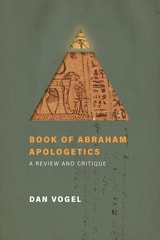
Book of Abraham Apologetics
A Review and CritiqueDan Vogel
Signature Books, 2021
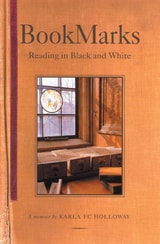
Bookmarks
Reading in Black and White, First Paperback EditionKarla F. Holloway
Rutgers University Press, 2006
"BookMarks is a moving and revelatory memoir... a work of fiercely intelligent scholarship." - Susan Larson,
"Erudite and emotional in turns, [BookMarks] is full of truths that appeal to the head and the heart." - Charlotte News Observer"
What are you reading? What books have been important to you? Whether you are interviewing for a job, chatting with a friend or colleague, or making small talk, these questions arise almost unfailingly. Some of us have stock responses, which may or may not be a fiction of our own making. Others gauge their answers according to who is asking the question. Either way, the replies that we give are thoughtfully crafted to suggest the intelligence, worldliness, political agenda, or good humor that we are hoping to convey. We form our answers carefully because we know that our responses say a lot.
But what exactly do our answers say? In BookMarks, Karla FC Holloway explores the public side of reading, and specifically how books and booklists form a public image of African Americans. Revealing her own love of books and her quirky passion for their locations in libraries and on bookshelves, Holloway reflects on the ways that her parents guided her reading when she was young and her bittersweet memories of reading to her children. She takes us on a personal and candid journey that considers the histories of reading in children’s rooms, prison libraries, and “Negro” libraries of the early twentieth century, and that finally reveals how her identity as a scholar, a parent, and an African American woman has been subject to judgments that public cultures make about race and our habits of reading.
Holloway is the first to call our attention to a remarkable trend of many prominent African American writers—including Maya Angelou, W.E.B. Du Bois, Henry Louis Gates, Malcolm X, and Zora Neale Hurston. Their autobiographies and memoirs are consistently marked with booklists—records of their own habits of reading. She examines these lists, along with the trends of selection in Oprah Winfrey’s popular book club, raising the questions: What does it mean for prominent African Americans to associate themselves with European learning and culture? How do books by black authors fare in the inevitable hierarchy of a booklist?
BookMarks provides a unique window into the ways that African Americans negotiate between black and white cultures. This compelling rumination on reading is a book that everyone should add to their personal collections and proudly carry “cover out.”
Books and Readers in the Premodern World
Essays in Honor of Harry GambleKarl Shuve
SBL Press, 2018
A book about the role of books in shaping the ancient religious landscape
This collection of essays by leading scholars from a variety of academic disciplines explores the ongoing relevance of Harry Gamble’s Books and Readers in the Early Church (1995) for the study of premodern book cultures. Contributors expand the conversation of book culture to examine the role the Hebrew Bible, the New Testament, and the Qur’an played in shaping the Jewish, Christian, and Muslim religions in the ancient and medieval world. By considering books as material objects rather than as repositories for stories and texts, the essays examine how new technologies, new materials, and new cultural encounters contributed to these holy books spreading throughout territories, becoming authoritative, and profoundly shaping three global religions.
Features:
- Comparative analysis of book culture in Roman, Jewish, Christian, and Islamic contexts
- Art-historical, papyrological, philological, and historical modes of analysis
- Essays that demonstrate the vibrant, ongoing legacy of Gamble’s seminal work
Border Confluences
Borderland Narratives from the Mexican War to the PresentRosemary A. King
University of Arizona Press, 2004

Border Crossings
An Introduction to East German ProseThomas C. Fox
University of Michigan Press, 1993

Border Killers
Neoliberalism, Necropolitics, and Mexican MasculinityElizabeth Villalobos
University of Arizona Press, 2024
Villalobos focuses on representations of “border killers” in literature, film, and theater. The author develops a metaphor of “maquilization” to describe the mass-production of masculine violence as a result of neoliberalism. The author demonstrates that the killer is an interchangeable cog in a societal factory of violence whose work is to produce dead bodies. By turning to cultural narratives, Villalobos seeks to counter the sensationalistic and stereotyped media depictions of border residents as criminals. The cultural works she examines instead indict the Mexican state and the global economic system for producing agents of violence.
Focusing on both Mexico’s northern and southern borders, Border Killers uses Achille Mbembe’s concept of necropolitics and various theories of masculinity to argue that contemporary Mexico is home to a form of necropolitical masculinity that has flourished in the neoliberal era and made the exercise of death both profitable and necessary for the functioning of Mexico’s state-cartel-corporate governance matrix.
Border Renaissance
The Texas Centennial and the Emergence of Mexican American LiteratureBy John Morán González
University of Texas Press, 2009
The Texas Centennial of 1936, commemorated by statewide celebrations of independence from Mexico, proved to be a powerful catalyst for the formation of a distinctly Mexican American identity. Confronted by a media frenzy that vilified "Meskins" as the antithesis of Texan liberty, Mexican Americans created literary responses that critiqued these racialized representations while forging a new bilingual, bicultural community within the United States. The development of a modern Tejana identity, controversies surrounding bicultural nationalism, and other conflictual aspects of the transformation from mexicano to Mexican American are explored in this study. Capturing this fascinating aesthetic and political rebirth, Border Renaissance presents innovative readings of important novels by María Elena Zamora O'Shea, Américo Paredes, and Jovita González. In addition, the previously overlooked literary texts by members of the League of United Latin American Citizens (LULAC) are given their first detailed consideration in this compelling work of intellectual and literary history.
Drawing on extensive archival research in the English and Spanish languages, John Morán González revisits the 1930s as a crucial decade for the vibrant Mexican American reclamation of Texas history. Border Renaissance pays tribute to this vital turning point in the Mexican American struggle for civil rights.
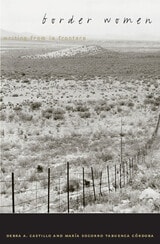
Border Women
Writing From La FronteraDebra A. Castillo
University of Minnesota Press, 2002
The first study to foreground writing by women who live at the U.S.-Mexico Border.
It is a peculiar fact that U.S.-Mexico border theory is dominated by those who write about, not from, the border. By looking at the work of women writers from both sides of the border, Debra A. Castillo and María-Socorro Tabuenca Córdoba open border studies to a truly transnational analysis while bringing questions of gender to the fore.
Border Women rethinks border theory by emphasizing women writers whose work—in Spanish, English, or a mixture of the two languages—calls into question accepted notions of border identities. These writers include those who are already well recognized internationally (Helena María Viramontes, Sheila and Sandra Ortiz Taylor, and María Novaro); those who have become part of the Chicano canon (Norma Cantú, Alicia Gaspar de Alba, and Demetria Martínez); along with some of the lesser-known, yet most exciting, women’s voices from the Mexican border (Rosario Sanmiguel, Rosina Conde, and Regina Swain).
Border Writing
The Multidimensional TextD. Emily HicksForeword by Neil Larsen
University of Minnesota Press, 1991
Border Writing was first published in 1991. Minnesota Archive Editions uses digital technology to make long-unavailable books once again accessible, and are published unaltered from the original University of Minnesota Press editions.
Until recently, literary theory has been grounded in the histories of English, French, German, and Spanish literature. The terms and models for the production of literature and its function in culture and society were decided in Western Europe, and any deviations were immediately marginalized. This Eurocentric view has been widely attached by postmodern, feminist, and postcolonial political practices.
Drawing on a variety of critical and theoretical sources, D. Emily Hicks employs the concept of border writing to consider the complexities of contemporary Latin American writing. With its emphasis on the multiplicity of languages and the problems of translation, border writing connotes a perspective that is no longer determined by neat distinctions. Hicks combines Deleuze and Guattari's notion of "deterritorialization" (the geographic, linguistic, or cultural displacement from one's own country, language, or native culture) with a holographic metaphor in provocative readings of Latin America writers, including Gabriel Garcia Marquez, Luisa Valenzuela, and Julio Cortazar. The result is a volume that forces the reader to consider the development of literature in terms of strategies and tactics that contribute to the production of meaning in culturally complex and politically repressive societies.
D. Emily Hicks is associate professor of English and comparative literature and a member of the Latin American studies faculty at San Diego State University. Neil Larsen is associate professor of Spanish and Latin American literature at Northeastern University and the author of Modernism and Hegemony: A Materialist Critique of Aesthetic Agencies (Minnesota, 1990).
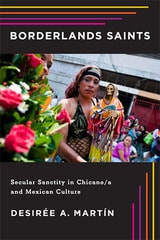
Borderlands Saints
Secular Sanctity in Chicano/a and Mexican CultureMartín, Desirée A
Rutgers University Press, 2013
Winner of the 2014 Latina/o Studies Section - LASA Outstanding Book Award
In Borderlands Saints, Desirée A. Martín examines the rise and fall of popular saints and saint-like figures in the borderlands of the United States and Mexico. Focusing specifically on Teresa Urrea (La Santa de Cabora), Pancho Villa, César Chávez, Subcomandante Marcos, and Santa Muerte, she traces the intersections of these figures, their devotees, artistic representations, and dominant institutions with an eye for the ways in which such unofficial saints mirror traditional spiritual practices and serve specific cultural needs.
Popular spirituality of this kind engages the use and exchange of relics, faith healing, pilgrimages, and spirit possession, exemplifying the contradictions between high and popular culture, human and divine, and secular and sacred. Martín focuses upon a wide range of Mexican and Chicano/a cultural works drawn from the nineteenth century to the present, covering such diverse genres as the novel, the communiqué, drama, the essay or crónica, film, and contemporary digital media. She argues that spiritual practice is often represented as narrative, while narrative—whether literary, historical, visual, or oral—may modify or even function as devotional practice.
Boredom
The Literary History of a State of MindPatricia Meyer Spacks
University of Chicago Press, 1994
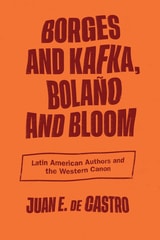
Borges and Kafka, Bolaño and Bloom
Latin American Authors and the Western CanonJuan E. De Castro
Vanderbilt University Press, 2022
Borges and Kafka, Bolaño and Bloom is a parsing not simply of these authors' reactions to a canon, but of the notion of canon writ large and the inequities and erasures therein. It concludes with a look at the testimonial and autobiographical writings of Rigoberta Menchú and Lurgio Gavilán, who arguably represent the trajectory of Indigenous testimonial and autobiographical writing during the last forty years, noting how their texts represent alternative ways of relating to national and, on occasion, Western cultures. This study is a new attempt to map writers' diverse ways of thinking about locality and universality from within and without what is known as the canon.
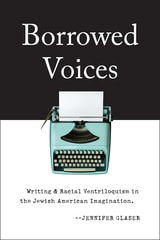
Borrowed Voices
Writing and Racial Ventriloquism in the Jewish American ImaginationGlaser, Jennifer
Rutgers University Press, 2016