Results by title
403 books match the query 'Journalism' and 24 start with c
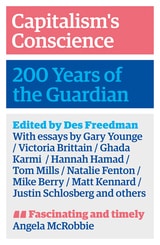
Capitalism's Conscience
200 Years of the GuardianDes Freedman
Pluto Press, 2021
Since its inception in Manchester in 1821 as a response to the 1819 Peterloo Massacre, the Guardian has been a key institution in the definition and development of liberalism. The stereotype of the 'Guardianista', an environmentally-conscious, Labour-voting, progressively-minded public sector worker endures in the popular mythology of British press history.
Yet the title has a complex lineage and occupies an equivocal position between capital and its opponents. It has both fiercely defended the need for fearless, independent journalism and handed over documents to the authorities; it has carved out a niche for itself in the UK media as a progressive voice but has also consistently diminished more radical projects on the left.
Published to coincide with its 200th anniversary, Capitalism's Conscience brings together historians, journalists and activists in an appraisal of the Guardian's contribution to British politics, society and culture - and its distinctive brand of centrism. Contextualising some of the main controversies in which the title has been implicated, the book offers timely insights into the publication's history, loyalties and political values.

Changing Minds or Changing Channels?
Partisan News in an Age of ChoiceKevin Arceneaux and Martin Johnson
University of Chicago Press, 2013
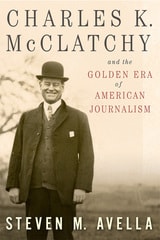
Charles K. McClatchy and the Golden Era of American Journalism
Steven M. Avella
University of Missouri Press, 2016
Charles K. McClatchy was twenty-five when he inherited The Sacramento Bee from his father, and his ensuing career as the paper’s editor extended well beyond the newsroom. Until his death in 1936, McClatchy was a consistent advocate for Progressive politics, a crusader for urban reform, a staunch isolationist, and a voice for Northern California. This biography explores his career as the long-time editor of the Bee in a work that weaves the history of Northern California with that of American newspapers.
Chasing Newsroom Diversity
From Jim Crow to Affirmative ActionGwyneth Mellinger
University of Illinois Press, 2013
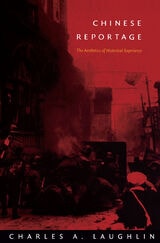
Chinese Reportage
The Aesthetics of Historical ExperienceCharles A. Laughlin
Duke University Press, 2002
Laughlin traces the roots of reportage (or baogao wenxue) to the travel literature of the Qing Dynasty but shows that its flourishing was part of the growth of Chinese communism in the twentieth century. In a modern Asian context critical of capitalism and imperialism, reportage offered the promise of radicalizing writers through a new method of literary practice and the hope that this kind of writing could in turn contribute to social revolution and China’s national self-realization. Chinese Reportage explores the wide range of social engagement depicted in this literature: witnessing historic events unfolding on city streets; experiencing brutal working conditions in 1930s Shanghai factories; struggling in the battlefields and trenches of the war of resistance against Japan, the civil war, and the Korean war; and participating in revolutionary rural, social, and economic transformation. Laughlin’s close readings emphasize the literary construction of social space over that of character and narrative structure, a method that brings out the critique of individualism and humanism underlying the genre’s aesthetics.
Chinese Reportage recaptures a critical aspect of leftist culture in China with far-reaching implications for historians and sociologists as well as literary scholars.
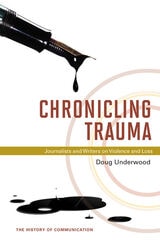
Chronicling Trauma
Journalists and Writers on Violence and LossDoug Underwood
University of Illinois Press, 2011
To attract readers, journalists have long trafficked in the causes of trauma--crime, violence, warfare--as well as psychological profiling of deviance and aberrational personalities. Novelists, in turn, have explored these same subjects in developing their characters and by borrowing from their own traumatic life stories to shape the themes and psychological terrain of their fiction. In this book, Doug Underwood offers a conceptual and historical framework for comprehending the impact of trauma and violence in the careers and the writings of important journalist-literary figures in the United States and British Isles from the early 1700s to today.
Grounded in the latest research in the fields of trauma studies, literary biography, and the history of journalism, this study draws upon the lively and sometimes breathtaking accounts of popular writers such as Charles Dickens, Ernest Hemingway, Dorothy Parker, Graham Greene, and Truman Capote, exploring the role that trauma has played in shaping their literary works. Underwood notes that the influence of traumatic experience upon journalistic literature is being reshaped by a number of factors, including news media trends, the advance of the Internet, the changing nature of the journalism profession, the proliferation of psychoactive drugs, and journalists' greater self-awareness of the impact of trauma in their work.
The most extensive scholarly examination of the role that trauma has played in the shaping of our journalistic and literary heritage, Chronicling Trauma: Journalists and Writers on Violence and Loss discusses more than a hundred writers whose works have won them fame, even at the price of their health, their families, and their lives.
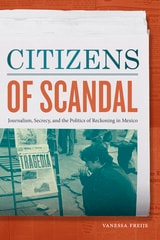
Citizens of Scandal
Journalism, Secrecy, and the Politics of Reckoning in MexicoVanessa Freije
Duke University Press, 2020
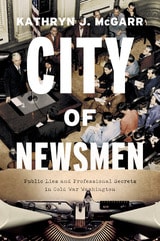
City of Newsmen
Public Lies and Professional Secrets in Cold War WashingtonKathryn J. McGarr
University of Chicago Press, 2022
Americans’ current trust in journalists is at a dismayingly low ebb, particularly on the subject of national and international politics. For some, it might be tempting to look back to the mid-twentieth century, when the nation’s press corps was a seemingly venerable and monolithic institution that conveyed the official line from Washington with nary a glint of anti-patriotic cynicism. As Kathryn McGarr’s City of Newsmen shows, however, the real story of what Cold War–era journalists did and how they did it wasn’t exactly the one you’d find in the morning papers.
City of Newsmen explores foreign policy journalism in Washington during and after World War II—a time supposedly defined by the press’s blind patriotism and groupthink. McGarr reveals, though, that DC reporters then were deeply cynical about government sources and their motives, but kept their doubts to themselves for professional, social, and ideological reasons. The alliance and rivalries among these reporters constituted a world of debts and loyalties: shared memories of harrowing wartime experiences, shared frustrations with government censorship and information programs, shared antagonisms, and shared mentors. McGarr ventures into the back hallways and private clubs of the 1940s and 1950s to show how white male reporters suppressed their skepticism to build one of the most powerful and enduring constructed realities in recent US history—the Washington Cold War consensus. Though by the 1960s, this set of reporters was seen as unduly complicit with the government—failing to openly critique the decisions and worldviews that led to disasters like the Vietnam War—McGarr shows how self-aware these reporters were as they negotiated for access, prominence, and, yes, the truth—even as they denied those things to their readers.
Coming of Age with the New Republic, 1938-1950
Merrill D. Peterson
University of Missouri Press, 1999
In this absorbing memoir, Merrill D. Peterson traces his progress from a young Kansas Republican to a "Left Liberal," Democrat by reconstructing how the New Republic singularly influenced his intellectual development and academic career during some of the most turbulent years in American history—the final years of the Great Depression through World War II and the beginnings of the Cold War. Peterson recalls how, as a young man, he was guided to intellectual maturity by such extraordinary individuals as Max Lerner, Archibald MacLeish, Vincent Sheean, Alfred Kazin, Lewis Mumford, and Malcolm Cowley—all contributors to this important magazine. We look back, with Peterson, and see how their views are inextricably reflected in his own developing worldview.
Peterson was introduced to this liberal weekly by one of his teachers during his senior year of high school (1938-1939). For the next ten years, the magazine served as his principal guide to the politics and culture of the times. Now, at seventy-eight years of age, Peterson revisits the magazine that he read so eagerly during those early, impressionable years. With considerable skill and charm, Peterson weaves together the fresh reading, the history of the country during the 1940s, and his own personal history to give us the heart of the book. In addition, he includes brief essays on Vernon L. Parrington, Lewis Mumford, and Max Lerner, the three American writers and intellectuals he believes had the most influence on him.
Peterson discusses several turning points in his young life, but he focuses primarily on his education and the role the magazine played in it. The book concludes when Peterson, with a Ph.D. in the history of American civilization, accepts his first academic appointment, at Brandeis University, and approaches the publication of his first book. Thus, a critical chapter in his life comes to a close.
Commercializing Childhood
Children's Magazines, Urban Gentility, and the Ideal of the Child Consumer in the United States, 1823-1918Paul B. Ringel
University of Massachusetts Press, 2015
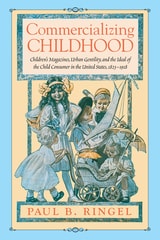
In this deeply researched and engaging book, Paul B. Ringel combines an analysis of the stories in nineteenth-century American children's magazines with the backstories of their authors, editors, and publishers to explain how this hugely successful industry trained generations of American children to become genteel consumers. Ringel demonstrates how these publications, which were read in hundreds of thousands of homes, played to two conflicting impulses within American families: to shield children from commercial influences by offering earnest and moral entertainment and to help children learn how to prosper in an increasingly market-driven society.
Common Knowledge
News and the Construction of Political MeaningW. Russell Neuman, Marion R. Just, and Ann N. Crigler
University of Chicago Press, 1992
For their study, the authors analyzed coverage of 150 television and newspaper stories on five prominent issues—drugs, AIDS, South African apartheid, the Strategic Defense Initiative, and the stock market crash of October 1987. They tested audience responses of more than 1,600 people, and conducted in-depth interviews with a select sample. What emerges is a surprisingly complex picture of people actively and critically interpreting the news, making sense of even the most abstract issues in terms of their own lives, and finding political meaning in a sophisticated interplay of message, medium, and firsthand experience.
At every turn, Common Knowledge refutes conventional wisdom. It shows that television is far more effective at raising the saliency of issues and promoting learning than is generally assumed; it also undermines the assumed causal connection between newspaper reading and higher levels of political knowledge. Finally, this book gives a deeply responsible and thoroughly fascinating account of how the news is conveyed to us, and how we in turn convey it to others, making meaning of at once so much and so little. For anyone who makes the news—or tries to make anything of it—Common Knowledge promises uncommon wisdom.
Communication Convergence in Contemporary China
International Perspectives on Politics, Platforms, and ParticipationPatrick Shaou-Whea Dodge
Michigan State University Press, 2020
Communities of Journalism
A History of American Newspapers and Their ReadersDavid Paul Nord
University of Illinois Press, 2006
Community-Centered Journalism
Engaging People, Exploring Solutions, and Building TrustAndrea Wenzel
University of Illinois Press, 2020
Andrea Wenzel models new practices of community-centered journalism that build trust across boundaries of politics, race, and class, and prioritize solutions while engaging the full range of local stakeholders. Informed by case studies from rural, suburban, and urban settings, Wenzel's blueprint reshapes journalism norms and creates vigorous storytelling networks between all parts of a community. Envisioning a portable, rather than scalable, process, Wenzel proposes a community-centered journalism that, once implemented, will strengthen lines of local communication, reinvigorate civic participation, and forge a trusting partnership between media and the people they cover.

Comparative Media Policy, Regulation and Governance in Europe
Unpacking the Policy CycleEdited by Leen d’Haenens, Helena Sousa, and Josef Trappel
Intellect Books, 2018
Complacency and Collusion
A Critical Introduction to Business and Financial JournalismKeith J. Butterick
Pluto Press, 2015
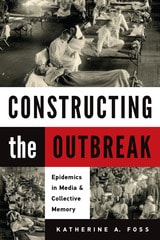
Constructing the Outbreak
Epidemics in Media and Collective MemoryKatherine A. Foss
University of Massachusetts Press, 2020
Constructing the Outbreak demonstrates how news reporting on epidemics communicates more than just information about pathogens; rather, prejudices, political agendas, religious beliefs, and theories of disease also shape the message. Analyzing seven epidemics spanning more than two hundred years—from Boston's smallpox epidemic and Philadelphia's yellow fever epidemic in the eighteenth century to outbreaks of diphtheria, influenza, and typhoid in the early twentieth century—Katherine A. Foss discusses how shifts in journalism and medicine influenced the coverage, preservation, and fictionalization of different disease outbreaks. Each case study highlights facets of this interplay, delving into topics such as colonization, tourism, war, and politics. Through this investigation into what has been preserved and forgotten in the collective memory of disease, Foss sheds light on current health care debates, like vaccine hesitancy.
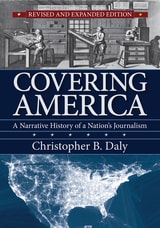
Covering America
A Narrative History of a Nation's JournalismChristopher B. Daly
University of Massachusetts Press, 2018
In this revised and expanded edition, Daly updates his narrative with new stories about legacy media like the New York Times and the Washington Post, and the digital natives like the Huffington Post and Buzzfeed. A new final chapter extends the study of the business crisis facing journalism by examining the "platform revolution" in media, showing how Facebook, Twitter, and other social media are disrupting the traditional systems of delivering journalism to the public. In an era when the factual basis of news is contested and when the government calls journalists "the enemy of the American people" or "the opposition party," Covering America brings history to bear on the vital issues of our times.
Covering America
A Narrative History of a Nation's JournalismChristopher B. Daly
University of Massachusetts Press, 2018
In this revised and expanded edition, Daly updates his narrative with new stories about legacy media like the New York Times and the Washington Post, and the digital natives like the Huffington Post and Buzzfeed. A new final chapter extends the study of the business crisis facing journalism by examining the "platform revolution" in media, showing how Facebook, Twitter, and other social media are disrupting the traditional systems of delivering journalism to the public. In an era when the factual basis of news is contested and when the government calls journalists "the enemy of the American people" or "the opposition party," Covering America brings history to bear on the vital issues of our times.
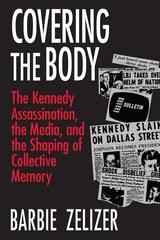
Covering the Body
The Kennedy Assassination, the Media, and the Shaping of Collective MemoryBarbie Zelizer
University of Chicago Press, 1992
Covering the Body (the title refers to the charge given journalists to follow a president) is a powerful reassessment of the media's role in shaping our collective memory of the assassination—at the same time as it used the assassination coverage to legitimize its own role as official interpreter of American reality. Of the more than fifty reporters covering Kennedy in Dallas, no one actually saw the assassination. And faced with a monumentally important story that was continuously breaking, most journalists had no time to verify leads or substantiate reports. Rather, they took discrete moments of their stories and turned them into one coherent narrative, blurring what was and was not "professional" about their coverage.
Through incisive analyses of the many accounts and investigations in the years since the shooting, Zelizer reveals how journalists used the assassination not just to relay the news but to address the issues they saw as central to the profession and to promote themselves as cultural authorities. Indeed, argues Zelizer, these motivations are still alive and are at the core of the controversy surrounding Oliver Stone's movie, JFK.
At its heart, Covering the Body raises serious questions about the role of the media in defining our reality, and shaping our myths and memories. In tracing how journalists attempted to answer questions that still trouble most Americans, Zelizer offers a fascinating analysis of the role of the media as cultural authorities.
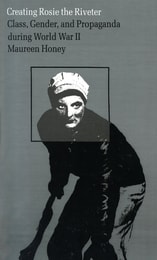
Creating Rosie the Riveter
Class, Gender, and Propaganda during World War IIMaureen Honey
University of Massachusetts Press, 1984
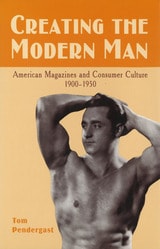
Creating the Modern Man
American Magazines and Consumer Culture, 1900-1950Tom Pendergast
University of Missouri Press, 2000
In the late nineteenth century, general-interest magazines began to reach an unprecedented number of readers and conveyed to those readers diverse messages about the meaning of masculinity in America. Over the next fifty years, these messages narrated a shift from Victorian masculinity, which valued character, integrity, hard work, and duty, to modern masculinity, which valued personality, self-realization, and image. In Creating the Modern Man, Tom Pendergast studies the multifaceted ways that masculinity is represented in magazines published during this transitional period.
Pendergast focuses on the rise of mass consumer culture, demonstrating that consumerism was a key factor in reshaping American notions of masculinity as presented in popular magazines. Whereas much scholarship has decried the effects of consumerism, Pendergast treats consumer culture as an energizing force in the American magazine market. He suggests that such magazines offered men new and meaningful visions of masculine identity and argues that men actively participated in restructuring the masculine ideal. Engaging a wide range of magazines from American Magazine to Esquire to True, Pendergast demonstrates how these publications presented masculinity in ways that reflected the magazines' relationship to advertisers, contributors, and readers.
This fascinating study includes such African American magazines as the Colored American, Crisis, Opportunity, and Ebony. Pendergast reasons that the rise of modern masculinity opened the way for African American men to identify with normative masculine values. As white men reinvented the idea of the "self-made man" for a new era, black men struggled to negotiate a meaningful place for black masculinity in a culture intent on denying them access.
The first complete investigation of the representation of men in American magazines, Creating the Modern Man makes an important contribution to our understanding of these publications, both as elements of mass culture and as interesting institutions in their own right. Pendergast takes readers inside the complex world of magazine publishing, demonstrating how magazines slowly yet surely help create the cultural images that shape societal gender roles.
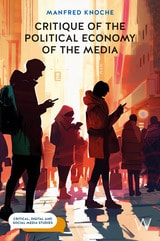
Critique of the Political Economy of the Media
Foundations and ApplicationsManfred Knoche
University of Westminster Press, 2025
It introduces a theoretical framework that engages with important themes including the crisis-ridden structural transformation of the media industry, media economics in the age of digital communications, media concentration, science communication and open access publishing, media technologies, the role of advertising in capitalism, and the contradictions of alternative media in capitalism.
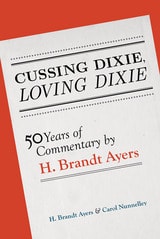
Cussing Dixie, Loving Dixie
Fifty Years of Commentary by H. Brandt AyersH. Brandt Ayers and Carol Nunnelley
University of Alabama Press, 2015
The decades-long ribbon of prose that spilled from Ayers’s pen captured the epochal milestones of our times, such as the 1965 March on Washington, the civil rights movement, the rise and decay of the New South movement, the South’s transformation from a bulwark of Democratic entropy to a heartland of irascible conservatism, and the election of the republic’s first black president.
Cussing Dixie, Loving Dixie: Fifty Years of Commentary by H. Brandt Ayers includes Ayers’s unforgettable descriptions of the political giants of Alabama’s turbulent twentieth century. Of George Wallace he wrote: “He lost his way in the swamp of racial politics, squandered his great talent for leadership, and, cruelly, has made his most devoted followers bear the consequences.” And Ayers memorably hymned Supreme Court justice Hugo Black as having “made of the Bill of Rights a trumpet which kept calling the nation back to its original purpose.”
Ayers was so known for his passionate crusade for a fair deal for “the plain people of both races” of Alabama that enemies dubbed his family’s newspaper “The Red Star.” A loyal son of Alabama who extolls Southern culture, Ayers unapologetically calls for Alabamians to cast off the moribund ideologies of the past. He jousts against obscurantism itself: “When fear and ignorance snuff out the brains of a man,” he thunders, “he is reduced to the level of a jungle predator—a flexed mass of instincts.”
Writing from a generous heart, Ayers enlivens and enlightens. Eschewing the hifalutin, his artful writing is both accessible to the people and admired by the learned. Far from provincial, his far-ranging eye landed often on global events, and he persuasively frames the state and region as an active front on which key national issues hang.
Ayers ranks among the most prolific and insightful chroniclers of twentieth- and twenty-first-century Alabama. Cussing Dixie, Loving Dixie: Fifty Years of Commentary by H. Brandt Ayers is a monument to his enduring legacy and relevance.