Results by title
936 books match the query 'LGBTQ+ Studies' and 57 start with c
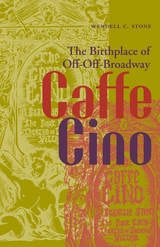
Caffe Cino
The Birthplace of Off-Off-BroadwayWendell C. Stone
Southern Illinois University Press, 2005
“It’s Magic Time!” That colorful promise began each performance at the Caffe Cino, the storied Greenwich Village coffeehouse that fostered the gay and alternative theatre movements of the 1960s and launched the careers of such stage mainstays as Sam Shepard, Lanford Wilson, Robert Heide, Harry Koutoukas, Robert Patrick, Robert Dahdah, Helen Hanft, Al Pacino, and Bernadette Peters. As Off-Off-Broadway productions enjoy a deserved resurgence, theatre historian and actor Wendell C. Stone reopens the Cino’s doors in this vibrant look at the earliest days of OOB.
Rife with insider interviews and rich with evocative photographs, Caffe Cino: The Birthplace of Off-Off-Broadway provides the first detailed account of Joe Cino’s iconic café theatre and its influence on American theatre. A hub of artistic innovation and haven for bohemians, beats, hippies, and gays, the café gave a much-sought outlet to voices otherwise shunned by mainstream entertainment. The Cino’s square stage measured only eight feet, but the dynamic ideas that emerged there spawned the numerous alternative theatre spaces that owe their origins to the risky enterprise on Cornelia Street.

Call Me by Your Name
Perspectives on the FilmEdited by Edward Lamberti and Michael Williams
Intellect Books, 2026
This edited collection explores how Luca Guadagnino’s film Call Me by Your Name speaks powerfully to questions of contemporary sexual identity and romance.
Adapted by James Ivory from André Aciman’s novel and directed by Luca Guadagnino, the film Call Me by Your Name has been passionately received among audiences and critics ever since its 2017 release. A love story between seventeen-year-old Elio (Timothée Chalamet) and graduate student Oliver (Armie Hammer) set in 1983 “somewhere in northern Italy,” Call Me by Your Name presents a gay relationship in a romantic idyll seemingly untroubled by outside pressures, prejudices, or tragedy.
While this means it offers audiences welcome opportunities to swoon in front of an LGBTQ+ romance that equals classic heterosexual romances onscreen, its relevance or political significance today may not be immediately apparent. This edited collection points out the ways in which the film is abundantly infused with narrative, thematic, and stylistic elements that can be interpreted as speaking powerfully to contemporary audiences on questions of sexual identity. How does this love story explore wider tensions that exist between the specific and the general, between the open and the hidden, and between the past and the present? The contributors to this collection provide stimulating and contemplative responses to this question.
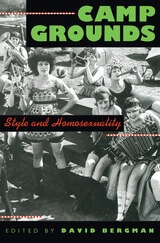
Camp Grounds
Style and HomosexualityEdited by David Bergman
University of Massachusetts Press, 1993
The concept of camp has never been easy to define. Derived from the French verb camper, “to pose,” it has been variously interpreted as a style that favors exaggeration, an ironic attitude toward the cultural mainstream, and a form of aestheticism that celebrates artifice over beauty. At the same time, camp has been long associated with homosexual culture, or at least with a self-conscious eroticism that questions traditional gender constructions.
The sixteen essays on camp included in this book explore further the relationship between style and homosexuality, showing how camp has made its way into every aspect of our cultural lives: theater, popular music, opera, film, and literature. Beginning with an overview of what camp is, where it came from, and how it operates, the chapter addresses topics ranging from the “high camp” of Whitman and Proust to the “low camp” of drag queen culture and gay fanzines. Together they carry forward a conversation that began more than twenty-five years ago, before Stonewall and AIDS, when Susan Sontag published her memorable “Notes on Camp.”
Camp TV
Trans Gender Queer Sitcom HistoryQuinlan Miller
Duke University Press, 2019
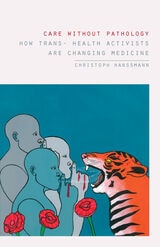
Care without Pathology
How Trans- Health Activists Are Changing MedicineChristoph Hanssmann
University of Minnesota Press, 2023
Examining trans- healthcare as a key site through which struggles for health and justice take shape
Over the past two decades, medical and therapeutic approaches to transgender patients have changed radically, from treating a supposed pathology to offering gender-affirming care. Based on ethnographic fieldwork in New York City and Buenos Aires, Care without Pathology moves across the Americas to show how trans- health activists have taken on the project of depathologization.
In New York, Christoph Hanssmann examines activist attempts to overturn bans on using public health dollars to fund trans- health care. In Argentina, he traces how trans- activists marshaled medical statistics and personal biographies to reveal state violence directed against trans- people and travestis. Hanssmann also demonstrates the importance of understanding transphobia in the broader context of gendered racism, ableism, and antipoverty, arguing for the rise of a thoroughly coalition-based mass mobilization.
Care without Pathology highlights the distributive arguments activists made to access state funding for health care, combating state arguments that funding trans- health care is too specialized, too expensive, and too controversial. Hanssmann situates trans- health as a crucible within which sweeping changes are taking place—with potentially far-reaching effects on the economic and racial barriers to accessing care.
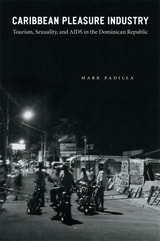
Caribbean Pleasure Industry
Tourism, Sexuality, and AIDS in the Dominican RepublicMark Padilla
University of Chicago Press, 2007
In recent years, the economy of the Caribbean has become almost completely dependent on international tourism. And today one of the chief ways that foreign visitors there seek pleasure is through prostitution. While much has been written on the female sex workers who service these tourists, Caribbean Pleasure Industry shifts the focus onto the men. Drawing on his groundbreaking ethnographic research in the Dominican Republic, Mark Padilla discovers a complex world where the global political and economic impact of tourism has led to shifting sexual identities, growing economic pressures, and new challenges for HIV prevention. In fluid prose, Padilla analyzes men who have sex with male tourists, yet identify themselves as “normal” heterosexual men and struggle to maintain this status within their relationships with wives and girlfriends. Padilla’s exceptional ability to describe the experiences of these men will interest anthropologists, but his examination of bisexuality and tourism as much-neglected factors in the HIV/AIDS epidemic makes this book essential to anyone concerned with health and sexuality in the Caribbean or beyond.
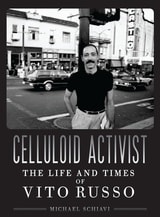
Celluloid Activist
The Life and Times of Vito RussoMichael Schiavi
University of Wisconsin Press, 2011
“Schiavi tells a compelling story in this biography—from his re-creation of life on the streets of East Harlem and in Greenwich Village of the 1960s and 1970s to the way he conveys Russo’s excitement about his film research and popular education to his account of the AIDS years in New York City.”—John D’Emilio, Italian American Review
“In [Schiavi’s] hands Russo’s life is both fascinating in its own right and a window into a larger milieu of activism during two critical decades.”—Italian American Review
Best Books for General Audiences, selected by the Public Library Reviewers
Finalist, Gay Memoir/Biography, Lambda Literary Awards
Finalist, Over the Rainbow Selection, American Library Association

Changing Corporate America from Inside Out
Lesbian and Gay Workplace RightsNicole C. Raeburn
University of Minnesota Press, 2004
Investigates how gays, lesbians, and bisexuals have succeeded in securing equitable benefits
Despite the backlash against lesbian and gay rights occurring in cities and states across the country, a growing number of corporations are actually expanding protections and benefits for their gay and lesbian employees. Why this should be, and why some corporations are increasingly open to inclusive policies while others are determinedly not, is what Nicole C. Raeburn seeks to explain in Changing Corporate America from Inside Out.
A long-overdue study of the workplace movement, Raeburn’s analysis focuses on the mobilization of lesbian, gay, and bisexual employee networks over the past fifteen years to win domestic partner benefits in Fortune 1000 companies. Drawing on surveys of nearly one hundred corporations with and without gay networks, intensive interviews with human resources executives and gay employee activists, as well as a number of case studies, Raeburn reveals the impact of the larger social and political environment on corporations’s openness to gay-inclusive policies, the effects of industry and corporate characteristics on companies’s willingness to adopt such policies, and what strategies have been most effective in transforming corporate policies and practices to support equitable benefits for all workers.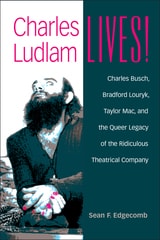
Charles Ludlam Lives!
Charles Busch, Bradford Louryk, Taylor Mac, and the Queer Legacy of the Ridiculous Theatrical CompanySean F. Edgecomb
University of Michigan Press, 2017
Author Sean F. Edgecomb focuses on the neo-Ridiculous artists Charles Busch, Bradford Louryk, and Taylor Mac to trace the connections between Ludlam’s legacy and their performances, using alternative queer models such as kinetic kinship, lateral historiography, and a new approach to camp. Charles Ludlam Lives! demonstrates that the queer legacy of Ludlam is one of distinct transformation—one where artists can reject faithful interpretations in order to move in new interpretive directions.

Charles Ludlam Lives!
Charles Busch, Bradford Louryk, Taylor Mac, and the Queer Legacy of the Ridiculous Theatrical CompanySean F. Edgecomb
University of Michigan Press, 2017
Author Sean F. Edgecomb focuses on the neo-Ridiculous artists Charles Busch, Bradford Louryk, and Taylor Mac to trace the connections between Ludlam’s legacy and their performances, using alternative queer models such as kinetic kinship, lateral historiography, and a new approach to camp. Charles Ludlam Lives! demonstrates that the queer legacy of Ludlam is one of distinct transformation—one where artists can reject faithful interpretations in order to move in new interpretive directions.
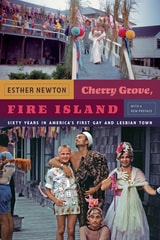
Cherry Grove, Fire Island
Sixty Years in America's First Gay and Lesbian TownEsther Newton
Duke University Press, 2014
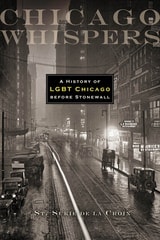
Chicago Whispers
A History of LGBT Chicago before StonewallSt. Sukie de la Croix; Foreword by John D’Emilio
University of Wisconsin Press, 2012
Chicago Whispers illuminates a colorful and vibrant record of lesbian, gay, bisexual, and transgendered people who lived and loved in Chicago from the city’s beginnings in the 1670s as a fur-trading post to the end of the 1960s. Journalist St. Sukie de la Croix, drawing on years of archival research and personal interviews, reclaims Chicago’s LGBT past that had been forgotten, suppressed, or overlooked.
Included here are Jane Addams, the pioneer of American social work; blues legend Ma Rainey, who recorded “Sissy Blues” in Chicago in 1926; commercial artist J. C. Leyendecker, who used his lover as the model for “The Arrow Collar Man” advertisements; and celebrated playwright Lorraine Hansberry, author of A Raisin in the Sun. Here, too, are accounts of vice dens during the Civil War and classy gentlemen’s clubs; the wild and gaudy First Ward Ball that was held annually from 1896 to 1908; gender-crossing performers in cabarets and at carnival sideshows; rights activists like Henry Gerber in the 1920s; authors of lesbian pulp novels and publishers of “physique magazines”; and evidence of thousands of nameless queer Chicagoans who worked as artists and musicians, in the factories, offices, and shops, at theaters and in hotels. Chicago Whispers offers a diverse collection of alternately hip and heart-wrenching accounts that crackle with vitality.
Christianity, Social Tolerance, and Homosexuality
Gay People in Western Europe from the Beginning of the Christian Era to the Fourteenth CenturyJohn Boswell
University of Chicago Press, 1981
John Boswell's National Book Award-winning study of the history of attitudes toward homosexuality in the early Christian West was a groundbreaking work that challenged preconceptions about the Church's past relationship to its gay members—among them priests, bishops, and even saints—when it was first published twenty-five years ago. The historical breadth of Boswell's research (from the Greeks to Aquinas) and the variety of sources consulted make this one of the most extensive treatments of any single aspect of Western social history. Christianity, Social Tolerance, and Homosexuality, still fiercely relevant today, helped form the disciplines of gay and gender studies, and it continues to illuminate the origins and operations of intolerance as a social force.
Christianity, Social Tolerance, and Homosexuality
Gay People in Western Europe from the Beginning of the Christian Era to the Fourteenth CenturyJohn Boswell
University of Chicago Press, 2015
John Boswell’s National Book Award–winning study of the history of attitudes toward homosexuality in the early Christian West was a groundbreaking work that challenged preconceptions about the Church’s past relationship to its gay members—among them priests, bishops, and even saints—when it was first published in 1980. The historical breadth of Boswell’s research (from the Greeks to Aquinas) and the variety of sources consulted make this one of the most extensive treatments of any single aspect of Western social history.
This edition offers a new foreword by leading queer and religious studies scholar Mark D. Jordan that reminds current readers, scholars, and students that Christianity, Social Tolerance, and Homosexuality is still fiercely relevant. This landmark book helped form the disciplines of gay and gender studies, and it continues to illuminate the origins and operations of intolerance as a social force.
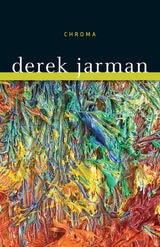
Chroma
A Book of ColorDerek Jarman
University of Minnesota Press, 2010
Cinemas of Bisexual Transgression
Jacob Engelberg
Duke University Press, 2026

Circuits of the Sacred
A Faggotology in the Black Latinx CaribbeanCarlos Ulises Decena
Duke University Press, 2023
Circulating Queerness
Before the Gay and Lesbian NovelNatasha Hurley
University of Minnesota Press, 2018
A new history of the queer novel shows its role in constructing gay and lesbian lives
The gay and lesbian novel has long been a distinct literary genre with its own awards, shelving categories, bookstore spaces, and book reviews. But very little has been said about the remarkable history of its emergence in American literature, particularly the ways in which the novel about homosexuality did not just reflect but actively produced queer life.
Drawing on Mikhail Bakhtin’s insight that the history of society is connected to the history of language, author Natasha Hurley charts the messy, complex movement by which the queer novel produced the very frames that made it legible as a distinct literature and central to the imagination of queer worlds. Her vision of the queer novel's development revolves around the bold argument that literary circulation is the key ingredient that has made the gay and lesbian novel and its queer forebears available to its audiences.
Challenging the narrative that the gay and lesbian novel came into view in response to the emergence of homosexuality as a concept, Hurley posits a much longer history of this novelistic genre. In so doing, she revises our understanding of the history of sexuality, as well as of the processes of producing new concepts and the evolution of new categories of language.

Cisgender
Disorienting a CategoryPerry Zurn
Duke University Press, 2026
Cistem Failure
Essays on Blackness and CisgenderMarquis Bey
Duke University Press, 2022
Citizen, Invert, Queer
Lesbianism and War in Early Twentieth-Century BritainDeborah Cohler
University of Minnesota Press, 2010
City Of Sisterly And Brotherly Loves
Lesbian And Gay Philadelphia, 1945-1972Marc Stein
Temple University Press, 2004

City of Sisterly and Brotherly Loves
Lesbian and Gay Philadelphia, 1945-1972Marc Stein
University of Chicago Press, 2000
Stein takes us on a tour through Philadelphia's bars, restaurants, bookstores, bathhouses, movie theaters, parks, and parades where lesbian and gay cultures thrived.
We learn about the scientific experts, religious leaders, public officials, and journalists who attacked and ignored same-sex sexualities. And we read about the courageous people who fought back with strategies of everyday resistance and organized political activism.
Stein argues against the idea that a conspiracy of silence surrounded gays and lesbians in the 1940s and 1950s. He shows that same-sex sexualities were regularly discussed in controversies concerning the tennis player Big Bill Tilden, the Walt Whitman Bridge, sex murders and crimes, and police raids. Philadelphians became national leaders in the gay and lesbian movement. They conducted sit-ins at Dewey's restaurant, organized pickets at Independence Hall, edited the movement's most widely circulated publications the Ladder and Drum, and pursued court cases all the way to the U.S. Supreme Court.
Beautifully crafted and exceptionally well-written, Stein's book not only provides a new starting place for thinking about lesbian and gay history but also challenges readers to rethink twentieth-century urban history.
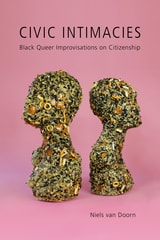
Civic Intimacies
Black Queer Improvisations on CitizenshipNiels van Doorn
Temple University Press, 2019
Black queer lives often exist outside conventional civic institutions and therefore have to explore alternative intimacies to experience a sense of belonging. Civic Intimacies examines how—and to what extent—these different forms of intimacy catalyze the values, aspirations, and collective flourishing of Black queer denizens of Baltimore. Niels van Doorn draws on 18 months of immersive ethnographic fieldwork for his innovative cross-disciplinary analysis of contemporary debates in political and cultural theory.
Van Doorn describes the way that these systematically marginalized communities improvise on citizenship not just to survive but also to thrive despite the proliferation of violence and insecurity in their lives. By reimagining citizenship as the everyday reparative work of building support structures, Civic Intimacies highlights the extent to which sex, kinship, memory, religious faith, and sexual health are rooted in collective practices that are deeply political. These systems sustain the lives of Black queer Baltimoreans who find themselves stuck in a city they cannot give up on—even though it has in many ways given up on them.
Climbing
Hil Malatino
Duke University Press, 2026
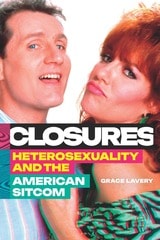
Closures
Heterosexuality and the American SitcomGrace Lavery
Duke University Press, 2024
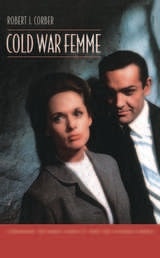
Cold War Femme
Lesbianism, National Identity, and Hollywood CinemaRobert J. Corber
Duke University Press, 2011
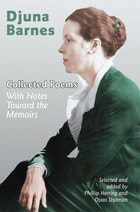
Collected Poems
With Notes Toward the MemoirsDjuna Barnes; selected and edited by Phillip Herrring and Osias Stutman
University of Wisconsin Press, 2005
This groundbreaking edition compiles many of the late unpublished works of American writer Djuna Barnes (1892–1982). Because she published only seven poems and a play during the last forty years of her life, scholars believed Barnes wrote almost nothing during this period. But at the time of her death her apartment was filled with multiple drafts of unpublished poetry and notes toward her memoirs, both included here for the first time. Best known for her tragic lesbian novel Nightwood, Barnes has always been considered a crucial modernist. Her later poetry will only enhance this reputation as it shows her remarkable evolution from a competent young writer to a deeply intellectual poet in the metaphysical tradition. With the full force of her biting wit and dramatic flair, Barnes’s autobiographical notes describe the expatriate scene in Paris during the 1920s, including her interactions with James Joyce and Gertrude Stein and her intimate recollections of T. S. Eliot. These memoirs provide a rare opportunity to experience the intense personality of this complex and fascinating poet.
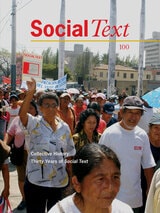
Collective History
Thirty Years of Social Text, Volume 27Brent Hayes Edwards and Anna McCarthy, eds.
Duke University Press, 0
Featuring new interviews with Social Text’s founders and former editors—including Stanley Aronowitz, John Brenkman, Fredric Jameson, Randy Martin, Toby Miller, Bruce Robbins, Andrew Ross, Sohnya Sayres, and Anders Stephanson—the issue reflects on the journal’s legacy as a radical publication that has bridged politics and the academy and has made critical interventions in both arenas. Several contributors revisit the first issue of the journal and describe its lasting impact. Others examine the politics of production at Social Text and detail the hands-on process of putting the journal together. Notably, the issue also features thirty essays by members of the current editorial collective, on key topics that have been crucial to the journal. Ranging from aesthetics to war, and including empire, mass culture, revolution, science, and theory, these essays bring to life the cultural history of the journal and demonstrate how Social Text has shaped the way that these terms are conceptualized and used today.
Contributors. The forty-four contributors include the current members of the Social Text collective and a number of former members. For a complete list of the collective, visit socialtextonline.org.
Coming Out, Moving Forward
Wisconsin's Recent Gay HistoryR. Richard Wagner
Wisconsin Historical Society Press, 2020
In this volume, R. Richard Wagner draws on historical research and materials from his extensive personal archive to not only chronicle an important movement, but also to tell the stories of the state’s LGBT pioneers—from legislators and elected officials to activists, businesspeople, and everyday citizens. Coming Out, Moving Forward documents the rich history of Wisconsin’s LGBT individuals and communities as they pushed back against injustice and found ways to live openly and proudly as themselves.
Coming Out, Moving Forward is a continuation to the first volume in this series, We’ve Been Here All Along.
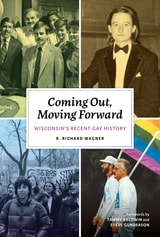
Coming Out, Moving Forward
Wisconsin’s Recent Gay HistoryR. Richard Wagner
Wisconsin Historical Society Press, 2020
In this volume, R. Richard Wagner draws on historical research and materials from his extensive personal archive to not only chronicle an important movement, but also to tell the stories of the state’s LGBT pioneers—from legislators and elected officials to activists, businesspeople, and everyday citizens. Coming Out, Moving Forward documents the rich history of Wisconsin’s LGBT individuals and communities as they pushed back against injustice and found ways to live openly and proudly as themselves.
Coming Out, Moving Forward is a continuation to the first volume in this series, We’ve Been Here All Along.
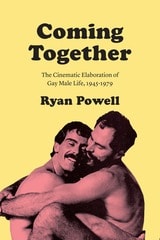
Coming Together
The Cinematic Elaboration of Gay Male Life, 1945-1979Ryan Powell
University of Chicago Press, 2019

Commodities of Care
The Business of HIV Testing in ChinaElsa L. Fan
University of Minnesota Press, 2021
How global health practices can end up reorganizing practices of care for the people and communities they seek to serve
Commodities of Care examines the unanticipated effects of global health interventions, ideas, and practices as they unfold in communities of men who have sex with men (MSM) in China. Targeted for the scaling-up of HIV testing, Elsa L. Fan examines how the impact of this initiative has transformed these men from subjects of care into commodities of care: through the use of performance-based financing tied to HIV testing, MSM have become a source of economic and political capital.
In ethnographic detail, Fan shows how this particular program, ushered in by global health donors, became the prevailing strategy to control the epidemic in China in the late 2000s. Fan examines the implementation of MSM testing and its effects among these men, arguing that the intervention produced new markets of men, driven by the push to meet testing metrics.
Fan shows how men who have sex with men in China came to see themselves as part of a global “MSM” category, adopting new selfhoods and socialities inextricably tied to HIV and to testing. Wider trends in global health programming have shaped national public health responses in China and, this book reveals, have radically altered the ways health, disease, and care are addressed.
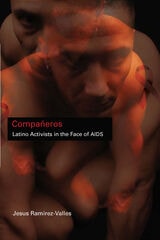
Compañeros
Latino Activists in the Face of AIDSJesus Ramirez-Valles
University of Illinois Press, 2011
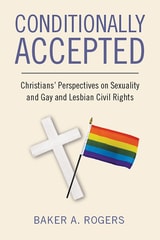
Conditionally Accepted
Christians' Perspectives on Sexuality and Gay and Lesbian Civil RightsBaker A. Rogers
Rutgers University Press, 2020

Conferencing on the Edge
A Queer History of Feminist Field FormationRachel Corbman
Duke University Press, 2027
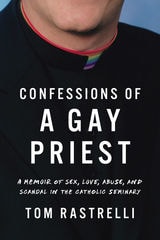
Confessions of a Gay Priest
A Memoir of Sex, Love, Abuse, and Scandal in the Catholic SeminaryTom Rastrelli
University of Iowa Press, 2020
Tom Rastrelli is a survivor of clergy-perpetrated sexual abuse who then became a priest in the early days of the Catholic Church’s ongoing scandals. Confessions of a Gay Priest divulges the clandestine inner workings of the seminary, providing an intimate and unapologetic look into the psychosexual and spiritual dynamics of celibacy and lays bare the “formation” system that perpetuates the cycle of abuse and cover-up that continues today.
Under the guidance of a charismatic college campus minister, Rastrelli sought to reconcile his homosexuality and childhood sexual abuse. When he felt called to the priesthood, Rastrelli began the process of “priestly discernment.” Priests welcomed him into a confusing clerical culture where public displays of piety, celibacy, and homophobia masked a closeted underworld in which elder priests preyed upon young recruits.
From there he ventured deeper into the seminary system seeking healing, hoping to help others, and striving not to live a double life. Trained to treat sexuality like an addiction, he and his brother seminarians lived in a world of cliques, competition, self-loathing, alcohol, hidden crushes, and closeted sex. Ultimately, the “formation” intended to make Rastrelli a compliant priest helped to liberate him.
Confessions of a Presidential Speechwriter
Craig R. Smith
Michigan State University Press, 2014
Confronting History
A MemoirGeorge L. Mosse; Foreword by Walter Laqueur
University of Wisconsin Press, 2000
Confronting History describes Mosse's opulent childhood in Weimar Berlin; his exile in Paris and England, including boarding school and study at Cambridge University; his second exile in the U.S. at Haverford, Harvard, Iowa, and Wisconsin; and his extended stays in London and Jerusalem. Mosse discusses being a Jew and his attachment to Israel and Zionism, and he addresses his gayness, his coming out, and his growing scholarly interest in issues of sexuality. This touching memoir—told with the clarity, passion, and verve that entranced thousands of Mosse's students—is guided in part by his belief that "what man is, only history tells" and, most of all, by the importance of finding one's self through the pursuit of truth and through an honest and unflinching analysis of one's place in the context of the times.
Congregations in Conflict
The Battle over HomosexualityHartman, Keith
Rutgers University Press, 1996
A Methodist church puts its minister on trial after he marches in a gay rights parade. A Quaker meeting struggles to decide whether to marry a lesbian couple. An entire congregation is thrown out of the Southern Baptist Convention for deciding that a gay divinity student had a sincere calling to the ministry, and an order of celibate monks comes out of the closet. An Episcopal priest blesses two same-sex relationships--then a closeted gay lawyer leads the charge to have him fired.
Homosexuality is the most divisive issue facing churches today. Like the issue of slavery 150 years ago, it is a matter that ignites passionate convictions on both sides, a matter that threatens to turn members of the same faith against each other, to divide congregations, and possibly even to fragment several denominations. Like slavery, it is an issue that calls up basic questions about what it means to be a Christian. How does one know right from wrong? Is the Bible fallible? Do good Christians always follow their church's teachings, or are they allowed to think for themselves on moral issues? And to what source does one finally look to determine what God really wants?
While many books have been written analyzing the scriptural and theological dimensions of the conflict, none has yet shown how it is being played out in the pews. Congregations in Conflict examines nine churches that were split by disagreements over gay and lesbian issues, and how the congregations resolved them.
Hartman explores in very readable prose how different denominations have handled their conflicts and what it says about the nature of their faith. He shows some churches coming through their struggles stronger and more unified, while others irrevocably split. Most importantly, he illuminates how people with a passionate clash of beliefs can still function together as a community of faith.

Conspiracy Narratives from Postcolonial Africa
Freemasonry, Homosexuality, and Illicit EnrichmentRogers Orock and Peter Geschiere
University of Chicago Press, 2024
In this book, anthropologists Rogers Orock and Peter Geschiere examine the moral panic over a perceived rise in homosexuality that engulfed Cameroon and Gabon beginning in the early twenty-first century. As they uncover the origins of the conspiratorial narratives that fed this obsession, they argue that the public’s fears were grounded in historically situated assumptions about the entanglement of same-sex practices, Freemasonry, and illicit enrichment.
This specific panic in postcolonial Central Africa fixated on high-ranking Masonic figures thought to lure younger men into sex in exchange for professional advancement. The authors’ thorough account shows how attacks on elites as homosexual predators corrupting the nation became a powerful outlet for mounting populist anger against the excesses and corruption of the national regimes. Unraveling these tensions, Orock and Geschiere present a genealogy of Freemasonry, taking readers from London through Paris to francophone Africa and revealing along the way how the colonial past shapes present-day anxieties linking same-sex practices to enrichment.
Constellating Home
Trans and Queer Asian American RhetoricsV. Jo Hsu
The Ohio State University Press, 2022
Winner of the 2024 Winifred Bryan Horner Outstanding Book Award
Winner of the 2023 NCA Diamond Anniversary Book Award
Winner of the Innovations in Community Writing Book Award from the Conference on Community Writing
Constellating Home: Trans and Queer Asian American Rhetorics explores how race, migration, gender, and disability entwine in conceptions of deserving citizens. V. Jo Hsu explores three archives of trans and queer Asian American (QTAPI) rhetorics, considering a range of texts including oral histories, photography, personal essays, and performance showcases. To demonstrate how QTAPI use personal narrative to critique and revise the conditions of their exclusion, Hsu forwards a critical approach to storytelling, homing, which deliberately engages sites of alienation and belonging. Through a practice of diasporic listening, Hsu tracks confluences among seemingly divergent journeys and locates trans and queer Asian American experiences within broader US and global politics.
The stories at the heart of Constellating Home center the voices of trans and nonbinary people, disabled people, and others often overlooked in conceptions of US citizenry. Hsu’s analyses demonstrate the inextricability of Asian American activism from queer politics, disability activism, and racial justice, and they consider how stories network individual experiences with resonant histories and struggles. Finding unlikely intimacies among individual and communal histories, Constellating Home provides tools for fostering mutual care, revealing harmful social patterns, and orienting shared values and politics.
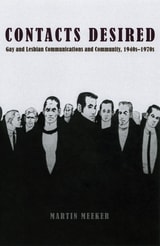
Contacts Desired
Gay and Lesbian Communications and Community, 1940s-1970sMartin Meeker
University of Chicago Press, 2006
Martin Meeker here argues that over the course of the twentieth century, a series of important innovations occurred in the networks that linked individuals to a larger social knowledge of homosexuality. He points to three key innovations in particular: the emergence of the homophile movement in the 1950s; the mass media treatments of homosexuals in the late 1950s and early 1960s; and the popularization of do-it-yourself publishing from the late 1940s to the 1970s, which offered bar guides, handmade magazines, and other materials that gay men and lesbians could use to seek one another out. In the process, Meeker unearths a treasure trove of archival materials that reveals how homosexuals played a crucial role in transforming the very structure of communications and urban communities since the postwar era.
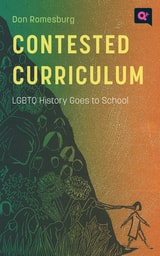
Contested Curriculum
LGBTQ History Goes to SchoolDon Romesburg
Rutgers University Press, 2025
What began in fits and starts in activism and educational materials across the late twentieth century led to the passage of California’s landmark FAIR Education Act in 2011, ensuring that LGBTQ history has a place in the K–12 classroom. Historian Don Romesburg, the lead scholar who worked with advocacy organizations to pass the act, recounts the decades-long struggle to integrate LGBTQ content into history education policy, textbooks, and classrooms. Looking at California and states that followed its lead, he assesses the challenges and opportunities presented by this new way of teaching history. Romesburg’s powerful case for LGBTQ-inclusive education is all the more urgent in this era of anti-gay book bans, regressive legislation, and attempts to diminish the vital role that inclusive and honest history education should play in a democratic nation.
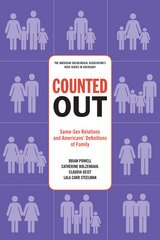
Counted Out
Same-Sex Relations and Americans' Definitions of FamilyBrian Powell
Russell Sage Foundation, 2011

Courts Liberalism And Rights
Gay Law And Politics In The United States and CanadaJason Pierceson
Temple University Press, 2005
At a time when most gay and lesbian politics focuses only on the issue of gay marriage, Courts, Liberalism, and Rights guides readers through a nuanced discussion of liberalism, court rulings on sodomy laws and same-sex marriage, and the comparative progress gays and lesbians have made via the courts in Canada.
As debates continue about the ability of courts to affect social change, Jason Pierceson argues that this is possible. He claims that the greatest opportunity for reform via the judiciary exists when a judiciary with broad interpretive powers encounters a political culture that endorses a form of liberalism based on broadly conceived individual rights; not a negative set of rights to be held against the state, but a set of rights that recognizes the inherent dignity and worth of every individual.
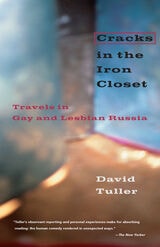
Cracks in the Iron Closet
Travels in Gay and Lesbian RussiaDavid Tuller
University of Chicago Press, 1997
"Tuller's observant reporting and personal experiences make for absorbing reading: the human comedy rendered in unexpected ways."—New Yorker
"Anyone who thinks San Francisco is the world capital of sexual polymorphism should read this book."—Adam Goodheart, Washington Post
"[This book is] is profoundly moving."—Jim Van Buskirk, San Francisco Chronicle
Criminalized Lives
HIV and Legal ViolenceAlexander McClelland
Rutgers University Press, 2024
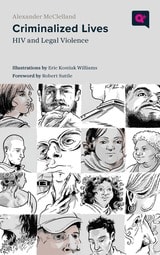
Canada has been known as a hot spot for HIV criminalization where the act of not disclosing one’s HIV-positive status to sex partners has historically been regarded as a serious criminal offence. Criminalized Lives describes how this approach has disproportionately harmed the poor, Black and Indigenous people, gay men, and women in Canada. In this book, people who have been criminally accused of not disclosing their HIV-positive status, detail the many complexities of disclosure, and the violence that results from being criminalized.
Accompanied by portraits from artist Eric Kostiuk Williams, the profiles examine whether the criminal legal system is really prepared to handle the nuances and ethical dilemmas faced everyday by people living with HIV. By offering personal stories of people who have faced criminalization first-hand, Alexander McClelland questions common assumptions about HIV, the role of punishment, and the violence that results from the criminal legal system’s legacy of categorizing people as either victims or perpetrators.
Note: A regrettable error appears on page 22. The number 240 should be 206 when referring to the number of people prosecuted in relation to allegations of HIV nondisclosure. This will be fixed in future reprints.

Crip Negativity
J. Logan Smilges
University of Minnesota Press, 2023
Imagining anti-ableist liberation beyond the rubrics of access and inclusion
In the thirty years since the Americans with Disabilities Act was signed into law, the lives of disabled people have not improved nearly as much as activists and politicians had hoped. In Crip Negativity, J. Logan Smilges shows us what’s gone wrong and what we can do to fix it.
Leveling a strong critique of the category of disability and liberal disability politics, Smilges asks and imagines what horizons might exist for the liberation of those oppressed by ableism—beyond access and inclusion. Inspired by models of negativity in queer studies, Black studies, and crip theory, Smilges proposes that bad crip feelings might help all of us to care gently for one another, even as we demand more from the world than we currently believe to be possible.
Forerunners: Ideas First is a thought-in-process series of breakthrough digital publications. Written between fresh ideas and finished books, Forerunners draws on scholarly work initiated in notable blogs, social media, conference plenaries, journal articles, and the synergy of academic exchange. This is gray literature publishing: where intense thinking, change, and speculation take place in scholarship.
Critical Terms for the Study of Gender
Edited by Catharine R. Stimpson and Gilbert Herdt
University of Chicago Press, 2014
So write women’s studies pioneer Catharine R. Stimpson and anthropologist Gilbert Herdt in their introduction to Critical Terms for the Study of Gender, laying out the wide-ranging nature of this interdisciplinary and rapidly changing field. The sixth in the series of “Critical Terms” books, this volume provides an indispensable introduction to the study of gender through an exploration of key terms that are a part of everyday discourse in this vital subject.
Following Stimpson and Herdt’s careful account of the evolution of gender studies and its relation to women’s and sexuality studies, the twenty-one essays here cast an appropriately broad net, spanning the study of gender and sexuality across the humanities and social sciences. Written by a distinguished group of scholars, each essay presents students with a history of a given term—from bodies to utopia—and explains the conceptual baggage it carries and the kinds of critical work it can be made to do. The contributors offer incisive discussions of topics ranging from desire, identity, justice, and kinship to love, race, and religion that suggest new directions for the understanding of gender studies. The result is an essential reference addressed to students studying gender in very different disciplinary contexts.