Results by title
905 books match the query 'Literary' and 41 start with c
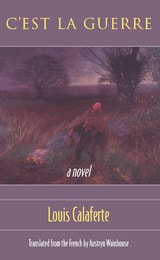
C'est la Guerre
Louis Calaferte
Northwestern University Press, 1999
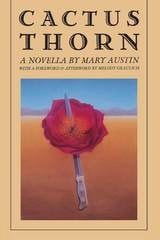
Cactus Thorn
(A Novella)Mary Austin
University of Nevada Press, 1994
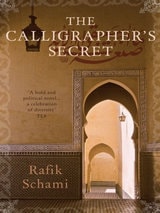
Calligraphers Secret
Rafik Schami and Anthea Bell
Haus Publishing, 2011
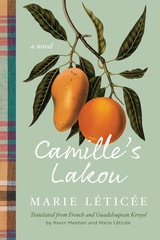
Camille's Lakou
A NovelMarie Léticée; Translated from French and Guadeloupean Kreyol by Kevin Meehan
Vanderbilt University Press, 2025
Camille’s Lakou tells the story of Camille, a young Caribbean girl living with her single‑parent mother in a 1960s urbanized zone at the edge of Pointe‑à‑Pitre, Guadeloupe, following her through her adult life as a Caribbean migrant in Florida. Author Marie Léticée explores neocolonial culture clash and identity conflict themes that will be familiar to readers of the Francophone Caribbean coming‑of‑age novel and its revisions by women writers such as Capécia, Lacrosil, Manicom, Schwarz‑Bart, Condé, Pineau, and others. Léticée makes it her own by fleshing out a time and place not well‑represented in Guadeloupean literature. While previous bildungsromane from the writers mentioned here typically focus on rural peasant or urban bourgeois settings, Camille’s Lakou shifts location to an impoverished urban environment. “Lakou” is translated as “courtyard” or, more colloquially, “yard.” The author explores the culture and politics of lakou society while raising the issue of how this social dynamic is transformed through the impact of globalization and dispersal into a diasporic experience outside the island milieu of Camille’s childhood.
In a collaborative translation effort between the author and Kevin Meehan, Camille’s Lakou will bring the realities and joys of Léticée’s Guadeloupe to an English audience for the first time.
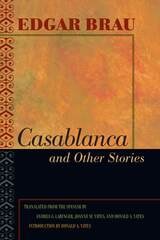
Casablanca and Other Stories
Edgar Brau
Michigan State University Press, 2006
Edgar Brau, one of the most exciting South American writers to emerge in the past twenty years, debuts his first English-language collection with the publication of Casablanca and Other Stories. The fiction of Edgar Brau draws not only upon the rich literary heritage of his native Argentina but also upon the body of work that has now rightly been formed into a South American canon, embracing those such as Jorge Luis Borges, Gabriel García Marquez, and Isabelle Allende. He brings a unique perspective to his narratives—narratives forged in the political and social upheaval that has been modern South America. Employing a fantasy-like aspect that goes beyond magical realism, his work is reminiscent of Edgar Allan Poe in his use of atmosphere as an additional character. These short stories signal a new era, much as the publication of Jorge Luis Borges’ Labyrinths in 1962 heralded a coming-of-age for his generation.
Translated by Donald A. Yates, Andrea Labinger, and Joanne M. Yates, this collection includes stories from two of Edgar Brau’s collections—El poema y otras historias and Tres cuentos—to bring to a fresh audience the very best new work of a major Argentinean author.
Catering an Affair
Alberta Skaggs
Southern Illinois University Press, 2018
Cement
Fyodor Vasilievich Gladkov
Northwestern University Press, 1994
Chase
Alejo Carpentier
University of Minnesota Press, 2001
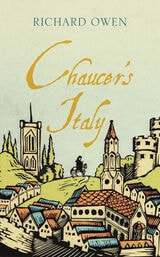
Chaucer's Italy
Richard Owen
Haus Publishing, 2023
Geoffrey Chaucer might be considered the quintessential English writer, but he drew much of his inspiration and material from Italy. In fact, without the tremendous influence of Francesco Petrarch and Giovanni Boccaccio (among others), the author of The Canterbury Tales might never have assumed his place as the “father” of English literature. Nevertheless, Richard Owen’s Chaucer’s Italy begins in London, where the poet dealt with Italian merchants in his roles as court diplomat and customs official. Next Owen takes us, via Chaucer’s capture at the siege of Rheims, to his involvement in arranging the marriage of King Edward III’s son Lionel in Milan and his missions to Genoa and Florence. By scrutinizing his encounters with Petrarch, Boccaccio, and the mercenary knight John Hawkwood—and with vividly evocative descriptions of the Arezzo, Padua, Florence, Certaldo, and Milan that Chaucer would have encountered—Owen reveals the deep influence of Italy’s people and towns on Chaucer’s poems and stories. Much writing on Chaucer depicts a misleadingly parochial figure, but as Owen’s enlightening short study of Chaucer’s Italian years makes clear, the poet’s life was internationally eventful. The consequences have made the English canon what it is today.
Child of the Holy Ghost
Robert Laxalt
University of Nevada Press, 1997
Childhood and Other Neighborhoods
StoriesStuart Dybek
University of Chicago Press, 2003

Children of the Albatross
Anaïs Nin
Ohio University Press, 1959
Children of the Albatross is divided into two sections: “The Sealed Room” focuses on the dancer Djuna and a set of characters, chiefly male, who surround her; “The Café” brings together a cast of characters already familiar to Nin’s readers, but it is their meeting place that is the focal point of the story.
As always, in Children of the Albatross, Nin’s writing is inseparable from her life. From Djuna’s story, told in “The Sealed Room” through hints and allusions, hazy in their details and chronology, the most important event to emerge is her father’s desertion (like Nin’s) when she was sixteen. By rejecting realistic writing for the experience and intuitions she drew from her diary, Nin was able to forge a novelistic style emphasizing free association, spontaneity, and improvisation, a technique that finds its parallel in the jazz music performed at the café where Nin’s characters meet.
Children of the Albatross
Anaïs Nin
Ohio University Press, 2023
The second novel in Anaïs Nin’s Cities of the Interior series, Children of the Albatross is divided into two sections: “The Sealed Room” focuses on the dancer Djuna and a set of characters, chiefly male, who surround her; “The Café” brings together a cast of characters already familiar to Nin’s readers, but it is their meeting place that is the focal point of the story.
As always, in Children of the Albatross, Nin’s writing is inseparable from her life. From Djuna’s story, told in “The Sealed Room” through hints and allusions, hazy in their details and chronology, the most important event to emerge is her father’s desertion (as Nin’s father did) when she was sixteen. By rejecting realistic writing for the experience and intuitions she drew from her diary, Nin was able to forge a novelistic style emphasizing free association, spontaneity, and improvisation, a technique that finds its parallel in the jazz music performed at the café where Nin’s characters meet.
Children of the Holocaust
Arnost Lustig
Northwestern University Press, 1995
Chiquinho
A Novel of Cabo VerdeBaltazar Lopes
Tagus Press, 2019
Choke Box
a Fem-NoirChristina Milletti
University of Massachusetts Press, 2019
When Edward Tamlin disappears while writing his memoir, Jane Tamlin (his wife and the mother of his young children) begins to write a secret, corrective “counter-memoir” of her own. Calling the book Choke Box, she reveals intimate, often irreverent, details about her family and marriage, rejecting—and occasionally celebrating—her suspected role in her husband's disappearance.
Choke Box isn't Jane's first book. From her room in the Buffalo Psychiatric Institute, she slowly reveals a hidden history of the ghost authorship that has sabotaged her family and driven her to madness. Her latest work, finally written under her own name, is designed to reclaim her dark and troubled story. Yet even as Jane portrays her life as a wife, mother, and slighted artist with sardonic candor, her every word is underscored by one belief above all others: the complete truth is always a secret. But the stories we tell may help us survive—if they don't kill us first.
Cinnamon
Samar Yazbek
Haus Publishing, 2012
Cities of the Interior
Anaïs Nin
Ohio University Press, 1996
Ladders to Fire, Children of the Albatross, The Four-Chambered Heart, A Spy in the House of Love, Seduction of the Minotaur. Haunting and hypnotic, these five novels by Anaïs Nin began in 1946 to appear in quiet succession. Though published separately over the next fifteen years, the five were conceived as a continuous experience—a continuous novel like Proust’s, real and flowing as a river.
The full impact of Anaïs Nin’s genius is only to be found through reading the novels in context and in succession. They form a rich, luminous tapestry whose overall theme Nin has called “woman at war with herself.” Characters, symbols appear and reappear: now one, now another unfolding, gradually revealing, changing, struggling, growing, and Nin had forged an evocative language all her own for the telling.
“The diary taught me that there were no neat ends to novels, no neat denouement, no neat synthesis,” she explains. “So I began an endless novel, a novel in which the climaxes consisted of discoveries in awareness, each step in awareness becoming a stage in the growth like the layers in trees.”
Cities of the Interior fulfills a long–time desire on the part of readers, publisher, and Anaïs Nin herself to reunite the five novels in a single volume.
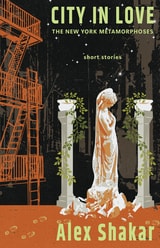
City in Love
The New York MetamorphosesAlex Shakar
University of Alabama Press, 2026
WINNER OF THE 1996 FC2 NATIONAL FICTION COMPETITION
New York. 1 BC. A mythic metropolis. Dangerous, seductive, and strange.
A Queens schoolchild rises to become a powerful superhero. A scavenger fashions love from the city’s castoffs. A weary detective keeps vigil as the city shifts. A serial prankster spells secrets across the skyline.
Through seven transformative tales, fate-struck characters undertake urgent journeys for belonging and survival in the city that tests, nurtures, and remakes them. Alex Shakar’s debut collection metamorphoses the familiar into the marvelous—sharp, luminous, and wondrously alive.
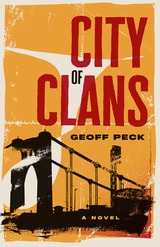
City of Clans
Geoff Peck
University of Iowa Press, 2025
Jeremy begins a journey of healing and self-reflection that carries him back to his family and his one true friend, Katrina Kovacs, a photography major who opens his eyes to societal issues he’s always ignored. A story of redemption, City of Clans captures the resiliency of the human spirit and explores hidden truths of masculinity, sexuality, and self.
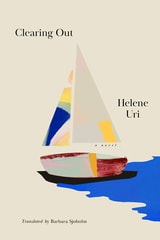
Clearing Out
A NovelHelene Uri
University of Minnesota Press, 2024
Winner of the Nadia Christensen Prize for translation from the American-Scandinavian Foundation
In a masterful blend of fiction and autobiography, a Norwegian novelist sends her character to the far north to learn what she can about their Sami ancestry
Inspired by Helene Uri’s own journey into her family’s ancestry, Clearing Out, an emotionally resonant novel by one of Norway’s most celebrated authors, tells two intertwining stories. A novelist, named Helene, is living in Oslo with her husband and children and contemplating her new protagonist, Ellinor Smidt—a language researcher, divorced and in her late thirties, with a doctorate but no steady job.
An unexpected call from a distant relative reveals that Helene’s grandfather, Nicolai Nilsen, was the son of a coastal (sjø) Sami fisherman—something no one in her family ever talked about. Uncertain how to weave this new knowledge into who she believes she is, Helene continues to write her novel, in which her heroine Ellinor travels to Finnmark in the far north to study the dying languages of the Sami families there. What Ellinor finds among the Sami people she meets is a culture little known in her own world; she discovers history richer and more alluring than rumor and a connection charged with mystery and promise. Through her persistence in approaching an elderly Sami activist, and her relationship with a local Sami man, Ellinor confronts a rift that has existed between two families for generations.
Intricate and beautifully constructed, Clearing Out offers a solemn reflection on how identities, like families, are formed and fractured and recovered as stories are told. In its depiction of the forgotten and the fiercely held memories among the Sea (sjø) Sami of northern Norway, the novel is a powerful statement on what is lost, and what remains in reach, in the character and composition of contemporary life.
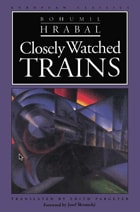
Closely Watched Trains
Bohumil Hrabal
Northwestern University Press, 1995
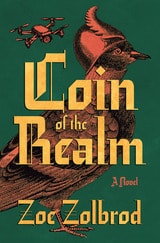
Coin of the Realm
A NovelZoe Zolbrod
Northwestern University Press, 2027
Can liberation be found in the unexpected corners of a Renaissance faire?
In a near-future United States, the government has just stripped away the protections of birthright citizenship, and eighteen-year-old Raven is facing deportation. Her best hope: finding her long-gone father, an off-the-grid Renaissance faire entrepreneur called Tom the Hunter. If Raven can convince Tom to affirm his paternity, she will be able to remain in the only country she has ever known.
But Tom is no easy man locate, let alone tell what to do. The charismatic leader of an underground resistance movement based at a Ren faire in Bristol, Wisconsin, he has spent his life agitating against the ever-increasing reach of corporate and government surveillance while avoiding its gaze. In a society overrun by drones, self-driving cars, and wearable devices that track mood and behavior, he sends messages by pigeon and trains hawks to attack invaders. The only thing from the “regular world” allowed to enter his self-contained realm has been Gwen, his new lover. Facing economic and emotional headwinds after losing her job, Gwen has fled her family and a home dangerously in need of remediation, and she dives headfirst into an affair with the passionate yet conniving Tom. But when Tom’s machinations threaten those around him, Gwen begins to question her choice to leave her children behind for a world that may not be as empowering as it seems.
As Raven and Gwen become enmeshed in the vibrant and insurgent community of Bristol’s Ren faire and Tom’s antics reach unsettling new heights, each must make a choice on where they stand—and with whom.
Collected Stories
Bruno Schulz, Translated from the Polish by Madeline G. Levine Foreword by Rivka Galchen
Northwestern University Press, 2018
Collected Stories is an authoritative new translation of the complete fiction of Bruno Schulz, whose work has influenced writers as various as Salman Rushdie, Cynthia Ozick, Jonathan Safran Foer, Philip Roth, Danilo Kiš, and Roberto Bolaño.
Schulz’s prose is renowned for its originality. Set largely in a fictional counterpart of his hometown of Drohobych, his stories merge the real and the surreal. The most ordinary objects—the wind, an article of clothing, a plate of fish—can suddenly appear unfathomably mysterious and capable of illuminating profound truths. As Father, one of his most intriguing characters, declaims: “Matter has been granted infinite fecundity, an inexhaustible vital force, and at the same time, a seductive power of temptation that entices us to create forms.”
This comprehensive volume brings together all of Schulz's published stories—Cinnamon Shops, his most famous collection (sometimes titled The Street of Crocodiles in English), The Sanatorium under the Hourglass, and an additional four stories that he did not include in either of his collections. Madeline G. Levine’s masterful new translation shows contemporary readers how Schulz, often compared to Proust and Kafka, reveals the workings of memory and consciousness.
Colonial Itineraries of Contemporary Mexico
Literary and Cultural InquiriesEdited by Oswaldo Estrada and Anna M. Nogar
University of Arizona Press, 2014
Through a transformative interdisciplinary lens, this book studies the ultra-contemporary chronicles of Carlos Monsiváis, the poetry of Carmen Boullosa and Luis Felipe Fabre, and the novels of Enrique Serna, Héctor de Mauleón, Mónica Lavín, and Pablo Soler Frost, among others. The book also pays close attention to a good sample of recent children’s literature that revisit Mexico’s colonia. It includes the transatlantic perspective of Spanish novelist Inma Chacón, and a detailed analysis of the strategies employed by Laura Esquivel in the creation of a best seller. Other chapters are devoted to the study of transnational film productions, a play by Flavio González Mello, and a set of novels set in the nineteenth-century colonia that problematize static notions of both personal and national identity within specific cultural palimpsests. Taken together, these incisive readings open broader conversations about Mexican coloniality as it continues well into the twenty-first century.
Come Landfall
A NovelRoy Hoffman
University of Alabama Press, 2014
The Gulf Coast serves as more than just a setting—it is a character unto itself. With casinos lining one side of the highway, antebellum homes along the other, and a Vietnamese neighborhood up the road, here the old South collides with the new. From households along this stretch of US 90, lineages and emotional connections stretch all over the world.
Inspired by true events, Roy Hoffman’s novel has its seeds in the saga of his uncle, Maj. Roy Robinton, US Marine Corps, a WWII prisoner of war in the Philippines who disappeared as captive on a Japanese “hellship.” His young bride, back home, was ground down, waiting.
Christiane returns in her mind to the man she married at twenty-one—Rosey, a flyer with the Army Air Corps who was in the Philippines at the outbreak of WWII. Angela meets Frank, an airman at Keesler Air Force base who is proudly patriotic, deeply religious, and a student of weather. Cam falls in love with Joe, a Biloxi cop, and her own tumultuous story begins to interweave with that of Angela’s and Nana’s. What’s taken from Nana, Angela, and Cam (and so many others when storms make their landfall), what’s given back, and what’s kept forever sit at the heart of this
intimate yet expansive novel.
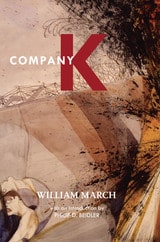
Company K
William March
University of Alabama Press, 1989
Through fragmented testimonies of Marines, the novel exposes the psychological and moral wreckage left in the wake of modern warfare.
This book was originally published in 1933. It is the first novel by William March, pen name for William Edward Campbell. Stemming directly from the author's experiences with the US Marines in France during World War I, the book consists of 113 sketches, or chapters, tracing the fictional Company K's war exploits and providing an emotional history of the men of the company that extends beyond the boundaries of the war itself.
William Edward Campbell served courageously in France as evidenced by his chestful of medals and certificates, including the Croix de Guerre, the Distinguished Service Cross, and the Navy Cross. However, without the medals and citations we would know of his bravery. For it is clear in the pages of Company K that this book was written by a man who had been to war, who had clearly seen his share of the worst of it, who had somehow survived, and who had committed himself afterward to the new bravery of sense-making embodied in the creation of major literary art. It is of that bravery that we still have the record of magnificent achievement, the brave terrible gift of Company K.
Compulsory Happiness
Norman Manea
Northwestern University Press, 1994
Constance Ring
Amalie Skram
Northwestern University Press, 2002
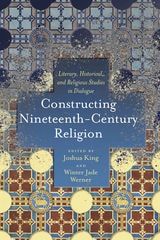
Constructing Nineteenth-Century Religion
Literary, Historical, and Religious Studies in DialogueEdited by Joshua King and Winter Jade Werner
The Ohio State University Press, 2019
The participle in its title—Constructing—acknowledges that any articulation of nineteenth-century religion is never just a work of the past: scholars also actively construct religion as their disciplinary assumptions (and indeed personal and lived investments) shape their research and findings. Constructing NineteenthCentury Religion newly analyzes the diverse ways in which religion was debated and deployed in a wide range of nineteenthcentury texts and contexts. While focusing primarily on nineteenthcentury Britain, the collection also contributes to the increasingly transnational and transcultural outlook of postsecular studies, drawing connections between Britain and the United States, continental Europe, and colonial India.
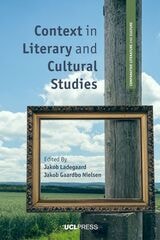
Context in Literary and Cultural Studies
Edited by Jakob Ladegaard and Jakob Gaardbo Nielsen
University College London, 2019
Introducing readers to new developments in literary and cultural theory, Context in Literary and Cultural Studies connects all disciplines related to these areas to provide an interdisciplinary overview of the challenges different scholarly fields today meet in their studies of artworks in context. Spanning a number of countries and covering subjects from nineteenth-century novels to rave culture, the chapters together constitute an informed, diverse and wide-ranging discussion. The volume is written for scholarly readers at all levels in the fields of literary studies, comparative literature, cultural studies, art history, film, theater studies, and digital humanities.
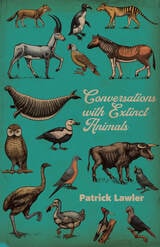
Conversations with Extinct Animals
A NovelPatrick Lawler
University of Alabama Press, 2024
An experimental narrative by eco-fiction author and poet Patrick Lawler evolves out of the interactions between twenty-four extinct animals and those characters who struggle for significance in the face of their own extinction.
Patrick Lawler’s second novel, Conversations with Extinct Animal, is a dialogue between psychology and ecology—between poetry and story. A suicide note masquerading as a love letter, the novel transcends genres and keeps kaleidoscopically shifting: sometimes it is an elegy, and sometimes it is a therapy session—but always these are the field notes for the end of the world.
As a collection of characters associated with The Facility come to terms with an individual’s death, they must confront their own losses amid the colossal absence of the twenty-four extinct animals. All the characters float between various inexplicable, mystifying “syndromes” that call into question their identities and, ultimately, call into question the elements of story itself. “Looking at pictures of the Extinct Animals, I can’t help but wonder if it is too late to save the world—especially since there are so many different worlds,” observes the narrator of the novel in his efforts to save the unsavable.
Correction of Drift
A Novel in StoriesPamela Ryder
University of Alabama Press, 2008
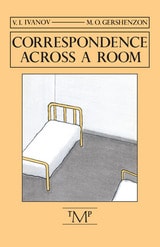
Correspondence Across a Room
Vsevolod I. Ivanov and M.O. Gershenzon
Northwestern University Press, 1984
Day-long conversations having drawn them away from their literary tasks, the two then decided to converse in writing. Correspondence, the result, examines the condition and future of Western culture-whose values, according to the historian Gershenzon, have deteriorated into a deadly burden upon mankind, into mankind's ultimate prison. For the poet Ivanov, it is not the disavowal of a cultural heritage but the struggle to recover man's own unity with God that alone guarantees his true, his spiritual freedom.
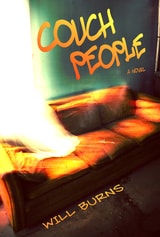
Couch People
A NovelWill Burns
University of Alabama Press, 2026
A darkly comic descent into Arkansas’s surreal criminal underworld through the eyes of a hapless, debt‑ridden hypochondriac
Couch People is a feverish, darkly comic novel that captures the anxious intensity of a world obsessed with wellness and control even as life keeps spinning into chaos. Prince, a debt-ridden drug dealer on probation, clings to vitamins and homeopathic rituals while stumbling through a surreal Arkansas underworld filled with criminal volatility and sudden violence.
As Prince fights to stay out of prison, recover his stolen money, and hold onto a fragile hope for love, he moves through a landscape populated by unforgettable misfits and bizarre dangers, including a system where snitches are cremated, turned into diamonds, and set into convicts’ teeth. Will Burns blends his satirical bite with unexpected tenderness, creating a narrative that prizes raw interiority and absurd humor over neat redemption. Couch People becomes a propulsive fever dream about love, loss, and the impossible effort to impose order on a world that refuses to make sense, inviting readers to embrace the beautiful mess of being alive without a manual, a map, or mercy.
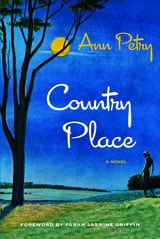
Country Place
A NovelAnn Petry, foreword by Farah Jasmine Griffin
Northwestern University Press, 1947
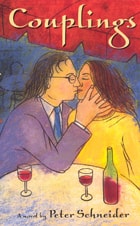
Couplings
Peter Schneider
University of Chicago Press, 1998
"A little Don Giovanni, a little café sociology, a little laboratory science, a little Berlin wit—it's a pleasant mix."—Suzanne Ruta, New York Times Book Review
"With its poignant valedictory to its protagonists' waning youth and its rueful placing of them in the firing line of history, Couplings achieves a balance of light and dark that is utterly persuasive."—Michael Upchurch, San Francisco Chronicle Book Review
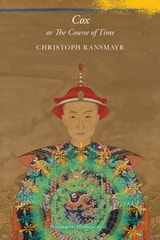
Cox
or, The Course of TimeChristoph Ransmayr
Seagull Books, 2020
The world’s most powerful man, Qiánlóng, emperor of China, invites the famous eighteenth-century clockmaker Alister Cox to his court in Beijing. There, in the heart of the Forbidden City, the Englishman and his assistants are to build machines that mark the passing of time as a child or a condemned man might experience it and that capture the many shades of happiness, suffering, love, and loss that come with that passing.
Mystified by the rituals of a rigidly hierarchical society dominated by an unimaginably wealthy, god-like ruler, Cox musters all his expertise and ingenuity to satisfy the emperor’s desires. Finally, Qiánlóng, also known by the moniker Lord of Time, requests the construction of a clock capable of measuring eternity—a perpetuum mobile. Seizing this chance to realize a long-held dream and honor the memory of his late beloved daughter, yet conscious of the impossibility of his task, Cox sets to work. As the court is suspended in a never-ending summer, festering with evil gossip about the monster these foreigners are creating, the Englishmen wonder if they will ever escape from their gilded cage. More than a meeting of two men, one isolated by power, the other by grief, this is an exploration of mortality and a virtuoso demonstration that storytelling alone can truly conquer time.
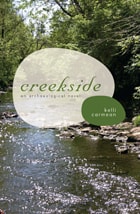
Creekside
An Archaeological NovelKelli Carmean
University of Alabama Press, 2010
Uncovering a frontier family’s secrets before progress wipes them away.
In Creekside, dedicated archaeologist Meg Harrington guides her students in a race against time to protect the legacy of the past before bulldozers rip it to shreds.
The setting is a Kentucky pasture slated for development—the construction of the new Creekside subdivision. Once, that same beautiful stretch of land was home to three generations who experienced love, loss, and tragedy in their log cabin beside the creek. It was here during the late 18th century that Estelle Mullins struggled to build her home on the dangerous frontier.
In Meg’s 21st-century world of archaeology we read about excavation techniques, daily experiences at a dig, tight construction deadlines, the use of heavy equipment, report writing, artifact analysis, damage from looters and collectors, and the reality of site destruction in the path of modern development. The depiction of Estelle’s frontier life includes Kentucky’s early Euro-American settlement of the Cumberland Gap, encounters with Shawnee defending their land, Protestant fragmentation, the rise of religious fundamentalism, the immigrant stampede down the Ohio River, and the persistent issue of class-based land ownership.
The two partially interwoven story lines link artifact and place, ancestors and descendants, the present and the past, and inspire us to explore the personal connections between them all in fresh and vital ways.
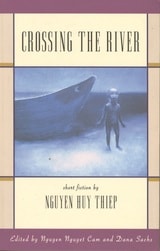
Crossing the River
Short Fiction by Nguyen Huy ThiepNguyen Huy Thiep
Northwestern University Press, 2002
Crossing the River presents a wide range of Nguyen Huy Thiep's short fiction, both realistic stories in contemporary settings and retellings of folk myths that serve as contemporary parables. When Thiep's stories first appeared in the 1980s, they set off a chain of debate, not only within intellectual and political circles, but also within the society at large. Typically, the struggles of his characters were about survival, not survival in the context of war or revolution, but survival in the context of the emotional and psychological strength it takes to live within the harsh confines of post-war Vietnamese society. Thiep captured the emotional quality of Vietnamese life in a way no other author had done, and his importance can be recognized today by his enormous influence on younger writers.
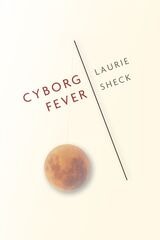
Cyborg Fever
Laurie Sheck
Tupelo Press, 2025
In Cyborg Fever, acclaimed writer Laurie Sheck brings us a probing and lyrical philosophical fiction in the spirit of Umberto Eco, Italo Calvino, and Donna Haraway’s Cyborg Manifesto that enacts an incisive and moving exploration into what it means to be human in the age of AI and increasing transhumanism.
Throughout Cyborg Fever, many strange, surprising facts appear: an artist clones a flower from his DNA and the DNA of a petunia, an astronaut plays golf on the moon, a mathematician on a rest cure rethinks the life of Shakespeare, and particles and antiparticles collide at lightning speed beneath the green hills of Switzerland and France. Threaded throughout, one question lingers: in this age of AI and genetic engineering, how can we come to know more fully what it means to love and be human among the wonders and destructions we have wrought on Earth?
At the center of the book is the narrator, Erwin, left as an hours-old infant on the steps of an orphanage where he is named after the renowned physicist Erwin Schrodinger (of the famous Schrodinger’s cat experiment). After a traumatic fall into a year-long fever dream, he experiences many visions that take him into many areas of inquiry including the nature of the universe, bioengineering, medical experimentation, cyborgs, AI, and space and time, and ultimately teaches him the nature of love. Along the way, he develops a friendship with a gentle cyborg who has escaped from a Lab involved in covert medical intervention. Guided by the cyborg and a vision of Funes (of Borges’s iconic story “Funes the Memorious”), Erwin experiences the Information Age and the promises of AI in all its beauty and, ultimately, its terror, as he watches the cyborg he has come to love devolve into an unfeeling information machine.
Throughout, issues of personhood, human attachment, and the dignity of all living beings pervade Erwin’s thinking and leave him with a larger understanding and appreciation of what it means to love.