Results by title
1106 books match the query 'Memoirs' and 58 start with c
CANCELED - Notes from Home
Jonna McKone
Rutgers University Press, 2021
Through portraiture, oral history, writing, and family archives, the contributors explore childhood, geography, immigration, education, and family relationships, recovering misunderstood or overlooked moments. In the process of making this work, the group found old family photos, returned to sites of significance, and made new friendships, discovering the transformational potential of this kind of storytelling to reframe hardship, loss, and uncertainty. In the words of one contributor, “I felt like this process was a necessary step that allowed me to acknowledge and comprehend what I was experiencing at the time. It allowed me to create a more coherent understanding that I am who I am because of my past and because I was the one who had control of molding my own, better path.” Each chapter, encompassing one person’s story, is strikingly unique in its vision and approach.
Cabin 135
A Memoir of AlaskaKatie Eberhart
University of Alaska Press, 2020
Caminos
Memoirs from the Center for Mexican American Studies at the University of Texas at AustinEdited by Zita Arocha
University of Texas Press, 2026
Fourteen writers reflect on the complexities of Mexican American identity in hyphenated America.
At a time when memoir has become an increasingly popular form of self-expression, fourteen writers from diverse backgrounds engaged with one another in a series of writing workshops sponsored by the Center for Mexican American Studies at UT Austin to reflect on their life journeys. They wrestle with issues that shaped them in provocative, evocative, and sometimes humorous short essays. The writers include a lawyer, a civil rights activist, actors, journalists, and professors who write of belonging, national and sexual identity, coping with illness and loss, career challenges, and life-altering events familiar to us all. The contributors write poignantly about losing a parent at an early age; growing up in segregated communities; bravely confronting serious health problems; living in a household with a mentally disturbed family member; the complexity of being “American” as well as “Mexican”; and the professional challenges facing all hyphenated Americans, many of whom are often the first person of color in their workplaces.
Camp Life Is Paradise for Freddy
A Childhood in the Dutch East Indies, 1933–1946Fred Lanzing
Ohio University Press, 2017
“Children see and hear what is there; adults see and hear what they are expected to and mainly remember what they think they ought to remember,” David Lowenthal wrote in The Past Is a Foreign Country. It is on this fraught foundation that Fred Lanzing builds this memoir of his childhood in a Japanese internment camp for Dutch colonialists in the East Indies during the World War II.
When published in the Netherlands in 2007, the book triggered controversy, if not vitriol, for Lanzing’s assertion that his time in the camp was not the compendium of horrors commonly associated with the Dutch internment experience. Despite the angry reception, Lanzing’s account corresponds more closely with the scant historical record than do most camp memoirs. In this way, Lanzing’s work is a substantial addition to ongoing discussions of the politics of memory and the powerful—if contentious—contributions that subjective accounts make to historiography and to the legacies of the past.
Lanzing relates an aspect of the war in the Pacific seldom discussed outside the Netherlands and, by focusing on the experiences of ordinary people, expands our understanding of World War II in general. His compact, beautifully detailed account will be accessible to undergraduate students and a general readership and, together with the introduction by William H. Frederick, is a significant contribution to literature on World War II, the Dutch colonial experience, the history of childhood, and Southeast Asian history.
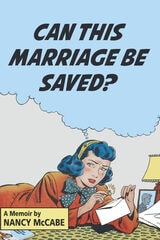
Can This Marriage Be Saved?
A MemoirNancy McCabe
University of Missouri Press, 2020
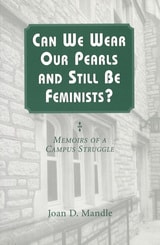
Can We Wear Our Pearls and Still Be Feminists?
Memoirs of a Campus StruggleJoan D. Mandle
University of Missouri Press, 2000
When Joan Mandle accepted the position of Director of Women's Studies at Colgate University, she had specific goals in mind—to make the program stronger, more academically rigorous, and publicly open. The program would resist becoming the captive of identity politics and would refuse to allow itself to become marginalized on the campus. It would reach beyond the negative stereotypes of feminism on campus by appealing to and challenging all students and faculty interested in gender issues and social change.
Just as Mandle anticipated, she faced obstacles during the transformation. Among her critics were feminist students and faculty whose views of a successful program directly contradicted Mandle's. While the new director called for outreach, they insisted on isolation. While she set forth a policy of inclusiveness, they sought to maintain an exclusive community. These individuals preferred the former model of the women's studies program, despite its tendency toward separatism.
Can We Wear Our Pearls and Still Be Feminists? explores women's studies from Mandle's perspective as a program director, feminist activist, and scholar. She offers a vivid account of being forced to grapple with fundamental issues of what women's studies is and should be. Her strong commitment to feminism and women's studies does not prevent her from voicing her concerns; instead, it compells her to share the story of her directorship in hopes of shedding light on the strengths and weaknesses, pitfalls and triumphs of women's studies as an academic discipline.
Through her examination of the battles involved in creating an academically significant and ideologically open program, Mandle provides insight into a possible avenue of change for feminism. By showing how the program at Colgate University was able to encourage campuswide discussions on feminism, Mandle demonstrates that women's studies can succeed as an inclusive and rigorous field. This enlightening memoir provides readers with a window on important debates concerning feminism and women in academia.

Canyon, Mountain, Cloud
Absence and Longing in American ParksTyra A. Olstad
Oregon State University Press, 2021
Part memoir and part scholarly analysis of the psychological and societal dimensions of place-creation, Canyon, Mountain, Cloud details the author’s experiences working and living in Black Canyon of the Gunnison National Park, Denali National Park and Preserve, Adirondack State Park, and arctic Alaska. Along the way, Olstad explores canyons, climbs mountains, watches clouds, rafts rivers, searches for fossils, and protects rare and fragile vegetation. She learns and shares local natural and cultural histories, questions perceptions of “wilderness,” deepens her appreciation for wildness, and reshapes her understanding of self and self-in-place.
Anyone who has ever felt appreciation for wild places and who wants to think more deeply about individual and societal relationships with American parks and protected areas will find humor, fear, provocation, wonder, awe, and, above all, inspiration in these pages.
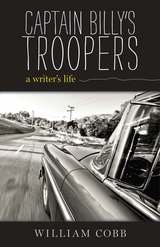
Captain Billy's Troopers
A Writer's LifeWilliam Cobb
University of Alabama Press, 2015
Captain Billy’s Troopers is a frank, literary memoir about William Cobb’s life as a southern writer—his struggles with addiction and illness, his career as a teacher and novelist, and his hard‑won return to creative life.
In this audacious memoir, William Cobb reveals the tumultuous creative life of a distinguished practitioner of southern and Alabama storytelling. As poignant and inspiring as his own fiction, Captain Billy’s Troopers traces Cobb’s early life, education, and struggles with alcohol and the debilitating condition normal pressure hydrocephalus (NPH).
Like a curving river, the broad sweep of Cobb’s turbulent life includes both startling cataracts and desultory eddies, leading sometimes into shadows or opening into unexpected sunlight. With unsentimental clarity, Cobb recounts coming of age in his native Demopolis in the churning middle years of the twentieth century. It’s there he has his first tantalizing tastes of alcohol and begins to drink habitually. Readers then travel with Cobb to Livingston University (now the University of West Alabama) and then on to Vanderbilt University. Along the way, readers relish his first experiences of love and success as a writer, leading to a career as a professor of writing at Alabama College (now the University of Montevallo) in 1963.
From there Cobb’s struggles with alcohol and depression lead to elongated years of tumbling creative output and the collapse of his marriage. The summer of 1984 found Cobb in rehab, the first step in his path to recovery. His unflinching memoir narrates both the milestones and telling details of his intense therapy and years in Alcoholics Anonymous (AA). In the sober thirty years since, Cobb has published a string of critically praised novels and a prize-winning collection of short stories. The capstone of his comeback was winning the Harper Lee Award in 2007 for distinguished fiction writing.
In 2000, shortly after retiring, Cobb developed NPH, which upset his sense of balance and triggered dementia symptoms and other maladies. Nine years later in 2009, brain surgery brought Cobb a dramatic recovery, which began the third act in his writing career. Vital, honest, and entertaining, Captain Billy’s Troopers captures the life of an Alabama original.
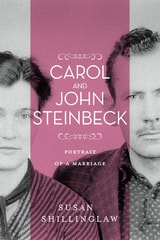
Carol and John Steinbeck
Portrait of a MarriageSusan Shillinglaw
University of Nevada Press, 2024
Carrying a Secret in My Heart
Children of the Victims of the Reprisals after the Hungarian Revolution in 1956 - An Oral HistoryZsuzsanna Korösi
Central European University Press, 2003

Cat Woman in Dog Country
A Year on a Southern FarmHelena Feder
University of Alabama Press, 2026
One woman, a tiny farm, unruly chickens, and the challenge of putting down roots in a rapidly changing world
Cat Woman in Dog Country is Helena Feder's witty, perceptive account of life on a tiny North Carolina farm. Part memoir, part nature writing, and part literary how-not-to guide to growing and raising things, it chronicles her attempts to cultivate a small plot while marveling at the symbiotic wonders of figs and wasps, navigating chicken politics, and learning to laugh at her own mistakes.
A transplanted Yankee by way of California, Feder often feels like exactly what the title suggests: a cat woman in dog country. Conspicuous in a place where men still largely own and work the land, she finds herself at once welcomed, bewildered, and fascinated by the culture around her. Along the way, she discovers that teaching Walden requires a very different skill set from growing her own beans and that country life comes with its share of challenges, from failed crops to an alarming abundance of rats and copperheads.
Charming, laugh-out-loud funny, and deeply thoughtful, Cat Woman in Dog Country reflects making a home in an era of climate change, forever chemicals, and environmental uncertainty. It is a book for anyone who ponders the personal, social, and planetary meaning of home.
Catching Stories
A Practical Guide to Oral HistoryDonna M. DeBlasio
Ohio University Press, 2009
In neighborhoods, schools, community centers, and workplaces, people are using oral history to capture and collect the kinds of stories that the history books and the media tend to overlook: stories of personal struggle and hope, of war and peace, of family and friends, of beliefs, traditions, and values—the stories of our lives.
Catching Stories: A Practical Guide to Oral History is a clear and comprehensive introduction for those with little or no experience in planning or undertaking oral history projects. Opening with the key question, “Why do oral history?” the guide outlines the stages of a project from idea to final product—planning and research, the interviewing process, basic technical principles, and audio and video recording techniques. The guide covers interview transcribing, ethical and legal issues, archiving, funding sources, and sharing oral history with audiences.
Intended for teachers, students, librarians, local historians, and volunteers as well as individuals, Catching Stories is the place to start for anyone who wants to document the memories and collect the stories of community or family.
Central Standard
A Time, a Place, a FamilyPatrick Irelan
University of Iowa Press, 2002
Not so long ago, the Rock Island Railroad was a household name, the Great Depression was a recent memory, and family farms dotted the landscape. Today, the great railroads have nearly disappeared, the Depression is a chapter in history books, and family farms are hard to come by. Yet this time is not forgotten.
In Central Standard: A Time, a Place, a Family, Patrick Irelan vividly recaptures a remarkable era in midwestern history in twenty-four beautifully crafted and often witty essays. Beginning with his parents’ marriage in 1932 and continuing into the present, Irelan relates the many wonderful stories and experiences of his Davis County, Iowa, family. In “Country Living,” he describes his parents’ disheartening life as farmers during the worst years of the Depression. “The CB&Q” then relates the happiest years of his family’s life when his parents lived and worked in the Burlington Railroad depots of rural Nebraska.
Irelan’s tales of hard times and harder work, family meals and talkative relatives, depots and farmsteads paint a brilliant yet deceptively simple portrait of one rural, working-class family. At its heart, Central Standard carries a greater message: it reminds us of the enduring strength of the American family.
Chasing Good Sense
A Boy's Life on the FrontierHomer McCarty and Coralie McCarty Beyers
University of Utah Press, 2018
In the spirit of Huck Finn, Buck embarks on adventures and mischief with his loyal friend, Earl. Naïve, eager, and inquisitive, he seeks to make sense of his world. McCarty’s portrayal of the period is often humorous, capturing the intimacy of place and family through a young boy’s eyes.
McCarty completed this work in 1948. Had it not been for a series of fortuitous events and the dedication of his granddaughters, including Coralie Beyers, these pages would have been lost. Thanks to her efforts, her grandfather’s lively, entertaining book is now available for readers to relish and enjoy.
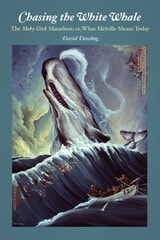
Chasing the White Whale
The Moby-Dick Marathon; or, What Melville Means TodayDavid Dowling
University of Iowa Press, 2010
The experimental artist Peter Fischli once observed, “There’s certainly a subversive pleasure in occupying yourself with something for an unreasonable length of time.” In this same spirit, David Dowling takes it upon himself to attend and report on the all-consuming annual Moby-Dick Marathon reading at the New Bedford Whaling Museum.
The twenty-five-hour nonstop reading of Melville’s titanic epic has inspired this fresh look at Moby-Dick in light of its most devoted followers at the moment of their high holy day, January 3, 2009. With some trepidation, Dowling joined the ranks of the Melvillians, among the world’s most obsessive literary aficionados, to participate in the event for its full length, from “Call Me Ishmael” to the destruction of the Pequod. Dowling not only survived to tell his tale, but does so with erudition, humor, and a keen sense for the passions of his fellow whalers.
The obsession of participants at the marathon reading is startling, providing evidence of Ishmael’s remark that “all men live enveloped in whale-lines. All are born with halters round their necks; but it is only when caught in the swift, sudden turn of death, that mortals realize the silent, subtle, ever-present perils of life.” Dowling organizes his savvy analysis of the novel from its romantic departure to its sledge-hammering seas, detailing the culture of the top brass to the common crew and scrutinizing the inscrutable in and through Melville’s great novel.
Chasing the White Whale offers a case study of the reading as a barometer of how Melville lives today among his most passionate and enthusiastic disciples, who include waterfront workers, professors, naval officers, tattooed teens, and even a member of Congress. Dowling unearths Moby-Dick’s central role in these lives, and by going within the local culture he explains how the novel could have developed such an ardent following and ubiquitous presence in popular culture within our technology-obsessed, quick-fix contemporary world.
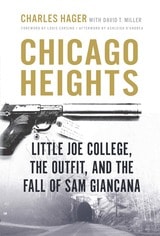
Chicago Heights
Little Joe College, the Outfit, and the Fall of Sam GiancanaCharles Hager with David T. Miller, Foreword by Louis Corsino, Afterword by Ashleigh D'Andrea
Southern Illinois University Press, 2018
In this riveting true story of coming of age in the Chicago Mob, Charles “Charley” Hager is plucked from his rural West Virginia home by an uncle in the 1960s and thrown into an underworld of money, cars, crime, and murder on the streets of Chicago Heights.
Street-smart and good with his hands, Hager is accepted into the working life of a chauffeur and “street tax” collector, earning the moniker “Little Joe College” by notorious mob boss Albert Tocco. But when his childhood friend is gunned down by a hit man, Hager finds himself a bit player in the events surrounding the mysterious, and yet unsolved, murder of mafia chief Sam Giancana.
Chicago Heights is part rags-to-riches story, part murder mystery, and part redemption tale. Hager, with author David T. Miller, juxtaposes his early years in West Virginia with his life in crime, intricately weaving his own experiences into the fabric of mob life, its many characters, and the murder of Giancana.
Fueled by vivid recollections of turf wars and chop shops, of fix-ridden harness racing and the turbulent politics of the 1960s, Chicago Heights reveals similarities between high-level organized crime in the city and the corrupt lawlessness of Appalachia. Hager candidly reveals how he got caught up in a criminal life, what it cost him, and how he rebuilt his life back in West Virginia with a prison record.
Based on interviews with Hager and supplemented by additional interviews and extensive research by Miller, the book also adds Hager’s unique voice to the volumes of speculation about Giancana’s murder, offering a plausible theory of what happened on that June night in 1975.

Chitrakar
Benode Behari Mukherjee
Seagull Books, 2026
What happens when a passage from the world of light to the world of darkness opens onto a new chapter of life? A retrospective account of a pioneering Indian artist who continued to paint after losing his eyesight.
Benode Behari Mukherjee (1904–1980) was one of the most influential and highly regarded artists in the history of modern Indian art. Chitrakar brings together four broadly autobiographical pieces written by Benode Behari after he lost his eyesight in the summer of 1957. The Artist is a selective reminiscence recapturing various pictures from the years of his childhood, apprenticeship, and maturity, up to the time he became blind. Master of the Household is a candid and complex fictionalized account of his struggle to come to terms with his blindness and continue making art. The Creator is a simple, but telling, parable about the vanity of inordinate ambition. Finally, Art Quest outlines his philosophy of art and the basic elements of his work.
In the sensitive and empathetic hands of K. G. Subramanyan, once his student and later himself a major figure in the Indian art scene, this translation, appearing for the first time in English, is a precious and timeless document.
Chosen Path
A MemoirD. Michael Quinn
Signature Books, 2022
From the age of nine, Quinn felt convicted he would one day serve as an apostle of the Church of Jesus Christ of Latter-day Saints. He chose the path he believed would take him there, eventually living as a straight LDS family man in a mixed-orientation marriage. In the 1970s and 1980s he became a BYU professor and one of Mormonism’s most promising, prolific, and respected historians. But his uncompromising commitment to total honesty about his religion’s history, along with his homosexuality, set him on a collision course with church leaders and the end of his seemingly idyllic Mormon life. Throughout his telling, Quinn unflinchingly opens up about his feelings and experiences that shaped his enigmatic life.
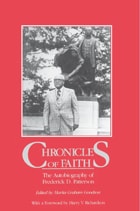
Chronicles Of Faith
The Autobiography of Frederick D. PattersonFrederick D. Patterson, edited by Martia Graham Goodson
University of Alabama Press, 1991
From Tuskegee to the United Negro College Fund, one man's legacy changed American education.
Chronicles of Faith: The Autobiography of Frederick D. Patterson, edited by Martia Graham Goodson, presents the remarkable life story of one of the most influential educators and institutional leaders in twentieth-century America. Based on Patterson's personal recollections, the autobiography traces his journey from a childhood marked by adversity to a distinguished career as a veterinarian, educator, college president, and visionary advocate for higher education.
Best known as president of Tuskegee Institute and founder of the United Negro College Fund, Patterson played a pivotal role in expanding educational opportunities for African Americans during an era of segregation and limited resources. The narrative chronicles his leadership in strengthening historically Black colleges and universities, promoting professional education, and developing innovative fundraising models that transformed the future of Black higher education.
Interwoven with accounts of personal determination, faith, and public service, the book offers valuable insight into the challenges and achievements that shaped American educational history. Patterson's story is both an inspiring autobiography and an important historical document, revealing the vision and perseverance required to create lasting institutional change. Essential for understanding the evolution of higher education in the United States, this volume will be especially valuable to students, scholars, educators, historians, and readers interested in African American leadership, HBCUs, philanthropy, and social progress.

Cidermaster Of Rio Oscuro
Harvey Frauenglas
University of Utah Press, 2000
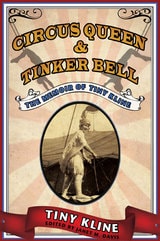
Circus Queen and Tinker Bell
The Memoir of Tiny KlineTiny Kline. Edited by Janet M. Davis
University of Illinois Press, 2008
This engaging memoir follows the life and career of circus performer Tiny Kline (1891-1964) from the burlesque house to the circus tent, and on to Disneyland and the silver screen. While working for the Ringling Bros. and Barnum & Bailey Circus, Kline became well known for her signature "slide for life" stunt, an "iron jaw" act in which she slid to the ground while dangling from trapeze rigging by her teeth. Kline renewed her spectacular acrobatics at the age of seventy when she played Tinker Bell in the "Fantasy in the Sky" fireworks show at Disneyland. In that same year, she also began writing her life story.
Extensively annotated by Janet M. Davis, this memoir documents twentieth-century changes in popular amusements, while providing fresh insight into circus personalities such as John Ringling, acrobat Lillian Leitzel, and big cat trainer Mabel Stark, as well as mainstream entertainers like Florenz Ziegfeld, John Philip Sousa, and others. Kline also provides intimate details about the daily machinations at the circus, including fascinating accounts of its sexual politics, racial dynamics, risky nature, and labor relations.
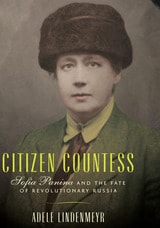
Citizen Countess
Sofia Panina and the Fate of Revolutionary RussiaAdele Lindenmeyr
University of Wisconsin Press, 2019
Based on Adele Lindenmeyr's detailed research in dozens of archival collections, Citizen Countess establishes Sofia Panina as an astute eyewitness to and passionate participant in the historical events that shaped her life. Her experiences shed light on the evolution of the European nobility, women's emancipation and political influence of the time, and the fate of Russian liberalism.
Citizens of Everywhere
Searching for Identity in the Age of BrexitPeter Gumbel
Haus Publishing, 2020
Drawing on one family’s migration stories, Citizens of Everywhere explores the nature of belonging amid cycles of pluralism and nationalism. In an increasingly global world, nativist and diasporic impulses pull many people in contradictory directions that can be difficult to even understand. In Citizens of Everywhere, Gumbel grapples with this complexity through his own family history, revealing the personal costs of Britain’s recent isolationist retreat. Along the way, he laments the decline of British pluralism at the worst possible moment—as it rejects the European project and engages in an ill-fated struggle against an ever more interconnected world.
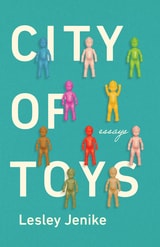
City of Toys
EssaysLesley Jenike
The Ohio State University Press, 2026
Composed in a postpartum blur and finessed as Lesley Jenike settled into established motherhood, the essays in City of Toys careen from exteriority to interiority, from high to low culture, and from the manufactured to the natural world, all on a quest to understand creativity, mothering, and how art drives and shapes us. With madcap acuity, Jenike casts her eye on cultural flash points from Harambe the gorilla to Steven Spielberg and Ada Lovelace to Yayoi Kusama. At times she doubles back to her own experience as a young performer, and at others hurtles into her children’s possible futures, when AI starts to dream, imagination is commodified, and the polar bear drowns. All the while she wonders what we owe our children and what we believe (rightly or wrongly) our children owe us. Fascinated by creativity and peopled by dolls, automatons, robots, ghosts, puppets, and historical figures, this exuberant and devastating debut asks, What world are we building, and what are we tearing down?
Class Not Dismissed
Reflections on Undergraduate Education and Teaching the Liberal ArtsAnthony Aveni
University Press of Colorado, 2014
Although in recent years the lecture has come under fire as a pedagogical method, Aveni ardently defends lecturing to students. He shares his secrets on crafting an engaging lecture and creating productive dialogue in class discussions. He lays out his rules on classroom discipline and tells how he promotes the lost art of listening. He is a passionate proponent of the liberal arts and core course requirements as well as a believer in sound teaching promoted by active scholarship.
Aveni is known to his students as a consummate storyteller. In Class Not Dismissed he shares real stories about everyday college life that shed light on serious educational issues. The result is a humorous, reflective, inviting, and powerful inquiry into higher education that will be of interest to anyone invested in the current and future state of college and university education.
Clear Creek
Toward a Natural PhilosophyErik Reece
West Virginia University Press, 2023
A critic once wrote that Rebecca West’s Black Lamb and Grey Falcon was about two things: Yugoslavia and everything else. Something similar might be said about Clear Creek. In this boundary-defying work, Erik Reece spends a year beside the stream in his rural Kentucky homeplace, tracking the movements of the seasons, the animals, and the thoughts passing through his mind.
Clear Creek is a series of vignettes that calls us out of our frenzied, digitized world to a slower, more contemplative way of being. Reece’s subjects range from solitude and solidarity to the intricacies of forest communities, and from the genius of songwriter Tom T. Hall to reforestation projects on abandoned strip mines. A work of close observation and carefully grounded insights, Clear Creek articulates a nature-based philosophy for pondering humanity’s current plight.
Clogs and Shawls
Mormons, Moorlands, and the Search for ZionAnn Chamberlin
University of Utah Press, 2019
Chamberlin interviewed her grandmother and six of her surviving great-aunts for Clogs and Shawls, the relatives who had made their way to Mormon Zion. She weaves novelistic passages with their first-person narratives to create a singular work of oral immigrant family history that is both lively and revealing.

Close Formation
My Friendship with James SalterWilliam Benton
University of Iowa Press, 2027
Clutch
An Education at WorkLinda Pawlenty
The Ohio State University Press, 2025
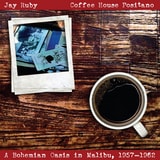
Coffee House Positano
A Bohemian Oasis in Malibu, 1957–1962Jay Ruby
University Press of Colorado, 2013
As an ethnographer analyzing his own culture, author Jay Ruby uses a unique ethnographic method known as “studying sideways.” He combines the exploration of self and others with the theoretical framework of anthropology to provide deep insight into the counterculture of late 1950s and early 1960s America. He shares his connection to Positano, where he lived and worked from 1957 to 1959 and again in 1963, and reflects on Positano in the context of US counterculture and the greater role of countercultures in society.
This intimate and significant work will be of interest to anthropologists as well as scholars and the general reader interested in California history, Beat culture, and countercultural movements.
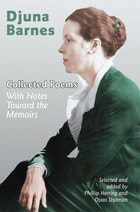
Collected Poems
With Notes Toward the MemoirsDjuna Barnes; selected and edited by Phillip Herrring and Osias Stutman
University of Wisconsin Press, 2005
This groundbreaking edition compiles many of the late unpublished works of American writer Djuna Barnes (1892–1982). Because she published only seven poems and a play during the last forty years of her life, scholars believed Barnes wrote almost nothing during this period. But at the time of her death her apartment was filled with multiple drafts of unpublished poetry and notes toward her memoirs, both included here for the first time. Best known for her tragic lesbian novel Nightwood, Barnes has always been considered a crucial modernist. Her later poetry will only enhance this reputation as it shows her remarkable evolution from a competent young writer to a deeply intellectual poet in the metaphysical tradition. With the full force of her biting wit and dramatic flair, Barnes’s autobiographical notes describe the expatriate scene in Paris during the 1920s, including her interactions with James Joyce and Gertrude Stein and her intimate recollections of T. S. Eliot. These memoirs provide a rare opportunity to experience the intense personality of this complex and fascinating poet.
Collisions With History
Latin American Fiction and Social Science from “El Boom” to the New World OrderFrederick M. Nunn
Ohio University Press, 2001
Latin American intellectuals have traditionally debated their region’s history, never with so much agreement as in the fiction, commentary, and scholarship of the late twentieth century. Collisions with History shows how “fictional histories” of discovery and conquest, independence and early nationhood, and the recent authoritarian past were purposeful revisionist collisions with received national versions. These collisions occurred only because of El Boom, thus making Latin America’s greatest literary movement a historical phenomenon as well. Frederick M. Nunn discusses the cataclysmic view of history conveyed in Boom novels and examines the thought and self-perception of selected authors whose political activism enhanced the appeal of their works—historical and otherwise: Alejo Carpentier, Carlos Fuentes, Gabriel García Márquez, and Augusto Roa Bastos; Julio Cortázar, Isabel Allende, Mario Vargas Llosa, and Darcy Ribeiro.
Collisions with History demonstrates how their commentary on history, literature, politics, and international affairs reveals a conscious sense of purpose. From between the lines of their nonfiction emerges a consensus that outside forces have defined as well as controlled Latin America’s history.
Professor Nunn also suggests that, with novelists now no longer very interested in colliding with history, it may fall to social scientists to speak for what remains of the region’s past in the New World Order.
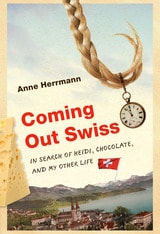
Coming Out Swiss
In Search of Heidi, Chocolate, and My Other LifeAnne Herrmann
University of Wisconsin Press, 2014
In a work that is part memoir, part history and travelogue, Herrmann explores all our Swiss clichés (chocolate, secret bank accounts, Heidi, Nazi gold, neutrality, mountains, Swiss Family Robinson) and also scrutinizes topics that may surprise (the “invention” of the Alps, the English Colony in Davos, Switzerland’s role during World War II, women students at the University of Zurich in the 1870s). She ponders, as well, marks of Swissness that have lost their identity in the diaspora (Sutter Home, Helvetica, Dadaism) and the enduring Swiss American community of New Glarus, Wisconsin. Coming Out Swiss will appeal not just to the Swiss diaspora but also to those drawn to multi-genre writing that blurs boundaries between the personal and the historical.
Coming to My Senses
One Woman's Cochlear Implant JourneyClaire H. Blatchford
Gallaudet University Press, 2014
Companionship in Grief
Love and Loss in the Memoirs of C. S. Lewis, John Bayley, Donald Hall, Joan Didion, and Calvin TrillinJeffrey Berman
University of Massachusetts Press, 2010
In Companionship in Grief, Jeffrey Berman focuses on the most life-changing event for many people—the death of a spouse. Some of the most acclaimed memoirs of the past fifty years offer insights into this profound loss: C. S. Lewis's A Grief Observed; John Bayley's three memoirs about Iris Murdoch, including Elegy for Iris; Donald Hall's The Best Day the Worst Day; Joan Didion's best-selling The Year of Magical Thinking; and Calvin Trillin's About Alice. These books explore the nature of spousal bereavement, the importance of caregiving, the role of writing in recovery, and the possibility of falling in love again after a devastating loss.
Throughout his study, Berman traces the theme of love and loss in all five memoirists' fictional and nonfictional writings as well as in those of their spouses, who were also accomplished writers. Combining literary studies, grief and bereavement theory, attachment theory, composition studies, and trauma theory, Companionship in Grief will appeal to anyone who has experienced love and loss. Berman's research casts light on five remarkable marriages, showing how autobiographical stories of love and loss can memorialize deceased spouses and offer wisdom and comfort to readers.
Confessions of Joan the Tall
Joan Cusack Handler
CavanKerry Press, 2012
Confessions of a Left-Handed Man
An Artist's MemoirPeter Selgin
University of Iowa Press, 2011
Peter Selgin was cursed/blessed with an unusual childhood. The son of Italian immigrants—his father an electronics inventor and a mother so good looking UPS drivers swerved off their routes to see her—Selgin spent his formative years scrambling among the hat factory ruins of a small Connecticut town, visiting doting—and dotty—relatives in the “old world,” watching mental giants clash at Mensa gatherings, enduring Pavlovian training sessions with a grandmother bent on “curing” his left-handedness, and competing savagely with his right-handed twin.
Confronting History
A MemoirGeorge L. Mosse; Foreword by Walter Laqueur
University of Wisconsin Press, 2000
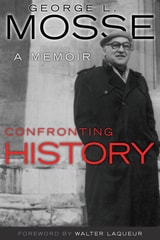
Confronting History describes Mosse's opulent childhood in Weimar Berlin; his exile in Paris and England, including boarding school and study at Cambridge University; his second exile in the U.S. at Haverford, Harvard, Iowa, and Wisconsin; and his extended stays in London and Jerusalem. Mosse discusses being a Jew and his attachment to Israel and Zionism, and he addresses his gayness, his coming out, and his growing scholarly interest in issues of sexuality. This touching memoir—told with the clarity, passion, and verve that entranced thousands of Mosse's students—is guided in part by his belief that "what man is, only history tells" and, most of all, by the importance of finding one's self through the pursuit of truth and through an honest and unflinching analysis of one's place in the context of the times.
Contact
Mountain Climbing And Environmental ThinkingJeffrey Mccarthy
University of Nevada Press, 2008
Cop's Kid
A Milwaukee MemoirMel C. Miskimen
University of Wisconsin Press, 2003
B-Day, as it came to be known, finally arrived. It was a Friday. A school day. I identified with Cinderella as I watched Dad get ready for work. Holster, check. Gun, check. Billy club, check. Handcuffs, check. . . . Saturday morning I got up early. Dad was already gone. Back to work. Ushering the Beatles out of town. On the table . . . there were two small bars of soap, slightly used, the words "Coach House Inn" still legible. One book of matches with four missing. And a note from Dad, "From their room." . . . No one else’s dad comes home from work with something that might, just might, have been intimate with a Beatle.
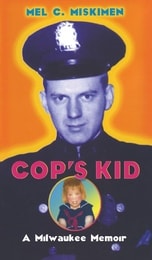
Growing up, Mel Miskimen thought that a gun and handcuffs on the kitchen table were as normal as a gallon of milk and a loaf of Mrs. Karl’s bread. Her father, a Milwaukee cop for almost forty years was part Super Hero (He simply held up his hand and three lanes of traffic came to a screeching halt) and part Supreme Being (He could be anywhere at anytime. I never knew when or where he would pop up.) Miskimen’s memoir, told in humorous vignettes, tells what it was like for a girl growing up with a dad who packed a lunch and packed heat.

Core Samples
A Climate Scientist's Experiments in Politics and MotherhoodAnna Farro Henderson
University of Minnesota Press, 2024
People live by their stories—how can we use them to accelerate action on climate change?
Climate scientist and policy expert Anna Farro Henderson embarks on a remarkable narrative journey in Core Samples, exploring how science is done, discussed, legislated, and imagined. Through stories both raucous and poignant—of far-flung expeditions, finding artistic inspiration in research, and traversing the systemic barriers women and mothers face in science and politics—she brings readers into the daily rhythms and intimacies of scientific research and political negotiation.
Grounded in her experiences as a climate scientist, an environmental policy advisor to Minnesota Senator Al Franken and Governor Mark Dayton, and a constant juggler of the many roles and responsibilities of professional moms, Henderson’s eclectic, unconventional essays range from observations, confessions, and meditations on lab and fieldwork to a packing list for a trip to the State Capitol and a lactation diary. Readers are invited on voyages as far afield as the Trinity nuclear test site in New Mexico, the Juneau Icefield in Alaska, and a meteor crater in Ghana—and as close to home as a town hall meeting in America’s corn belt.
A love letter to science and a bracing (and sometimes hilarious) portrait of the many obstacles women, mothers, and people digging for truth navigate, Core Samples illuminates the messy, contradictory humanity of our scientific and political institutions. Bringing us behind the closed doors of discovery and debate, Henderson exposes the flaws in research institutions, the halls of government, and the role of science in policy, yet she shows how each crack is also an invitation for camaraderie, creativity, and change.
Correctional
Ravi Shankar
University of Wisconsin Press, 2021
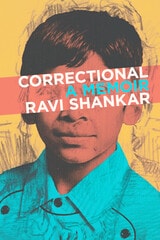
Shankar’s bold and complex self-portrait—and portrait of America—challenges us to rethink our complicity in the criminal justice system and mental health policies that perpetuate inequity and harm. Correctional dives into the inner workings of his mind and heart, framing his unexpected encounters with law and order through the lenses of race, class, privilege, and his bicultural upbringing as the first and only son of South Indian immigrants. Vignettes from his early life set the scene for his spectacular fall and subsequent struggle to come to terms with his own demons. Many of them, it turns out, are also our own.
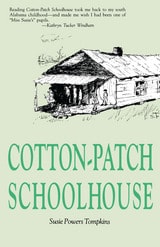
Cotton Patch Schoolhouse
Susie Powers Tompkins
University of Alabama Press, 1992
Step back into 1920s Alabama, where grit, laughter, and the red clay roads of the Black Belt shape one young woman’s unforgettable first year of teaching
Cotton-Patch Schoolhouse follows 18‑year‑old Susie Powers Tompkins as she takes on a one-room school with eight children, zero experience, and a Model T that’s always one mud puddle away from disaster. With warmth and wit, she discovers that the real curriculum is written not in textbooks—but in the faces, fears, and fierce hopes of her students.
In a world of cotton fields, nature walks, homemade art supplies, and potbellied stoves, Susie learns that teaching is as much about heart as it is about lessons. She navigates runaway love affairs, surprise pets (including an opinionated mouse), the hardships of rural poverty, and the extraordinary generosity of neighbors who have little but give much.
As contemporary readers grapple with educational inequities, rural depopulation, and renewed conversations about community, Cotton-Patch Schoolhouse feels strikingly fresh. It reminds us that creativity blooms under constraint, that relationships matter more than resources, and that small schools can make a big difference. Tompkins' memoir will delight lovers of Southern history, educators, memoir readers, rural studies enthusiasts, and anyone who enjoys heartfelt stories of resilience, community, and the transformative power of teaching
Count Those Buzzards! Stamp Those Grey Mules!
Superstitions Remembered from a Southern ChildhoodKathryn Tucker Windham with a preface by Dilcy Hilley Windham and a foreword by Emily Blejwas
University of Alabama Press, 2026
A nostalgic journey through the beliefs, customs, sayings, superstitions, and folk wisdom of a Southern childhood
Before the internet, before social media, and before answers were only a click away, children learned about the world from parents, grandparents, neighbors, and friends. They counted buzzards, stamped grey mules, wished on stars, avoided black cats, and trusted a rich collection of sayings, superstitions, and folk wisdom passed from one generation to the next.
In Count Those Buzzards! Stamp Those Grey Mules!, Kathryn Tucker Windham lovingly recalls the beliefs, customs, rituals, and traditions that shaped her rural Alabama childhood. With her trademark warmth, humor, and storytelling charm, Windham invites readers into a world where bottle trees warded off evil, rabbit's feet brought good luck, and everyday life was filled with signs, symbols, and lessons handed down through family and community.
Part memoir, part folklore collection, and wholly entertaining, this beloved collection preserves a disappearing landscape of Southern folklore while celebrating the people and stories that kept these traditions alive. Whether remembered from childhood or encountered for the first time, these recollections offer a fascinating glimpse into the customs that colored daily life throughout the twentieth-century South.
This new edition features an introductory note by Dilcy Windham, daughter of Kathryn Tucker Windham, and a foreword by Emily Blejwas, author of The Story of Alabama in Fourteen Foods, offering fresh reflections on Kathryn’s enduring legacy and the stories, superstitions, and folklore that shaped generations of Southern life. Fans of Southern history, Alabama culture, rural life, and family traditions will find much to enjoy in this charming and nostalgic collection.
Counting Down
A Memoir of Foster Parenting and BeyondDeborah Gold
Ohio University Press, 2017
When Deborah Gold and her husband signed up to foster parent in their rural mountain community, they did not foresee that it would lead to a roller-coaster fifteen years of involvement with a traumatized yet resilient birth family. They fell in love with Michael (a toddler when he came to them), yet they had to reckon with the knowledge that he could leave their lives at any time.
In Counting Down, Gold tells the story of forging a family within a confounding system. We meet social workers, a birth mother with the courage to give her children the childhood she never had herself, and a father parenting from prison. We also encounter members of a remarkable fellowship of Appalachian foster parents—gay, straight, right, left, evangelical, and atheist—united by love, loss, and quality hand-me-downs.
Gold’s memoir is one of the few books to deliver a foster parent’s perspective (and, through Michael’s own poetry and essays, that of a former foster child). In it, she shakes up common assumptions and offers a powerfully frank and hopeful look at an experience often portrayed as bleak.
Counting the Tiger's Teeth
An African Teenager's StoryToyin Falola
University of Michigan Press, 2016
Courting History
A Supreme Court Historian Reflects on His Life and CareerJames F. Simon
University of Texas Press, 2025
A Supreme Court historian’s memoir places court events in the larger context of American history.
Legal scholar James F. Simon has written many acclaimed books on the history of the US Supreme Court, but in this memoir, he turns his attention to a more personal subject: himself. Simon, a native of Fort Worth, details what it was like growing up in segregated Texas. He left home for college and law school at Yale, interspersed with travels abroad to build a schoolhouse in Ghana, work at an Israeli kibbutz, and spend a year on a fellowship in India.
Simon worked as a legal journalist for Time magazine before embarking on a career as a Supreme Court historian. He later was appointed professor of constitutional law and served as dean of New York Law School. Meanwhile, he continued his work on what became his specialty, well-researched books on the history of the Supreme Court that place events at the court in the larger context of American history. Much of this research is included in his papers, which are now housed at the Briscoe Center for American History.
In this engaging memoir, Simon describes the challenges of interviewing Supreme Court justices and researching constitutional history for his books and juggling his law school and family responsibilities, all the while reflecting on changing American perspectives on civil rights and liberties.
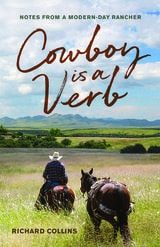
Cowboy is a Verb
Notes from a Modern-day RancherRichard Collins
University of Nevada Press, 2019
A born storyteller with a flair for words, Collins breathes life into the geology, history, and interdependency of land, water, and native and introduced plants and animals. He conjures indelible portraits of the hardworking, dedicated people he comes to know. With both humor and humility, he recounts the day-to-day challenges of ranch life such as how to build a productive herd, distribute your cattle evenly across a rough and rocky landscape, and establish a grazing system that allows pastures enough time to recover. He also intimately recounts a battle over the endangered Gila topminnow and how he and his neighbors worked with university range scientists, forest service conservationists, and funding agencies to improve their ranches as well as the ecological health of the Redrock Canyon watershed.
Ranchers who want to stay in the game don’t dominate the landscape; instead, they have to continually study the land and the animals it supports. Collins is a keen observer of both. He demonstrates that patience, resilience, and a common-sense approach to conservation and range management are what counts, combined with an enduring affection for nature, its animals, and the land. Cowboy is a Verb is not a romanticized story of cowboy life on the range, rather it is a complex story of the complicated work involved with being a rancher in the twenty-first-century West.
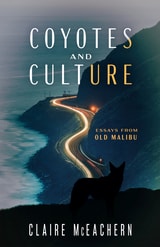
Coyotes and Culture
Essays from Old MalibuClaire McEachern
University of Nevada Press, 2025
This unique collection of essays offers a gripping exploration of the precarious beauty and peril of California’s iconic coastline. Through essays blending personal narrative, cultural analysis, and history, author Claire McEachern takes us behind the scenes of surf and celebrities to paint a vivid portrait of life on the edge —both literally and metaphorically. From the rugged Santa Monica Mountains to the shimmering Pacific, this work captures the paradoxes of Old Malibu: a place of luxury and risk, natural splendor and ecological vulnerability.
As an East Coast academic married to a fifth-generation Californian cowboy, McEachern brings a wry yet tender lens to the modern American story, delving into what happens to love and community in a land of both devastating wildfires and extravagant wildflowers. Her reflections weave together questions of beauty, resilience, and humanity’s uneasy relationship with nature, creating an unforgettable narrative of place and survival. Readers drawn to the drama of human stories set against larger cultural and environmental forces will find this book both thought-provoking and deeply moving.
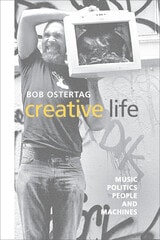
Creative Life
Music, Politics, People, and MachinesBob Ostertag
University of Illinois Press, 2008
Drawing on his intimate engagement with political conflict in Latin America and the Balkans, Ostertag identifies an art of "insurgent politics" that struggles to expand the parameters of the physical and social world. He also discusses his innovative collaborations with major modern performers, filmmakers, and artists around the world. Part memoir, part journalism, and part aesthetic manifesto, Creative Life is a dazzling set of writings from a musical artist who has worked on the cutting edge of new music for thirty years.