Results by title
1210 books match the query 'Mexico' and 108 start with c
Caciques and Their People
A Volume in Honor of Ronald SporesEdited by Joyce Marcus and Judith Francis Zeitlin
University of Michigan Press, 1994
Calculating Brilliance
An Intellectual History of Mayan Astronomy at Chich’en ItzaGerardo Aldana y Villalobos
University of Arizona Press, 2021
Near the structure known today as the Great Ball Court and within the interior of the Lower Temple of the Jaguar, a mural depicts a female Mayan astronomer called K'uk'ul Ek' Tuyilaj. Weaving together archaeology, mathematics, history, and astronomy, Calculating Brilliance brings to light the discovery by this Mayan astronomer, which is recorded in the Venus Table of the Dresden Codex. As the book demonstrates, this brilliant discovery reverberated throughout Mayan science. But it has remained obscured to modern eyes.
Jumping from the vital contributions of K'uk'ul Ek' Tuyilaj, Gerardo Aldana y Villalobos critically reframes science in the pre-Columbian world. He reexamines the historiography of the Dresden Codex and contextualizes the Venus Table relative to other Indigenous literature. From a perspective anchored to Indigenous cosmologies and religions, Aldana y Villalobos delves into how we may understand Indigenous science and discovery—both its parallels and divergences from modern globalized perspectives of science.
Calculating Brilliance brings different intellectual threads together across time and space, from the Classic to the Postclassic, the colonial period to the twenty-first century to offer a new vision for understanding Mayan astronomy.
Californios, Anglos, and the Performance of Oligarchy in the U.S. West
Andrew Gibb
Southern Illinois University Press, 2018
This interdisciplinary study draws on performance studies, theatre historiography, and New Western History to identify how the unique power relations of historical California were constituted and perpetuated through public performances—not only traditional theatrical productions but also social events such as elite weddings and community dances—and historical events like the U.S. seizure of the city of Monterey, the feting of Commodore Stockton in San Francisco, and the Bear Flag Revolt.
Canal Irrigation in Prehistoric Mexico
The Sequence of Technological ChangeBy William E. Doolittle
University of Texas Press, 1990
Prehistoric farmers in Mexico invented irrigation, developed it into a science, and used it widely. Indeed, many of the canal systems still in use in Mexico today were originally begun well before the discovery of the New World. In this comprehensive study, William E. Doolittle synthesizes and extensively analyzes all that is currently known about the development and use of irrigation technology in prehistoric Mexico from about 1200 B.C. until the Spanish conquest in the sixteenth century A.D.
Unlike authors of previous studies who have focused on the political, economic, and social implications of irrigation, Doolittle considers it in a developmental context. He examines virtually all the known systems, from small canals that diverted runoff from ephemeral mountain streams to elaborate networks that involved numerous large canals to irrigate broad valley floors with water from perennial rivers. Throughout the discussion, he gives special emphasis to the technological elaborations that distinguish each system from its predecessors. He also traces the spread of canal technology into and through different ecological settings.
This research substantially clarifies the relationship between irrigation technology in Mexico and the American Southwest and argues persuasively that much of the technology that has been attributed to the Spaniards was actually developed in Mexico by indigenous people. These findings will be important not only for archaeologists working in this area but also for geographers, historians, and engineers interested in agriculture, technology, and arid lands.
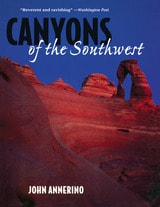
Canyons of the Southwest
A Tour of the Great Canyon Country from Colorado to Northern MexicoJohn Annerino
University of Arizona Press, 1993
The canyons of the southwestern United States and northern Mexico contain some of the most dramatic landscapes in the world. John Annerino's pictorial celebration of this visually rich region is a handsome memento for those who have heard the wind whistling in these haunting canyons, and a beckoning invitation for those who have not yet made the journey.
Annerino has spent much of his adult life exploring this territory—as wilderness runner, adventurer, and photojournalist—and combines his firsthand knowledge with his expertise as a nature photographer and author to create an intimate portrait of these timeless places. Accompanying the photographs are informative essays describing the region's geological and human history.
Capturing Mariposas
Reading Cultural Schema in Gay Chicano LiteratureDoug P. Bush
The Ohio State University Press, 2019
In Capturing Mariposas: Reading Cultural Schema in Gay Chicano Literature, Doug P. Bush looks at the book as only the beginning, considering how this literature has the power to bring understanding to disparate groups, speak truth about repressed sexuality and repressive communities, and recast traditional spaces as ones of inclusion, all through the idea of the cultural schema. Integrating elements of narratology and cognitive studies of literature, the cultural schema speaks to how these authors challenge, reaffirm, and transform commonly held experiences of gay Chicanos—or potentially any audience who reads their works. Focusing on twenty-first-century writers such as Manuel Muñoz, Rigoberto González, and Alex Espinoza, Bush examines the cultural schema of their works and then moves toward a more holistic discussion of the publishing and political implications of this genre. In addition to Bush’s important scholarship, the book includes extensive interviews with the authors themselves.
Capturing the Landscape of New Spain
Baltasar Obregón and the 1564 Ibarra ExpeditionRebecca A. Carte
University of Arizona Press, 2015
Although Obregón’s role in the Ibarra expedition was that of soldier-explorer, and despite his lacking an advanced education, he would go on to compose Historia de los descubrimientos de Nueva España twenty years later, expanding his narrative to include the years before and after his own firsthand experiences with Ibarra. Obregón depicts the storied landscape of the northern borderlands with vivid imagery, fusing setting and situation, constructing a new reality of what was, is, and should be, and presenting it as truth.
In Capturing the Landscape of New Spain, Rebecca A. Carte explains how landscape performs a primary role in Obregón’s retelling, emerging at times as protagonist and others as antagonist. Carte argues that Obregón’s textualization offers one of the first renderings of the region through the Occidental cultural lens, offering insight into Spanish cultural perceptions of landscape during a period of important social and political shifts.
By examining mapping and landscape discourse, Carte shows how history and geography, past and present, people and land, come together to fashion the landscape of northern New Spain.
Caracoleando Among Worlds
Reconstructing Maya Worldviews in ChiapasSilvia Soto
University of Arizona Press, 2024
This shared vision emerges in Caracoleando Among Worlds, which provides an in-depth analysis of poetry, short stories, and one of the first novels written by a Maya Tsotsil writer of Chiapas alongside close readings of the EZLN’s six declarations of the Lacandon Jungle. Themes echoing ancestral connections, informing epistemologies, and sustaining cultural and spiritual practices emerge and weave the texts to each other. The work brings into the conversation literature that has been translated into English for the first time and places Maya writers of Chiapas in discussion with other Native American and Indigenous scholars.
This work shows how literature, culture, and activism intertwine, and offers a compelling narrative that transcends boundaries and fosters a deeper understanding of Maya identities and resilience.

Carlos Fuentes, Mexico, and Modernity
Maarten van Delden
Vanderbilt University Press, 1998
Van Delden's thorough command of the subject matter, his innovative and sometimes iconoclastic conclusions, and his clear and engaging writing style make this study more than just an interpretation of Fuentes's work. Carlos Fuentes, Mexico, and Modernity offers nothing less than a comprehensive analysis of Fuentes's intellectual development in the context of modern Mexican political and cultural life.
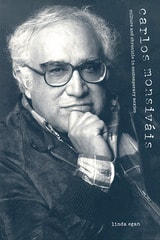
Carlos Monsiváis
Culture and Chronicle in Contemporary MexicoLinda Egan
University of Arizona Press, 2001
One of Mexico’s foremost social and political chroniclers and its most celebrated cultural critic, Carlos Monsiváis has read the pulse of his country over the past half century. The author of five collections of literary journalism pieces called crónicas, he is perhaps best known for his analytic and often satirical descriptions of Mexico City’s popular culture.
This comprehensive study of Monsiváis’s crónicas is the first book to offer an analysis of these works and to place Monsiváis’s work within a theoretical framework that recognizes the importance of his vision of Mexican culture. Linda Egan examines his ideology in relation to theoretical postures in Latin America, the United States, and Europe to cast Monsiváis as both a heterodox pioneer and a mainstream spokesman. She then explores the poetics of the contemporary chronicle in Mexico, reviewing the genre’s history and its relation to other narrative forms. Finally, she focuses on the canonical status of Monsiváis’s work, devoting a chapter to each of his five principal collections.
Egan argues that the five books that are the focus of her study tell a story of ever-renewing suspense: we cannot know “the end” until Monsiváis is through constructing his literary project. Despite this, she observes, his work between 1970 and 1995 documents important discoveries in his search for causes, effects, and deconstructions of historical obstacles to Mexico’s passage into modernity.
While anthropologists and historians continue to introduce new paradigms for the study of Mexico’s cultural space, Egan’s book provides a reflexive twist by examining the work of one of the thinkers who first inspired such a critical movement. More than an appraisal of Monsiváis, it offers a valuable discussion of theoretical issues surrounding the study of the chronicle as it is currently practiced in Mexico. It balances theory and criticism to lend new insight into the ties between Mexican society, social conscience, and literature.
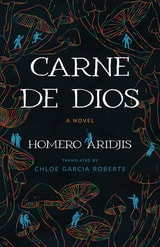
Carne de Dios
A NovelHomero Aridjis; Translated by Chloe Garcia Roberts
University of Arizona Press, 2025
María Sabina, the renowned Mazatec healer, spends her days in the small town of Huautla de Jiménez selling produce at the market and foraging under the new moon for the sacred mushrooms that grow near her home—her Holy Children, Carne de Dios, or Flesh of God. But her life changes forever when an amateur mycologist from New York, with a cameraman in tow, visits her to experience for himself the mushroom ceremony, or velada, he knows only from whispers in anthropological records. When he publishes an unauthorized article about his experience in LIFE Magazine 1957, the stage is set for an explosive encounter between the burgeoning international counterculture and the woman who became an unwilling icon of the psychedelic revolution.
Homero Aridjis’s novel, vividly translated by Chloe Garcia Roberts, tells the story of the motley crew of bohemians, researchers, and holy fools, both real and imagined, who descend on the town of Huautla de Jiménez searching for inspiration, distraction, and salvation in the sacred mushrooms. These seekers melt in and out of a narrative infiltrated by the slipstream logic of dreams. As John Lennon plays jazz on the patio of the Hotel Grande, Juan Rulfo contemplates horror movies, and Allen Ginsberg recites mantras at Philip Lamantia’s wedding, María Sabina’s life is increasingly thrown into turmoil.
Carne de Dios is a masterful and often humorous blend of history, myth, and poetic imagination, captured in a translation that mirrors the hallucinatory beauty of Aridjis’s original Spanish. Aridjis’s intimate portrayal of María Sabina, informed by his personal connection to her, serves as both a tribute to her enduring legacy and a critical reflection on the wave of global interest in mushroom culture still gaining momentum today.
This English translation includes an introduction by the translator and an afterword by the author.
Carnegie Maya II
Carnegie Institution of Washington <i>Current Reports</i>, 1952-1957John M. Weeks
University Press of Colorado, 2009
The final CIW field project took place in July of 1950, in the Maya region of Mayapán, where extensive and detailed investigations were conducted for five years. To ensure the rapid dissemination of the results of the Mayapán Project, two series of papers described the work being undertaken and reported the preliminary findings. These were volumes 50 through 57 of the Year Books and numbers 1 through 41 of the Current Reports. A total of forty one Current Reports were published by the Carnegie Institution of Washington from 1952 to 1957. All forty one of these are reproduced in The Carnegie Maya II, accompanied by an introduction by John Weeks, a forward by Marilyn Masson, and a summary table of data compiled by Marilyn Masson regarding artifacts unearthed at Mayapán.
Purchase of the print book comes with free individual access to the Adobe Digital Editions Carnegie Maya Series Ebook, which contains the complete set of The Carnegie Maya, The Carnegie Maya II, The Carnegie Maya III and The Carnegie Maya IV, thus making hundreds of documents from the Carnegie Institution's Maya program available in one source.
Carnegie Maya
The Carnegie Institution of Washington Maya Research Program, 1913-1957John M. Weeks
University Press of Colorado, 2006
The Carnegie Institution of Washington sponsored archaeological, ethnographic, linguistic, and historical investigations in the Maya region of southern Mexico and northern Central America between 1914 and 1957. The institution led the field during that time, with financial support and other resources no university could match.
Dispersed and out-of-print for fifty years, more than 350 reports from the Maya program are now available in this single volume. Reports from the institution's annual Year Books and other materials collected here tell the history of Maya research through firsthand accounts by participating scholars and reveal the progression of Mesoamerican archaeology from avocational interest to scholarly pursuit. Thematic and regional organization of the reports permits readers to monitor development of research concepts. Appendixes list all Carnegie Maya publications, Carnegie personnel, and the archival holdings of Carnegie-derived material at Harvard University, Tulane University, and the University of Chicago.
Purchase of the print book comes with free individual access to the Adobe Digital Editions Carnegie Maya Series Ebook, which contains the complete set of The Carnegie Maya, The Carnegie Maya II, The Carnegie Maya III and The Carnegie Maya IV, thus making hundreds of documents from the Carnegie Institution's Maya program available in one source.
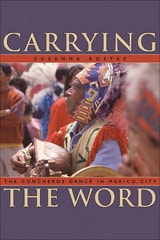
Carrying the Word
The Concheros Dance in Mexico CitySusanna Rostas
University Press of Colorado, 2009
The Concheros blend Catholic and indigenous traditions in their performances, but are not governed by a predetermined set of beliefs; rather they are bound together by long standing interpersonal connections framed by the discipline of their tradition. The Concheros manifest their spirituality by means of the dance. Rostas traces how they construct their identity and beliefs, both individual and communal, by its means. The book offers new insights into the experience of dancing as a Conchero while also exploring their history, organization and practices.
Carrying the Word provides a new way for audiences to understand the Conchero's dance tradition, and will be of interest to students and scholars of contemporary Mesoamerica. Those studying identity, religion, and tradition will find this social-anthropological work particularly enlightening.
Cartographic Mexico
A History of State Fixations and Fugitive LandscapesRaymond B. Craib
Duke University Press, 2004
Cartucho and My Mother's Hands
By Nellie Campobello
University of Texas Press, 1988
Nellie Campobello, a prominent Mexican writer and "novelist of the Revolution," played an important role in Mexico's cultural renaissance in the 1920s and early 1930s, along with such writers as Rafael Muñoz and Gregorio López y Fuentes and artists Diego Rivera, Orozco, and others. Her two novellas, Cartucho (first published in 1931) and My Mother's Hands (first published as Las manos de Mamá in 1938), are autobiographical evocations of a childhood spent amidst the violence and turmoil of the Revolution in Mexico. Campobello's memories of the Revolution in the north of Mexico, where Pancho Villa was a popular hero and a personal friend of her family, show not only the stark realism of Cartucho but also the tender lyricism of My Mother's Hands. They are noteworthy, too, as a first-person account of the female experience in the early years of the Mexican Revolution and unique in their presentation of events from a child's perspective.
Casas Grandes and Its Hinterlands
Prehistoric Regional Organization in Northwest MexicoMichael E. Whalen and Paul E. Minnis
University of Arizona Press, 2001

Caste War Now and Never
Unreading Gender, Race, and Land in YucatánS. B. West
University of Arizona Press, 2026
In Caste War Now and Never scholar S. B. West considers Yucatán’s nineteenth-century Caste War, the longest and most violent Indigenous uprising of the Western Hemisphere, to argue that it actually never occurred.
Instead, West writes that the violent events grouped under the “Caste War” label must be understood through alternative frameworks that resist the emergent logics of race war and include related regulatory matrices like gender and land. Through this lens, the Caste War emerges as a discursive construct rooted in an anti-Indigenous archive that served the political interests of a frustrated regional elite during the rise of liberalism and nationhood. West argues that Caste War discourse unfolds as a technology that mobilized and legitimized genocidal actions against racialized rebels and inspired assimilation into hegemonic political and social structures.
In the second half of the book, West looks at the Caste War to engage its contemporary polysemic nature through close readings of Yucatec Maya texts, stories, and other forms of knowledge production. These sources reframe the Caste War as an important part of a framework of resistance that defies colonial time and reclaims narrative control of its events.
Caste War Now and Never captures how Maya communities understand the conflict as ongoing and demonstrates that although the Caste War never occurred as such, it continues to endure presently.
Catarino Garza's Revolution on the Texas-Mexico Border
Elliott Young
Duke University Press, 2004
Elliott Young provides the first full-length analysis of the revolt and its significance, arguing that Garza’s rebellion is an important and telling chapter in the formation of the border between Mexico and the United States and in the histories of both countries. Throughout the nineteenth century, the borderlands were a relatively coherent region. Young analyzes archival materials, newspapers, travel accounts, and autobiographies from both countries to show that Garza’s revolution was more than just an effort to overthrow Díaz. It was part of the long struggle of borderlands people to maintain their autonomy in the face of two powerful and encroaching nation-states and of Mexicans in particular to protect themselves from being economically and socially displaced by Anglo Americans. By critically examining the different perspectives of military officers, journalists, diplomats, and the Garzistas themselves, Young exposes how nationalism and its preeminent symbol, the border, were manufactured and resisted along the Rio Grande.
Cenote of Sacrifice
Maya Treasures from the Sacred Well at Chichen ItzaClemency Chase Coggins
University of Texas Press, 1984
Chichén Itzá ("mouth of the well of the Itza") was one of the great centers of civilization in prehistoric America, serving between the eighth and twelfth centuries A.D. as a religious, economic, social, and political capital on the Yucatán Peninsula. Within the ancient city there were many natural wells or cenotes. One, within the ceremonial heart of the city, is an impressive natural feature with vertical limestone walls enclosing a deep pool of jade green water some eighty feet below ground level. This cenote, which gave the city its name, became a sacred shrine of Maya pilgrimage, described by one post-Conquest observer as similar to Jerusalem and Rome. Here, during the city's ascendancy and for centuries after its decline, the peoples of Yucatán consulted their gods and made ritual offerings of precious objects and living victims who were thought to receive prophecies.
Although the well was described by Bishop Diego de Landa in the late sixteenth century, its contents were not known until the early 1900s when revealed by the work of Edward H. Thompson. Conducting excavations for the Peabody Museum of Harvard University, Thompson recovered almost thirty thousand artifacts, most ceremonially broken and many beautifully preserved by burial in the deep silt at the bottom of the well. The materials were sent to the Peabody Museum, where they remained, unexhibited, for over seventy years.
In 1984, for the first time, nearly three hundred objects of gold, jade, copper, pottery, wood, copal, textile, and other materials from the collection were gathered into a traveling interpretive exhibition. No other archaeological exhibition had previously given this glimpse into Maya ritual life because no other collection had objects such as those found in the Sacred Cenote. Moreover, the objects from the Cenote come from throughout Mesoamerica and lower Central America, representing many artistic traditions. The exhibit and this, its accompanying catalog, marked the first time all of the different kinds of offerings have ever been displayed together, and the first time many have been published.
Essays by Gordon R. Willey and Linnea H. Wren place the Cenote of Sacrifice and the great Maya city of Chichén Itzá within the larger context of Maya archaeology and history. The catalog entries, written by Clemency Chase Coggins, describe the objects displayed in the traveling exhibition. Some entries are brief descriptive statements; others develop short scholarly themes bearing on the function and interpretation of specific objects. Coggins' introductory essay describes how the objects were collected by Thompson and how the exhibition collection has been studied to reveal the periods of Cenote ritual and the changing practices of offering to the Sacred Cenote.
Ceramic Sequence in Colima
Capacha, an Early PhaseIsabel Kelly
University of Arizona Press, 1980

Ceramic Sequence in Colima
Capacha, an Early PhaseIsabel Kelly
University of Arizona Press, 1980
Ceremonial Exchange as a Mechanism in Tribal Integration Among the Mayos of Northwest Mexico
Lynne Scoggins Crumrine
University of Arizona Press, 1969
Ceremonial Lithics in Classic Mesoamerica
Zachary Hruby
University Press of Colorado, 2025
Ceremonial Lithics in Classic Mesoamerica explores how and why ceremonial lithic artifacts were made in ancient Mesoamerica’s Classic period, focusing on their implications for economic and sociopolitical organization. Technological analyses of unique examples are interpreted to understand the processes of lithic production and how chipped stone was ritualized across Mesoamerica.
Investigations of ritualized lithics also draw on iconography, epigraphy, and ethnohistory to understand the meaning of these objects, including the so-called eccentric flints and obsidians of the Maya area and Central Mexico, massive debitage deposits in tomb contexts, and the use of utilitarian objects in ceremonial contexts. In the cases of the largest and most elaborate artifacts (e.g., the effigy flints of Copan, Honduras and the obsidian serpents of Teotihuacan), authors examine what the basic production processes may have been, while cases of blade and debitage deposits focus on how the objects were produced within their social context, in what sequence, and why they may have been chosen for ritual deposition.
Ceremonial Lithics in Classic Mesoamerica is the first book to address from a pan-Mesoamerican perspective how and why these objects were made. While obsidian and flint carried their own respective symbolic meanings, the final form of an artifact and the process of its production also contributed to its identification. Hence, this volume is an essential step toward understanding the ancient meanings imbued in these material objects.
Cerro Danush
Excavations at a Hilltop Community in the Eastern Valley of Oaxaca, MexicoRonald K. Faulseit
University of Michigan Press, 2013
Monte Albán was the capital of the Valley of Oaxaca, Mexico, ca. 500 BC–AD 600, but once its control began to wane, other sites filled the political vacuum. Archaeologists have long awaited a meticulous excavation of one of these sites—one that would help us better understand the process that transformed second-tier sites into a series of polities or señoríos that competed with each other for centuries.
This book reports in detail on Ronald Faulseit’s excavations at the site of Dainzú-Macuilxóchitl in the Valley of Oaxaca. His 2007–2010 mapping and excavation seasons focused on the Late Classic (AD 600–900) and Early Postclassic (AD 900–1300). The spatial distributions of surface artifacts—collected during the intensive mapping and systematic surface collecting—on residential terraces at Cerro Danush are analyzed to evaluate evidence for craft production, ritual, and abandonment at the community level. This community analysis is complemented by data from the comprehensive excavation of a residential terrace, which documents diachronic patterns of behavior at the household level. The results from Faulseit’s survey and excavations are evaluated within the theoretical frameworks of political cycling and resilience theory. Faulseit concludes that resilient social structures may have helped orchestrate reorganization in the dynamic political landscape of Oaxaca after the political collapse of Monte Albán.
Chaco Revisited
New Research on the Prehistory of Chaco Canyon, New MexicoEdited by Carrie C. Heitman and Stephen Plog
University of Arizona Press, 2015
In each of the twelve chapters, luminaries from the field of archaeology and anthropology, such as R. Gwinn Vivian, Peter Whiteley, and Paul E. Minnis, address some of the most fundamental questions surrounding Chaco, from agriculture and craft production, to social organization and skeletal analyses. Though varied in their key questions about Chaco, each author uses previous research or new studies to ultimately blaze a trail for future research and discoveries about the canyon.
Written by both up-and-coming and well-seasoned scholars of Chaco Canyon, Chaco Revisited provides readers with a perspective that is both varied and balanced. Though a singular theory for the Chaco Canyon phenomenon is yet to be reached, Chaco Revisited brings a new understanding to scholars: that Chaco was perhaps even more productive and socially complex than previous analyses would suggest.
Charrería Mexicana
An Equestrian Folk TraditionKathleen Mullen Sands
University of Arizona Press, 1993
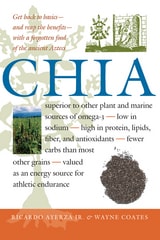
Chia
Rediscovering a Forgotten Crop of the AztecsRicardo Ayerza Jr. and Wayne Coates
University of Arizona Press, 2005
In this book, agronomist Ricardo Ayerza and agricultural engineer Wayne Coates trace the long and fascinating history of chia’s use, then reveal the scientific story of the plant and its modern potential. They compare fatty acid profiles of chia with our other major sources—fish oil, flaxseed, and marine algae—and provide evidence that chia is superior in many ways.
Here are just some of the benefits that chia provides:
- chia has the highest known percentage of alpha-linolenic acid, and the highest combined alpha-linolenic and linoleic fatty acid percentage of all crops
- chia has more protein, lipids, energy, and fiber—but fewer carbs—than rice, barley, oats, wheat, or corn—and its protein is gluten-free
- chia is an excellent source of calcium, phosphorus, magnesium, potassium, iron, zinc, and copper
- chia is low in sodium: salmon has 78 times as much, tuna 237 times as much
- chia exhibits no evidence of allergic response, even in individuals with peanut and tree-nut allergies
- chia doesn’t give off a “fishy flavor,” unlike some other sources of omega-3 fatty acid
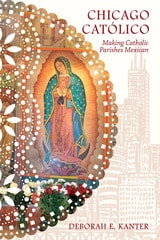
Chicago Católico
Making Catholic Parishes MexicanDeborah E. Kanter
University of Illinois Press, 2020
Deborah E. Kanter tells the story of neighborhood change and rebirth in Chicago's Mexican American communities. She unveils a vibrant history of Mexican American and Mexican immigrant relations as remembered by laity and clergy, schoolchildren and their female religious teachers, parish athletes and coaches, European American neighbors, and from the immigrant women who organized as guadalupanas and their husbands who took part in the Holy Name Society. Kanter shows how the newly arrived mixed memories of home into learning the ways of Chicago to create new identities. In an ever-evolving city, Mexican immigrants and Mexican Americans’ fierce devotion to their churches transformed neighborhoods such as Pilsen.
The first-ever study of Mexican-descent Catholicism in the city, Chicago Católico illuminates a previously unexplored facet of the urban past and provides present-day lessons for American communities undergoing ethnic integration and succession.
Chicanos And Film
Representation and ResistanceChon A. Noriega
University of Minnesota Press, 1992
Chicle
The Chewing Gum of the Americas, From the Ancient Maya to William WrigleyJennifer P. Mathews
University of Arizona Press, 2009
Chicle is a history in four acts, all of them focused on the sticky white substance that seeps from the sapodilla tree when its bark is cut. First, Jennifer Mathews recounts the story of chicle and its earliest-known adherents, the Maya and Aztecs. Second, with the assistance of botanist Gillian Schultz, Mathews examines the sapodilla tree itself, an extraordinarily hardy plant that is native only to Mesoamerica and the Caribbean. Third, Mathews presents the fascinating story of the chicle and chewing gum industry over the last hundred plus years, a tale (like so many twentieth-century tales) of greed, growth, and collapse. In closing, Mathews considers the plight of the chicleros, the “extractors” who often work by themselves tapping trees deep in the forests, and how they have emerged as icons of local pop culture—portrayed as fearless, hard-drinking brawlers, people to be respected as well as feared.
Before Dentyne® and Chiclets®, before bubble gum comic strips and the Doublemint® twins, there was gum, oozing from jungle trees like melting candle wax under the slash of a machete. Chicle tells us everything that happened next. It is a spellbinding story.
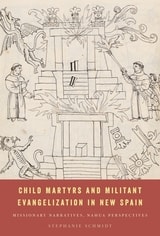
Child Martyrs and Militant Evangelization in New Spain
Missionary Narratives, Nahua PerspectivesStephanie Schmidt
University of Texas Press, 2025
Examines the many iterations of a story of child martyrdom in colonial Mexico.
A cornerstone of the evangelization of early New Spain was the conversion of Nahua boys, especially the children of elites. They were to be emissaries between Nahua society and foreign missionaries, hastening the transmission of the gospel. Under the tutelage of Franciscan friars, the boys also learned to act with militant zeal. They sermonized and smashed sacred objects. Some went so far as to kill a Nahua religious leader. For three boys from Tlaxcala, the reprisals were just as deadly.
In Child Martyrs and Militant Evangelization in New Spain, Stephanie Schmidt sheds light on a rare manuscript about Nahua child converts who were killed for acts of zealotry during the late 1520s. This is the Nahuatl version of an account by an early missionary-friar, Toribio de Benavente Motolinía. To this day, Catholics venerate the slain boys as Christian martyrs who suffered for their piety. Yet Franciscan accounts of the boys’ sacrifice were influenced by ulterior motives, as the friars sought to deflect attention from their missteps in New Spain. Illuminating Nahua perspectives on this story and period, Schmidt leaves no doubt as to who drove this violence as she dramatically expands the knowledgebase available to students of colonial Latin America.
Chimalpahin and the Kingdoms of Chalco
Susan Schroeder
University of Arizona Press, 1991
"By delineating the concepts and personae that were most salient in Chimalpahin's politically-oriented perspective on the past, Schroeder has advanced our understanding of native Mexican political organization and has made a major contribution toward interpreting the work of this Nahua historian." —Anthropos
"In this well-structured volume, Susan Schroeder synthesizes Chimalpahin's detailed information on the Prehispanic kingdoms of Chalco (located in the southern Valley of Mexico) with particular emphasis on their sociopolitical organization. . . . A valuable contribution." —American Antiquity
"This is an important piece of scholarship which makes more accessible to general historians of colonial Mexico an item of Nahuatl literature." —The Americas
Chino
Anti-Chinese Racism in Mexico, 1880-1940Jason Oliver Chang
University of Illinois Press, 2017
Chipped Stone Tools in Formative Oaxaca, Mexico
Their Procurement, Production and UseWilliam J. Parry
University of Michigan Press, 1987
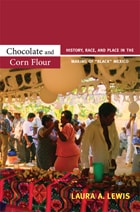
Chocolate and Corn Flour
History, Race, and Place in the Making of "Black" MexicoLaura A. Lewis
Duke University Press, 2012
Drawing on more than a decade of fieldwork, Lewis offers a richly detailed and subtle ethnography of the lives and stories of the people of San Nicolás, including community residents who have migrated to the United States. San Nicoladenses, she finds, have complex attitudes toward blackness—as a way of identifying themselves and as a racial and cultural category. They neither consider themselves part of an African diaspora nor deny their heritage. Rather, they acknowledge their hybridity and choose to identify most deeply with their community.
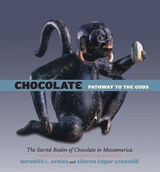
Chocolate
Pathway to the GodsMeredith L. Dreiss and Sharon Edgar Greenhill
University of Arizona Press, 2008
Although it didn’t receive its Western scientific name, Theobroma cacao—“food of the gods”—until the eighteenth century, the cacao tree has been at the center of Mesoamerican mythology for thousands of years. Not only did this “chocolate tree” produce the actual seeds from which chocolate was extracted but it was also symbolically endowed with cosmic powers that enabled a dialogue between humans and their gods. From the pre-Columbian images included in this sumptuous book, we are able to see for ourselves the importance of chocolate to the Maya, Aztecs, Olmecs, Mixtecs, and Zapotecs who grew, produced, traded, and fought over the prized substance.
Through archaeological and other ethnohistoric research, the authors of this fascinating book document the significance of chocolate—to gods, kings, and everyday people—over several millennia. The illustrations allow us to envision the many ancient uses of this magical elixir: in divination ceremonies, in human sacrifices, and even in ball games. And as mythological connections between cacao trees, primordial rainforests, and biodiversity are unveiled, our own quest for ecological balance is reignited. In demonstrating the extraordinary value of chocolate in Mesoamerica, the authors provide new reasons—if any are needed—to celebrate this wondrous concoction.
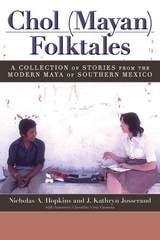
Chol (Mayan) Folktales
A Collection of Stories from the Modern Maya of Southern MexicoNicholas A. Hopkins
University Press of Colorado, 2016
The rich Chol oral narrative tradition is represented by eleven stories, each printed in the original language of the storytellers with parallel English translations and accompanied by a brief introduction that provides the relevant cultural and mythological background. Included with eight of the stories is a link to an audio clip of the tale told aloud in the Chol language. In addition, Chol (Mayan) Folktales introduces a model for the analysis of narratives that can be used to demonstrate the existence of a tradition of storytelling applicable to other Maya lore, including Classic period hieroglyphic texts.
Creating a nuanced sense of the Mayan oral tradition and revealing a highly structured literary style, this collection provides insight into contemporary Maya culture as well as a greater understanding of Classic period society. It will be of interest to students and scholars of folklore and literature and to anthropologists and linguists.
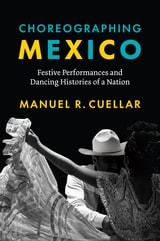
Choreographing Mexico
Festive Performances and Dancing Histories of a NationManuel R. Cuellar
University of Texas Press, 2022
2023 de la Torre Bueno® First Book Award, Dance Studies Association
The impact of folkloric dance and performance on Mexican cultural politics and national identity.
The years between 1910 and 1940 were formative for Mexico, with the ouster of Porfirio Díaz, the subsequent revolution, and the creation of the new state. Amid the upheaval, Mexican dance emerged as a key arena of contestation regarding what it meant to be Mexican. Through an analysis of written, photographic, choreographic, and cinematographic renderings of a festive Mexico, Choreographing Mexico examines how bodies in motion both performed and critiqued the nation.
Manuel Cuellar details the integration of Indigenous and regional dance styles into centennial celebrations, civic festivals, and popular films. Much of the time, this was a top-down affair, with cultural elites seeking to legitimate a hegemonic national character by incorporating traces of indigeneity. Yet dancers also used their moving bodies to challenge the official image of a Mexico full of manly vigor and free from racial and ethnic divisions. At home and abroad, dancers made nuanced articulations of female, Indigenous, Black, and even queer renditions of the nation. Cuellar reminds us of the ongoing political significance of movement and embodied experience, as folklórico maintains an important and still-contested place in Mexican and Mexican American identity today.
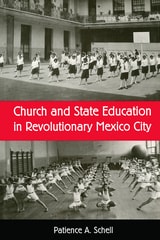
Church and State Education in Revolutionary Mexico City
Patience A. Schell
University of Arizona Press, 2003
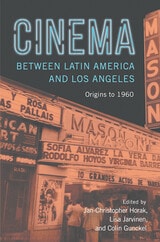
Cinema between Latin America and Los Angeles
Origins to 1960Horak, Jan-Christopher
Rutgers University Press, 2019
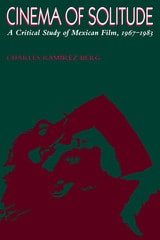
Cinema of Solitude
A Critical Study of Mexican Film, 1967-1983By Charles Ramírez Berg
University of Texas Press, 1992
La crisis, a period of political and economic turmoil in Mexico that began in the late 1960s, spawned a new era in Mexican cinema. Known as el Nuevo Cine (the New Cinema), these films presented alienated characters caught in a painful transition period in which old family, gender, and social roles have ceased to function without being replaced by viable new ones. These are the films explored by Charles Ramírez Berg in Cinema of Solitude, the first book-length critical study of Mexican cinema in English.
Berg discusses the major films and filmmakers of el Nuevo Cine in depth. He analyzes dozens of commercial movies, from popular comedies and adventures to award-winning films. Introductory chapters address the issue of mexicanidad (Mexican national identity) and outline Mexican history, the history of film as popular culture and as a leading national industry, and the ideological dynamics of Mexican cinema.
In thematically arranged chapters, Berg investigates the images of women, men, and social structures portrayed in New Cinema films. He finds that women characters have begun to reject traditional stereotypes for more positive images, while male characters have grown ambiguous and undefined as machismo is abandoned. Other chapters trace the continuing marginalization of Indians in Mexican culture, the changes in male dominance within the family, and the disruptive social and economic effects caused by migration.
For everyone interested in Mexican culture as reflected in its major cinematic productions, as well as students of film theory and national cinemas, this book will be important reading.
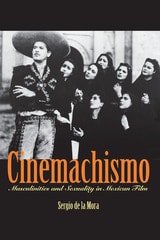
Cinemachismo
Masculinities and Sexuality in Mexican FilmBy Sergio de la Mora
University of Texas Press, 2006
After the modern Mexican state came into being following the Revolution of 1910, hyper-masculine machismo came to be a defining characteristic of "mexicanidad," or Mexican national identity. Virile men (pelados and charros), virtuous prostitutes as mother figures, and minstrel-like gay men were held out as desired and/or abject models not only in governmental rhetoric and propaganda, but also in literature and popular culture, particularly in the cinema. Indeed, cinema provided an especially effective staging ground for the construction of a gendered and sexualized national identity.
In this book, Sergio de la Mora offers the first extended analysis of how Mexican cinema has represented masculinities and sexualities and their relationship to national identity from 1950 to 2004. He focuses on three traditional genres (the revolutionary melodrama, the cabaretera [dancehall] prostitution melodrama, and the musical comedy "buddy movie") and one subgenre (the fichera brothel-cabaret comedy) of classic and contemporary cinema. By concentrating on the changing conventions of these genres, de la Mora reveals how Mexican films have both supported and subverted traditional heterosexual norms of Mexican national identity. In particular, his analyses of Mexican cinematic icons Pedro Infante and Gael García Bernal and of Arturo Ripstein's cult film El lugar sin límites illuminate cinema's role in fostering distinct figurations of masculinity, queer spectatorship, and gay male representations. De la Mora completes this exciting interdisciplinary study with an in-depth look at how the Mexican state brought about structural changes in the film industry between 1989 and 1994 through the work of the Mexican Film Institute (IMCINE), paving the way for a renaissance in the national cinema.
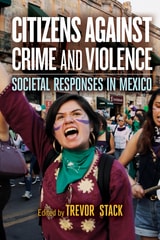
Citizens against Crime and Violence
Societal Responses in MexicoTrevor Stack
Rutgers University Press, 2022
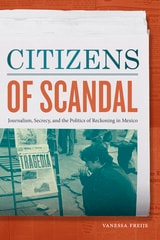
Citizens of Scandal
Journalism, Secrecy, and the Politics of Reckoning in MexicoVanessa Freije
Duke University Press, 2020
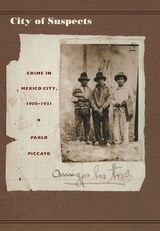
City of Suspects
Crime in Mexico City, 1900–1931Pablo Piccato
Duke University Press, 2001
By investigating postrevolutionary examples of corruption and organized crime, Piccato shines light on the historical foundations of a social problem that remains the main concern of Mexico City today. Emphasizing the social construction of crime and the way it was interpreted within the moral economy of the urban poor, he describes the capital city during the early twentieth century as a contested territory in which a growing population of urban poor had to negotiate the use of public spaces with more powerful citizens and the police. Probing official discourse on deviance, Piccato reveals how the nineteenth-century rise of positivist criminology—which asserted that criminals could be readily distinguished from the normal population based on psychological and physical traits—was used to lend scientific legitimacy to class stratifications and to criminalize working-class culture. Furthermore, he argues, the authorities’ emphasis on punishment, isolation, and stigmatization effectively created cadres of professional criminals, reshaping crime into a more dangerous problem for all inhabitants of the capital.
This unique investigation into crime in Mexico City will interest Latin Americanists, sociologists, and historians of twentieth-century Mexican history.
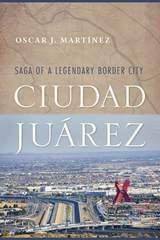
Ciudad Juárez
Saga of a Legendary Border CityOscar J. Martínez
University of Arizona Press, 2018
In Ciudad Juárez: Saga of a Legendary Border City, Oscar J. Martínez provides a historical overview of the economic and social evolution of this famous transnational urban center from the 1848 creation of the international boundary between Mexico and the United States to the present, emphasizing the city’s deep ties to the United States.
Martínez also explores major aspects of the social history of the city, including cross-border migration, urbanization, population growth, living standards, conditions among the city’s workers, crime, and the circumstances that led to the horrendous violence that catapulted Juárez to the top rung of the world’s most violent urban areas in the early twenty-first century.
In countless ways, the history of Juárez is the history of the entire Mexican northern frontier. Understanding how the city evolved provides a greater appreciation for the formidable challenges faced by Mexican fronterizos and yields vital insights into the functioning of borderland regions around the world.
Classic Maya Polities of the Southern Lowlands
Integration, Interaction, DissolutionDamien B. Marken
University Press of Colorado, 2015
Classic Maya Polities of the Southern Lowlands investigates Maya political and social structure in the southern lowlands, assessing, comparing, and interpreting the wide variation in Classic period Maya polity and city composition, development, and integration. Traditionally, discussions of Classic Maya political organization have been dominated by the debate over whether Maya polities were centralized or decentralized. With new, largely unpublished data from several recent archaeological projects, this book examines the premises, strengths, and weaknesses of these two perspectives before moving beyond this long-standing debate and into different territory.
The volume examines the articulations of the various social and spatial components of Maya polity—the relationships, strategies, and practices that bound households, communities, institutions, and dynasties into enduring (or short-lived) political entities. By emphasizing the internal negotiation of polity, the contributions provide an important foundation for a more holistic understanding of how political organization functioned in the Classic period.
Contributors include Francisco Estrada Belli, James L. Fitzsimmons, Sarah E. Jackson, Caleb Kestle, Brigitte Kovacevich, Allan Maca, Damien B. Marken, James Meierhoff, Timothy Murtha, Cynthia Robin, Alexandre Tokovinine, and Andrew Wyatt.
Climate and Culture Change in North America AD 900–1600
By William C. Foster
University of Texas Press, 2012
Climate change is today’s news, but it isn’t a new phenomenon. Centuries-long cycles of heating and cooling are well documented for Europe and the North Atlantic. These variations in climate, including the Medieval Warm Period (MWP), AD 900 to 1300, and the early centuries of the Little Ice Age (LIA), AD 1300 to 1600, had a substantial impact on the cultural history of Europe. In this pathfinding volume, William C. Foster marshals extensive evidence that the heating and cooling of the MWP and LIA also occurred in North America and significantly affected the cultural history of Native peoples of the American Southwest, Southern Plains, and Southeast.
Correlating climate change data with studies of archaeological sites across the Southwest, Southern Plains, and Southeast, Foster presents the first comprehensive overview of how Native American societies responded to climate variations over seven centuries. He describes how, as in Europe, the MWP ushered in a cultural renaissance, during which population levels surged and Native peoples substantially intensified agriculture, constructed monumental architecture, and produced sophisticated works of art. Foster follows the rise of three dominant cultural centers—Chaco Canyon in New Mexico, Cahokia on the middle Mississippi River, and Casas Grandes in northwestern Chihuahua, Mexico—that reached population levels comparable to those of London and Paris. Then he shows how the LIA reversed the gains of the MWP as population levels and agricultural production sharply declined; Chaco Canyon, Cahokia, and Casas Grandes collapsed; and dozens of smaller villages also collapsed or became fortresses.
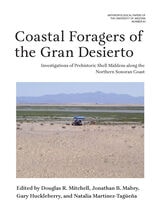
Coastal Foragers of the Gran Desierto
Investigations of Prehistoric Shell Middens along the Northern Sonoran CoastDouglas R. Mitchell, Jonathan B. Mabry, Gary Huckleberry, and Natalia Martínez-Tagüeña
University of Arizona Press, 2024
Focused on the coast near Puerto Peñasco, Sonora, Mexico, Coastal Foragers of the Gran Desierto examines the diverse groups occupying the coast for salt, abundant food sources, and shells for ornament manufacturing. The archaeological patterns demonstrated by the data gathered lead to the conclusion that, since ancient times, this coastal landscape was not a marginal zone but rather an important source of food and trade goods, and a pilgrimage destination that influenced broad and diverse communities across the Sonoran Desert and beyond.
Contributors
Jenny L. Adams
Karen R. Adams
Thomas Bowen
Tessa L. Branyan
Bill Broyles
Richard C. Brusca
David L. Dettman
Michael S. Foster
Gary Huckleberry
Jonathan B. Mabry
Natalia Martínez-Tagüeña
Richard J. Martynec
Douglas R. Mitchell
Kirsten Rowell
Melissa R. Schwan
M. Steven Shackley
R. J. Sliva
Kayla B. Worthey