Results by title
941 books match the query 'Military' and 58 start with c

CW-21 Interceptor
Edwin Hoogschagen
Amsterdam University Press, 2023
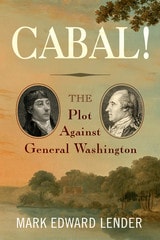
Cabal!
The Plot Against General Washington, The Conway Cabal ReconsideredMark Edward Lender
Westholme Publishing, 2024
In the spring of 1778, General George Washington wrote to his friend Landon Carter about a rumored “disposition in the Northern Officers to see me superceded in my Command.” This was as candid a statement as the general ever made about the so-called “Conway Cabal” of patriot officers and politicians critical of his leadership. Most early historians of the Revolution took the threat to Washington seriously, but by the mid-twentieth century interpretations had reversed, with the plot—if one existed—posing no real danger to the commander-in-chief. Yet, as historian Mark Edward Lender reveals in his compelling Cabal! The Plot Against General Washington, clues found in original new research provide a more comprehensive understanding of the personalities and political maneuverings of those involved in the Cabal, and the real nature of the challenge to Washington.
Rather than the “classic Cabal” of Generals Horatio Gates, Thomas Mifflin, and Thomas Conway in a plot to remove Washington quickly, the threat to Washington’s command was a gradual administrative attempt by the Board of War and political allies to take over the war effort. Reorganized in late 1777 under the leadership of Mifflin, with Gates assuming the board presidency in January 1778, the Board of War sought authority to determine military policy and strategic goals, all training, organizational, personnel, and logistical functions, and even the assignment of theater commanders. Had they succeeded, Washington’s title of commander-in-chief would have been utterly hollow. The Cabal tested Washington as few other things did during the war and perhaps tempered him into the man we remember today. Washington adroitly navigated the challenges to his leadership, meeting and defeating every attempt to curtail his authority. His response revealed a leadership style that saw him safely through the war, and gave him overwhelming support from his countrymen to become their first president.
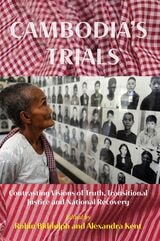
Cambodia's Trials
Contrasting Visions of Truth, Transitional Justice and National RecoveryEdited by Robin Biddulph and Alexandra Kent
National University of Singapore Press, 2023
More than four decades have passed since the end of Khmer Rouge rule in Cambodia in 1979. Even so, the country is still coming to terms with the destruction wrought by the Khmer Rouge during both the time they were in power and during the period of guerrilla resistance that lasted until 1998. The Khmer Rouge Tribunal, or the Extraordinary Chambers in the Court of Cambodia (ECCC), was established in 2006 to bring the Khmer Rouge leadership to justice. In many ways a product of the 1990s, when liberal democracy appeared to be on the rise both in Cambodia and internationally, the ECCC was imagined as a transitional justice initiative that would help ease the transition to liberal democracy.
The ECCC has long been the focus of scholarly attention in Cambodia’s recovery, but this compelling study argues that such an approach is dated, noting that the political circumstances in which the ECCC was born have since changed profoundly, both globally and locally. Cambodia’s current situation can no longer be analyzed solely in terms of transitional justice narratives or the work of the ECCC, and other ways in which Cambodians have come to terms with their past and built new lives must be considered. By decentering the ECCC in the scholarly narrative of Cambodia’s recovery, the volume’s authors offer fascinating new insights into the Khmer Rouge period and more recent years of social, cultural, and political change in Cambodia.
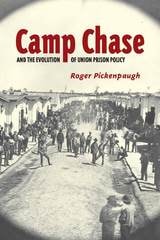
Camp Chase and the Evolution of Union Prison Policy
Roger Pickenpaugh
University of Alabama Press, 2007
Camp Chase was a major Union POW camp and also served at various times as a Union military training facility and as quarters for Union soldiers who had been taken prisoner by the Confederacy and released on parole or exchanged. As such, this careful, thorough, and objective examination of the history and administration of the camp will be of true significance in the literature on the Civil War.
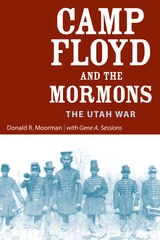
Camp Floyd and the Mormons
The Utah WarDonald R Moorman
University of Utah Press, 1992
Camp Floyd and the Mormons traces the history of the sojourn of “Johnston’s Army” in Utah Territory from the beginning of the Utah War in 1857 through the abandonment of Camp Floyd in Cedar Valley west of Utah Lake at the outbreak of the Civil War. The book describes the relationship between the invading army and the local Mormon population, gives an account of Indian affairs in Utah, and describes the activities of federal officials in Utah during that volatile period.
Completed posthumously by Gene Sessions, Moorman’s colleague at Weber State University, Camp Floyd and the Mormons is a comprehensive analysis of the history of frontier Utah as a decade of isolation ended and confrontations with the United States government began. Moorman had unprecedented access to materials in the LDS Church Archives on subjects ranging from the Mountain Meadows Massacre to the Mormon responses to the presence of the army in Utah from 1858 through 1861.
First published by the University of Utah Press in 1992, this reprint edition includes a new introduction by Gene Sessions in which he recounts Moorman’s research adventures during the 1960s "in the bowels of the old Church Administration Building, where Joseph Fielding Smith and A. Will Lund watched over the contents of the archives like wide-eyed mother hens."
Cannoneers in Gray
The Field Artillery of the Army of TennesseeLarry J. Daniel
University of Alabama Press, 1989
This enlarged edition of Cannoneers in Gray provides new detail concerning the activities of artillery units operating in key campaigns of the western theater of the Civil War—at Stones River, Missionary Ridge, Kennesaw Mountain, Shiloh, Peachtree Creek. Larry Daniel traces the four-year history of the artillery branch of the Army of Tennessee from its organization through its demise at the war's end. He shows that Civil War cannons were of little consequence when used as offensive weapons but could be highly effective in defense.
Includes five new maps of campaigns and battles central to his discussion of larger issues, such as command and strategy on the western front.
Capitalism, Politics, and Railroads in Jacksonian New England
Michael J. Connolly
University of Missouri Press, 2003
Captives in Blue
The Civil War Prisons of the ConfederacyRoger Pickenpaugh
University of Alabama Press, 2013
A gripping account of Union soldiers behind Confederate bars—where survival, sacrifice, and the unforgiving realities of Civil War imprisonment collide.
In Captives in Blue, Roger Pickenpaugh examines the ways the Confederate army contended with the growing prison population, the variations in the policies and practices of different Confederate prison camps, the effects these policies and practices had on Union prisoners, and the logistics of prisoner exchanges. He explores conditions that arose from conscious government policy decisions and conditions that were the product of local officials or unique local situations. He also considers how Confederate prisons and policies dealt with African American Union soldiers. Black soldiers held captive in Confederate prisons faced uncertain fates; many former slaves were returned to their former owners, while others faced harsh treatment in the camps. Drawing on prisoner diaries, Pickenpaugh provides compelling first-person accounts of life in prison camps often overlooked by scholars in the field.
This study of Union captives in Confederate prisons is a companion to Roger Pickenpaugh’s earlier groundbreaking book Captives in Gray: The Civil War Prisons of the Union and extends his examination of Civil War prisoner-of-war facilities into the Confederacy.
Captives in Gray
The Civil War Prisons of the UnionRoger Pickenpaugh
University of Alabama Press, 2009
“This is a vivid description of conditions and events rarely described: the imprisonment of captured Confederate soldiers during the Civil War. Its many parallels to circumstances in Andersonville are especially intriguing.” —Jimmy Carter, 39th President of the United States
Contains contemporary reports from prisoners and witnesses humanize the grim realities of the POW camps.
Captives in Gray is Civil War prison camp authority Roger Pickenpaugh’s acclaimed and definitive account of the Union’s POW camps. Combining his own extensive research into official records and a rich variety of letters and diaries with the best contemporary scholarship, Pickenpaugh covers every major northern camp.
Because the Union won few victories in 1861 and took few prisoners, the North had time to plan and build prison camps, an opportunity it largely squandered. Pickenpaugh gives illuminating accounts of the role and leadership of thrifty Lieutenant Colonel William Hoffman, the commissary general of prisoners for most of the conflict, and President Abraham Lincoln's secretaries of war, the incompetent Simon Cameron and the malignant Edwin M. Stanton.
Death came in many ways. Soldiers from the Deep South had no experience with extreme cold, and they died by the hundreds each winter. In one memorable freeze, Rock Island, Illinois, saw temperatures between twenty-eight and thirty-one degrees below zero. With insufficient fuel and inadequate shelter, clothing, and blankets, prisoners there and in other camps froze to death. Food rations varied widely. A few Confederates enjoyed better rations than they had in the CSA armies, but the majority supplemented their meager rations by eating rats, dogs, cats, and seagulls.
Poor medical care added to the death toll. Treatment was bad even by the standards of Civil War medicine, often due to Hoffman's reluctance to spend. Prisoners suffered from lice and scurvy, as well as pneumonia, measles, and a variety of fevers. As in both armies, diarrhea and dysentery were chronic. Smallpox epidemics killed many. Poor sanitation and drainage caused 385 deaths at Elmira, New York, in September 1864 alone.
During the war, over 12 percent of rebel prisoners, or 25,976 of the 214,865, died in captivity. Together with his Captives in Blue, Captives in Gray gives the fullest account of the experiences of prisoners of war in the American Civil War.
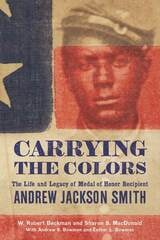
Carrying the Colors
The Life and Legacy of Medal of Honor Recipient Andrew Jackson SmithW. Robert Beckman
Westholme Publishing, 2025
An Escaped Slave who Fought for the Union and Whose Wartime Heroism was Finally Recognized with the Nation's Highest Honor for Military Valor
In 1862, Andrew “Andy” Jackson Smith, son of a white landowner and enslaved woman, escaped to Union troops operating in Kentucky, made his way to the North, and volunteered for the 55th Massachusetts, one of the newly formed African American regiments. The regiment was deployed to South Carolina, and during a desperate assault on a Confederate battery, the color bearer was killed. Before the flag was lost, Smith quickly retrieved it and under heavy fire held the colors steady while the decimated regiment withdrew. The regiment’s commanding officer promoted Smith to color sergeant and wrote him a commendation for both saving the regimental flag and bravery under fire. Honorably discharged, Smith returned to Kentucky, where over the course of the next forty years he invested in land. In the early twentieth century, Burt G. Wilder, medical officer of the 55th, contacted Smith about his experiences for a book he was writing. During their correspondence, Wilder realized Smith was eligible for the nation’s highest award. In 1916, Wilder applied to the army, but his request for Smith’s medal was denied due to the “absence of records.” At Smith’s death in 1932, his daughter Caruth received a box of his papers revealing the extent of her father’s heroism. Her nephew took up the cause and through long and painstaking research located the lost records. With the help of historians, local politicians, and others, Andrew Jackson Smith received his long overdue Medal of Honor in 2001.
In Carrying the Colors: The Life and Legacy of Medal of Honor Recipient Andrew Jackson Smith, the riveting journey from slavery to a White House ceremony is revealed, with the indomitable spirit of Smith—slave, soldier, landowner, father—mirrored by the dogged pursuit of his grandson and his allies in the quest to discover the truth about an American who dedicated his life to the service of his community and country.
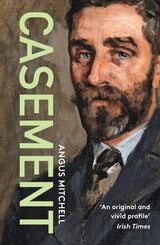
Casement
Angus Mitchell
Haus Publishing, 2026
At the time of his execution for treason in 1916, few were aware who Roger Casement was or what he represented. Since then, he has been lauded for his investigations into Belgian brutality in the Congo Free State and human rights abuses in the Peruvian rubber industry, but much else about him has remained obscured behind speculation about his sexuality and secret Irish revolutionary activity while in service of the British Empire. As such, his place in history has been ill-defined and multifarious: his involvement in the waging of war followed by the delicate negotiation of peace; his republicanism perceived variously as an eccentric enthusiasm and as a threat to the British Empire; his contemporary legacy overshadowed by the Black Diaries of disputed legitimacy, detailing alleged liaisons with young men.
In Casement, Angus Mitchell illuminates a life shrouded in mystery, which operated in the conflicting spheres of British foreign diplomacy and Irish revolutionary activity. Considering Casement’s rebellious nature, Mitchell asks if it was motivated as much by his “incorrigible” Irishness as by his exposure of the appalling crimes against humanity that he witnessed in Africa and South America. Most significantly, Casement demonstrates that his legacy cannot be ascribed to just one cause, whether as a critic of global colonialism or as a founding father of the modern Irish nation-state. Casement’s true commitment was to a universal understanding based on humanity, tolerance, and justice.
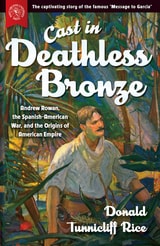
Cast in Deathless Bronze
Andrew Rowan, the Spanish-American War, and the Origins of American EmpireDonald Tunnicliff Rice
West Virginia University Press, 2016
Donald Tunnicliff Rice reveals the facts behind the story of “A Message to García” while using Rowan’s biography as a window into the history of the Spanish-American War, the Philippine War, and the Moro Rebellion. The result is a compellingly written narrative containing many details never before published in any form, and also an accessible perspective on American diplomatic and military history in the late nineteenth and early twentieth centuries.
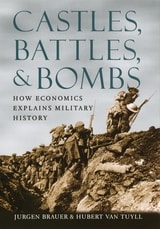
Castles, Battles, and Bombs
How Economics Explains Military HistoryJurgen Brauer and Hubert van Tuyll
University of Chicago Press, 2008
Castles, Battles, and Bombs reconsiders key episodes of military history from the point of view of economics—with dramatically insightful results. For example, when looked at as a question of sheer cost, the building of castles in the High Middle Ages seems almost inevitable: though stunningly expensive, a strong castle was far cheaper to maintain than a standing army. The authors also reexamine the strategic bombing of Germany in World War II and provide new insights into France’s decision to develop nuclear weapons. Drawing on these examples and more, Brauer and Van Tuyll suggest lessons for today’s military, from counterterrorist strategy and military manpower planning to the use of private military companies in Afghanistan and Iraq.
"In bringing economics into assessments of military history, [the authors] also bring illumination. . . . [The authors] turn their interdisciplinary lens on the mercenary arrangements of Renaissance Italy; the wars of Marlborough, Frederick the Great, and Napoleon; Grant's campaigns in the Civil War; and the strategic bombings of World War II. The results are invariably stimulating."—Martin Walker, Wilson Quarterly
"This study is serious, creative, important. As an economist I am happy to see economics so professionally applied to illuminate major decisions in the history of warfare."—Thomas C. Schelling, Winner of the 2005 Nobel Prize in Economics
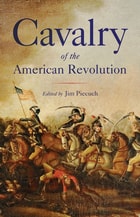
Cavalry of the American Revolution
Jim Piecuch
Westholme Publishing, 2012
Nine Historians and Writers Investigate the Role of Cavalry in the War for Independence
From the bitterly contested no-man’s-land between American and British lines in New York and New Jersey to the scorching pine forests of the South, the cavalry of both armies fought valiantly throughout the American Revolution. This volume explores several aspects of cavalry’s role in the war, which has often been overlooked in general histories. The topics covered include the development of the Continental Army’s cavalry arm, European influences on American cavalry training and tactics, accounts of several important cavalry raids and battles, and histories of mounted units such as the Continental Light Dragoons, American rangers in the South Carolina backcountry, and the British army’s Queen’s Rangers and “Black Dragoons,” the latter force composed entirely of former slaves. The essays also examine the roles of important commanders, including Brigadier General Francis “Swamp Fox” Marion, Lieutenant Colonel William Washington, and Colonel Anthony Walton White of the American army, and British cavalry leaders Banastre “Bloody Ban” Tarleton and John Graves Simcoe, as well as the American prisoners of war who switched sides and served in the “British Legion.” The authors of the essays include acclaimed military historians Gregory J. W. Urwin and Lawrence E. Babits. Readers with a general interest in military history, as well as those with more specific interests in the American Revolution or the history of the cavalry arm, and anyone who wishes to undertake further study of these subjects, will find the essays fresh, engaging, and informative.
@font-face { font-family: "Times New Roman";}@font-face { font-family: "HelveticaNeue-LightCond";}p.MsoNormal, li.MsoNormal, div.MsoNormal { margin: 0in 0in 0.0001pt; font-size: 12pt; font-family: "Times New Roman"; }table.MsoNormalTable { font-size: 10pt; font-family: "Times New Roman"; }div.Section1 { page: Section1; }
Contents
Gregory J. W. Urwin: The Continental Light Dragoons, 1776-1783
Lee F. McGee: European Influences on Continental Cavalry
John M. Hutchins: Cavalry Action at Poundridge, New York
Donald J. Gara: Cavalry Battles in New York and New Jersey
Scott A. Miskimon: Anthony Walton White: A Revolutionary Dragoon
Michael C. Scoggins: South Carolina’s Backcountry Rangers
Lawrence E. Babits and Joshua B. Howard: Continentals in Tarleton’s
British Legion
Charles F. Price: Cavalry Operations at Eutaw Springs
Jim Piecuch: The “Black Dragoons”
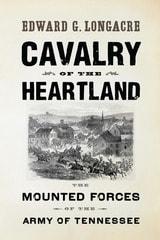
Cavalry of the Heartland
The Mounted Forces of the Army of TennesseeEdward G. Longacre
Westholme Publishing, 2009
A History of the Finest and Most Flamboyant Cavalry Arm of the Civil War
While Robert E. Lee’s Army of Northern Virginia prosecuted the war in the East for the Confederacy, the Army of Tennessee fought in the West, ranging over a tremendous expanse during the course of the Civil War, from southern Ohio and eastern Kentucky all the way to Georgia and the Carolinas. Unlike Lee’s army, however, the Army of Tennessee suffered at the hands of a series of uninspired commanders and had few impressive victories. It did have, however, arguably the best cavalry of any army in the war in terms of numbers and leadership. Led by some of the most colorful officers of the Civil War—the brilliant, passionate Nathan Bedford Forrest, the flamboyant but erratic John Hunt Morgan, and the quietly competent “Fightin’ Joe” Wheeler—and grabbing headlines for daring raids, such as Morgan’s foray into Ohio, the mounted forces of the Army of Tennessee developed a strategy of a highly mobile fighting unit that could be deployed rapidly in strength to strike deep behind enemy lines and maneuver at a moment’s notice during a battle, tactics that were to have the most impact on military operations in the future.
As distinguished historian Edward G. Longacre chronicles in Cavalry of the Heartland: The Mounted Forces of the Army of Tennessee, the army’s top generals failed to recognize the battle-winning potential of their cavalry and instead sent them off on sideshow operations rather than deploying them consistently to assist the main body’s efforts. Based on a wide array of research materials, Cavalry of the Heartland is the only book-length study of the strategy and tactics of the Army of Tennessee’s mounted forces from its inception in the spring of 1861 to its final bow at Bentonville, North Carolina, four years later. Throughout, numerous campaigns and battles are described in full detail, including Fort Donelson, Shiloh, Perryville, Murfreesboro (Stones River), Tullahoma, Chickamauga, Chattanooga, Atlanta, Nashville, and the Carolinas.
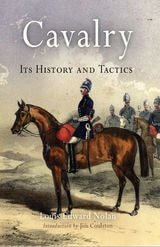
Cavalry
Its History and TacticsLouis Edward Nolan
Westholme Publishing, 2020
A New Edition of One of the Great Military Treatises of the Nineteenth Century
First published in 1853, Cavalry: Its History and Tactics had a major impact on military theorists and officers for decades—it was reprinted as a manual during the American Civil War—and its influence on European cavalry performance can be traced into World War I. It is an intelligent work which discusses the history and development of cavalry over the ages, advocates a program of reform for Britain’s horsed troops, and covers many aspects of equipment, training, drill, organization, formation, and battlefield tactics. The author, an experienced and gifted cavalryman, first served in the Austrian army, then joined the British army’s 15th Hussars in 1839, fought in India, and became the regimental riding master. Captain Nolan’s 1852 tour of European armies, wide reading in many languages, and service in Europe and India makes Cavalry an extraordinary statement on mid-nineteenth-century theory and practice.
As historian Jon Coulston explains in his introduction, Nolan was writing at the cusp of technological change, drawing upon the experiences of the Napoleonic Wars, continental suppression of the 1848 Revolutions, and Britain’s wars in India, but with an eye to firepower developments on the eve of the Crimean War. In 1854, at the Battle of Balaklava, Nolan rode with the written order which unleashed the Charge of the Light Brigade, an action in which he lost his life. Presented here as the first modern reprint, complete with a new introduction and further reading, Nolan’s Cavalry remains a hallmark of military history.
Cayman's 1794 Wreck of the Ten Sail
Peace, War, and Peril in the CaribbeanMargaret E. Leshikar-Denton
University of Alabama Press, 2020
The story has been passed through generations for more than two centuries. Details vary depending on who is doing the telling, but all refer to this momentous maritime event as the Wreck of the Ten Sail. Sometimes misunderstood as the loss of a single ship, it was in fact the wreck of ten vessels at once, comprising one of the most dramatic maritime disasters in all of Caribbean naval history. Surviving historical documents and the remains of the wrecked ships in the sea confirm that the narrative is more than folklore. It is a legend based on a historical event in which HMS Convert, formerly L’Inconstante, a recent prize from the French, and 9 of her 58-ship merchant convoy sailing from Jamaica to Britain, wrecked on the jagged eastern reefs of Grand Cayman in 1794.
The incident has historical significance far beyond the boundaries of the Cayman Islands. It is tied to British and French history during the French Revolution, when these and other European nations were competing for military and commercial dominance around the globe. The Wreck of the Ten Sail attests to the worldwide distribution of European war and trade at the close of the eighteenth century.
In Cayman’s 1794 Wreck of the Ten Sail: Peace, War, and Peril in the Caribbean, Margaret E. Leshikar-Denton focuses on the ships, the people, and the wreck itself to define their place in Caymanian, Caribbean, and European history. This well-researched volume weaves together rich oral folklore accounts, invaluable supporting documents found in archives in the United Kingdom, Jamaica, and France, and tangible evidence of the disaster from archaeological sites on the reefs of the East End.
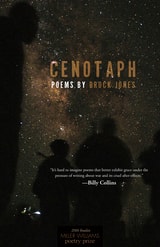
Cenotaph
PoemsBrock Jones
University of Arkansas Press, 2016
Finalist, 2016 Miller Williams Poetry Prize, edited by Billy Collins
Out of the contradiction, paradox, loss, and strange beauty of contemporary warfare, Brock Jones brings us Cenotaph, a collection of poems that have as their genesis Jones’s deployments to Iraq in 2002 and 2005, when he was in the US Army.
These are war poems, but also love poems and hate poems, poems about dying and living, poems about hope and hopelessness. These are poems that beautifully reflect Jones’s resignation to and rejection of the impossibility of saying anything definitive or honest about war.
These are poems that strive to do what poet Bruce Weigl described as the poet’s job: to find “some kind of miraculous way th at if you work hard enough to get the words right, that which you call horrific and wrong is defeated.”
Cenotaph is a poet doing the poet’s work: trying, hoping to get the words right.
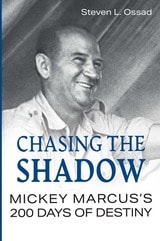
Chasing the Shadow
Mickey Marcus's 200 Days of DestinySteven L. Ossad
University of Missouri Press, 2024
The life of David “Mickey” Marcus has become the stuff of legends and myths (even fantasy), conspiracy, wild exaggeration, and untethered embellishment. The image of Marcus cast by the character portrayed by Kirk Douglas in the film version of his life still dominates most evocations of the man, for good or ill. And these days, reactions to the book or film rest mostly on the current headlines rather than the historical context of the struggle in which Marcus died, or the events that cast him as a real-life player in an event marked by destiny.
Chasing the Shadow: Mickey Marcus’s 200 Days of Destiny is the first comprehensive and balanced biography of David Daniel “Mickey” Marcus, a founder of American Civil Affairs and Military Government doctrine and practice and a seminal figure in early Israeli military history. Far from merely a tribute to Mickey Marcus's legacy, Ossad’s work serves as a critical tool for understanding the realities of mid-20th-century warfare in a Postwar colonial struggle and the dynamics of U.S.-Israeli military and political relations in 1948, the critical year for Israel’s struggle for independence. Indeed, Chasing the Shadow is a valuable read for those interested in Middle East history, Jewish military history, and a fascinating character whose story is told in an engaging, informative, and insightful narrative.
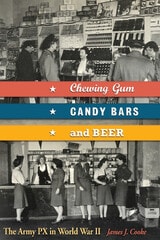
Chewing Gum, Candy Bars, and Beer
The Army PX in World War IIJames J. Cooke
University of Missouri Press, 2009
The AES was dedicated to providing soldiers with some of the comforts they had enjoyed in civilian life—candy, beer, cigarettes, razor blades, soap—whether by operating an exchange close to where they were fighting or by sending goods forward to the lines, free of charge. The beer may have been only “3.2,” but it was cheap and, unlike British beer, was served cold, thanks to PX coolers. And a constant supply of cigarettes and chewing gum gave GIs an advantage when flirting with the local girls.
In chronicling the history of the AES, James J. Cooke harks back to the Civil War, in which sutlers sold basic items to the Yankee troops for exorbitant prices, and to the First World War, when morale-building provisions were brought in by agencies such as the Red Cross. He then traces the evolution of the PX through World War II from the point of view of those who ran the service and that of the soldiers who used it, blending administrative history with colorful anecdotes and interspersing letters from GIs.
Cooke views the PX as a manifestation of American mobility, materialism, and the cultural revolution of mass consumerism that flourished in the 1920s, serving soldiers who were themselves products of this new American way of retail and expected a high level of material support in time of war. He emphasizes the accomplishments of Major General Joseph W. Byron, chief PX officer from 1941 to 1943, and his deputy, Colonel Frank Kerr. He also tells how the PX dealt with the presence of large numbers of women in uniform and the need to meet their demands in exchange offerings.
By 1945, General Byron could boast that the Army Exchange Service operated the world’s largest department store chain, serving the grandest army the United States had ever put in the field, and today the PX is still a central factor of military life. Yet as Cooke shows, the key to the AES’s importance was ultimately the way it bolstered morale—and helped give our fighting men the will to keep fighting.
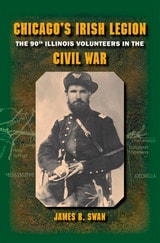
Chicago's Irish Legion
The 90th Illinois Volunteers in the Civil WarJames B. Swan
Southern Illinois University Press, 2009
Extensively documented and richly detailed, Chicago’s Irish Legion tells the compelling story of Chicago’s 90th Illinois Volunteer Infantry, the only Irish regiment in Major General William Tecumseh Sherman’s XV Army Corps. Swan’s sweeping history of this singular regiment and its pivotal role in the Western Theater of the Civil War draws heavily from primary documents and first-person observations, giving readers an intimate glimpse into the trials and triumphs of ethnic soldiers during one of the most destructive wars in American history.
At the onset of the bitter conflict between the North and the South, Irish immigrants faced a wall of distrust and discrimination in the United States. Many Americans were deeply suspicious of Irish religion and politics, while others openly doubted the dedication of the Irish to the Union cause. Responding to these criticisms with a firm show of patriotism, the Catholic clergy and Irish politicians in northern Illinois—along with the Chicago press and community—joined forces to recruit the Irish Legion. Composed mainly of foreign-born recruits, the Legion rapidly dispelled any rumors of disloyalty with its heroic endeavors for the Union. The volunteers proved to be instrumental in various battles and sieges, as well as the marches to the sea and through the Carolinas, suffering severe casualties and providing indispensable support for the Union. Swan meticulously traces the remarkable journey of these unique soldiers from their regiment’s inception and first military engagement in 1862 to their disbandment and participation in the Grand Review of General Sherman’s army in 1865.
Enhancing the volume are firsthand accounts from the soldiers who endured the misery of frigid winters and brutal environments, struggling against the ravages of disease and hunger as they marched more than twenty-six hundred miles over the course of the war. Also revealed are personal insights into some of the war’s most harrowing events, including the battle at Chattanooga and Sherman’s famous campaign for Atlanta. In addition, Swan exposes the racial issues that affected the soldiers of the 90th Illinois, including their reactions to the Emancipation Proclamation and the formations of the first African American fighting units. Swan rounds out the volume with stories of survivors’ lives after the war, adding an even deeper personal dimension to this absorbing chronicle.
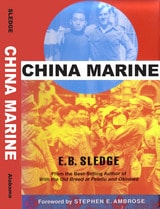
China Marine
E. B. Sledge
University of Alabama Press, 2002
From the respected author of one of the best books on World War II combat, comes an equally captivating saga of battle recovery, healing, and homecoming.
China Marine is the long-awaited sequel to E. B. Sledge’s critically acclaimed memoir, With the Old Breed at Peleliu and Okinawa. Picking up where his previous memoir leaves off, Sledge, a young marine in the First Division, traces his company’s movements and charts his own difficult passage to peace following his horrific experiences in the Pacific. He reflects on his duty in the ancient city of Peiping (now Beijing) and recounts the difficulty of returning to his hometown of Mobile, Alabama, and resuming civilian life haunted by the shadows of close combat.
Distinguished historians have praised Sledge’s first book as the definitive rifleman’s account of World War II, ranking it with the Civil War’s Red Badge of Courage and World War I’s All Quiet on the Western Front. Although With the Old Breed ends with the surrender of Japan, marines in the Pacific were still faced with the mission of disarming the immense Japanese forces on the Asian mainland and reestablishing order. For infantrymen so long engaged in the savage and surreal world of close combat, there remained the personal tasks of regaining normalcy and dealing with suppressed memories, fears, and guilt.
In China Marine, E. B. Sledge completes his story and provides emotional closure to the searing events detailed in his first memoir. He speaks frankly about the real costs of war, emotional and psychological as well as physical, and explains the lifetime loyalties that develop between men who face fear, loss, and horror together. That bond becomes one of the newfound treasures of life after battle.
With his hallmark style of simplicity, directness, and lack of sentimentality, "Sledgehammer" has given us yet another great document of war literature.

China Marine
25th Anniversary EditionE. B. Sledge with a new foreword by John C. McManus and a new preface by John S. Sledge
University of Alabama Press, 2002
From the Pacific’s brutality to China’s uneasy peace—one Marine’s fight to reclaim himself.
In this powerful anniversary edition of China Marine, Eugene B. Sledge—acclaimed author of the classic WWII memoir With the Old Breed—offers an unforgettable portrait of a young Marine navigating the uneasy peace that followed history’s most brutal war. Already celebrated for his visceral honesty and humanity, Sledge deepened his legacy with this rare account of the U.S. occupation of North China, a period as volatile as it was transformative.
Sledge’s memoirs remain enduringly popular because they never flinch from the truth. His reflections resonate across generations, offering readers not only a veteran’s hard-won wisdom but a moving story of survival, friendship, trauma, and the long journey back to ordinary life. His life and words have become part of American cultural memory, featured prominently in both Ken Burns’s PBS series The War and the HBO production The Pacific.
This special anniversary edition honors that legacy with a new preface by his son, bestselling author John Sledge and a new foreword by the eminent military historian John McManus, who together illuminate Sledge’s continued relevance in understanding war and its aftermath.
Intimate, vivid, and deeply human, China Marine stands as a timeless testament to courage, resilience, and the costs of peace after war.
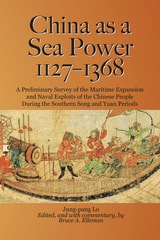
China as a Sea Power, 1127–1368
A Preliminary Survey of the Maritime Expansion and Naval Exploits of the Chinese People During the Southern Song and Yuan PeriodsLo Jung-pang
National University of Singapore Press, 2012
In the early 21st century, a strong and outward looking China is again building up its navy and seeking maritime dominance, with important implications for trade, diplomacy and naval affairs. Events will not necessarily follow the same course as in the past, but Lo Jung-pang's analysis suggests useful questions for the study of events as they unfold and decades to come.
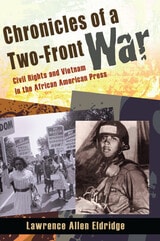
Chronicles of a Two-Front War
Civil Rights and Vietnam in the African American PressLawrence Allen Eldridge
University of Missouri Press, 2011
Eldridge reveals how the black press not only reported the war but also weighed its significance in the context of the civil rights movement.
Eldridge examines not only the role of reporters during the war, but also those of editors, commentators, and cartoonists. Especially enlightening is the research drawn from extensive oral histories by prominent journalist Ethel Payne, the first African American woman to receive the title of war correspondent. She described a widespread practice in black papers of reworking material from major white papers without providing proper credit, as the demand for news swamped the small budgets and limited staffs of African American papers. The author analyzes both the strengths of the black print media and the weaknesses in their coverage.
The black press ultimately viewed the Vietnam War through the lens of African American experience, blaming the war for crippling LBJ’s Great Society and the War on Poverty. Despite its waning hopes for an improved life, the black press soldiered on.
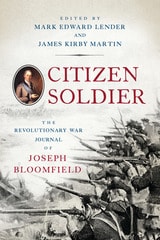
Citizen Soldier
The Revolutionary War Journal of Joseph BloomfieldMark Edward Lender and James K. Martin
Westholme Publishing, 2017
“About sunset we made a stand, when I was wounded, having a Ball with the Wad shot through my left forearm & the fuse set my coat and shirt on fire.” So wrote Major Joseph Bloomfield in his journal on September 11, 1777, describing his experiences during the hard-fought battle of Brandywine. Bloomfield was an officer in the 3rd New Jersey Regiment from 1776 to 1779. His service took him from Fort Stanwix to Fort Ticonderoga in New York, to the battle of Brandywine in Pennsylvania, and to the battle of Monmouth in his native state. He later served as governor of New Jersey from 1801 to 1812. A compassionate officer admired by his men, Bloomfield carefully recounted the hardships of military campaigns—the swings of morale, the shortage of supplies, the ever-present illnesses—and the intensity of combat. Of special interest are Bloomfield’s important notes on the culture and behavior of the Iroquois tribes known collectively as the Six Nations, which played a crucial role in revolutionary New York.
Unpublished and all but unknown when the first edition—skillfully edited by historians Mark Edward Lender and Joseph Kirby Martin—appeared, Bloomfield’s wartime journal was praised for providing both scholars and general readers with new information on the Continental soldier; the revolution’s impact on society; warfare in New York, New Jersey, and Pennsylvania; and the motives and actions of the revolutionary generation. Soldiers and civilians, Patriots and Tories, come alive in this fascinating eyewitness narrative. This new edition of Citizen Soldier: The Revolutionary War Journal of Joseph Bloomfield—the first in thirty-five years—includes a new introduction and bibliographic essay by the editors.
Citizen-General
Jacob Dolson Cox and the Civil War EraEugene D. Schmiel
Ohio University Press, 2014
The wrenching events of the Civil War transformed not only the United States but also the men unexpectedly called on to lead their fellow citizens in this first modern example of total war. Jacob Dolson Cox, a former divinity student with no formal military training, was among those who rose to the challenge. In a conflict in which “political generals” often proved less than competent, Cox, the consummate citizen general, emerged as one of the best commanders in the Union army.
During his school days at Oberlin College, no one could have predicted that the intellectual, reserved, and bookish Cox possessed what he called in his writings the “military aptitude” to lead men effectively in war. His military career included helping secure West Virginia for the Union; jointly commanding the left wing of the Union army at the critical Battle of Antietam; breaking the Confederate supply line and thereby precipitating the fall of Atlanta; and holding the defensive line at the Battle of Franklin, a Union victory that effectively ended the Confederate threat in the West.
At a time when there were few professional schools other than West Point, the self-made man was the standard for success; true to that mode, Cox fashioned himself into a Renaissance man. In each of his vocations and avocations—general, governor, cabinet secretary, university president, law school dean, railroad president, historian, and scientist—he was recognized as a leader. Cox’s greatest fame, however, came to him as the foremost participant historian of the Civil War. His accounts of the conflict are to this day cited by serious scholars and serve as a foundation for the interpretation of many aspects of the war.
Civil War Alabama
Christopher Lyle McIlwain, Sr.
University of Alabama Press, 2016
The definitive study of Alabama's divided path through the Civil War.
Christopher McIlwain’s Civil War Alabama is a landmark book that sheds invigorating new light on the causes, the course, and the outcomes in Alabama of the nation’s greatest drama and trauma. Based on twenty years of exhaustive research that draws on a vast trove of primary sources such as letters, newspapers, and personal journals, Civil War Alabama presents compelling new explanations for how Alabama’s white citizens came to take up arms against the federal government.
A fledgling state at only forty years old, Alabama approached the 1860s with expanding populations of both whites and black slaves. They were locked together in a powerful yet fragile economic engine that produced and concentrated titanic wealth in the hands of a white elite. Perceiving themselves trapped between a mass of disenfranchised black slaves and the industrializing and increasingly abolitionist North, white Alabamians were led into secession and war by a charismatic cohort who claimed the imprimatur of biblical scripture, romanticized traditions of chivalry, and the military mantle of the American Revolution.
And yet, Alabama’s white citizens were not a monolith of one mind. McIlwain dispels the received wisdom of a white citizenry united behind a cadre of patriarchs and patriots. Providing a fresh and insightful synthesis of military events, economic factors such as inflation and shortages, politics and elections, the pivotal role of the legal profession, and the influence of the press, McIlwain’s Civil War Alabama illuminates the fissiparous state of white, antebellum Alabamians divided by class, geography, financial interests, and political loyalties.
Vital and compelling, Civil War Alabama will take its place among the definitive books about Alabama’s doomed Confederate experiment and legacy. Although he rigorously dismantles idealized myths about the South’s “Lost Cause,” McIlwain restores for contemporary readers the fervent struggles between Alabamians over their response to the epic crisis of their times.
Clara Barton's Civil War
Between Bullet and HospitalDonald C. Pfanz
Westholme Publishing, 2018
“I always tried to succor the wounded until medical aid and supplies could come up—I could run the risk; it made no difference to anyone if I were shot or taken prisoner.” So recorded Clara Barton, the most famous woman to emerge from the American Civil War. In an age when few women worked in hospitals, much less at the front, Barton served in at least four Union armies, providing food and assistance to wounded soldiers on battlefields stretching from Maryland to South Carolina. Thousands of soldiers benefited from her actions, and she is unquestionably an American heroine. But how much do we really know about her actual wartime service? Most information about Barton’s activities comes from Barton herself. After the war, she toured the country recounting her wartime experiences to overflowing audiences. In vivid language, she described crossing the Rappahannock River under fire to succor wounded Union soldiers at Fredericksburg, transporting critical supplies to field hospitals at Antietam, and enduring searing heat and brackish water on the sunscorched beaches of South Carolina. She willingly braved hardship and danger in order to help the young men under her care, receiving in return their love and respect. Most of Barton’s biographers have accepted her statements at face value, but in doing so, they stand on shaky ground, for Barton was a relentless selfpromoter and often embellished her stories in an effort to enhance her accomplishments.
In Clara Barton’s Civil War: Between Bullet and Hospital, distinguished historian Donald Pfanz revisits Barton’s claims, comparing the information in her speeches with contemporary documents, including Barton’s own wartime diary and letters. In doing so, he provides the first balanced and accurate account of her wartime service—a service that in the end needed no exaggeration.

Co. Aytch, or a Side Show of the Big Show
A New Edition Introduced and Annotated by Philip LeighSam Watkins
Westholme Publishing, 2013
Co. Aytch, or a Side Show of the Big Show is perhaps the finest memoir of an ordinary Confederate soldier. According to Margaret Mitchell, “a better book there never was.” Sam Watkins served in Company H of the First Tennessee Infantry for the duration of the Civil War. Remarkably, he survived some of the most intense battles of the war, including Shiloh, Chickamauga, Kennesaw Mountain, Atlanta, and Franklin. He was one of only seven of the original members of Company H when it surrendered in April 1865. Watkins’s memoir was written in the winter of 1882–83. The humor and depth of writing at times rises to a level resembling Mark Twain; thus, twenty-first-century readers can still discover the everlasting treasures of Private Sam Watkins’s story just as it was. It is this reason that excerpts were featured frequently in Ken Burns’s documentary on the Civil War. However, since most of Sam’s original readers—or some of their family members—actually lived through the Civil War, much of the context for the narrative was common knowledge. But what was once received history has gradually disappeared, and presently only specialists can fully understand and appreciate Sam’s tale.
The chief aim for this new annotated edition of Co. Aytch—the first of its kind—is to amplify the experience for today’s readers by providing the missing context. Over 240 annotations clarify the situational backgrounds, personalities, and terminology that might not be familiar to most readers. The annotations also identify and explain errors mostly resulting from Sam’s occasionally faulty memory or limited perspective. Similarly, twentyfour battlefield and war theater maps enable readers to track Sam’s combat participation as well as his journeys while marching with the army. Finally fifteen photographs and prints illustrate some of the battles, people, towns, buildings, tools of war, and ruins that Sam witnessed. As someone once cleverly observed, “It’s not an adventure until something goes wrong.” If nothing else, Sam’s memoir is a foot soldier’s view of the resulting horrors, heroics, and healing humor when war planning routinely goes awry.
Code Name Puritan
Norman Holmes Pearson at the Nexus of Poetry, Espionage, and American PowerGreg Barnhisel
University of Chicago Press, 2024
Although his impact on twentieth-century American cultural life was profound, few people know the story of Norman Holmes Pearson. Pearson’s life embodied the Cold War alliances among US artists, scholars, and the national-security state that coalesced after World War II. As a Yale professor and editor, he helped legitimize the study of American culture and shaped the public’s understanding of literary modernism—significantly, the work of women poets such as Hilda Doolittle and Gertrude Stein. At the same time, as a spy, recruiter, and cultural diplomat, he connected the academy, the State Department, and even the CIA.
In Code Name Puritan, Greg Barnhisel maps Pearson’s life, from his childhood injury that led to a visible, permanent disability to his wartime counterespionage work neutralizing the Nazis’ spy network to his powerful role in the cultural and political heyday sometimes called the American Century. Written with clarity and informed by meticulous research, Barnhisel’s revelatory portrait of Pearson details how his unique experiences shaped his beliefs about the American character, from the Puritans onward.
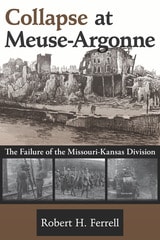
Collapse at Meuse-Argonne
The Failure of the Missouri-Kansas DivisionRobert H. Ferrell
University of Missouri Press, 2004
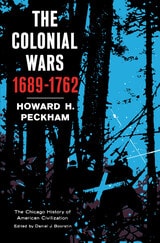
Colonial Wars, 1689-1762
Howard H. Peckham
University of Chicago Press, 1965
Mr. Peckham chronicles the events of these wars, summarizing the struggle for empire in America among France, England, and Spain. He indicates how the colonists applied the experience they gained from fighting Indians to their engagements with European powers. And what they learned from the colonial wars they translated into a political philosophy that led to independence and self-government.
The ready involvement of the colonies in European ambitions, the success and failure of co-operation between colony and mother country, the efforts of the English colonies together, and the growing differences between them and Britain give the narrative continuity and rising excitement.
Colonial Wars, 1689-1762
Howard H. Peckham
University of Chicago Press, 1965
Although the colonial wars consisted of almost continuous raids and skirmishes between the English and French colonists and their Indian allies and enemies, they can be separated into four major conflicts, corresponding to four European wars of which they were, in varying degrees, a part: King William's War (1689-97) (War of the League of Augsburg); Queen Anne's War (1702-13) (War of the Spanish Succession); King George's War (1744-48) (War of the Austrian Succession); and The French and Indian War (1755-62) (Seven Years' War).
Mr. Peckham chronicles the events of these wars, summarizing the struggle for empire in America among France, England, and Spain. He indicates how the colonists applied the experience they gained from fighting Indians to their engagements with European powers. And what they learned from the colonial wars they translated into a political philosophy that led to independence and self-government.
The ready involvement of the colonies in European ambitions, the success and failure of co-operation between colony and mother country, the efforts of the English colonies together, and the growing differences between them and Britain give the narrative continuity and rising excitement.
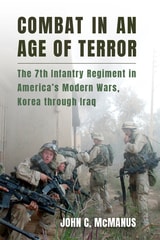
Combat in an Age of Terror
The 7th Infantry Regiment in America's Modern Wars, Korea through IraqJohn C. McManus
University of Missouri Press, 2025
In this in-depth history of the 7th, acclaimed combat historian John C. McManus takes readers from cold war campaigns through the global war on terror, chronicling the modern era of the regiment’s amazing history. Covering desperate fights for Korean hills, the struggle for control of steamy Vietnamese villages, and the lightning campaign of Desert Storm, the narrative culminates in the 7th’s toils in the Middle East. More than anything, McManus’s chronicle of the 7th portrays these unremarkable, ordinary individuals as the heart and soul of the United States Army. McManus gives a complete account of their struggles, anguish, fears, sacrifices, triumphs, and pride, providing a compelling glimpse not only of these soldiers’ journey through American history, but of the shaping of our nation as a whole.
Based on nearly a decade of research, from archives to battlefield visits to McManus’s personal interviews with countless 7th Infantry soldiers, and illustrated with maps and sixteen pages of photographs, this book is a definitive and moving story of Americans in combat.
Coming Out of War
Poetry, Grieving, and the Culture of the World WarsJanis P. Stout
University of Alabama Press, 2005
World War I is widely considered “the Great War” and World War II, “the Good War.” Janis Stout thinks of them as two parts of a whole that continues to engage historians and literary scholars searching for an understanding of both the actual war experiences and the modern culture of grief they embody. In Coming Out of War: Poetry, Grieving, and the Culture of the World Wars Stout argues that poetry, of all the arts, most fully captures and conveys those cultural responses.
While probing the work of such well known war poets as Rupert Brooke, Wilfred Owen, and Randall Jarrell, Stout also highlights the impact of the wars on lesser studied, but equally compelling, sources such as the music of Charles Ives and Cole Porter, Aaron Copland and Irving Berlin. She challenges the commonplace belief that war poetry came only from the battlefield and was written only by men by examining the wartime writings of women poets such as Rose Macaulay, Marianne Moore, Elizabeth Bishop, and Gwendolyn Brooks. She also challenges the assumption that World War II did not produce poetry of distinction by studying the work of John Ciardi, Karl Shapiro, Louis Simpson, Robert Frost, and Wallace Stevens. While emphasizing aesthetic continuity between the wars, Stout stresses that the poetry that emerged from each displays a greater variety than is usually recognized.
A final chapter considers Benjamin Britten’s War Requiem as a culmination and embodiment of the anti-war tradition in 20th-century poetry and music, and speculates on the reasons why, despite their abundance and eloquence, these expressions of grief and opposition to war have effected so little change.
Coming Through Fire
George Armstrong Custer and Chief Black KettleDuane Schultz
Westholme Publishing, 2012
The cold dawn of November 27, 1868, was the moment George Armstrong Custer had longed for ever since the Civil War ended three years before. It was also the moment Black Kettle of the Cheyenne nation had feared ever since he had survived the deadly attack on his people at Sand Creek, Colorado Territory. Custer, who gloried in battle, was no longer the national hero, the celebrity he had been in wartime. He was a forgotten man who had failed in his first Indian campaign the year before. He needed a resounding victory to resurrect the attention he craved, and the sleepy Cheyenne village along the banks of the Washita River—ironically near present-day Cheyenne, Oklahoma—proved irresistible. Custer led his 7th U.S. Cavalry in an early morning charge that wiped out the encampment, killing those who resisted and some of those who fled. Black Kettle’s Cheyenne had signed documents of peace with the U.S. Government as they had done before Sand Creek, but once again that did not protect them. Custer ordered his troops to capture women and children and traveled with these prisoners as a way to shield his column from a retaliatory strike on their way back to their post. Called both a massacre and a battle, the action at the Washita River returned Custer to national prominence as the “greatest Indian fighter of all.”
Coming Through Fire: George Armstrong Custer and Chief Black Kettle tells the converging stories of a Civil War hero and a native warrior who met along the Washita River. Black Kettle had given up fighting—he had “come through the fire”— and made his mark on treaty after treaty to try to save the Cheyenne and their way of life from the encroachments of the U.S. government and white settlers. He watched the government breach the terms of each treaty, yet he continued to work for a compromise, knowing that negotiations were the only way his people could survive. But the flood of wagon trains and settlements, the killing of the great buffalo herds, the new diseases and broken promises, political ambition, naked greed, and continuing restrictions on land, food, and shelter persisted. As the U.S. Army, including Custer, continued to attack and forceably move Indians to reservations despite treaties indicating otherwise, Black Kettle’s dreams of peace were shattered. He ended his life face down in the freezing waters of the Washita River, shot by one of Custer’s troopers. The “greatest Indian fighter” would not survive the Indian Wars either, cut down near the Little Big Horn River, in part for his actions against Black Kettle and the Cheyenne.
Con Thien
The Hill of AngelsJames P. Coan
University of Alabama Press, 2007
Holding the Hill of Angels: A Marine’s Fight for Survival at the DMZ.
Throughout much of 1967, a remote United States Marine firebase only two miles from the demilitarized zone (DMZ) captured the attention of the world’s media. That artillery-scarred outpost was the linchpin of the so-called McNamara Line intended to deter incursions into South Vietnam by the North Vietnamese Army. As such, the fighting along this territory was particularly intense and bloody, and the body count rose daily.
Con Thien combines James P. Coan’s personal experiences with information taken from archives, interviews with battle participants, and official documents to construct a powerful story of the daily life and combat on the red clay bulls-eye known as "The Hill of Angels." As a tank platoon leader in Alpha Company, 3d Tank Battalion, 3d Marine Division, Coan was stationed at Con Thien for eight months during his 1967-68 service in Vietnam and witnessed much of the carnage.
Con Thien was heavily bombarded by enemy artillery with impunity because it was located in politically sensitive territory and the U.S. government would not permit direct armed response from Marine tanks. Coan, like many other soldiers, began to feel as though the government was as much the enemy as the NVA, yet he continued to fight for his country with all that he had. In his riveting memoir, Coan depicts the hardships of life in the DMZ and the ineffectiveness of much of the U.S. military effort in Vietnam.
Confederate Colonels
A Biographical RegisterBruce S. Allardice
University of Missouri Press, 2008
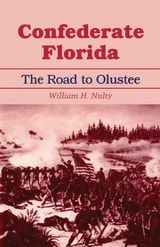
Confederate Florida
The Road to OlusteeWilliam H. Nulty
University of Alabama Press, 1990
At the end of 1863 the Federal forces in the Department of the South were tied up in siege operations against Charleston and Savannah, operations that showed little progress or promise. The commander of the Department, Major General Quincy A. Gillmore, led an expedition into Florida to recruit blacks, cut off commissary supplies headed for other parts of the Confederacy, and disrupt the railroad system within Florida. Expedition forces landed at Jacksonville on February 7, 1864.
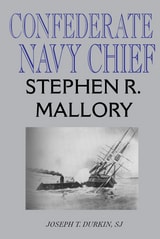
Confederate Navy Chief
Stephen R. MalloryJoseph T. Durkin
University of Alabama Press, 2005
The book tells of Stephen R. Mallory's support of naval inventions, strategy, and ideas. It also sheds light on the the successes and failures of Jefferson Davis. Durkin gives a well-balanced biography of Mallory and his life in the Confederate navy.
Conflicted Memory
Military Cultural Interventions and the Human Rights Era in PeruCynthia E. Milton
University of Wisconsin Press, 2018
Milton calls attention to fabrications of our post-truth era but goes further to deeply explore the ways members of the Peruvian military see their past, how they actively commemorate and curate it in the present, and why they do so. Her nuanced approach upends frameworks of memory studies that reduce military and ex-military to a predictable role of outright denial.
Conflicted Memory
Military Cultural Interventions and the Human Rights Era in PeruCynthia E. Milton
University of Wisconsin Press, 2020
Confronting Torture
Essays on the Ethics, Legality, History, and Psychology of Torture TodayEdited by Scott A. Anderson and Martha C. Nussbaum
University of Chicago Press, 2018
Confronting Torture offers a multidisciplinary investigation of this wrenching topic. Editors Scott A. Anderson and Martha C. Nussbaum bring together a diversity of scholars to grapple with many of torture’s complexities, including: How should we understand the impetus to use torture? Why does torture stand out as a particularly heinous means of war-fighting? Are there any sound justifications for the use of torture? How does torture affect the societies that employ it? And how can we develop ethical or political bulwarks to prevent its use? The essays here resist the temptation to oversimplify torture, drawing together work from scholars in psychology, history, sociology, law, and philosophy, deepening and broadening our grasp of the subject. Now, more than ever, torture is something we must think about; this important book offers a diversity of timely, constructive responses on this resurgent and controversial subject.
Constructing Disability after the Great War
Blind Veterans in the Progressive EraEvan P. Sullivan
University of Illinois Press, 2024
Constructing Peace
Conscientious Objectors and the Boundaries of State Power in East Germany in the 1960sDavid Doellinger
Central European University Press, 2026
Contested Medicine
Cancer Research and the MilitaryGerald Kutcher
University of Chicago Press, 2009
In the 1960s University of Cincinnati radiologist Eugene Saenger infamously conducted human experiments on patients with advanced cancer to examine how total body radiation could treat the disease. But, under contract with the Department of Defense, Saenger also used those same patients as proxies for soldiers to answer questions about combat effectiveness on a nuclear battlefield.
Using the Saenger case as a means to reconsider cold war medical trials, Contested Medicine examines the inherent tensions at the heart of clinical studies of the time. Emphasizing the deeply intertwined and mutually supportive relationship between cancer therapy with radiation and military medicine, Gerald Kutcher explores post–World War II cancer trials, the efforts of the government to manage clinical ethics, and the important role of military investigations in the development of an effective treatment for childhood leukemia. Whereas most histories of human experimentation judge research such as Saenger’s against idealized practices, Contested Medicine eschews such an approach and considers why Saenger’s peers and later critics had so much difficulty reaching an unambiguous ethical assessment. Kutcher’s engaging investigation offers an approach to clinical ethics and research imperatives that lays bare many of the conflicts and tensions of the postwar period.
Convair B-58 Hustler
cold war nuclear bomberNico Braas
Amsterdam University Press, 2023
However, problems occurred during the development process and costs risings went so out of control that the whole project was almost cancelled a few times. Strategic Air Command was initially against ordering the B-58 for service, not only because of its complexity but also since they saw no advantage of a Mach 2 bomber over other types. Despite this the B-58 entered service at S.A.C. in 1960. It would have a relatively short operational career.
Coronado's Well-Equipped Army
The Spanish Invasion of the American SouthwestJohn M. Hutchins
Westholme Publishing, 2023
Winner of Two Colorado Book Awards
The historic 1540–1542 expedition of Captain-General Francisco Vasquez de Coronado is popularly remembered as a luckless party of exploration which wandered the American Southwest and then blundered onto the central Great Plains of Texas, Oklahoma, and Kansas. The expedition, as historian John M. Hutchins relates in Coronado’s Well-Equipped Army: The Spanish Invasion of the American Southwest, was a military force of about 1,500 individuals, made up of Spanish soldiers, Indian warrior allies, and camp followers. Despite the hopes for a peaceful conquest of new lands—including those of a legendary kingdom of Cibola—the expedition was obliged to fight a series of battles with the natives in present-day Sonora, California, Arizona, and New Mexico. The final phase of the invasion was less warlike, as the members of the expedition searched the Great Plains in vain for a wealthy civilization called Quivira.While much has been written about the march of Coronado and his men, this is the first book to address the endeavor as a military campaign of potential conquest like those conducted by other conquistadors. This helps to explain many of the previously misunderstood activities of the expedition. In addition, new light is cast on the non-Spanish participants, including Mexican Indian allies and African retainers, as well as the important roles of women.
Crash Course
From the Good War to the Forever WarFranklin, H. Bruce
Rutgers University Press, 2024
Now, after fifty years as a renowned cultural historian, Franklin offers a set of hard-learned lessons about modern American history. Crash Course is essential reading for anyone who wonders how America ended up where it is today: with a deeply divided and disillusioned populace, led by a dysfunctional government, and mired in unwinnable wars. It also finds startling parallels between America’s foreign military exploits and the equally brutal tactics used on the home front to crush organized labor, antiwar, and civil rights movements.
More than just a memoir or a history book, Crash Course gives readers a unique firsthand look at the building of the American empire and the damage it has wrought. Shocking and gripping as any thriller, it exposes the endless deception of the American public, and reveals from inside how and why many millions of Americans have been struggling for decades against our own government in a fight for peace and justice.