Results by title
1668 books match the query 'Popular culture' and 123 start with c

CONSUMING FANTASIES
LABOR, LEISURE, AND THE LONDON SHOPGIRL,LISE SHAPIRO SANDERS
The Ohio State University Press, 2006
Cairo Pop
Youth Music in Contemporary EgyptDaniel J. Gilman
University of Minnesota Press, 2014
Cairo Pop is the first book to examine the dominant popular music of Egypt, shababiyya. Scorned or ignored by scholars and older Egyptians alike, shababiyya plays incessantly in Cairo, even while Egyptian youth joined in mass protests against their government, which eventually helped oust longtime Egyptian president Hosni Mubarak in early 2011. Living in Cairo at the time of the revolution, Daniel Gilman saw, and more importantly heard, the impact that popular music can have on culture and politics. Here he contributes a richly ethnographic analysis of the relationship between mass-mediated popular music, modernity, and nationalism in the Arab world.
Before Cairo Pop, most scholarship on the popular music of Egypt focused on musiqa al-ṭarab. Immensely popular in the 1950s and ’60s and even into the ’70s, musiqa al-ṭarab adheres to Arabic musical theory, with non-Western scales based on tunings of the strings of the ‘ud—the lute that features prominently, nearly ubiquitously, in Arabic music. However, today one in five Egyptians is between the ages of 15 and 24; half the population is under the age of 25. And shababiyya is their music of choice. By speaking informally with dozens of everyday young people in Cairo, Gilman comes to understand shababiyya as more than just a musical genre: sometimes it is for dancing or seduction, other times it propels social activism, at others it is simply sonic junk food.
In addition to providing a clear Egyptian musical history as well as a succinct modern political history of the nation, Cairo Pop elevates the aural and visual aesthetic of shababiyya—and its role in the lives of a nation’s youth.
Caliban's Curse
George Lamming and the Revisioning of HistorySupriya Nair
University of Michigan Press, 1996
Caliban's Curse draws upon a range of theories--postcolonial, Marxist, and feminist--to contextualize the black diaspora of the modern Caribbean through one of its primary anglophone novelists. Putting George Lamming in conversation with such contemporaries as C.L.R. James, Derek Walcott, and Wilson Harris, Nair argues that Lamming's works expand the protest of Shakespeare's Caliban to articulate a reinvention of Caribbean cultures. Both cursed by and cursing the weight of colonial history, Lamming works against the paralysis induced by such an encounter; his work serves to rewrite canonical icons and to reimagine popular cultures.
"Supriya Nair writes about the problems of history and social revolution with passion and clarity and an amazing range of critical and cultural reference. . . . She brings to existing studies of Lamming a wide and sustained knowledge of the forces that have shaped the West Indian novel, and the wider postcolonial debates in which these novels are read and discussed." --Simon Gikandi, University of Michigan
Supriya Nair is Associate Professor of English, Tulane University.
California Polyphony
Ethnic Voices, Musical CrossroadsMina Yang
University of Illinois Press, 2007
In the early twentieth century, an orientalist fascination with Asian music and culture dominated the popular imagination of white Californians and influenced their interactions with the Asian Other. Several decades later, tensions between the Los Angeles Police Department and the African American community made the thriving jazz and blues nightclub scene of 1940s Central Avenue a target for the LAPD's anti-vice crusade. The musical scores for Hollywood's noir films confirmed reactionary notions of the threat to white female sexuality in the face of black culture and urban corruption while Mexican Americans faced a conflicted assimilation into the white American mainstream. Finally, Korean Americans in the twenty-first century turned to hip-hop to express their cultural and national identities.
A compelling journey into the origins of musical identity, California Polyphony explores the intersection of musicology, cultural history, and politics to define Californian.
Camp Grounds
Style and HomosexualityEdited by David Bergman
University of Massachusetts Press, 1993
The concept of camp has never been easy to define. Derived from the French verb camper, “to pose,” it has been variously interpreted as a style that favors exaggeration, an ironic attitude toward the cultural mainstream, and a form of aestheticism that celebrates artifice over beauty. At the same time, camp has been long associated with homosexual culture, or at least with a self-conscious eroticism that questions traditional gender constructions.
The sixteen essays on camp included in this book explore further the relationship between style and homosexuality, showing how camp has made its way into every aspect of our cultural lives: theater, popular music, opera, film, and literature. Beginning with an overview of what camp is, where it came from, and how it operates, the chapter addresses topics ranging from the “high camp” of Whitman and Proust to the “low camp” of drag queen culture and gay fanzines. Together they carry forward a conversation that began more than twenty-five years ago, before Stonewall and AIDS, when Susan Sontag published her memorable “Notes on Camp.”
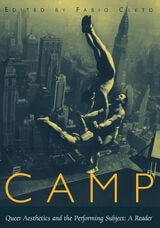
Camp
Queer Aesthetics and the Performing Subject--A ReaderFabio Cleto, Editor
University of Michigan Press, 1999
This groundbreaking collection addresses the multi-layered issue of camp, whose inexhaustible breadth of reference and theoretical relevance have made it one of the most salient and challenging issues on the contemporary critical stage. Reassessing the role and significance of the finest essays on camp written by leading intellectuals in cultural studies, lesbian and gay studies and queer theory, this critical anthology both "queers" camp as an issue and offers an excellent key to rethinking the history, theory, and practice of camp.
The anthology is divided into five thematic/historical sections: Tasting It; Flaunting the Closet; Gender, and Other Spectacles; Pop Camp, Surplus Counter-Value, or the Camp of Cultural Economy; and The Queer Issue. These groupings help the reader situate the critical debates around the subject. Fabio Cleto's introduction brings new theoretical insights to the subject of camp while tracing its history as an object of intellectual and cultural critique and analysis.
A comprehensive bibliography that traces the earliest use of the word 'camp' to the present completes this unique and exciting volume.
“Is ‘camp’ a kind of irony, an effect of one’s historic vantage point, an art form or an elitist aesthetic? … From landmark early works by Christopher Isherwood and Susan Sontag to influential contemporary pieces by Esther Newton, Andrew Ross and Judith Butler, this anthology encapsulates the philosophical discussion of this slippery postmodern concept.”
--Publishers Weekly
“As an object of critical inquiry, camp has proven notoriously difficult to define. Fabio Cleto takes this difficulty as his point of departure in the most recent anthology of a growing body of scholarly literature on the topic…Cleto resists defining camp [but] does not abandon the task of framing, in a coherent but flexible way, camp as a problematic.”
--Semiotica
“Fabio Cleto’s collection variously associates ‘camp’ with the 1960s, aestheticism, androgyny, cross-dressing, the cultural figure of the dandy, decadence, drag, exaggeration, kitsch, parody, pastiche, postmodernism, the sentimental, and the transvestite… The essayists in Camp disagree freely and fiercely over definitions. This is to be expected in a queer reader, one whose contributors endeavor to ‘read across’ the meanings of camp.”
--The Gay & Lesbian Review
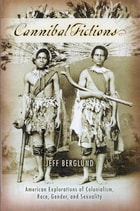
Cannibal Fictions
American Explorations of Colonialism, Race, Gender, and SexualityJeff Berglund
University of Wisconsin Press, 2006
Cannibal Fictions brings together two discrete periods in U.S. history: the years between the Civil War and World War I, the high-water mark in America's imperial presence, and the post-Vietnam era, when the nation was beginning to seriously question its own global agenda. Berglund shows how P. T. Barnum, in a traveling exhibit featuring so-called "Fiji cannibals," served up an alien "other" for popular consumption, while Edgar Rice Burroughs in his Tarzan of the Apes series tapped into similar anxieties about the eruption of foreign elements into a homogeneous culture. Turning to the last decades of the twentieth century, Berglund considers how treatments of cannibalism variously perpetuated or subverted racist, sexist, and homophobic ideologies rooted in earlier times. Fannie Flagg's novel Fried Green Tomatoes invokes cannibalism to new effect, offering an explicit critique of racial, gender, and sexual politics (an element to a large extent suppressed in the movie adaptation). Recurring motifs in contemporary Native American writing suggest how Western expansion has, cannibalistically, laid the seeds of its own destruction. And James Dobson's recent efforts to link the pro-life agenda to allegations of cannibalism in China testify still further to the currency and pervasiveness of this powerful trope.
By highlighting practices that preclude the many from becoming one, these representations of cannibalism, Berglund argues, call into question the comforting national narrative of e pluribus unum.
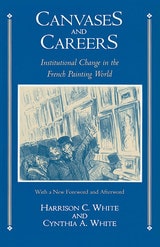
Canvases and Careers
Institutional Change in the French Painting WorldHarrison C. White and Cynthia A. White
University of Chicago Press, 1993
Originally published in 1965, this ground-breaking work is a classic piece of empirical research in the sociology of art. In this edition, Harrison C. White's new Foreword compares the marketing approaches of two contemporary painters, while Cynthia A. White's new Afterword reviews recent scholarship in the field.

Capital at the Brink
Overcoming the Destructive Legacies of NeoliberalismJeffrey R. Di Leo and Uppinder Mehan, editors
Michigan Publishing Services, 2014
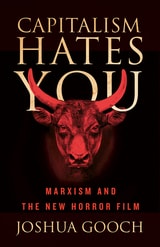
Capitalism Hates You
Marxism and the New Horror FilmJoshua Gooch
University of Minnesota Press, 2025
What contemporary horror films teach us about the cruelties of capitalist society
Capitalism Hates You uses the horror film genre as a tool to diagnose and expose the hostile conditions of life under capitalism. Through incisive critical analyses of popular films such as Get Out, Drag Me to Hell, Hereditary, The Babadook, and many others, Joshua Gooch draws connections between Marxist theory and contemporary narratives of psychological unease.
Gooch highlights the work of women, trans, and nonwhite filmmakers to show how the remarkable diversity of twenty-first-century horror cinema can provide an expansive catalog of capitalism’s varying forms of oppression. Studying films that interrogate such urgent topics as gentrification, climate change, and reproductive labor, he demonstrates how contemporary horror films give affective shape to the negative undercurrents of our present socioeconomic system.
Capitalism Hates You argues that these films and their material conditions can deepen our understanding of essential concepts in contemporary Marxism, from the theory of value and changing forms of commodification to the labor of social reproduction, the abolition of the family, and the necessity of ecosocialism. Synthesizing various strands of Marxist thought, Gooch sheds light on the growing field of socially conscious horror films, examining how they pinpoint and exaggerate latent feelings of dread and discomfort to reflect the ills of society.
Retail e-book files for this title are screen-reader friendly with images accompanied by short alt text and/or extended descriptions.
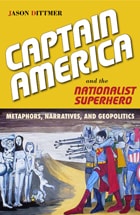
Captain America and the Nationalist Superhero
Metaphors, Narratives, and GeopoliticsJason Dittmer
Temple University Press, 2012
Nationalist superheroes—such as Captain America, Captain Canuck, and Union Jack—often signify the “nation-state” for readers, but how do these characters and comic books address issues of multiculturalism and geopolitical order? In his engaging book Captain America and the Nationalist Superhero, geographer Jason Dittmer traces the evolution of the comic book genre as it adapted to new national audiences. He argues that these iconic superheroes contribute to our contemporary understandings of national identity, the righteous use of power, and the role of the United States, Canada, and Britain in the world.
Tracing the nationalist superhero genre from its World War II origins to contemporary manifestations throughout the world, Captain America and the Nationalist Superhero analyzes nearly one thousand comic books and audience responses to those books. Dittmer also interviews key comic book writers from Stan Lee and J. M. DeMatteis to Steve Englehart and Paul Cornell.
At a time when popular culture is saturated with superheroes and their exploits, Captain America and the Nationalist Superhero highlights the unique relationship between popular culture and international relations.
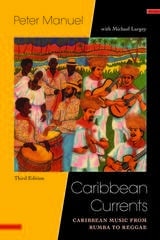
Caribbean Currents
Caribbean Music from Rumba to ReggaePeter Manuel
Temple University Press, 2016
The authors succinctly and perceptively situate the musical styles and developments in the context of themes of gender and racial dynamics, sociopolitical background, and diasporic dimensions. Caribbean Currents showcases the rich and diverse musics of Cuba, Puerto Rico, the Dominican Republic, Jamaica, Trinidad, the French Caribbean, the lesser Antilles, and their transnational communities in the United States and elsewhere to provide an engaging panorama of this most dynamic aspect of Caribbean culture.
Caribes 2.0
New Media, Globalization, and the Afterlives of DisasterJossianna Arroyo
Rutgers University Press, 2023
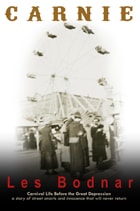
Carnie
Les Bodnar
St. Augustine's Press, 2010
Les Bodnar is a respected orthopedic surgeon and former physician for the Notre Dame football team. His memoir, however, is from an era long before that fame, when he was 12 and 13, and a part of his father’s carnival. The romance of carnival life, of escaping the 9-5 doldrums and somehow recapturing yourself, is there, but so too the hard work and trials, the difficulty of putting on a show day after day and week after week for people who both love the show and are apprehensive of the people who put it on.
The year is 1928, and the Boom is booming in our great cities, but life in the small towns in the Indiana, Illinois, and Wisconsin remains tenuous. Bodnar writes about putting the show together, handling the sometimes-unpredictable people who perform and run the games, holding on to the core that made the carnival that expectant joy for kids everywhere and of all ages. It’s a world filled with shills and cons, freak shows (some of them real) and rides galore, trust given to unlikely characters and the security of family, above all family, despite all the absences and hardships.
In the background the coming end of the Boom whispers, and soon the country will plunge into what will be called in America “the Great Depression.” It is not the innocence experienced before the Great War. Childhood had witnessed something too unspeakable and horrific to write about then; it demanded poetry. We hunkered down within our own, and did our best to forget, and only occasionally, as when Bodnar witnessed a Ku Klux Klan rally, did the ugliness that can be the world intrude on our sensibilities, and the reader finds himself or herself sharing this street-smart innocence of a never-to-return era.
Complete with period photographs, a lexicon, a bibliography, and a look at the way carnivals operate to this day, Carnie will inform, charm, and perhaps edify.
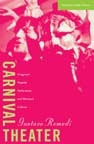
Carnival Theater
Uruguay’s Popular Performers and National CultureGustavo Remedi
University of Minnesota Press, 2004
Offers a new model for interpreting popular national culture through Uruguay’s carnival theater troupes
The murgas are troupes of performers, musicians, writers, and creators who, during Montevideo’s Carnival, perform on the tablados, temporary stages built in the neighborhoods of Uruguay’s capital city each year. Throughout the period of Uruguay’s subjection to a brutal dictatorship and in the following era of “democratization,” the murgas, envisioned originally as popular theater, were transformed into a symbol of social resistance, celebrated by many and perceived by others as menacing and subversive.
Focusing on the cultural practices of the lower classes and more specifically on the processes and productions of the murgas, Gustavo Remedi’s Carnival Theater is a deeply thoughtful consideration of Uruguayan society’s identity crisis and subsequent redefinition in the wake of the authoritarian-bureaucratic-technocratic regimes of the 1970s. A revealing work of cultural criticism, the book proposes a new set of criteria for the interpretation and critique of national culture.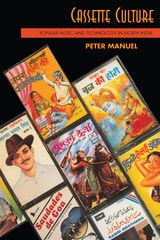
Cassette Culture
Popular Music and Technology in North IndiaPeter Manuel
University of Chicago Press, 1993
Manuel shows that the cassette revolution, however, has brought new contradictions and problems to Indian culture. While inexpensive cassettes revitalized local subcultures and community values throughout the subcontinent, they were also a vehicle for regional and political factionalism, new forms of commercial vulgarity, and, disturbingly, the most provocative sorts of hate-mongering and religious chauvinism.
Cassette Culture is the first scholarly account of Indian popular music and the first case study of a technological revolution now occurring throughout the world. It will be an essential resource for anyone interested in modern India, communications theory, world popular music, or contemporary global culture.
Celebrity And Power
Fame and Contemporary CultureP. David Marshall
University of Minnesota Press, 1997
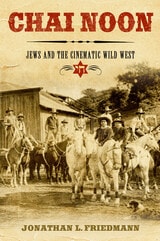
Chai Noon
Jews and the Cinematic Wild WestJonathan L. Friedmann
University of Wisconsin Press, 2025
This volume joins other reconsiderations of outsider and minority representations in Westerns to offer a more nuanced view of the genre. Friedmann engages with larger themes of Jewish identity in popular film, including depictions of race, ethnicity, and foreignness. He also identifies similar concerns within the invention and creation of the imaginary West writ large in American culture. The juxtapositions prove to be both unexpected and intuitively understandable.
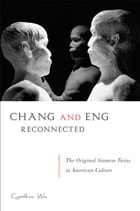
Chang and Eng Reconnected
The Original Siamese Twins in American CultureCynthia Wu
Temple University Press, 2012
Conjoined twins Chang and Eng Bunker have fascinated the world since the nineteenth century. In her captivating book, Chang and Eng Reconnected, Cynthia Wu traces the “Original Siamese Twins” through the terrain of American culture, showing how their inseparability underscored tensions between individuality and collectivity in the American popular imagination.
Using letters, medical documents and exhibits, literature, art, film, and family lore, Wu provides a trans-historical analysis that presents the Bunkers as both a material presence and as metaphor. She also shows how the twins figure in representations of race, disability, and science in fictional narratives about nation building.
As astute entrepreneurs, the twins managed their own lives; nonetheless, as Chang and Eng Reconnected shows, American culture has always viewed them through the multiple lenses of difference.
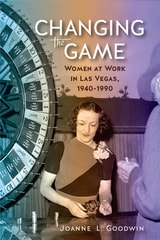
Changing the Game
Women at Work in Las Vegas, 1940-1990Joanne L. Goodwin
University of Nevada Press, 2014
Their experiences anticipated major trends in post-World War II labor history: the national migration of workers during and after the war, the growing proportion of women in the labor force, balancing work with family life, the unionization of service workers, and, above all, the desegregation of the labor force by sex and race. These narratives show women in Las Vegas resisting preassigned roles, seeing their work as a testimony of skill, a measure of independence, and a fulfillment of needs. Overall, these stories of women who lived and worked in Las Vegas in the last half of the twentieth century reveal much about the broader transitions for women in America between 1940 and 1990.
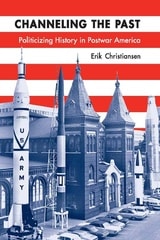
Channeling the Past
Politicizing History in Postwar AmericaErik Christiansen
University of Wisconsin Press, 2013
With insight and wit, Erik Christiansen uncovers in Channeling the Past the ways that powerful corporations rewrote history to strengthen the postwar corporate state, while progressives, communists, and other leftists vied to make their own versions of the past more popular. Christiansen looks closely at several notable initiatives—CBS’s flashback You Are There program; the Smithsonian Museum of American History, constructed in the late 1950s; the Cavalcade of America program sponsored by the Du Pont Company; the History Book Club; and the Freedom Train, a museum on rails that traveled the country from 1947 to 1949 exhibiting historic documents and flags, including original copies of the U.S. Constitution and the Magna Carta.
It is often said that history is written by the victors, but Christiansen offers a more nuanced perspective: history is constantly remade to suit the objectives of those with the resources to do it. He provides dramatic evidence of sophisticated calculations that influenced both public opinion and historical memory, and shows that Americans’ relationships with the past changed as a result.

Charles A. Lindbergh and the American Dilemma
The Conflict of Technology and Human ValuesSusan M. Gray
University of Wisconsin Press, 1988
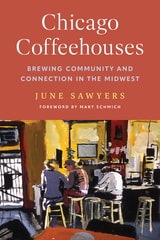
Chicago Coffeehouses
Brewing Community and Connection in the MidwestJune Sawyers
University of Illinois Press, 2027
Since the turn of the last century, immigrants have brought Chicago an abundance of varied café traditions from Europe, the Middle East, and beyond. Sawyers delves into yesteryear’s Towertown bohemian enclave and midcentury venues that helped fuel the folk music revival. She also explores the coffeehouse’s ongoing evolution into a digitized workplace, and the creative ways today’s artists and entrepreneurs reimagine these spaces as patisseries, cafés, bake shops, tearooms, and performance settings. Throughout, Sawyers brings to light the Midwestern coffeehouse’s role in cultivating individual identity and neighborhood connection.
Entertaining and enlightening, Chicago Coffeehouses takes readers into iconic gathering places with art on the walls and the aroma of ground beans in the air, where steam rises from a chipped but bottomless cup of coffee.
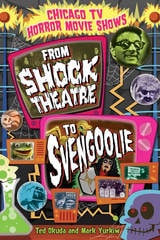
Chicago TV Horror Movie Shows
From Shock Theatre to SvengoolieTed Okuda and Mark Yurkiw
Southern Illinois University Press, 2007
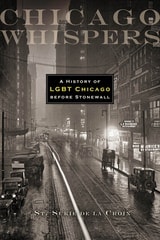
Chicago Whispers
A History of LGBT Chicago before StonewallSt. Sukie de la Croix; Foreword by John D’Emilio
University of Wisconsin Press, 2012
Chicago Whispers illuminates a colorful and vibrant record of lesbian, gay, bisexual, and transgendered people who lived and loved in Chicago from the city’s beginnings in the 1670s as a fur-trading post to the end of the 1960s. Journalist St. Sukie de la Croix, drawing on years of archival research and personal interviews, reclaims Chicago’s LGBT past that had been forgotten, suppressed, or overlooked.
Included here are Jane Addams, the pioneer of American social work; blues legend Ma Rainey, who recorded “Sissy Blues” in Chicago in 1926; commercial artist J. C. Leyendecker, who used his lover as the model for “The Arrow Collar Man” advertisements; and celebrated playwright Lorraine Hansberry, author of A Raisin in the Sun. Here, too, are accounts of vice dens during the Civil War and classy gentlemen’s clubs; the wild and gaudy First Ward Ball that was held annually from 1896 to 1908; gender-crossing performers in cabarets and at carnival sideshows; rights activists like Henry Gerber in the 1920s; authors of lesbian pulp novels and publishers of “physique magazines”; and evidence of thousands of nameless queer Chicagoans who worked as artists and musicians, in the factories, offices, and shops, at theaters and in hotels. Chicago Whispers offers a diverse collection of alternately hip and heart-wrenching accounts that crackle with vitality.
Chicana Ways
Conversations With Ten Chicana WritersKarin Rosa Ikas
University of Nevada Press, 2001
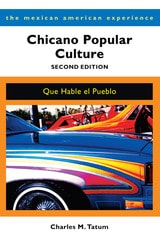
Chicano Popular Culture, Second Edition
Que Hable el PuebloCharles M. Tatum
University of Arizona Press, 2017
This edition features:
- Chicanas in the Chicano Movement and Chicanos since the Chicano Movement
- New material on popular authors such as Denise Chávez, Alfredo Vea, Luis Alberto Urrea, and Juan Felipe Herrera
- Suggested Readings to supplement each chapter
- Theoretical approaches to popular culture, including the perspectives of Norma Cantú, Alicia Gaspar de Alba, Pancho McFarland, Michelle Habell-Pallán, and Víctor Sorell
With clear examples, an engaging writing style, and helpful discussion questions, Chicano Popular Culture, Second Edition invites readers to discover and enjoy Mexican American popular culture.
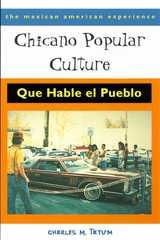
Chicano Popular Culture
Que Hable el PuebloCharles M. Tatum
University of Arizona Press, 2001
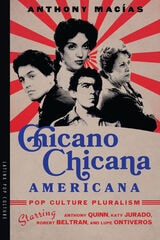
Chicano-Chicana Americana
Pop Culture Pluralism Starring Anthony Quinn, Katy Jurado, Robert Beltran, and Lupe OntiverosAnthony Macías
University of Arizona Press, 2023
Each biographical chapter analyzes an underappreciated actor, revealing their artistic contributions to U.S. common culture. Their long-shot careers tell a tale of players taking action with agency and fighting for screen time and equal opportunity despite disadvantages and differential treatment in Hollywood. These dynamic and complex individuals altered cinematic representations—and audience expectations—by surpassing stereotypes.
The book explores American national character by showing how ethnic Mexicans attained social and cultural status through fair, open competition without a radical realignment of political or economic structures. Their creative achievements demanded dignity and earned respect. Anthony Macías argues that these performances demonstrated a pop culture pluralism that subtly changed mainstream America, transforming it from the mythological past of the Wild West to the speculative future of science fiction.
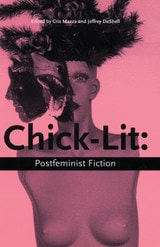
Chick Lit Postfeminist Fiction
Cris Mazza
University of Alabama Press, 2000
A provocative critique of chick lit’s glossy narratives and their complex relationship with postfeminist ideals.
Chick-Lit: Postfeminist Fiction is the fourth volume in “On the Edge: New Women’s Fiction,” FC2’s ongoing effort to discover new and innovative voices in women’s fiction. Determined to contradict the myth that “women don't write experimental fiction,” Chick-Lit discovers women writers with a fresh and irreverent wit and honesty, but no less powerful in their rendering of human experience.
Chick-Lit collects the original fiction of newly discovered writers, but also the award winning work of notable writers like Carole Maso, Jonis Agee, Stacy Levinne and Carolyn Banks. Marked by innovations in form and point-of-view, the writers in this collection are not satisfied with the terrain commonly referred to as “women’s writing.” Insane asylum sex, board games that control people’s lives, a masochistic pedophile humiliated by his victim, an obese woman paying nickels and quarters for attention from teenage girls, a deranged hair stylist and her disloyal dog, a men's impotence therapy group, a surreal landscape constantly producing the body of a woman's mother: this is writing that shouts, yes, there is such a thing as postfeminist fiction.
Child Brides and Intruders
Carol Wershoven
University of Wisconsin Press, 1993
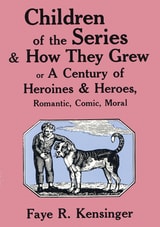
Children of the Series and How They Grew
or A Century of Heroines & Heroes, Romantic, Comic, MoralFaye Riter Kensinger
University of Wisconsin Press, 1987

China Forever
The Shaw Brothers and Diasporic CinemaEdited by Poshek Fu
University of Illinois Press, 2007
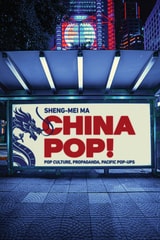
China Pop!
Pop Culture, Propaganda, Pacific Pop-UpsSheng-mei Ma
The Ohio State University Press, 2024
In China Pop! Sheng-mei Ma analyzes the propaganda-laced millennial Chinese pop culture—particularly TV dramas, films, and web novels—that streams online for over one billion Sinophone consumers in China and in diaspora. In part 1, Ma lays bare the “seductive art of propaganda” by reviewing TV series aired during the Chinese Communist Party Centennial in 2021 and the ways pop culture and propaganda are spliced. In part 2, he zeroes in on how the shared traumatic shock of the Cultural Revolution continues to echo. Parts 3 and 4 cross the Pacific to incorporate analysis of media originating outside of China, such as white depictions of revolutionary zeal and Asian American portrayals of immigrant characters that fetishize Asianness and reanimate stereotypes.
With methodological daring, Ma challenges existing scholarship by blending the professional and the personal through a lively and accessible autotheoretical approach. China Pop! walks the East-West cultural tightrope to critique a wide range of pop culture from both sides of the Pacific and sheds new light on the workings of propaganda on its intended audiences and its wider, more subtle reaches in both political and cultural spheres.
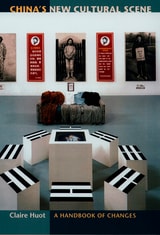
China's New Cultural Scene
A Handbook of ChangesClaire Huot
Duke University Press, 2000
Western observers who were impressed by the bravery of the demonstrators in Tiananmen Square—and stunned at the harshness of their suppression—will learn from this book how that political movement led to changes in cultural conditions and production. Attending to all the major elements of this vast nation’s high and low culture at the end of a landmark decade, Huot’s discussion ranges from the cinematic works of Zhang Yimou, Chen Kaige, and others to emerging musical forms such as rock, punk, and rap. Other topics include television, theater, and avant-garde art, the new electronic media, and subversive trends in both literature and the visual arts.
With a comprehensive index of artists and works, as well as a glossary of Chinese words, China’s New Cultural Scene will enlighten students of Chinese culture and general readers interested in contemporary Asia.

Chinese Cinema
Identity, Power, and GlobalizationEdited by Jeff Kyong-McClain, Russell Meeuf, and Jing Jing Chang
Hong Kong University Press, 2022
In Chinese Cinema: Identity, Power, and Globalization, a variety of scholars explore the history, aesthetics, and politics of Chinese cinema as the Chinese film industry grapples with its place as the second-largest film industry in the world. Exploring the various ways that Chinese cinema engages with global politics, market forces, and film cultures, this edited volume places Chinese cinema against an array of contexts informing the contours of Chinese cinema today. The book also demonstrates that Chinese cinema in the global context is informed by the intersections and tensions found in Chinese and world politics, national and international co-productions, the local and global in representing Chineseness, and the lived experiences of social and political movements versus screened politics in Chinese film culture.
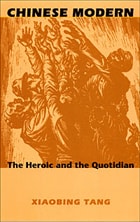
Chinese Modern
The Heroic and the QuotidianXiaobing Tang
Duke University Press, 2000
Tang uncovers crucial clues to modern Chinese literary and cultural practices through readings of Wu Jianren’s 1906 novel The Sea of Regret and works by canonical writers Lu Xun, Ding Ling, and Ba Jin. For the midcentury, he broadens his investigation by considering theatrical, cinematic, and visual materials in addition to literary texts. His reading of the 1963 play The Young Generation reveals the anxiety and terror underlying the exhilarating new socialist life portrayed on the stage. This play, enormously influential when it first appeared, illustrates the utopian vision of China’s lyrical age and its underlying discontents—both of which are critical for understanding late-twentieth-century China. Tang closes with an examination of post–Cultural Revolution nostalgia for the passion of the lyrical age.
Throughout Chinese Modern Tang suggests a historical and imaginative affinity between apparently separate literatures and cultures. He thus illuminates not only Chinese modernity but also the condition of modernity as a whole, particularly in light of the postmodern recognition that the market and commodity culture are both angel and devil.
This elegantly written volume will be invaluable to students of China, Asian studies, literary criticism, and cultural studies, as well as to readers who study modernity.

Chinese Popular Culture and the State, Volume 9
Jing Wang, ed.
Duke University Press, 0
Contributors. Tani E. Barlow, Dai Jinhua, Judith Farquhar, David S. G. Goodman, James L. Hevia, Li Hsiaoti, Ralph Litzinger, Eric Kit-Wa Ma, Jonathan Scott Noble, Jing Wang

Chocolate, Strawberry, and Vanilla
A History Of American Ice CreamAnne Cooper Funderburg
University of Wisconsin Press, 1995
Chocolate, Strawberry, and Vanilla traces the evolution of ice cream from a rarity to an everyday indulgence. It covers the genesis of ice cream in America, the invention of the hand-cranked ice cream freezer, the natural ice industry, the beginnings of wholesale ice cream manufacturing, and the origins of the ice cream soda, sundae, cone, sandwich, and bar. It also recounts the histories of many brands, including Dairy Queen, Good Humor, Eskimo Pie, Ben and Jerry's, Baskin-Robbins, and Haagen-Dazs. This history of ice cream reflects and reveals changes in social customs, diet and nutrition, class distinctions, leisure activities, and everyday life.
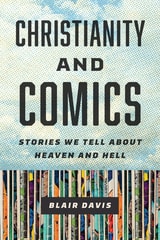
Christianity and Comics
Stories We Tell about Heaven and HellBlair Davis
Rutgers University Press, 2024
Christianity and Comics presents an 80-year history of the various ways that the comics industry has drawn from biblical source material. It explores how some publishers specifically targeted Christian audiences with titles like Catholic Comics, books featuring heroic versions of Oral Roberts and Billy Graham, and special religious-themed editions of Archie. But it also considers how popular mainstream comics like Daredevil, The Sandman, Ghost Rider, and Batman are infused with Christian themes and imagery.
Comics scholar Blair Davis pays special attention to how the medium’s unique use of panels, word balloons, captions, and serialized storytelling have provided vehicles for telling familiar biblical tales in new ways. Spanning the Golden Age of comics to the present day, this book charts how comics have both reflected and influenced Americans’ changing attitudes towards religion.

Christmas in Nevada
Patricia D. Cafferata
University of Nevada Press, 2014
• Includes a story from each of the state’s seventeen counties
• Illustrated with 57 historic photographs, many previously unpublished
Cigarettes Are Sublime
Richard Klein
Duke University Press, 1993
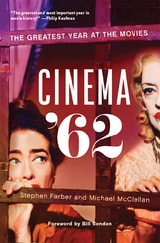
Cinema '62
The Greatest Year at the MoviesStephen Farber
Rutgers University Press, 2024
Lawrence of Arabia, The Miracle Worker, To Kill a Mockingbird, The Manchurian Candidate, Gypsy, Sweet Bird of Youth, The Longest Day, The Music Man, What Ever Happened to Baby Jane, and more.
Most conventional film histories dismiss the early 1960s as a pallid era, a downtime between the heights of the classic studio system and the rise of New Hollywood directors like Scorsese and Altman in the 1970s. It seemed to be a moment when the movie industry was floundering as the popularity of television caused a downturn in cinema attendance. Cinema ’62 challenges these assumptions by making the bold claim that 1962 was a peak year for film, with a high standard of quality that has not been equaled since.
Stephen Farber and Michael McClellan show how 1962 saw great late-period work by classic Hollywood directors like John Ford, Howard Hawks, and John Huston, as well as stars like Bette Davis, James Stewart, Katharine Hepburn, and Barbara Stanwyck. Yet it was also a seminal year for talented young directors like Sidney Lumet, Sam Peckinpah, and Stanley Kubrick, not to mention rising stars like Warren Beatty, Jane Fonda, Robert Redford, Peter O’Toole, and Omar Sharif. Above all, 1962—the year of To Kill a Mockingbird and The Manchurian Candidate—gave cinema attendees the kinds of adult, artistic, and uncompromising visions they would never see on television, including classics from Fellini, Bergman, and Kurosawa. Culminating in an analysis of the year’s Best Picture winner and top-grossing film, Lawrence of Arabia, and the factors that made that magnificent epic possible, Cinema ’62 makes a strong case that the movies peaked in the Kennedy era.
Circling Dixie
Contemporary Southern Culture through a Transatlantic LensHelen Taylor
Rutgers University Press, 2000
Taylor examines some of the South's most significant cultural exports in discussions that range across literature, music, film, television, theater, advertising, and tourism to focus on how and why Southern themes and icons have become so deeply embedded in British cultural life. The enduring legacy of Margaret Mitchell's Gone With the Wind can be seen today in the popularity of sequels, revisions, and reworkings of the novel. The conversation between these cultures is further explored in British responses to Alex Haley's Roots, the British theater's special affection for Tennessee Williams's plays, and the marketing of New Orleans as a preferred destination for European tourists. The transformation of Southern culture--itself a hybrid of the European, African, and American--as it circulates back across the Atlantic suggests not only new views of the history, racial politics, music and art of both Britain and the American South, but also an enhanced understanding of the dynamic flow of culture itself.
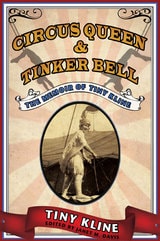
Circus Queen and Tinker Bell
The Memoir of Tiny KlineTiny Kline. Edited by Janet M. Davis
University of Illinois Press, 2008
This engaging memoir follows the life and career of circus performer Tiny Kline (1891-1964) from the burlesque house to the circus tent, and on to Disneyland and the silver screen. While working for the Ringling Bros. and Barnum & Bailey Circus, Kline became well known for her signature "slide for life" stunt, an "iron jaw" act in which she slid to the ground while dangling from trapeze rigging by her teeth. Kline renewed her spectacular acrobatics at the age of seventy when she played Tinker Bell in the "Fantasy in the Sky" fireworks show at Disneyland. In that same year, she also began writing her life story.
Extensively annotated by Janet M. Davis, this memoir documents twentieth-century changes in popular amusements, while providing fresh insight into circus personalities such as John Ringling, acrobat Lillian Leitzel, and big cat trainer Mabel Stark, as well as mainstream entertainers like Florenz Ziegfeld, John Philip Sousa, and others. Kline also provides intimate details about the daily machinations at the circus, including fascinating accounts of its sexual politics, racial dynamics, risky nature, and labor relations.
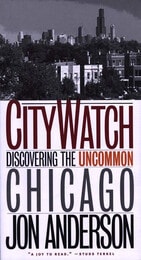
City Watch
Discovering The Uncommon ChicagoJon Anderson
University of Iowa Press, 2000
In forty-five years as one of Chicago's liveliest journalists for Time, Life, and the Chicago Tribune, Jon Anderson has established a reputation for picking up on what someone once called "the beauty of the specific fact." Part "Talk of the Town," part On the Road with Charles Kuralt, Anderson's twice-a-week "City Watch" columns in the Chicago Tribune seek out interesting and unexpected people and places from the everyday life of what the author calls the "most typical American big city." In the process he discovers the joys and triumphs of ordinary people.
Anderson writes with wit and insight about those who find themselves inspired or obsessed with alternative ways of viewing life or getting through the day. Like the man who started with one light pole, then painted all the poles in his southside neighborhood. Or the founder of Cats-Are-Purrsons-Too, a nun who lives with sixty-seven cats. Or the philosopher who, with no financial success, still publishes a newsletter called "The Meaning of Life." After years of hunting down moments of everyday life that have drama and meaning, Anderson offers a book that has curious power, because all of its stories are true.
Drawn from the best of Anderson's columns, City Watch introduces readers to an eclectic mix of social clubs, subcultures, and minor celebrities. From Foraging Friends, a group of penniless ecologists who forage for wild foods in a county forest preserve, to the annual Dumpster Diver fashion show, from the Oakton Elementary School chess team to a group that calls itself Some Chicago Anarchists, readers will discover the characters and events that define Chicago's local color.
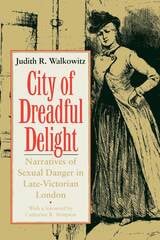
City of Dreadful Delight
Narratives of Sexual Danger in Late-Victorian LondonJudith R. Walkowitz
University of Chicago Press, 1992
Victorian London was a world where long-standing traditions of class and gender were challenged by a range of public spectacles, mass media scandals, new commercial spaces, and a proliferation of new sexual categories and identities. In the midst of this changing culture, women of many classes challenged the traditional privileges of elite males and
asserted their presence in the public domain.
An important catalyst in this conflict, argues Walkowitz, was W. T. Stead's widely read 1885 article about child prostitution. Capitalizing on the uproar caused by the piece and the volatile political climate of the time, women spoke of sexual danger, articulating their own grievances against men, inserting themselves into the public discussion of sex to an unprecedented extent, and gaining new entree to public spaces and journalistic practices. The ultimate manifestation of class anxiety and gender antagonism came in 1888 with the tabloid tales of Jack the Ripper. In between, there were quotidien stories of sexual possibility and urban adventure, and Walkowitz examines them all, showing how women were not simply figures in the imaginary landscape of male spectators, but also central actors in the stories of metropolotin life that reverberated in courtrooms, learned journals, drawing rooms, street corners, and in the letters columns of the daily press.
A model of cultural history, this ambitious book will stimulate and enlighten readers across a broad range of interests.
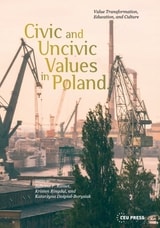
Civic and Uncivic Values in Poland
Value Transformation, Education, and CultureSabrina P. Ramet
Central European University Press, 2019
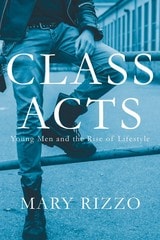
Class Acts
Young Men and the Rise of LifestyleMary Rizzo
University of Nevada Press, 2015
Mary Rizzo traces the development of the concept of lifestyle marketing, showing how marketers disconnected class identity from material reality, focusing instead on a person’s attitudes, opinions, and behaviors. The book includes discussions of the rebel of the 1950s, the hippie of the 1960s, the white suburban hip-hop fan of the 1980s, and the poverty chic of the 1990s. Class Acts illuminates how the concept of “lifestyle,” particularly as expressed through fashion, has disconnected social class from its material reality and diffused social critique into the opportunity to simply buy another identity. The book will appeal to scholars and other readers who are interested in American cultural history, youth culture, fashion, and style.

Class and Gender Politics in Progressive-Era Seattle
John C. Putman
University of Nevada Press, 2008